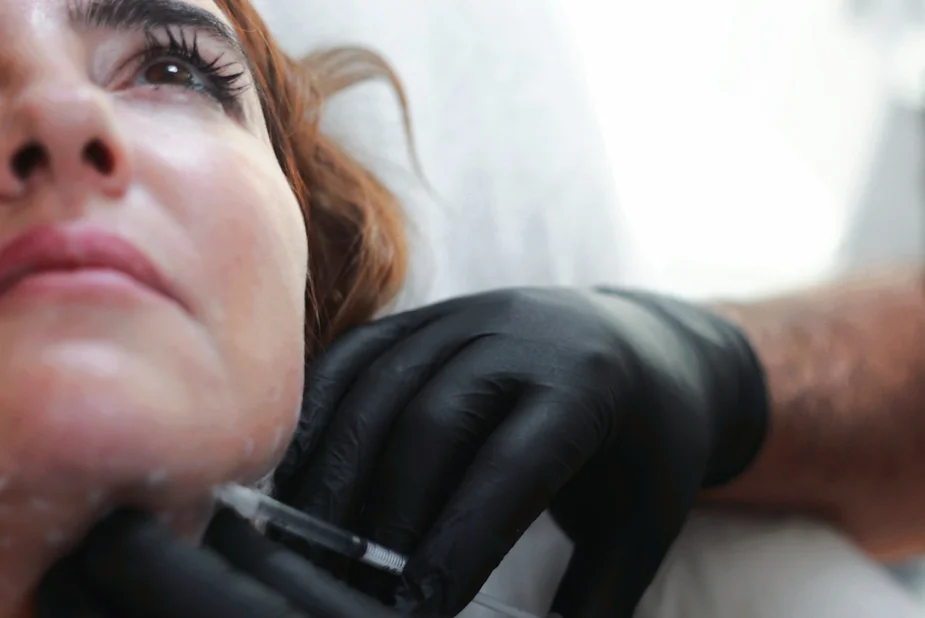
Botox, or botulinum toxin type A, temporarily relaxes specific muscles. In aesthetics it softens expression lines on the forehead, between the brows and at the crow’s feet, and is used in the Nefertiti lift; in medicine it treats excessive sweating, bruxism and chronic migraine. It doesn’t fill wrinkles: it acts on the expression that creates them, and its effect usually lasts a few months.
Botox temporarily relaxes specific muscles. In aesthetics it is used mainly to soften expression lines on the forehead, between the brows and at the crow’s feet; in medicine it is also indicated for excessive sweating, bruxism and other conditions where a muscle or gland is overworking. It doesn’t fill wrinkles: it acts on the expression that creates them.
In this guide we explain what botulinum toxin is, which areas it treats, how long it usually lasts, whether it hurts, from what age it makes sense and when it isn’t the right tool. At iki we don’t talk around it · we tell you straight.
What is botulinum toxin, or Botox?
Botulinum toxin is a protein produced by the bacterium Clostridium botulinum. In medicine it is used purified and in minimal doses, measured in units, to temporarily block the signal a nerve sends to a muscle or gland.
What is the difference between Botox and botulinum toxin?
In how it works, none. Botox is the brand name of one botulinum toxin type A that became synonymous with the treatment, as happens with other well-known products. Other brands contain the same active substance, including some with longer-lasting action, with different formulations. Their units don’t convert one to one, which is why the physician always sets the dose based on the product, the muscle and your face.
How it works: why it relaxes rather than fills
To understand what Botox is for, you need to tell the types of wrinkles apart:
- Dynamic, or expression, lines: they appear when you move your face, frown, raise your brows or smile. These are the ones that respond to the toxin.
- Static lines: visible even at rest. At first they are dynamic lines that, from folding so often, stayed etched; over time collagen loss and sun damage add to them.
- Lines from volume loss or laxity: folds and sagging that depend on the skin’s support, not on expression.
The toxin is injected into the muscle. As it relaxes, the skin above stops folding so forcefully and the line softens. That’s why it works very well on dynamic lines, helps keep early static lines from deepening, and doesn’t fill folds. For volume, other injectables such as hyaluronic acid are used, and for skin quality and firmness, collagen biostimulators.
What Botox is used for: areas and uses
These are the most common indications for botulinum toxin, with what you should know about each:
| Use | Area | Goal | Worth knowing |
|---|---|---|---|
| Forehead lines | Frontalis muscle | Soften the horizontal lines that appear when you raise your brows | The dose is measured so the brow doesn’t drop or feel heavy |
| Frown lines | Muscles between the brows | Soften the frowning expression | One of the most studied aesthetic indications |
| Crow’s feet | Outer corner of the eye | Soften the lines that appear when you smile | The smile is preserved · the goal isn’t a fixed stare |
| Nefertiti lift | Neck bands and jawline | Soften neck bands and slightly define the contour | It doesn’t replace a facelift or treat marked laxity |
| Bruxism | Masseter muscle | Reduce the force of teeth clenching | Coordinated with your dentist · it doesn’t replace a night guard |
| Excessive sweating | Underarms and palms | Reduce sweating | According to the American Academy of Dermatology, one underarm treatment can bring relief for up to 6 months |
| Gummy smile | Upper lip | Show less gum when you smile | Requires very small, precise doses |
The toxin also has neurological uses, such as chronic migraine or muscle spasticity, which a neurologist indicates and performs. If you come in for bruxism or sweating, the physician will tell you at the consultation whether the toxin makes sense in your case or whether another approach is better.
How long does Botox last?
According to the American Academy of Dermatology, the effect of botulinum toxin on wrinkles lasts about 3 to 4 months, and sometimes longer. In practice it usually holds for 3 to 6 months. The area, the dose, the strength of the muscle, the product and each person’s metabolism all play a part.
- First changes: usually noticeable between day 3 and day 7.
- Full effect: at around two weeks. That’s when the follow-up visit happens, if the physician recommends one.
- Afterward: the muscle gradually regains its movement. There is no rebound effect: lines go back to how they were, not worse.
Repeating the treatment too early doesn’t extend the result. The physician decides the interval based on how your muscle responds. Results vary from patient to patient.
Your consultation at iki is free · 45 minutes
A diagnosis and a written, phased plan. You decide afterwards. Related treatment: Botox.Does getting Botox hurt?
It is applied with a very fine needle and feels like brief pinpricks, a tolerable discomfort. For sensitive patients, cold or a numbing cream can be used. The session takes 15 to 30 minutes.
Afterward you may see small marks at the injection points, which disappear within minutes or hours, and sometimes a bruise that fades in a few days. You can go back to normal life the same day. For the first few hours, avoid massaging the area, lying down and intense exercise, as the physician instructs. Because UV radiation in Bogotá is high all year, sunscreen is still part of the plan: the toxin doesn’t treat sun damage.
From what age can you get Botox?
There is no fixed age. In aesthetics we treat adults, and most people start between 30 and 40, when expression lines begin to stay visible even at rest.
For younger skin with very strong facial expressions there is what’s called baby Botox, with low doses. It only makes sense if there is an expression that really marks the skin. If there isn’t, there is nothing to prevent with toxin, and what’s indicated is sun protection and a good routine. Age matters less than the diagnosis.
Not every injectable is Botox: myths and facts
Many people think every facial injectable is Botox. It isn’t: hyaluronic acid restores volume or hydrates, collagen biostimulators activate collagen production and the toxin relaxes the muscle. Each has its own indication, and in a facial harmonization plan they can be combined in phases.
- ✗ "Botox leaves your face frozen." Lack of expression, brows that sit too high or too low and heavy eyelids are usually the result of excessive doses or poorly chosen points, not the substance itself.
- ✗ "If you stop, your wrinkles get worse." The muscle returns to its previous movement and the skin to the state that matches your age.
- ✗ "It’s addictive." It doesn’t create physical dependence. Whether you repeat it is an aesthetic decision.
- ✓ It preserves expression when dosed well. The goal is to soften, not erase.
- ✓ Its side effects are usually mild and temporary when a trained physician performs it.
If you want to understand why there is no reason to fear it, read 5 reasons not to be afraid of facial Botox.
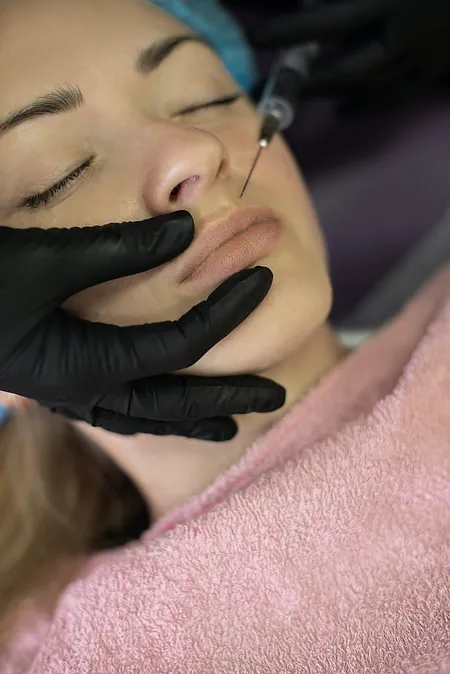
Who shouldn’t get Botox, and how is it done at iki?
The toxin isn’t indicated, or is postponed, in these cases:
- Pregnancy or breastfeeding.
- Neuromuscular diseases, such as myasthenia gravis.
- Active infection in the area or a known allergy to any component.
- Some medications that interfere with neuromuscular transmission: these are reviewed at the consultation.
- Deep static wrinkles or folds from volume loss: the toxin alone doesn’t correct them.
At iki, in Usaquén, treatment starts with a medical consultation: we look at your face at rest and in motion, define which muscles to treat, how many units and at which points, and we tell you if the toxin isn’t what you need, even if it means losing the sale. If needed, a follow-up is scheduled at two weeks to fine-tune. Results vary from patient to patient.
If you’re considering Botox and want to know whether it’s right for you, the first step is a diagnosis. Your consultation at iki is free · 45 minutes.
Frequently asked questions
How long does Botox last?
According to the American Academy of Dermatology, the effect lasts about 3 to 4 months and sometimes longer. In practice it usually holds for 3 to 6 months, depending on the area, the dose, the strength of the muscle and each person’s metabolism. The first changes show between day 3 and day 7, and the full effect at around two weeks.
Does Botox hurt?
It is applied with a very fine needle and feels like brief pinpricks, a tolerable discomfort. Cold or a numbing cream can be used for sensitive patients. The session takes 15 to 30 minutes, and afterward you may have small marks or a bruise that fade within hours or a few days. You can go back to normal life the same day.
What is the difference between Botox and botulinum toxin?
There is none in how it works. Botox is the brand name of one botulinum toxin type A that became synonymous with the treatment. Other brands contain the same active substance, but with different formulations and units that don’t convert one to one. That’s why the physician sets the dose based on the product, the muscle and your face.
From what age can you get Botox?
There is no fixed age. In aesthetics we treat adults, and most people start between 30 and 40, when expression lines begin to stay visible at rest. In younger skin with very strong facial expressions it can be indicated in low doses, but only if there is an expression that really marks the skin.
Is Botox used for migraine?
Yes, botulinum toxin is an approved treatment for chronic migraine in adults, with an injection pattern on the head, neck and shoulders that differs from the aesthetic one. That indication is set and performed by a neurologist after assessing the type of headache. It isn’t the same as treating the forehead or the frown lines for expression lines.
What happens if I stop getting Botox?
The muscle gradually regains its movement and the lines look the way they did before treatment, not worse. It is a myth that the skin ends up more wrinkled when you stop. While the muscle was relaxed, the skin wasn’t folding as much, so the line may take a while to set in again. Results vary from patient to patient.
This article is for information only and does not replace a medical consultation. Results of any treatment vary from patient to patient. If you have a skin condition, book a consultation to get a diagnosis.