Chemical peel for acne scars
Soften what acne left behind · without promising to erase it
A chemical peel for scars renews the top layers of the skin and stimulates collagen to smooth texture and soften marks. It works best on shallow scars and post-acne dark spots. Deep scars usually need it combined with laser or other techniques.
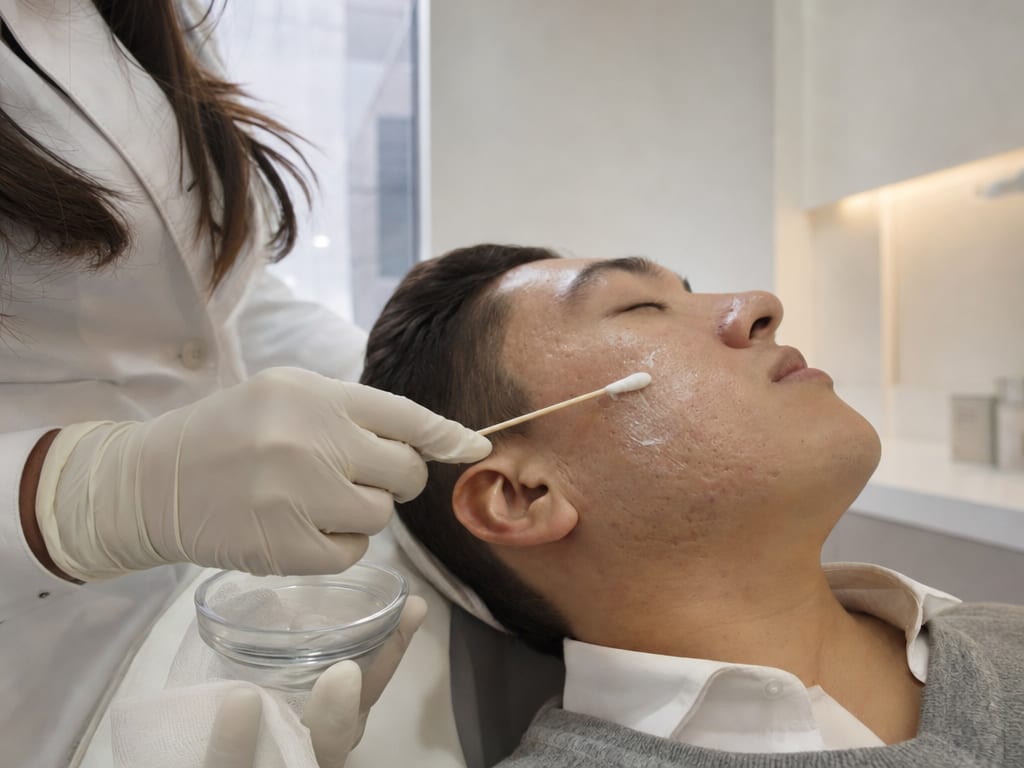
Results in acne and scars · identity protected
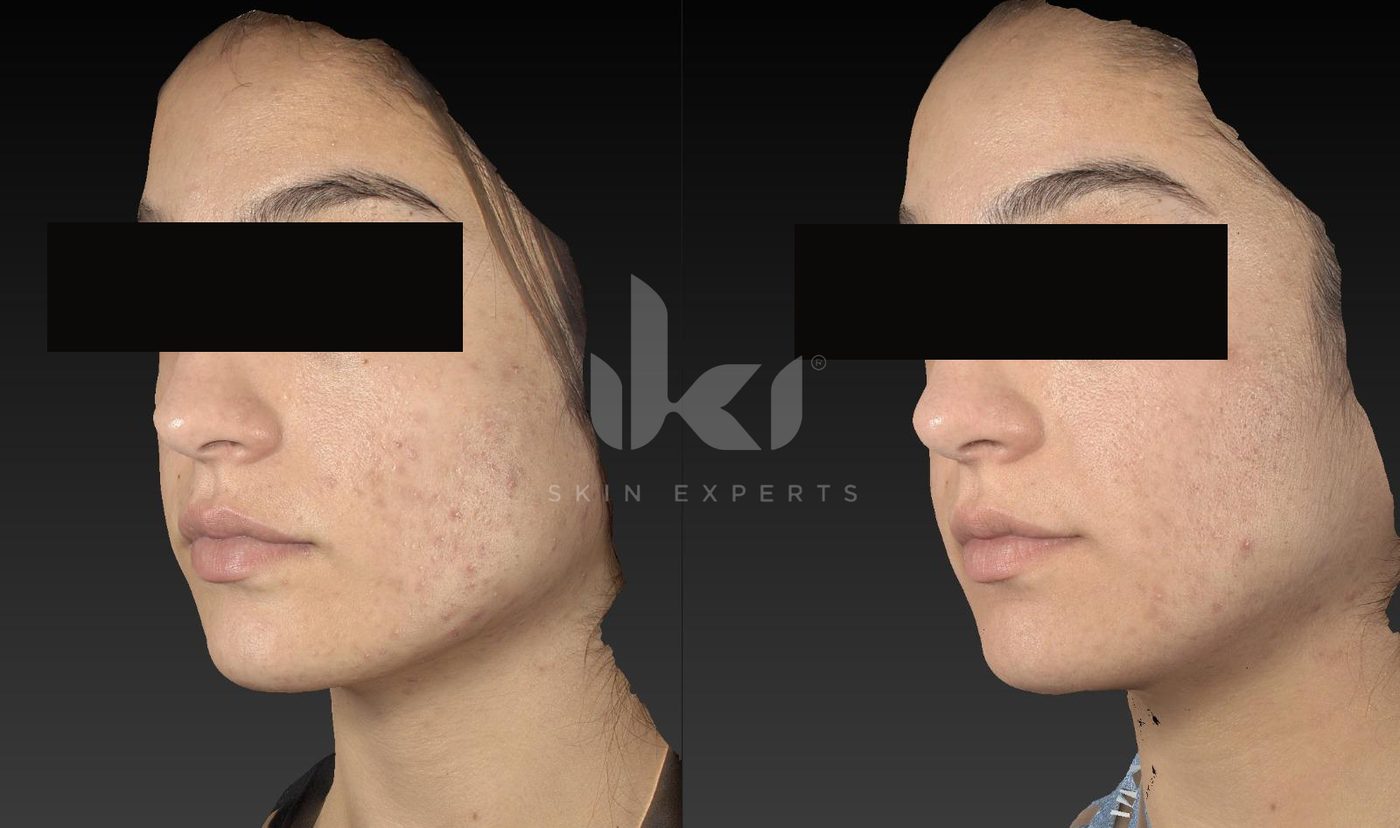
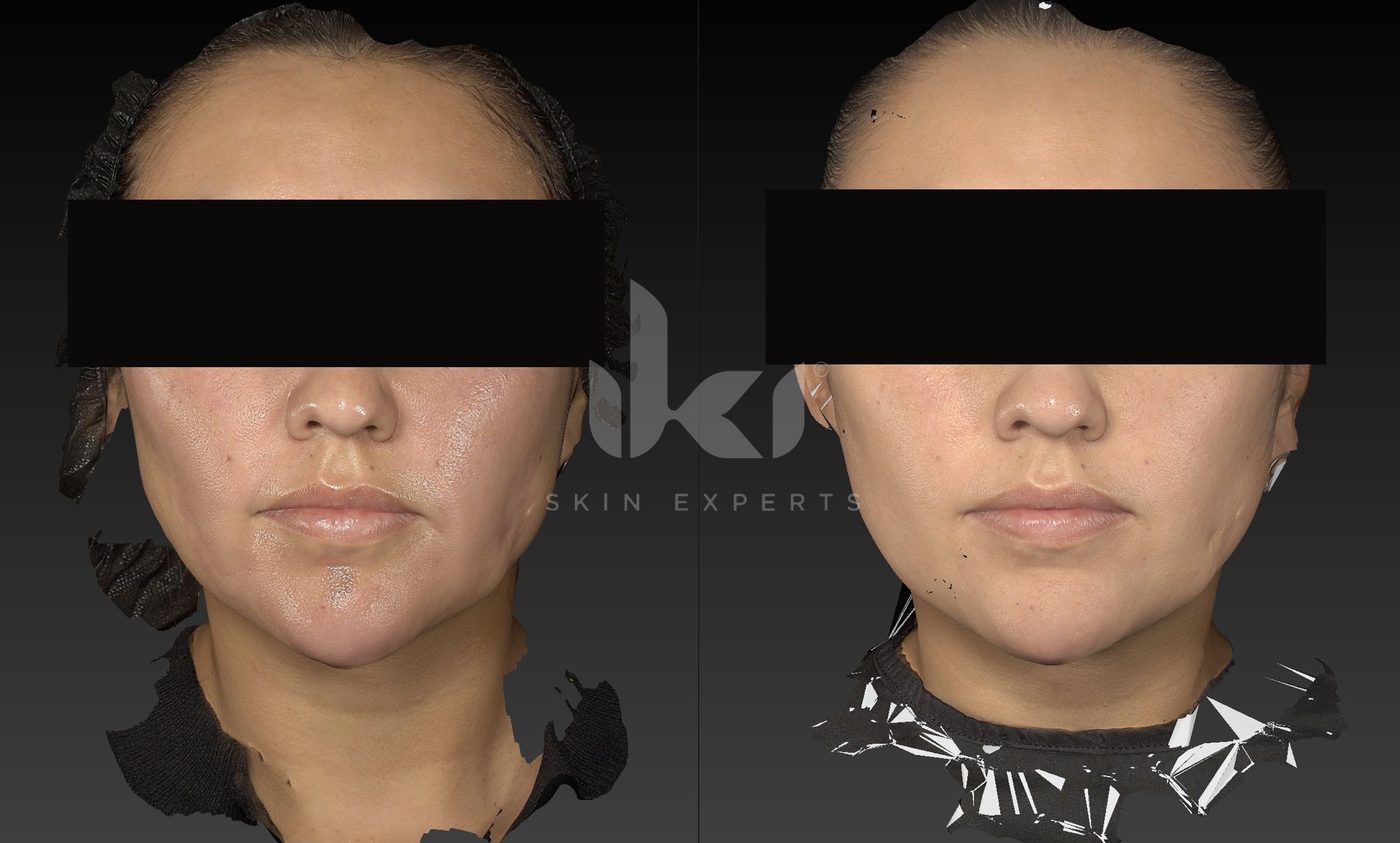
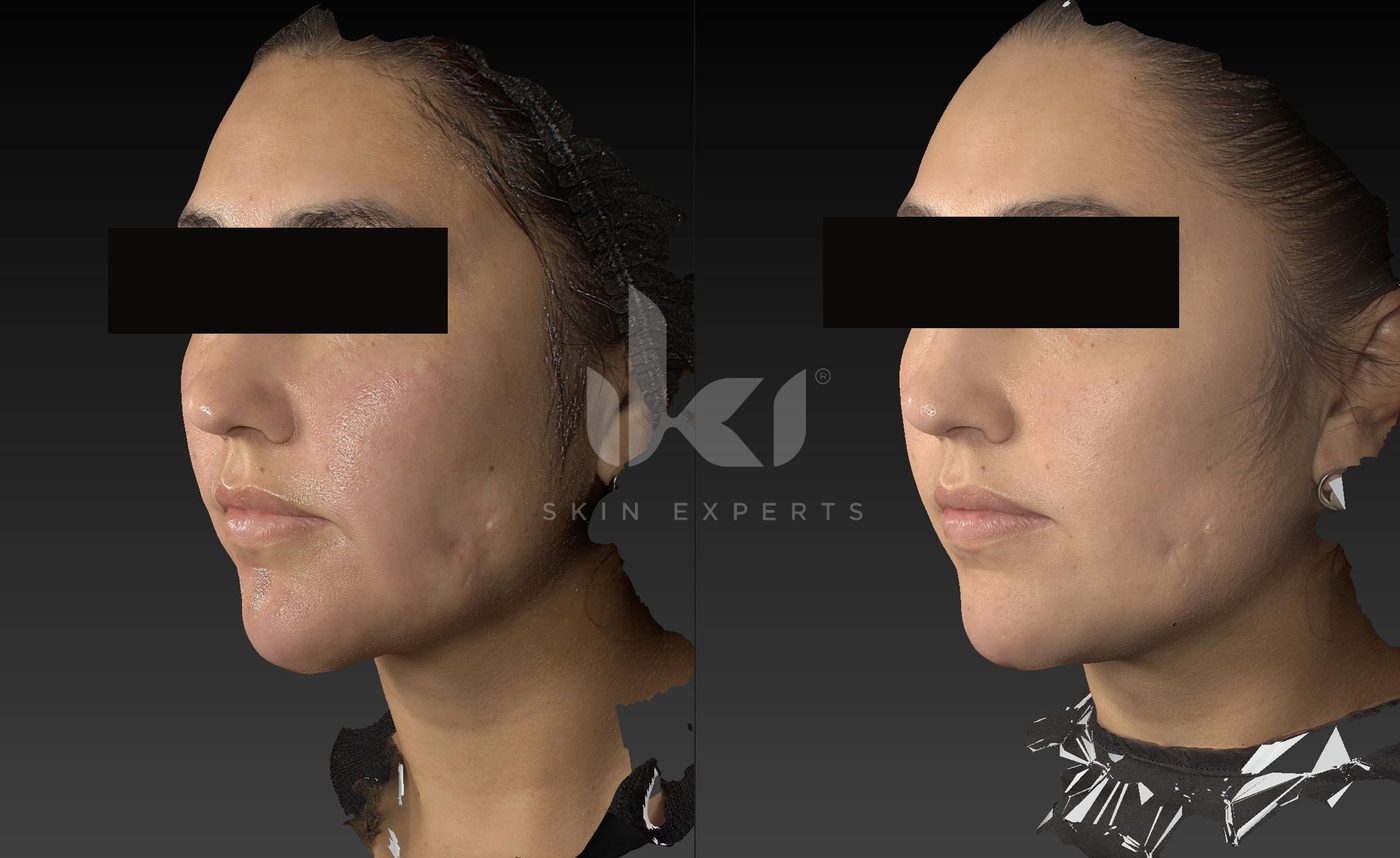
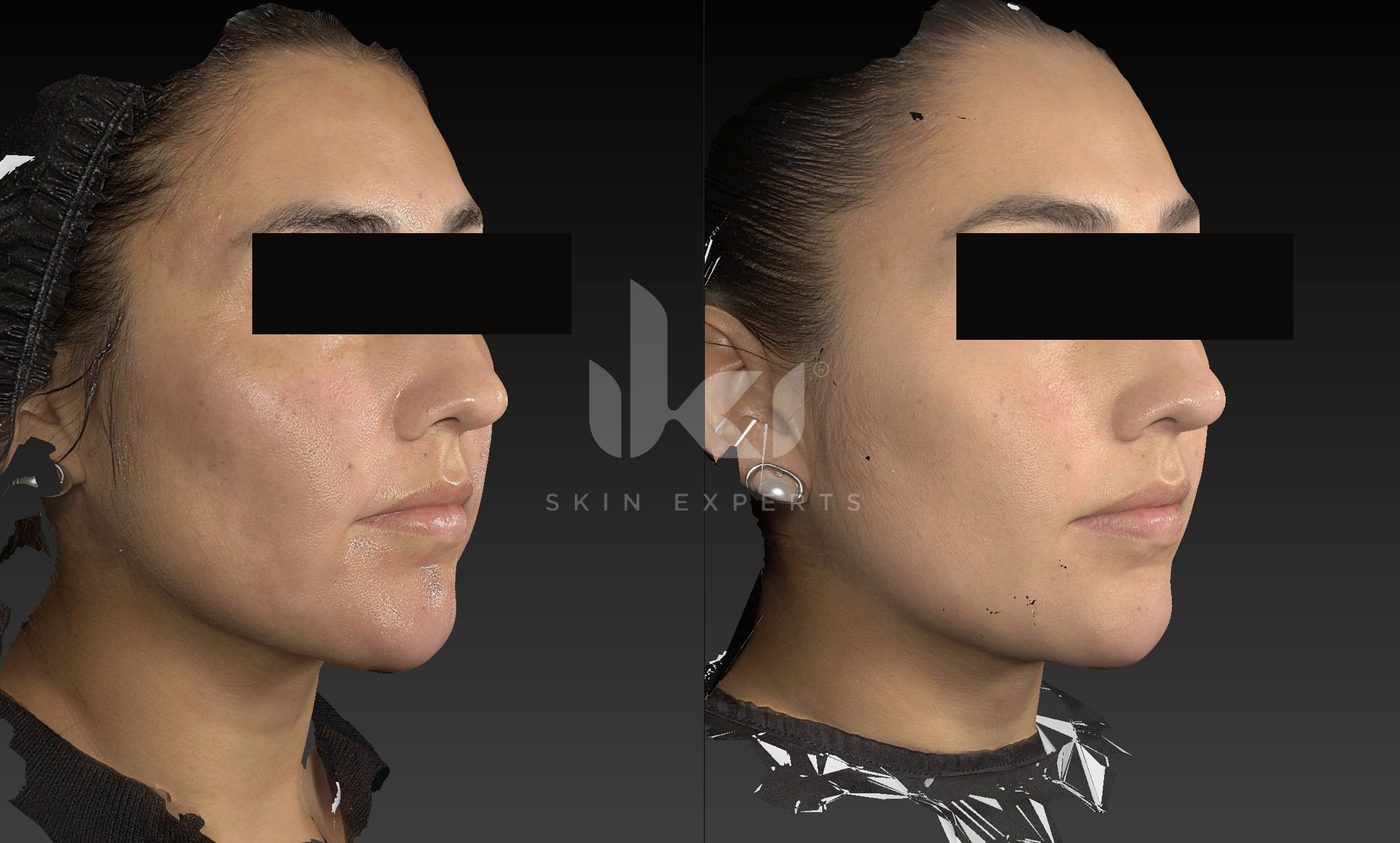
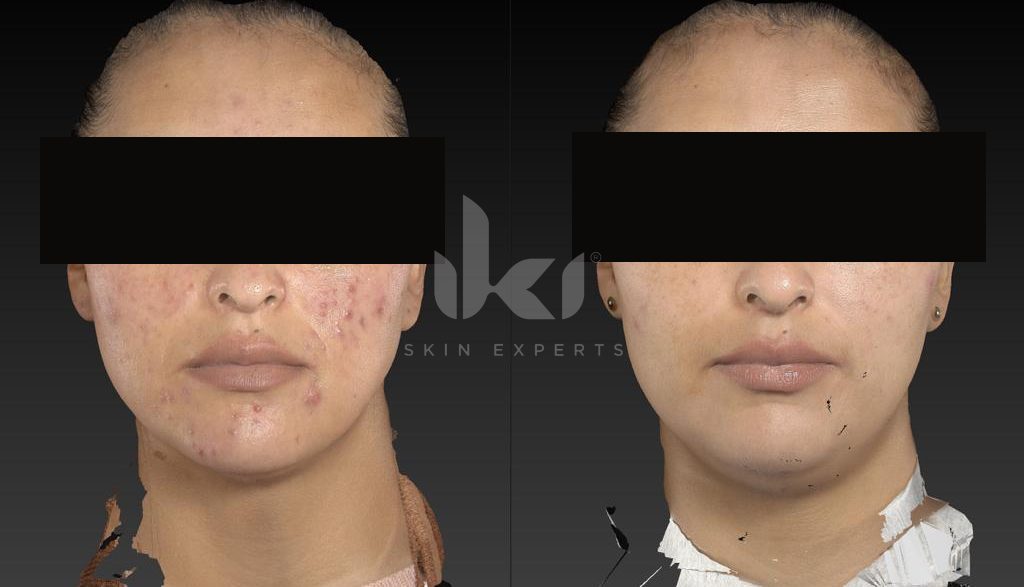
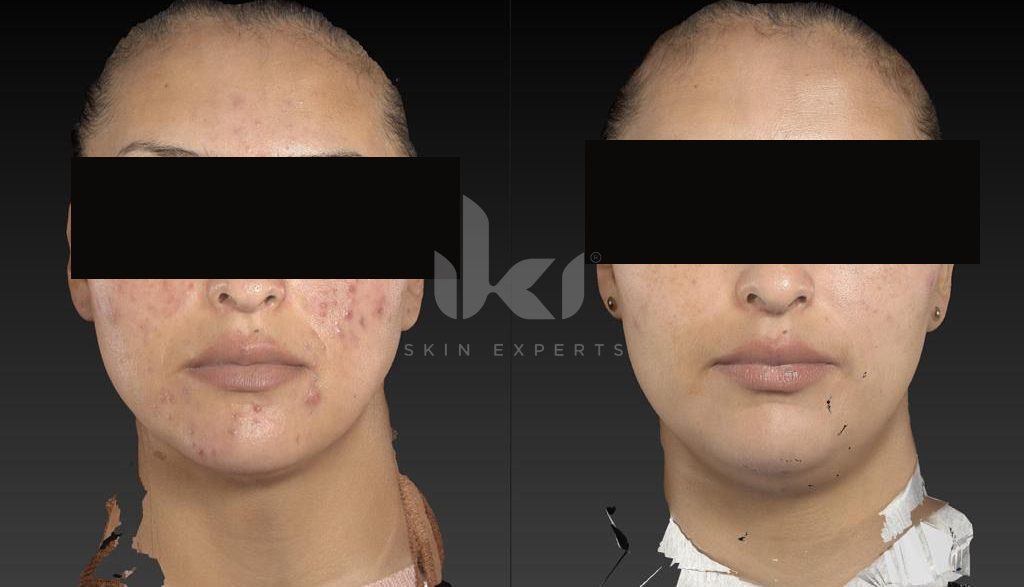
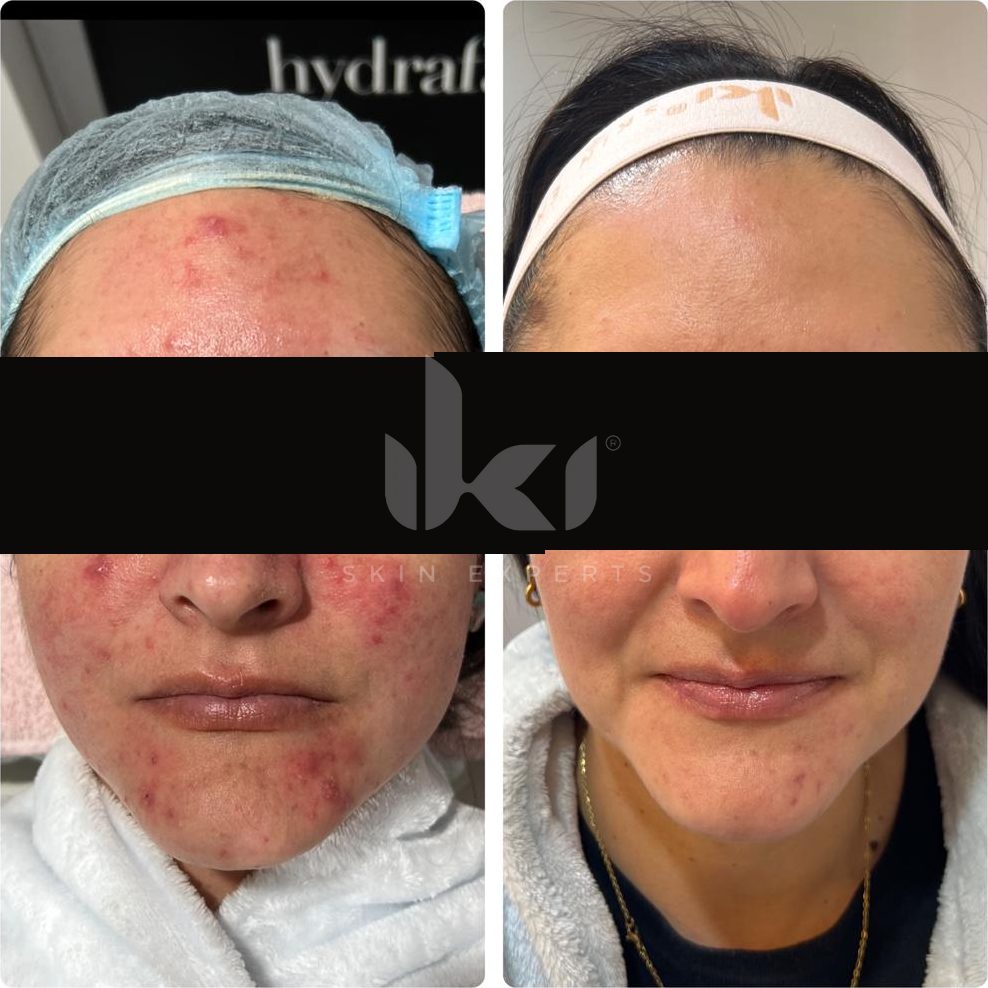
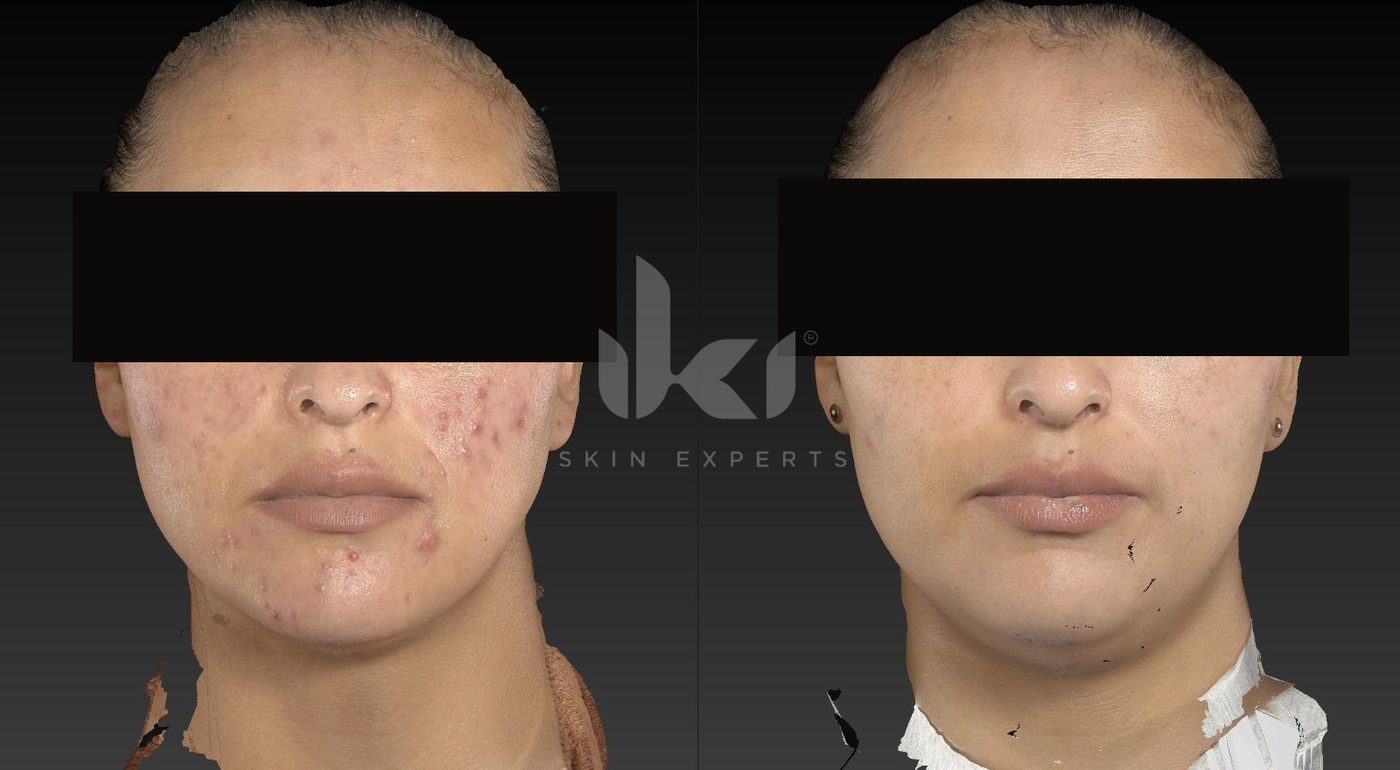
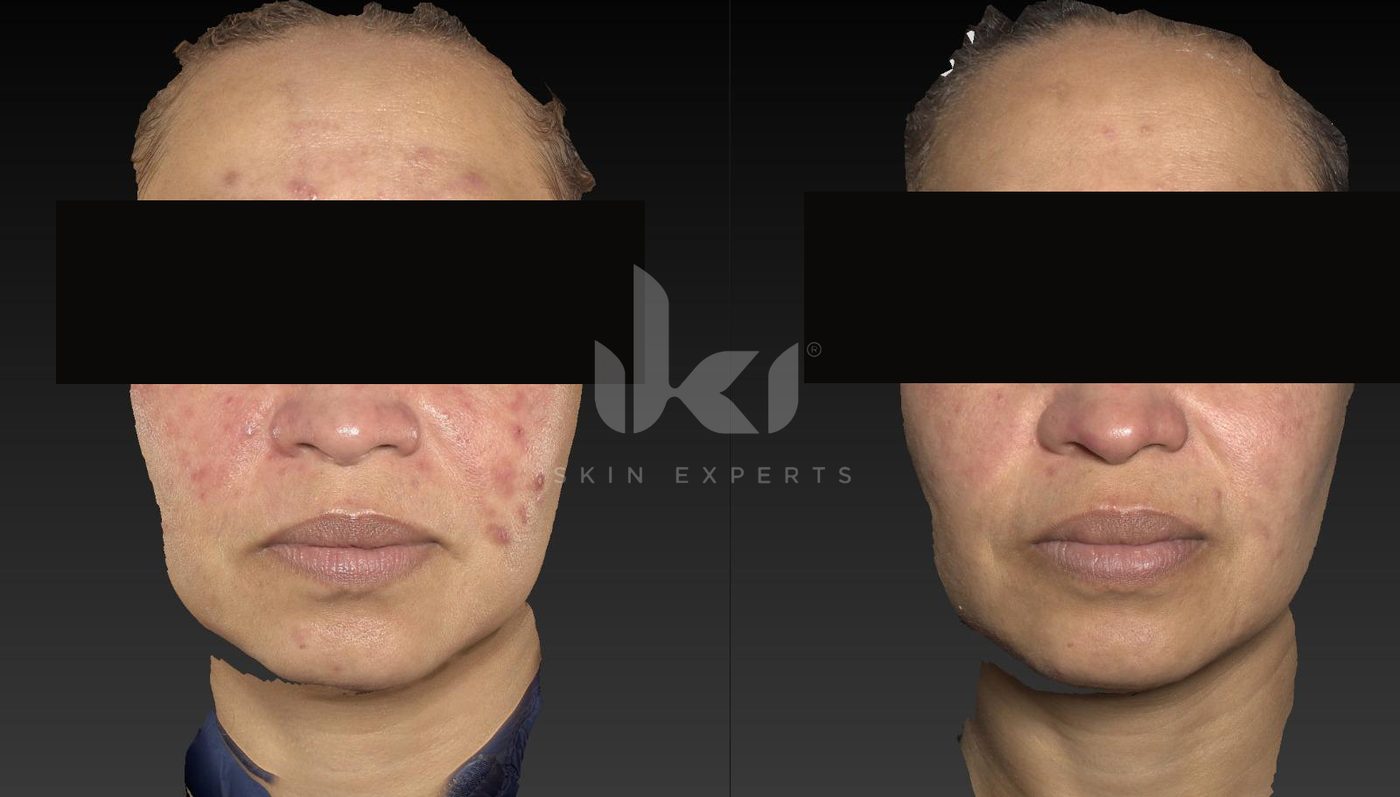
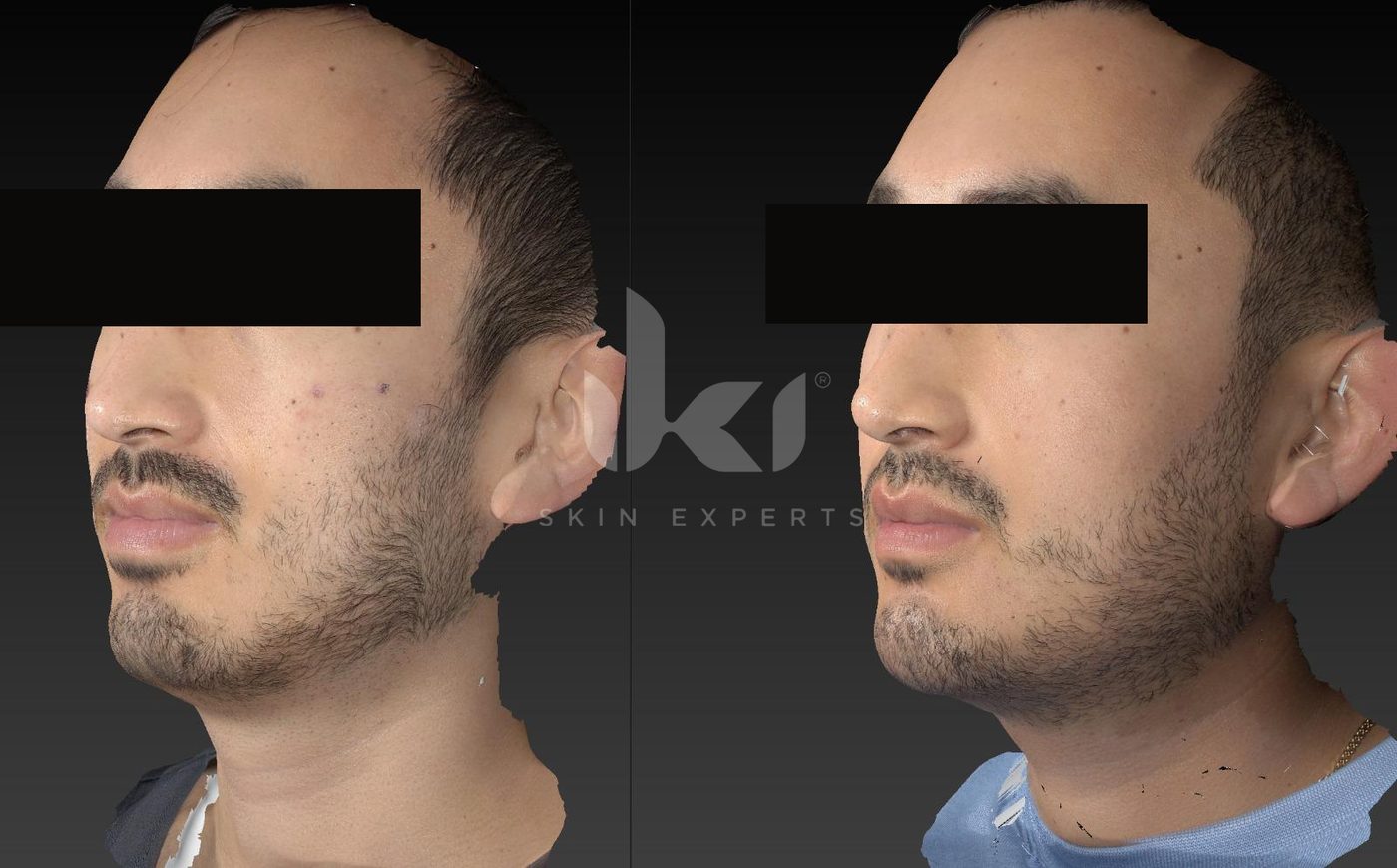
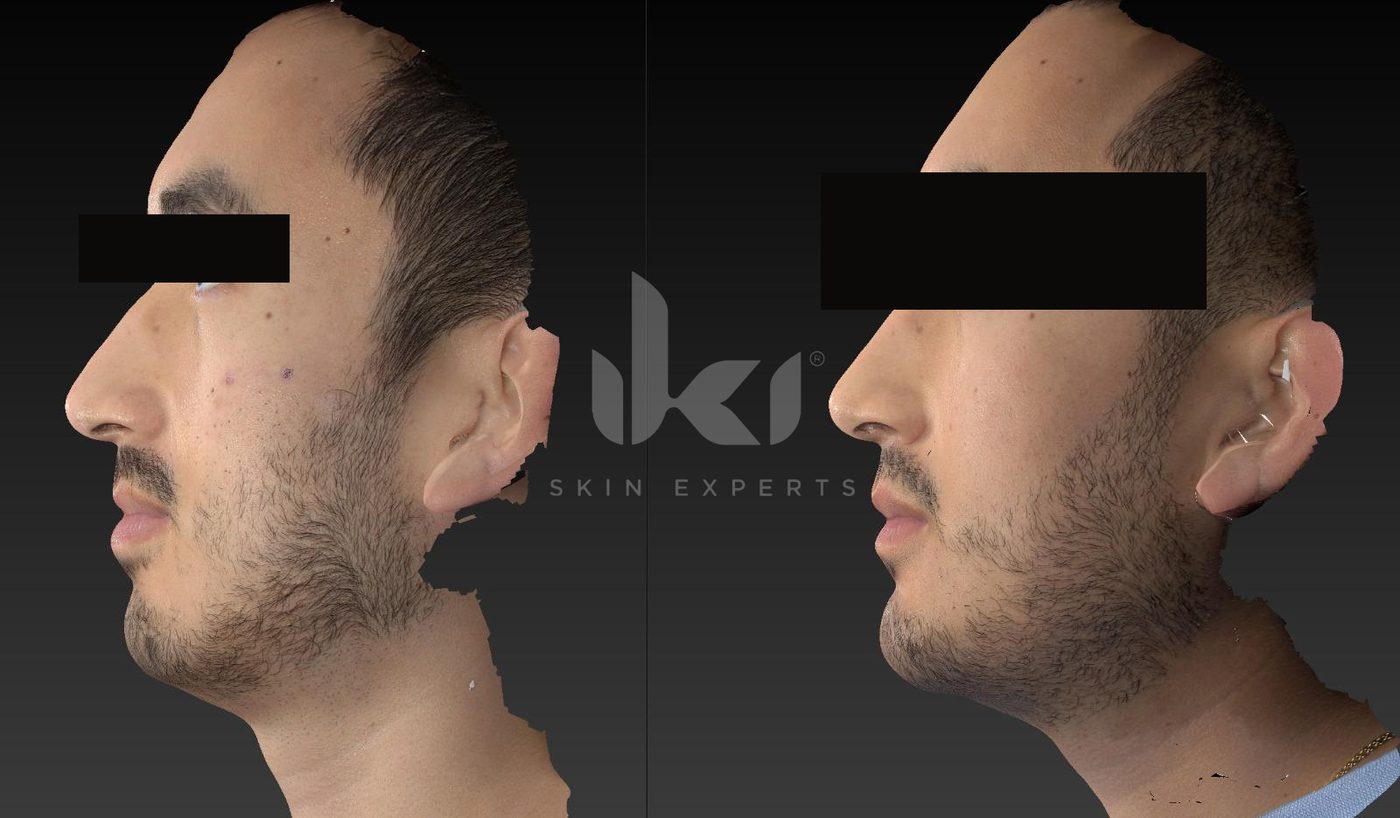
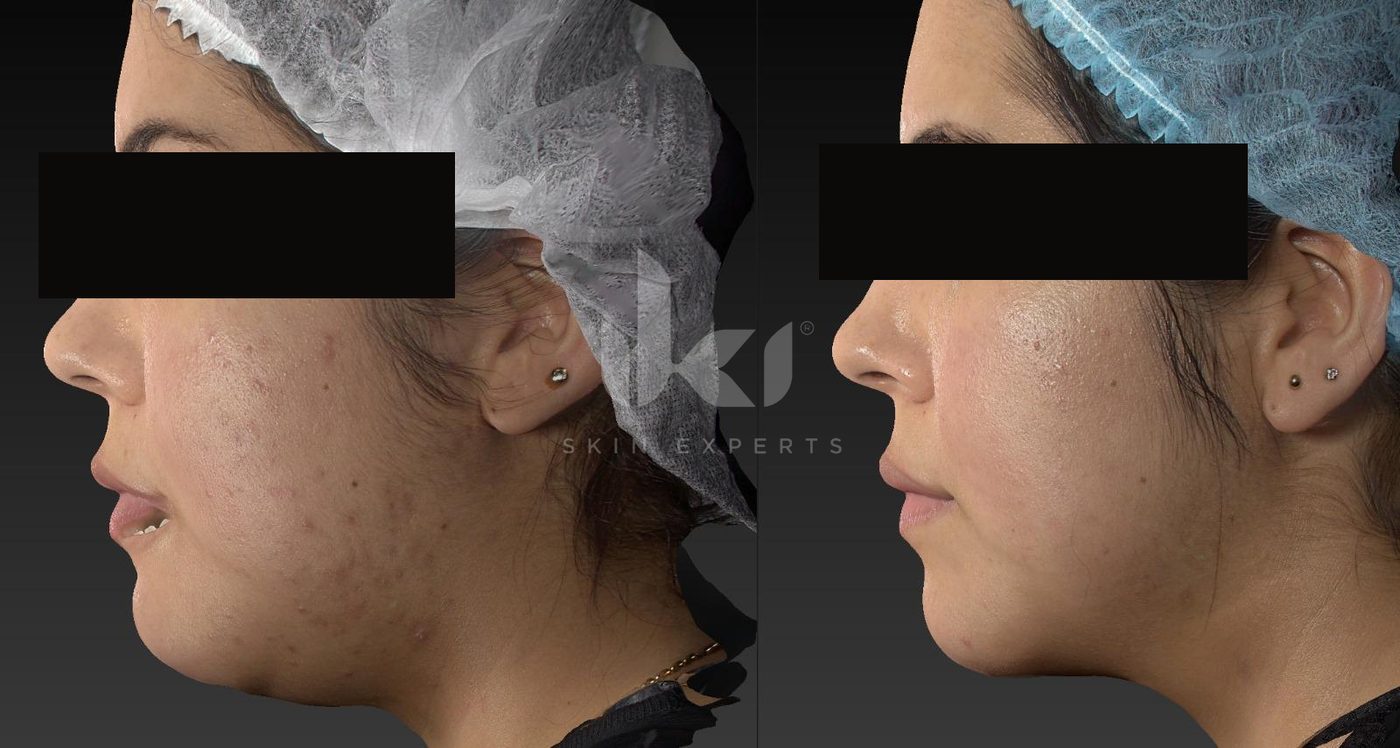
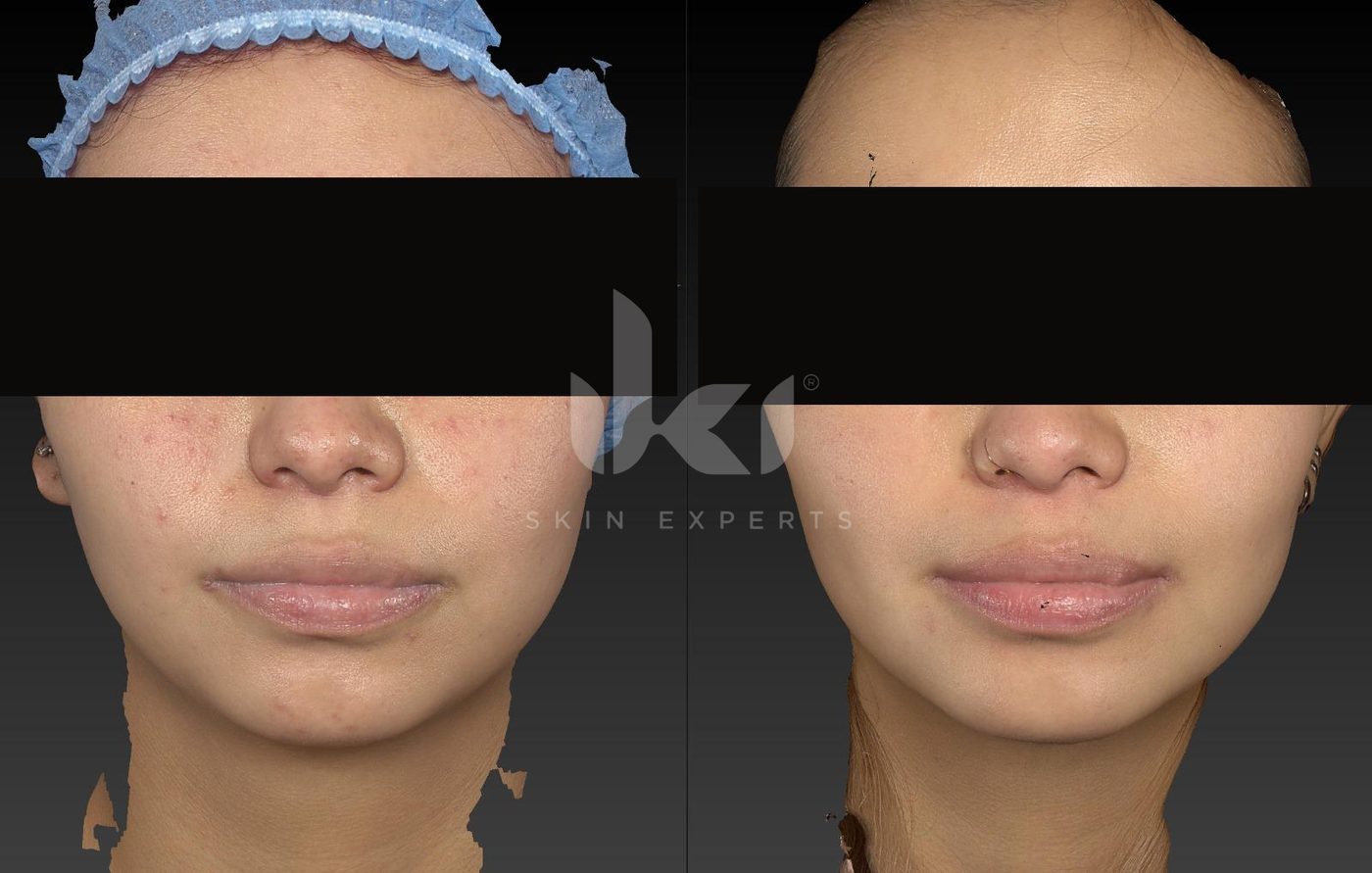
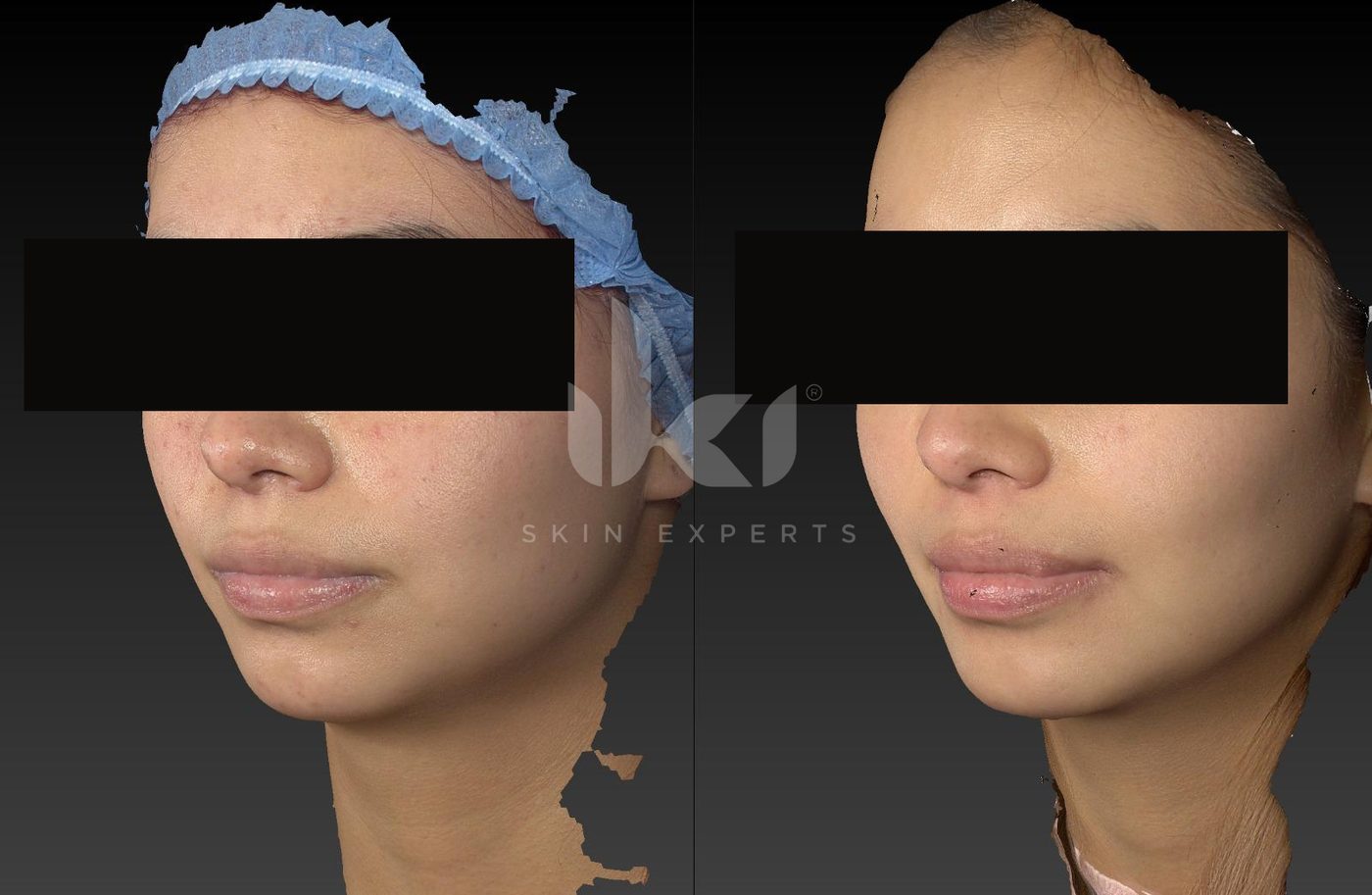
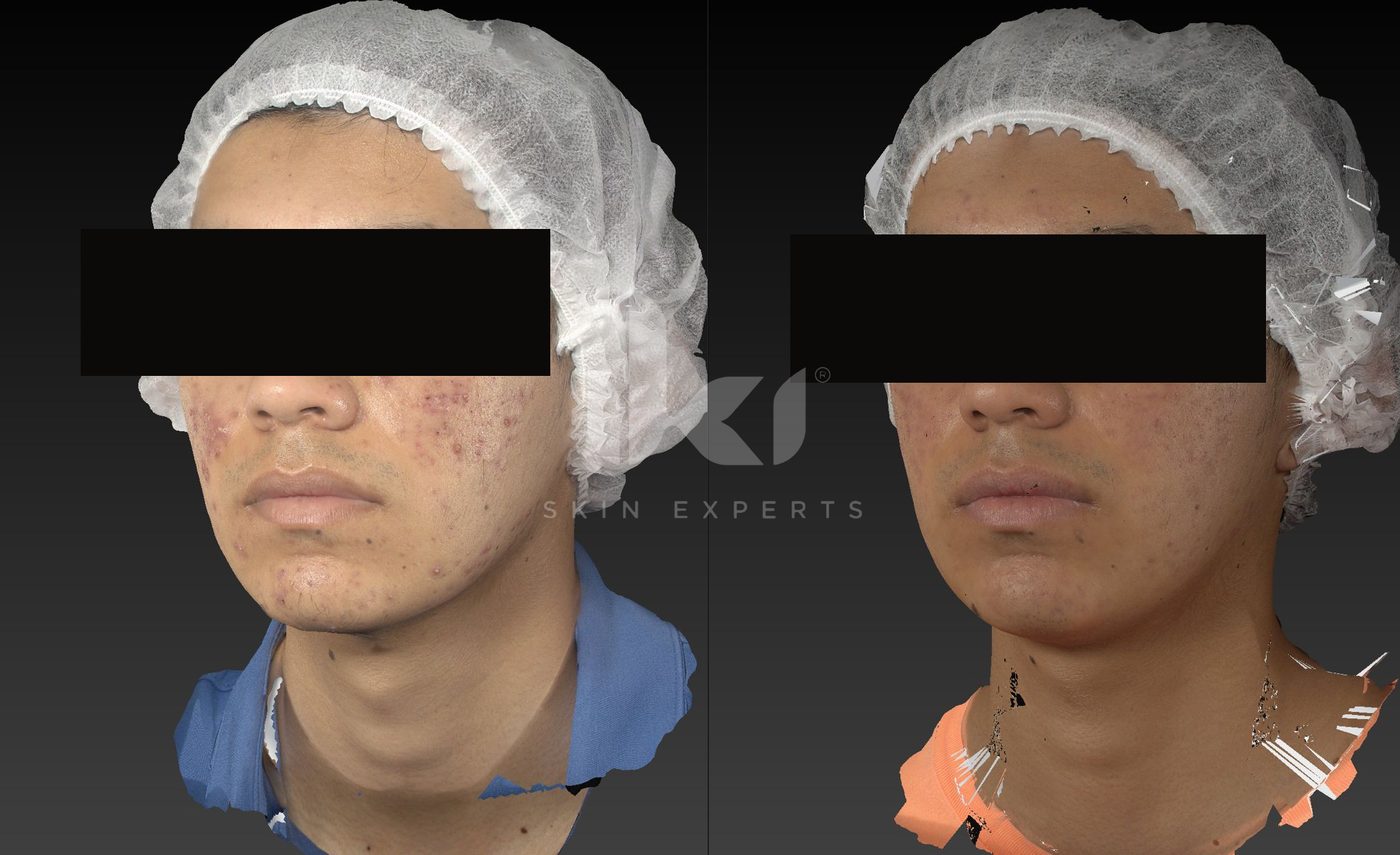
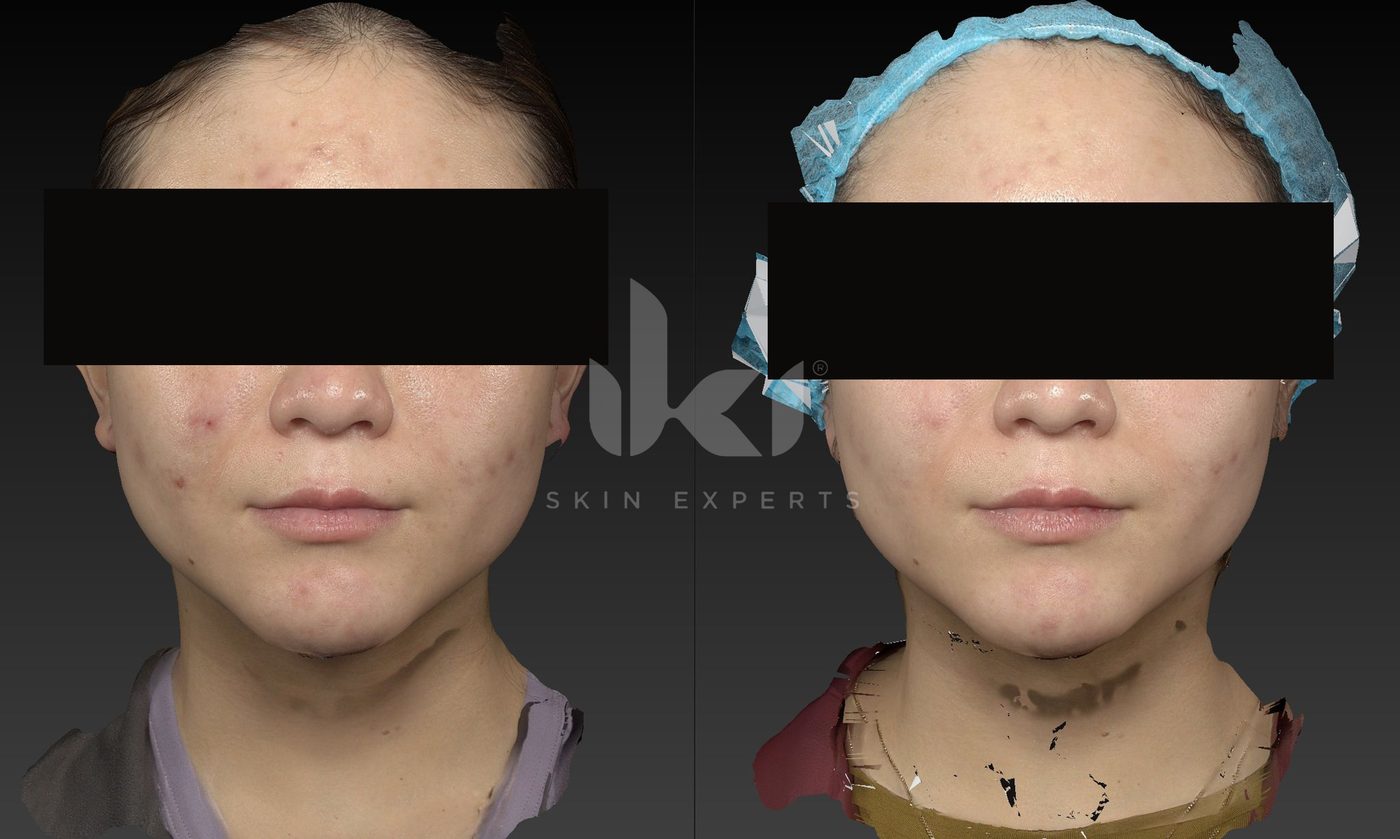
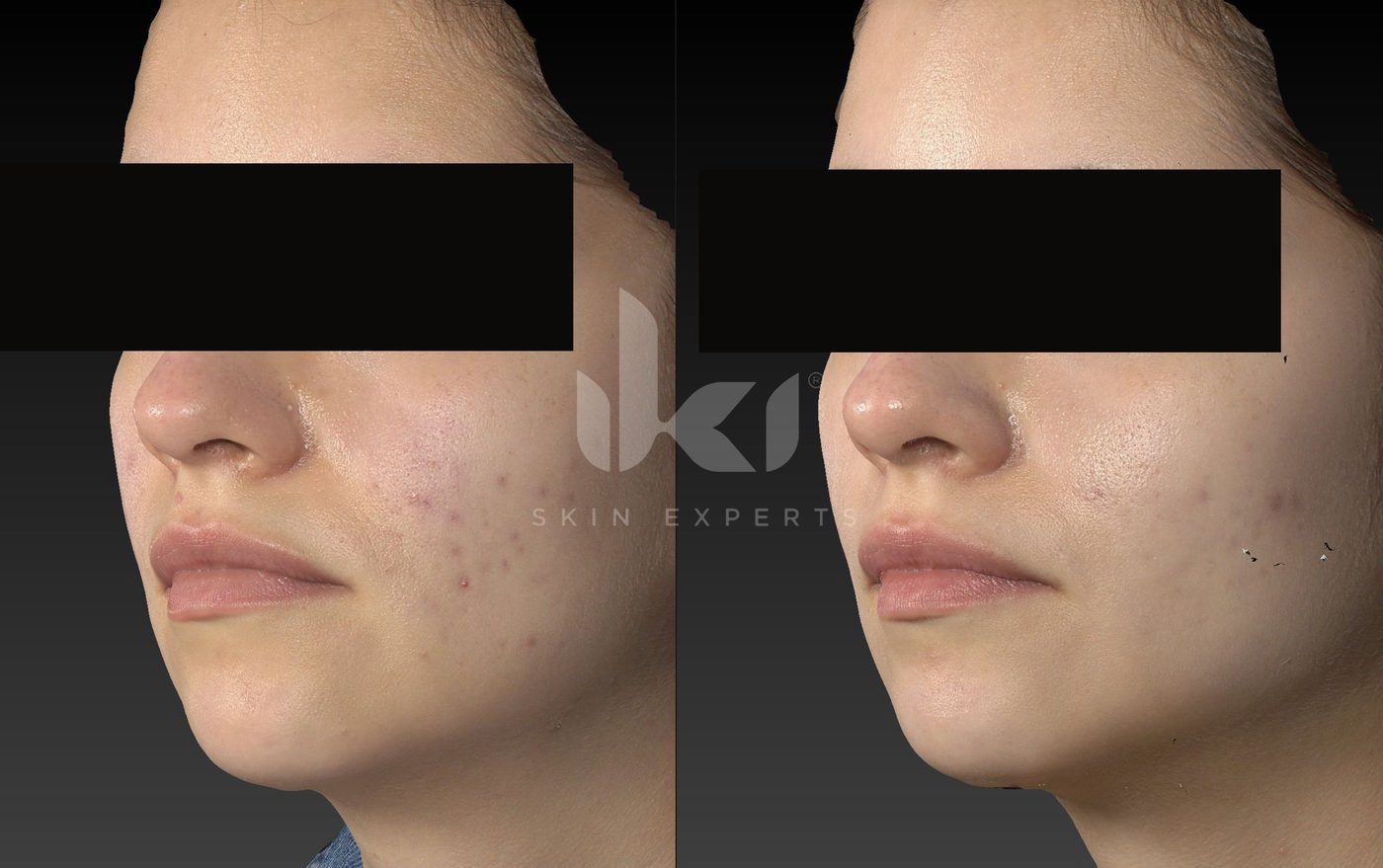
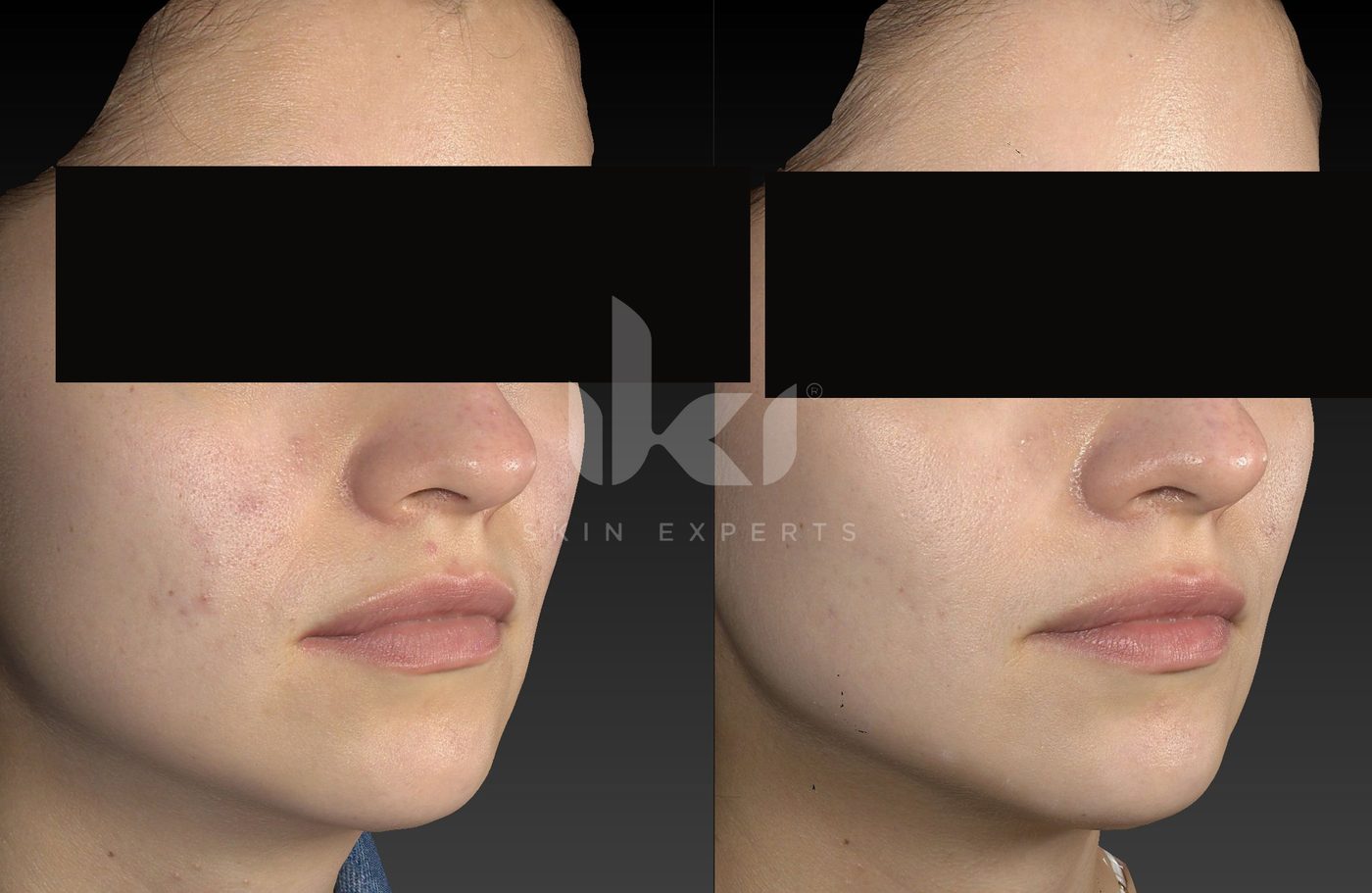
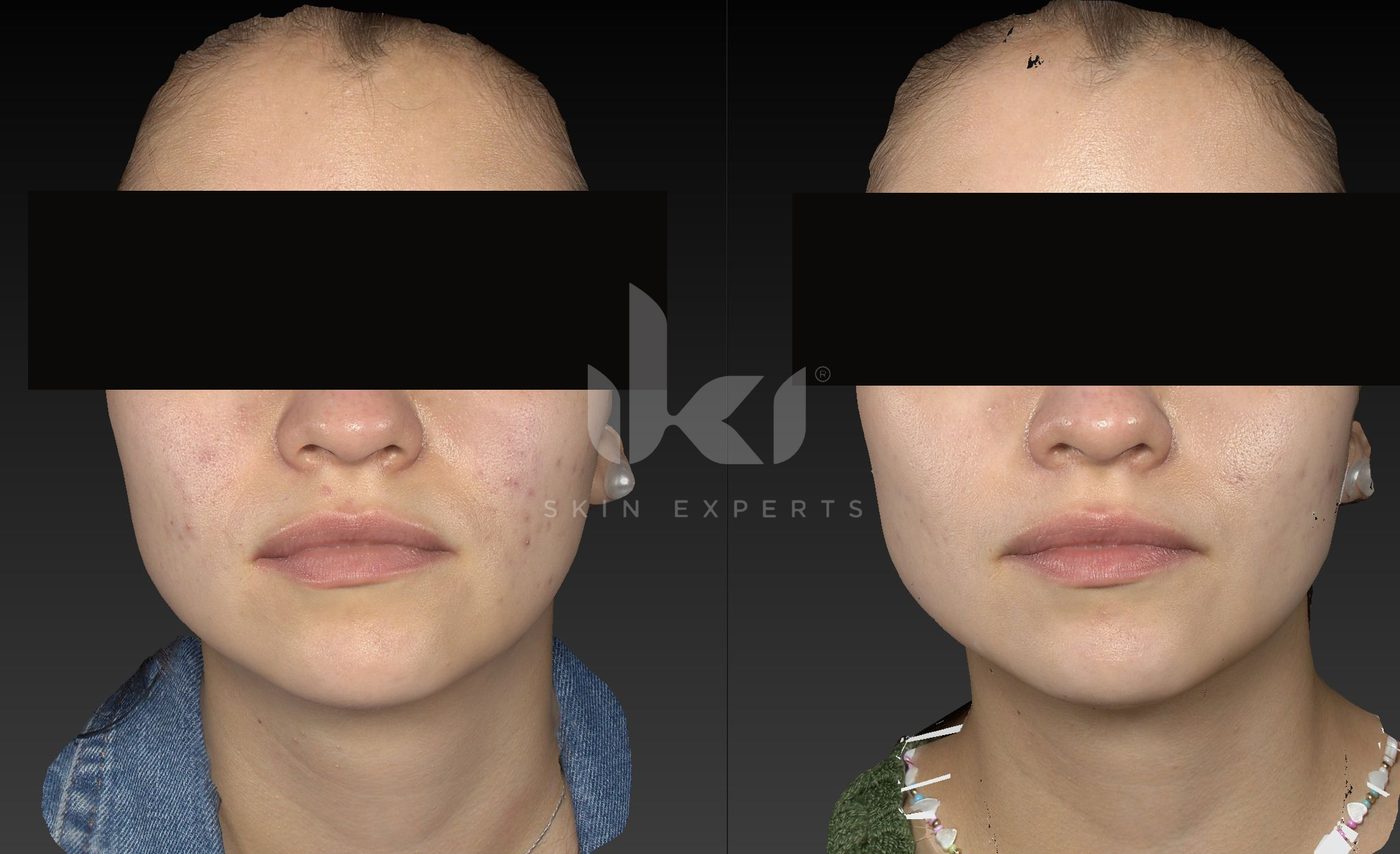
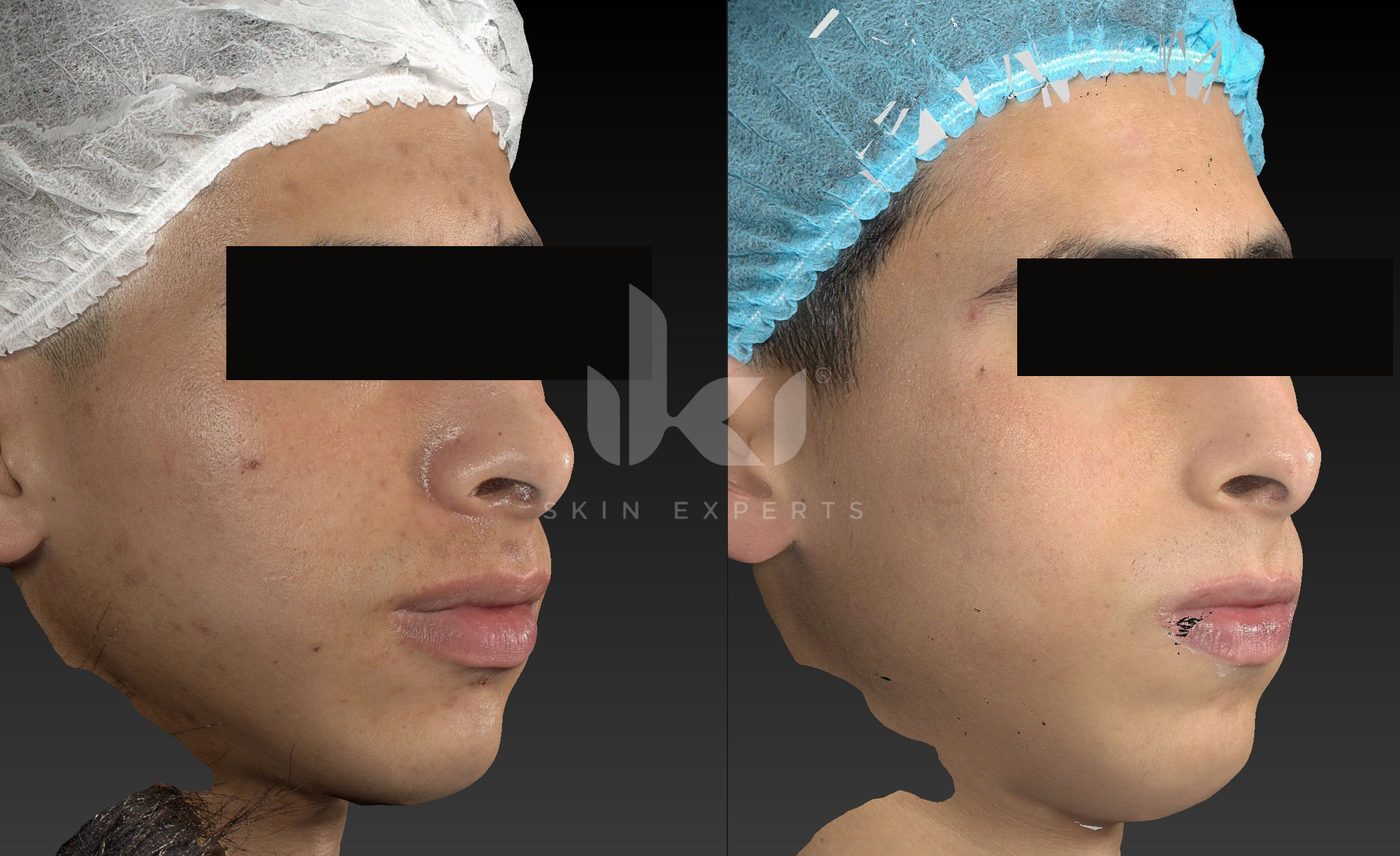
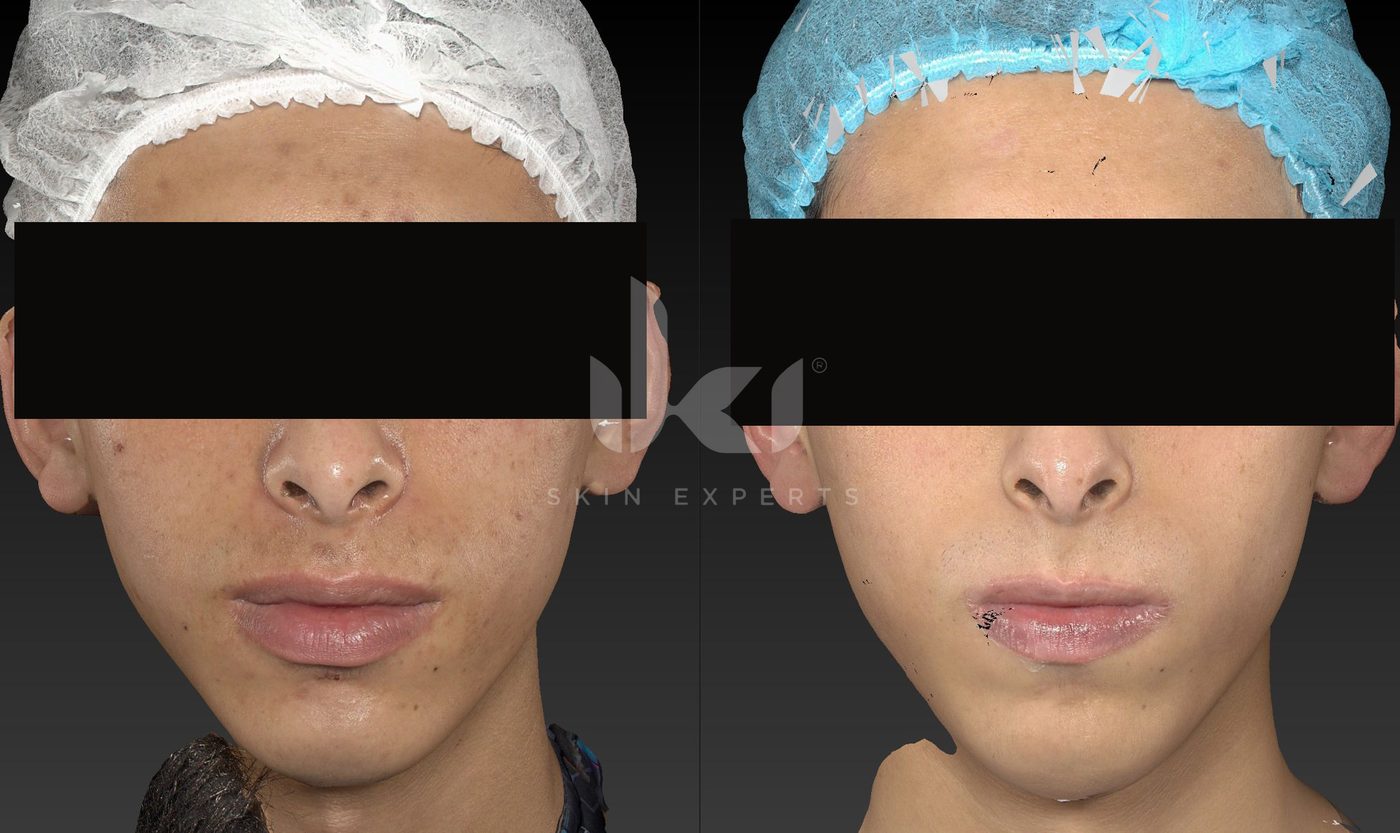
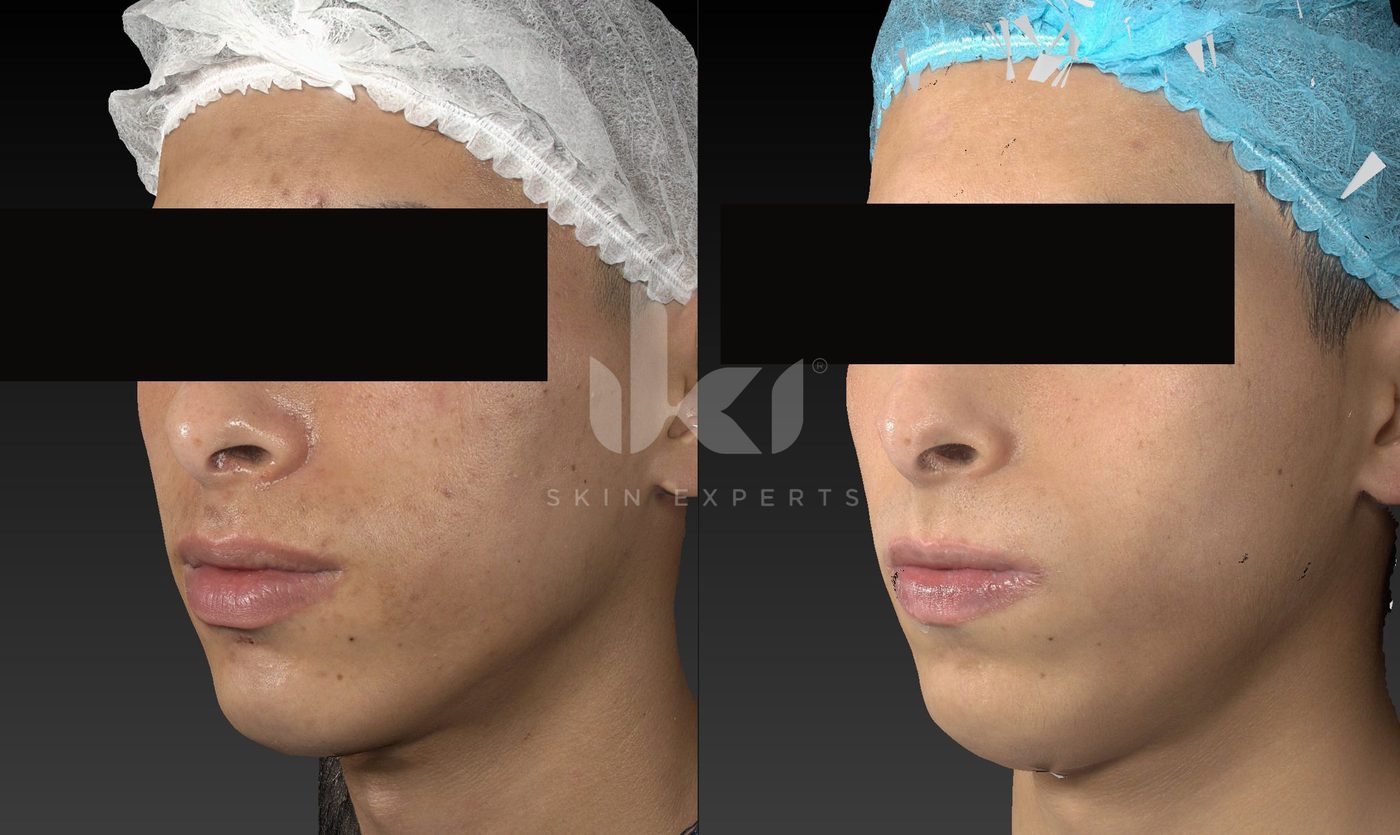
Photos of patients treated at iki, published with their authorization and with their identity covered. Each case had its own diagnosis and plan; the exact treatment may combine several techniques. Results vary from patient to patient. See all cases.
A chemical peel for acne scars applies deeper-acting acids to renew the skin and stimulate collagen, which smooths shallow scars and softens post-acne dark spots. At iki the physician chooses the type of peel based on the scar and your skin type (Fitzpatrick). The skin usually regenerates in about a week, and improvement is gradual. Results vary from patient to patient.
- Session length
- About 30–60 min
- Sessions
- Several · depending on the type of scar
- Recovery
- About 1 week
- Makeup
- From 48 hours
- First changes
- Gradual · weeks to months
- Indication
- Shallow scars and post-acne dark spots
Who it’s for · and who it isn’t
Indicated when
- Shallow acne scars and uneven texture
- Dark or reddish marks left by breakouts
- Acne that is already under control, with no active inflammatory breakouts
- Patients looking for gradual improvement who accept a step-by-step plan
Not the right time if
- Severe active acne · it is controlled first with medical management
- Deep ice-pick scars, if the peel would be the only tool · they need combined techniques
- Current or recent isotretinoin use · the physician decides the timing
- Tanned skin, active cold sores or wounds in the area
The physician makes the final indication at the consultation. Results vary from patient to patient.
What a chemical peel for acne scars looks like at iki
Every scar has its own shape and depth. Treating them all the same is one of the reasons so many treatments disappoint.
Classifying the scars
We identify whether they are ice-pick, boxcar or rolling scars, and how much is texture and how much is pigmentation. That decides whether the peel is the main tool or a complement.
Prep
A home routine may be prescribed a few weeks ahead to prepare the skin and lower the risk of dark spots. On the day of the procedure the area is cleansed and degreased.
Application
The physician applies the agent at the chosen depth. You may feel brief burning or itching, which is tolerable and controlled throughout the procedure.
Finish and recovery
The product is neutralized or removed, and a soothing product and sunscreen are applied. Over the following days the skin peels and regenerates in about a week.
What it offers
Smooths texture
By renewing the top layers, the edges of shallow scars look less defined.
Stimulates collagen
The renewal triggers collagen production, which keeps working for weeks after the session.
Softens post-acne dark spots
The dark or reddish marks breakouts leave usually respond better than raised or indented texture.
Fits a combined plan
When scars are deep, the peel alternates with the ResurFX laser or radiofrequency microneedling.
Technology with an indication
Medical peels for scars
The depth of the peel is the central clinical decision. Greater depth means more stimulation, but also more recovery and a higher risk of dark spots on higher skin types. The physician chooses the agent and technique based on the type of scar, your skin color and how much recovery time you can take.
Results and aftercare
Improvement is gradual: the skin looks smoother and more even as it regenerates and collagen reorganizes. Shallow scars and dark spots respond best. Deep scars improve, but rarely disappear completely. The realistic goal is skin with less texture and less contrast, not skin with no trace of acne.
Aftercare after the session
- Daily sunscreen, reapplied · key to preventing dark spots
- Don’t pull off peeling skin
- Avoid makeup for the first 48 hours
- A repairing moisturizer and a gentle cleanser during the recovery week
- Avoid direct sun, saunas and pools until the skin has regenerated
Results vary from patient to patient.
Pairs well with
 Acne and scars
ResurFX for acne scars
ResurFX is the non-ablative fractional laser on the Lumenis Stellar M22. It creates microscopic columns of heat beneath the…
See treatment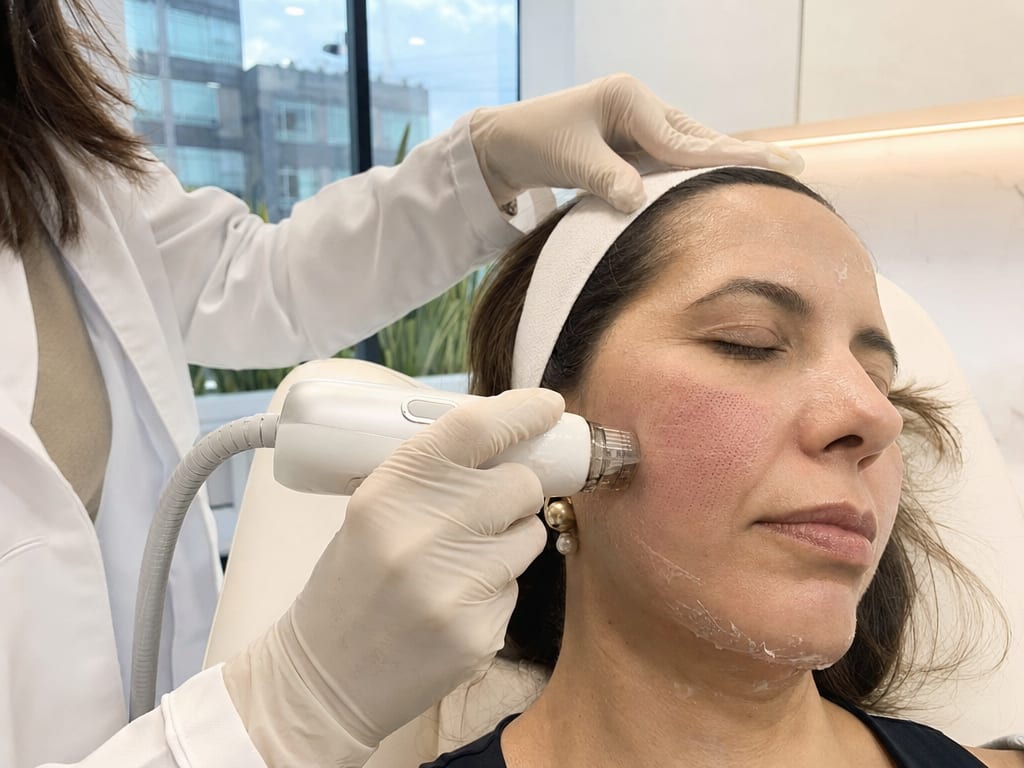 Anti-aging and skin laxity
RF microneedling
Fractional radiofrequency microneedling combines micro-channels in the skin with heat in the dermis to stimulate collagen and…
See treatment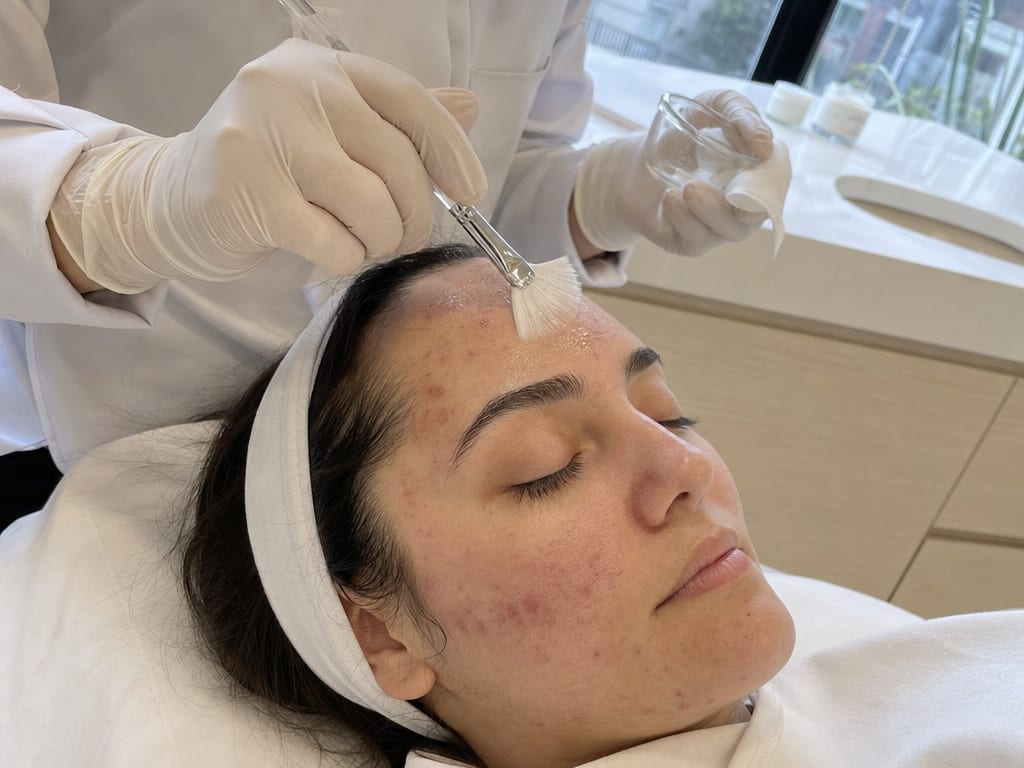 Acne and scars
Chemical peel for acne
A chemical peel applies selected acids to exfoliate the top layer of the skin, unclog pores and help regulate oil. At iki the…
See treatmentFrequently asked questions
Does a chemical peel completely remove acne scars?
No, and be wary of anyone who promises it. A peel smooths shallow scars and softens dark spots, and on deep scars it offers partial improvement. When the texture is significant, we combine it with the ResurFX laser or radiofrequency microneedling. At the consultation we tell you how much improvement is realistic in your case.
Does a peel for scars hurt?
Some patients feel burning or itching during application. These sensations are temporary and tolerable, and they ease when the product is removed or neutralized. The physician controls the contact time and the number of layers, and stops the procedure if the skin reacts more than expected.
How long is recovery?
It depends on the intensity of the peel, but the skin generally regenerates in about a week. During those days there is redness, tightness and peeling. It’s important not to wear makeup for the first 48 hours and not to pull off the skin that comes loose, so you don’t create new marks.
How many sessions do I need for acne scars?
Several sessions are almost always needed, spaced out so the skin recovers and collagen works between them. The number depends on the type of scar, its depth and how your skin responds. At the consultation we set a written, step-by-step plan with realistic timelines.
Can I have it if I still get breakouts?
Ideally, scars are treated once acne is under control. Mild breakouts can be managed at the same time. If active acne is severe, medical management comes first: it makes no sense to correct scars while new ones are forming. The right order saves time and sessions.
How is it different from the ResurFX laser?
A peel works from the surface inward and is very useful for surface texture and dark spots. ResurFX is a non-ablative fractional laser that works in the dermis without removing the surface, with more reach on rolling or boxcar scars. Many plans combine them.
Is it safe on darker skin?
Yes, with care. On higher skin types the main risk is a post-inflammatory dark spot, so more conservative agents and depths are chosen, the skin is prepped beforehand and sun protection is mandatory. The medical consultation decides whether a peel is the best option or another technique is a better fit.
When will I see results?
After the first week the skin looks renewed, but change in the scars depends on new collagen, which takes weeks or months to form. That’s why improvement is assessed at the end of each stage of the plan, with clinical follow-up photos, not overnight.
Is Chemical peel for acne scars right for you? · we’ll see at the consultation
Forty-five minutes with a physician, a skin analysis and a written, phased plan with complete prices. You decide afterwards, with no pressure. Living abroad? Start with a virtual consultation.