Stretch mark treatment
Stretch marks that show less · with clear expectations
Stretch marks are scars in the skin: they can be softened and improved, not erased. At iki, stretch mark treatment starts with knowing what type of stretch mark you have and what you want to change, color or texture, to choose between pigment camouflage and technologies that work on skin firmness.
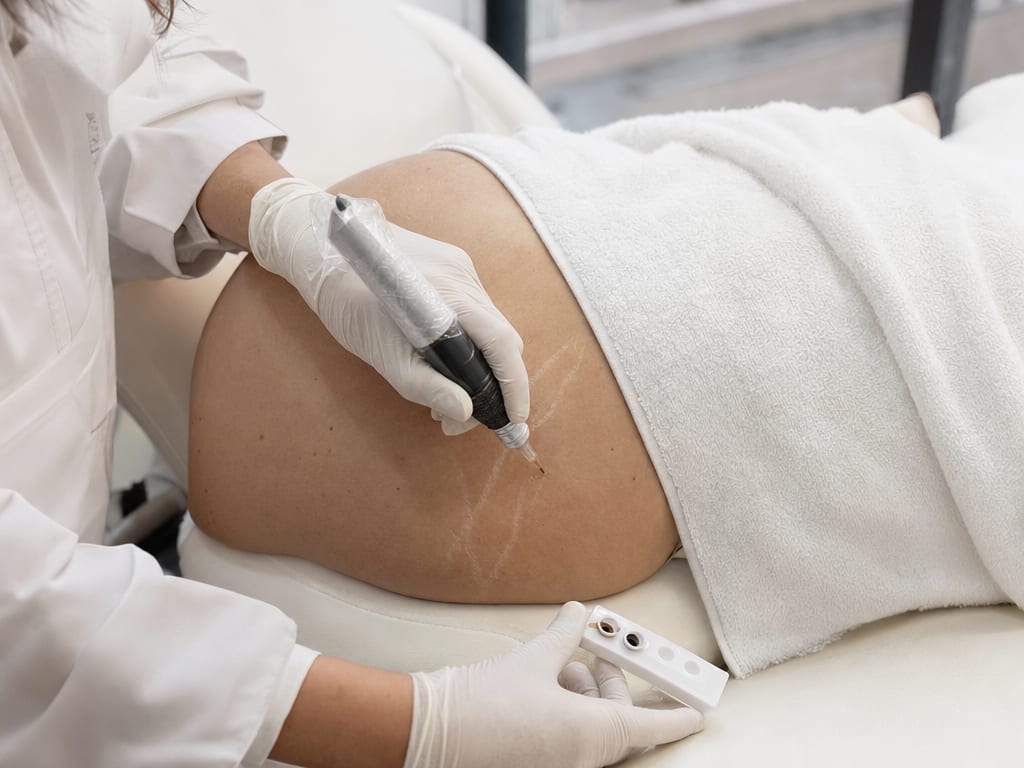
Results in body · identity protected
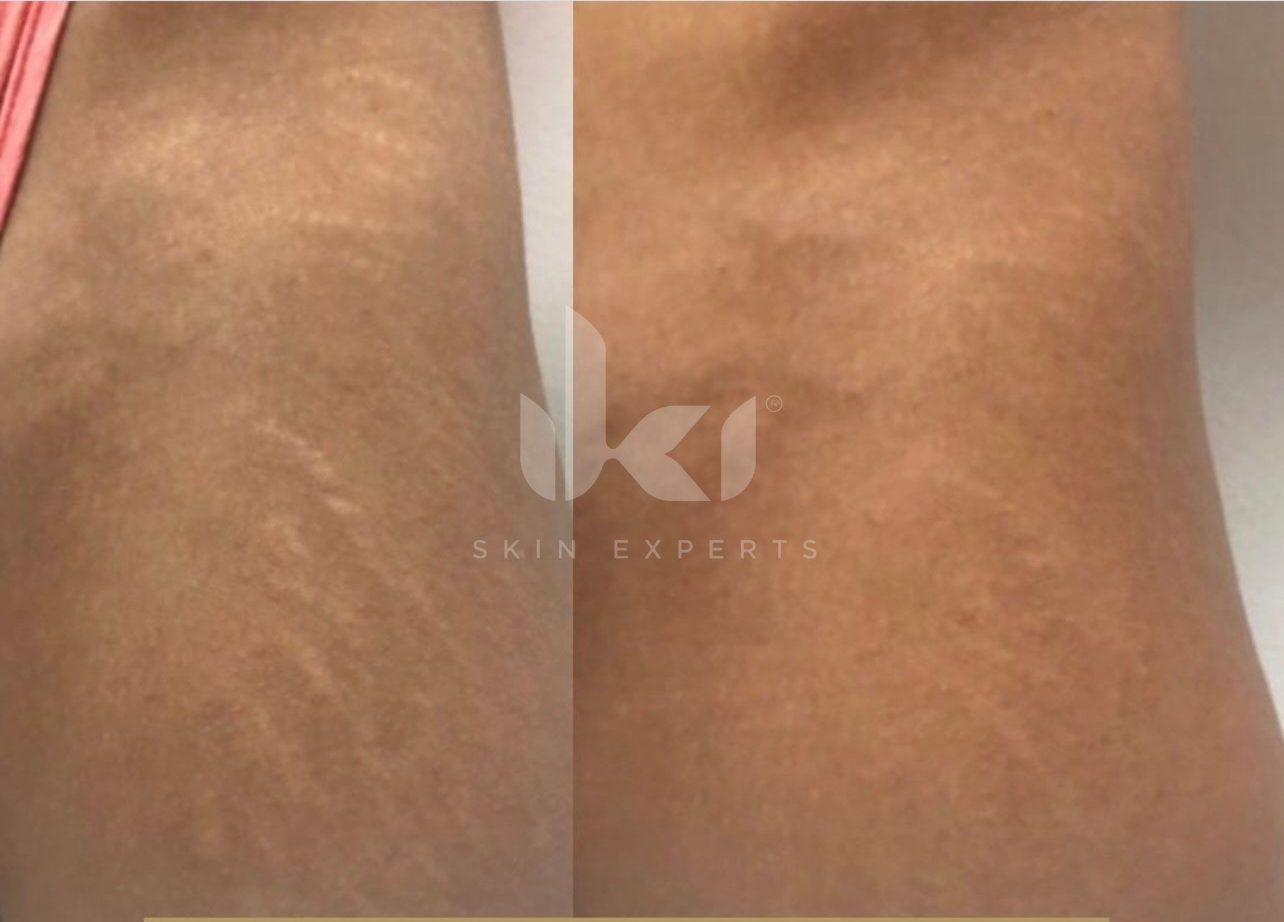
Photos of patients treated at iki, published with their authorization and with their identity covered. Each case had its own diagnosis and plan; the exact treatment may combine several techniques. Results vary from patient to patient. See all cases.
Stretch mark treatment at iki aims to reduce their visibility, not eliminate them. The main option is camouflage: a custom pigment applied with superficial micro-injections that matches the color of the stretch mark to your skin tone. It is a different technique from radiofrequency; if there is also skin laxity, the physician may suggest it separately. It is decided during a medical consultation, and results vary from patient to patient.
- Technique
- Camouflage with custom pigment
- Session length
- 1 to 4 hours depending on extent
- Sessions
- One is usually enough · touch-ups as needed
- Downtime
- No time off · 60 days without sun on the area
- Areas
- Abdomen, hips, buttocks, legs, arms
Who it’s for · and who it isn’t
Indicated when
- White or older stretch marks with visible contrast against your skin tone
- Stretch marks on the abdomen, hips, buttocks, legs or arms
- Anyone who understands the goal is to soften, not erase
- Anyone who can keep the area out of the sun for the following two months
Not the right time if
- Pregnancy or breastfeeding · we wait for the skin to stabilize
- Skin with wounds, infection or active dermatitis in the area
- Anyone expecting camouflage to make the stretch mark disappear or change its texture
The physician makes the final indication at the consultation. Results vary from patient to patient.
How stretch mark treatment works at iki
Camouflage is a precision procedure. Before applying any pigment, we define what can and cannot be achieved on your skin.
Medical consultation
We review the type of stretch mark, its color, its age, your skin type (Fitzpatrick) and the contrast with healthy skin. For red or recent stretch marks, the physician assesses whether to wait or treat the skin first.
Custom-matched pigment
A pigment is prepared to match the natural tone of the skin around the stretch marks. That is why it matters to do it with your skin at its usual color, not freshly tanned.
Application
The pigment is placed with superficial micro-injections inside each stretch mark. The session takes one to four hours depending on the extent, and the discomfort is usually tolerable.
Settling and touch-up
The color finishes settling over the following weeks. At the review, we decide whether specific areas need a touch-up.
What it offers
Reduces color contrast
By matching the tone of the stretch mark to your skin, the mark stops being the first thing you see.
White and red stretch marks, with judgment
White, mature stretch marks are the best candidates. Red ones are assessed case by case before pigmenting.
No time off
No incisions. You return to your routine after the session, taking care of the treated area.
Another technique, if needed
Camouflage works on color. If there is also skin laxity or there are recent stretch marks, the physician may separately suggest NuEra Tight radiofrequency, which in some cases improves texture.
Technology with an indication
Stretch mark camouflage: medical dermopigmentation
Camouflage is a technique of its own, distinct from radiofrequency: with a very fine-needle dermograph, a pigment custom-mixed to your skin tone is placed superficially inside the stretch mark. It works on color and reduces the contrast between the stretch mark and the skin; it does not change texture. It does not depend on any device: if there is also skin laxity or there are recent stretch marks, the physician may separately suggest NuEra Tight radiofrequency, which in some cases improves texture. That is decided during your consultation, not by default.
Results and aftercare
The color change shows from the first session and finishes settling over the following weeks, as the pigment integrates. The stretch mark is still there: its visibility changes, not its texture. How long the color lasts depends on your skin, sun exposure and weight changes. A pregnancy or weight gain can bring new stretch marks, and the physician decides whether touch-ups are needed.
Aftercare after the session
- Avoid direct sun on the area for the first 60 days
- Sunscreen on the area whenever it is exposed
- Do not scratch or rub the treated skin while the pigment settles
- Avoid pools, sauna and steam rooms until the team says otherwise
- Moisturize the skin on your body daily
Results vary from patient to patient.
Pairs well with
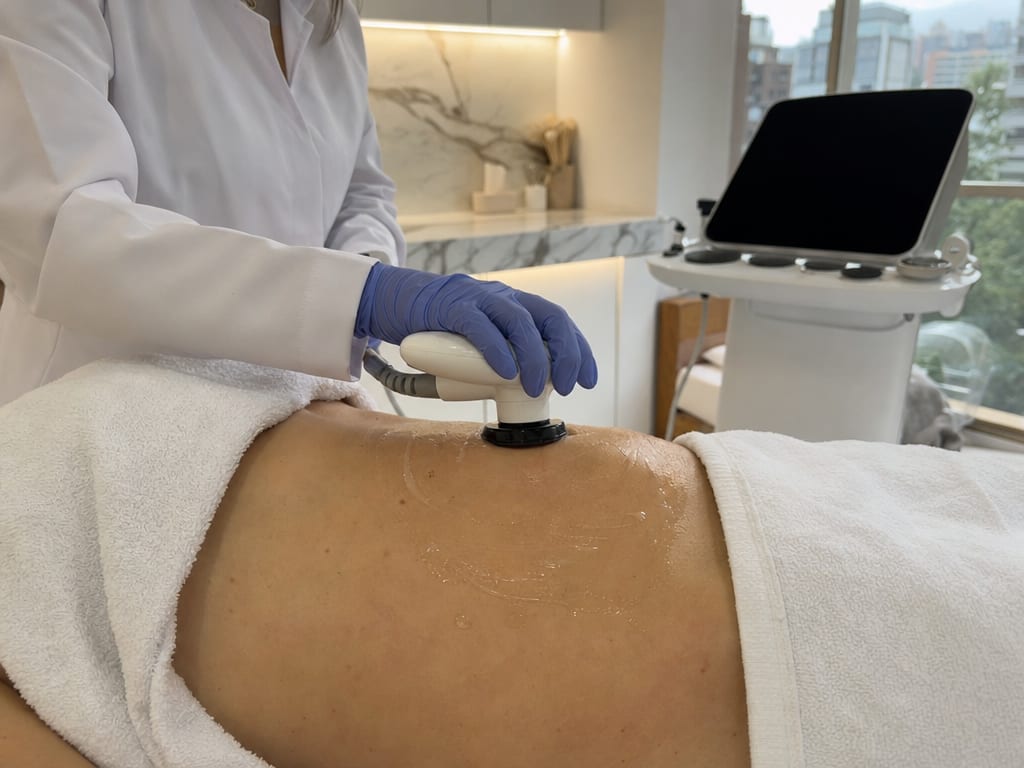 Body
BodyNuEra Tight
NuEra Tight is a radiofrequency treatment that heats the skin and superficial fat in a controlled way. At iki we use it for mild…
See treatment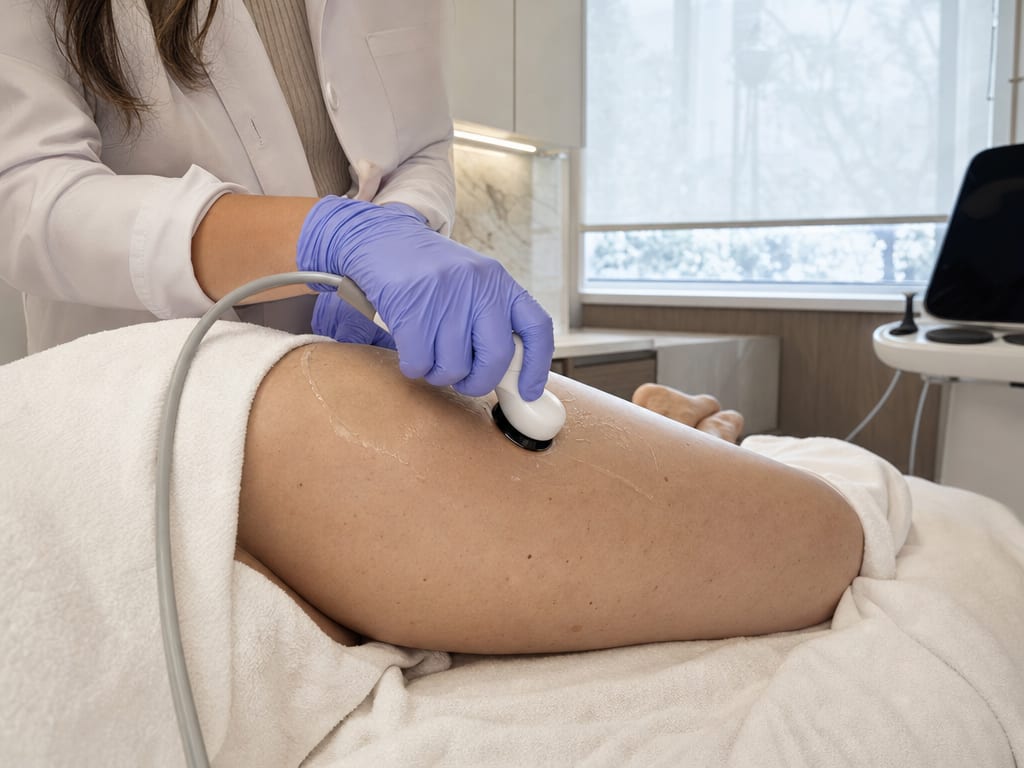 Body
BodyBody contouring
Body contouring at iki addresses mild localized fat and skin firmness in specific areas, with NuEra Tight radiofrequency as the…
See treatmentFrequently asked questions
Does stretch mark treatment eliminate them?
No. No technique erases a stretch mark completely, because it is a scar in the dermis. Camouflage reduces its visibility by matching its color to your skin, and other technologies can improve texture and firmness. Promising they disappear for good is promising something medicine does not offer.
Does it work on red and white stretch marks?
It can be applied to both, but not with the same approach. White, mature stretch marks respond best to camouflage, because their color is already stable. For red or recent ones, the physician assesses during the consultation whether to wait or treat the skin first before pigmenting.
Does stretch mark camouflage hurt?
It is usually tolerable. It feels like repeated superficial micro-injections over the area. Discomfort depends on the area and each person’s sensitivity, and the team adjusts the pace of the session. Mild redness may follow, which usually subsides soon.
How many sessions are needed?
In many cases one session is enough, with a later review to decide whether specific areas need a touch-up. Depending on the extent, the session takes one to four hours. If the plan adds radiofrequency for skin firmness, those sessions are scheduled separately.
Can I go in the sun after the treatment?
For the first 60 days, it is best to avoid direct sun on the area. The treated skin is sensitive, and tanning changes the tone of the surrounding skin while the pigment does not tan, so the contrast can become noticeable again. After that, sunscreen whenever the area is exposed.
What happens with a pregnancy or a weight change?
The applied pigment does not disappear with pregnancy, but new, untreated stretch marks may appear. The same happens with significant weight changes. We do not perform the procedure during pregnancy or breastfeeding · it resumes once the skin stabilizes.
How is camouflage different from creams or lasers?
Creams and oils hydrate and may help a little with very recent stretch marks, but they do not soften older ones. Collagen-stimulating technologies work on texture and firmness, not color. Camouflage works on color. That is why the plan is built around what is most noticeable about the stretch mark.
How do I start?
With a consultation where we review the type of stretch mark, your skin type (Fitzpatrick) and what you hope to achieve, and give you a written plan. If camouflage is not right for you, we tell you. Your consultation at iki is free · 45 minutes.
Is Stretch mark treatment right for you? · we’ll see at the consultation
Forty-five minutes with a physician, a skin analysis and a written, phased plan with complete prices. You decide afterwards, with no pressure. Living abroad? Start with a virtual consultation.