Non-surgical nose reshaping in Bogotá
Refine the profile · no operating room, and still your nose
Non-surgical nose reshaping uses absorbable MINT threads to lift the tip and define the profile of the nose and, in some cases, hyaluronic acid to soften the bridge. It changes how your nose looks in profile · it doesn’t make it smaller or replace a rhinoplasty.

Non-surgical nose reshaping is a procedure under local anesthesia in which absorbable MINT threads are placed in the tip and bridge of the nose to lift it and define its profile. At iki, in Bogotá, it can be complemented with hyaluronic acid on the bridge, depending on the consultation. It doesn’t reduce the size of the nose or replace a rhinoplasty. Results vary from patient to patient.
- Session length
- 30–60 min depending on the number of threads
- Anesthesia
- Local
- Sessions
- 1 · follow-up based on progress
- Recovery
- Mild swelling · a few days
- Technology
- MINT tip and up threads
- Complement
- Hyaluronic acid on the bridge · as assessed
Who it’s for · and who it isn’t
Indicated when
- A drooping or poorly defined nasal tip that becomes more noticeable when you smile
- A small bump or irregularity on the bridge that can be camouflaged
- People who want to refine their profile without surgery or time off
- Anyone who wants a moderate change before deciding whether to consider a rhinoplasty
Not the right time if
- Anyone who wants a smaller or narrower nose · only surgery can do that
- A significant septal deviation or difficulty breathing · this needs an ENT (ear, nose and throat) evaluation
- A recent rhinoplasty or complex previous nasal surgery · assessed with particular care
- Pregnancy, breastfeeding, active infection in the area or uncontrolled clotting disorders
The physician makes the final indication at the consultation. Results vary from patient to patient.
Non-surgical nose reshaping in Bogotá · how it’s done at iki
On the nose, millimeters change the profile. The design is done before the session: what gets lifted, what gets projected and what is best left as it is.
Profile assessment
The physician analyzes your nose from the front and in profile, at rest and when you smile, and its relationship to the chin and lips. The number and type of threads, and whether hyaluronic acid is needed, are defined in a written plan.
Marking and local anesthesia
The skin is cleansed, entry points are marked and local anesthesia is applied to the tip and the columella.
Thread placement
MINT threads are placed with a fine cannula: tip threads work on lifting and projecting the tip, and up threads give support along the bridge. You feel pressure, not intense pain.
Refinement and follow-up
If the plan includes it, the bridge is softened with a small amount of hyaluronic acid. Symmetry is checked and a follow-up visit is scheduled to check progress.
What it offers
No surgery, no time off
No incisions and no bandages. Most people return to their routine the next day, with simple aftercare.
A more defined tip
The threads hold the tip in a higher position and give it definition, something filler alone can’t achieve.
Absorbable material
MINT threads are made of polydioxanone, a medical suture material the body absorbs while forming collagen around it.
A moderate, temporary change
If you’re unsure about surgery, it lets you see a measured change in your profile without compromising a future surgical decision, which is assessed with the surgeon.
Technology with an indication
MINT threads for the nose
MINT polydioxanone (PDO) threads come in versions designed for the nose: tip, intended for the tip, and up, for support along the bridge. They are combined case by case · 2 or 4 threads of one type, or tip and up together. When the bridge has an irregularity, hyaluronic acid can soften it; because the nose is an area of vascular risk, very little product is used, with careful technique and hyaluronidase on hand.
Results and aftercare
The change in the tip is visible from the session, with some swelling that usually settles within a few days; the settled result is assessed at follow-up. The threads are absorbed over the months and leave collagen around them, so the effect is temporary and how long it lasts depends on your skin, the number of threads and your metabolism. The nose doesn’t get smaller · it looks more defined.
Aftercare after the session
- Don’t rest heavy glasses on your nose for as long as your physician advises
- Sleep on your back for the first few days
- Don’t touch, squeeze or massage your nose
- Avoid intense exercise, sauna and contact sports during the first week
- Contact us right away if you have severe pain, a change in skin color or a visible thread
- Daily sunscreen
Results vary from patient to patient.
Pairs well with
 Anti-aging and skin laxity
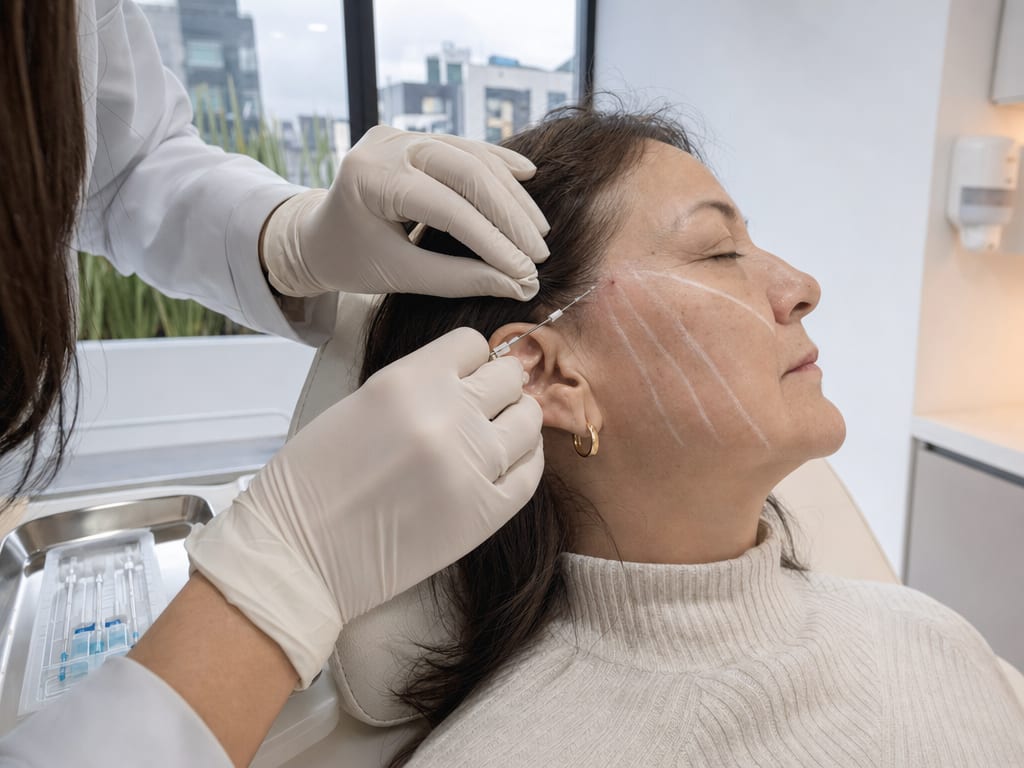
Thread lift
Lifting threads are absorbable sutures placed under the skin to reposition tissue that has started to descend and to stimulate…
See treatment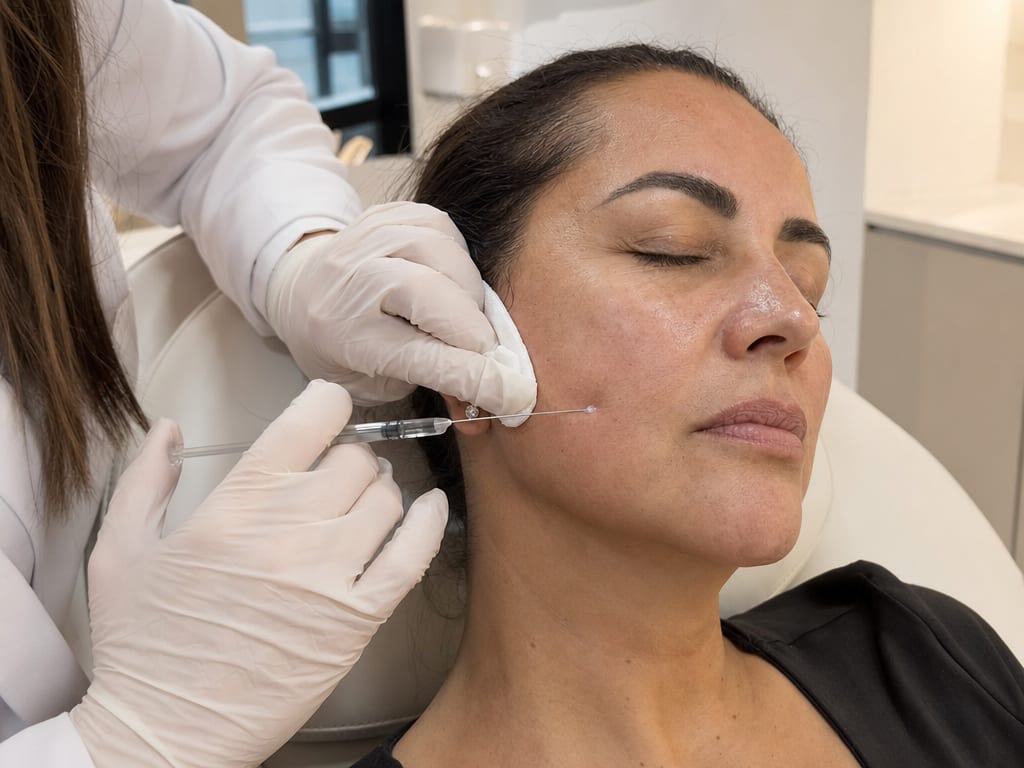 Anti-aging and skin laxity
Hyaluronic acid
Hyaluronic acid is an injectable gel that restores volume and support where the face has lost them over the years: cheekbones,…
See treatment Anti-aging and skin laxity
Facial harmonization
Facial harmonization is a medical plan that combines injectables and, when needed, threads to balance the proportions of the…
See treatmentFrequently asked questions
Does non-surgical nose reshaping make the nose smaller?
No. Threads and hyaluronic acid don’t remove tissue or bone, so the size of the nose doesn’t decrease. What changes is the position of the tip and the line of the profile, and that can make the nose look more balanced. If the goal is to make it smaller, the indication is a rhinoplasty.
What’s the difference between tip threads and up threads?
They are two types of MINT thread designed for the nose. Tip threads mainly work on the tip: they lift and project it. Up threads give support along the bridge. Depending on the nose, they are used alone or combined, in groups of 2 or 4. The physician defines the combination at the consultation.
Does thread nose reshaping hurt?
Local anesthesia is applied, so you usually feel pressure and tightness rather than pain. The tip of the nose is a sensitive area, and applying the anesthesia is usually the most uncomfortable moment. Afterward there may be swelling, tenderness to the touch or some bruising for a few days.
How long does the result last?
Polydioxanone threads are absorbed over the months, and the collagen that forms around them helps keep part of the support. How long depends on your skin, the number of threads and your metabolism, so we don’t give a guaranteed figure. Results vary from patient to patient.
Is hyaluronic acid safe in the nose?
The nose is an area of vascular risk. That’s why at iki hyaluronic acid on the bridge is recommended only when it adds something the thread can’t, in small amounts, with careful technique and hyaluronidase on hand. Severe pain or a change in skin color calls for immediate medical attention.
Can I have nose reshaping if I’ve already had a rhinoplasty?
It can be assessed, but with more care: after surgery the skin and tissues change, and threads aren’t always the best option. The recovery time your surgeon indicated must have passed. At the consultation we review your history and tell you whether it makes sense or not.
How much does non-surgical nose reshaping cost in Bogotá?
It depends on the number and type of threads, whether tip and up are combined, and whether the plan includes hyaluronic acid on the bridge. Each combination has its own price, and you receive it in full and in writing at the consultation, with no surprises at checkout. Your consultation at iki is free · 45 minutes.
What are the risks of nose reshaping?
The most common are swelling, bruising and tenderness in the first days. Less often there may be asymmetry, a thread that shows or comes through the skin, or infection, which are treated at follow-up. That’s why progress is reviewed and we ask you to contact us about any change in color or pain that gets worse.
Read before your appointment
Is Non-surgical nose reshaping right for you? · we’ll see at the consultation
Forty-five minutes with a physician, a skin analysis and a written, phased plan with complete prices. You decide afterwards, with no pressure. Living abroad? Start with a virtual consultation.