Botox for expression lines
Soften the expression · without erasing it
Botulinum toxin temporarily relaxes the muscles that etch expression lines into the forehead, the frown area and the crow’s feet. Well dosed, it softens without freezing. At iki the dose is decided muscle by muscle and face by face · not by habit.
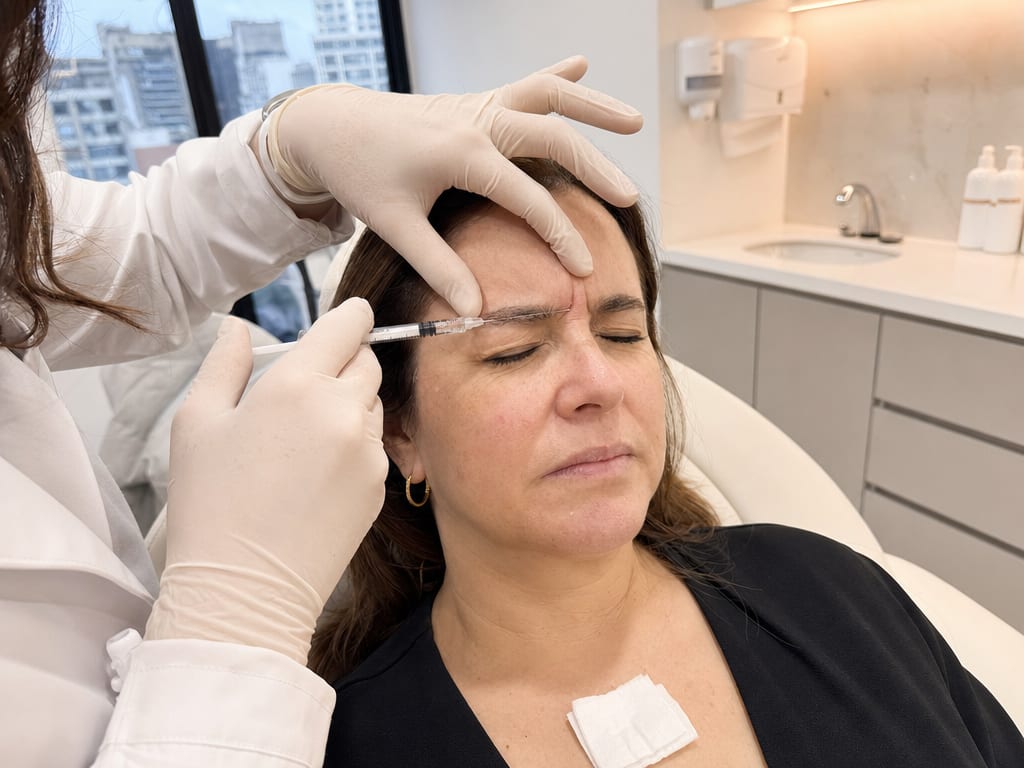
Results in anti-aging and skin laxity · identity protected
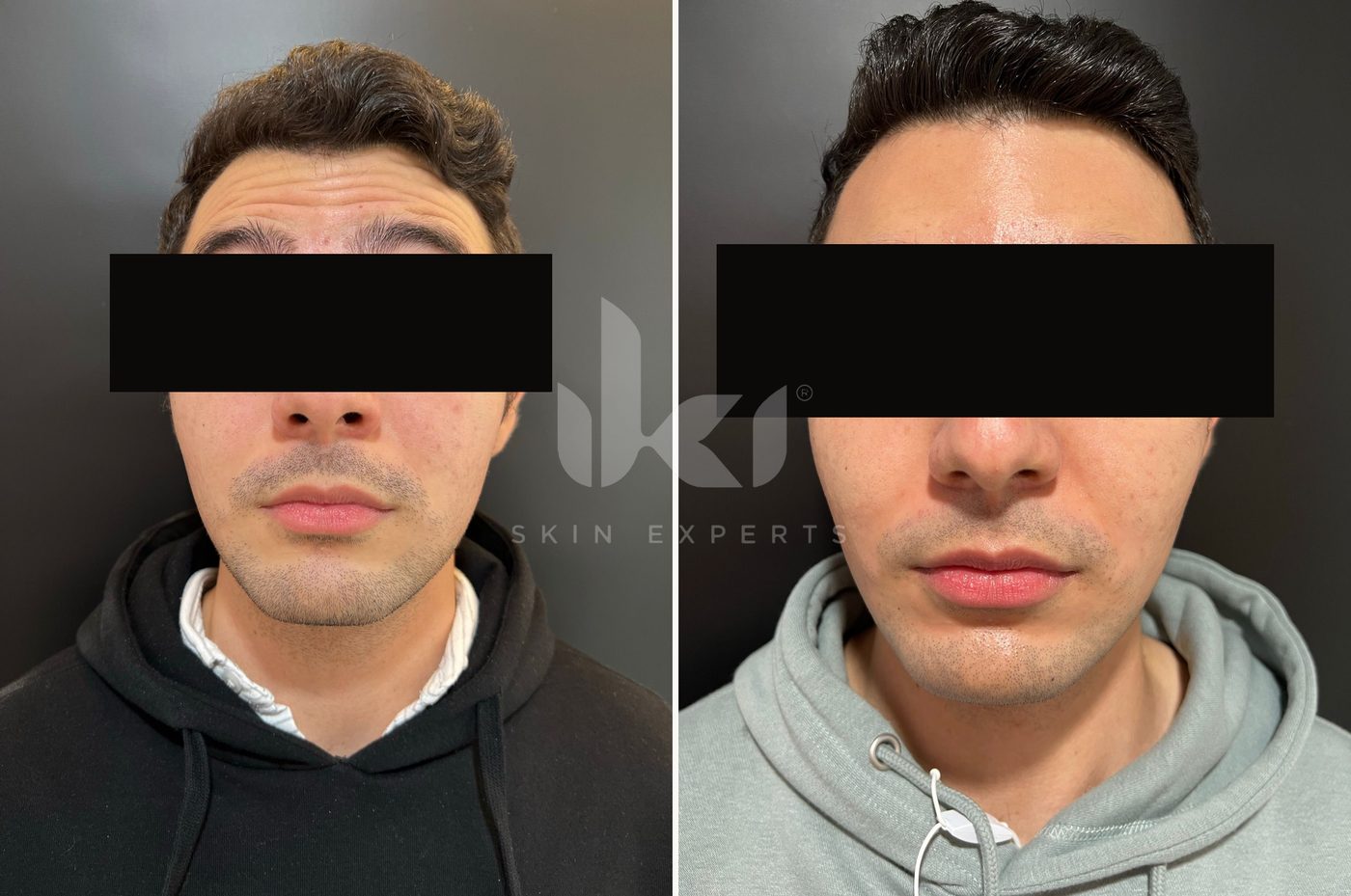
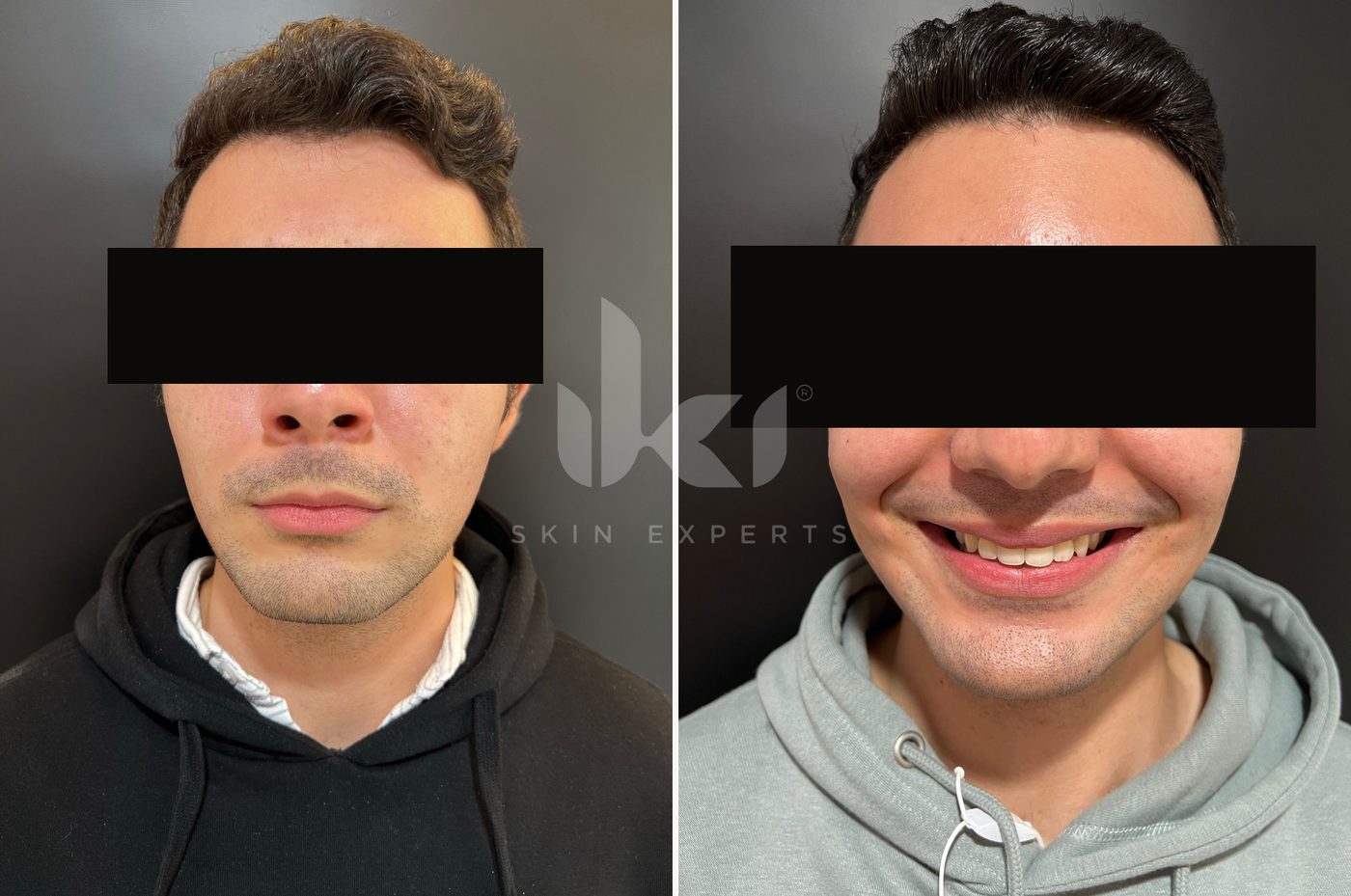
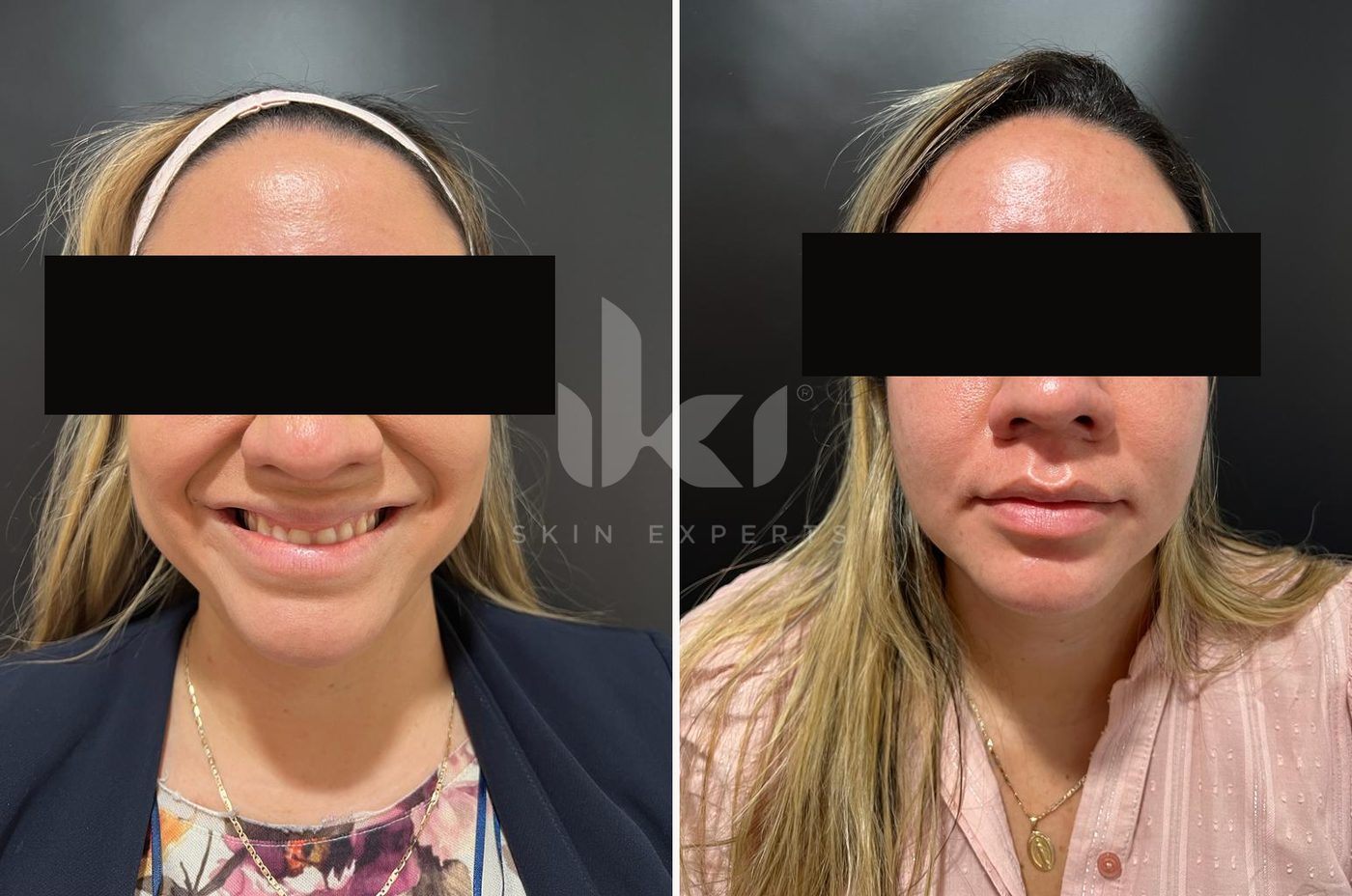
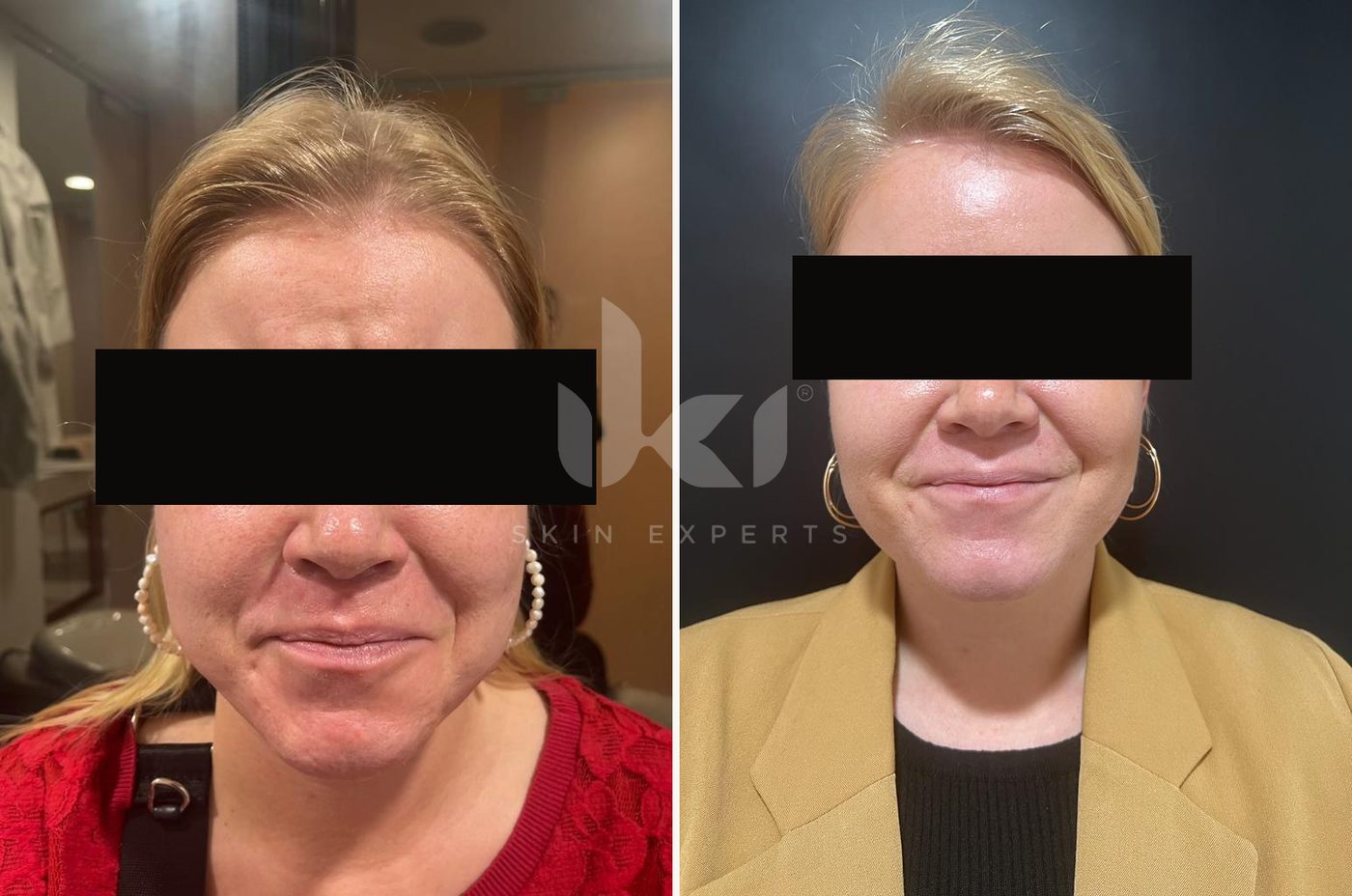
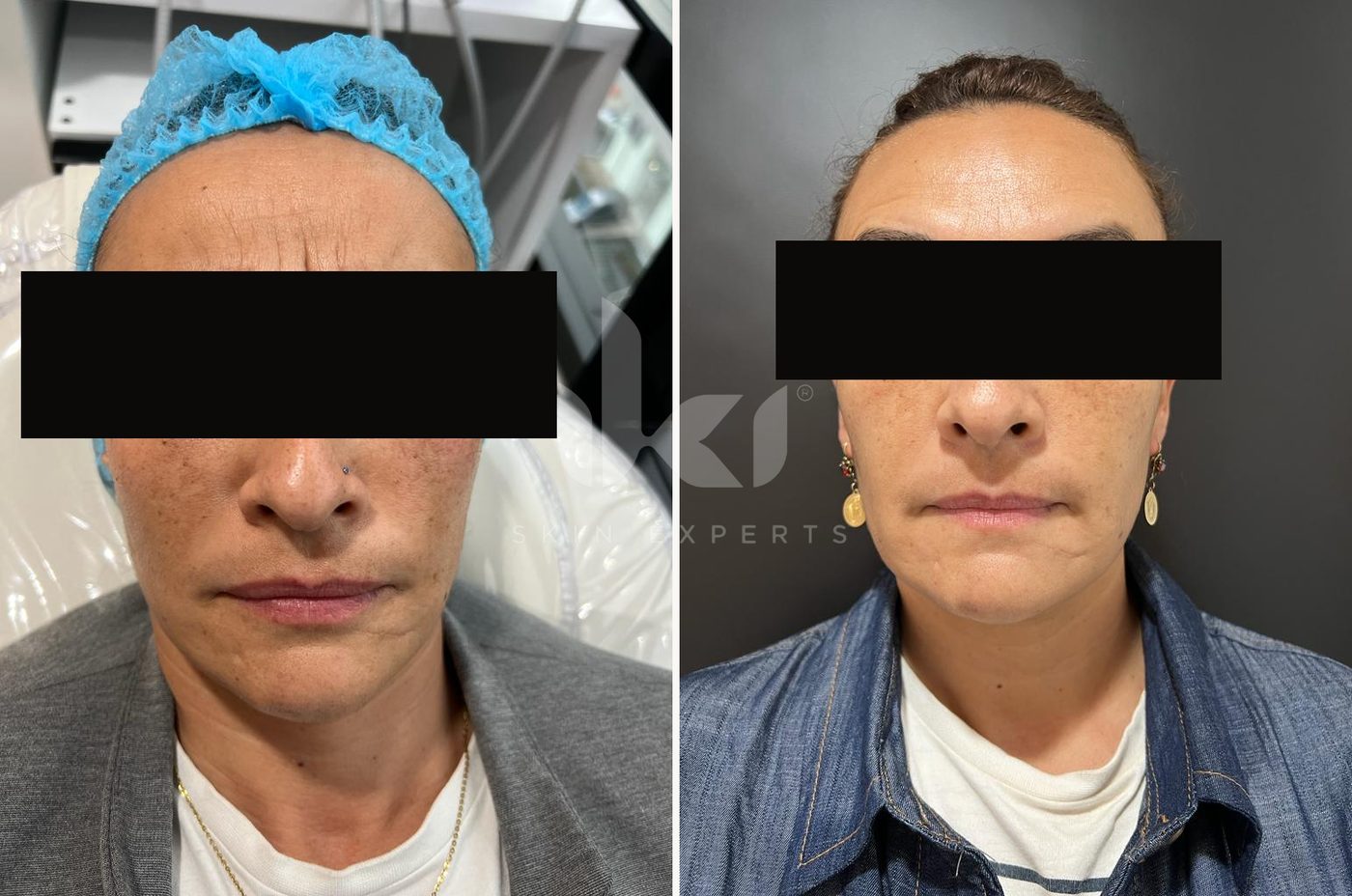
Photos of patients treated at iki, published with their authorization and with their identity covered. Each case had its own diagnosis and plan; the exact treatment may combine several techniques. Results vary from patient to patient. See all cases.
Botox is the injection of botulinum toxin type A, with a very fine needle, into specific muscles to relax expression lines on the forehead, between the brows and at the crow’s feet. At iki it follows a medical consultation that sets the dose and the points. The session takes 15 to 30 minutes, the effect starts to show in 3 to 7 days and usually lasts several months.
- Session length
- 15–30 min
- Sessions
- 1 · touch-up at follow-up if indicated
- Downtime
- None · aftercare for the first few hours
- First changes
- 3–7 days · full effect at around 2 weeks
- Typical duration
- Usually lasts 4–6 months
- Areas
- Forehead, frown lines, crow’s feet, neck
Who it’s for · and who it isn’t
Indicated when
- Expression lines on the forehead, between the brows or at the crow’s feet
- Lines that are starting to stay visible even at rest
- People who want to soften lines without losing natural expression
- Neck bands and mild jawline definition · Nefertiti lift
- Prevention in younger skin with strong facial movement, using low doses
Not the right time if
- Pregnancy or breastfeeding
- Neuromuscular conditions such as myasthenia gravis
- Deep static wrinkles or folds caused by volume loss · the toxin doesn’t fill
- Active infection in the area or a known allergy to any component
The physician makes the final indication at the consultation. Results vary from patient to patient.
What a Botox treatment at iki looks like
It’s a short procedure, but not a simple one. The difference between a rested face and a stiff one lies in reading the muscles before injecting.
Reading your expression
The physician asks you to make expressions to see which muscles create each line and how strongly. They set the points and doses, and both are recorded in your medical chart.
Preparation
The skin is cleansed and disinfected. If you’re sensitive, local cold can be applied beforehand.
Injection
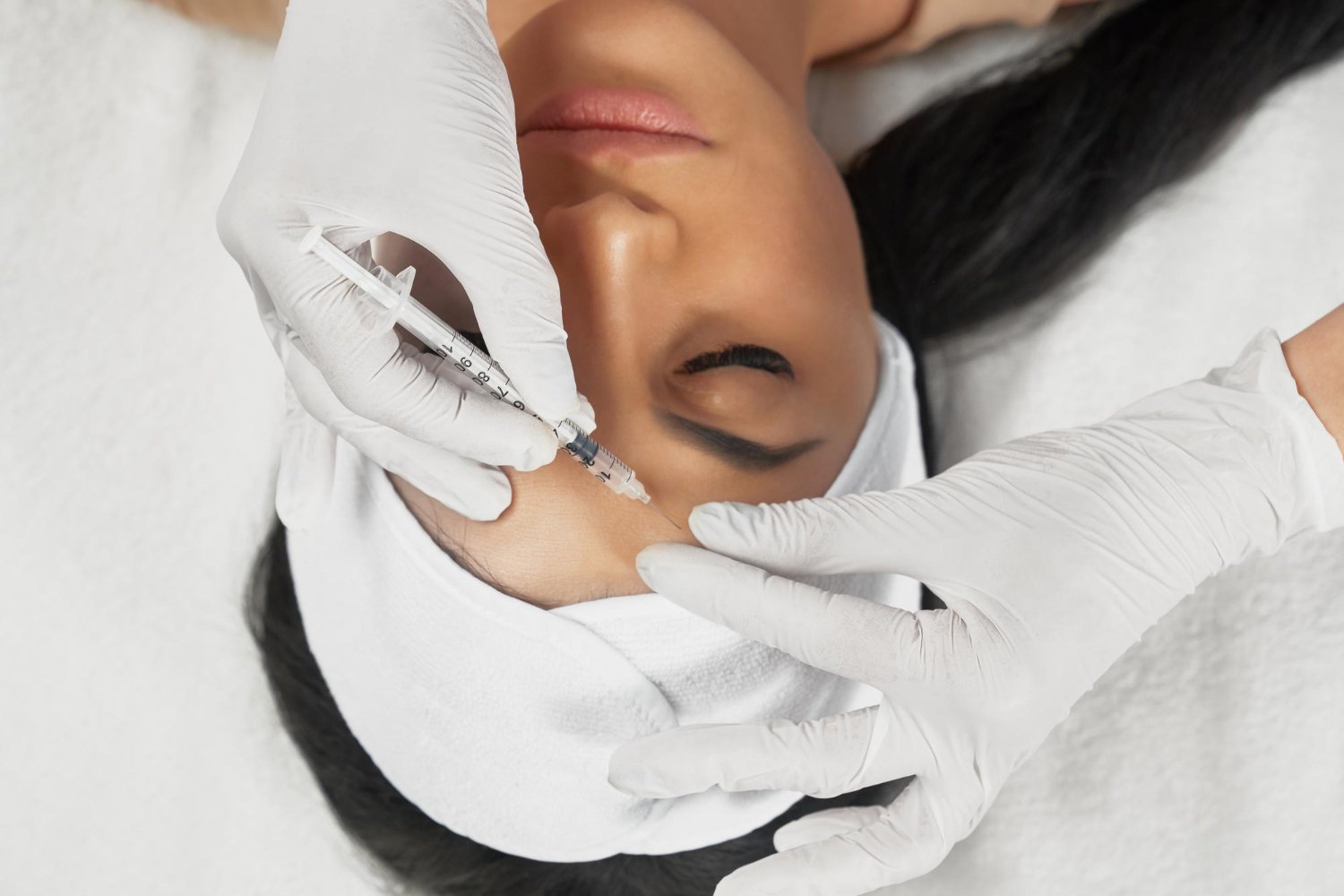
Small amounts are placed at the planned points with a very fine needle. It takes a few minutes and the discomfort is brief.
Follow-up
The full effect is assessed at around 2 weeks. If the physician indicates it, a fine touch-up is done at that visit.
What it offers
Natural expression
The dose is measured muscle by muscle. The goal is to soften the line · not to immobilize the face.
A short procedure
15 to 30 minutes, with no time off. You can return to your routine the same day with simple aftercare.
Prevention of set-in lines
By reducing repeated contraction, it helps dynamic lines take longer to settle in at rest.
Temporary, gradual effect
The muscle regains its function little by little. The plan is reviewed at every follow-up, using the data from the previous treatment.
Technology with an indication
Botulinum toxin type A
Botulinum toxin temporarily blocks the signal between nerve and muscle, which is why it relaxes the contraction that forms the line. It is one of the most studied procedures in aesthetic medicine. Every dose and every injection point is recorded in your medical chart, so the next follow-up starts from real data.
Results and aftercare
The first changes appear between day 3 and day 7, and the full effect is visible at around 2 weeks. It usually lasts 4 to 6 months, depending on the dose, muscle strength and each person’s metabolism. After that, movement returns gradually. The toxin softens dynamic wrinkles · deep lines at rest may need other tools.
Aftercare after the session
- Don’t lie down or bend your head forward for the next 4 hours
- Don’t massage or press on the area that day
- Avoid intense exercise, saunas and strong heat for the first 24 hours
- Avoid alcohol on the day of treatment
- Daily sunscreen
Results vary from patient to patient.
Pairs well with
 Anti-aging and skin laxity
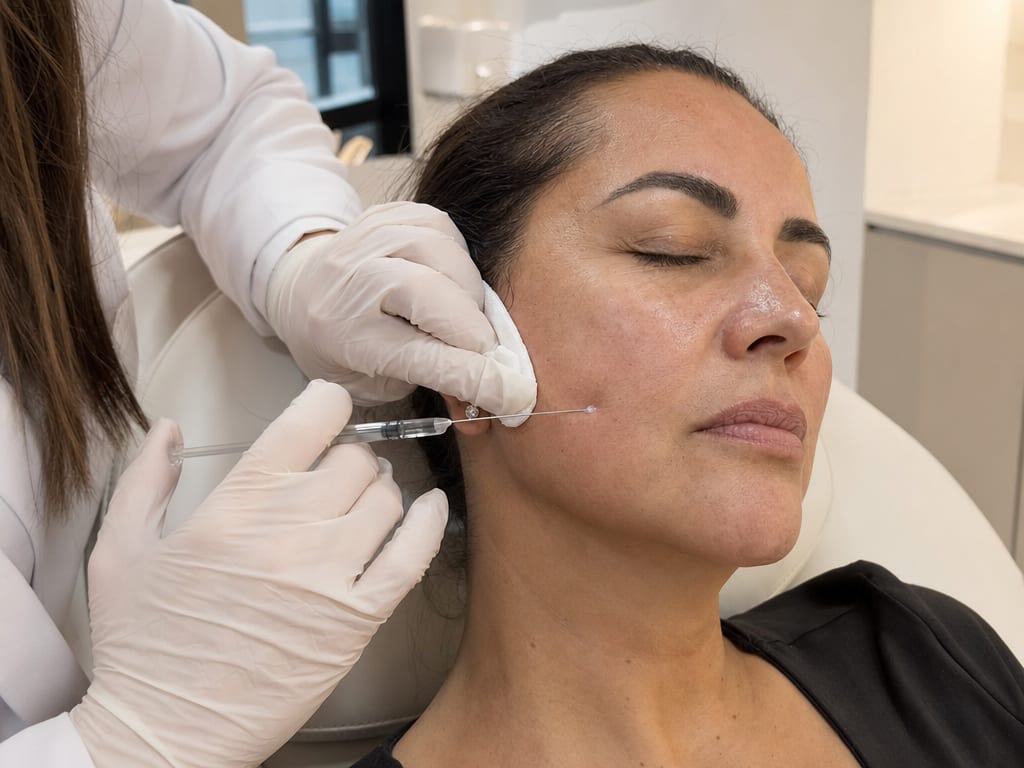
Hyaluronic acid
Hyaluronic acid is an injectable gel that restores volume and support where the face has lost them over the years: cheekbones,…
See treatment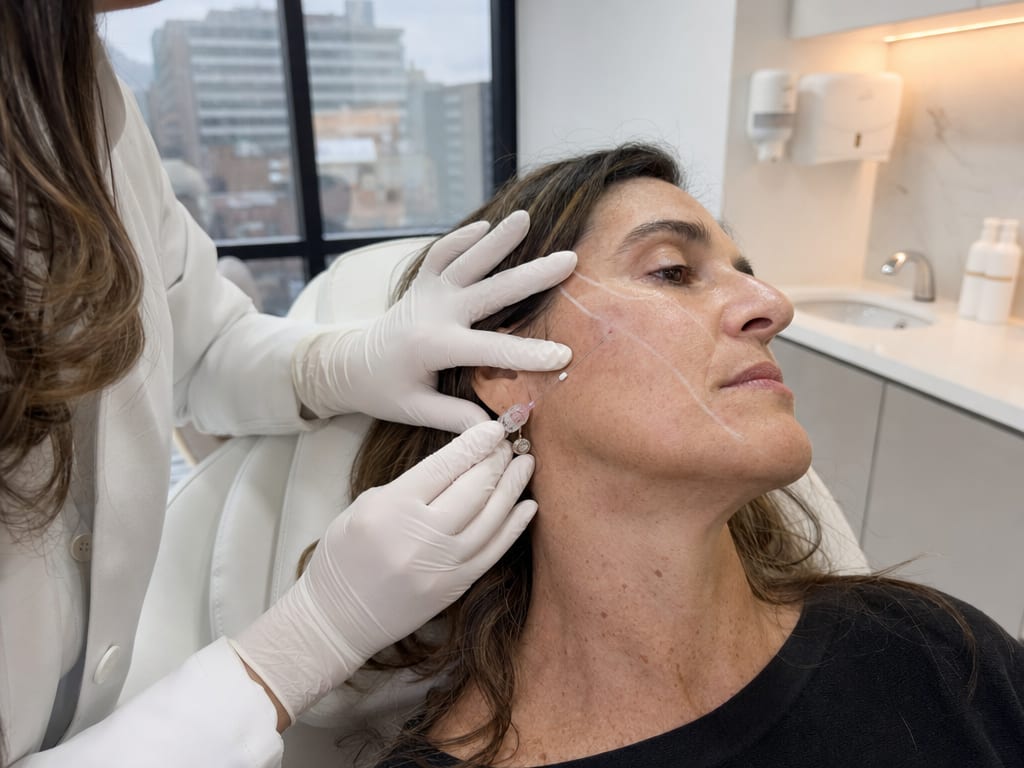 Anti-aging and skin laxity
HArmonyCa
HArmonyCa is a hybrid injectable: it combines hyaluronic acid, which gives support from the session, with calcium hydroxylapatite…
See treatment Anti-aging and skin laxity
HIFU for skin laxity
HIFU uses focused ultrasound to heat deep layers of the skin and stimulate new collagen, with no incisions and no needles. It…
See treatmentFrequently asked questions
Does Botox hurt?
A very fine needle and small amounts are used, so the discomfort is brief, similar to a pinch. The area between the brows tends to be the most sensitive. If you need it, local cold can be applied first. No anesthesia is required and the full session takes 15 to 30 minutes.
How long does Botox last?
It usually lasts 4 to 6 months. It depends on the dose, the area, the strength of the muscles and each person’s metabolism; in people who exercise a lot it may wear off sooner. Results vary from patient to patient, so the next step is decided at follow-up, not by a fixed calendar.
Will my face look frozen?
That’s not the goal. A stiff face is usually the result of high doses or poorly chosen points. At iki the dose is adjusted muscle by muscle to soften the line and keep your expression. If something looks asymmetric or insufficient at follow-up, the physician corrects it with a fine touch-up.
What side effects can it have?
The most common ones are mild and short-lived: redness at the injection points, small bruises or a mild headache on the first day. Less often, a drooping eyelid or brow can appear, which is temporary. Following the aftercare for the first few hours helps reduce that risk.
What’s the difference between Botox and hyaluronic acid?
Botulinum toxin relaxes the muscle that creates an expression line; it doesn’t add volume. Hyaluronic acid is a filler that restores volume or support where it has been lost, such as folds or cheekbones. They solve different problems and are often combined in the same plan.
Can I get Botox while pregnant or breastfeeding?
No. Botulinum toxin is not used during pregnancy or breastfeeding, as a precaution. It is also not used in people with neuromuscular conditions such as myasthenia gravis or with an active infection in the area. At your consultation we review your history and medications before recommending it.
At what age can you start Botox?
There’s no fixed age. What matters is whether there are pronounced dynamic lines, or facial movement that is starting to leave them visible at rest. In younger skin, low doses are sometimes used preventively. At your consultation we’ll tell you whether it makes sense yet or whether it’s not the right time.
Read before your appointment
Is Botox right for you? · we’ll see at the consultation
Forty-five minutes with a physician, a skin analysis and a written, phased plan with complete prices. You decide afterwards, with no pressure. Living abroad? Start with a virtual consultation.