Nd:YAG for telangiectasias
Visible vessels · treated with precision
Telangiectasias are small dilated blood vessels visible on the nose and cheeks, often linked to rosacea or sun damage. The Nd:YAG laser on the Stellar M22 acts on those vessels so the body reabsorbs them. It treats existing vessels · it doesn’t stop new ones from appearing.
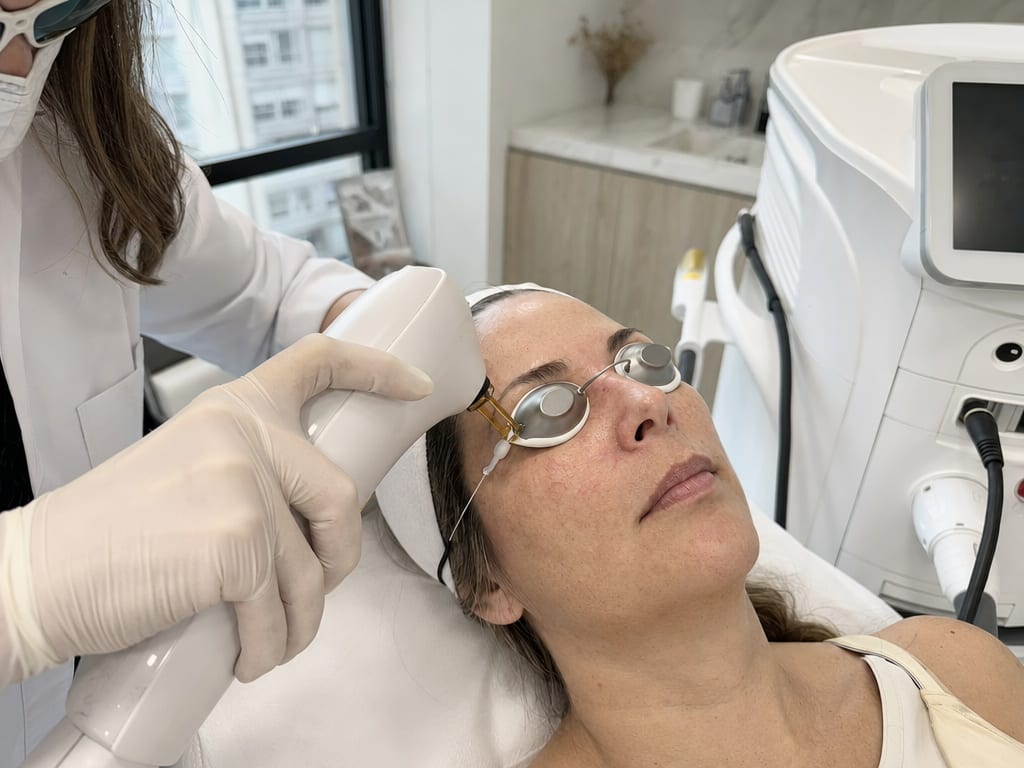
Results in rosacea and facial veins · identity protected
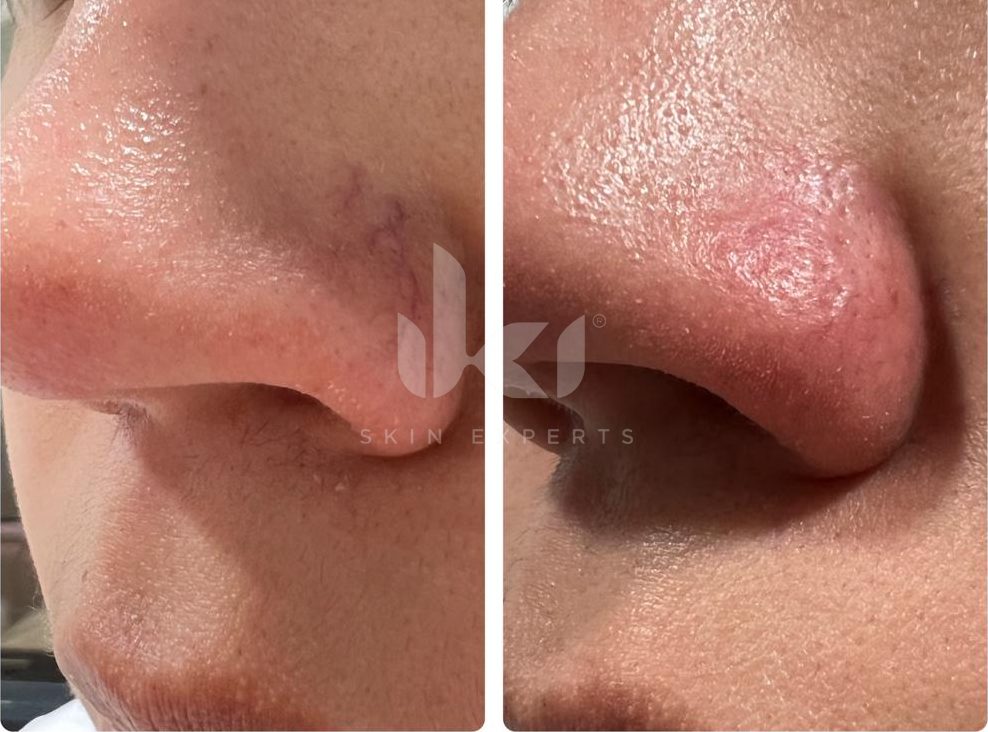
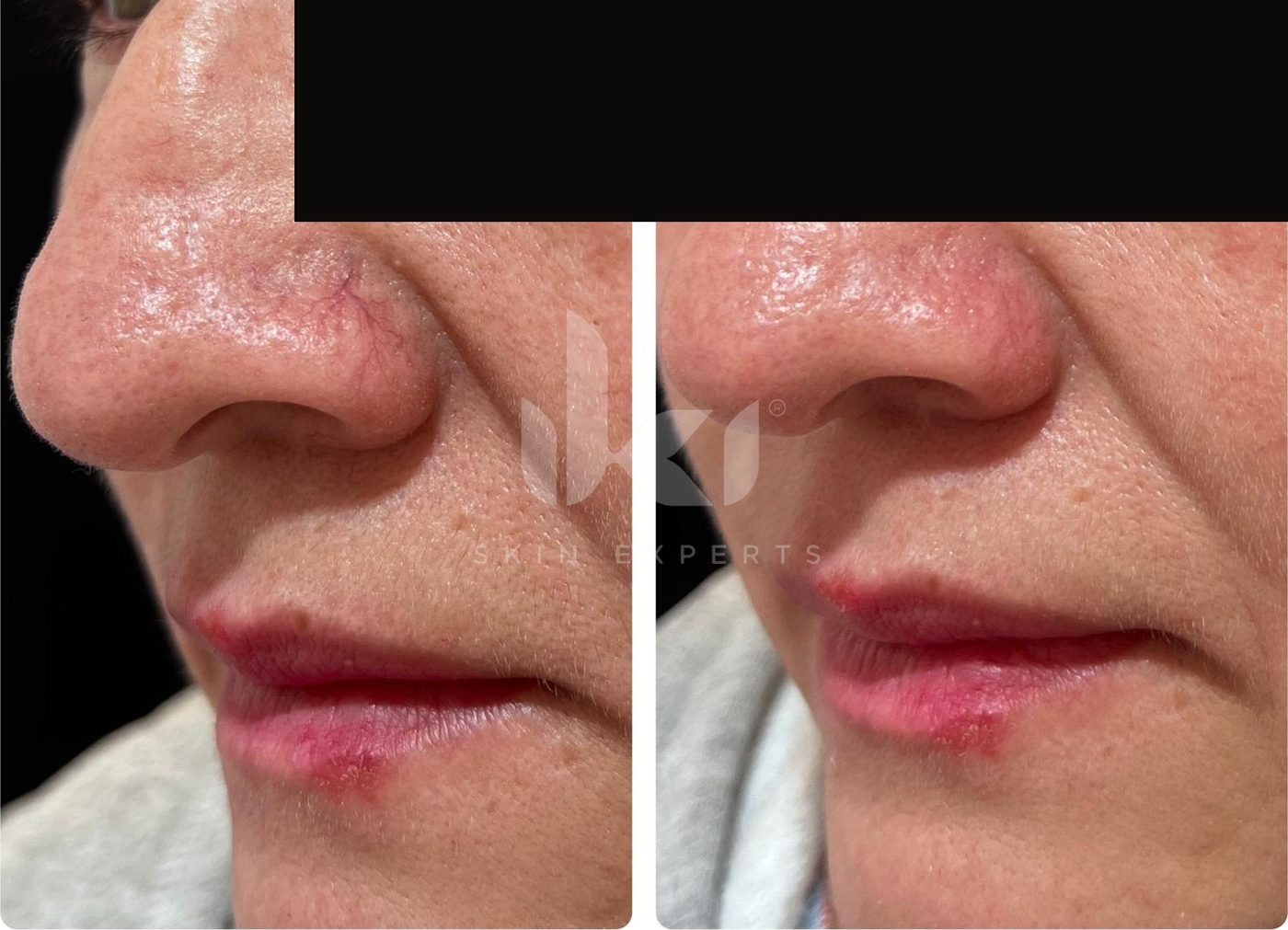
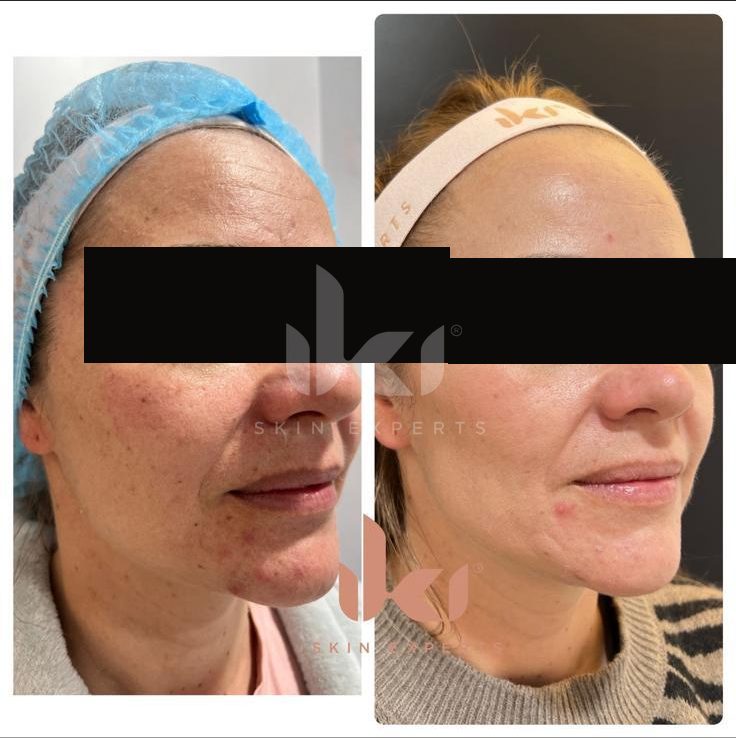
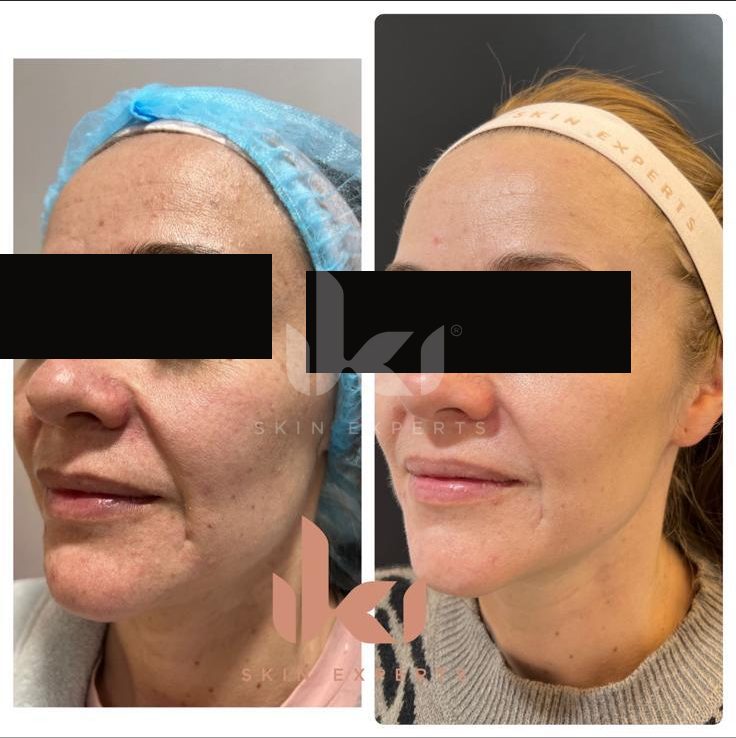
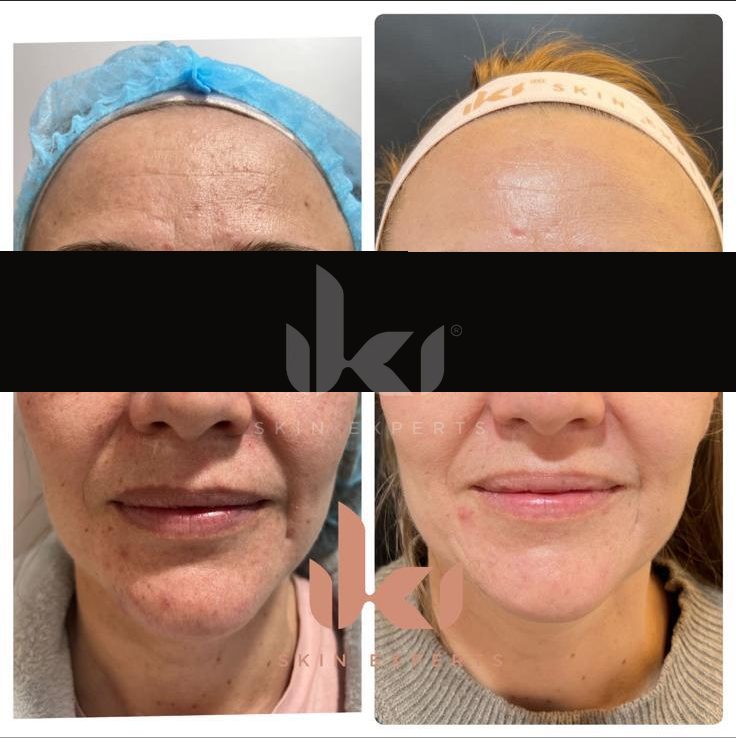
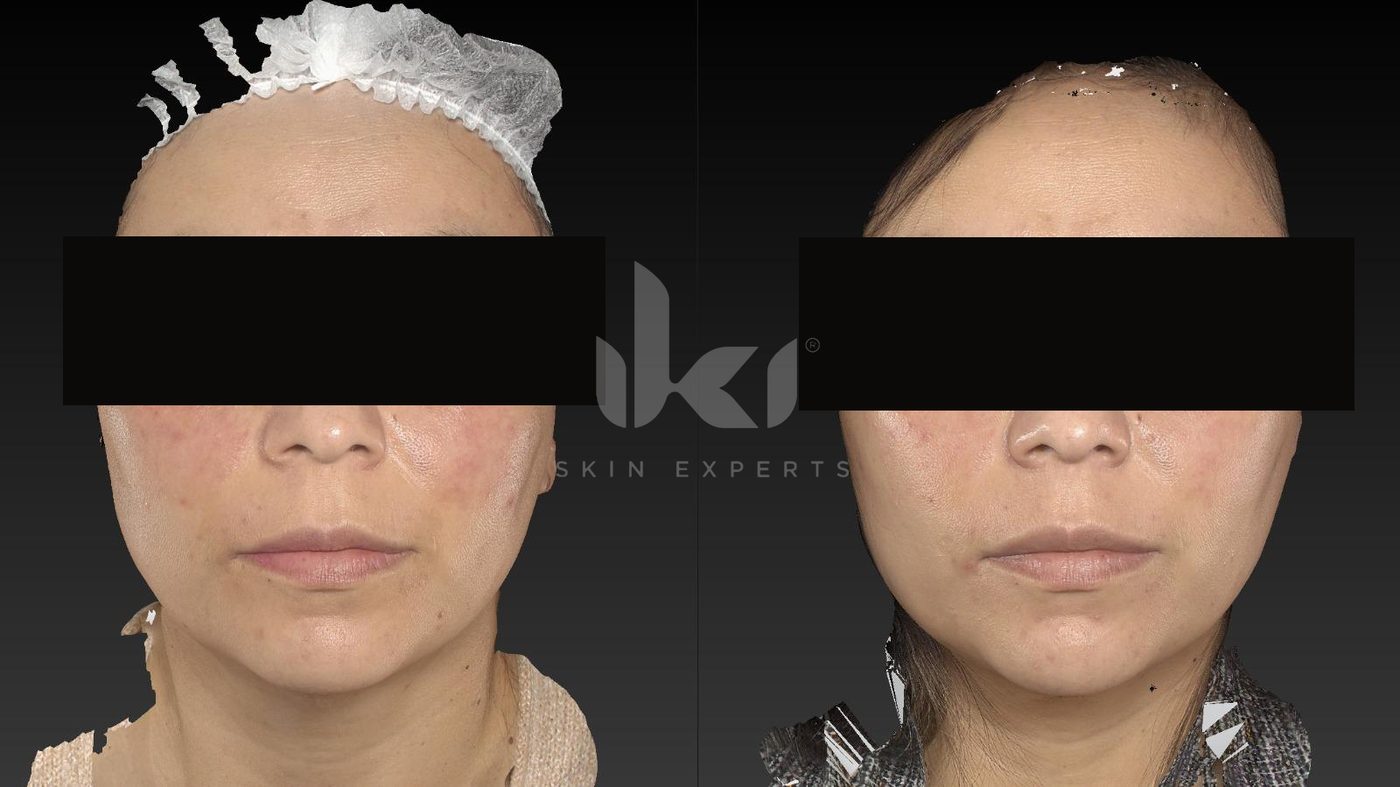
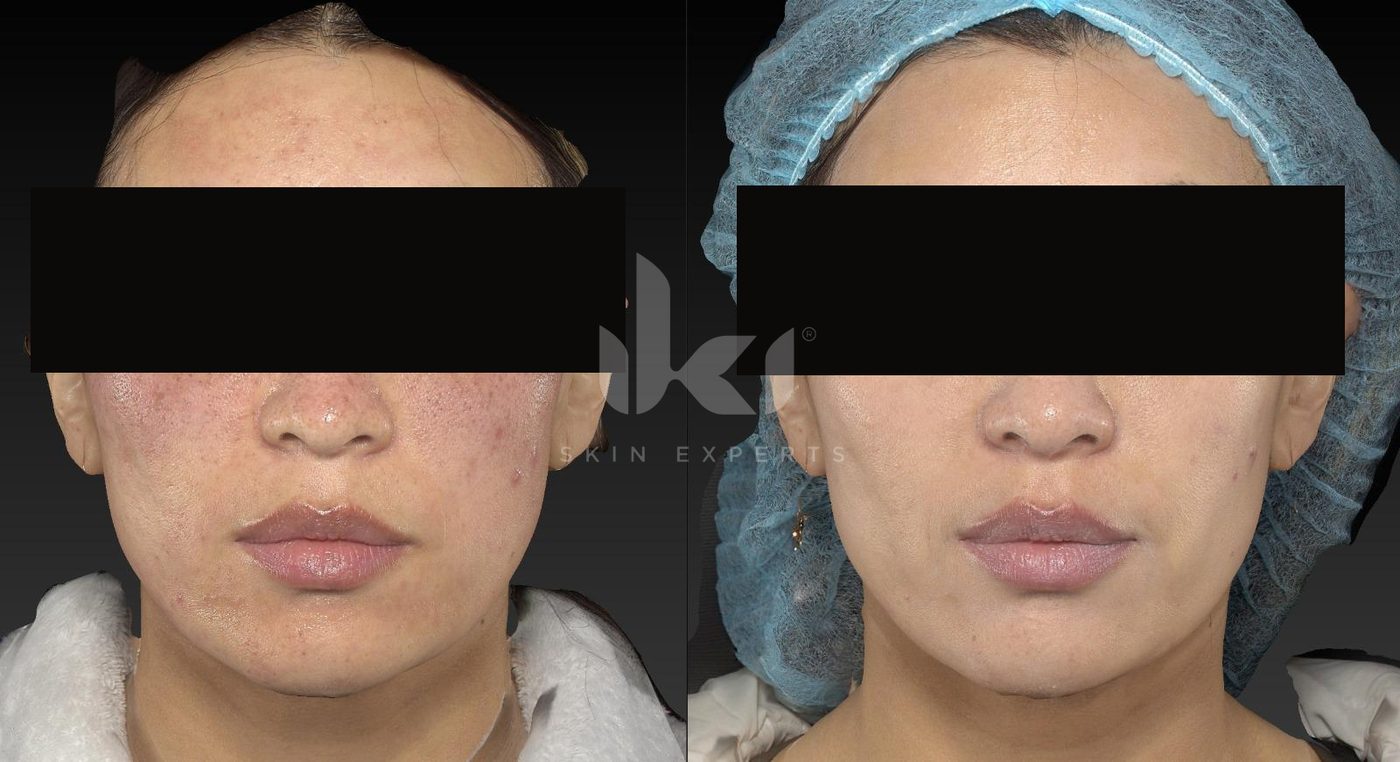
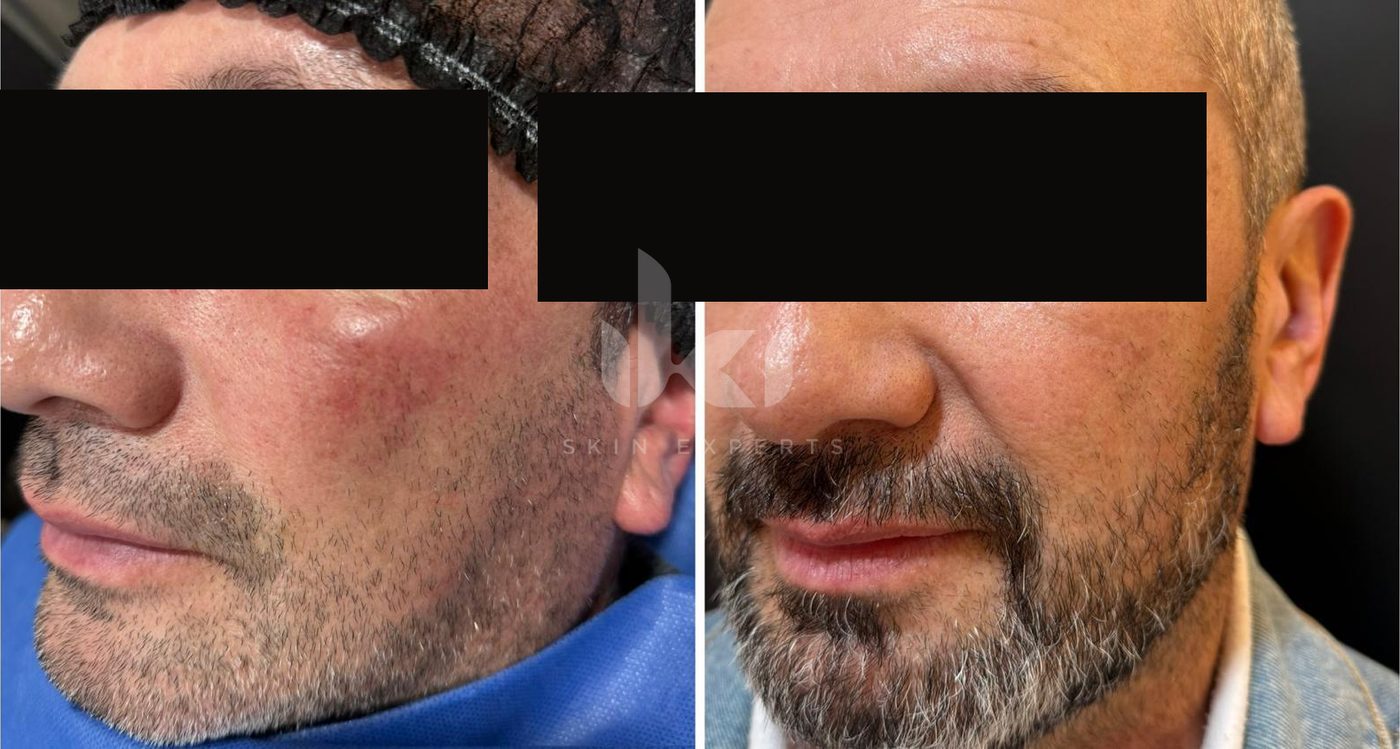
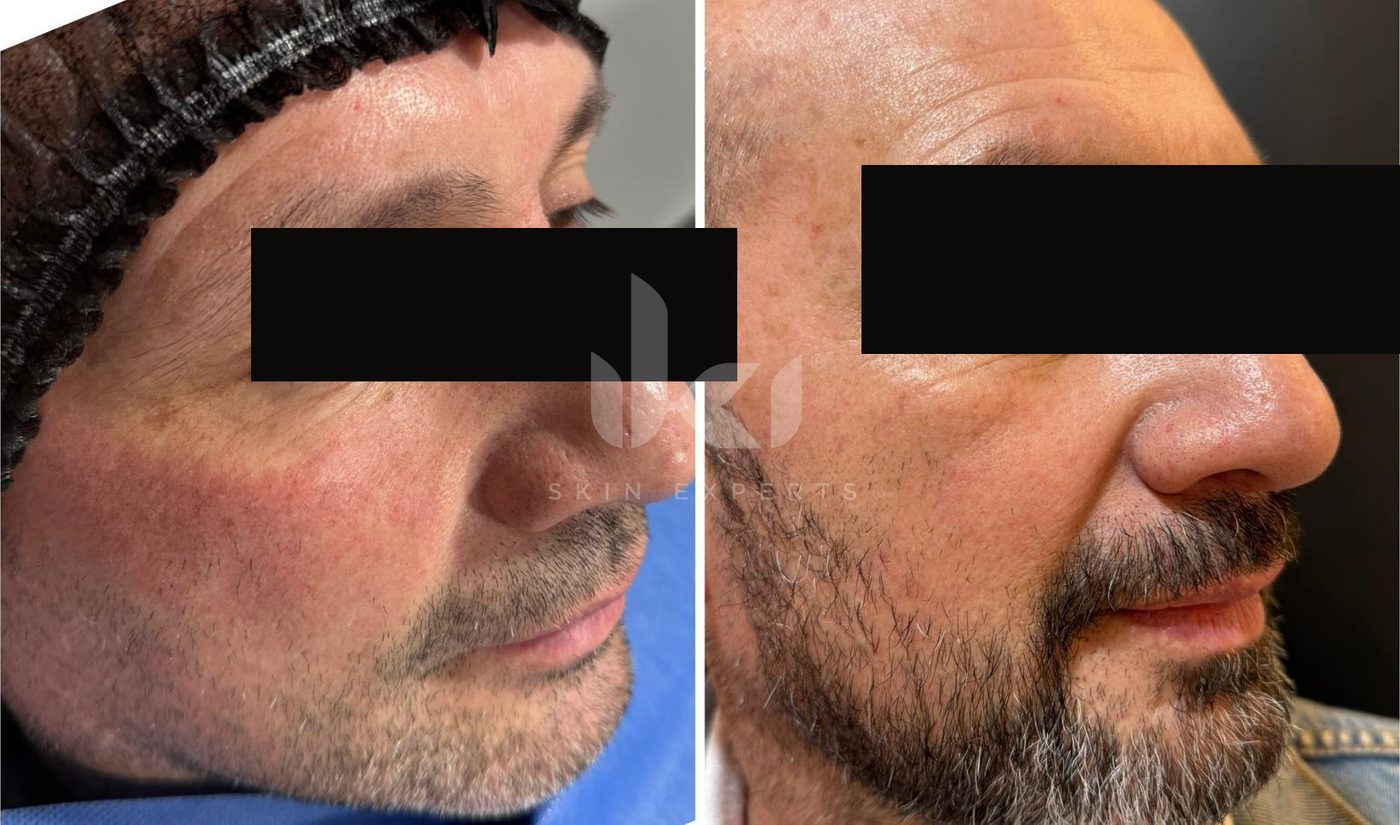
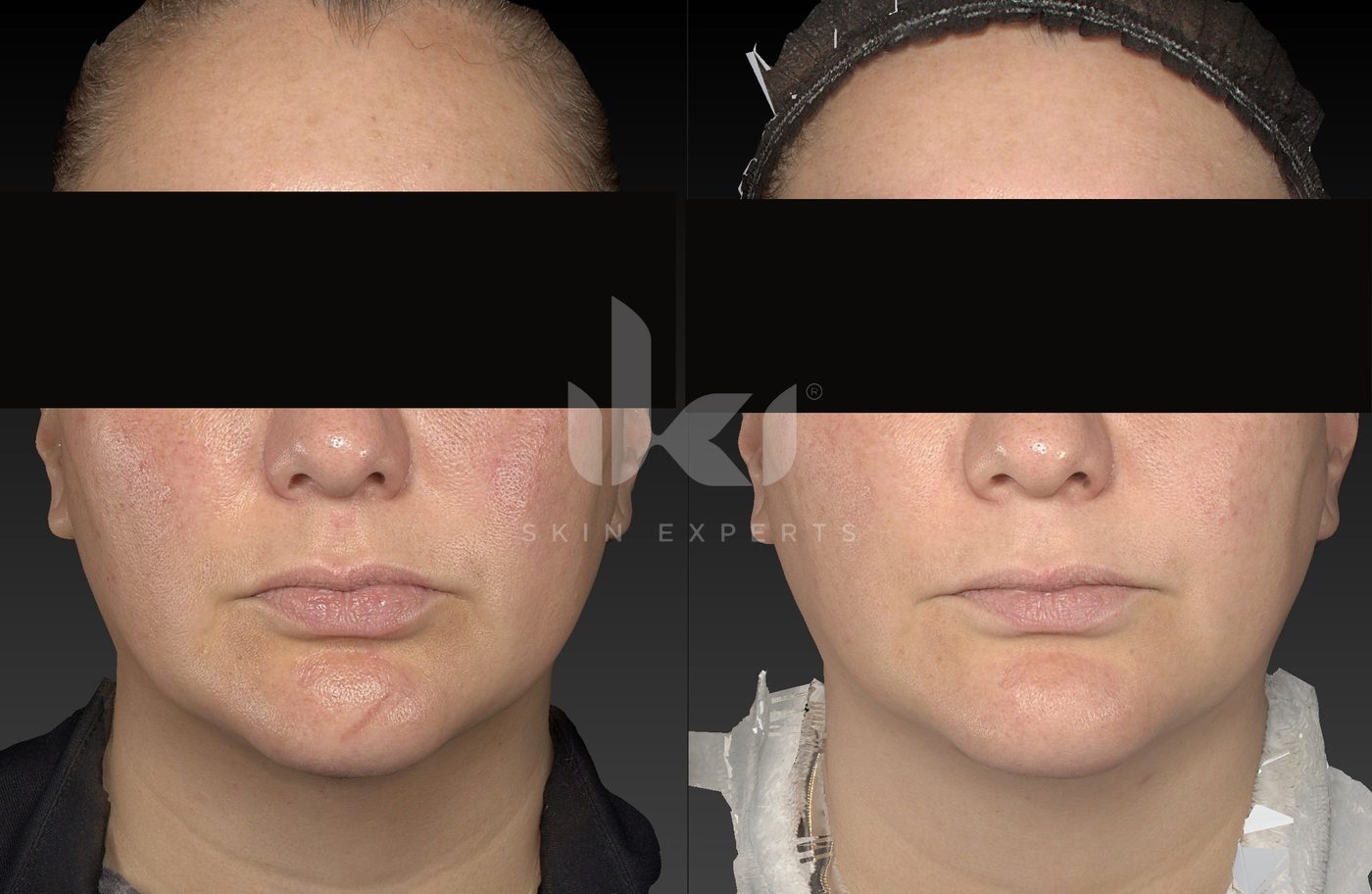
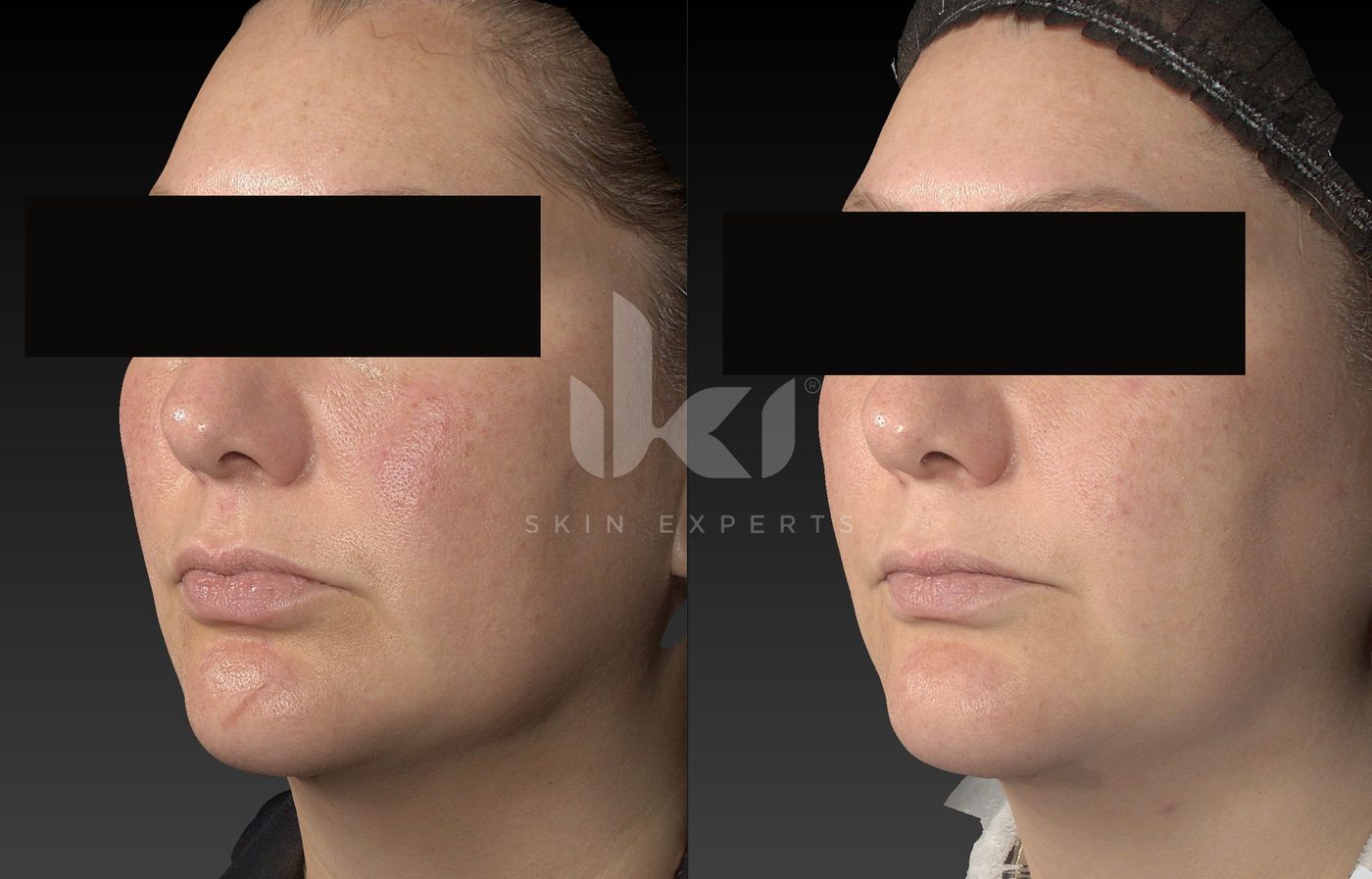
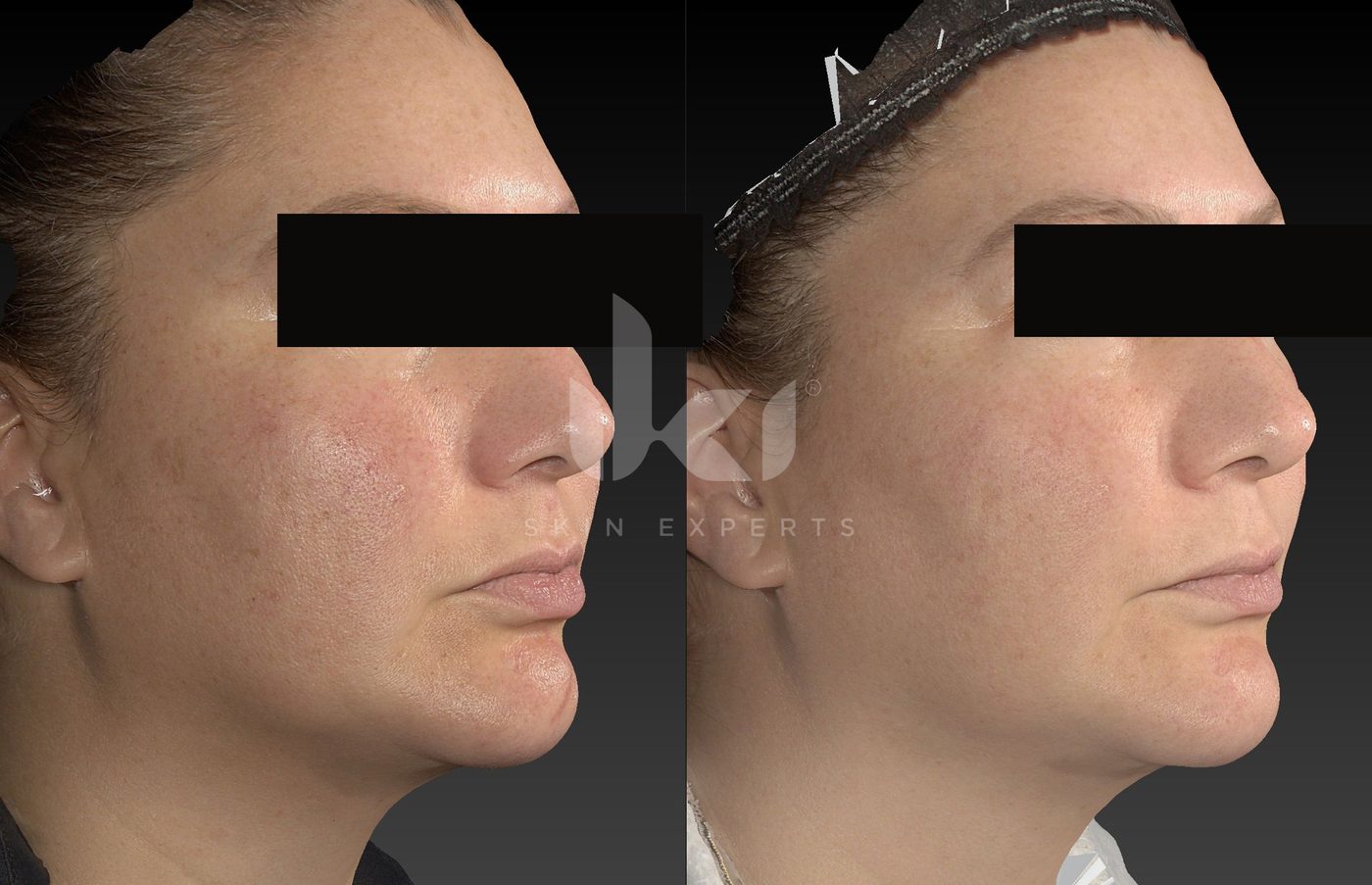

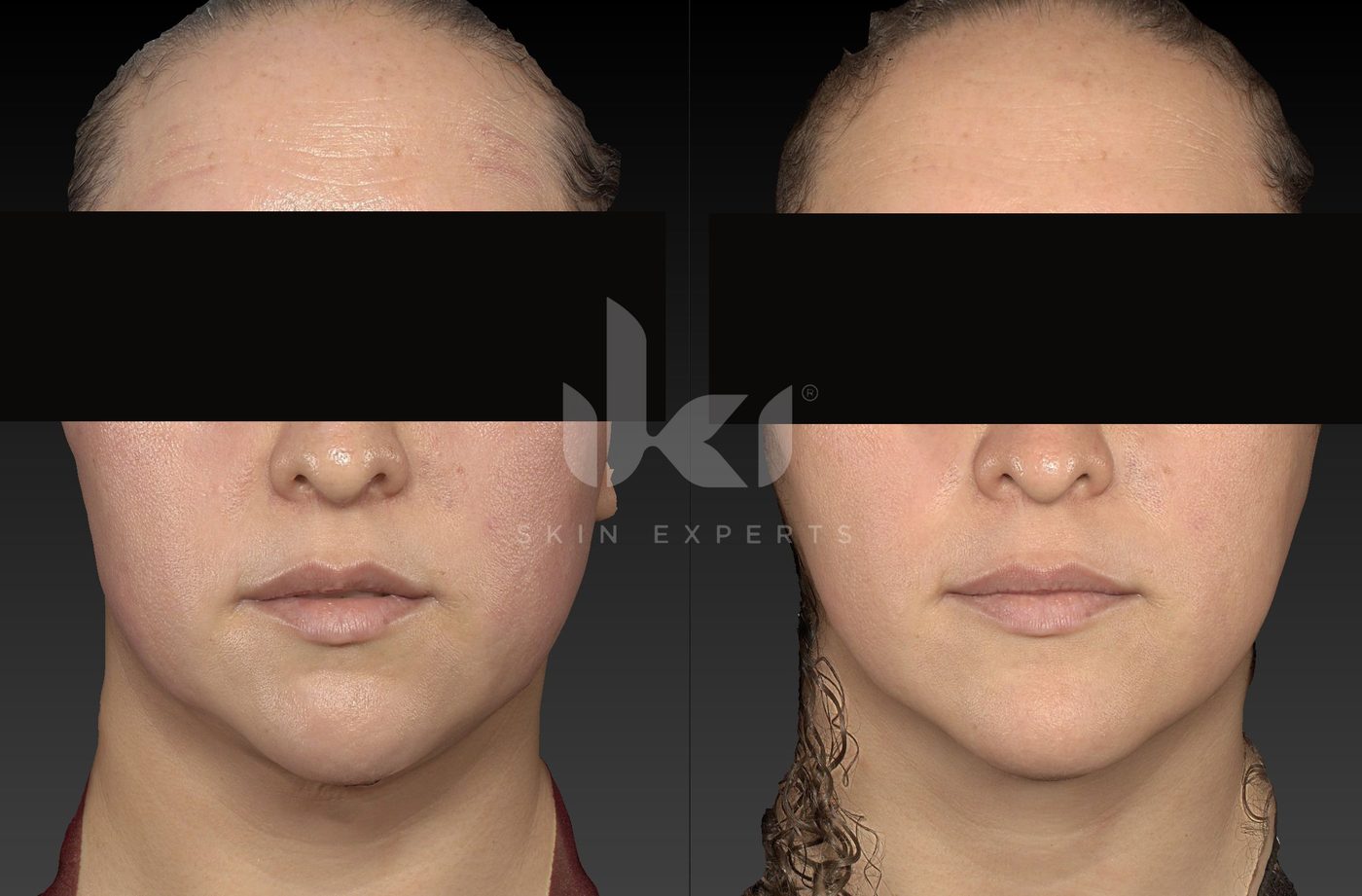
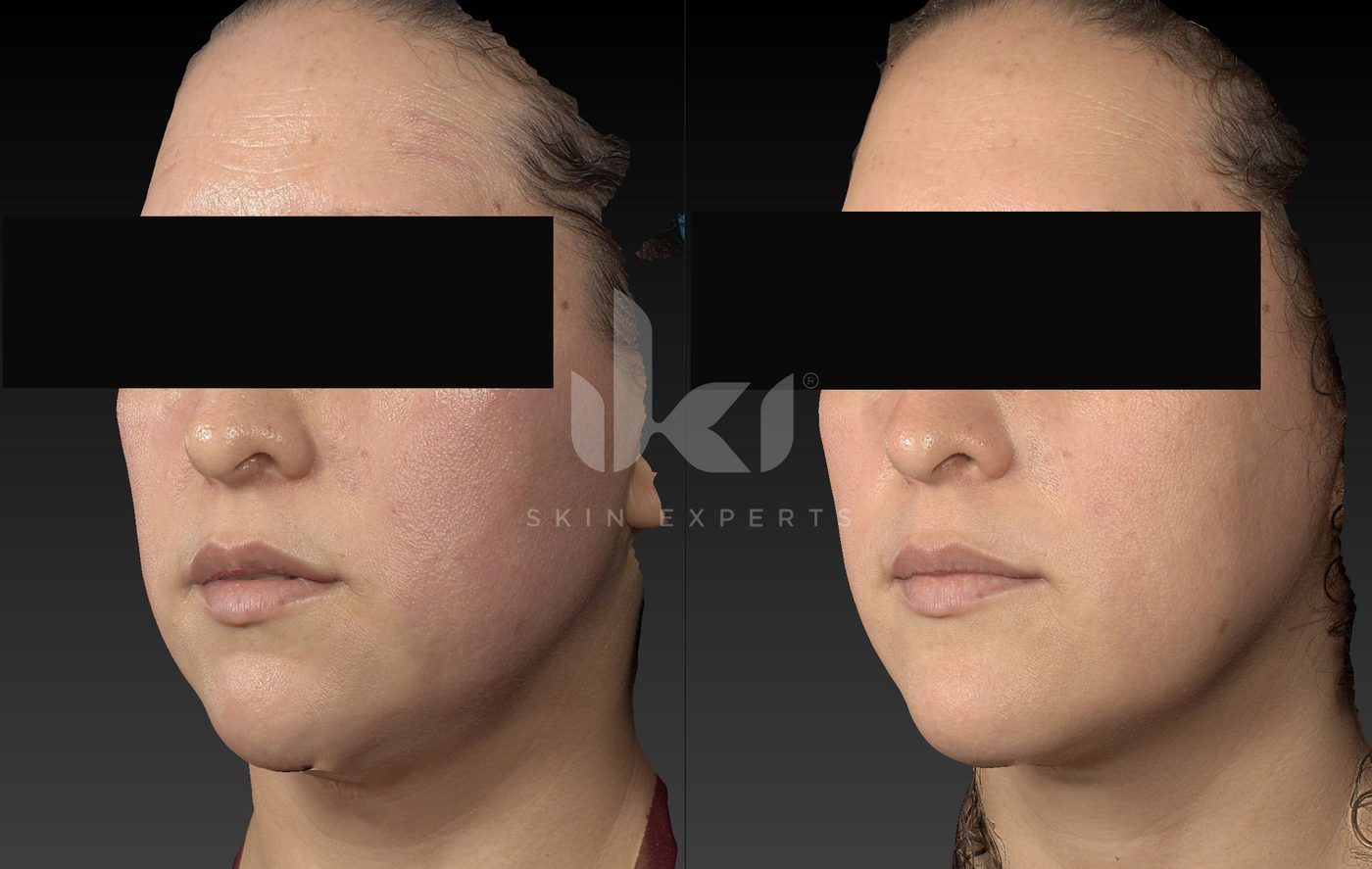
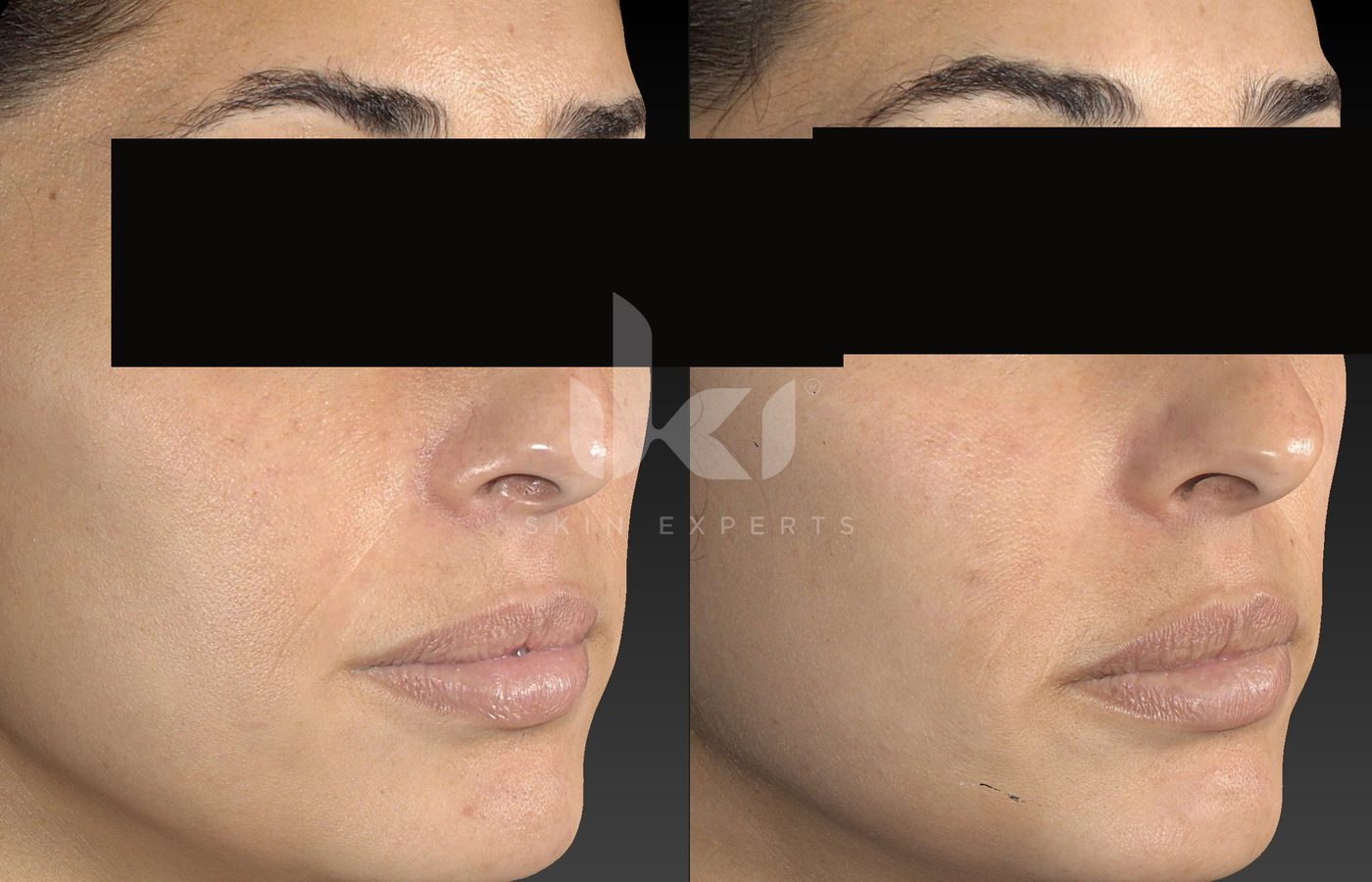
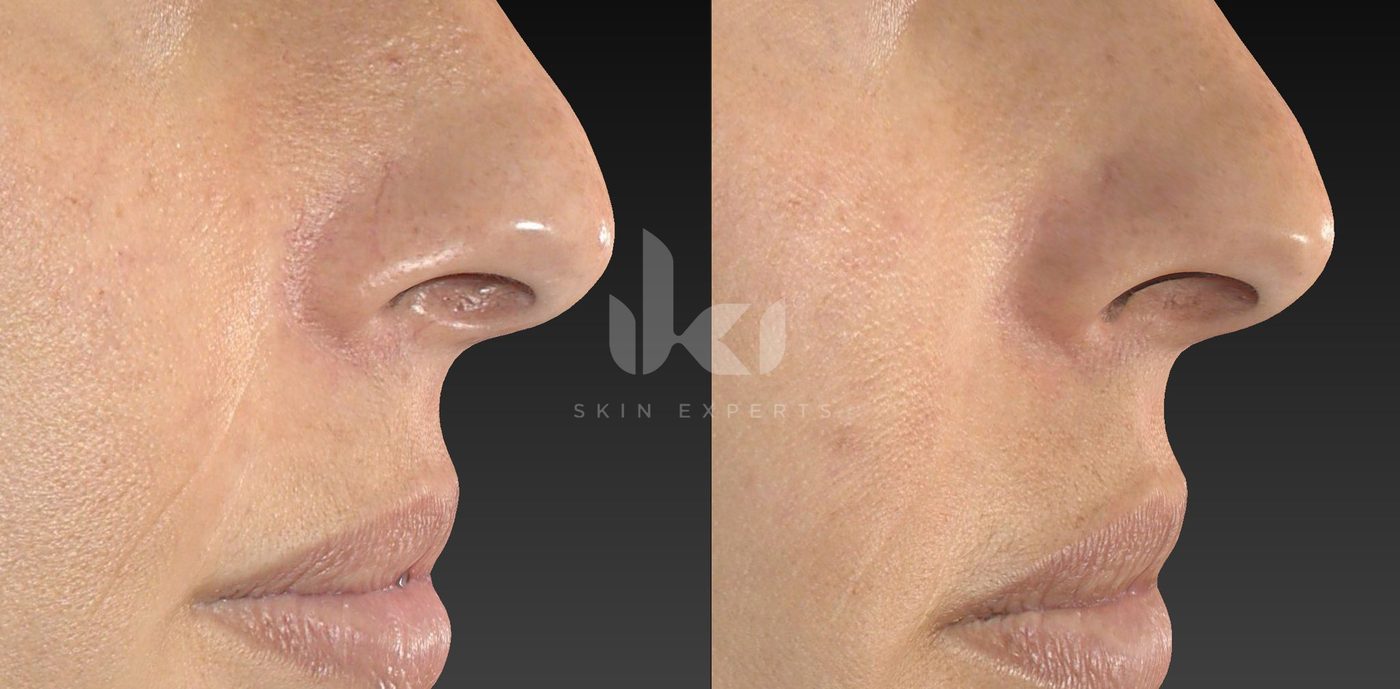
Photos of patients treated at iki, published with their authorization and with their identity covered. Each case had its own diagnosis and plan; the exact treatment may combine several techniques. Results vary from patient to patient. See all cases.
Nd:YAG for telangiectasias is a laser treatment that acts on the small dilated vessels of the face, known as spider veins, and closes them so the body reabsorbs them naturally. At iki it is done on the Stellar M22 after a medical consultation. A session takes 30 to 60 minutes, and 1 to 3 sessions are generally needed.
- Session length
- 30–60 min depending on the area
- Sessions
- Generally 1–3 · case by case
- Recovery
- Normal activity · possible redness or bruising
- Sun
- Avoid it · especially the first 24 h
- Technology
- Stellar M22 · Nd:YAG
- Areas
- Face · nose, cheeks, chin
Who it’s for · and who it isn’t
Indicated when
- Visible spider veins on the nose, cheeks or chin
- Rosacea in which dilated vessels are the main component
- Fine vessels from accumulated sun damage
- Patients with stable rosacea, not in a flare-up
Not the right time if
- Tanned skin or recent intense sun exposure
- Pregnancy or breastfeeding
- Diffuse redness without defined vessels · another approach may be indicated
- Anyone expecting vessels never to appear again · the treatment doesn’t guarantee that
The physician makes the final indication at the consultation. Results vary from patient to patient.
What an Nd:YAG session for telangiectasias looks like at iki
Before the laser, we work out why the vessels appeared. If there is underlying rosacea, it is controlled at the same time.
Consultation and vessel map
We review the size, depth and location of the telangiectasias, your skin type (Fitzpatrick) and the presence of rosacea or other triggers.
Prep
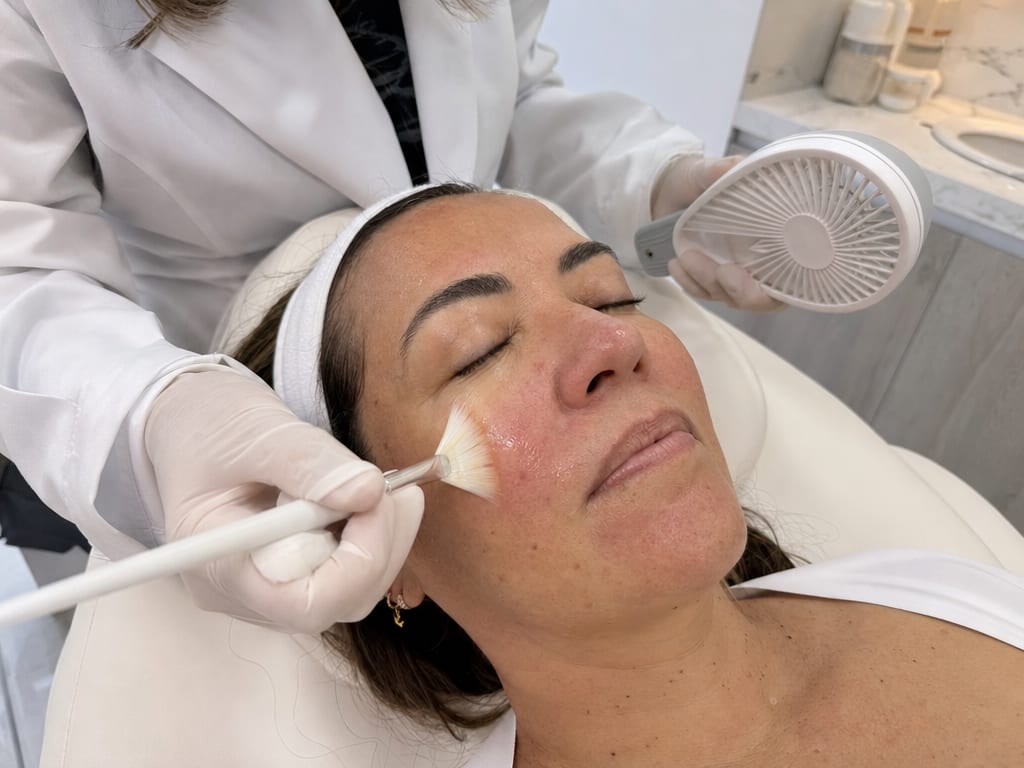
The skin is cleansed, the eyes are protected and the Nd:YAG settings are adjusted to the caliber of each vessel.
Treating the vessels
The physician traces each vessel with the handpiece. The light is absorbed by the blood in the vessel, heats it and closes it without damaging the surrounding tissue.
Soothing and written plan
The area is soothed, sunscreen is applied and aftercare is given in writing. The follow-up is scheduled based on how you respond.
What it offers
Acts on the vessel
It closes the telangiectasia so the body reabsorbs it · it doesn’t just hide it.
Precise
It treats individual vessels without damaging the surrounding tissue when the settings are right.
Few sessions
Generally between 1 and 3, depending on the number and caliber of the vessels.
No downtime
Most patients go back to their normal activities right away.
Technology with an indication
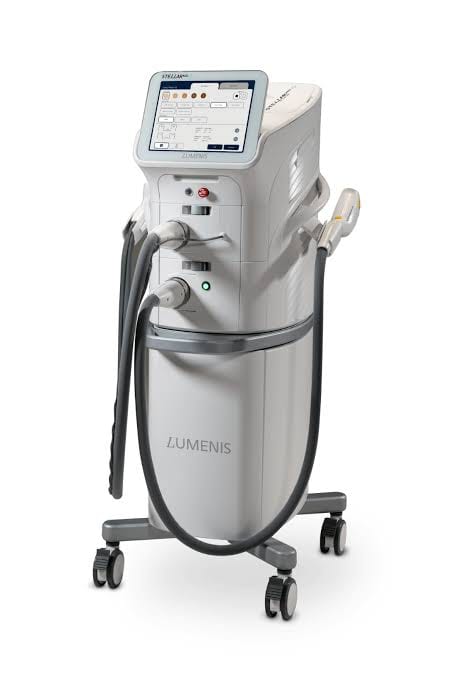
Stellar M22 · Nd:YAG
The Stellar M22 is a light and laser platform with several modules. Its Nd:YAG module emits a wavelength that penetrates deeply and is absorbed by the blood in the vessel, which allows visible vessels to be treated with precision. The same device includes IPL, useful when redness is diffuse. The physician chooses the module based on what the consultation shows.
Results and aftercare
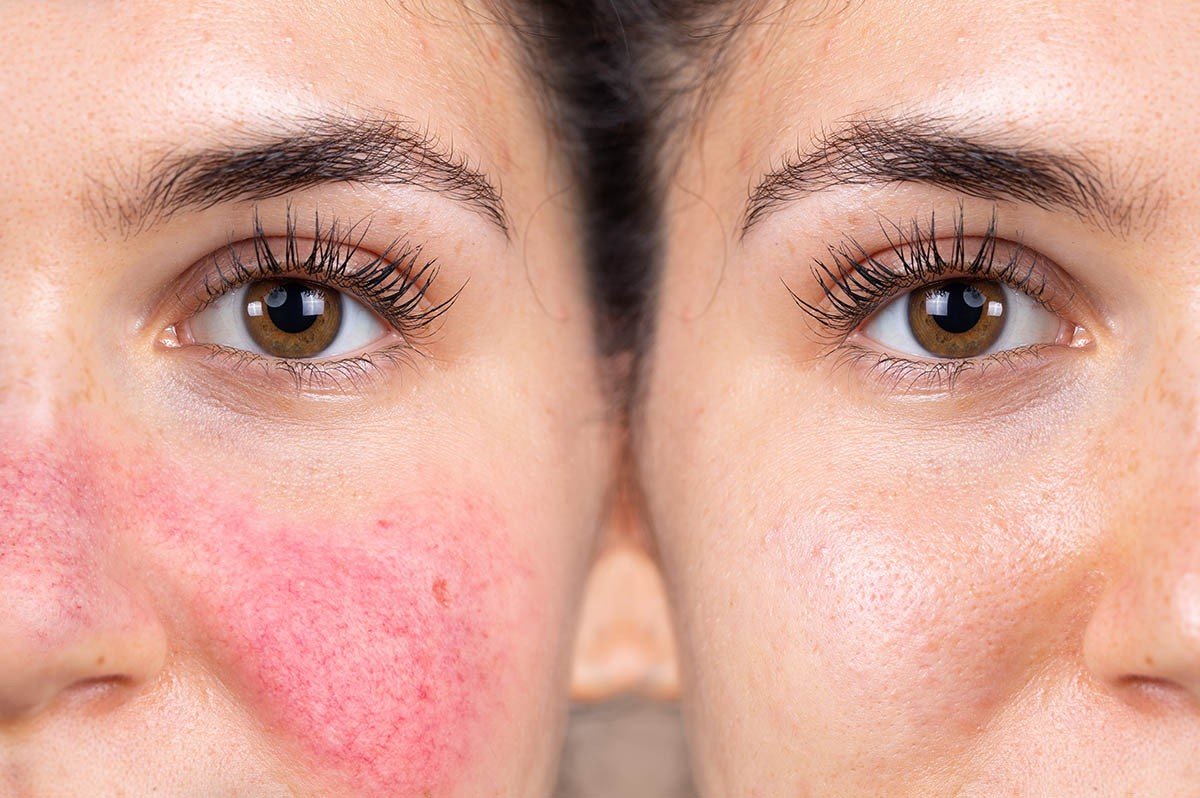
Treated vessels are reabsorbed gradually over the following weeks, and at the follow-up the physician assesses whether another session is needed. Results in the treated vessels are usually long-lasting, but new ones can appear over time, especially with rosacea, sun exposure or sudden temperature changes. That’s why controlling the cause is part of the plan.
Aftercare after the session
- Avoid sun exposure, especially during the first 24 hours
- Daily sunscreen, reapplied in the following days and weeks
- Avoid intense heat and saunas while the skin recovers
- Don’t rub or exfoliate the treated area
- Contact us if swelling or bruising doesn’t ease within a few days
Results vary from patient to patient.
Pairs well with
Frequently asked questions
How long does the treatment take?
About 30 to 60 minutes, depending on the area treated and the number of spider veins. It includes skin prep, eye protection, treating each vessel and soothing the area at the end. You leave with written instructions for the following days.
How many sessions are needed?
Generally 1 to 3 sessions. Every case is different: the number, caliber and depth of the vessels change the response. At the follow-up the physician assesses whether another session is needed and when to do it, based on how the treated vessels were reabsorbed.
Does the Nd:YAG laser hurt?
It feels like a pinpoint of heat with each pulse, a brief discomfort most patients tolerate well. Areas near the nose tend to be more sensitive. If the discomfort increases, the physician adjusts the pace of the session. Tolerance varies from person to person.
What side effects does it have?
They are usually minimal: redness, swelling and sometimes temporary bruising in the treated area, which clear on their own over the following days. Less often, pigment changes can appear, especially with sun exposure afterward. That’s why sun protection is part of the treatment.
Can I go back to my activities the same day?
Most patients return to their normal activities right away. We recommend avoiding sun exposure, especially during the first 24 hours, and using sunscreen daily. If you have an important event, leave some margin in case a bruise or some swelling appears.
Do spider veins come back?
Treated vessels usually don’t reappear, but the treatment doesn’t prevent new ones from forming. With rosacea, sun damage or a tendency to react to sudden temperature changes, new telangiectasias can appear over time. Controlling the cause and having regular check-ups is the honest way to maintain the result.
What’s the difference between Nd:YAG and IPL?
IPL works with broad-spectrum light and is useful for diffuse redness and some dark spots. Nd:YAG is a single-wavelength laser that penetrates deeper and is precise on defined vessels. Both are on the Stellar M22, and they are sometimes combined depending on the case.
Can it be done during pregnancy or on darker skin?
During pregnancy and breastfeeding we prefer to postpone it. On darker skin, Nd:YAG is one of the most widely used lasers because of its wavelength, but the risk of dark spots after inflammation exists, so the settings are adjusted cautiously. Tanned skin is never treated.
Read before your appointment


Is Nd:YAG for telangiectasias right for you? · we’ll see at the consultation
Forty-five minutes with a physician, a skin analysis and a written, phased plan with complete prices. You decide afterwards, with no pressure. Living abroad? Start with a virtual consultation.