Q-Switched Nd:YAG for dark spots
Break up pigment · with precision
The Stellar M22’s Q-Switched Nd:YAG fires very short pulses of light that break pigment into particles your body clears little by little. It’s useful for several types of spots, but not all of them. Whether it’s indicated depends on the diagnosis, not the device.
Results in dark spots and pigmentation · identity protected
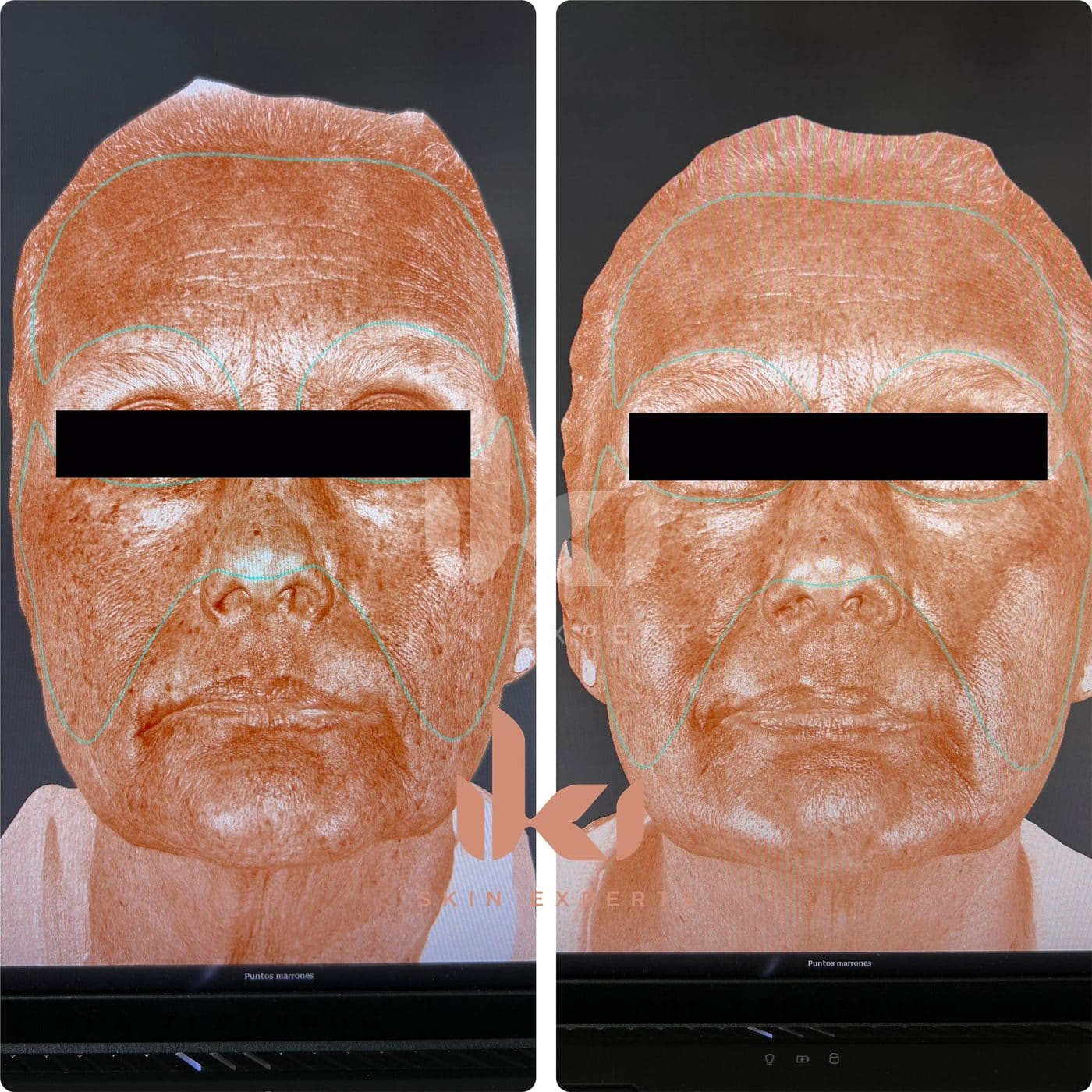
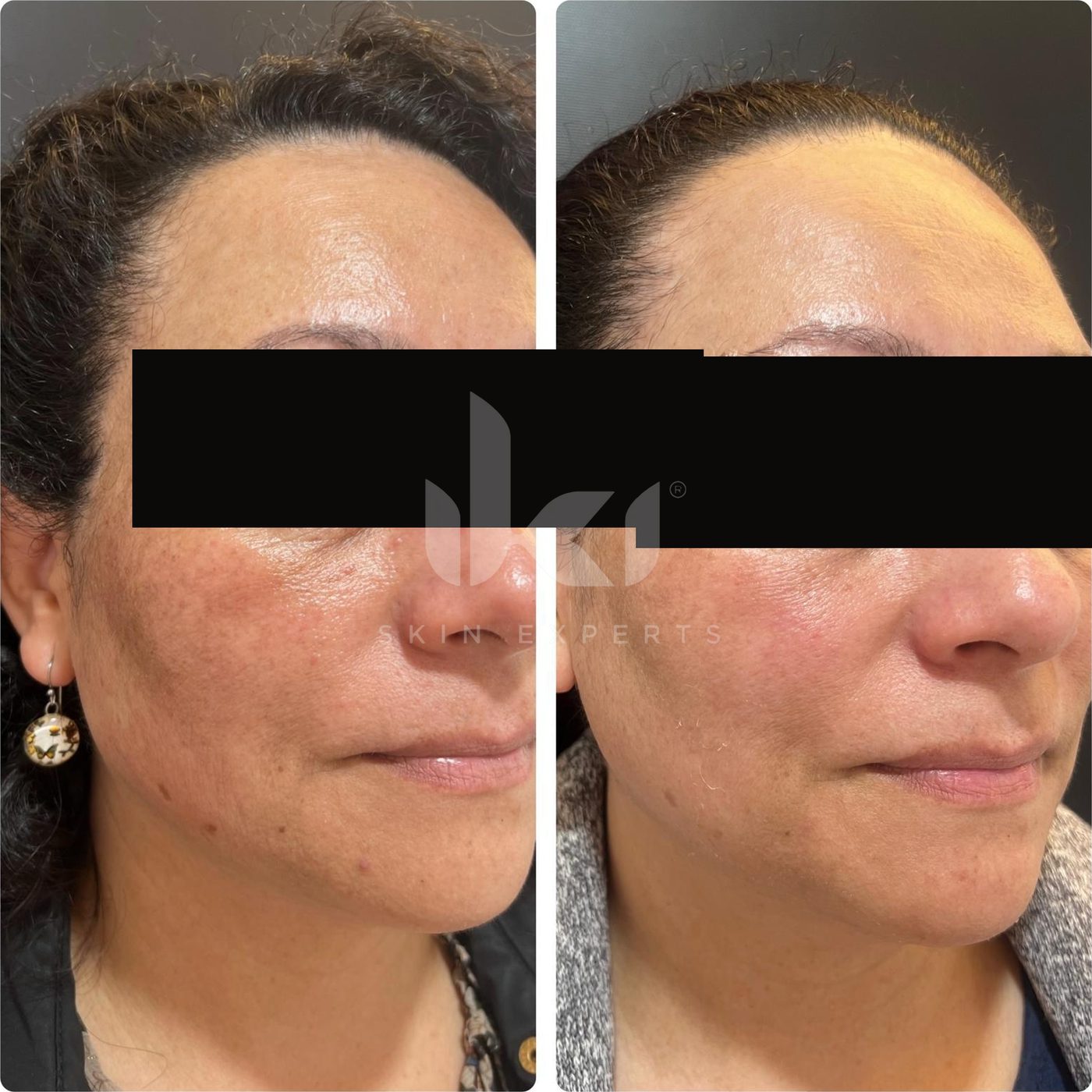
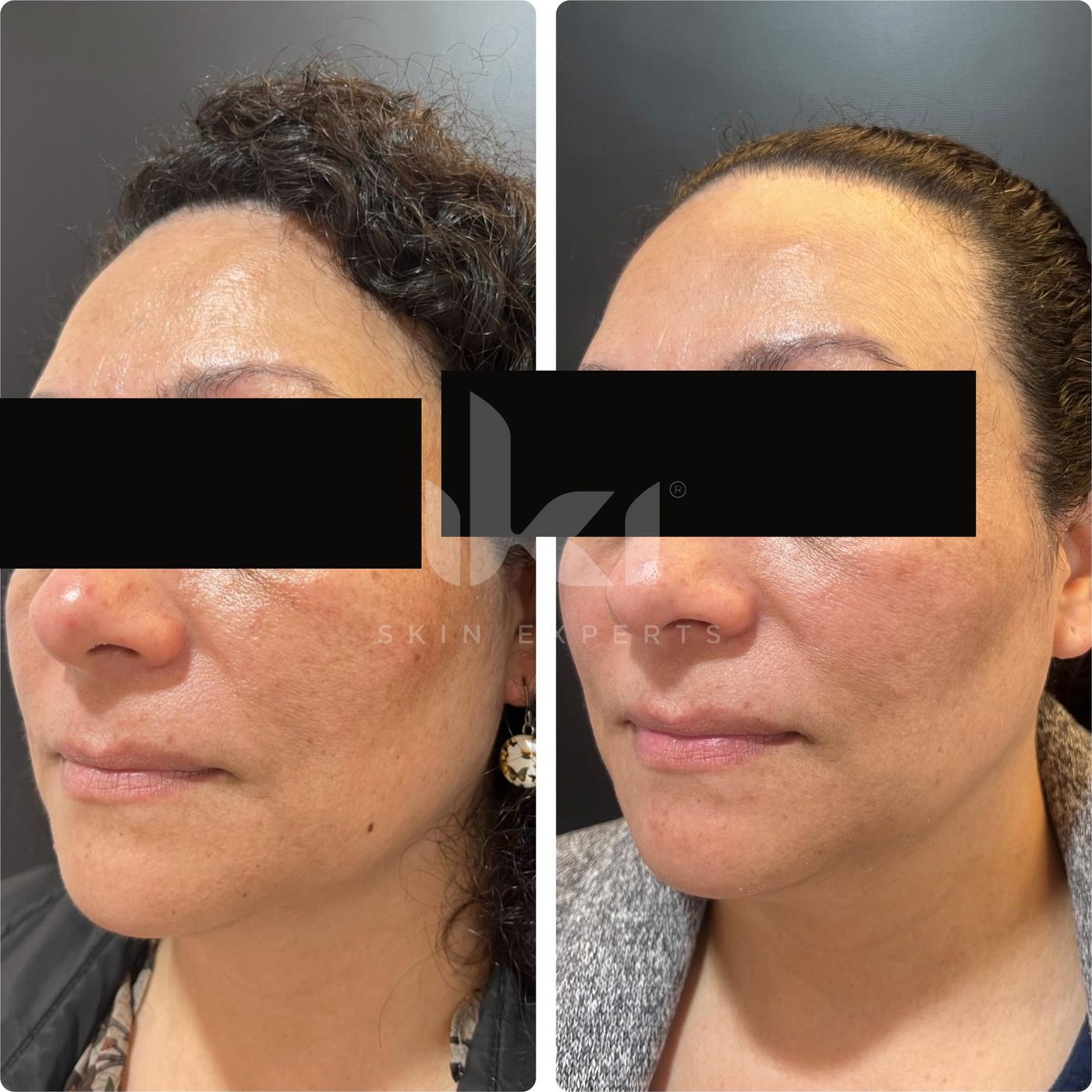
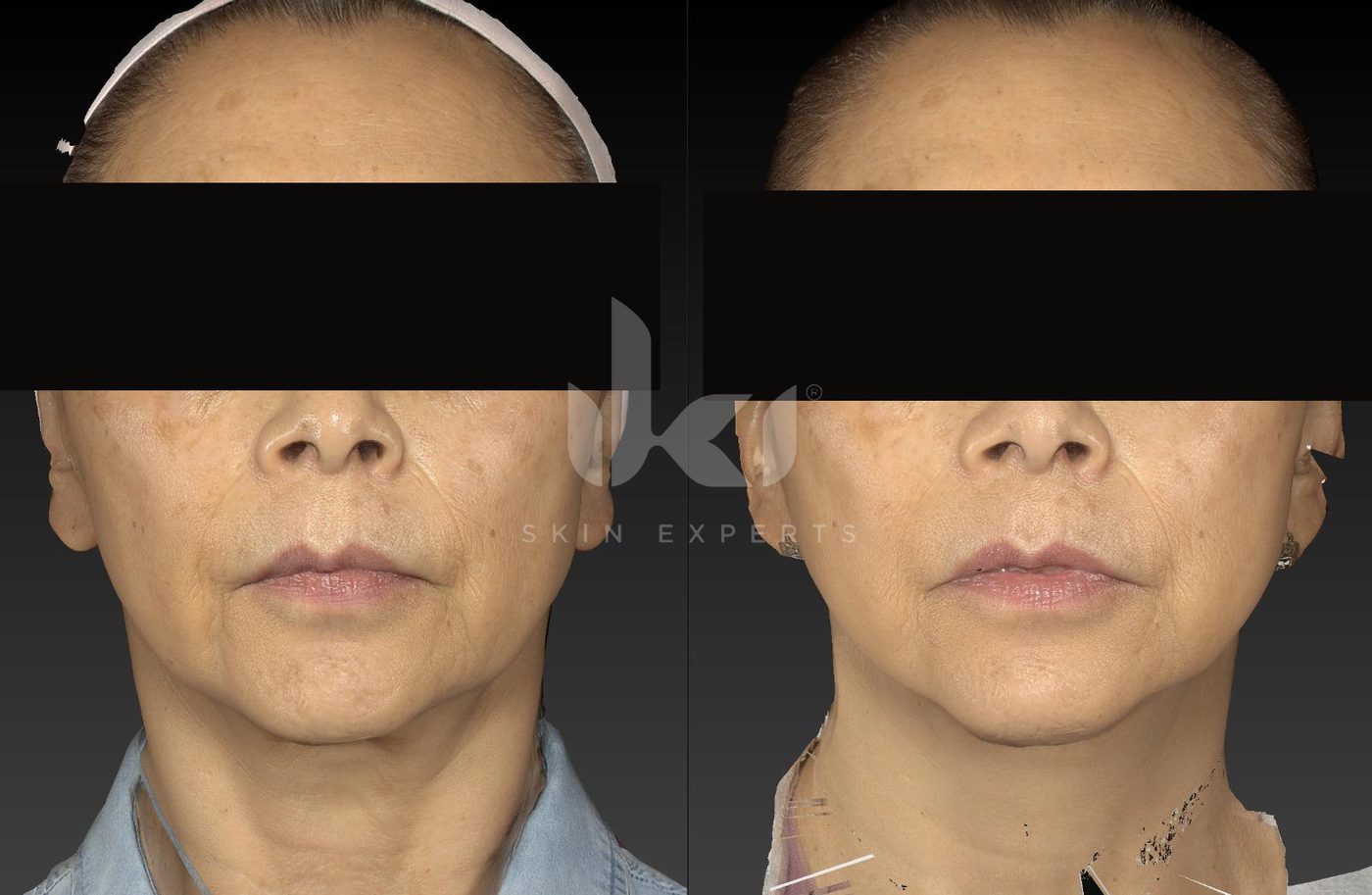
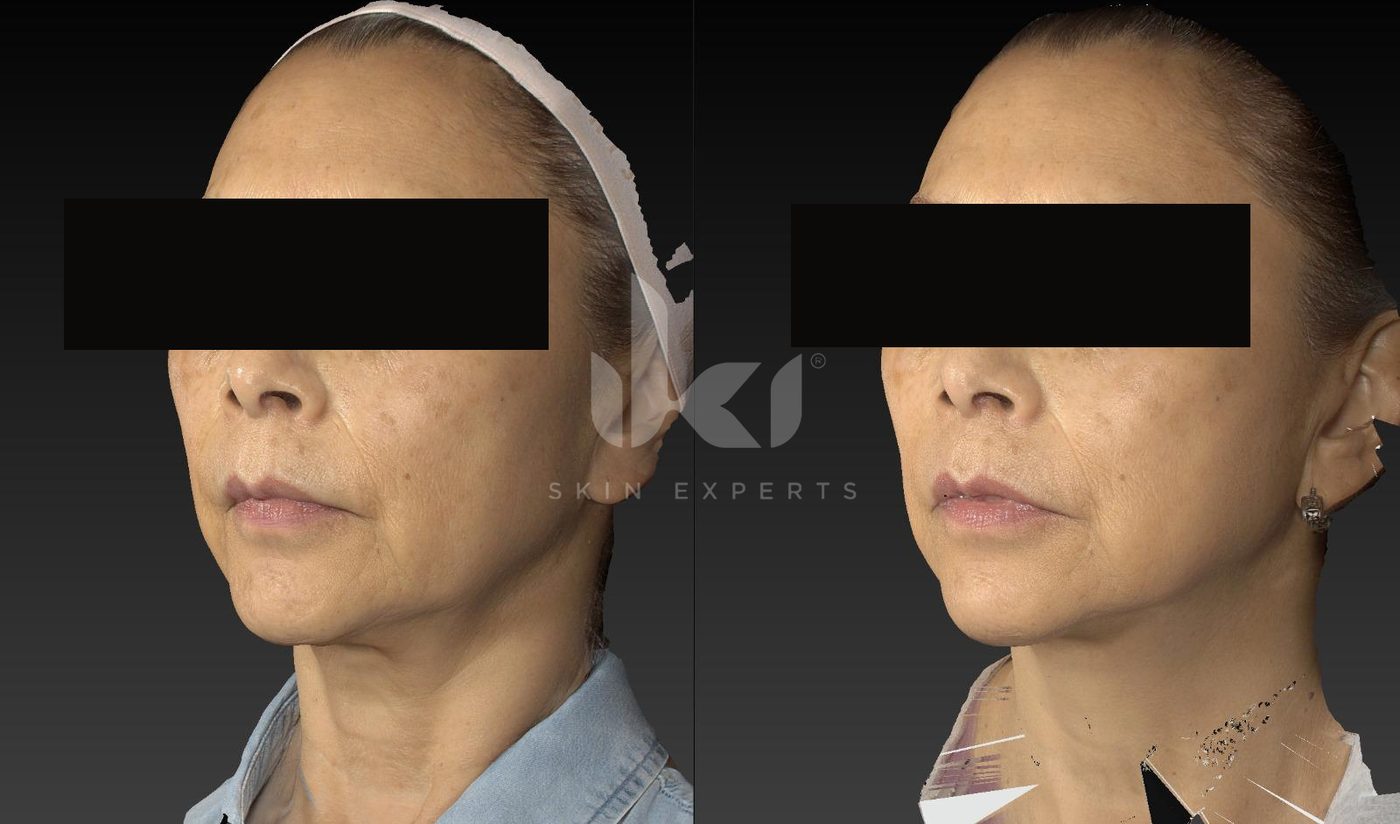
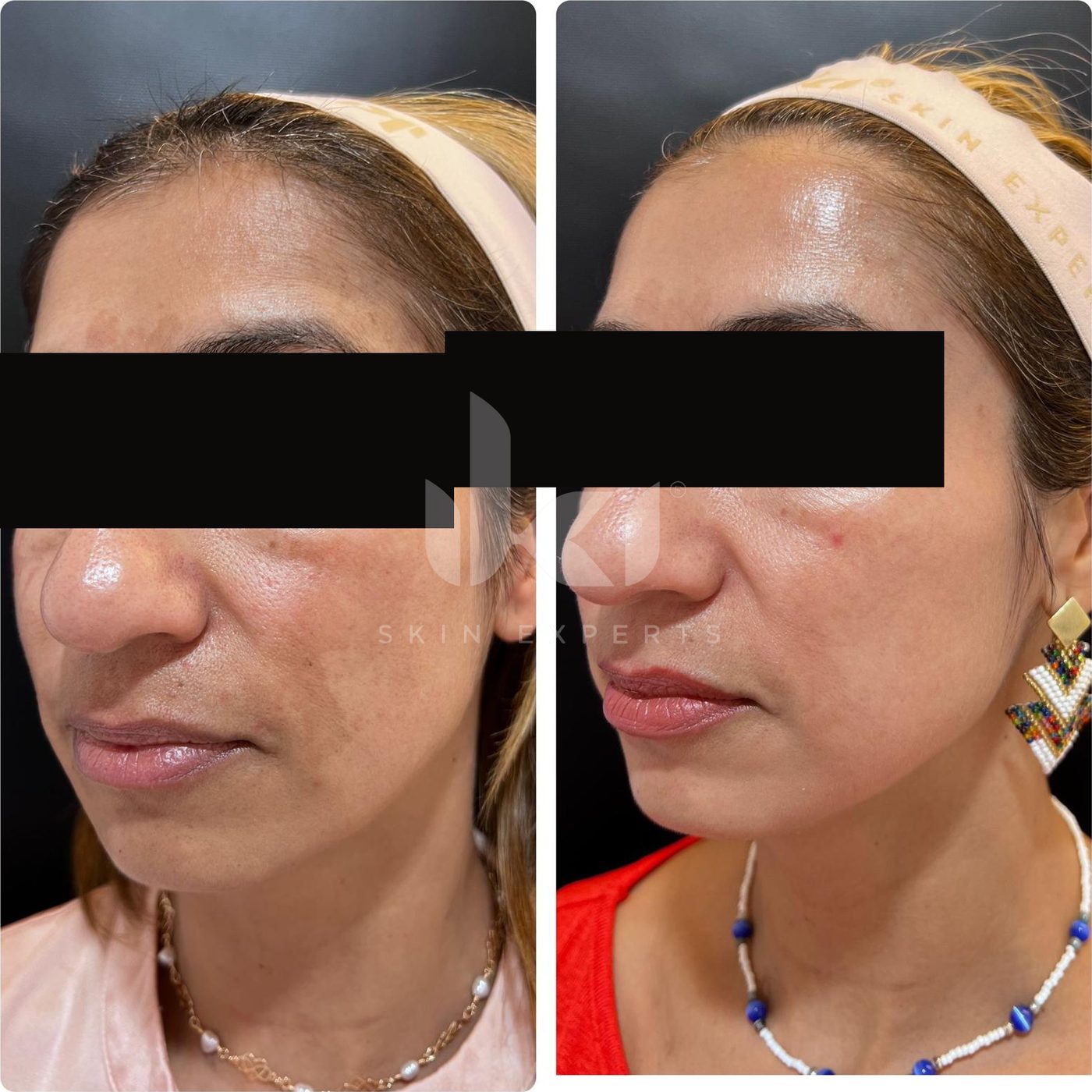
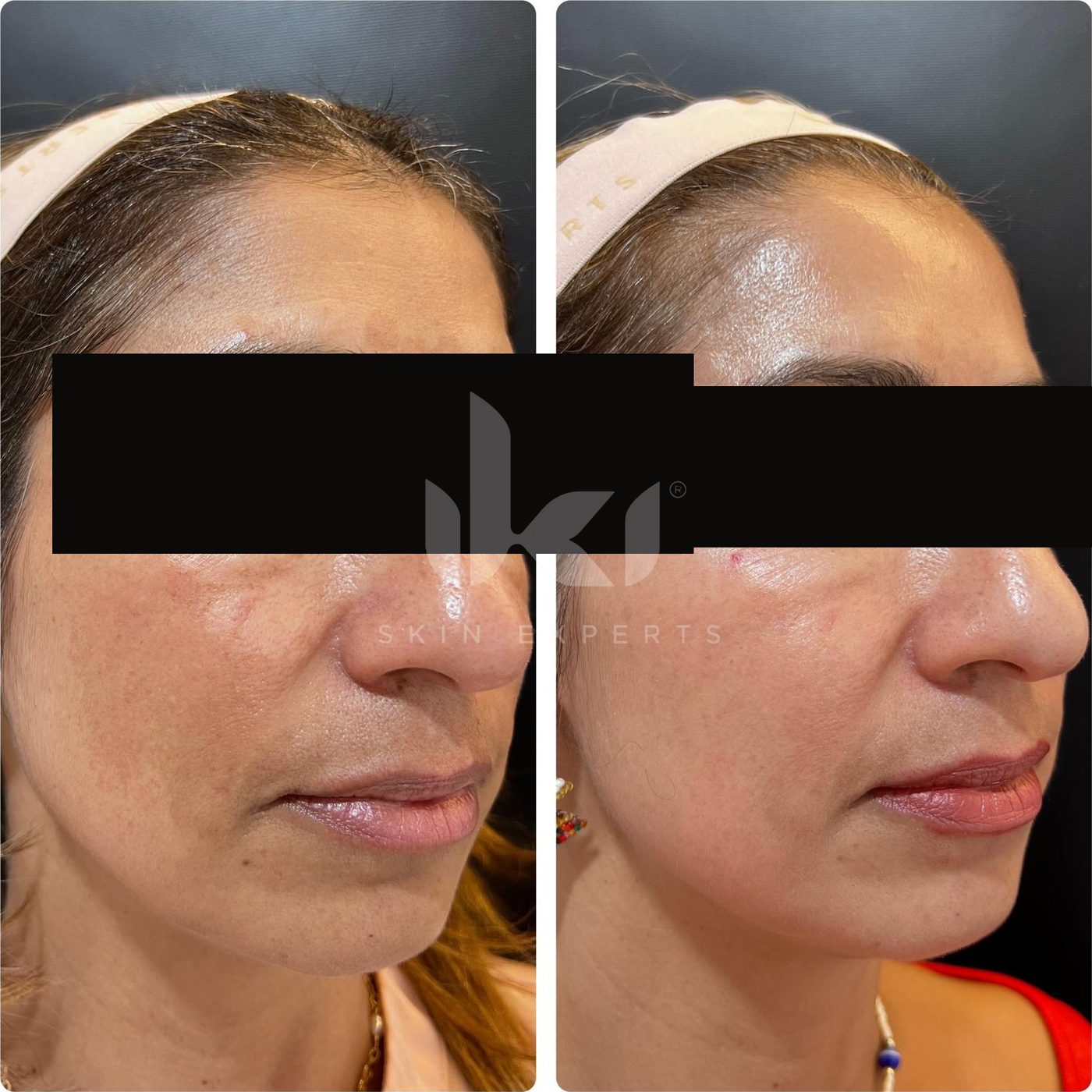
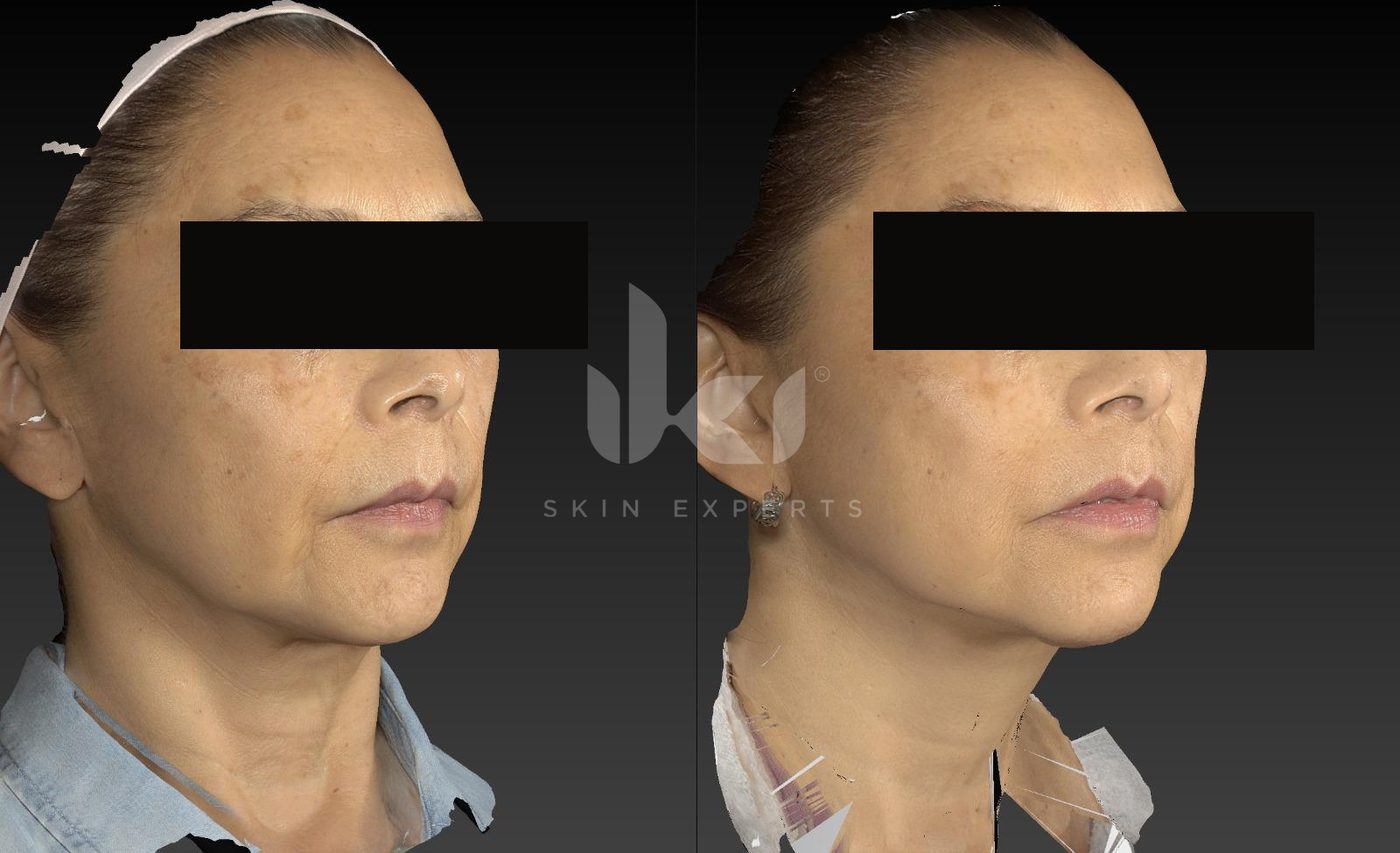
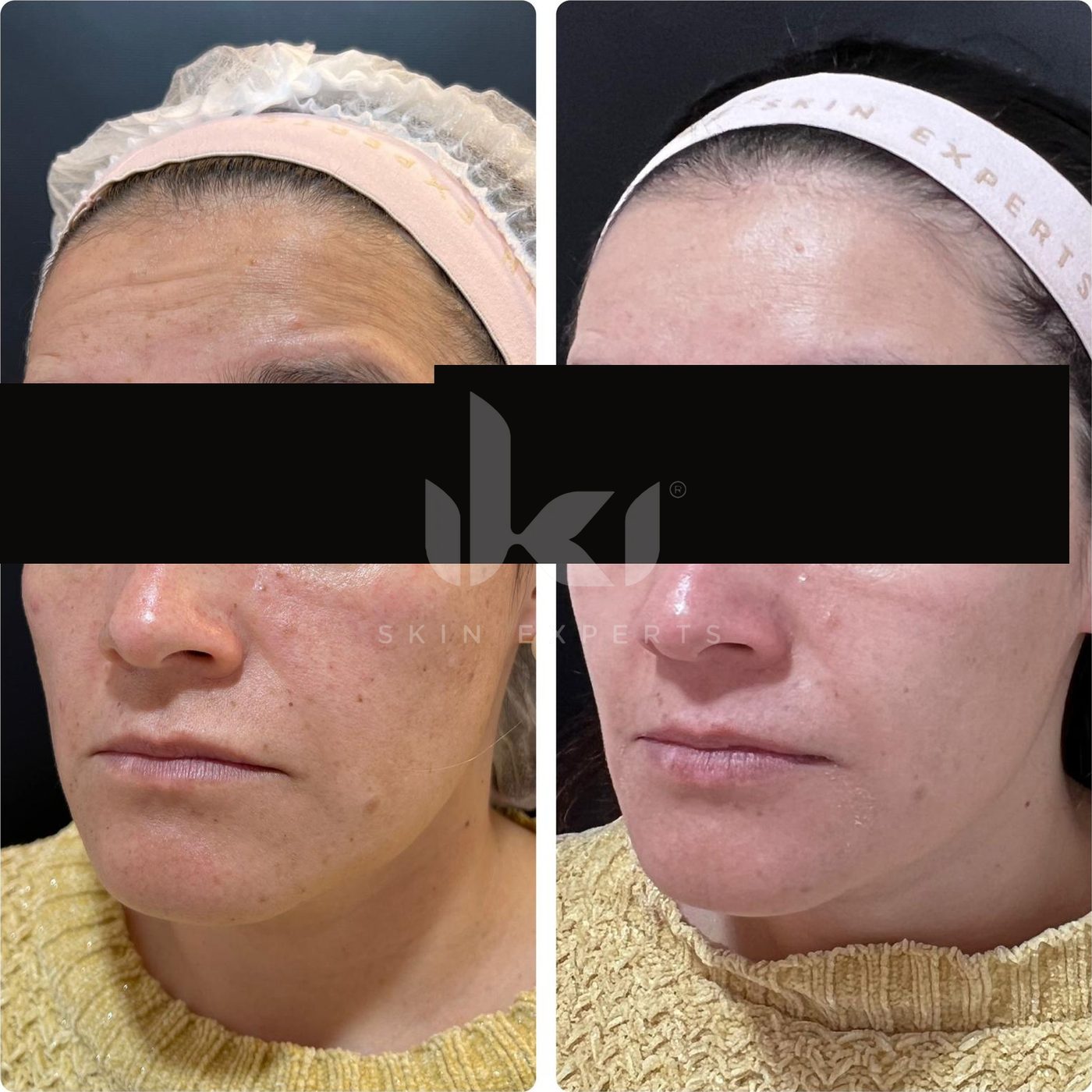
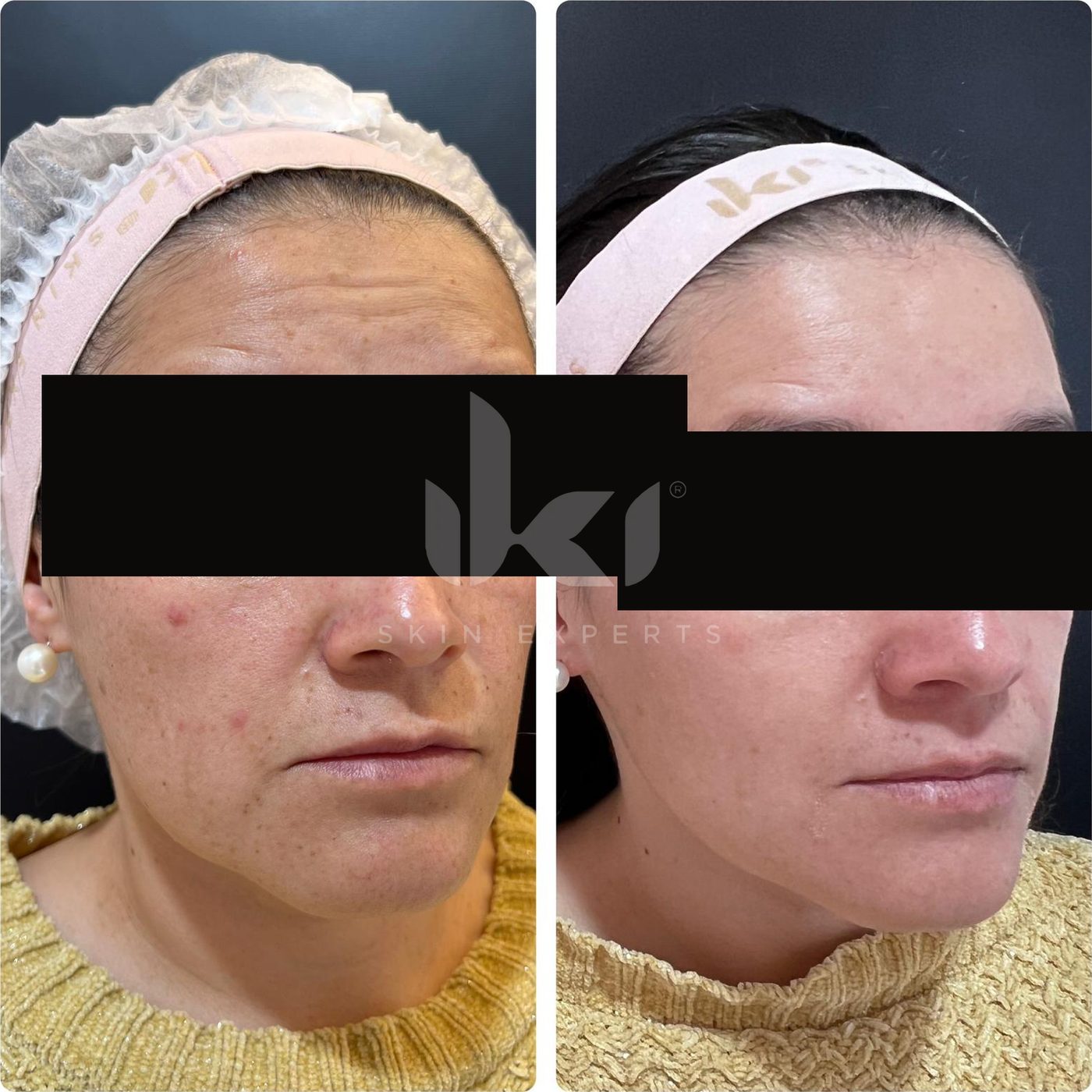
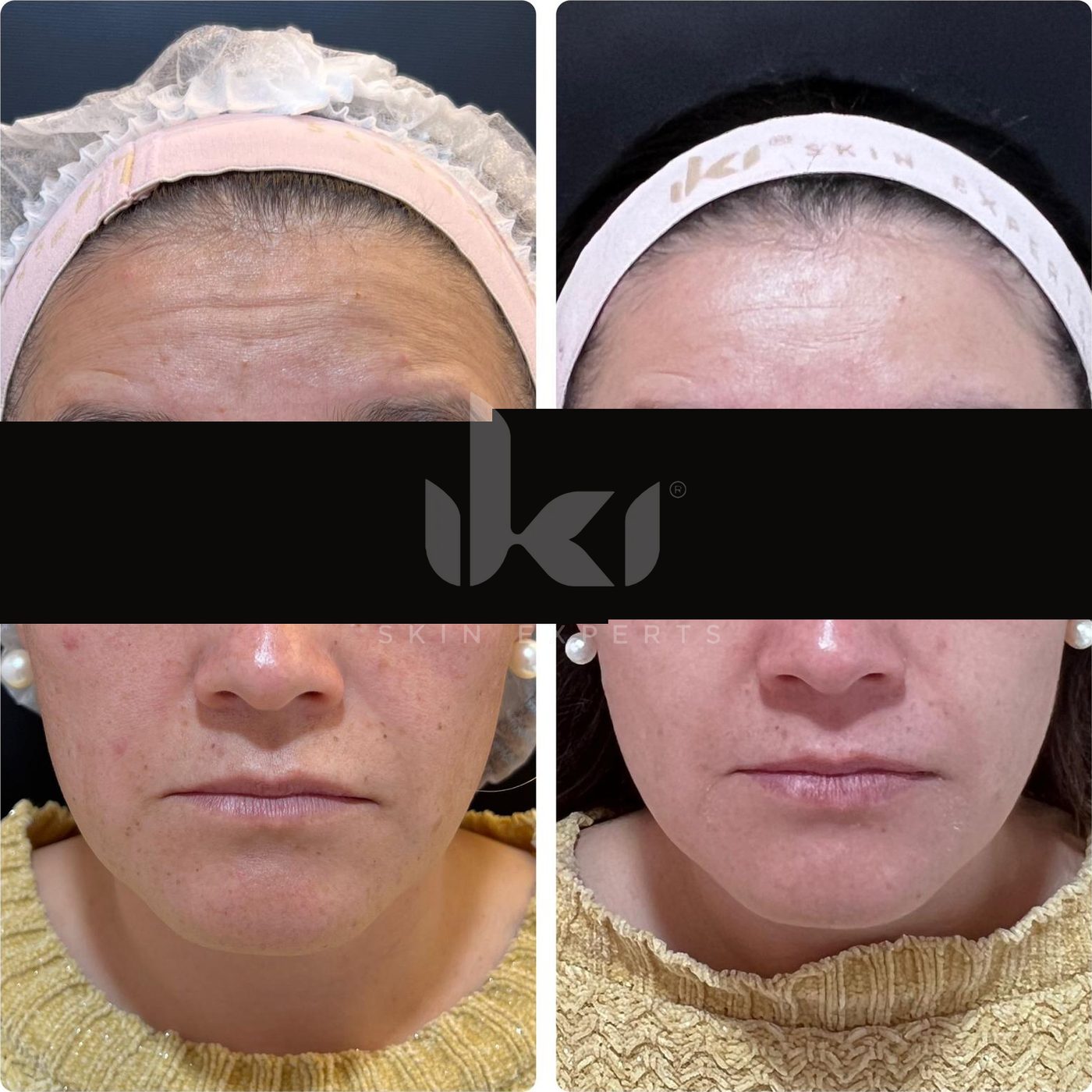
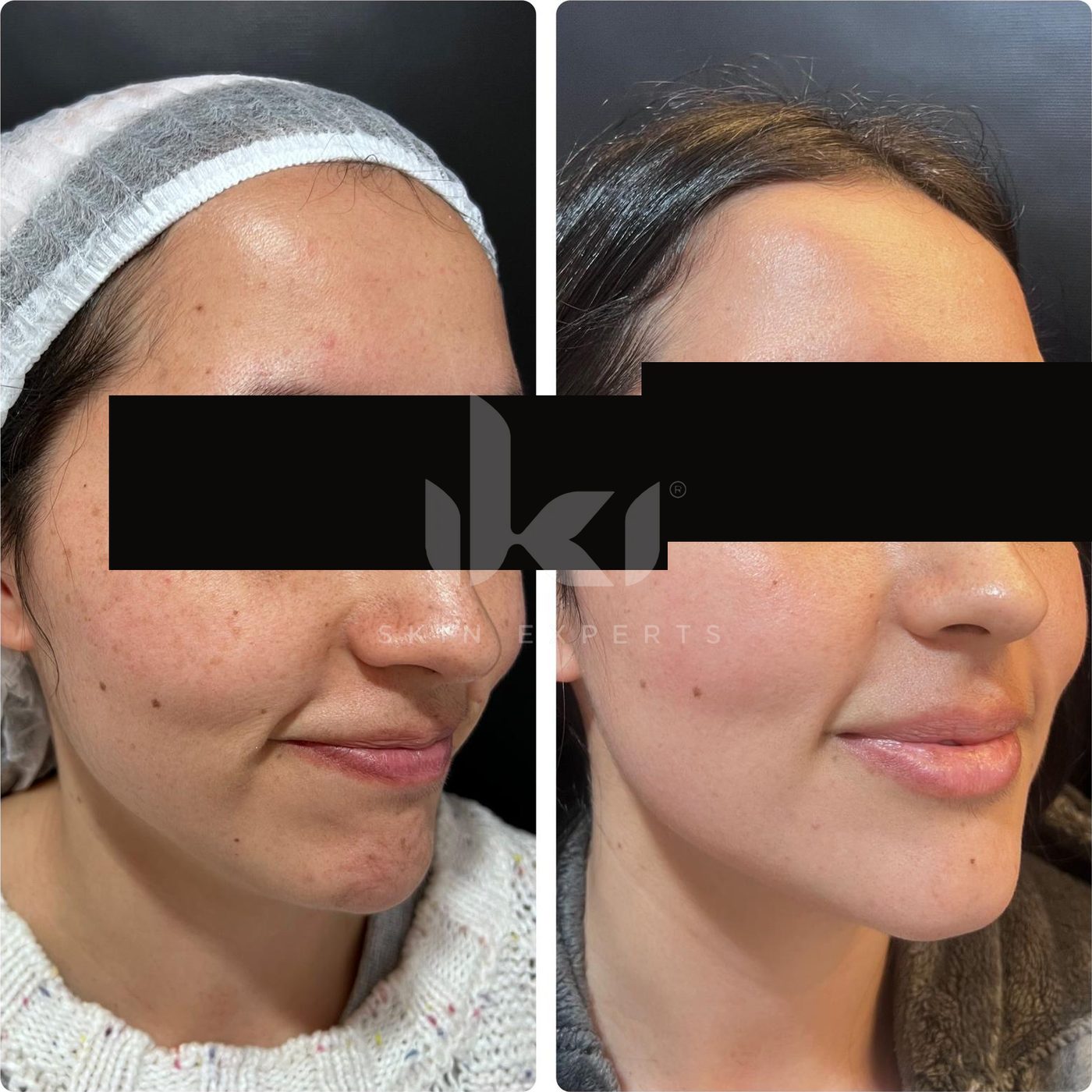
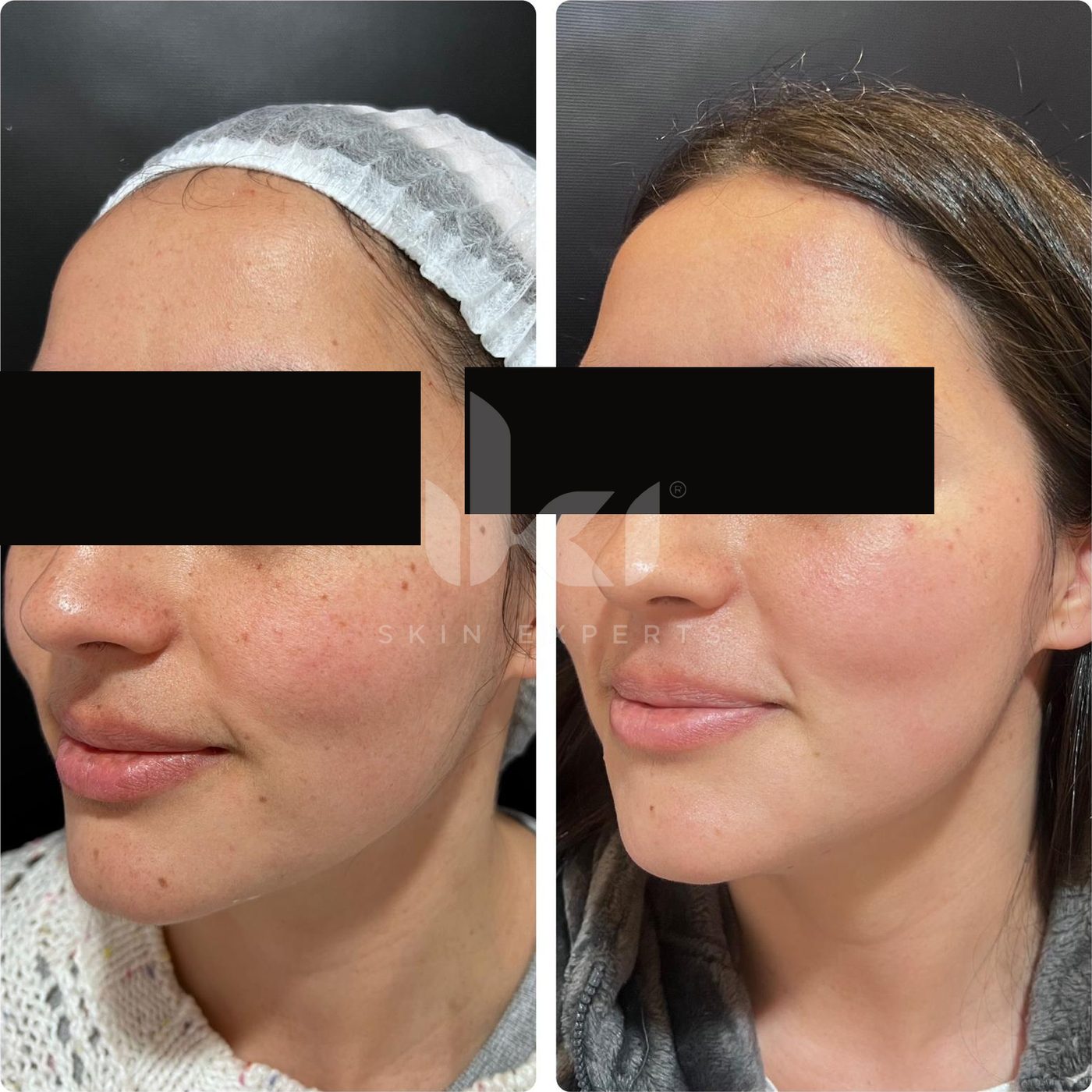
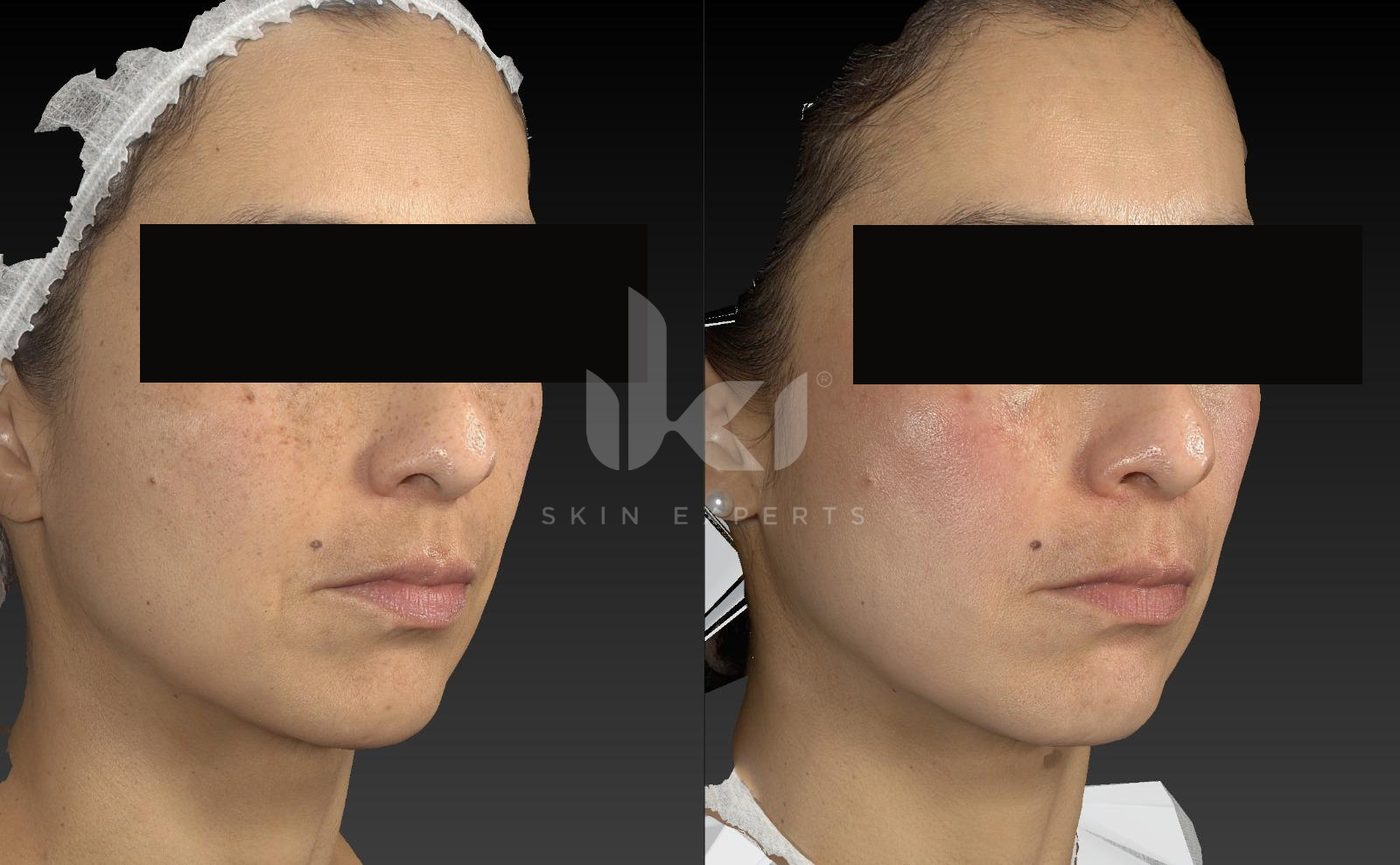
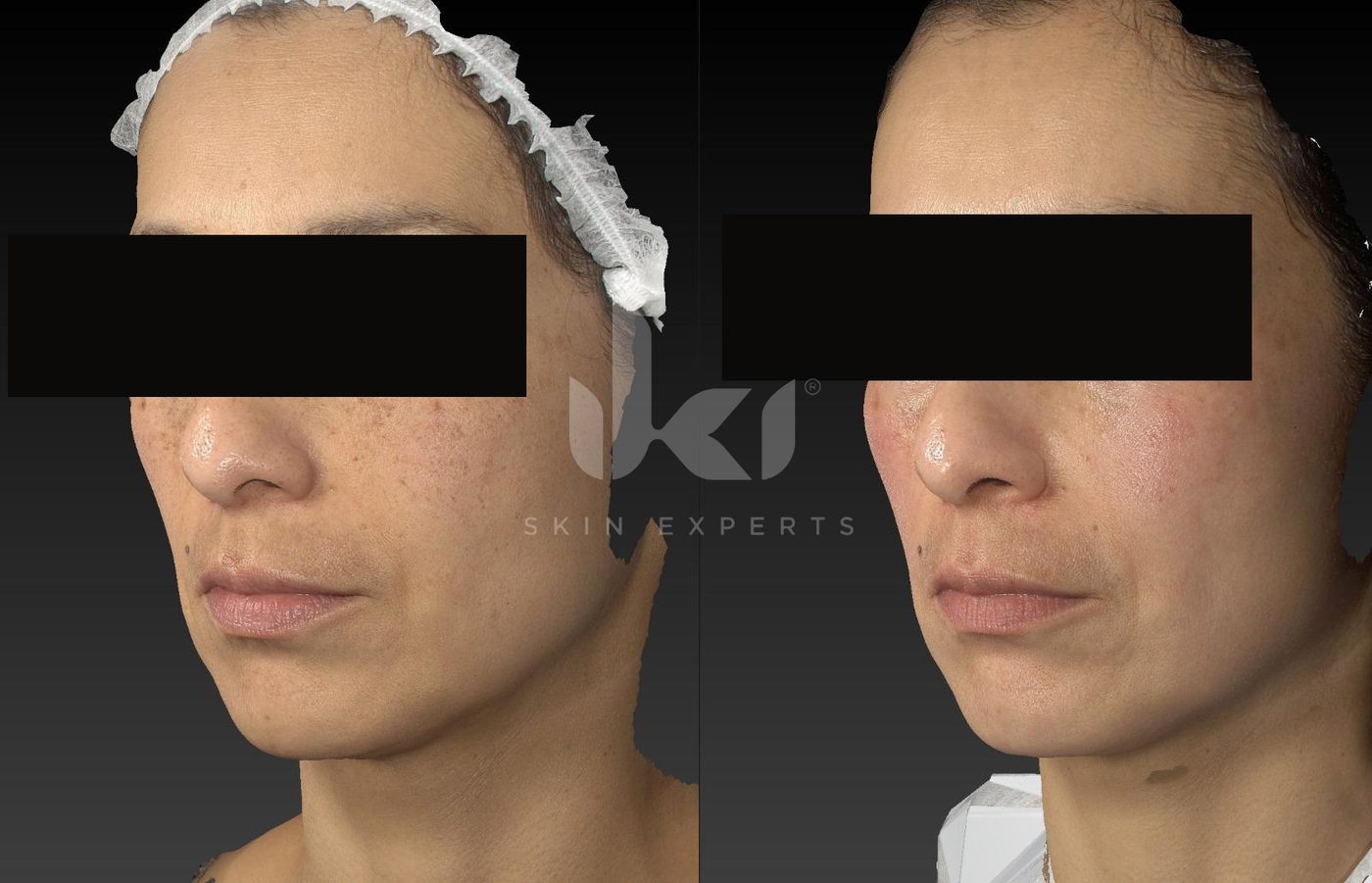
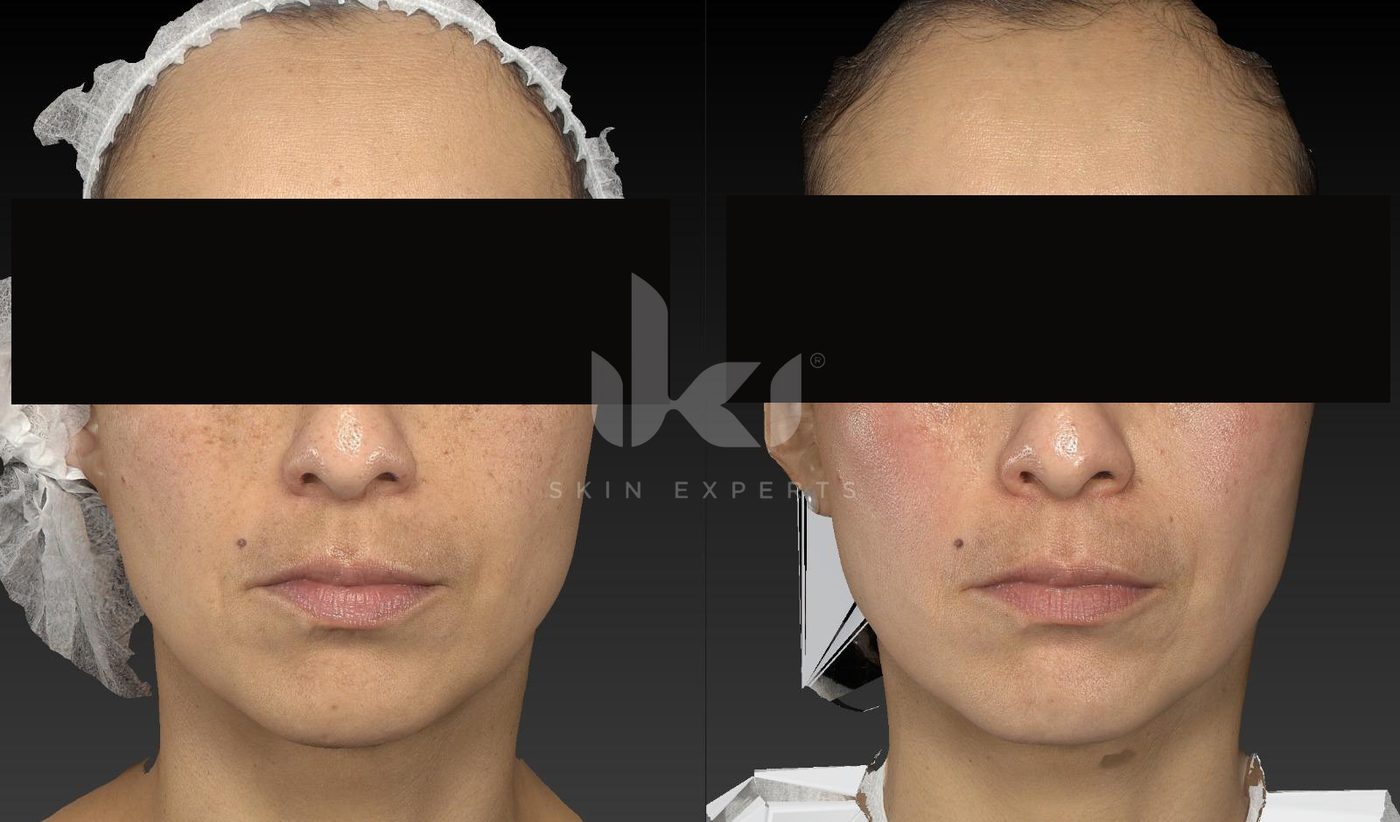
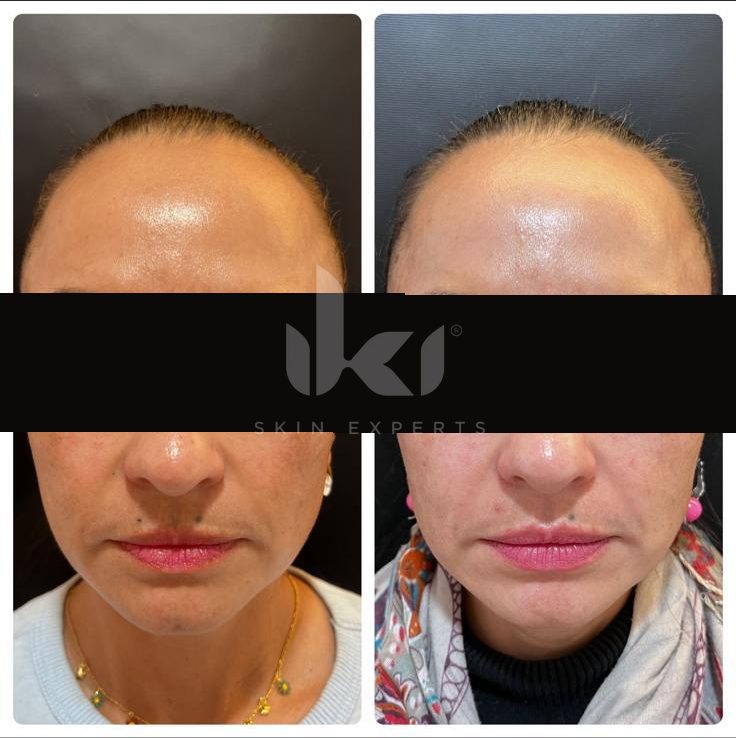
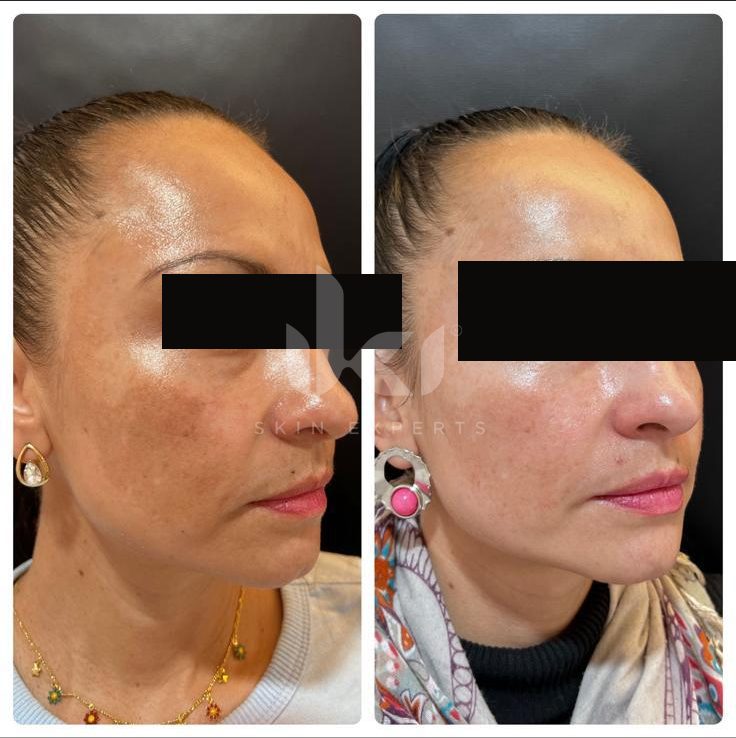
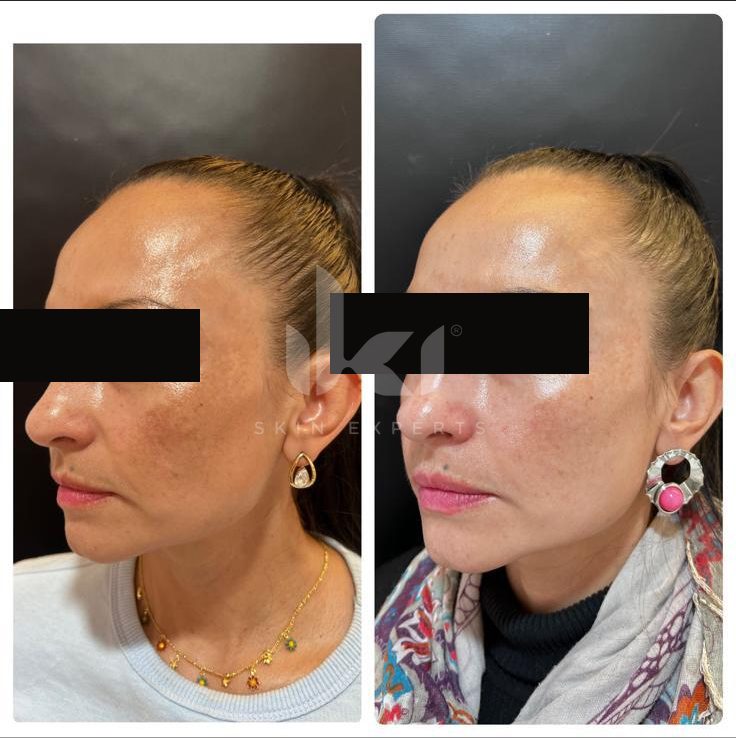
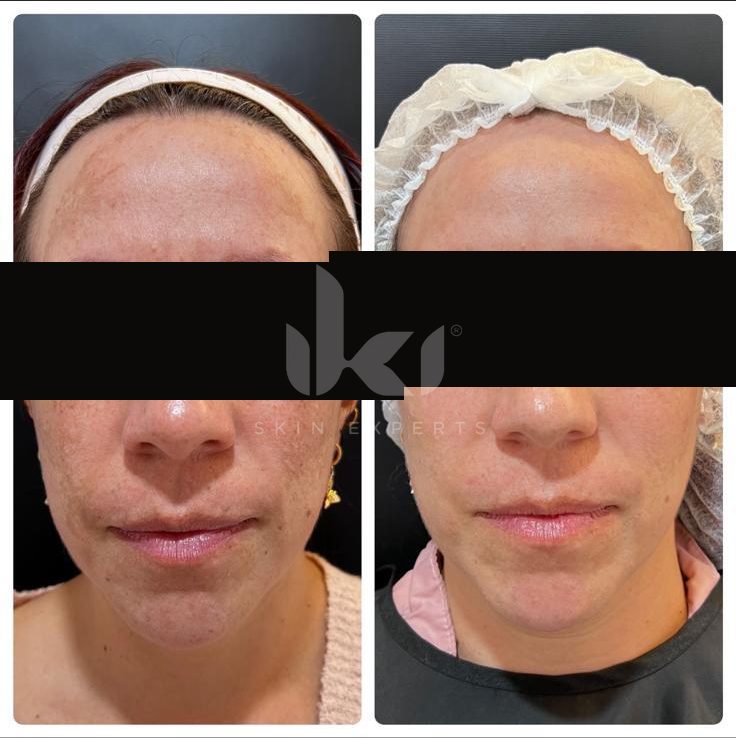
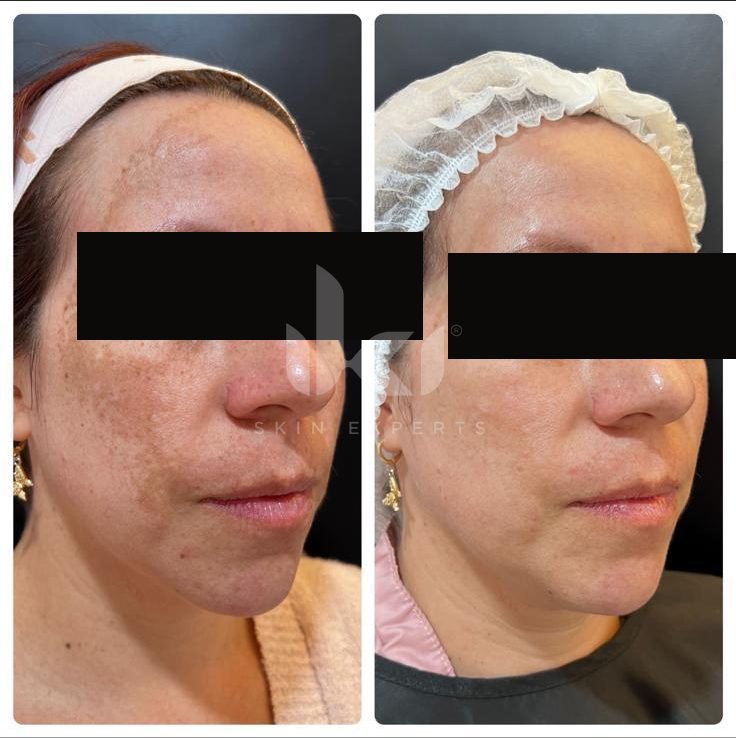
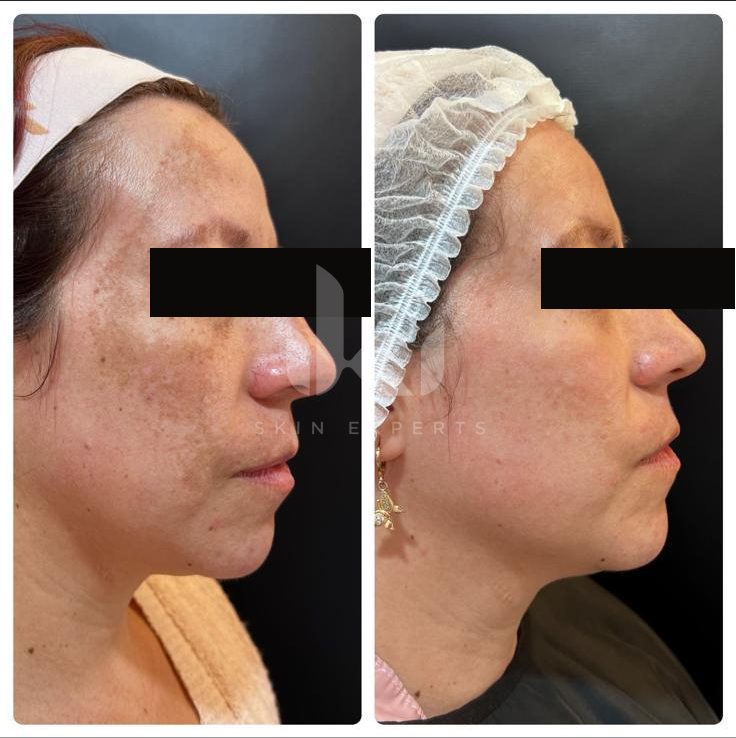
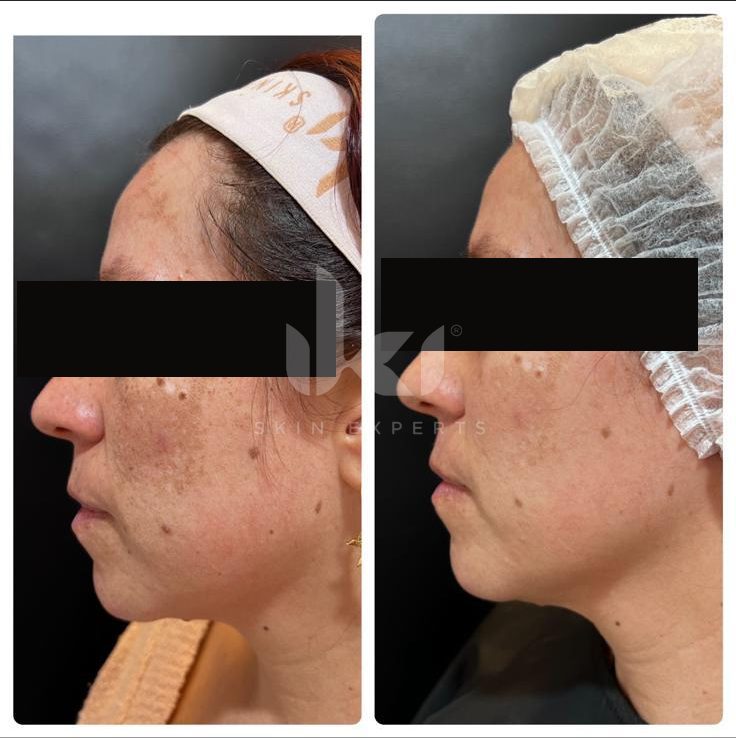
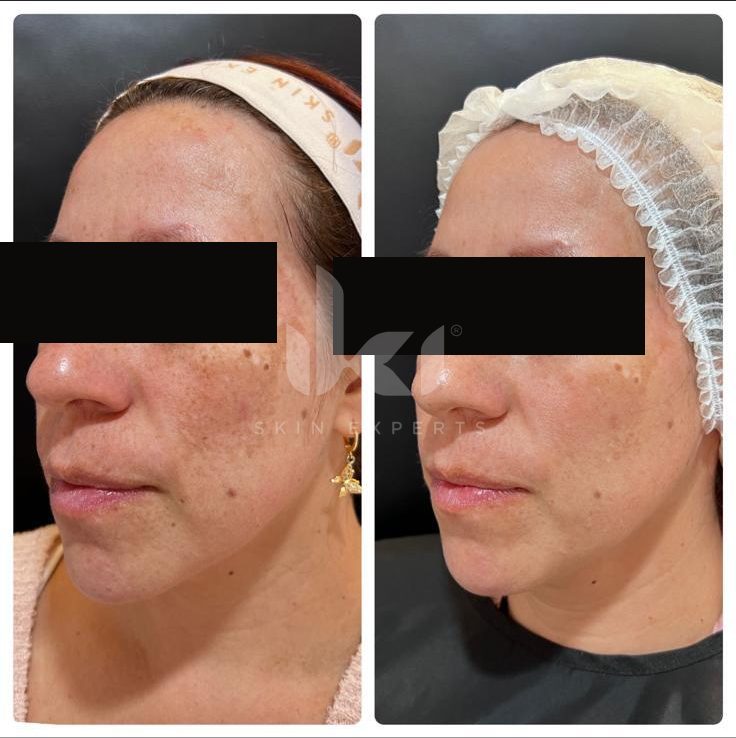
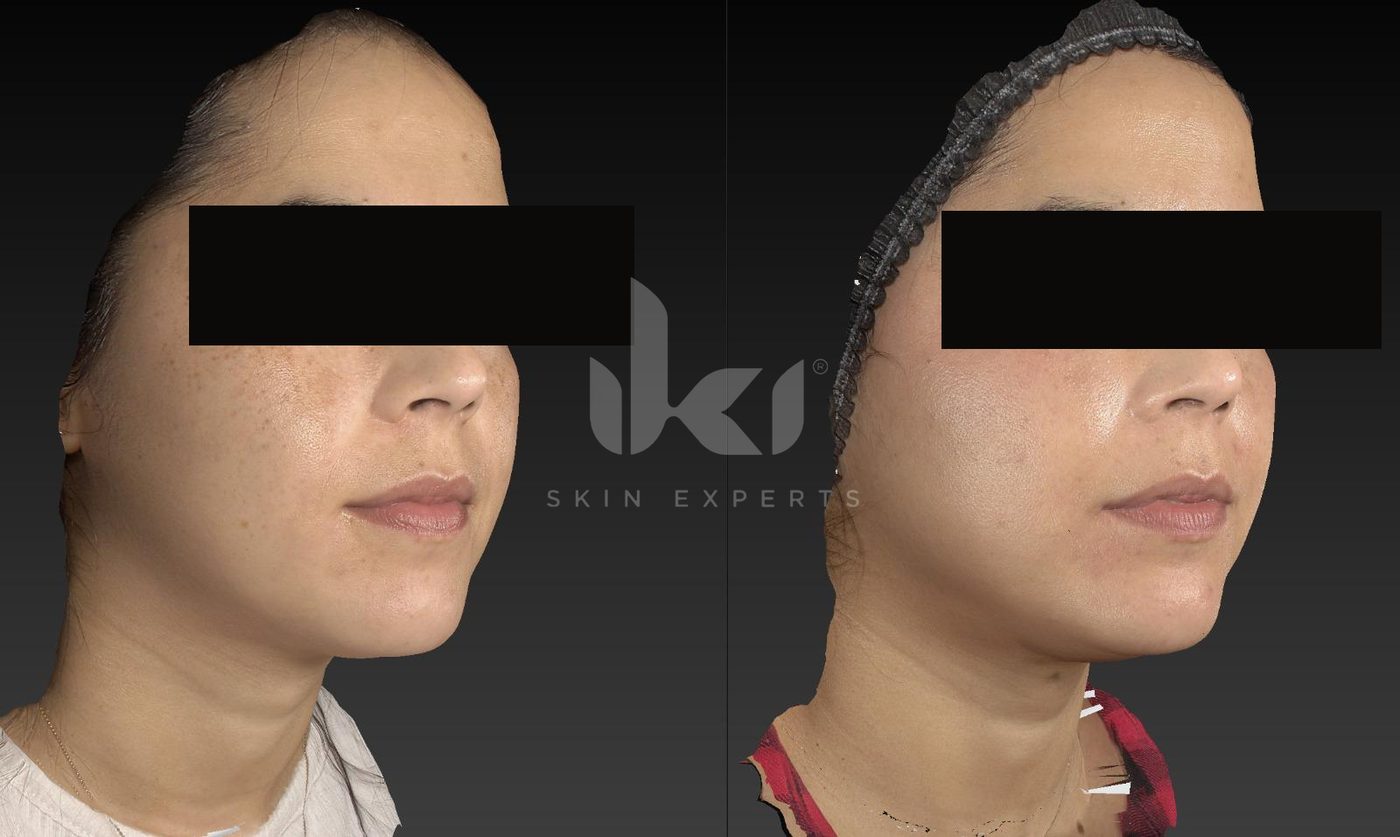
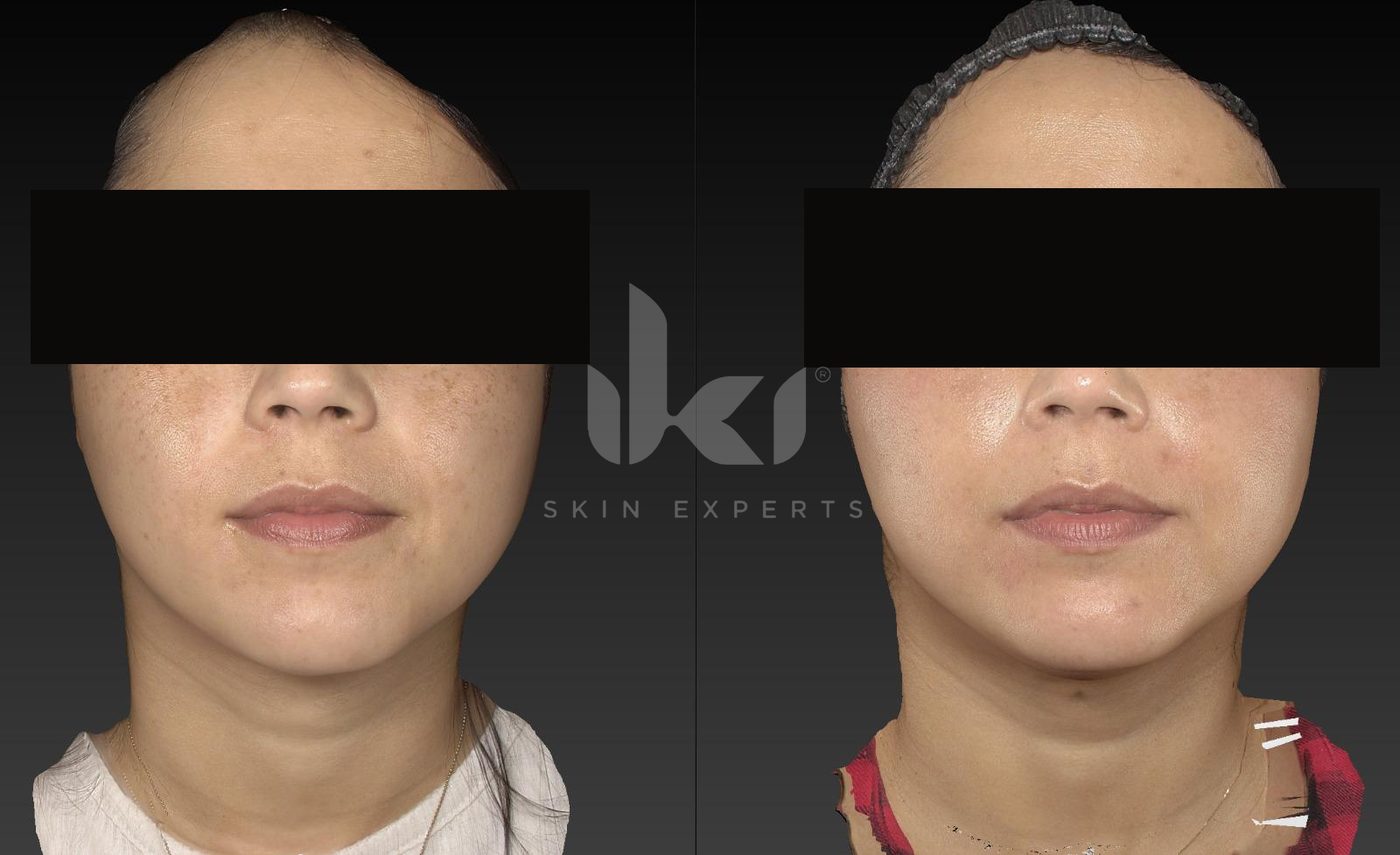
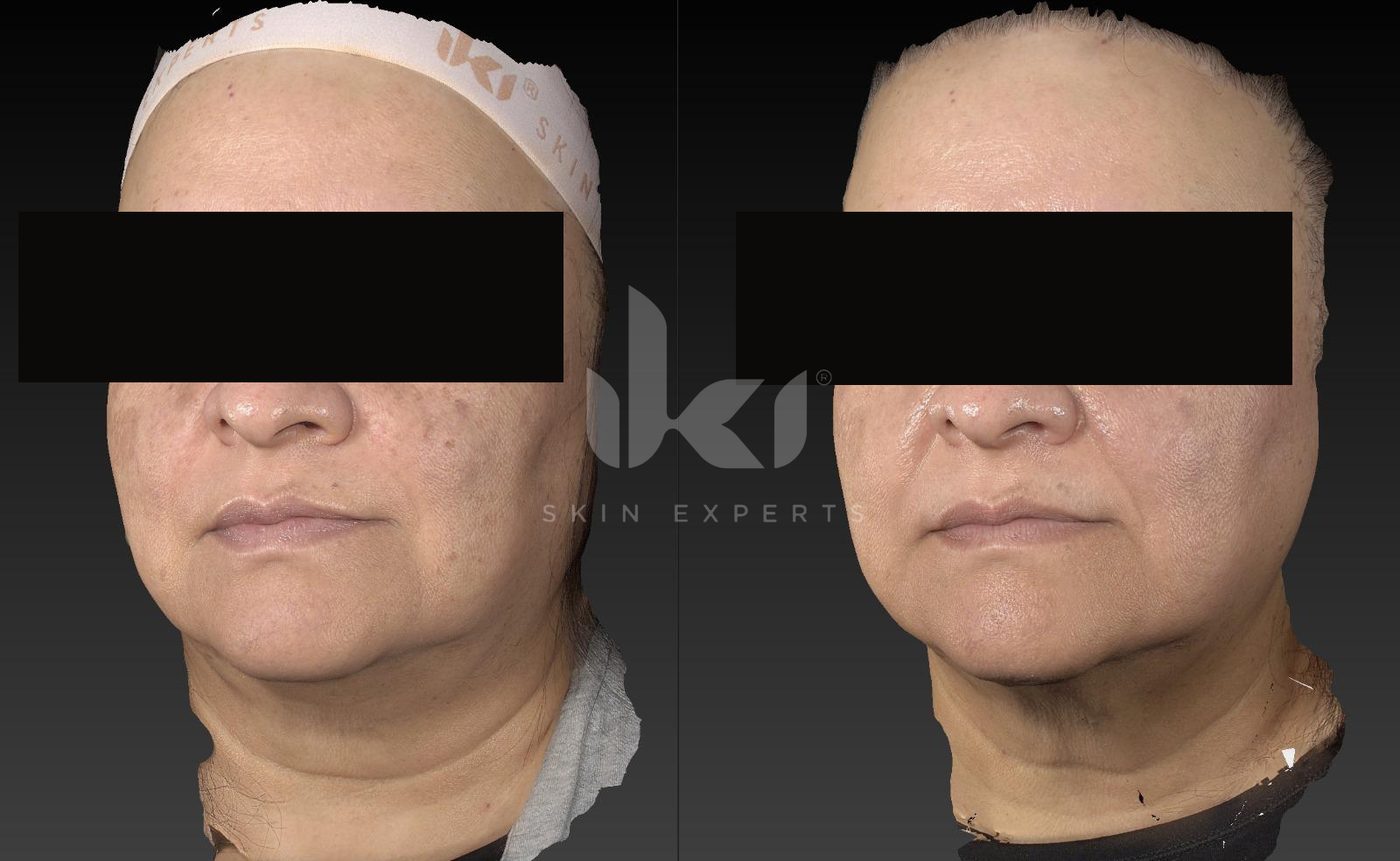
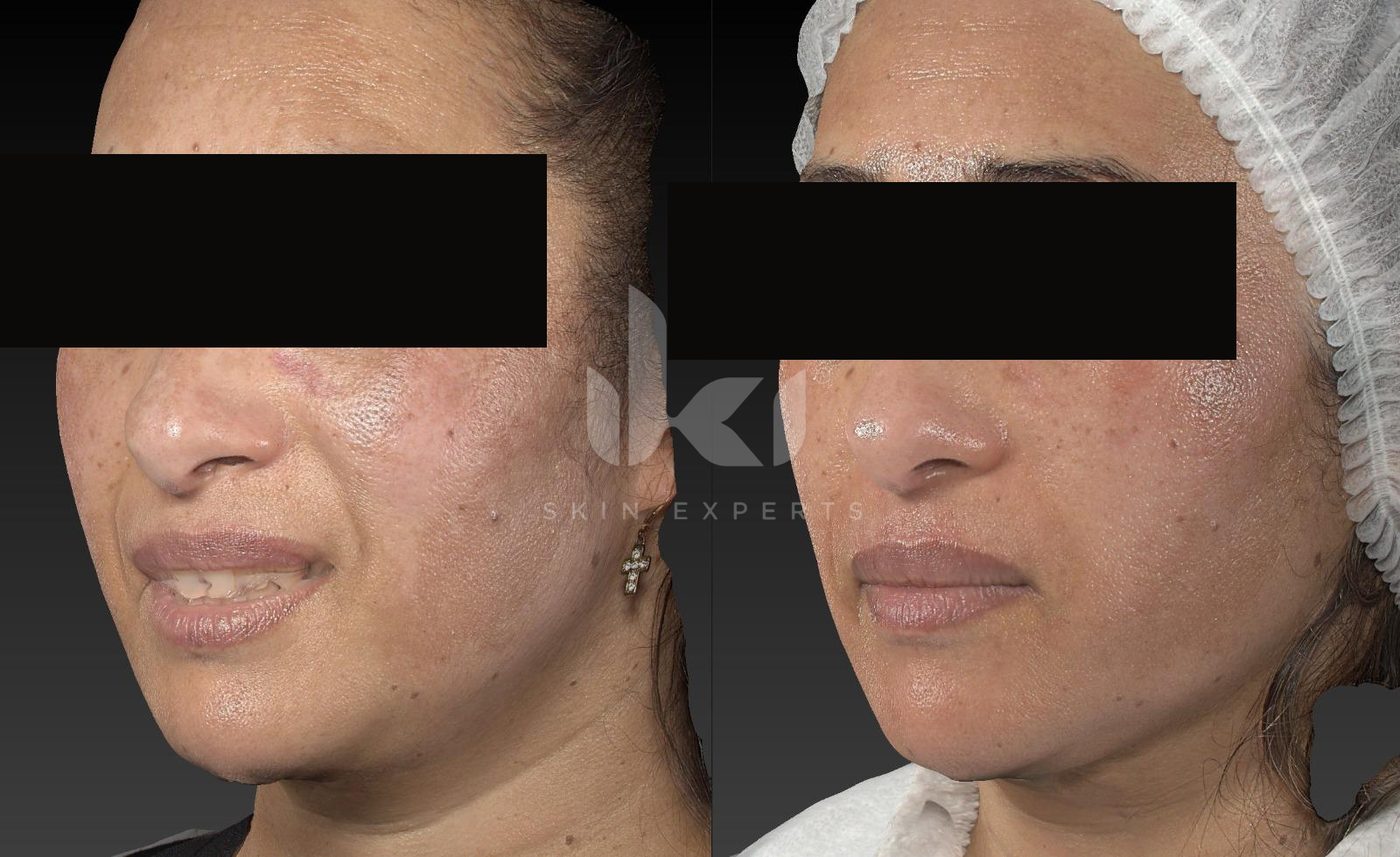
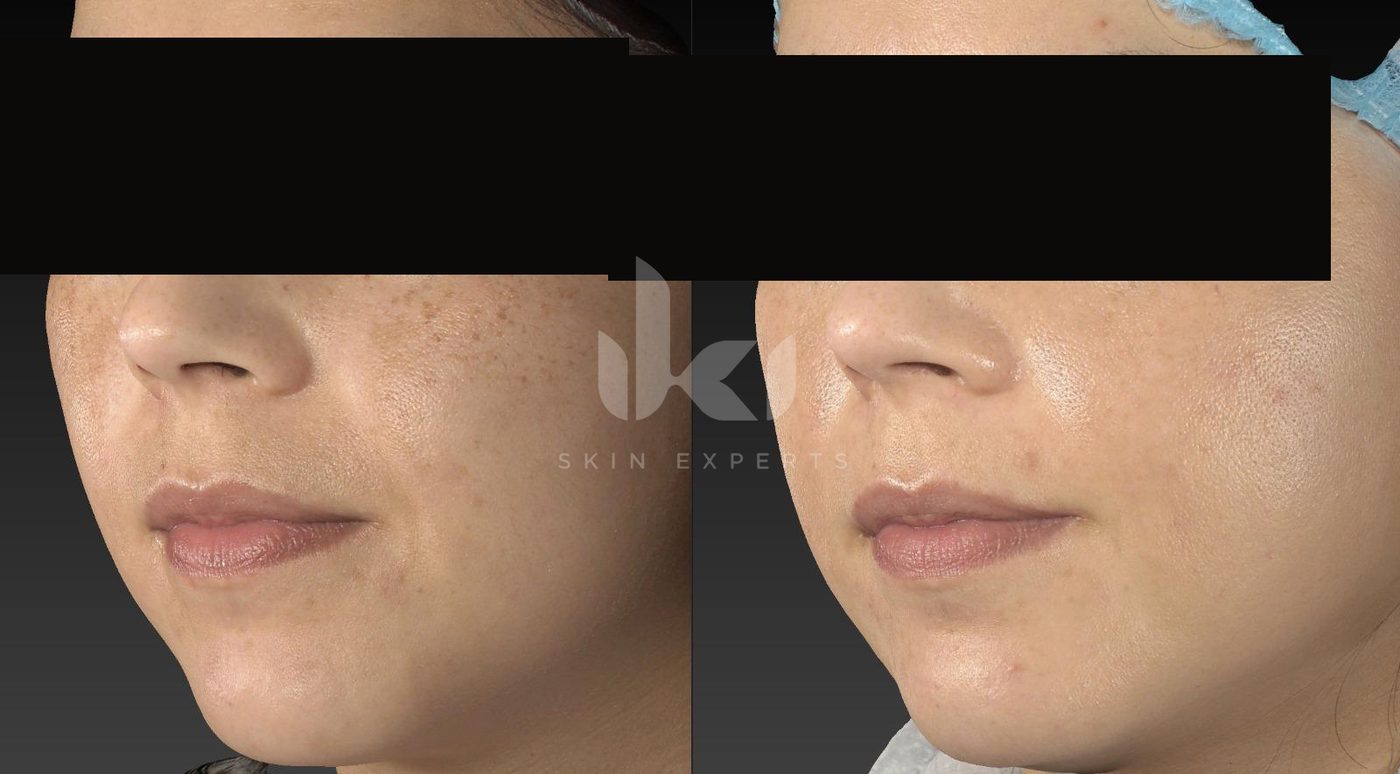
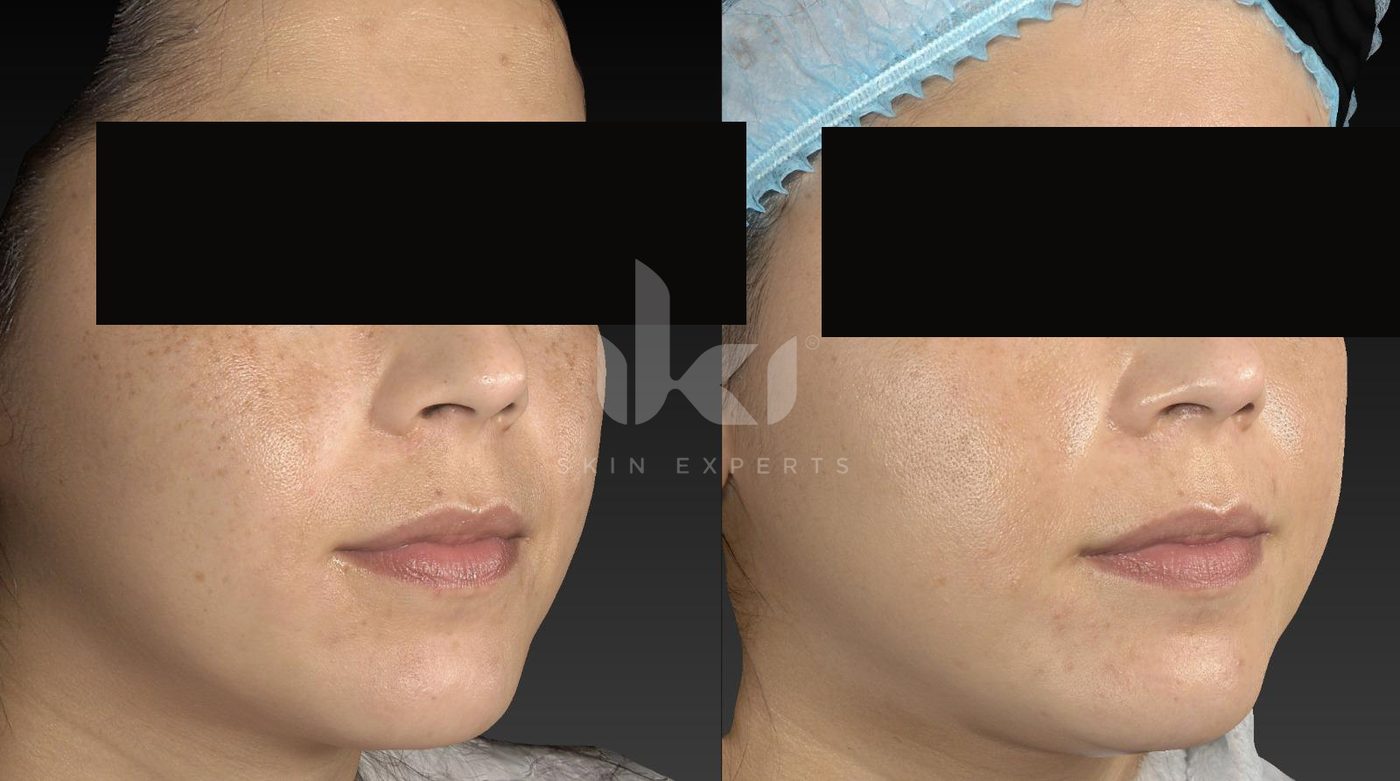
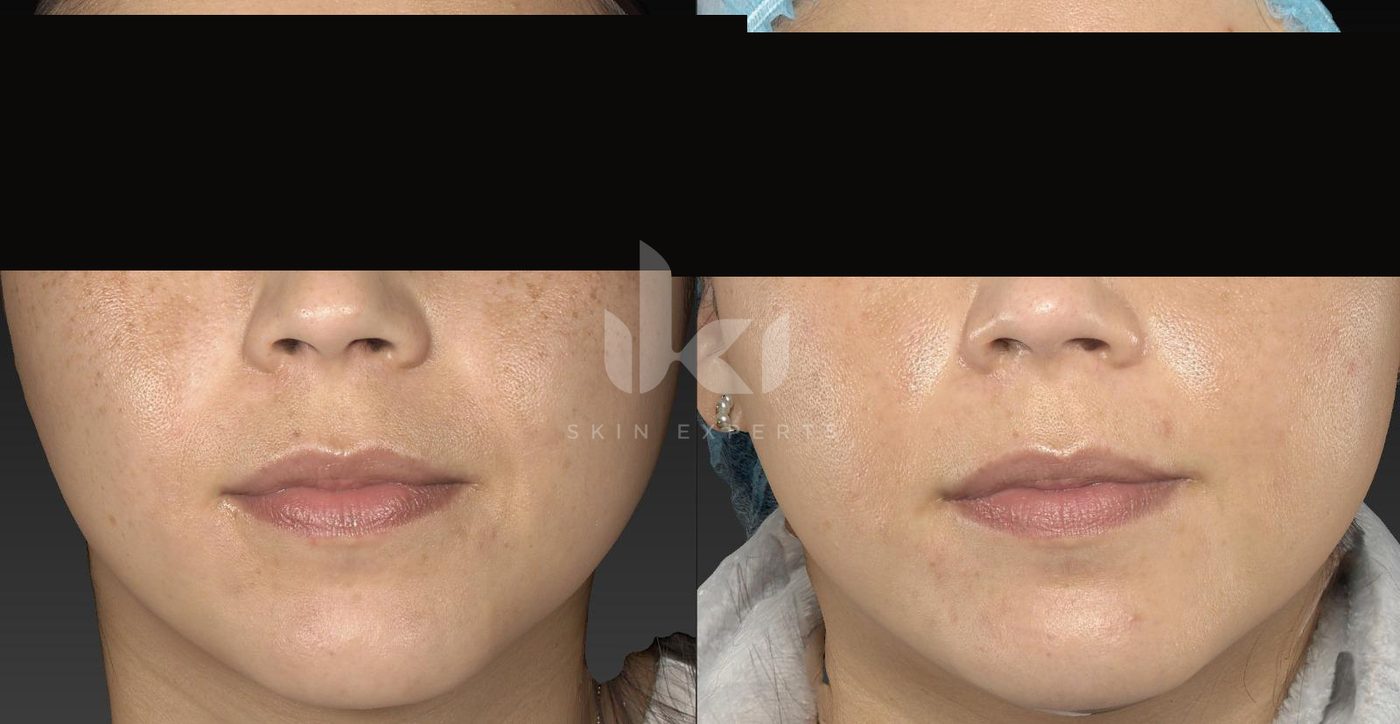
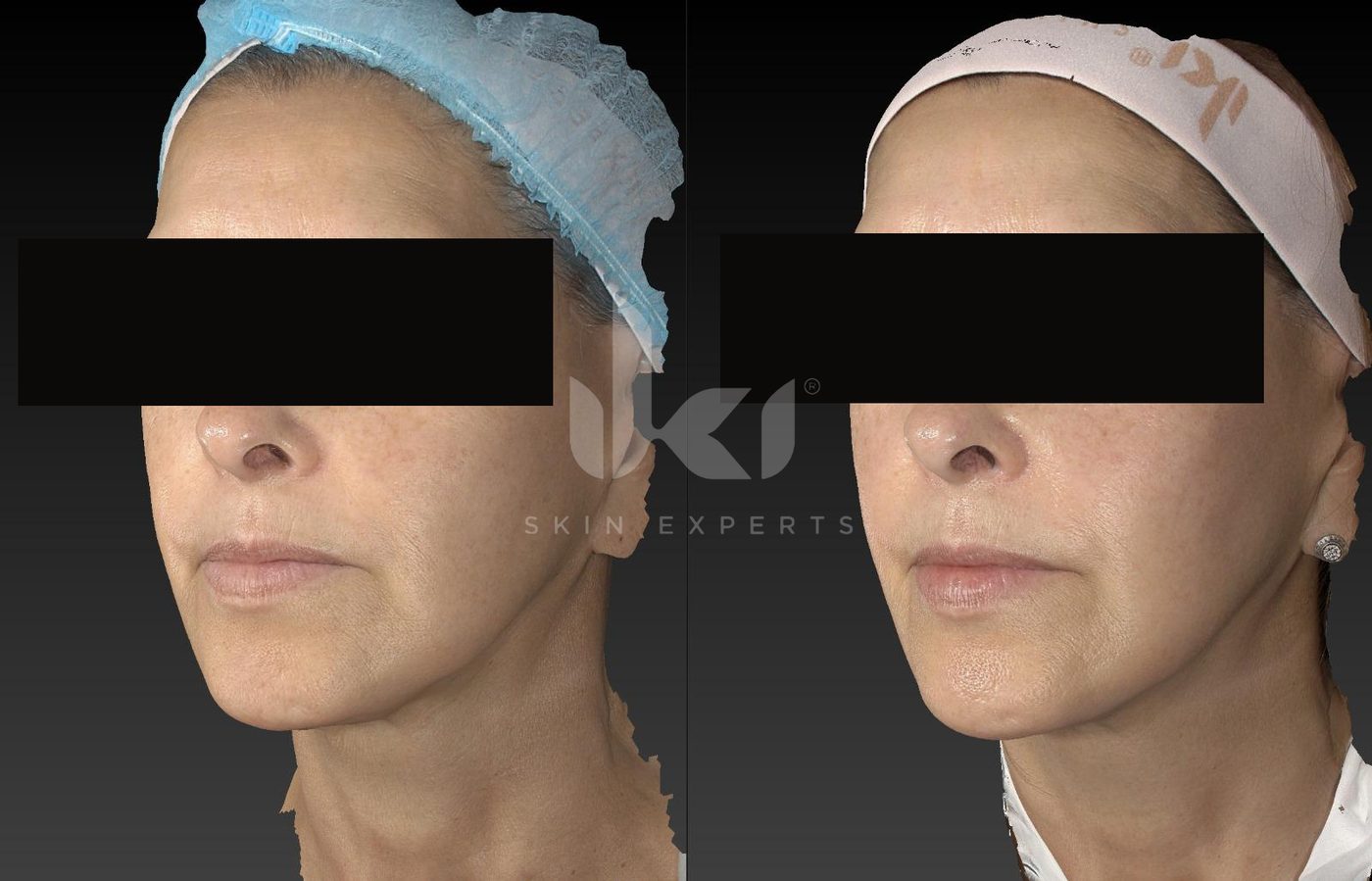
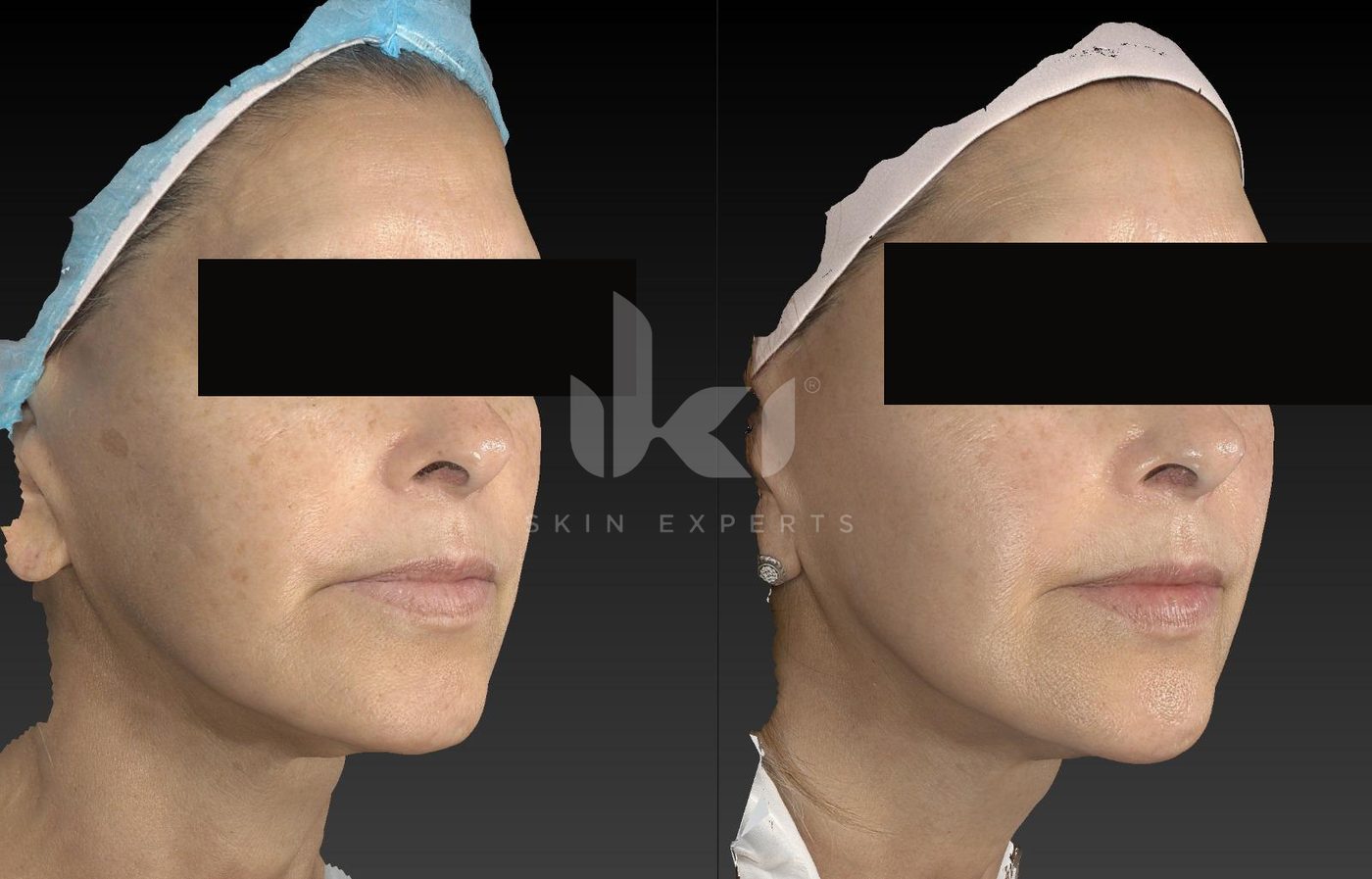
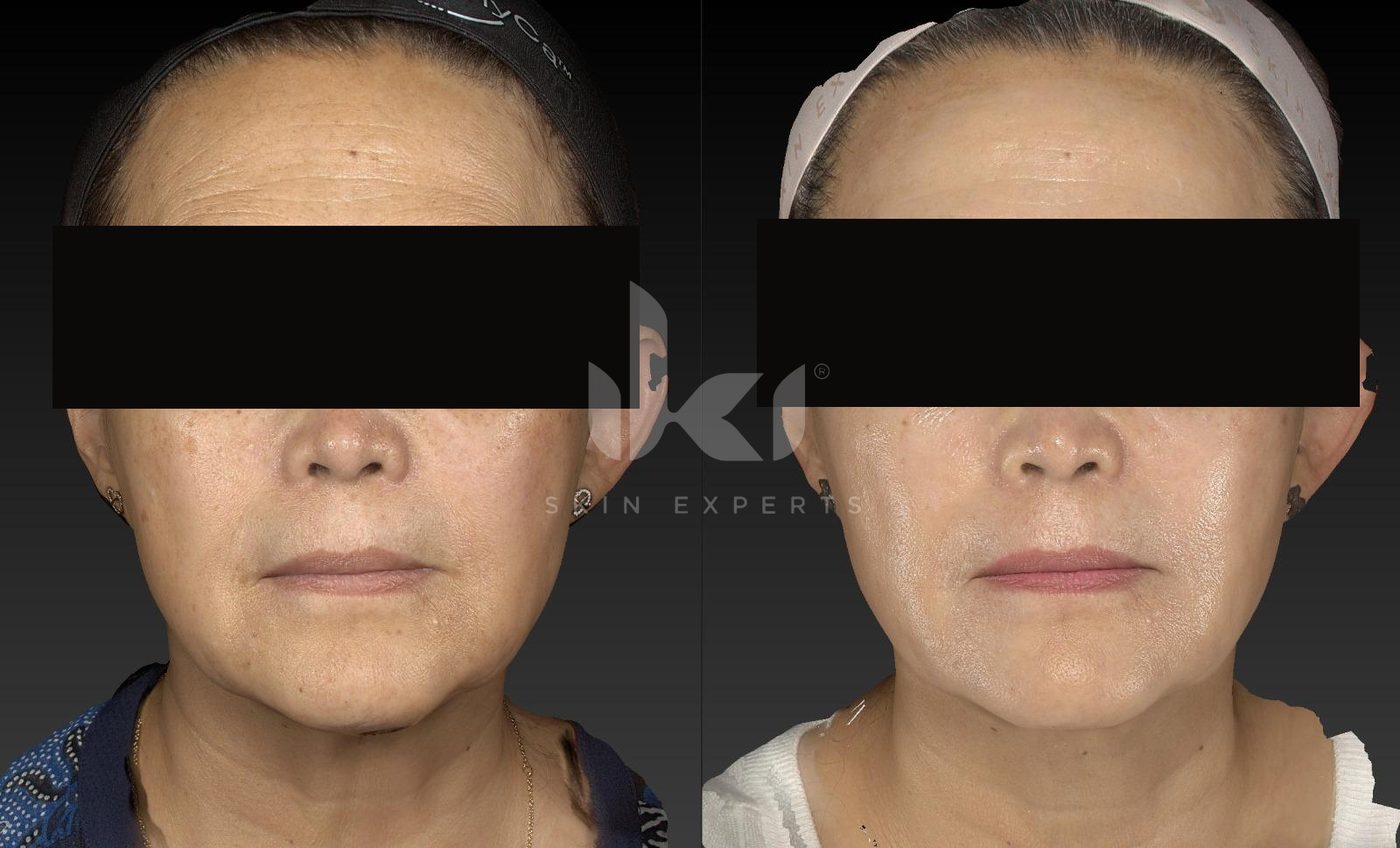
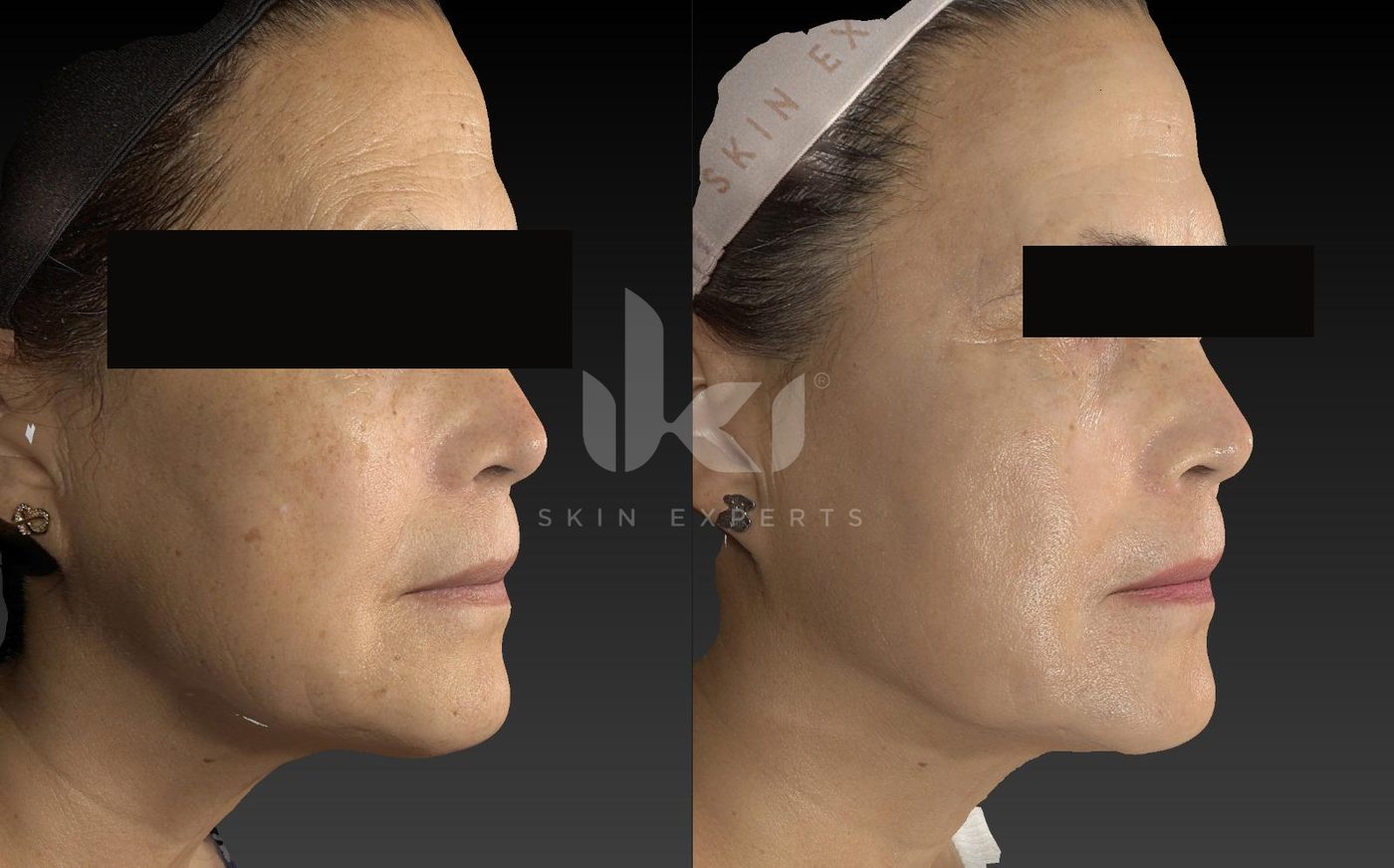
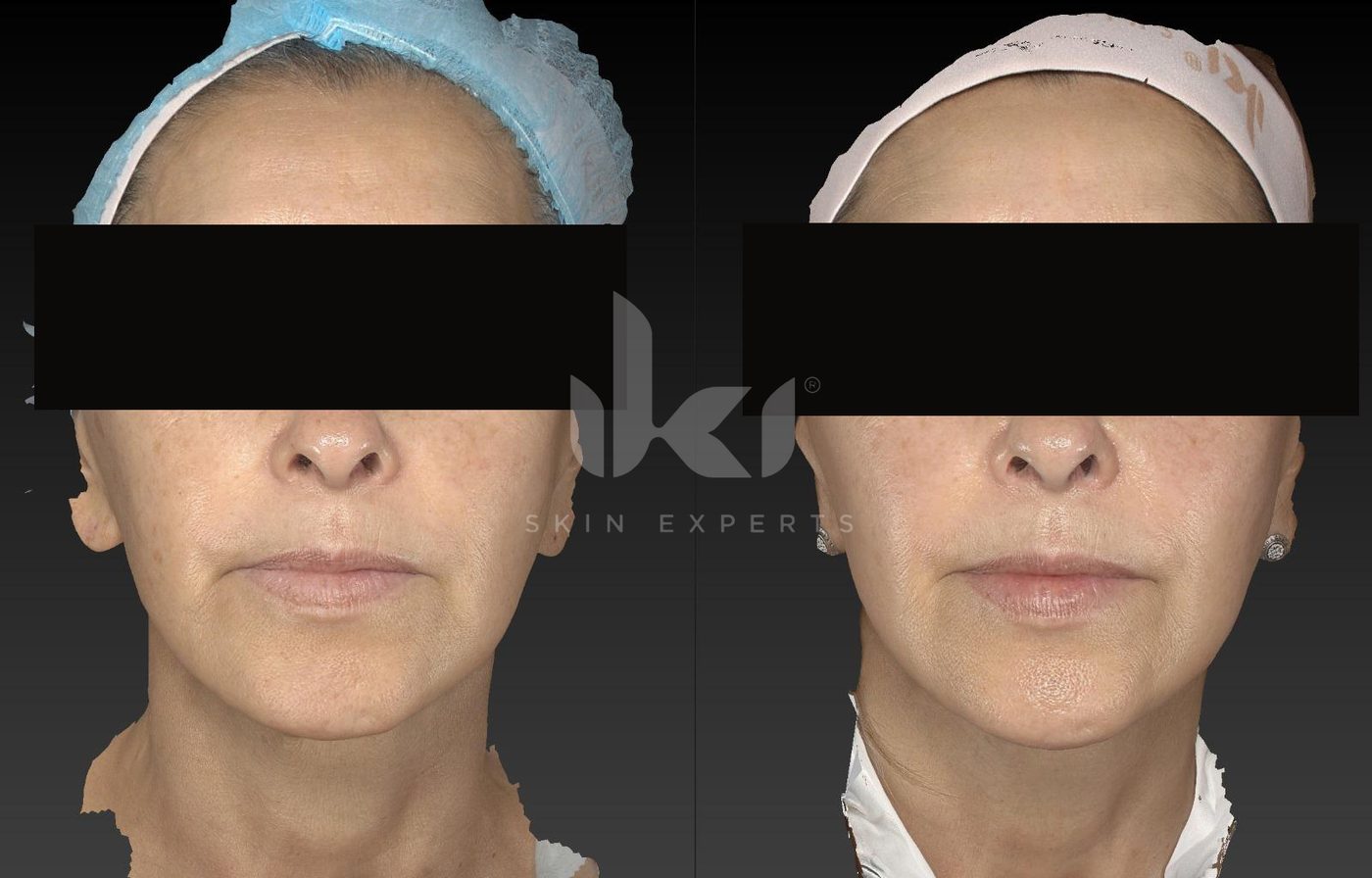
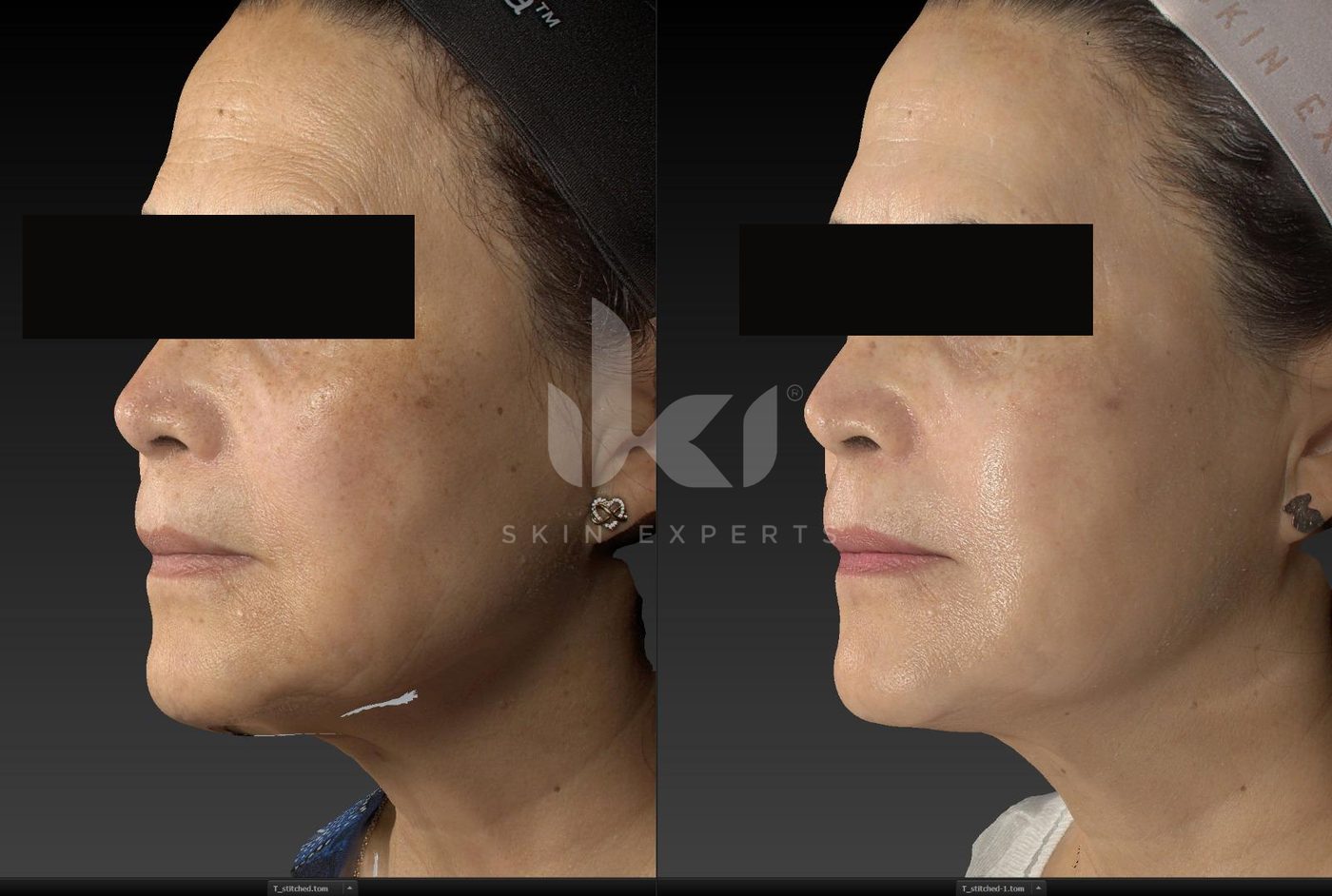
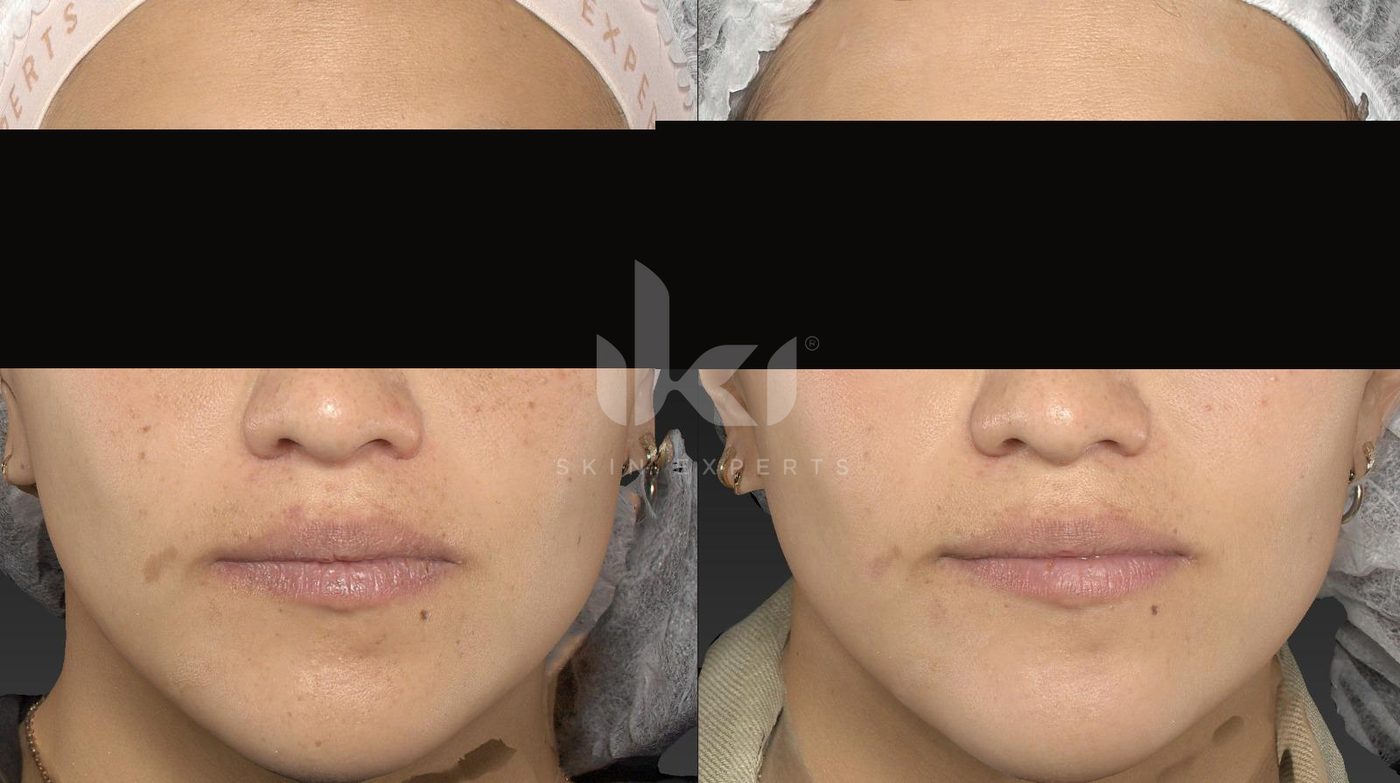
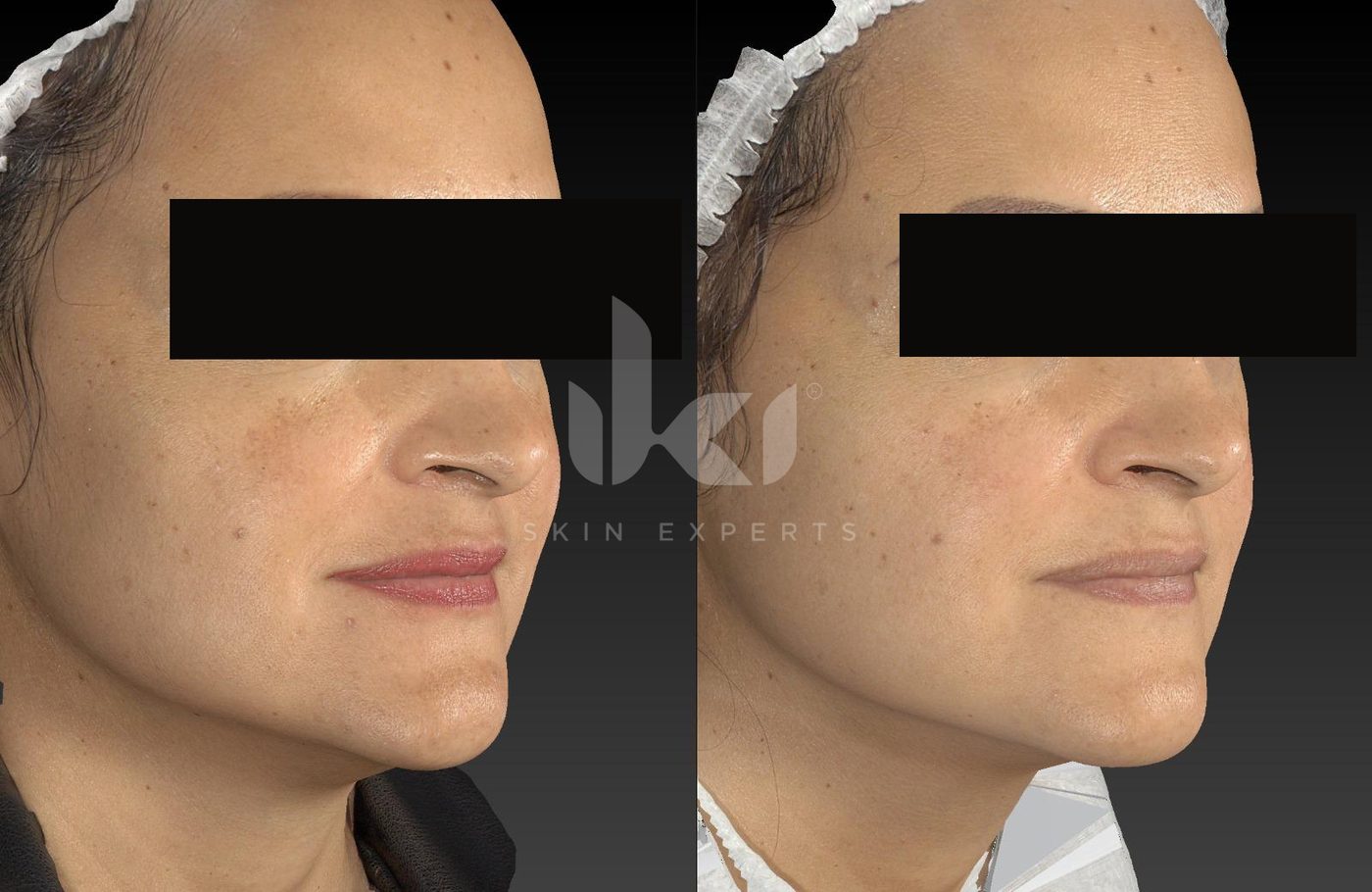
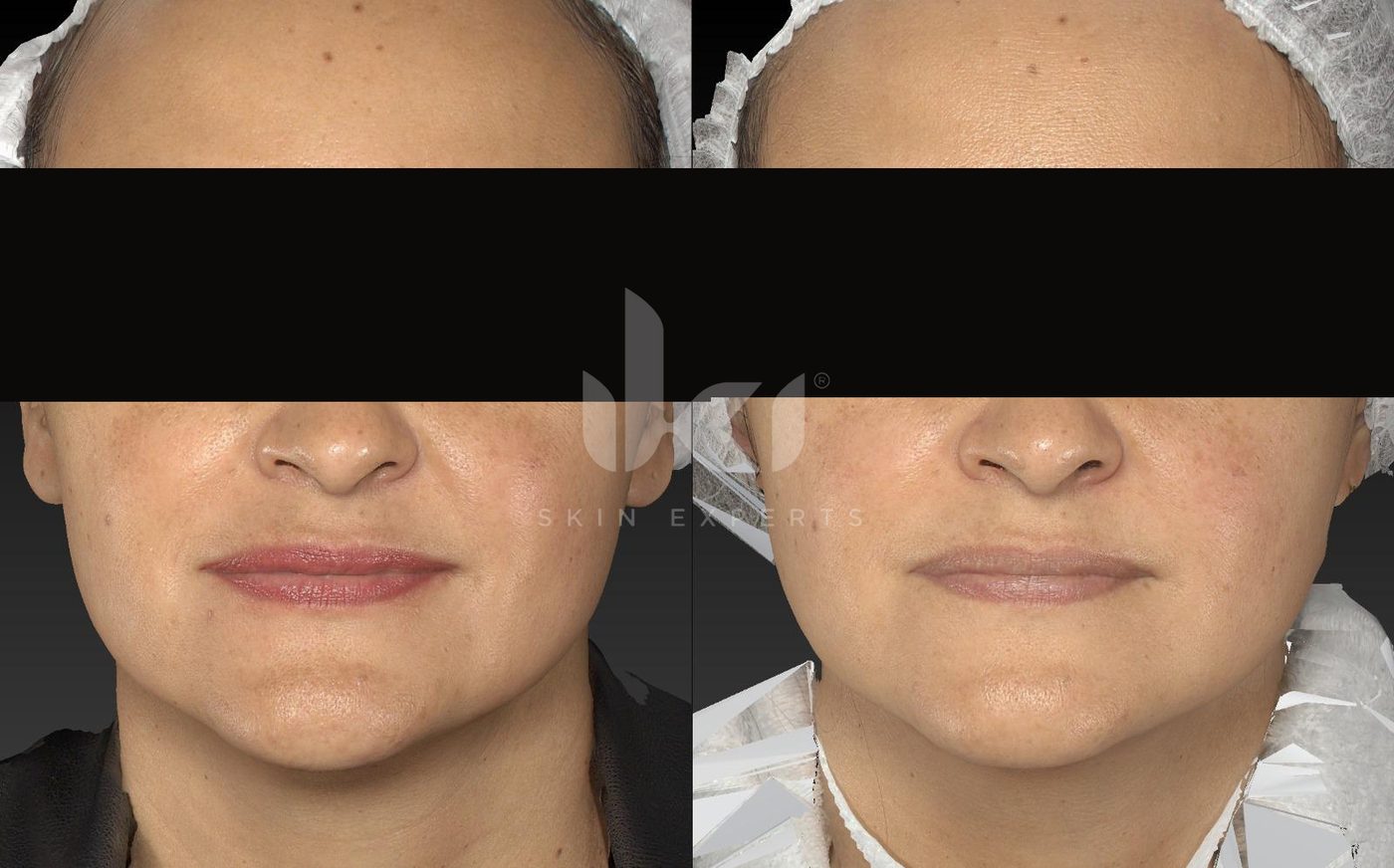
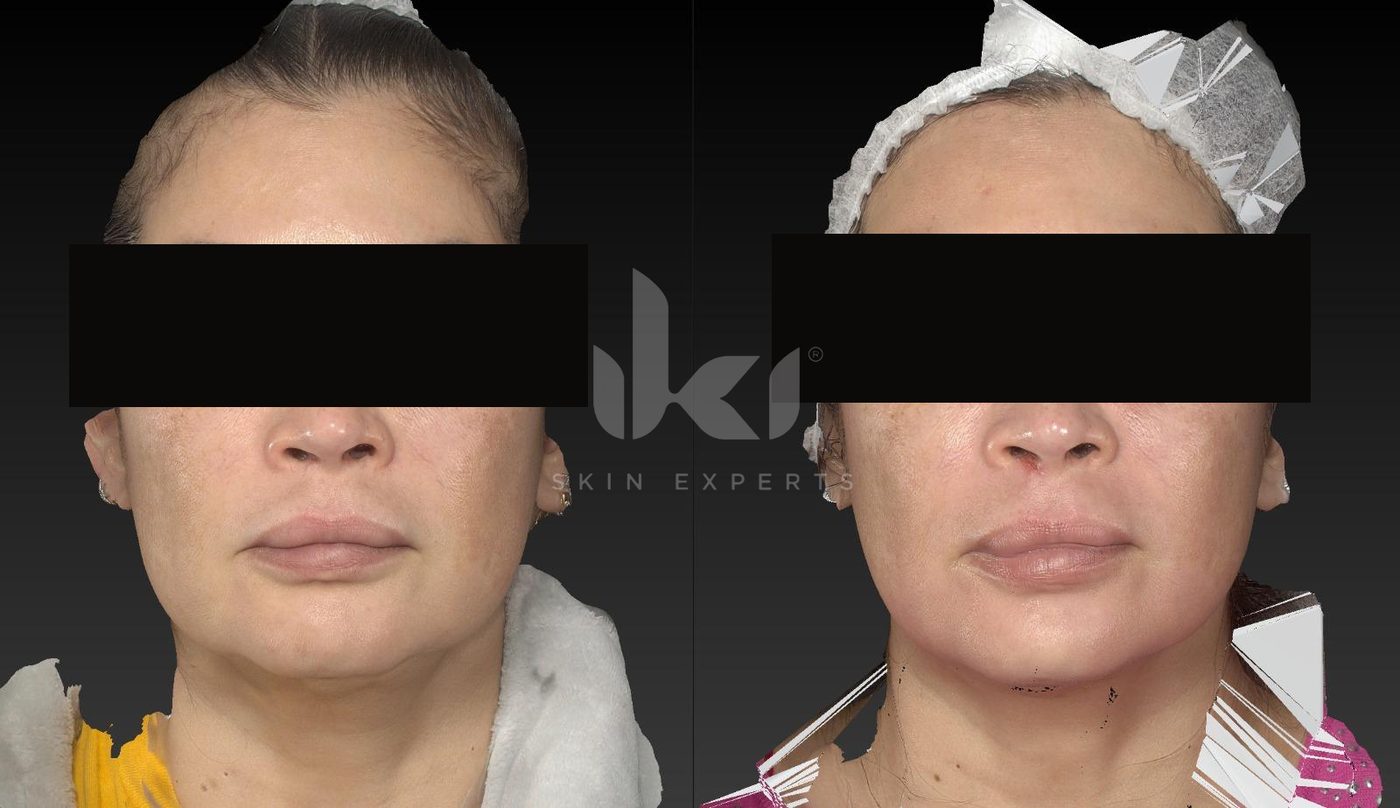
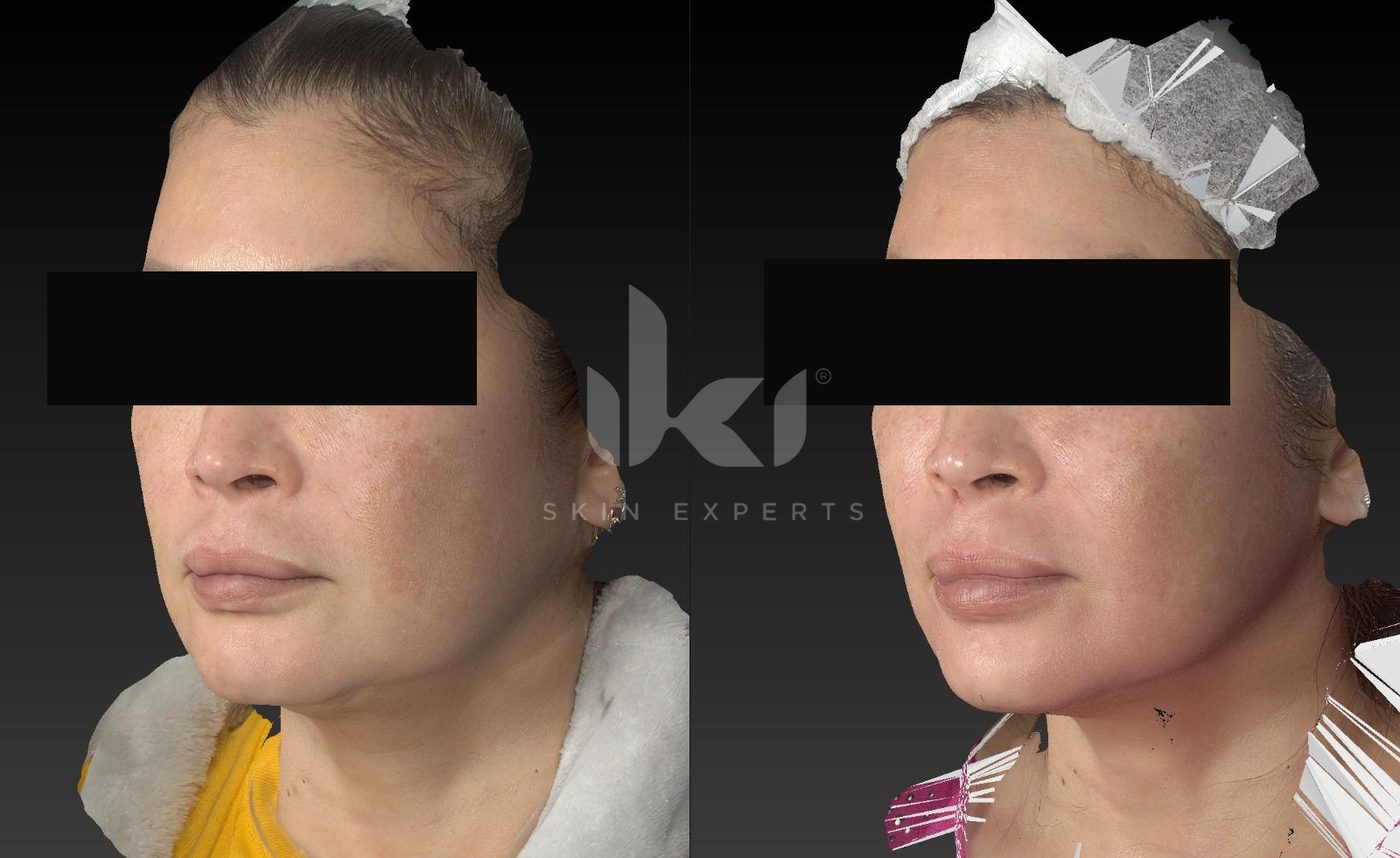
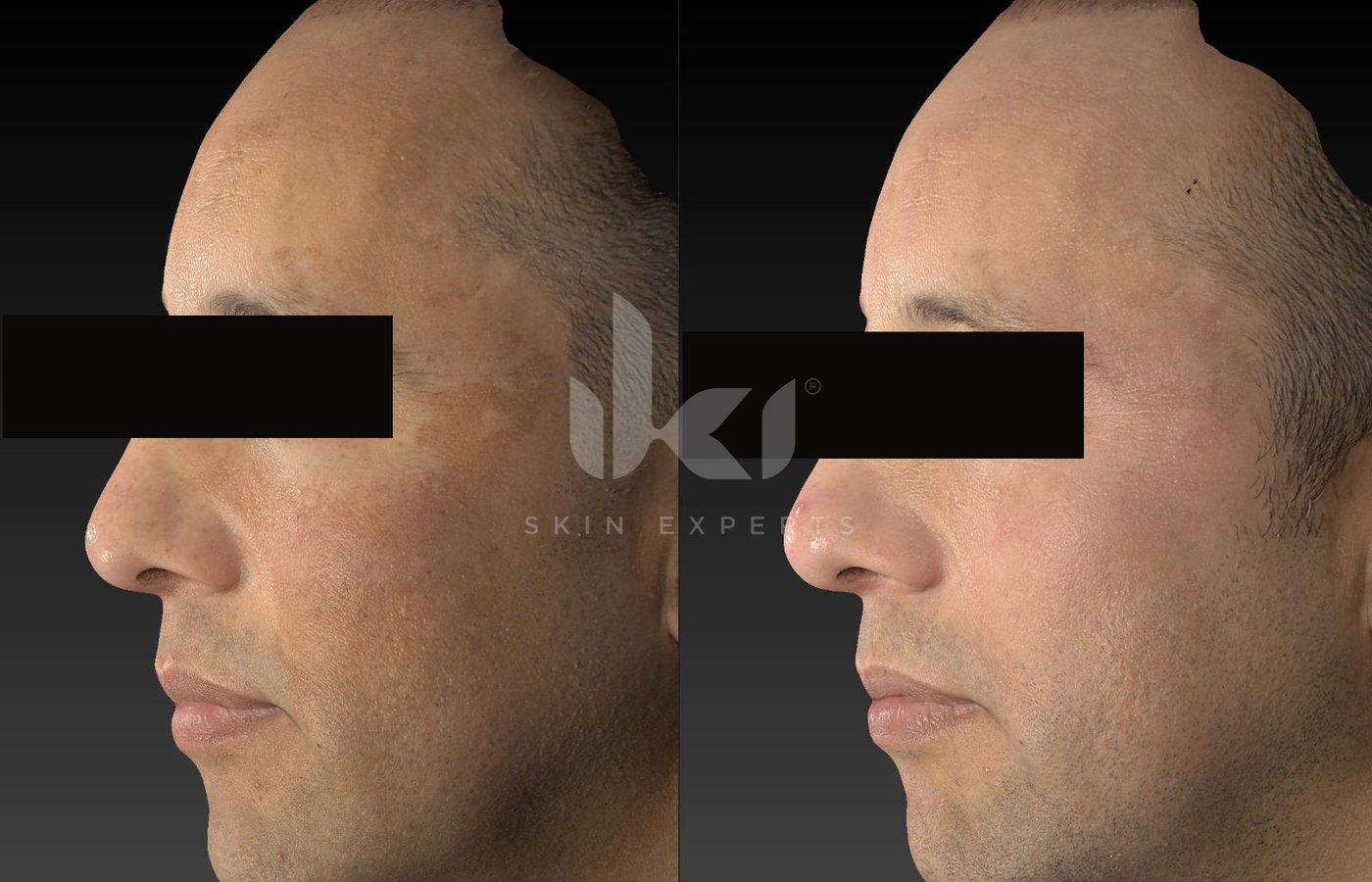
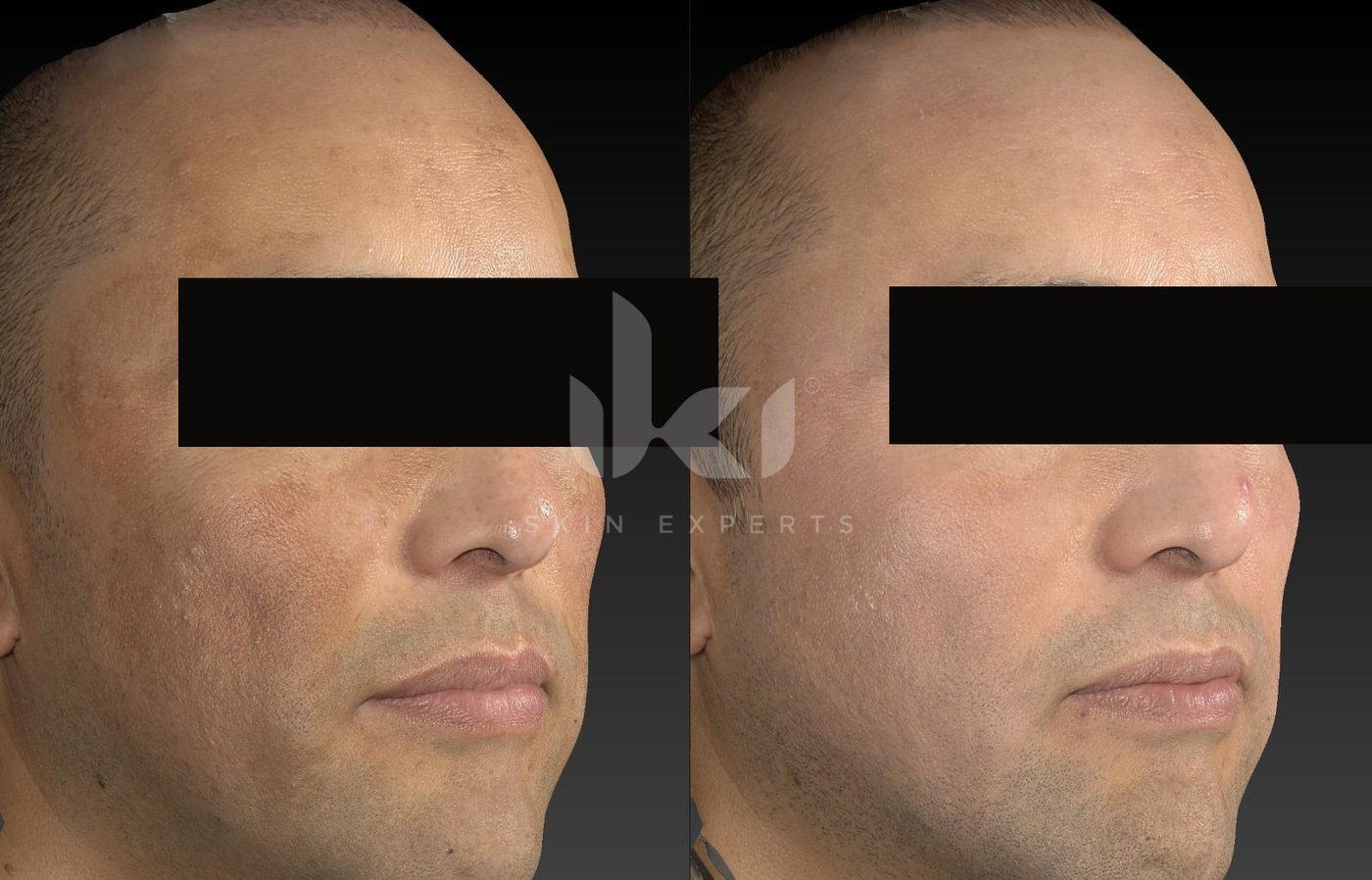
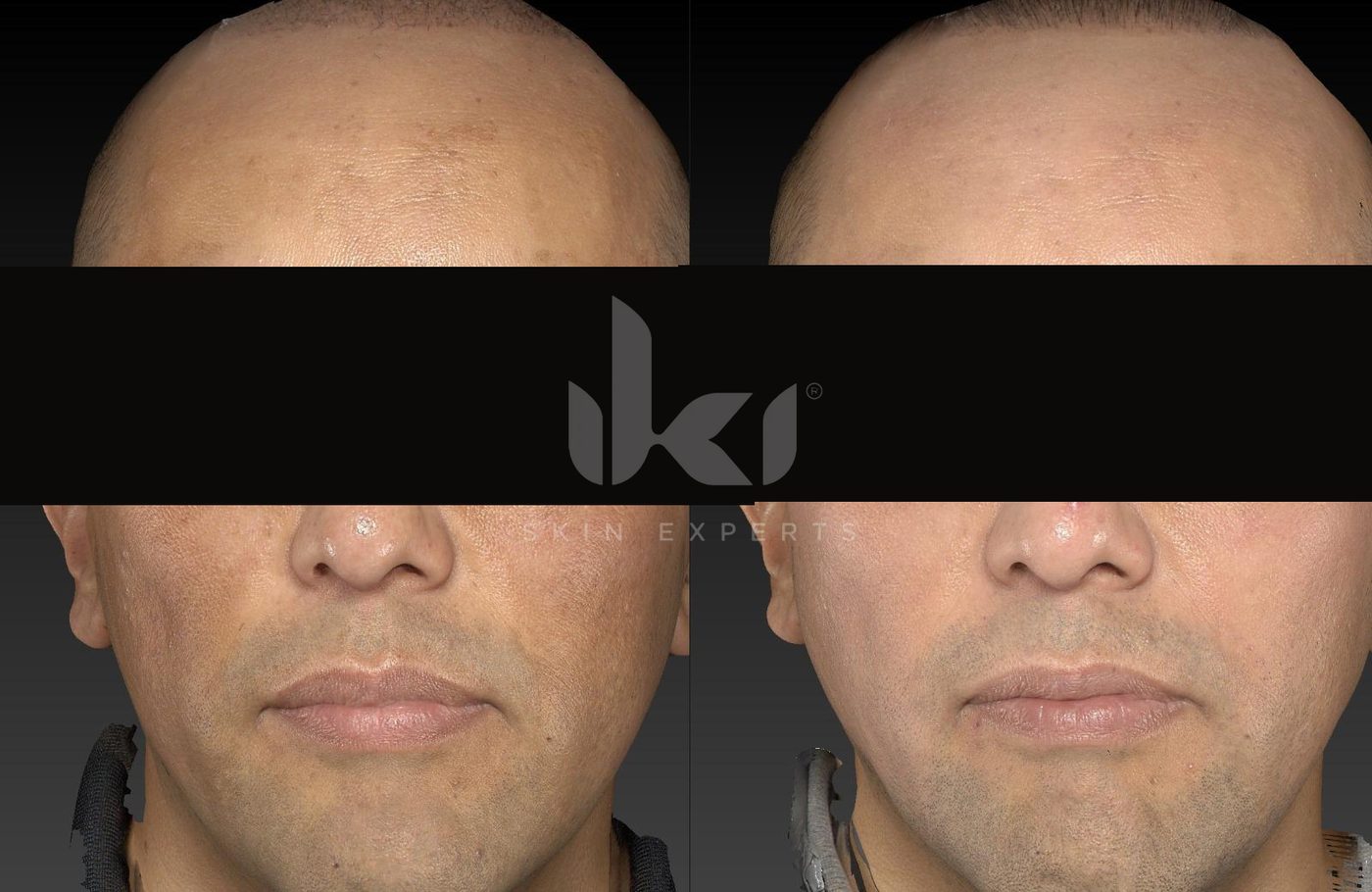
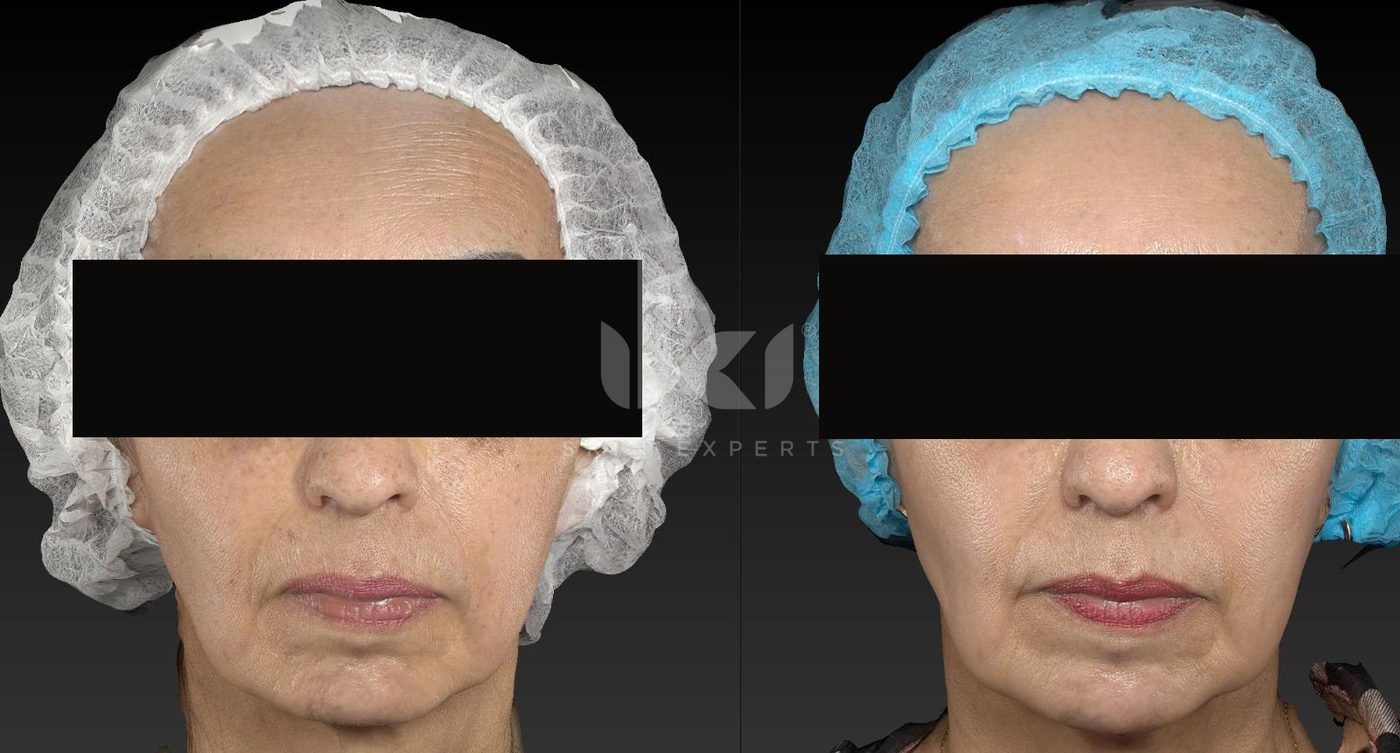
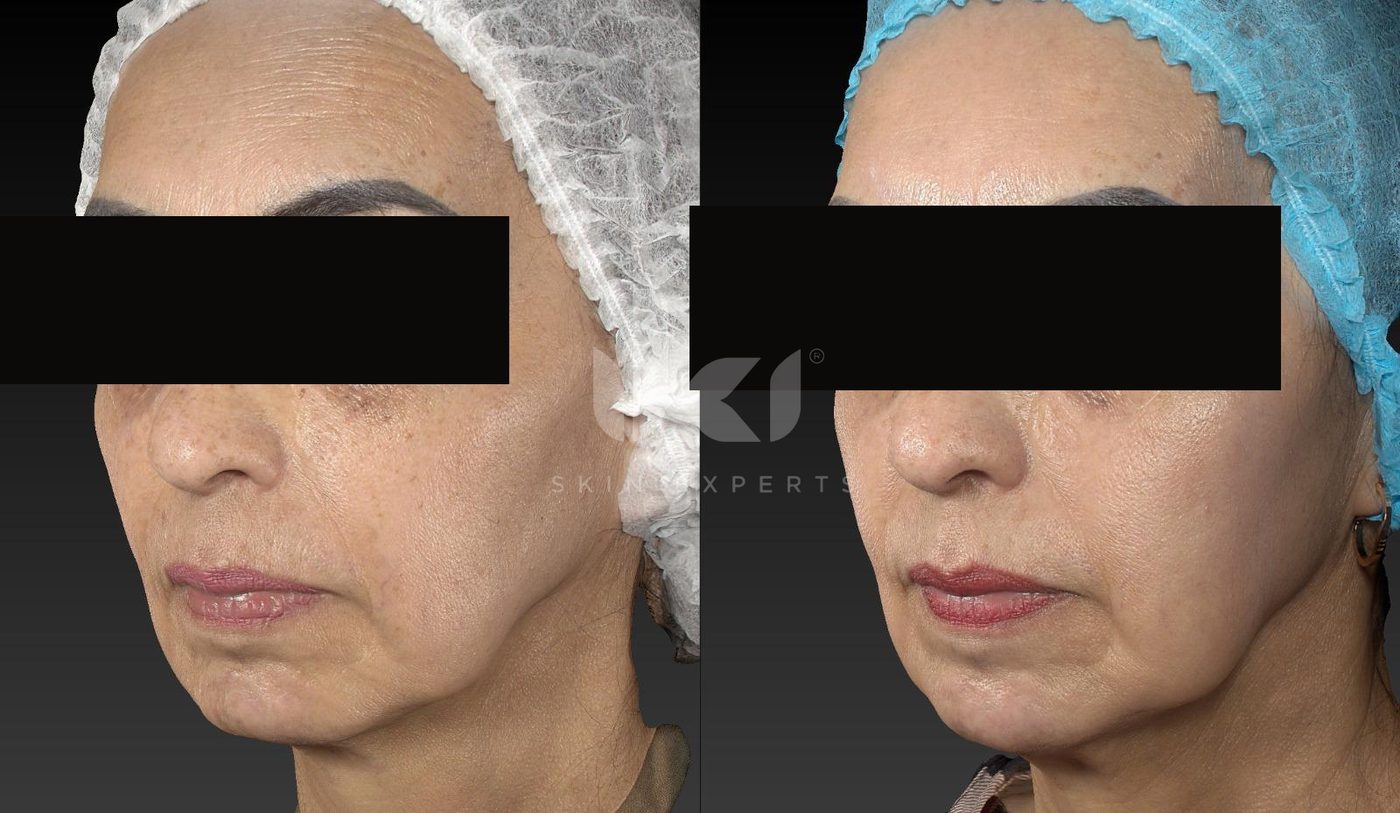
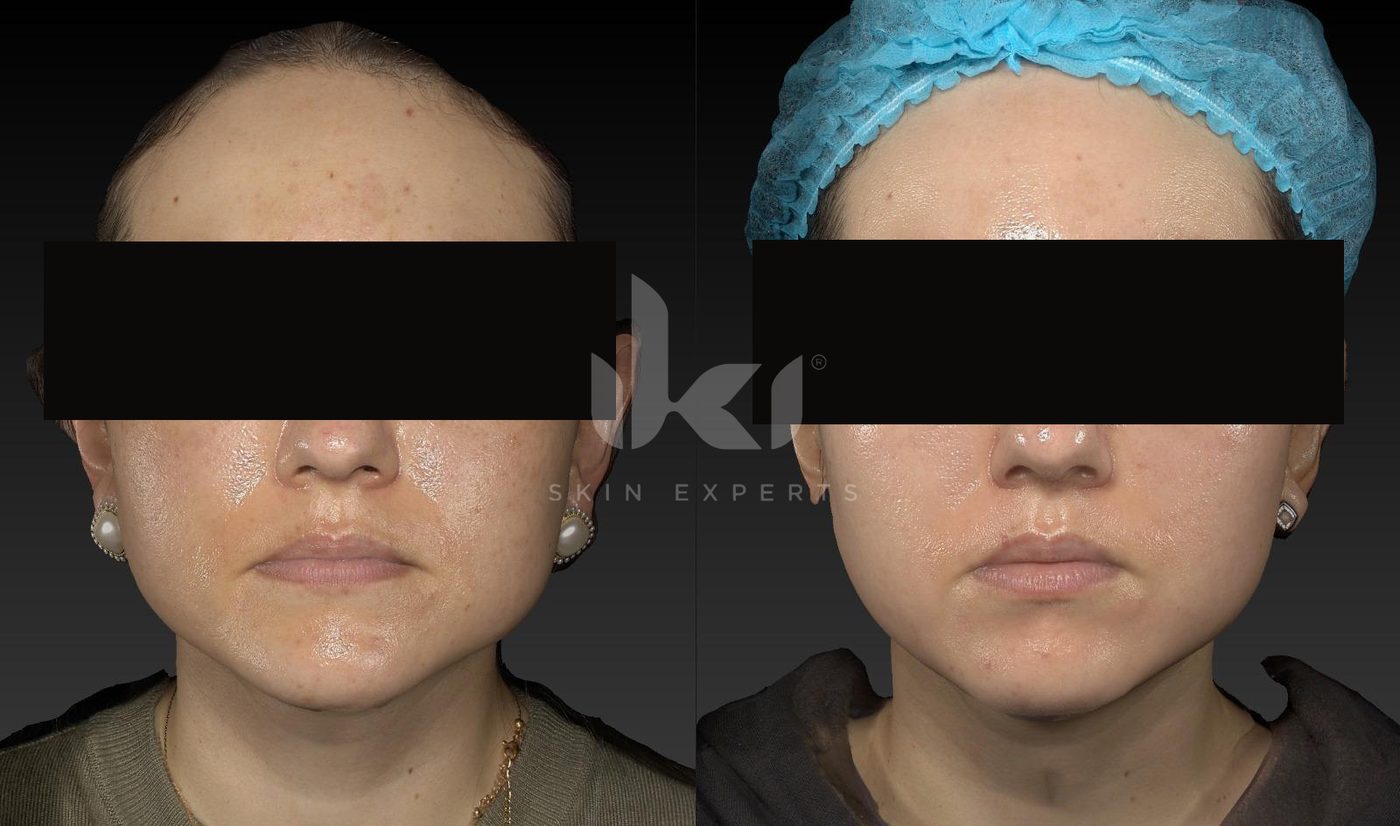
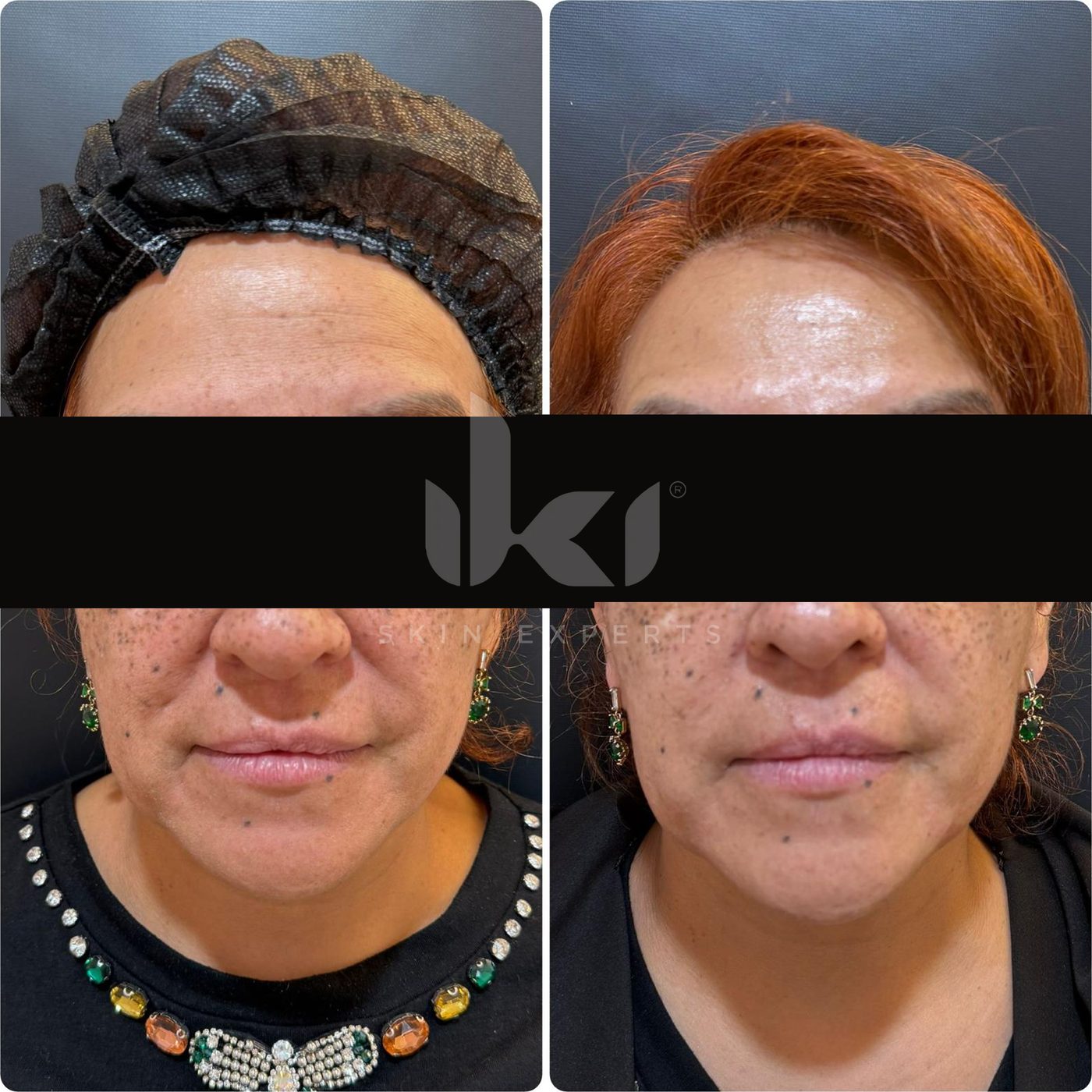
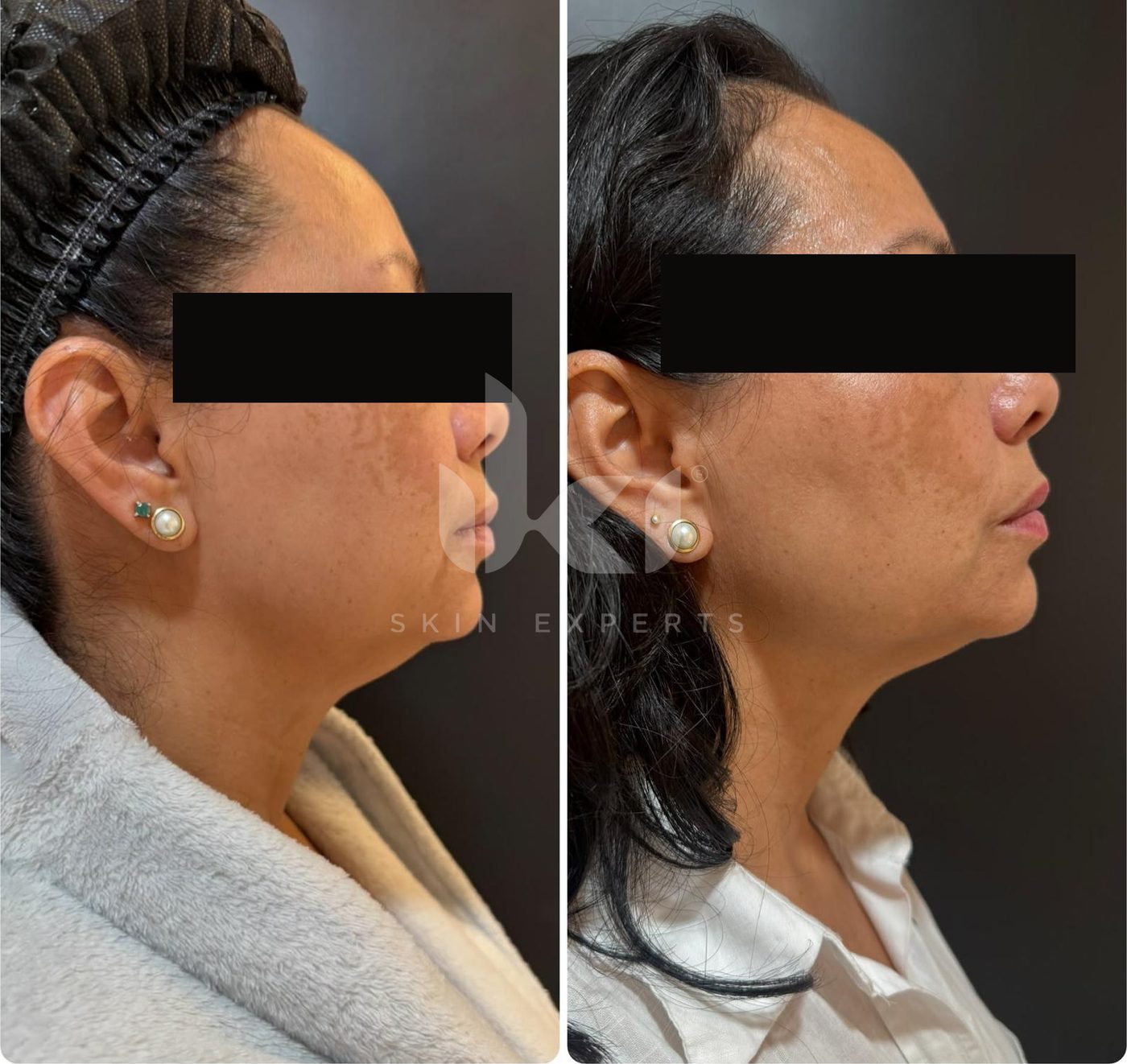
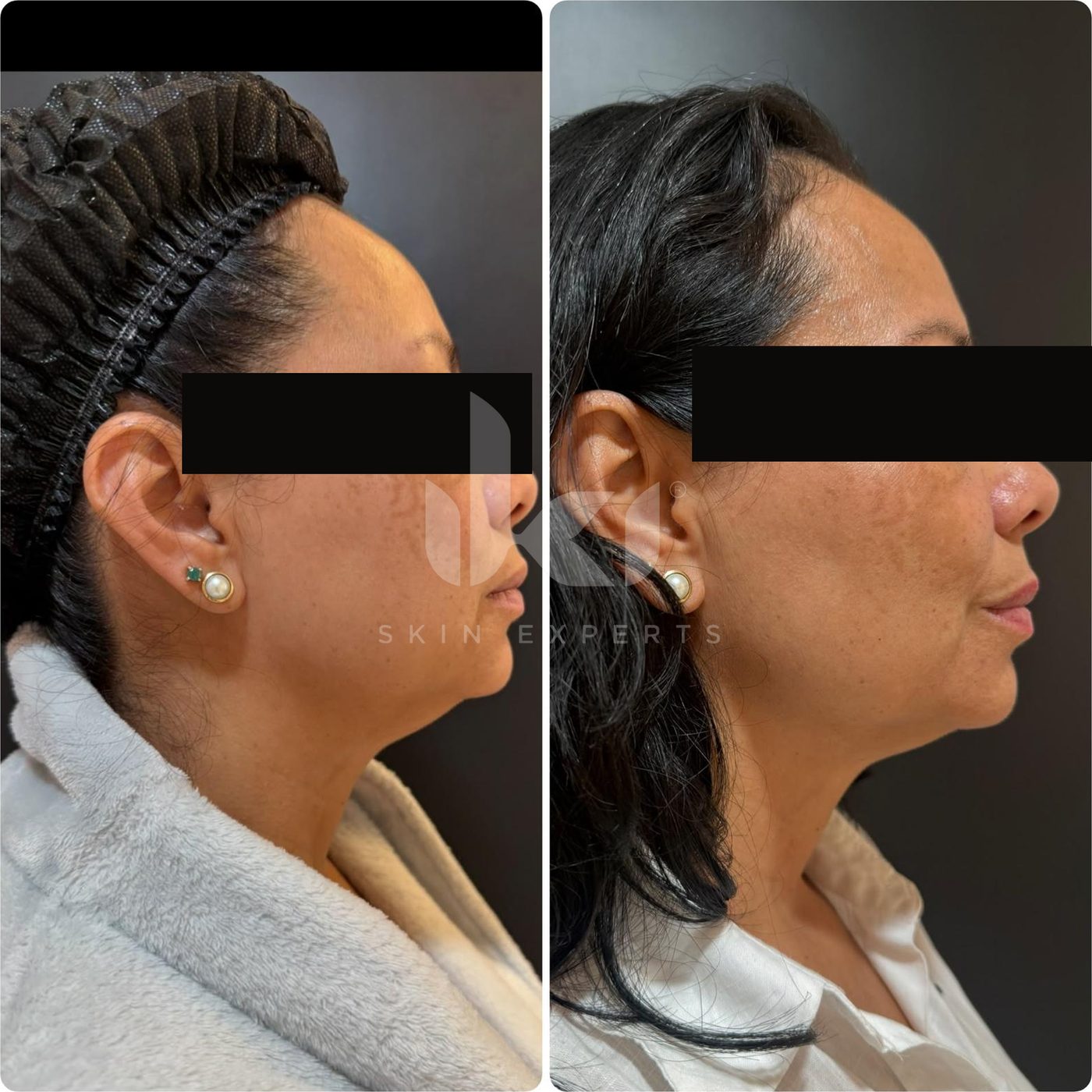
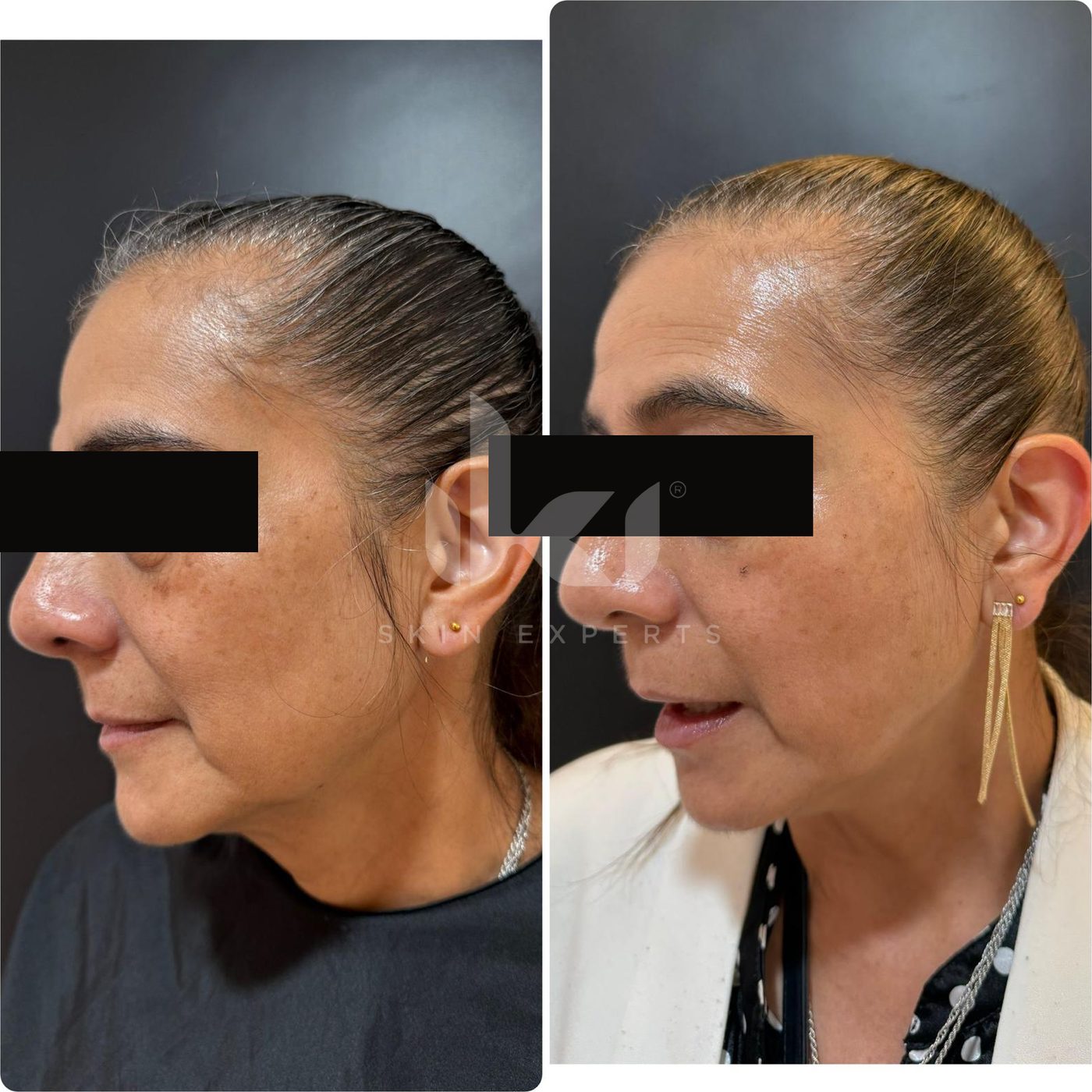
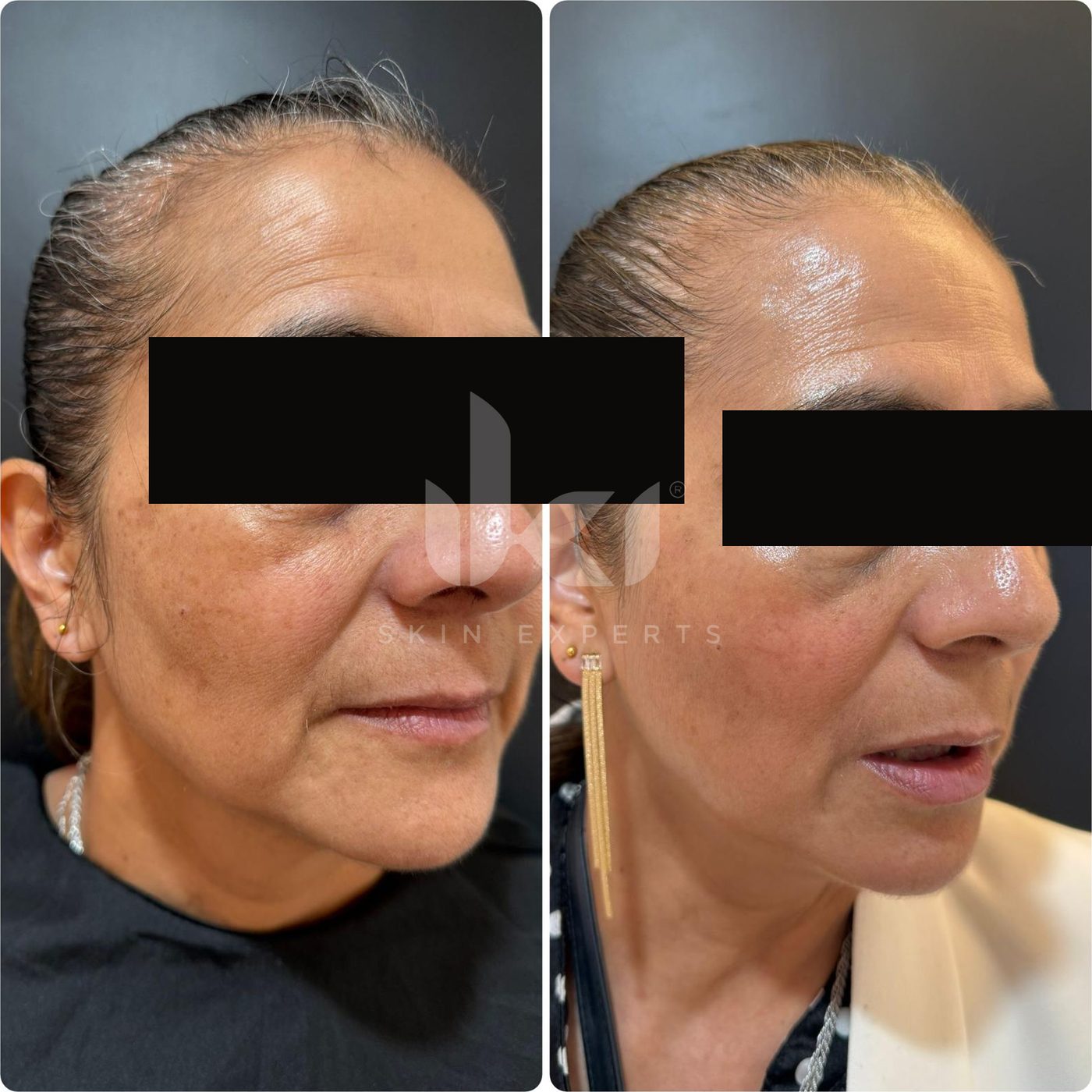
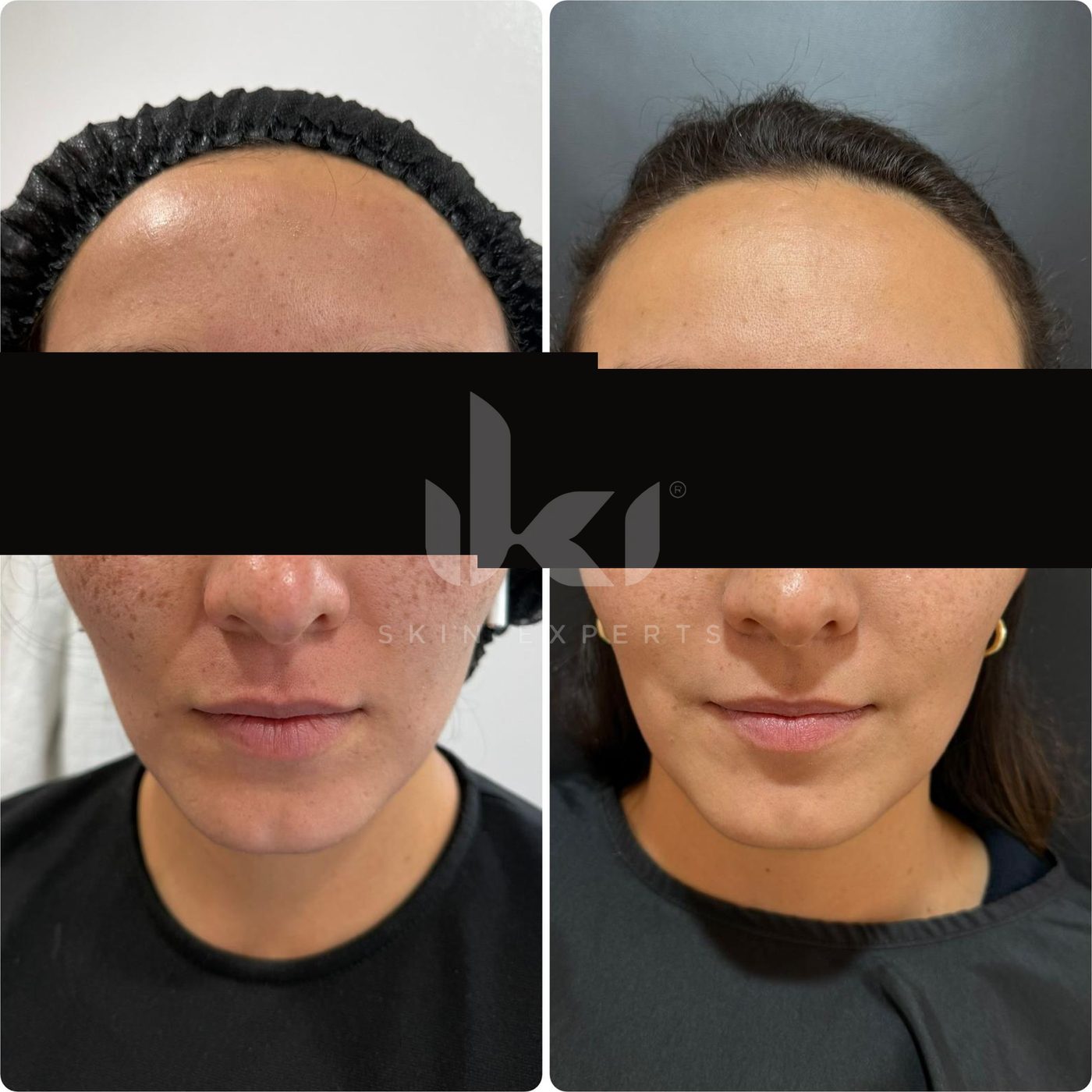
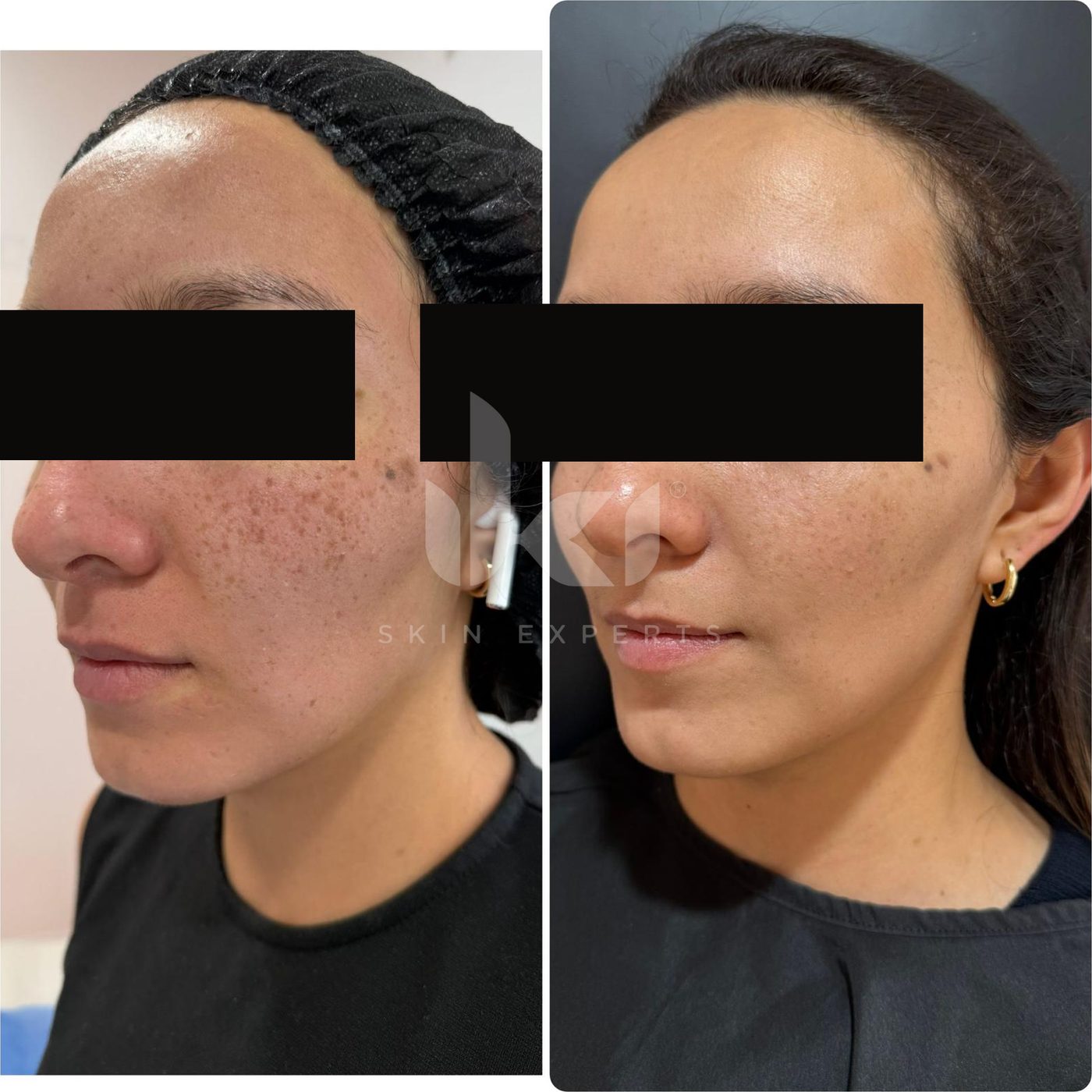
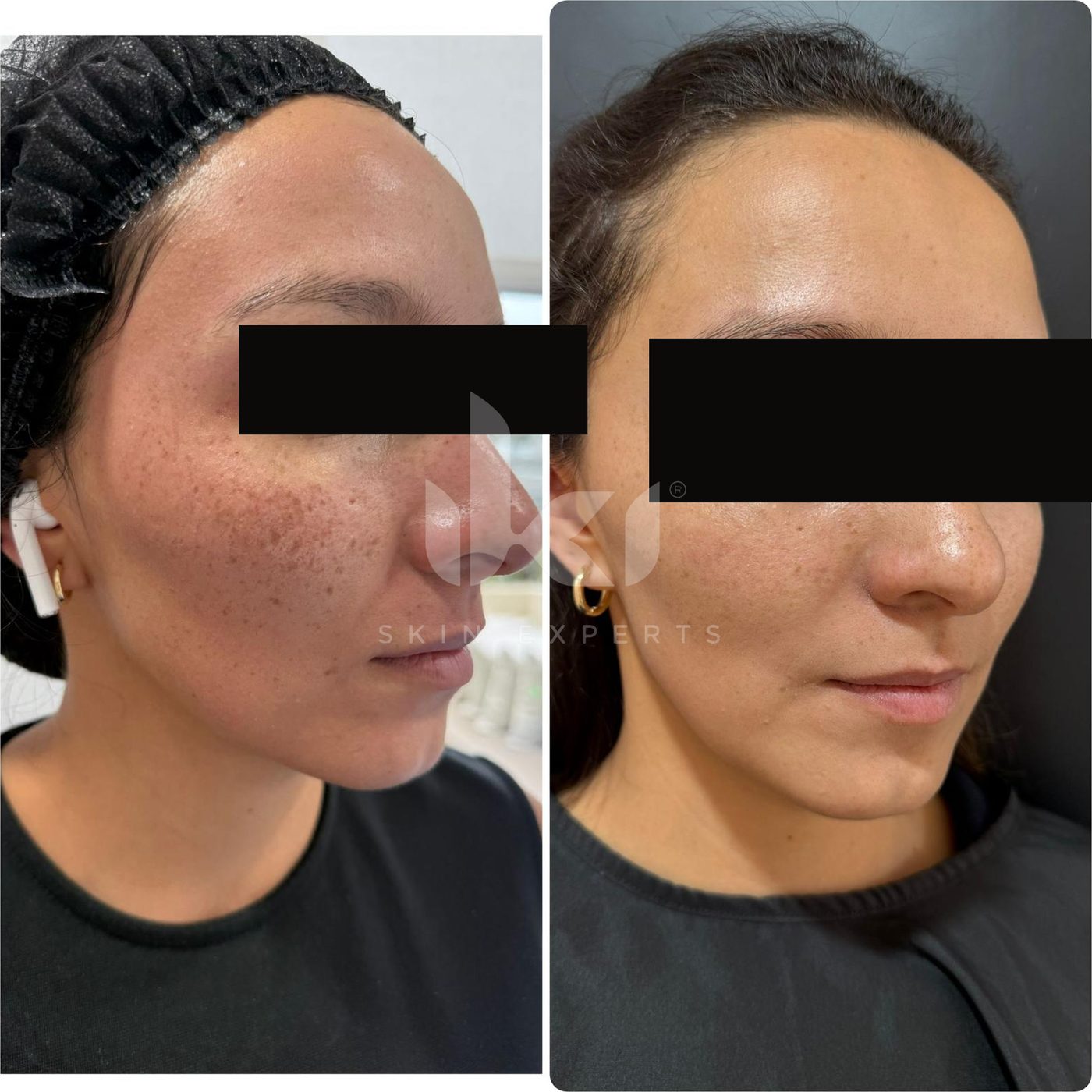
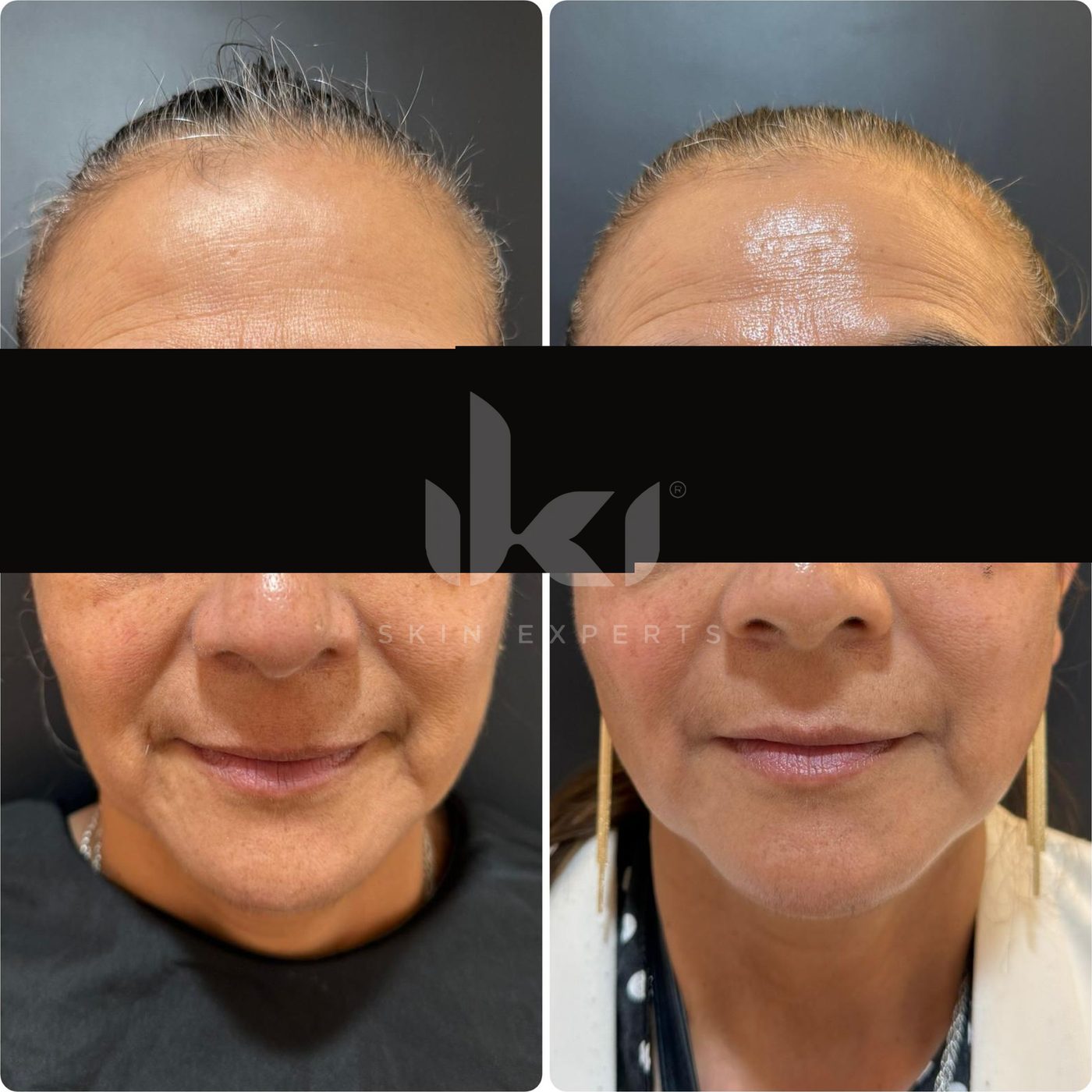
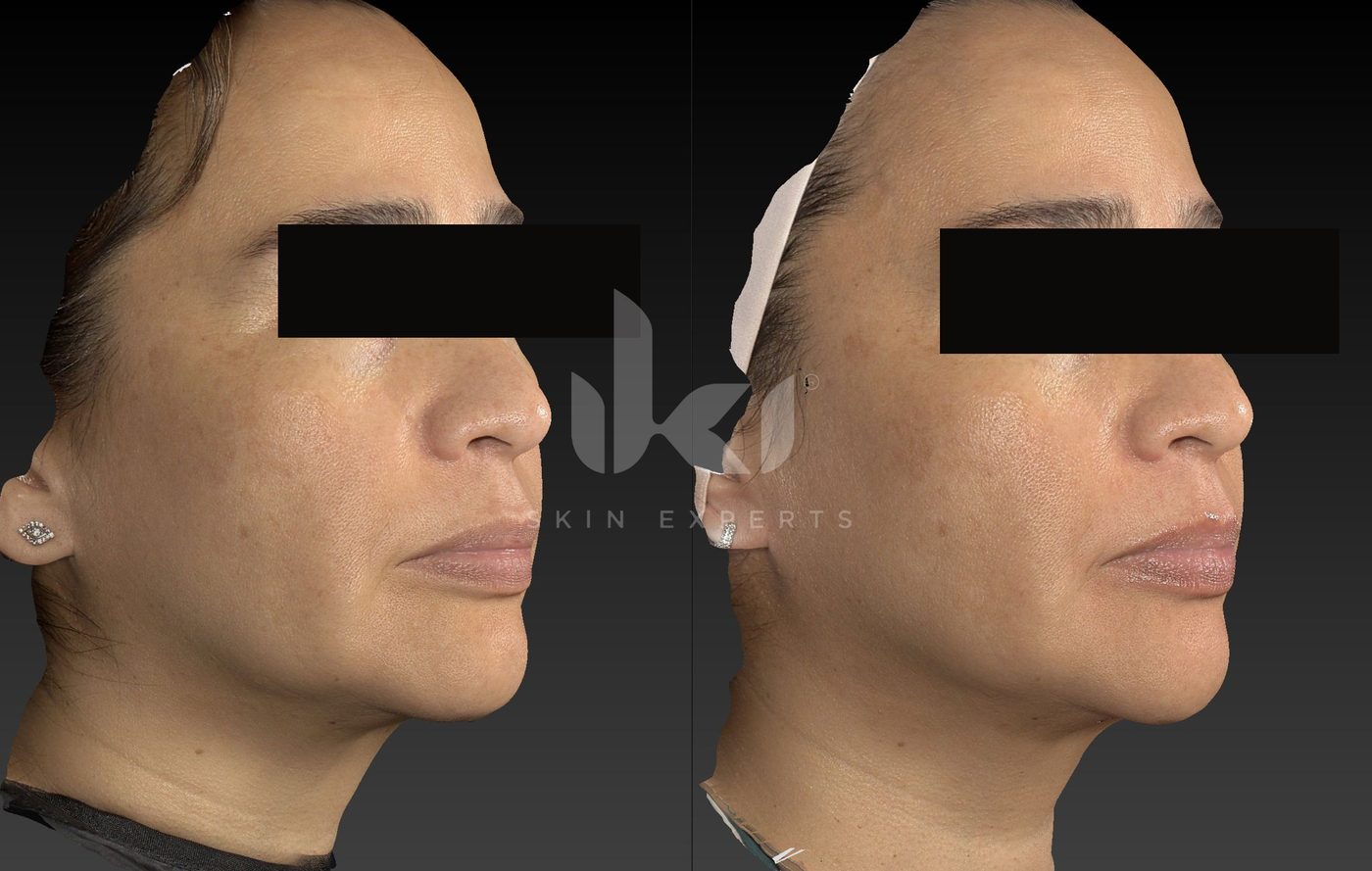
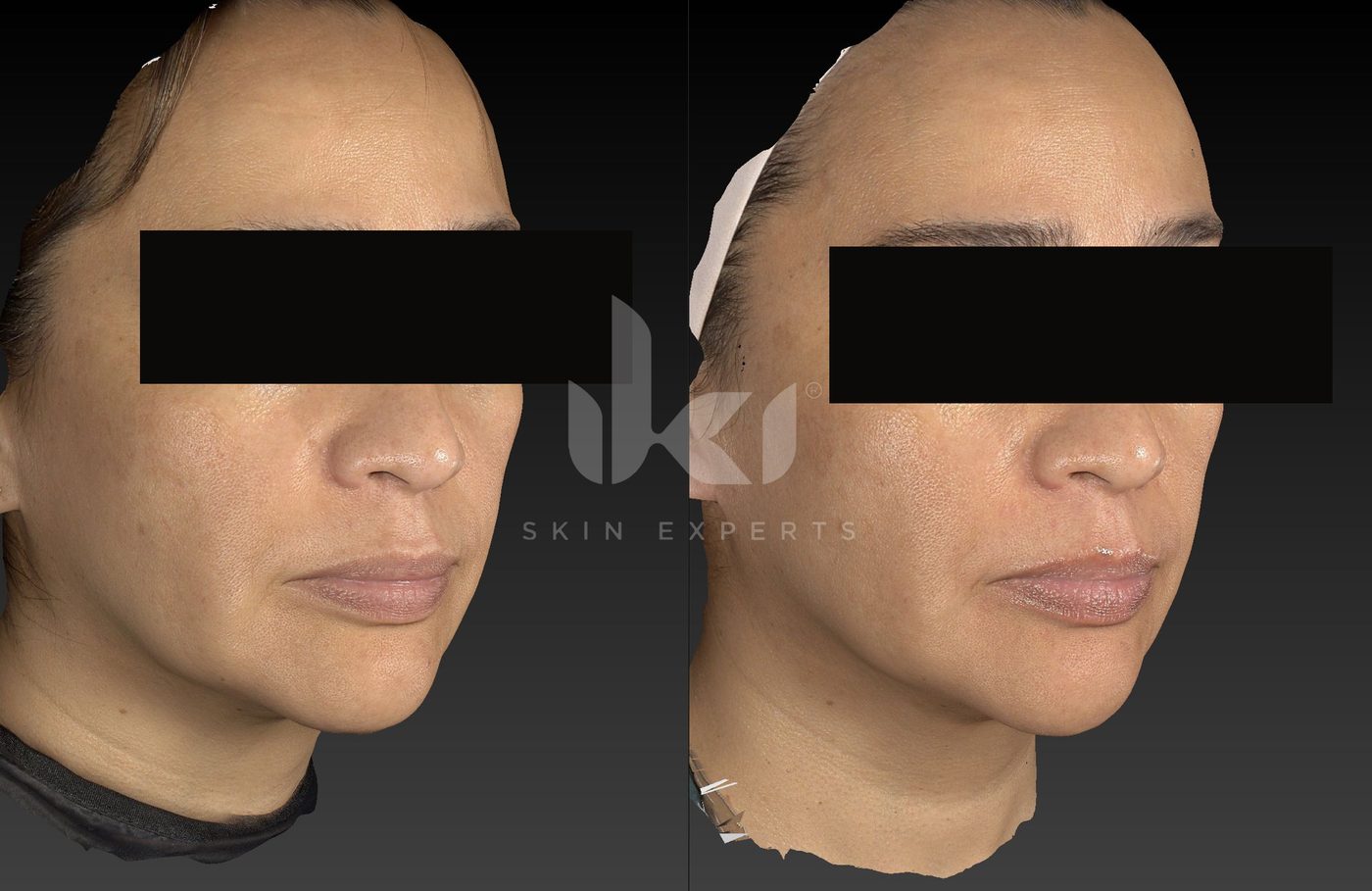
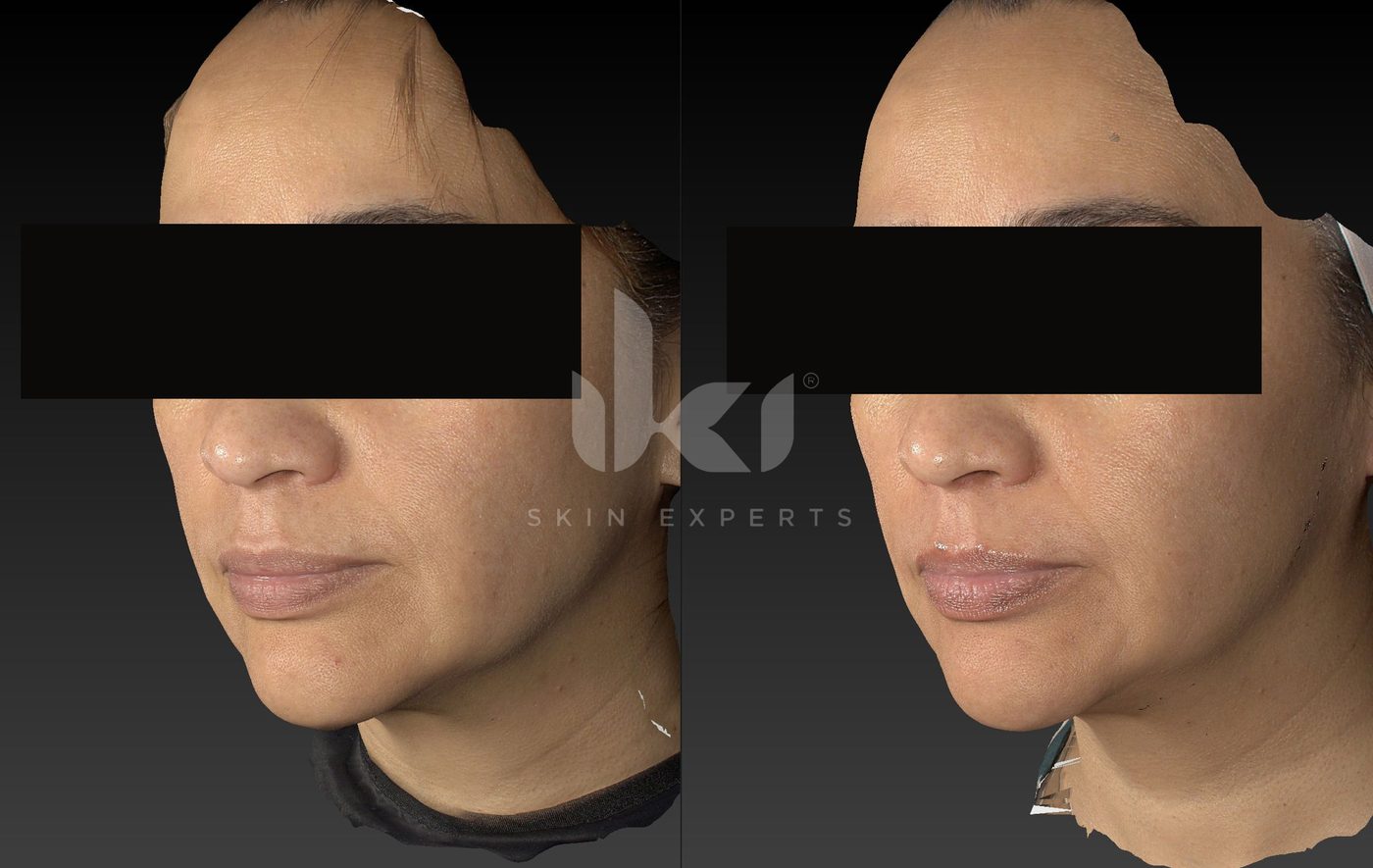
Photos of patients treated at iki, published with their authorization and with their identity covered. Each case had its own diagnosis and plan; the exact treatment may combine several techniques. Results vary from patient to patient. See all cases.
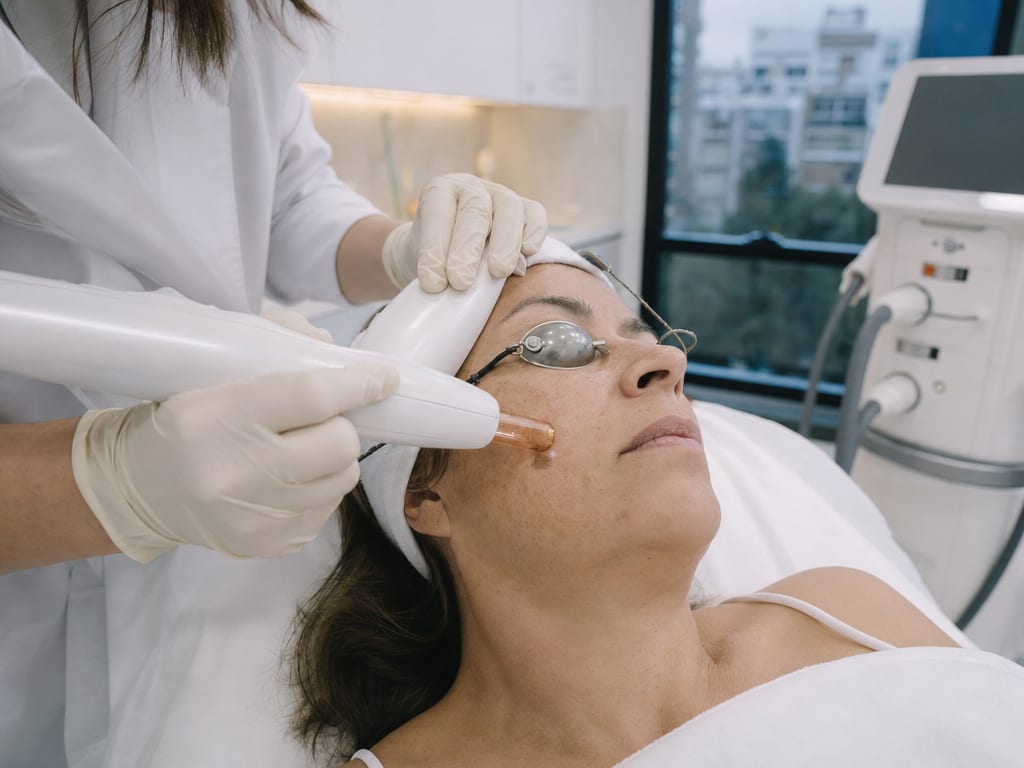
Q-Switched Nd:YAG for dark spots is an ultra-short-pulse laser that breaks up pigment in the skin without damaging the surrounding tissue, so the body can clear it gradually. At iki it’s performed with the Stellar M22 after a medical consultation. Each session takes about 30 minutes, and 3 to 6 sessions are generally recommended.
- Session length
- About 30 min depending on the area
- Sessions
- Generally 3–6 · case by case
- Sensation
- Mild heat and tingling
- Recovery
- Temporary redness · sun care
- Technology
- Stellar M22 · Q-Switched Nd:YAG
- Areas
- Face · others after consultation
Who it’s for · and who it isn’t
Indicated when
- Well-defined sun spots and lentigines
- Uneven pigment from accumulated sun damage
- Some post-inflammatory marks, depending on how deep they are
- Patients already using a depigmenting cream who need a next step
Not the right time if
- Tanned skin or recent intense sun exposure
- Pregnancy or breastfeeding
- Active melasma without a control plan · a poorly indicated laser can make it worse
- Undiagnosed pigmented lesions · those are evaluated first
The physician makes the final indication at the consultation. Results vary from patient to patient.
How a Q-Switched Nd:YAG session for dark spots works at iki
The laser is the tool · the diagnosis decides when and how to use it.
Consultation
We classify the spot and review your skin type (Fitzpatrick), recent sun exposure and any medications that increase sensitivity to light.
Protection and settings
The skin is cleansed, your eyes are protected and the physician adjusts the energy and spot size for the type of spot and skin.
Treating the spots
The physician passes the handpiece over the spots. You’ll feel mild heat and tingling, which are generally well tolerated.
Calming and written plan
The skin is calmed, sunscreen goes on, and you leave with your aftercare and follow-up date in writing.
What it offers
Selective for pigment
It targets pigmented cells and spares the surrounding tissue when the settings are right.
Reaches deeper
It gets to pigment that creams and superficial peels can’t treat on their own.
Short sessions
About 30 minutes per session, with no incisions and no long downtime.
Part of a plan
It’s combined with chemical peels, mesotherapy and an at-home routine when the diagnosis calls for it.
Technology with an indication
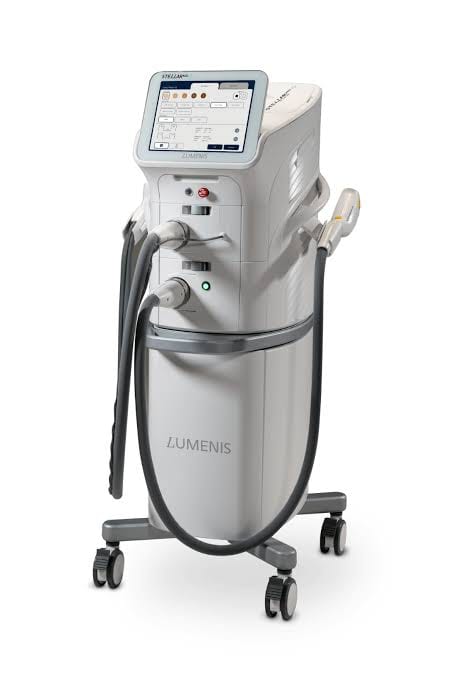
Stellar M22 · Q-Switched Nd:YAG
The Stellar M22 is a platform with several light and laser modules. Its Q-Switched Nd:YAG module fires nanosecond pulses that break up pigment without overheating the surrounding skin. We chose it because it lets us fine-tune settings to the spot and the skin type. The same device also houses IPL and ResurFX for other diagnoses.
Results and aftercare
It’s normal for some spots to darken slightly before they lighten or flake off over the following days and weeks. The change builds between sessions. Sun spots usually respond better than melasma, which can come back and requires maintenance and constant sun protection. With sun exposure, new spots can appear.
Aftercare after the session
- Broad-spectrum sunscreen every day, reapplied
- Avoid direct sun, saunas and intense heat for the following days
- Don’t scratch any fine crusts that form · they fall off on their own
- Gentle hydration and the routine your physician recommends
- Stop exfoliants and acids until your follow-up
Results vary from patient to patient.
Pairs well with
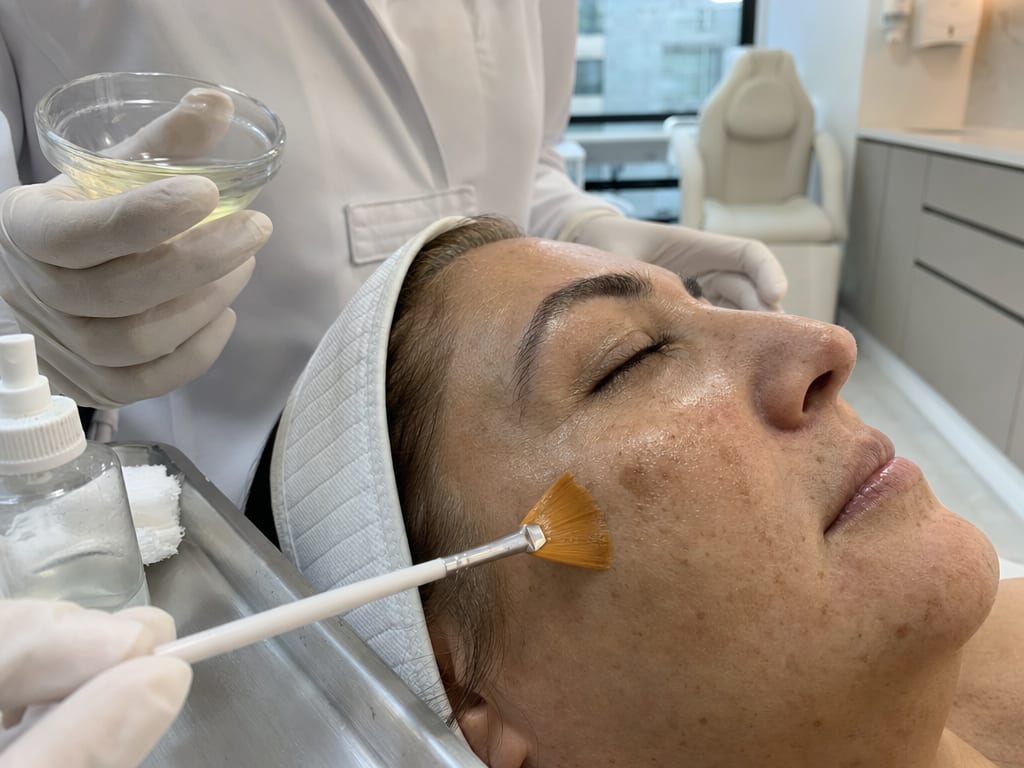 Dark spots and pigmentation
Chemical peel for dark spots
A chemical peel for dark spots uses solutions that exfoliate the superficial layers of the skin in a controlled way. It helps…
See treatment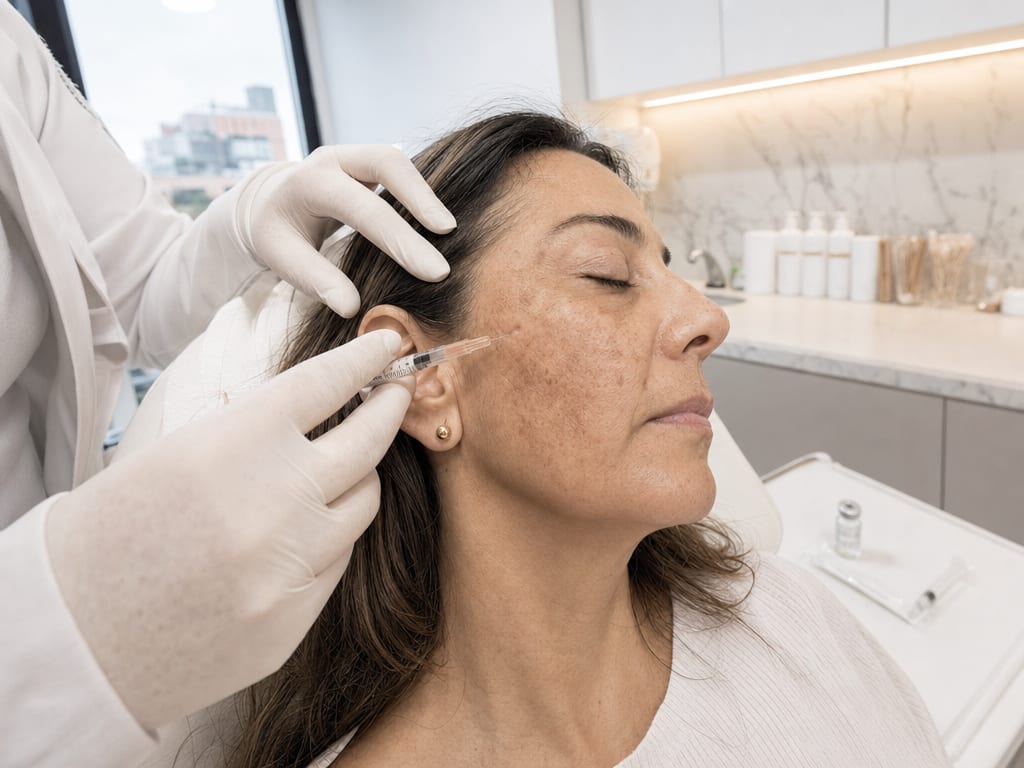 Dark spots and pigmentation
Mesotherapy for dark spots
Mesotherapy for dark spots delivers depigmenting actives straight into the skin through shallow micro-injections. It’s one tool…
See treatmentFrequently asked questions
How many Q-Switched Nd:YAG sessions will I need?
It varies from case to case. In general, 3 to 6 sessions are recommended to get the best possible result, at intervals the physician sets based on how your skin responds. A small, well-defined spot doesn’t behave like widespread pigment, and the plan is adjusted at each follow-up.
Does it hurt?
Most patients feel mild heat and tingling during the treatment. It’s generally well tolerated and isn’t considered painful. More sensitive areas may bother you a little more, and the physician adjusts the pace of the session if needed. If the discomfort increases, just say so.
How long is each session?
About 30 minutes, depending on the area treated and how extensive the spots are. Add to that the prep, eye protection and aftercare at the end. It’s an outpatient procedure: you leave the clinic and carry on with your day, with sun protection.
Does it work for melasma?
With caution. Melasma is chronic and reacts to heat and light, and a poorly indicated laser can make it worse or cause a rebound. In some cases it’s used with conservative settings within a plan that includes creams, daily sunscreen and maintenance. In others, it isn’t the right time. That’s decided at the consultation.
Can I have it if I have darker skin?
Nd:YAG is one of the most widely used wavelengths for higher skin types, but no laser is safe for every skin by default. On darker skin the risk of spots after inflammation is higher, so we use more conservative settings and prep the skin beforehand. Tanned skin is never treated.
What aftercare do I need?
Daily sunscreen with reapplication, no direct sun or intense heat for the following days, and no scratching any fine crusts that may form. It’s normal for some spots to darken before they lighten. Stop exfoliants and acids until your physician says otherwise at the follow-up.
Can I have it during pregnancy or breastfeeding?
We prefer to postpone it. During pregnancy, pigmentation changes because of hormonal factors, and many spots shift after delivery. The reasonable approach is to protect your skin from the sun, keep a routine that’s safe for that stage and have a new consultation once breastfeeding ends.
Does the laser replace depigmenting creams?
No. The laser treats pigment that’s already there · your at-home routine and sunscreen help keep new pigment from forming. Stopping sun protection is one of the most common reasons spots come back. That’s why the plan includes both from day one.
Read before your appointment

Is Q-Switched Nd:YAG for dark spots right for you? · we’ll see at the consultation
Forty-five minutes with a physician, a skin analysis and a written, phased plan with complete prices. You decide afterwards, with no pressure. Living abroad? Start with a virtual consultation.