IPL with an acne filter
Adult acne ≠ teenage acne · an adult diagnosis, an adult protocol
Intense pulsed light with the Stellar M22’s acne filter works on the inflammation and redness of breakouts. At iki it is prescribed as part of a medical plan, not as a stand-alone fix. First we understand why the acne appears · then we decide whether light has a role.
Results in acne and scars · identity protected
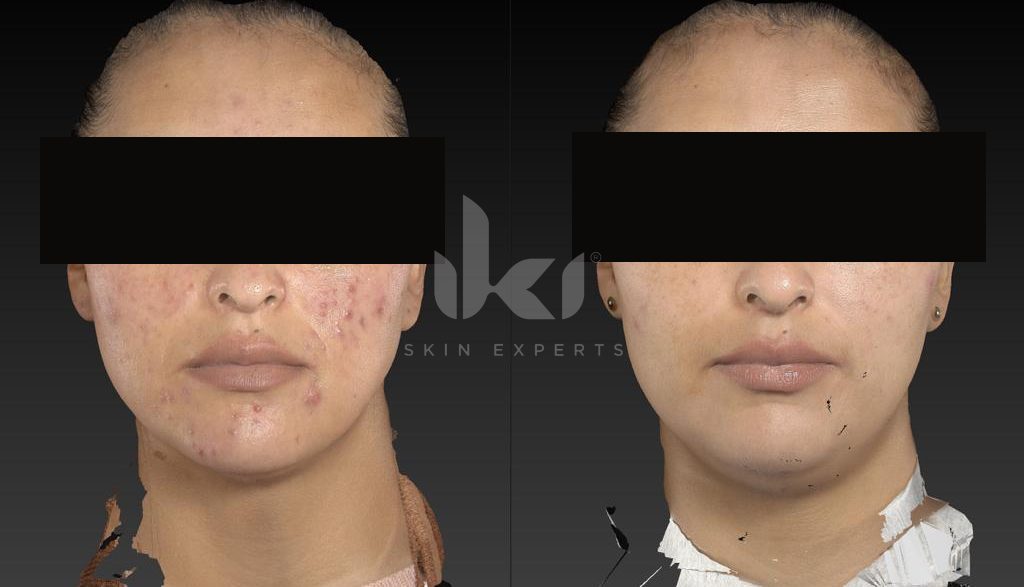
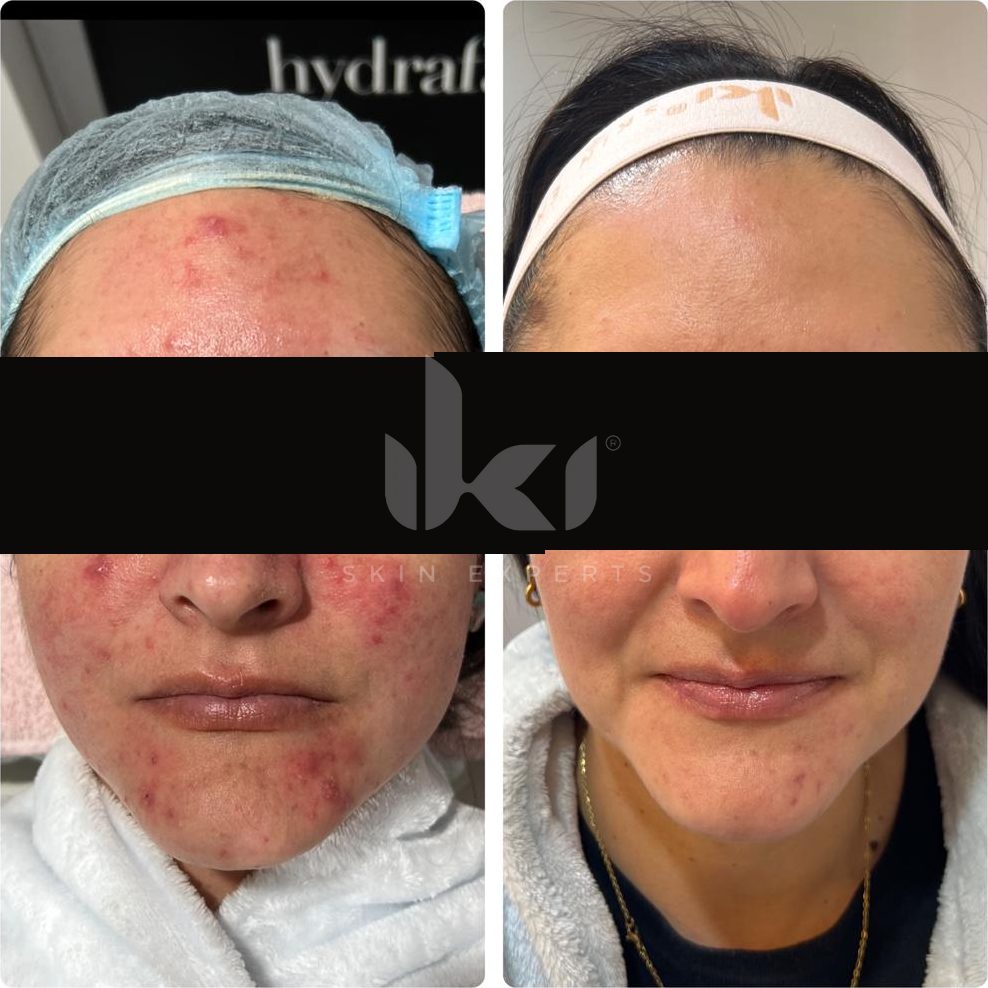
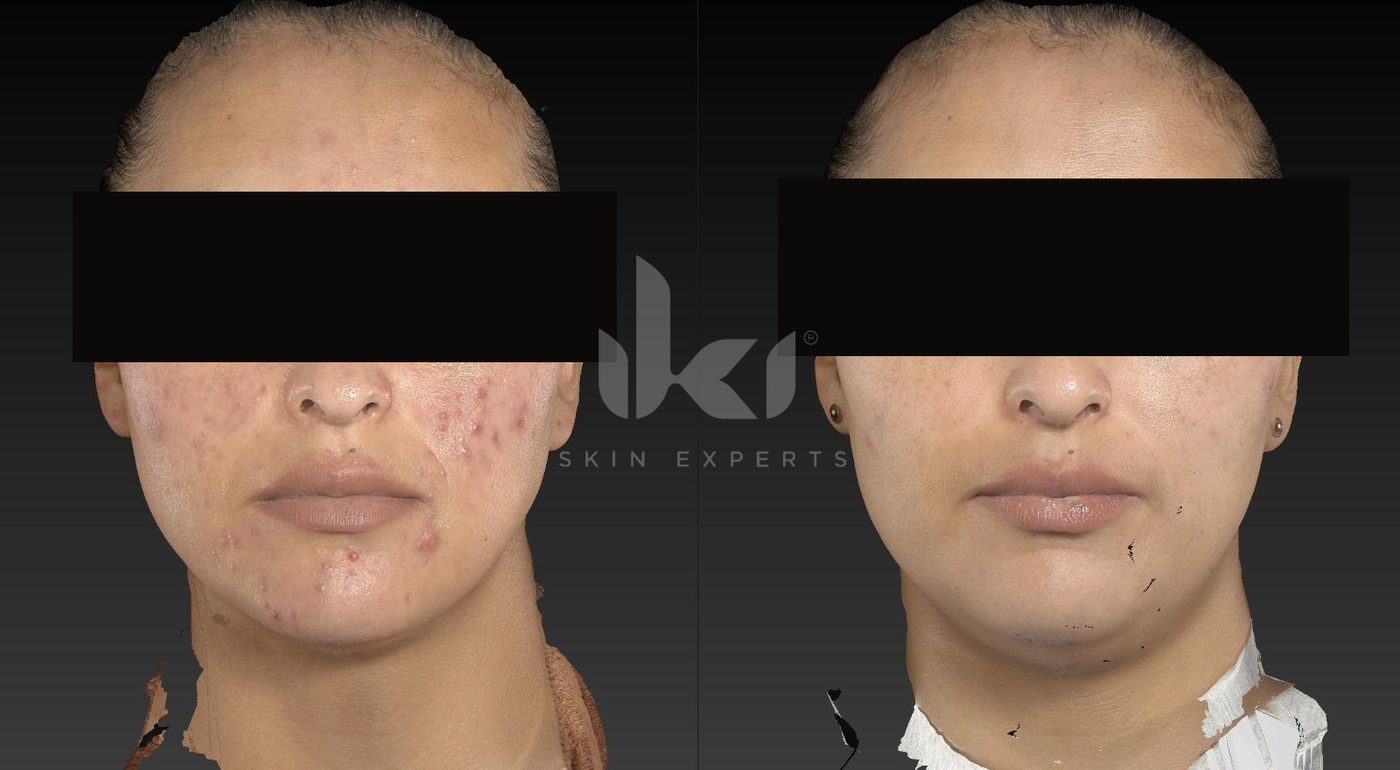
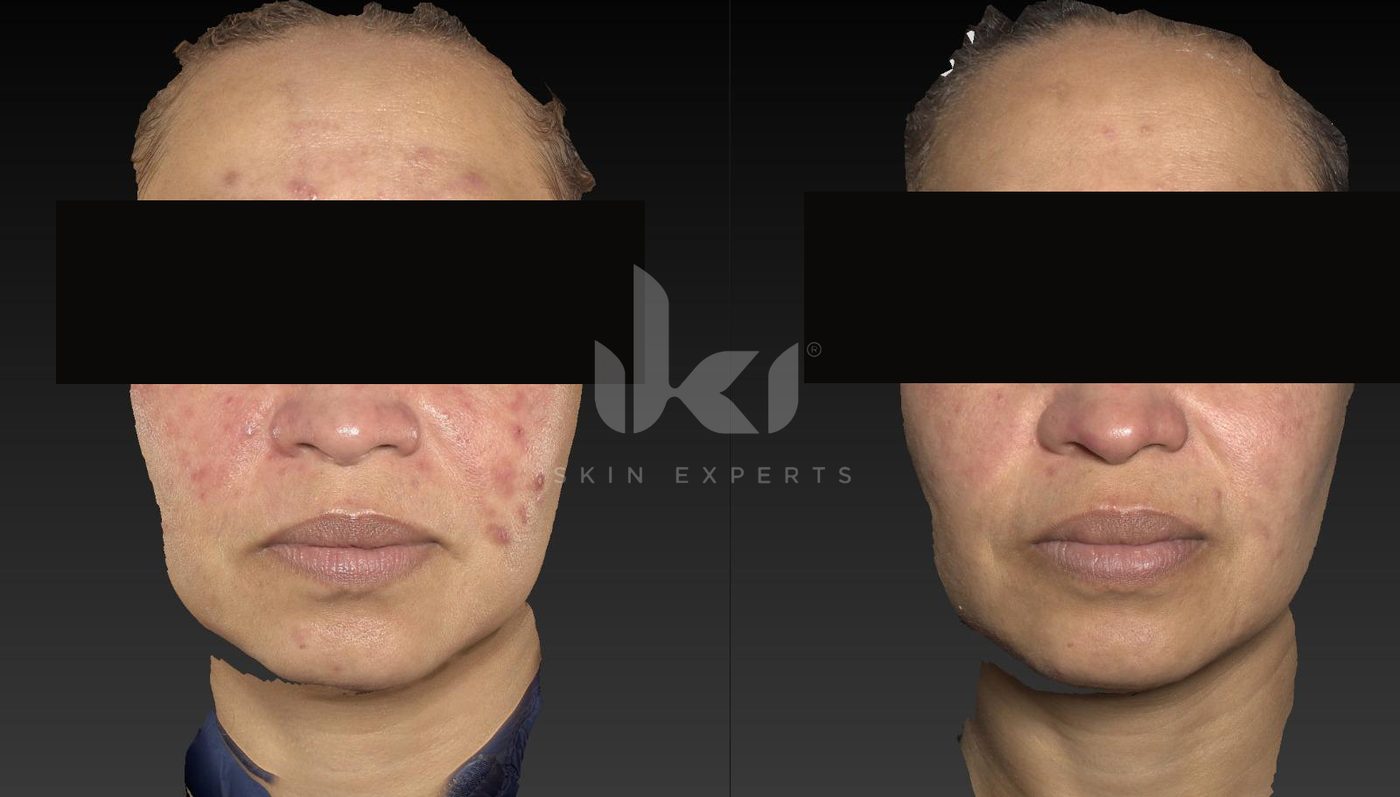
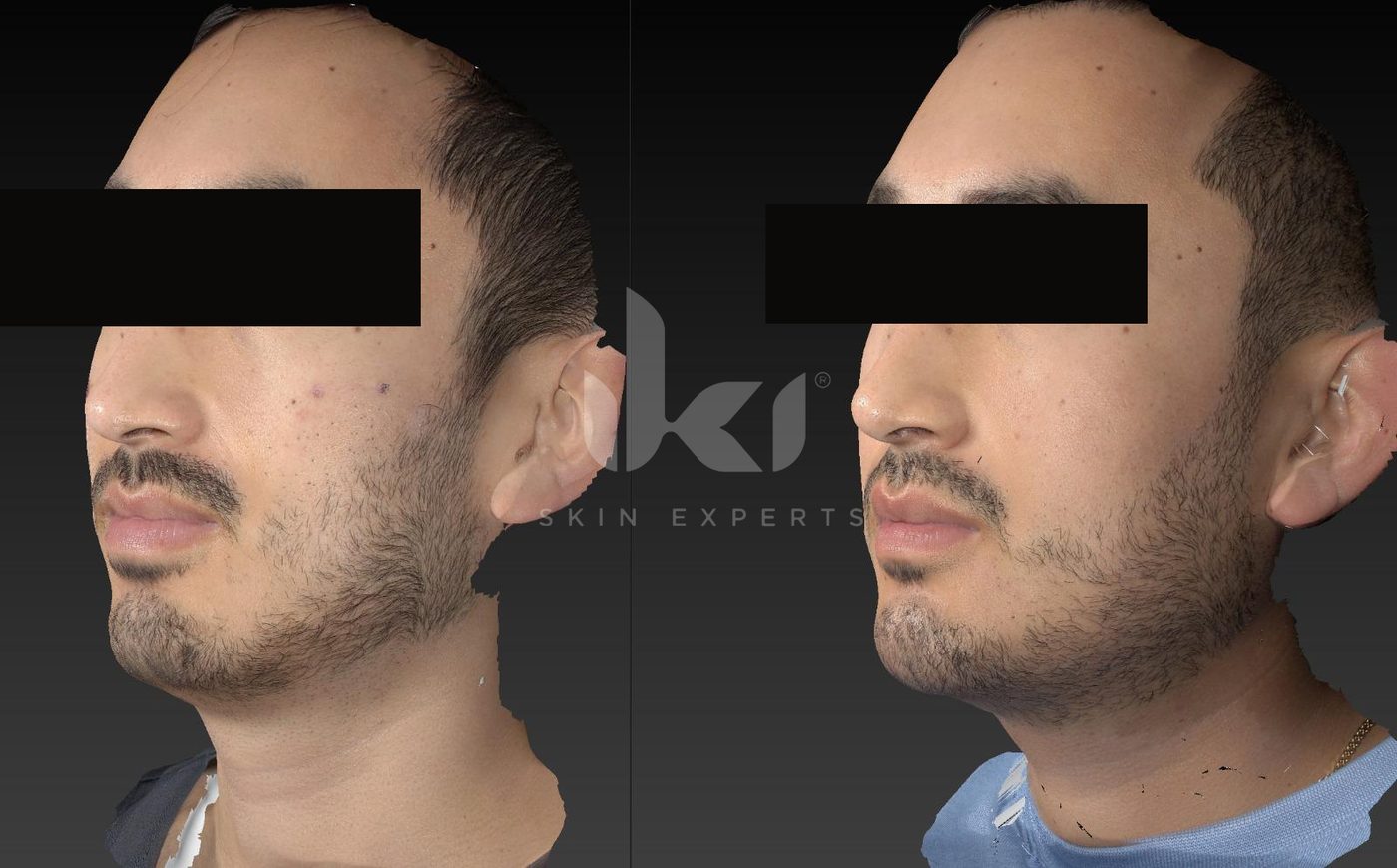
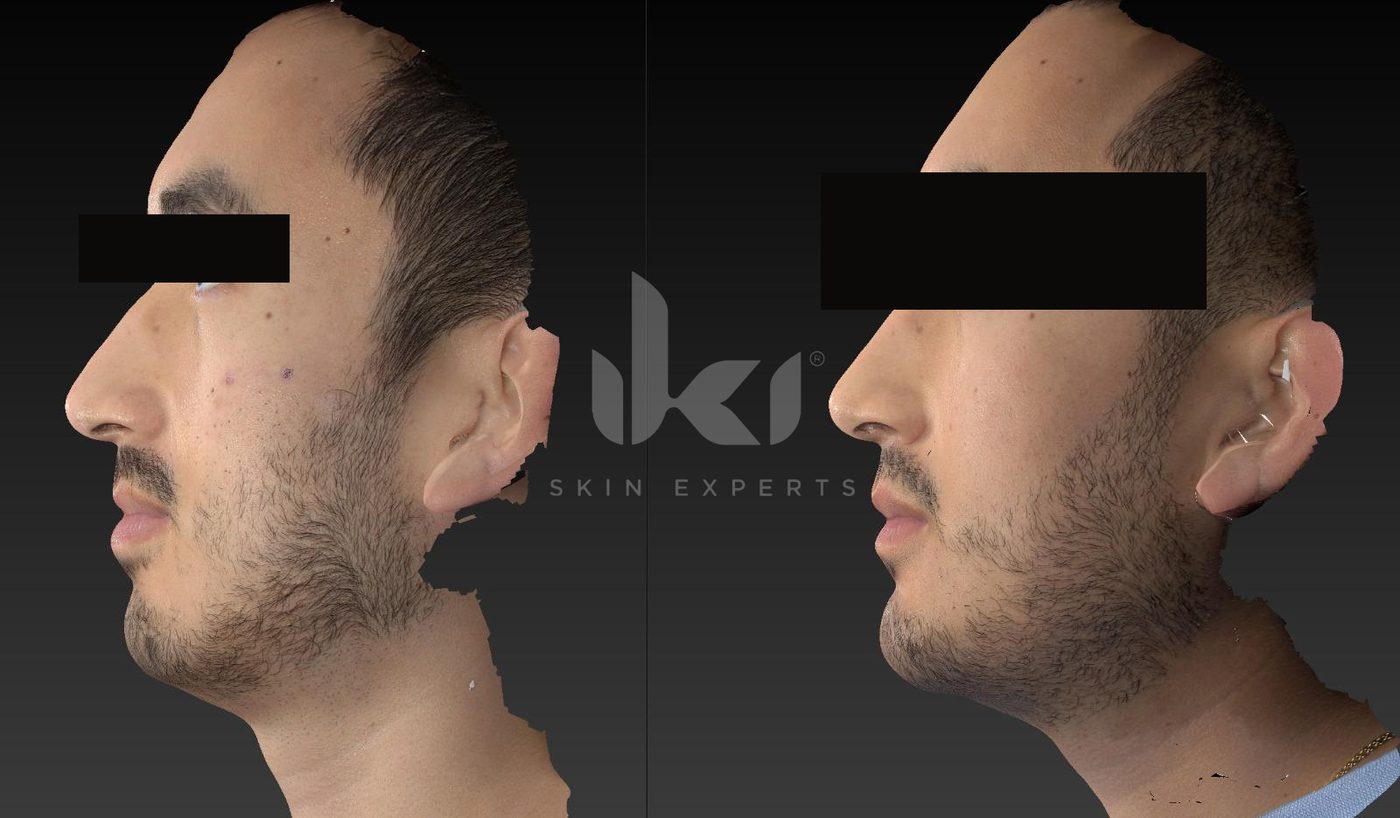
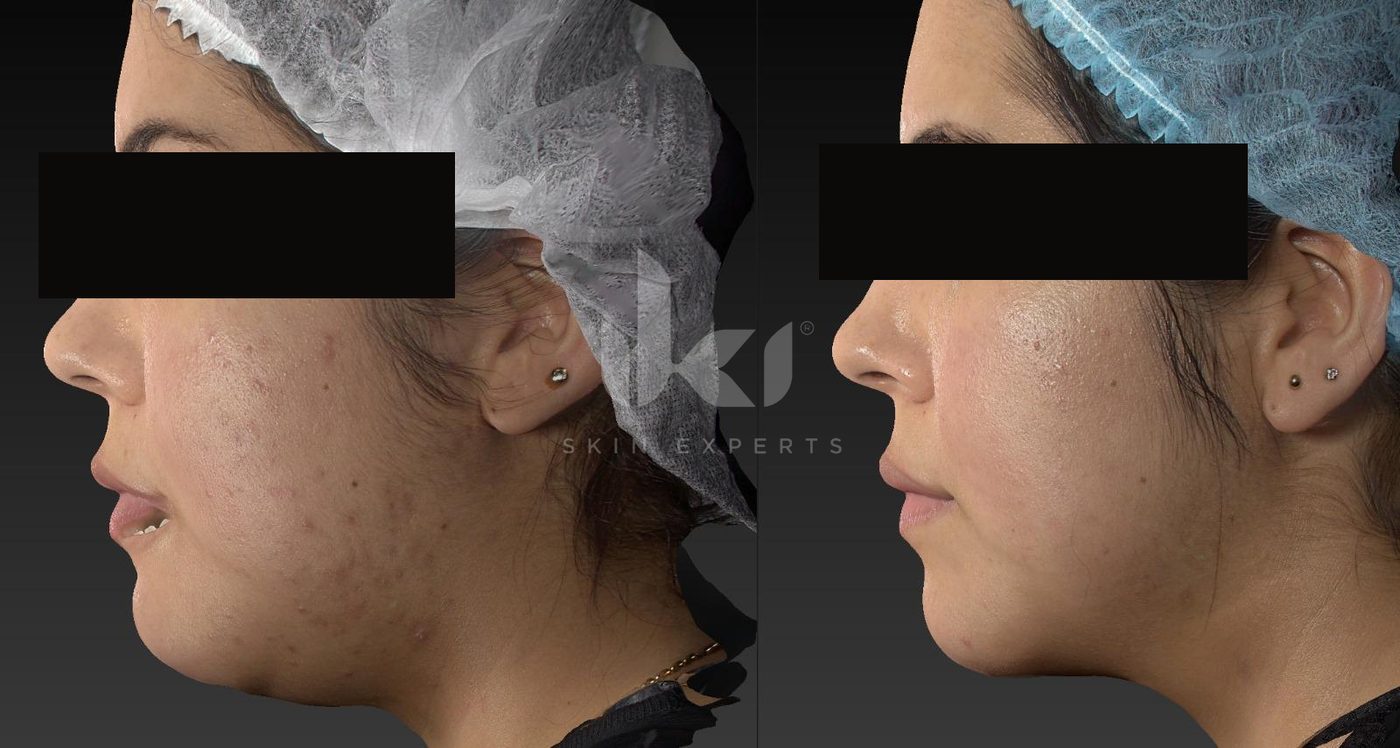
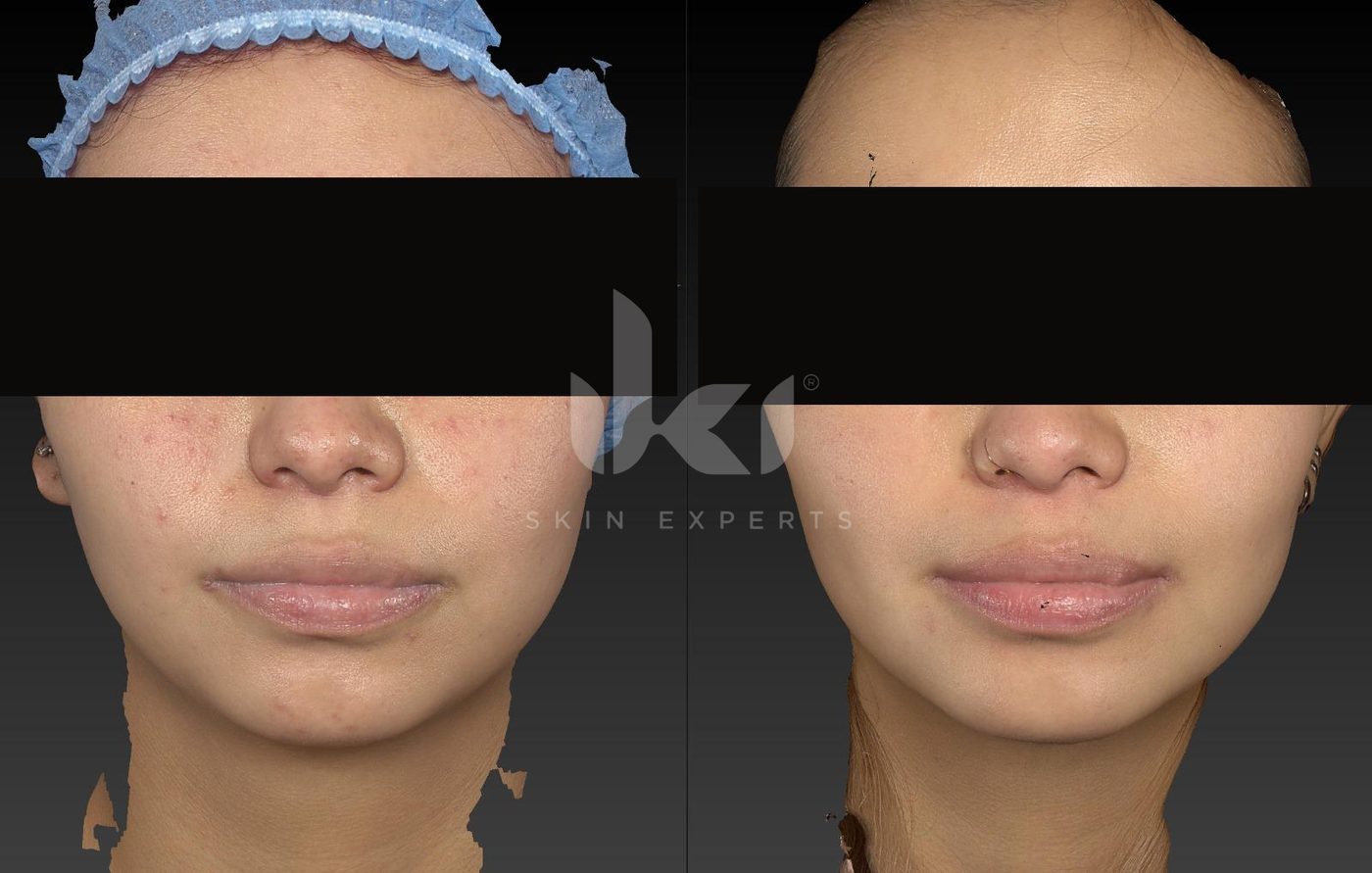
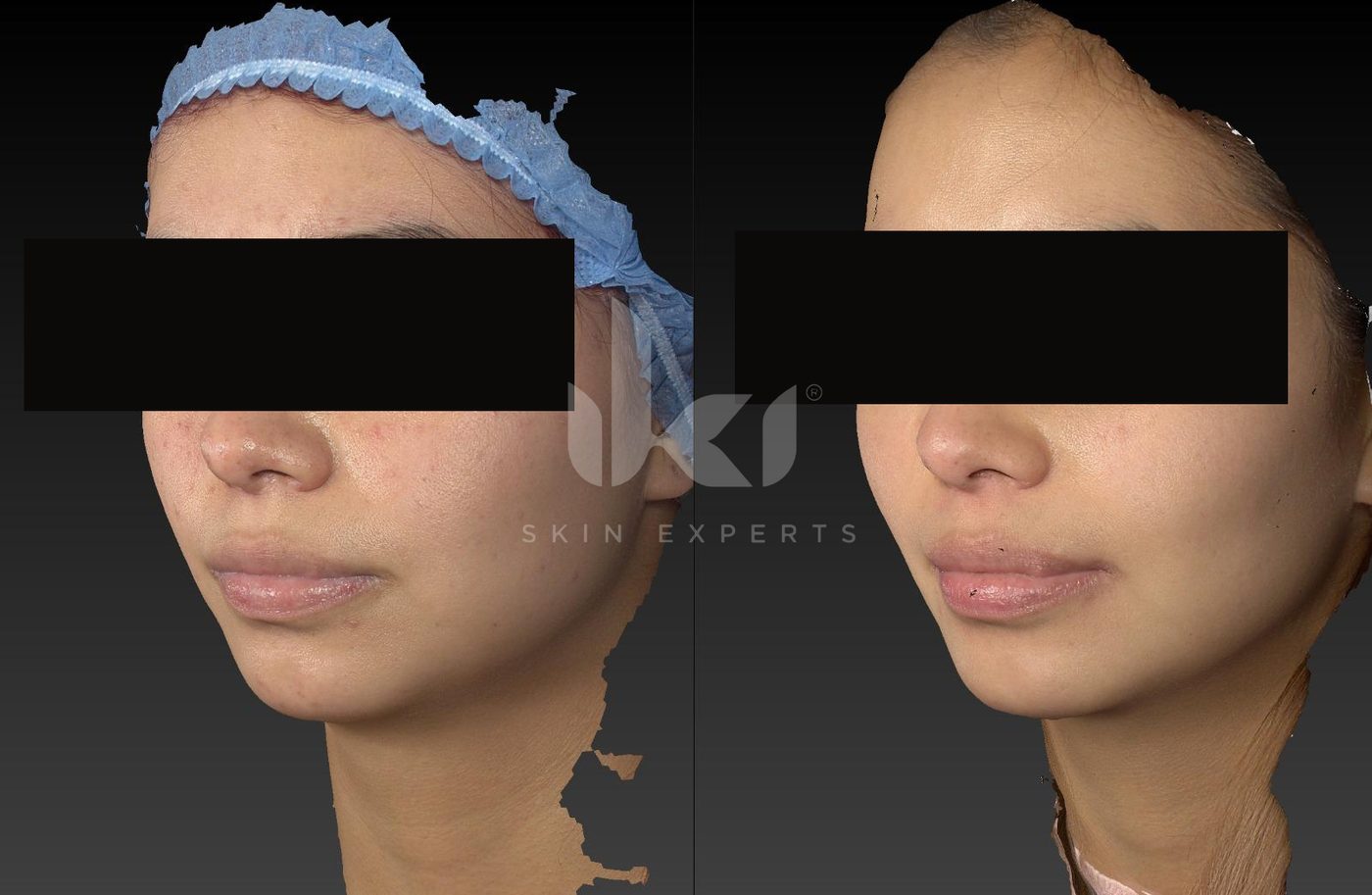
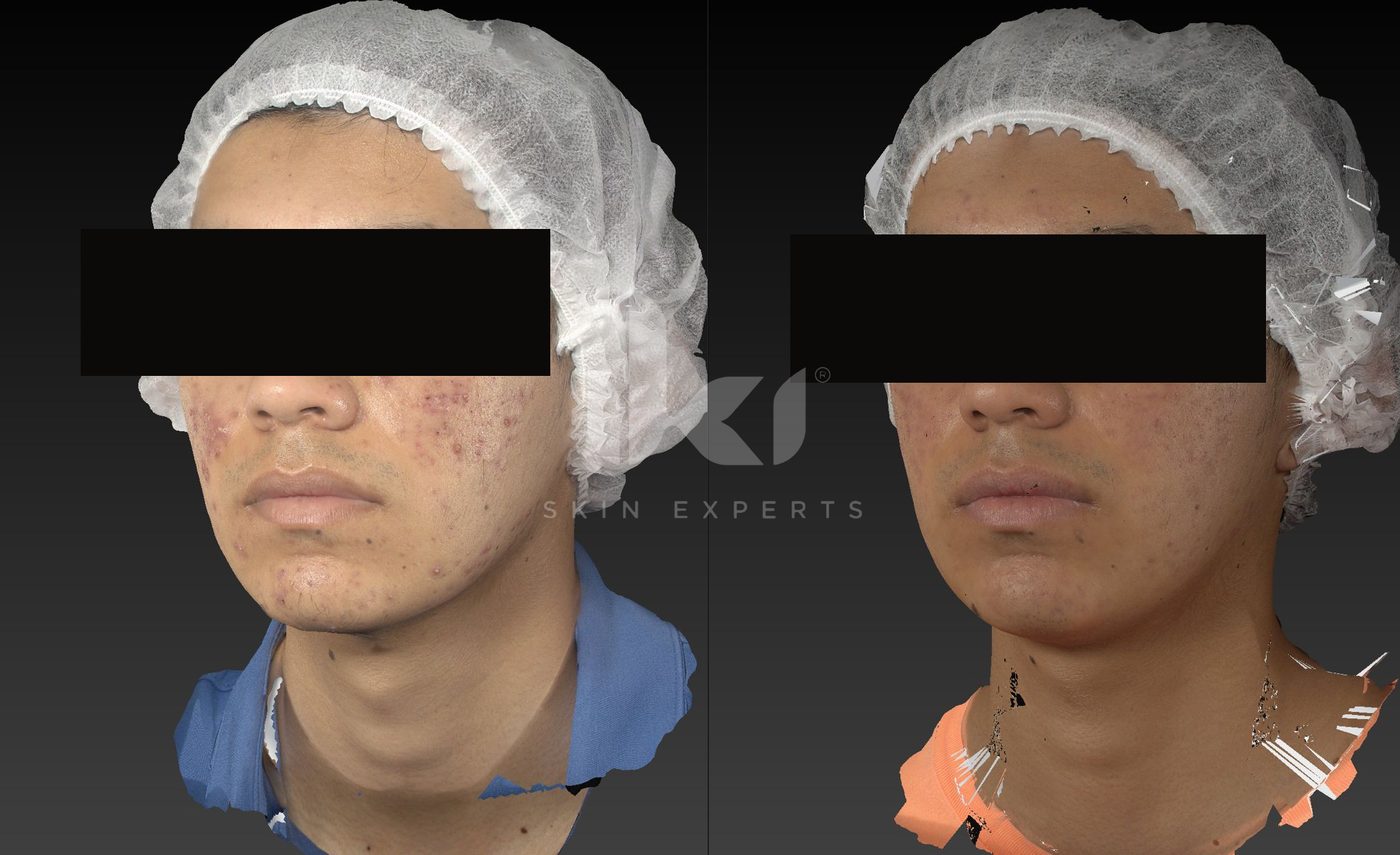
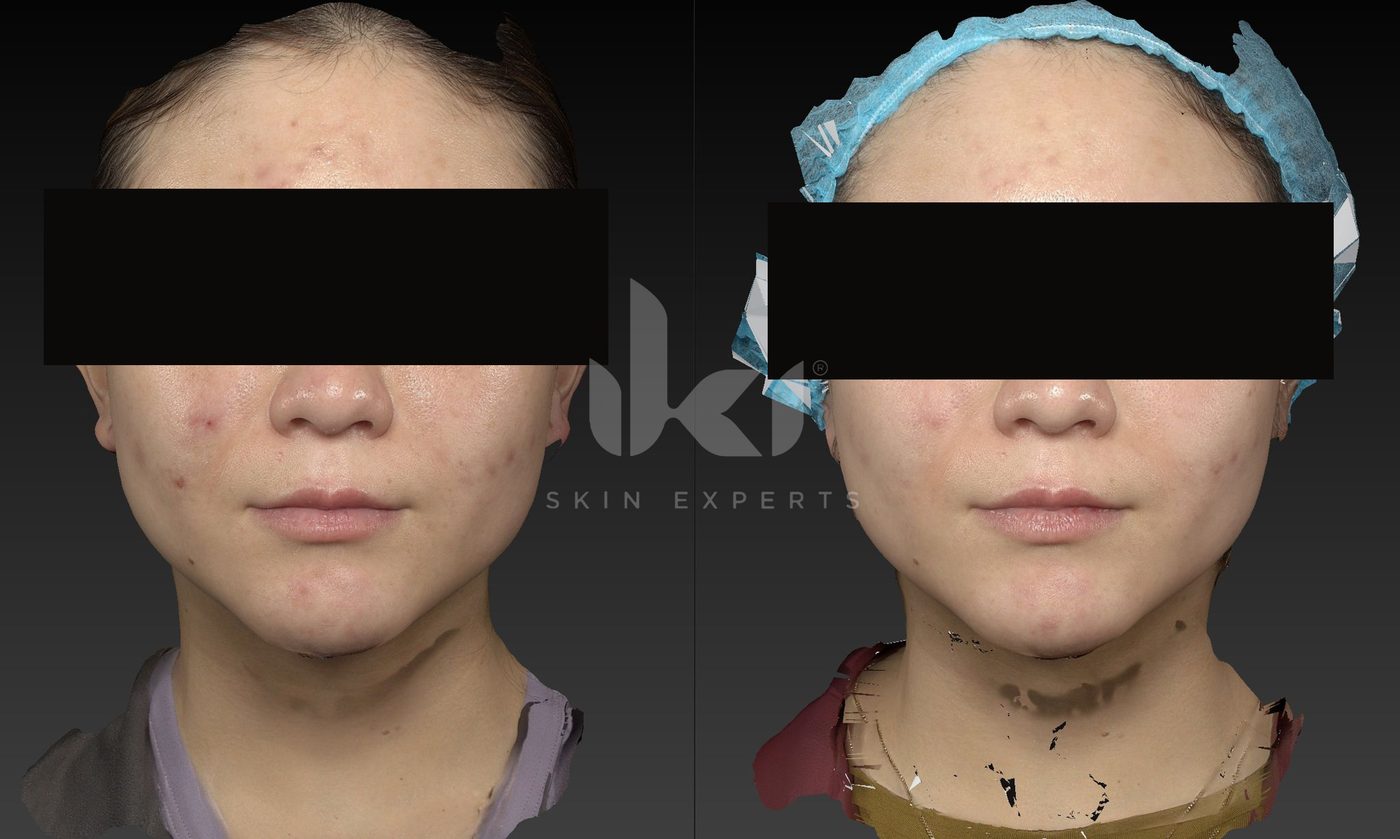
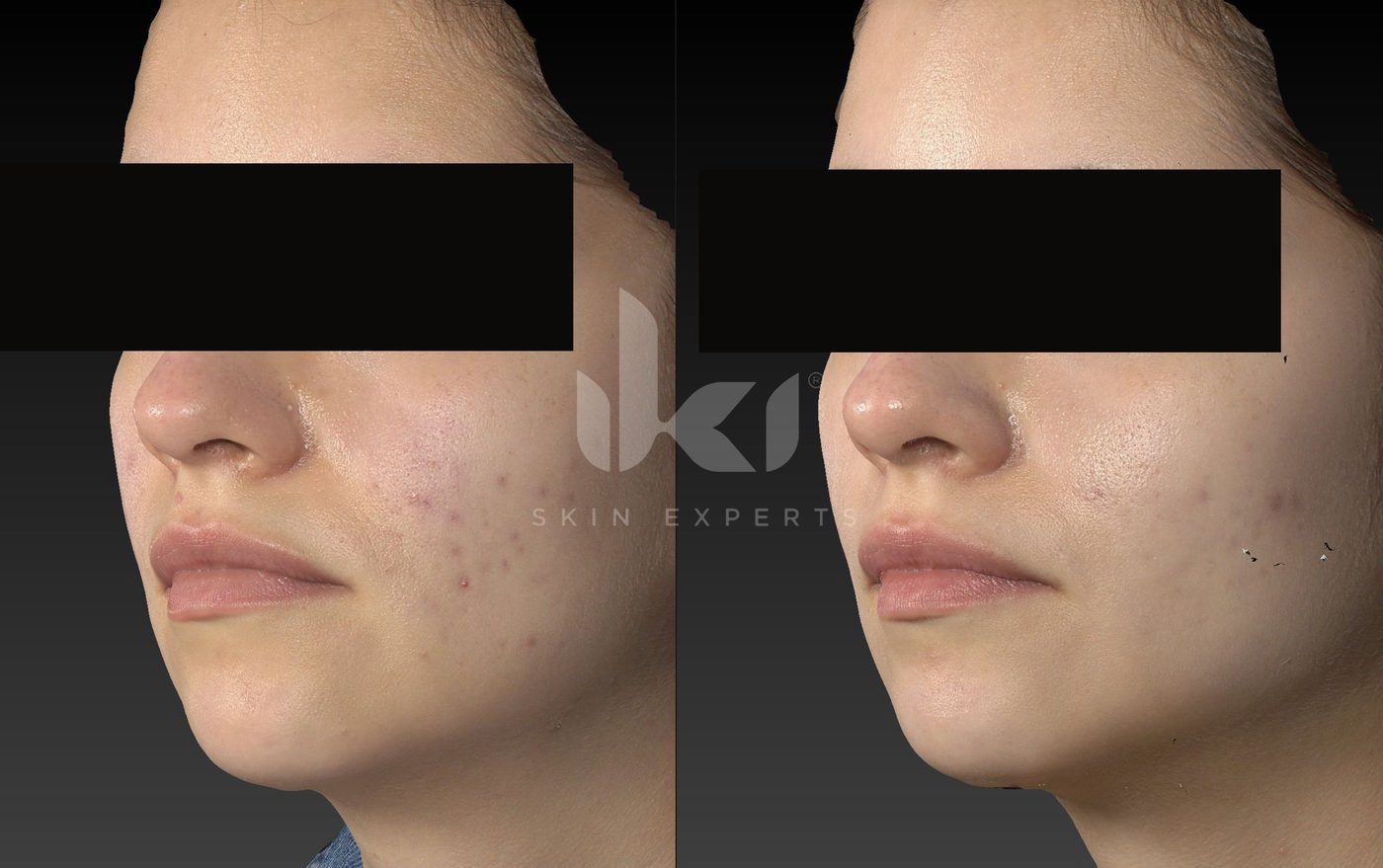
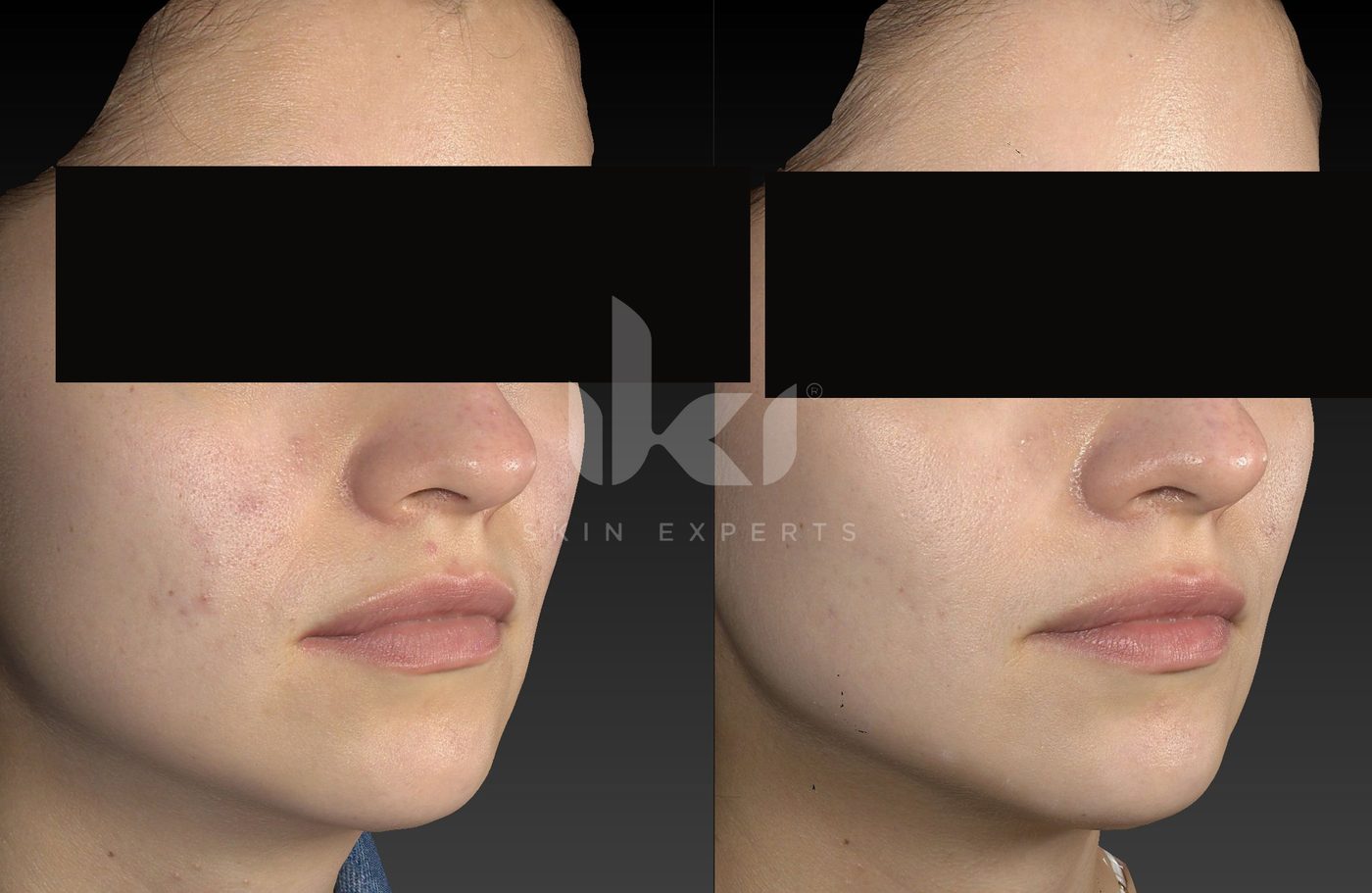
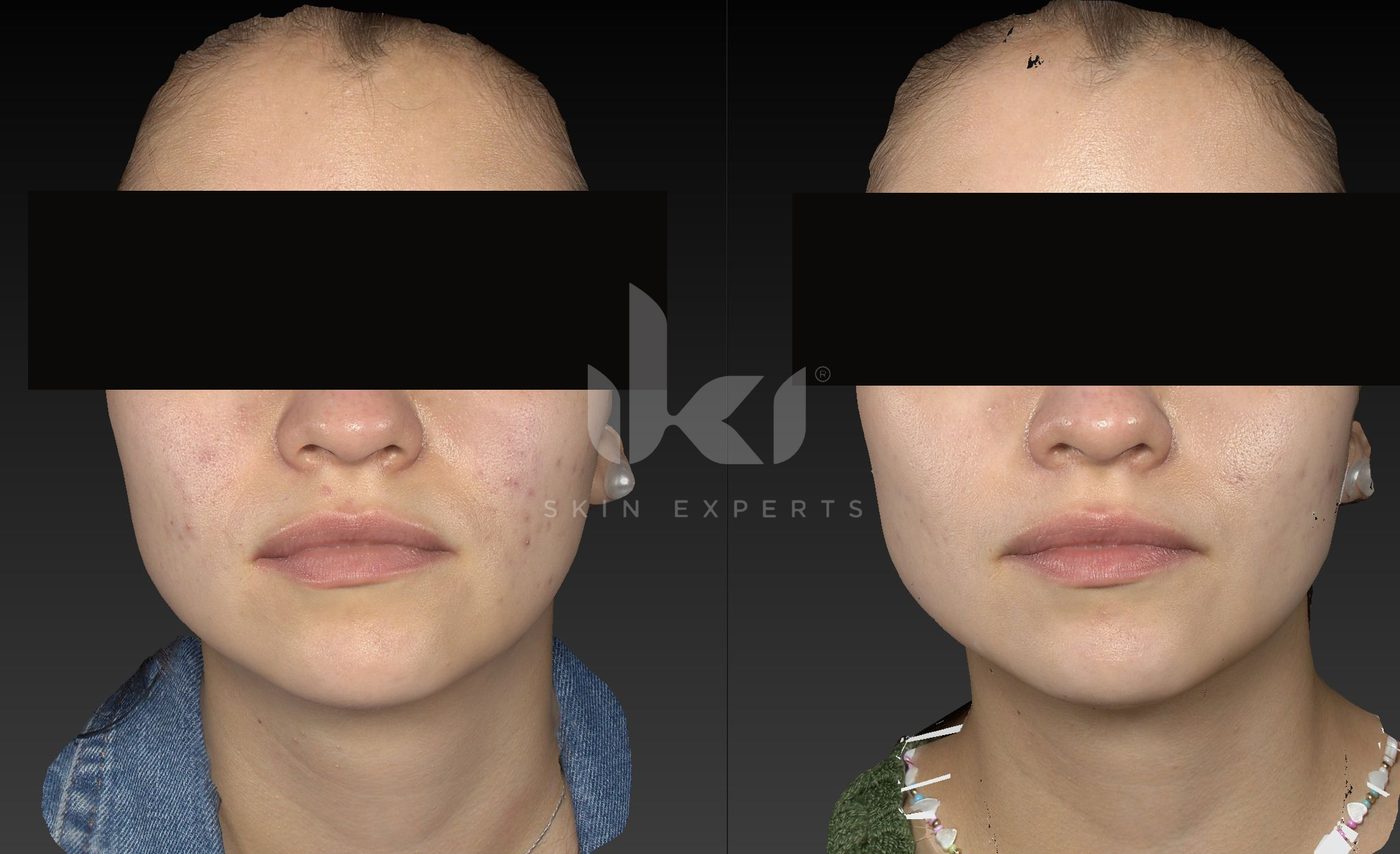
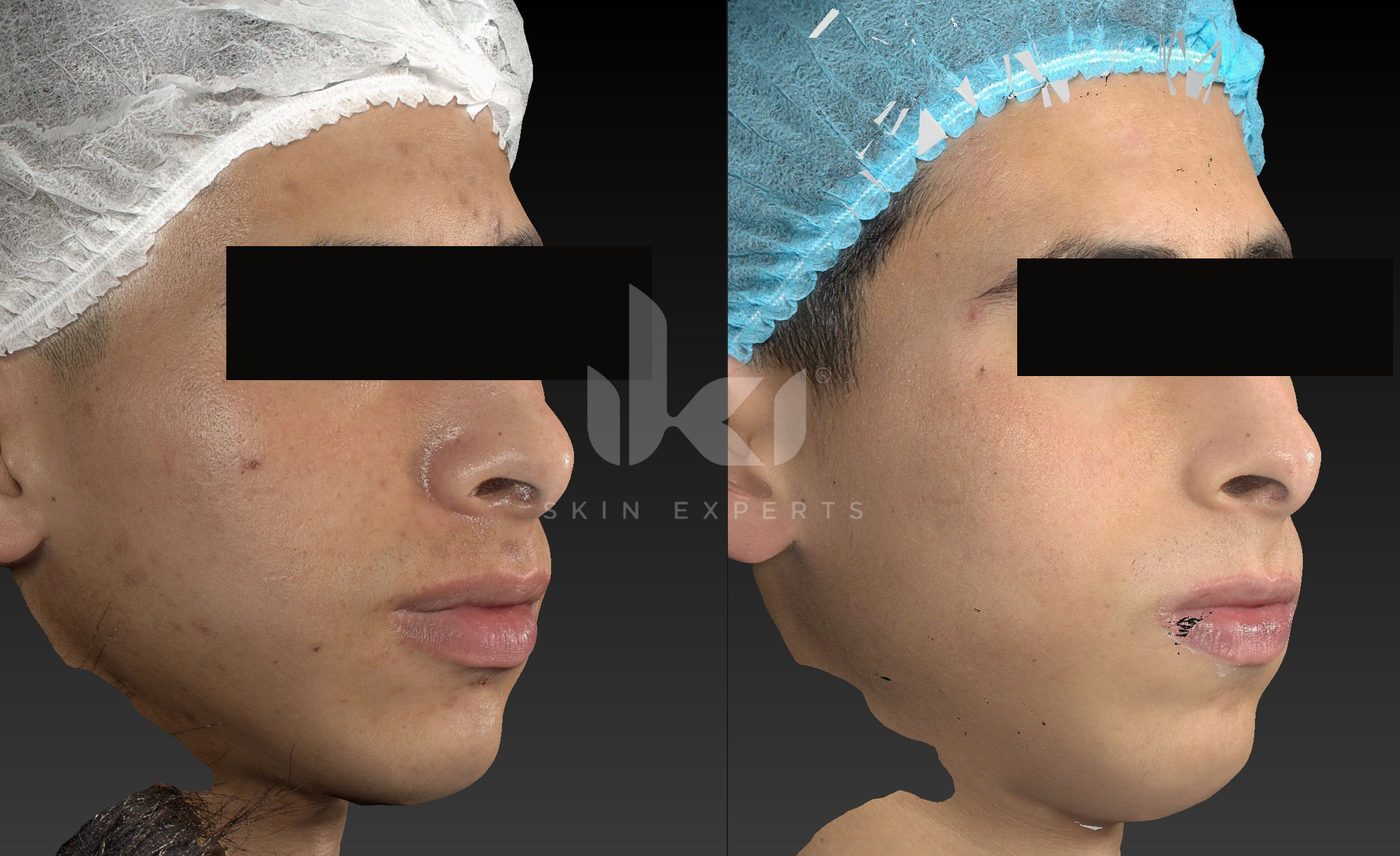
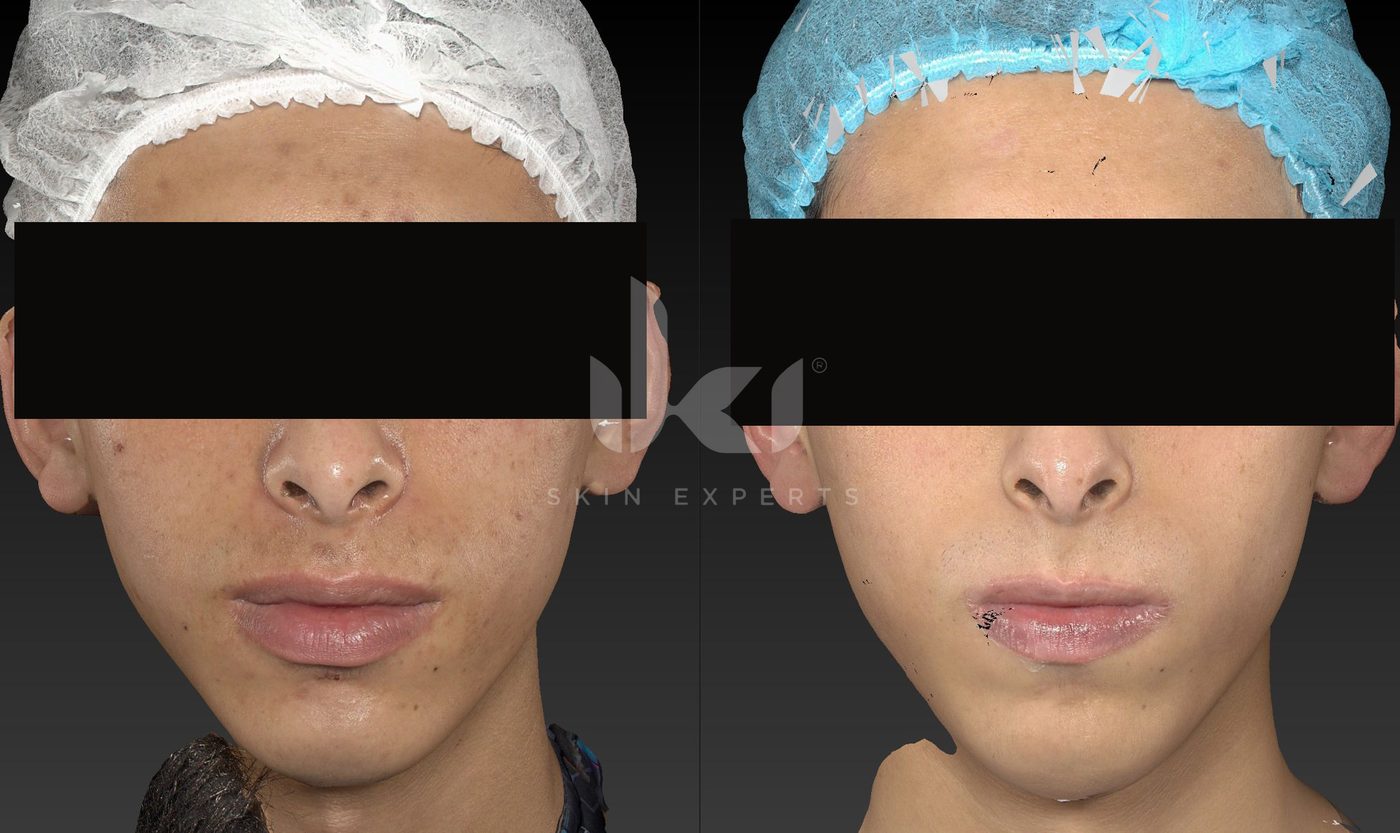
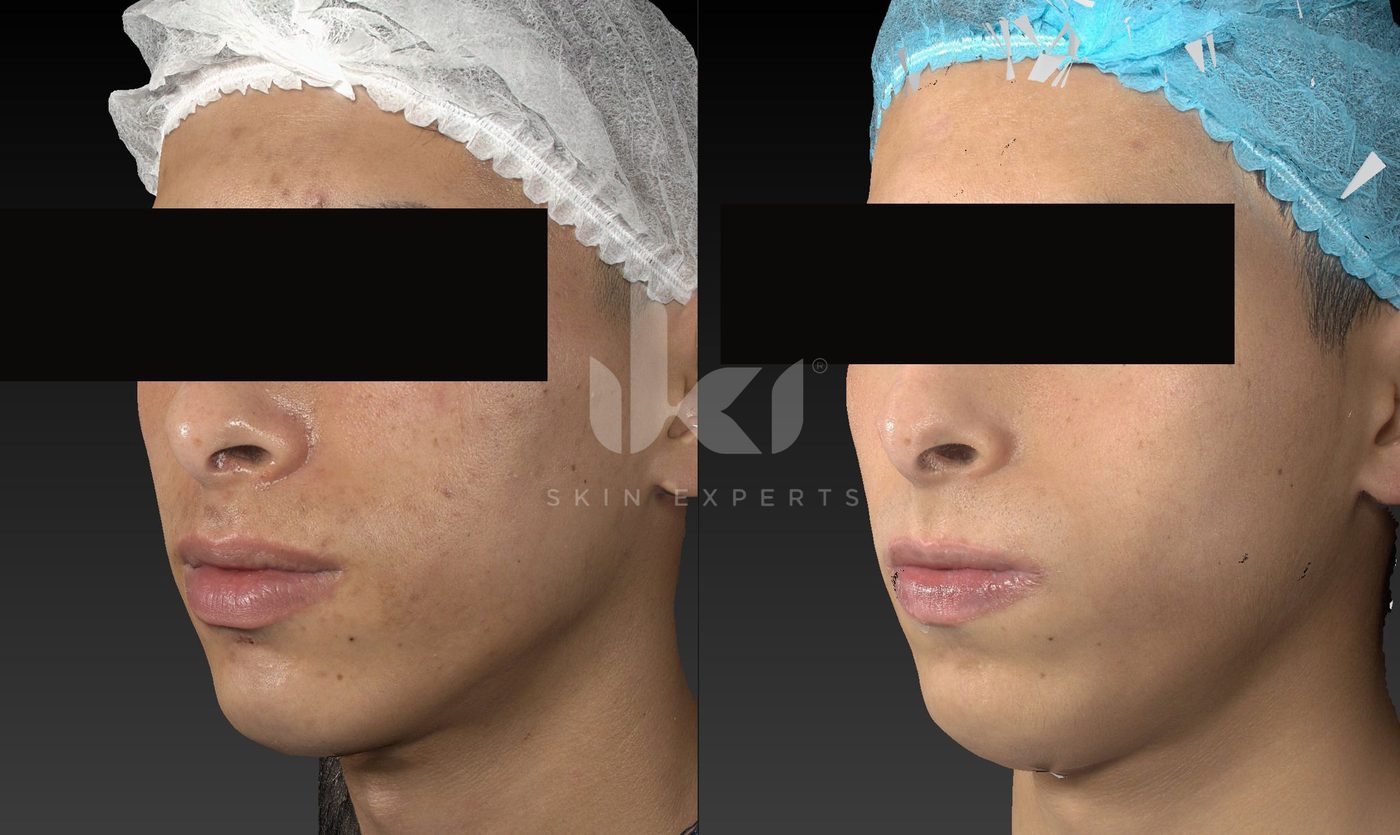
Photos of patients treated at iki, published with their authorization and with their identity covered. Each case had its own diagnosis and plan; the exact treatment may combine several techniques. Results vary from patient to patient. See all cases.
IPL with an acne filter is an intense pulsed light treatment that uses a dedicated filter on the Lumenis Stellar M22 to act on the inflammation, redness and bacterial activity of mild to moderate acne. At iki it follows a medical consultation and is done in 4 to 6 sessions, spaced 3 to 4 weeks apart. Improvement is gradual, and results vary from patient to patient.
- Session length
- 30–60 min depending on the area
- Sessions
- 4–6 · every 3–4 weeks
- Recovery
- Minimal · redness for a few hours
- First changes
- Gradual · over the course of the protocol
- Technology
- Stellar M22 · acne filter
- Areas
- Face · back and chest if the consultation supports it
Who it’s for · and who it isn’t
Indicated when
- Mild to moderate inflammatory acne, with papules and pustules
- Adult acne that persists or returns after age 25
- Red marks left by breakouts (post-inflammatory erythema)
- Patients who need a complement to medical or topical treatment
Not the right time if
- Severe nodular or cystic acne · it needs medical management before any technology
- Tanned skin or recent sun exposure · we wait for your skin tone to settle
- Current or recent use of isotretinoin or photosensitizing medication · the physician decides the timing
- Pregnancy · postponed as a precaution
The physician makes the final indication at the consultation. Results vary from patient to patient.
What an IPL session for acne looks like at iki
IPL does not replace a diagnosis. Before the first session we review your type of acne, its triggers and what you have already tried.
Medical consultation
We classify the acne and review your hormonal history, medications and routine. If there are signs of hormonal acne or polycystic ovary syndrome, they are addressed as part of the plan.
Skin prep
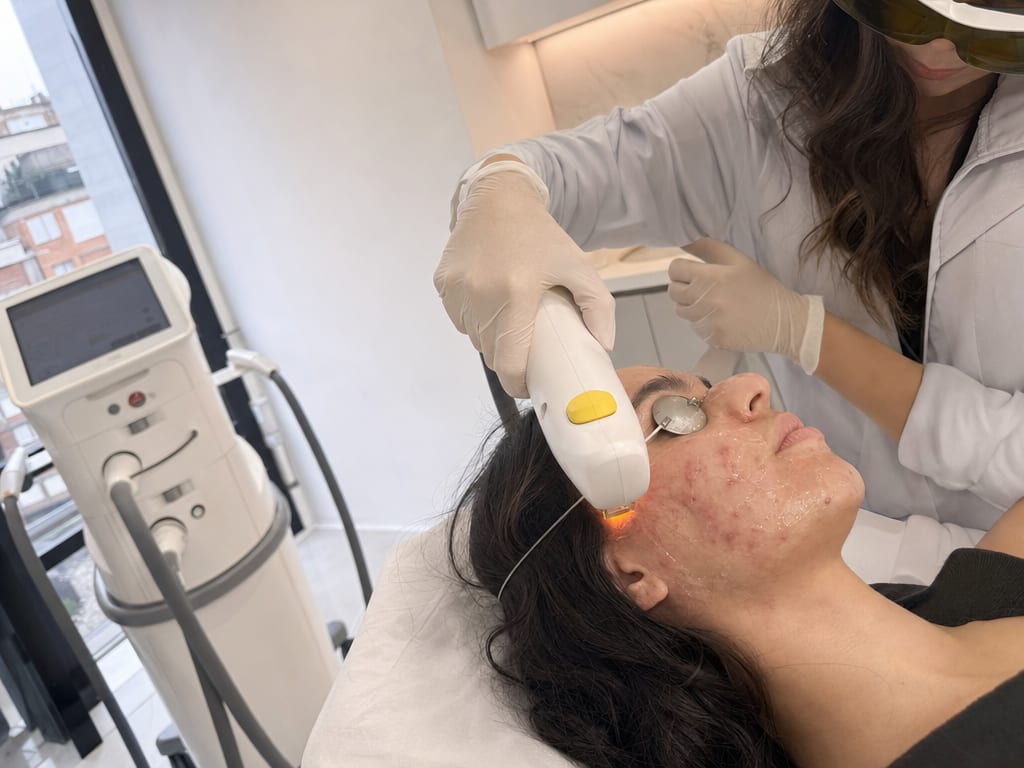
Cleansing, eye protection and a cold conductive gel. The filter settings are adjusted to your skin type (Fitzpatrick) and the area treated.
Light pulses
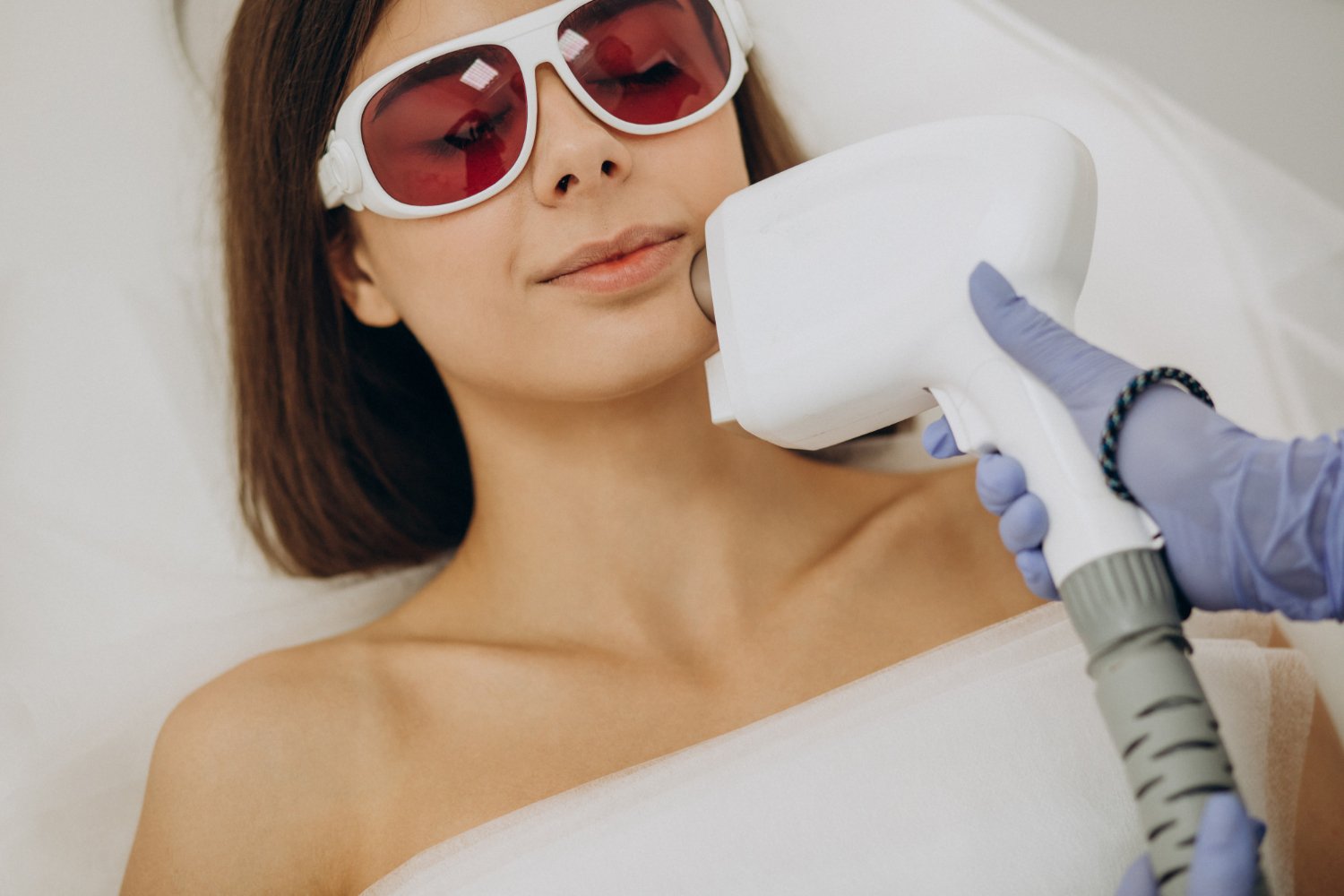
The handpiece moves across the area with short pulses. You feel warmth and a light snap, which most patients tolerate well.
Finish and aftercare
We remove the gel and apply a soothing product and sunscreen. You leave with written aftercare and the date of your next session.
What it offers
Works on inflammation
Light from the acne filter targets inflamed lesions and the vascular component of the breakout, which helps reduce redness.
Complements medical treatment
It fits alongside topicals, chemical peels or oral treatment when those are indicated. It doesn’t compete with them.
Softens red marks
The redness left after breakouts usually responds well to pulsed light. Raised or indented scars need other technologies.
No downtime
Most patients return to their day the same day. Mild redness usually fades within a few hours.
Technology with an indication
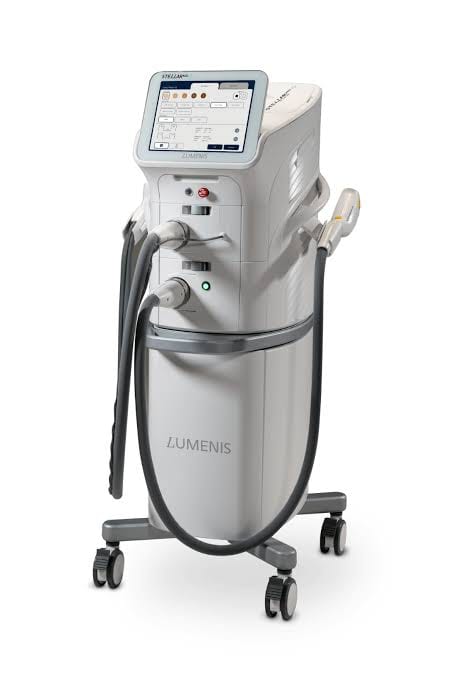
Lumenis Stellar M22
The Stellar M22 is a Lumenis platform that combines intense pulsed light with interchangeable filters and the ResurFX laser. The acne filter selects the wavelengths that are useful for inflammatory lesions and leaves the rest out. We chose it because it lets us adjust the energy to each skin type and each area, which is key for Latin skin.
Results and aftercare
Changes are gradual: fewer inflamed lesions and less redness as the protocol moves forward. IPL helps control acne activity, but it doesn’t change its cause. If there is a hormonal or routine component, the result also depends on managing it, and maintenance sessions may be needed.
Aftercare after the session
- Daily broad-spectrum sunscreen, reapplied during the day
- Avoid direct sun, saunas and intense exercise for 48 hours
- Don’t touch or squeeze the lesions
- Pause exfoliants and topical retinoids on the days your physician indicates
- Keep your routine and plan medications exactly as written
Results vary from patient to patient.
Pairs well with
 Acne and scars
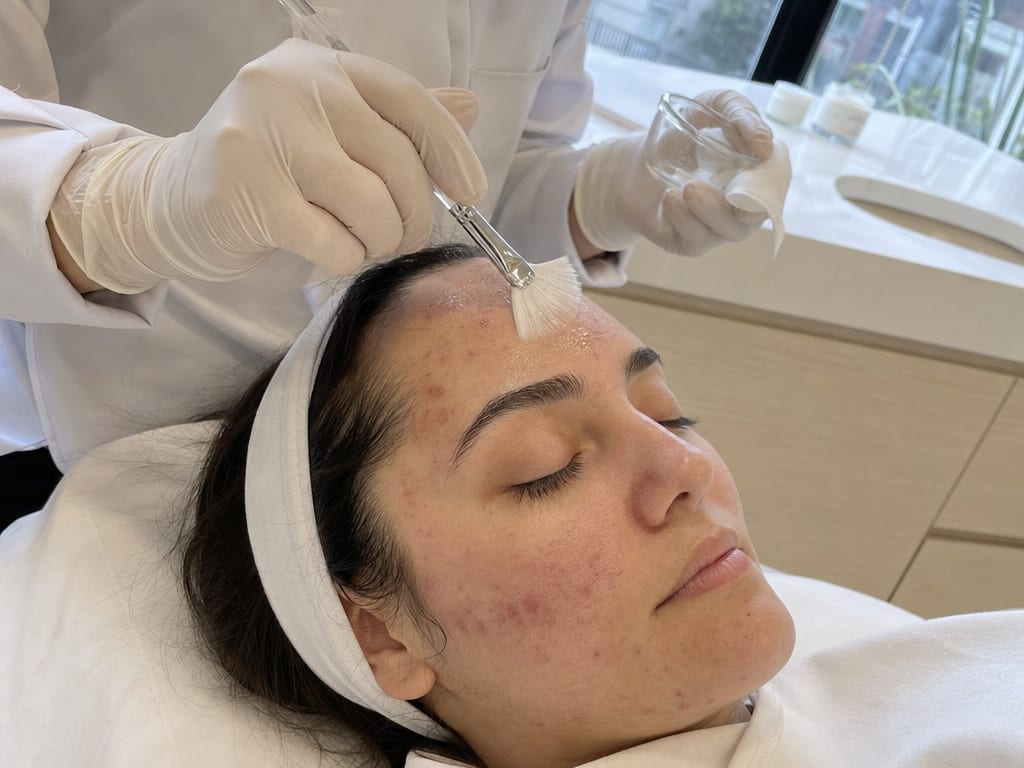
Chemical peel for acne
A chemical peel applies selected acids to exfoliate the top layer of the skin, unclog pores and help regulate oil. At iki the…
See treatment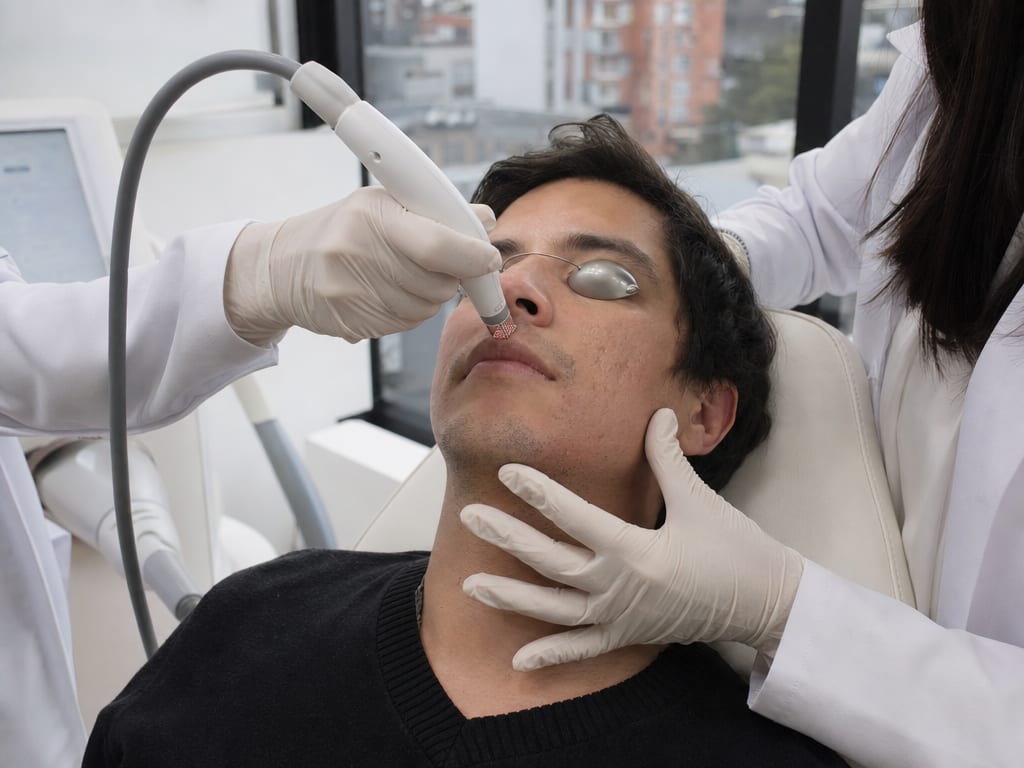 Acne and scars
ResurFX for acne scars
ResurFX is the non-ablative fractional laser on the Lumenis Stellar M22. It creates microscopic columns of heat beneath the…
See treatment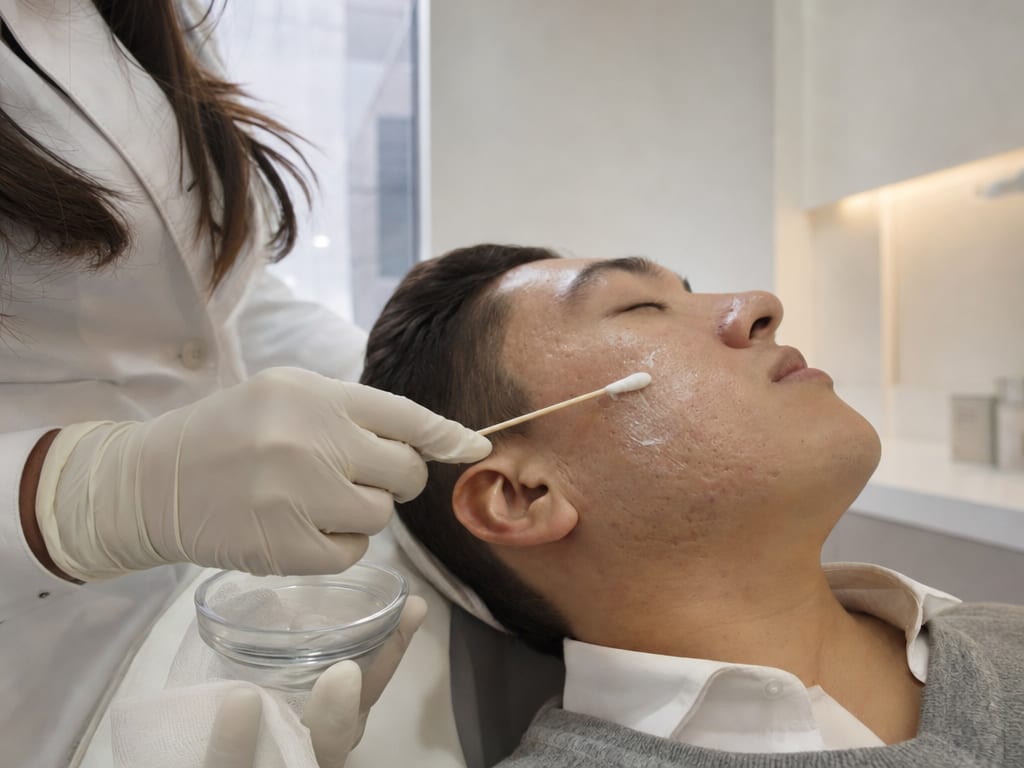 Acne and scars
Chemical peel for acne scars
A chemical peel for scars renews the top layers of the skin and stimulates collagen to smooth texture and soften marks. It works…
See treatmentFrequently asked questions
Does IPL for acne hurt?
Most patients describe it as warmth or a light snap with each pulse. It isn’t considered a painful treatment and usually doesn’t require numbing. The cold gel and adjusting the energy to each area help keep the session comfortable. If an area feels more sensitive, the physician adjusts the settings on the spot.
How many IPL sessions does acne need?
Usually between 4 and 6 sessions, spaced 3 to 4 weeks apart so the skin recovers in between. The exact number depends on how severe the acne is, the type of lesions and how your skin responds. At the consultation you receive a written plan with the estimated number of sessions.
How long does a session take?
Between 30 and 60 minutes, depending on the area and each patient’s condition. That time includes skin prep, eye protection, the light pulses and a soothing product and sunscreen at the end. You can go back to your activities when you leave the clinic.
Does IPL work for hormonal acne?
It can help control inflammation, but it doesn’t act on the hormonal cause. When acne appears or worsens in adulthood, concentrates along the jawline or follows the menstrual cycle, we check for a hormonal component such as polycystic ovary syndrome. The diagnosis decides whether IPL is the right step or a complement.
Does IPL erase acne scars?
No. IPL helps with the red marks breakouts leave behind, but indented or raised scars need technologies that stimulate collagen deeper in the skin, such as the ResurFX laser or chemical peels for scars. That’s why at iki we control active acne first and treat what it left behind afterward.
Can IPL be done on darker or tanned skin?
Darker skin can be treated with care: the physician adjusts the filter and energy to your skin type. Tanned skin or skin with recent sun exposure is a different story, because it raises the risk of dark spots and burns, so we wait for your tone to return to its baseline. It’s one of the reasons the consultation is essential.
Can I have IPL if I take isotretinoin or I’m pregnant?
During isotretinoin treatment, or shortly after finishing it, the skin is more sensitive and the physician decides when it’s safe to start. During pregnancy we prefer to postpone light treatments and focus on care that suits that stage. Tell us at the consultation everything you take, including birth control and supplements.
What happens after the session?
Mild redness, similar to light sun exposure, is normal and usually fades within a few hours. Use sunscreen, avoid direct sun and don’t touch the lesions. If you notice blisters, scabs or pain that doesn’t ease, message us so we can check it. The next session is booked once your skin has fully recovered.
Read before your appointment
Is Filtered IPL for acne right for you? · we’ll see at the consultation
Forty-five minutes with a physician, a skin analysis and a written, phased plan with complete prices. You decide afterwards, with no pressure. Living abroad? Start with a virtual consultation.