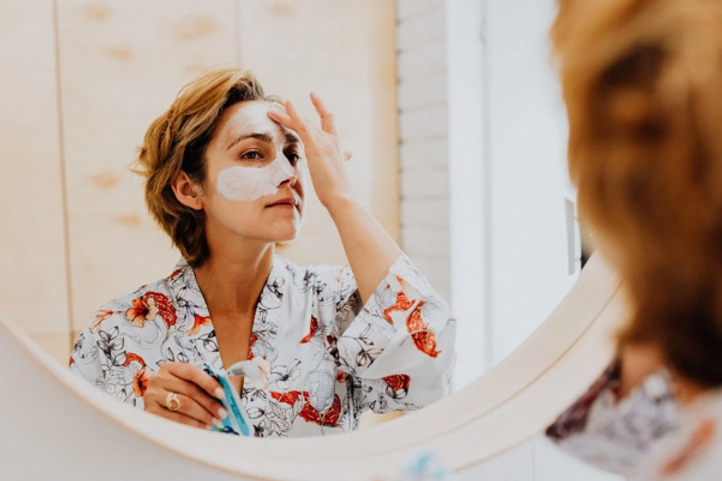
Skin produces less collagen with age. A classic study published in the British Journal of Dermatology (Shuster and colleagues, 1975) measured a decline of about 1% per year during adult life. Sun, smoking and stress speed it up. Collagen creams don’t replace it; collagen biostimulators, HIFU, microneedling and radiofrequency do stimulate it.
Yes: skin produces less collagen with age, and that’s why it becomes thinner, less firm and duller. The most repeated figure, 1% less per year, comes from a real study, but it is worth reading carefully. The loss doesn’t stop entirely; it slows with sun protection and good habits, and it is partly offset by treatments that actually stimulate new collagen.
In this article we explain where that figure comes from, how skin changes decade by decade, what speeds up the loss in a city like Bogotá and which options work and which don’t.
Is it true that you lose 1% of your collagen a year?
The figure has a source. A classic study published in the British Journal of Dermatology (Shuster, Black and McVitie, 1975) measured collagen in the forearm skin of 148 people aged 15 to 93. It found that collagen declines linearly, by about 1% per year during adult life, at a similar rate in men and women.
Three important nuances:
- It is an average. Genetics, sun, smoking and hormones mean two people of the same age can have very different skin.
- It doesn’t start exactly at 30. The decline is gradual throughout adulthood; at 30 it simply starts to show.
- Menopause speeds it up. The drop in estrogen is associated with faster loss of collagen and skin thickness.
How does skin age? Where collagen lives
Skin has three layers. The epidermis is the surface: it holds keratin and melanocytes, and it is where cells renew. The dermis, below, holds the collagen and elastin fibers that provide strength and elasticity, along with blood vessels, nerves and glands. The hypodermis is the fatty tissue that provides support.
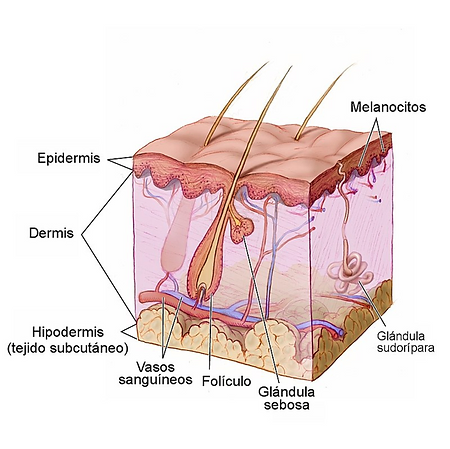
Collagen is made in the dermis, by cells called fibroblasts. That’s why any treatment that aims to stimulate it has to reach that layer or send it a signal. Anything that stays on the surface may improve texture or hydration, but it doesn’t rebuild the structure.
How skin ages over the years
- In your 30s: cell turnover slows, skin holds less water and tone loses radiance. The first expression lines that stay visible appear.
- In your 40s: the loss of density is visible. The jawline softens, the cheeks lose support and fine lines deepen.
- In your 50s: the skin produces less oil and feels drier. With menopause, skin thins faster and laxity becomes evident.
To recognize the first signs in your own skin, read first signs of skin aging.
What speeds up collagen loss?
Intrinsic aging, the kind set by the calendar, can’t be avoided. Extrinsic aging can be slowed, and it is what weighs most on how skin looks:
- UV radiation. It breaks down collagen and disrupts the production of new fibers. In Bogotá, at over 2,600 m (8,500 ft), UV radiation is high all year, even under cloudy skies.
- Smoking. It reduces oxygen supply to the skin and speeds up collagen breakdown.
- Excess sugar. It promotes glycation, a process that makes collagen fibers stiff.
- Lack of sleep and chronic stress. Sustained cortisol interferes with skin repair. We explain it in cortisol vs. collagen.
- Pollution. It increases oxidative stress on the skin’s surface.
Your consultation at iki is free · 45 minutes
A diagnosis and a written, phased plan. You decide afterwards. Related treatment: Collagen biostimulators.What stimulates collagen and what doesn’t
Here is the honest comparison. No treatment gives you back the skin you had 15 years ago; the ones that work activate fibroblasts to produce your own collagen, and the changes show over weeks or months.
| Option | Stimulates collagen? | How it works | Who it’s for · real ceiling |
|---|---|---|---|
| Injectable collagen biostimulators | Yes | Calcium hydroxylapatite or poly-L-lactic acid activate fibroblasts for months | Loss of density and mild to moderate laxity · they don’t correct excess skin |
| HIFU | Yes | Focused ultrasound that generates heat in deep layers and retracts tissue | Mild to moderate laxity of the face and neck · gradual changes over months |
| Radiofrequency microneedling | Yes | Controlled micro-injuries plus heat inside the dermis | Texture, pores, scars and firmness · several sessions |
| Radiofrequency | Yes, moderate | Heat that contracts fibers and stimulates their renewal | Maintenance and mild laxity · requires a series of sessions |
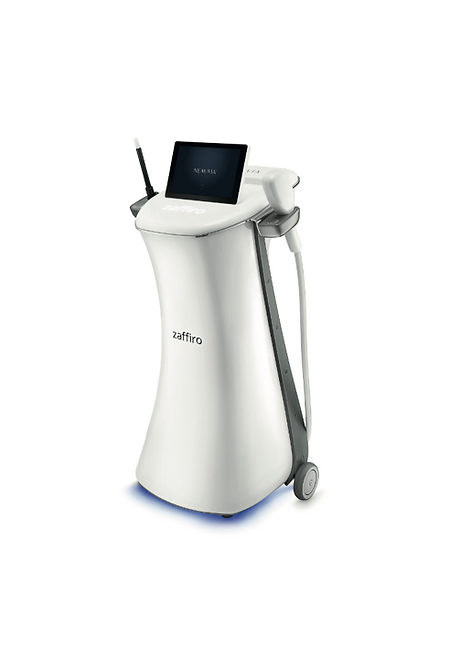
| Zaffiro | Yes, superficial | Hydro-exfoliation and infrared heat | Skin quality, fine lines and radiance · less depth than HIFU |
| Topical retinoids | Yes, at home | Stimulate turnover and collagen synthesis in the dermis | Prevention and photoaging · with a medical prescription |
| Collagen creams | No | The molecule is too large to reach the dermis | Moisturize and soften · don’t replace fibers |
| Collagen supplements | Limited evidence | Digested like any other protein | Don’t replace sunscreen or treatments |
At iki we work with collagen biostimulators such as Sculptra and Radiesse, with HIFU for skin laxity, fractional radiofrequency microneedling, NuEra Tight and Zaffiro. The choice depends on your diagnosis, not on the technology of the moment. On supplements, we review the evidence in the collagen myth.
Basic care against collagen loss
Treatments work better on well-cared-for skin. These habits do the most to protect the collagen you already have:
- ✓ Broad-spectrum sunscreen every day, reapplied if you’re outdoors. In Bogotá there is no season when you can skip it.
- ✓ A retinoid at night, introduced gradually and with a medical prescription if you have sensitive skin.
- ✓ Antioxidants such as vitamin C in the morning, under your sunscreen.
- ✓ Sleep well, don’t smoke and go easy on sugar.
- ✗ Piling on products without a plan. More steps don’t mean more collagen.
To organize your routine by age, read anti-aging skincare routine: the ideal age to start.
At what age should you start, and where?
At 30, prevention is usually enough: sunscreen, a retinoid and, if your skin calls for it, a skin-quality treatment. Between 35 and 45, when loss of density or mild laxity appears, collagen biostimulators, HIFU or microneedling are considered. After 50, a combined, phased plan is usually needed. When there is excess skin, the indication is surgical, and we tell you so, even if it means losing the sale. To see the options by area, read how to improve facial sagging without surgery.
At 40 you aren’t starting late · you’re starting with what you didn’t know at 30. At iki, in Usaquén, we review your skin, explain what makes sense to treat now and what doesn’t, and put together a step-by-step plan with realistic timelines. Results vary from patient to patient. Your consultation at iki is free · 45 minutes.
Frequently asked questions
How much collagen does skin lose after 30?
A classic study published in the British Journal of Dermatology in 1975 found that skin collagen declines by about 1% per year during adult life, at a similar rate in men and women. The figure is an average: genetics, sun, smoking and hormonal changes mean two people of the same age can age very differently.
Do collagen creams help restore collagen?
Not to restore it. The collagen molecule is too large to pass through the skin and reach the dermis, which is where collagen is made. These creams moisturize and make skin feel softer, which is fine, but they don’t replace lost fibers. What does have evidence at home is daily sunscreen and retinoids prescribed by a physician.
Which treatments really stimulate collagen?
Procedures that activate fibroblasts, the cells that make collagen: injectable collagen biostimulators such as calcium hydroxylapatite or poly-L-lactic acid, HIFU, radiofrequency microneedling and radiofrequency. Each works at a different depth and has a ceiling. The physician chooses based on laxity, skin and area. Results vary from patient to patient.
What speeds up collagen loss?
UV radiation is the most important external factor, and in Bogotá, because of the altitude, it is high all year. Smoking, excess sugar, lack of sleep, chronic stress and pollution also play a part. In women, the drop in estrogen at menopause speeds up the loss. Daily sunscreen and not smoking are the measures with the most impact.
Do collagen supplements work?
The evidence is limited and the available studies are mixed, many funded by manufacturers. Collagen you swallow is digested like any other protein, and the body decides where to use those amino acids. It doesn’t replace sun protection or treatments that stimulate collagen in the skin. If you want to take it, talk to your physician about whether it makes sense in your case.
At what age should you start stimulating collagen?
There is no single age. At 30, prevention is usually enough: sunscreen, a retinoid and good habits. Between 35 and 45, when skin loses density or mild laxity begins, collagen biostimulators, HIFU or microneedling are considered. After 50, a combined plan is usually needed. The diagnosis matters more than the age on your ID.
This article is for information only and does not replace a medical consultation. Results of any treatment vary from patient to patient. If you have a skin condition, book a consultation to get a diagnosis.