Platelet-rich plasma in Bogotá
Your own blood as treatment · without overpromising
Platelet-rich plasma, or PRP, is a fraction of your own blood concentrated in platelets, which release growth factors when applied to the skin. It improves texture, radiance and skin quality gradually. The evidence behind it is moderate: it’s useful as part of a plan · not a cure-all.

Platelet-rich plasma, or PRP, is a treatment that uses a sample of your own blood, centrifuged to concentrate the platelets, and applies it to the skin through micro-injections or together with microneedling. Its growth factors stimulate repair and improve texture and radiance. At iki, in Bogotá, it’s usually recommended as a series of sessions. Results are gradual and vary from patient to patient.
- Session length
- 45–60 min
- Sessions
- Series of 3 to 6 · as assessed
- Recovery
- Redness and injection points · 1–2 days
- First changes
- Gradual · weeks
- Source
- The patient’s own blood
- Areas
- Face, neck, décolletage · scalp as assessed
Who it’s for · and who it isn’t
Indicated when
- Dull skin, with uneven texture or visible pores
- Early signs of aging and fine lines
- People who prefer a treatment made from their own material
- A complement to microneedling or laser to support recovery and the result
Not the right time if
- Marked sagging or volume loss · PRP doesn’t lift or fill
- Platelet or clotting disorders, or use of anticoagulants
- Active infection, cancer under treatment or significant anemia
- Pregnancy and breastfeeding · it’s postponed
The physician makes the final indication at the consultation. Results vary from patient to patient.
Platelet-rich plasma in Bogotá · what a session is like at iki
PRP is a medical procedure from start to finish: the sample is drawn, processed in the same session and applied under aseptic conditions. The application technique is defined at the consultation.
Consultation
The physician reviews your history, medications and goal, and confirms PRP is the right option or suggests another with better support for your case.
Blood draw
A small amount of blood is drawn from your arm, as for a lab test.
Centrifugation
The sample is centrifuged to separate the plasma and concentrate the platelets. The whole process happens at the same visit.
Application
With topical anesthesia, the plasma is applied through micro-injections into the skin or as a complement to a microneedling treatment, as set out in the plan.
Finish and follow-up
The skin is soothed, you receive instructions and the next session in the series is scheduled.
What it offers
Your own material
Because it comes from your own blood, the risk of allergy or rejection is very low.
Better skin quality
Platelet growth factors take part in repair and collagen production, which shows in texture and radiance.
A good companion to other treatments
Added to microneedling or laser, it can support the recovery and the result of the main procedure.
Honest about its reach
The evidence is moderate and studies vary in technique. That’s why we recommend it where it makes sense and tell you when there’s something better.
Technology with an indication
Autologous platelet-rich plasma
Platelets contain growth factors the body uses to repair tissue. By concentrating them and applying them to the skin, the aim is to stimulate that response locally. The quality of the result depends on how the sample is processed, the application technique and each person’s response, which isn’t the same for everyone.
Results and aftercare
Changes build over the series: the skin usually looks more even, radiant and smoother in texture in the weeks after each session. It doesn’t lift tissue or replace a collagen biostimulator or a skin-tightening technology. To maintain the effect, booster sessions are usually recommended based on each person’s response.
Aftercare after the session
- Don’t wash the area or apply makeup for the first few hours
- Avoid direct sun, sauna and intense exercise for 24–48 hours
- Daily sunscreen
- No acids or retinoids for the days your physician indicates
- Avoid taking anti-inflammatories on your own in the following days, unless your physician advises it
Results vary from patient to patient.
Pairs well with
 Anti-aging and skin laxity
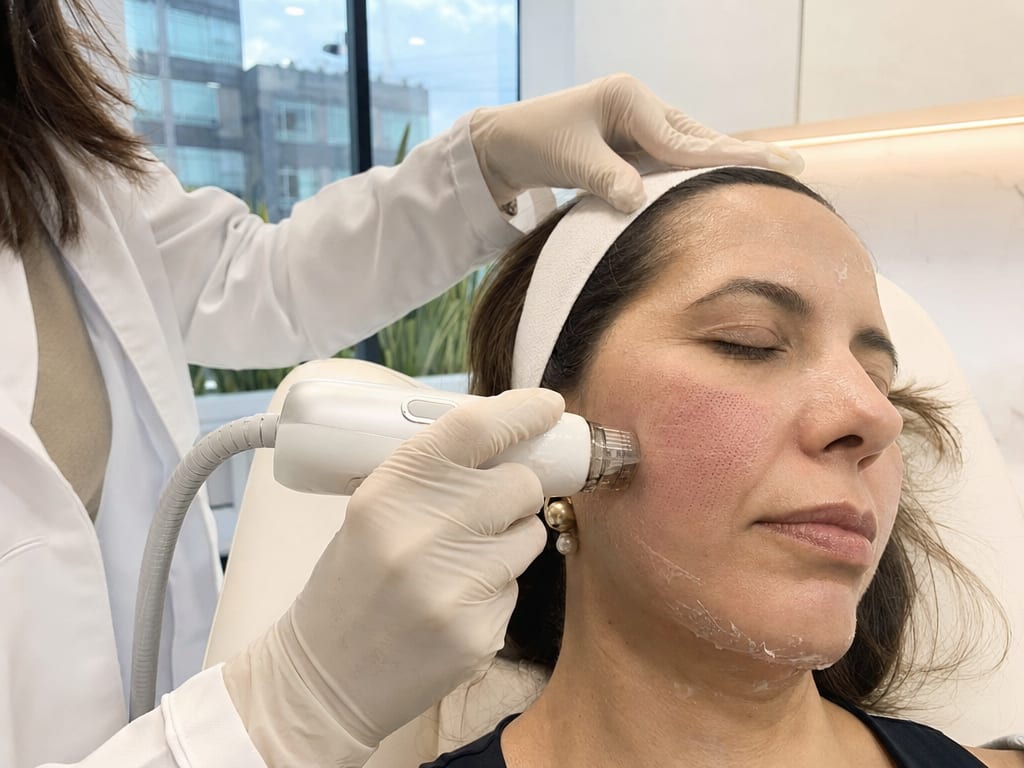
RF microneedling
Fractional radiofrequency microneedling combines micro-channels in the skin with heat in the dermis to stimulate collagen and…
See treatment Anti-aging and skin laxity
Exosomes
Exosomes are tiny vesicles cells use to communicate. Applied to skin prepared with micro-channels or laser, they are used to…
See treatment Anti-aging and skin laxity
Collagen biostimulators
Collagen biostimulators are injectables that activate fibroblasts so the skin produces its own collagen over months. They don’t…
See treatmentFrequently asked questions
What does platelet-rich plasma do for the face?
It improves skin quality: texture, radiance, fine lines and the appearance of pores. Platelet growth factors gradually stimulate repair and collagen. It doesn’t treat marked sagging or restore volume. It works best as part of a plan, together with microneedling or laser.
Does facial PRP work?
The evidence is moderate. Several studies show improvement in texture and skin quality, especially combined with microneedling, but techniques and results are heterogeneous. That’s why we don’t oversell it: at the consultation we tell you whether your case would benefit or whether another option has better support.
How many plasma sessions are needed?
A series of 3 to 6 sessions is usually recommended, several weeks apart, followed by boosters based on your response. The exact number depends on the goal, your age and whether it’s combined with other treatments. The physician defines it in the written plan.
Does platelet-rich plasma hurt?
The blood draw feels like a lab test. Application is done with topical anesthesia, so you usually feel light pricks and pressure. Afterward there may be redness, small dots or a bruise, which usually go away in one or two days.
What’s the difference between PRP and exosomes?
PRP comes from your own blood and provides growth factors from your platelets. Exosomes are vesicles obtained in a laboratory that carry signals between cells. Both aim to improve skin quality and are usually applied with microneedling or laser. The choice depends on the case and is made at the consultation.
Does plasma help with hair loss?
It’s used as a complement in androgenetic alopecia, because it can improve hair thickness and density in some patients. It doesn’t work the same way in every type of alopecia. Before recommending it, the physician looks into the cause of the hair loss and decides whether PRP makes sense or there is another priority.
How much does platelet-rich plasma cost in Bogotá?
The price depends on whether it’s a single session or a series, and whether PRP is applied on its own or as a complement to another treatment, such as microneedling. You receive it in writing at the free consultation, with the full plan. Your consultation at iki is free · 45 minutes.
Who can’t have PRP?
It isn’t recommended with platelet or clotting disorders, use of anticoagulants, active infection, cancer under treatment or significant anemia. During pregnancy and breastfeeding it’s postponed. If you take medication regularly, mention it at the consultation so we can check whether anything needs adjusting first.
Read before your appointment
Is Platelet-rich plasma (PRP) right for you? · we’ll see at the consultation
Forty-five minutes with a physician, a skin analysis and a written, phased plan with complete prices. You decide afterwards, with no pressure. Living abroad? Start with a virtual consultation.