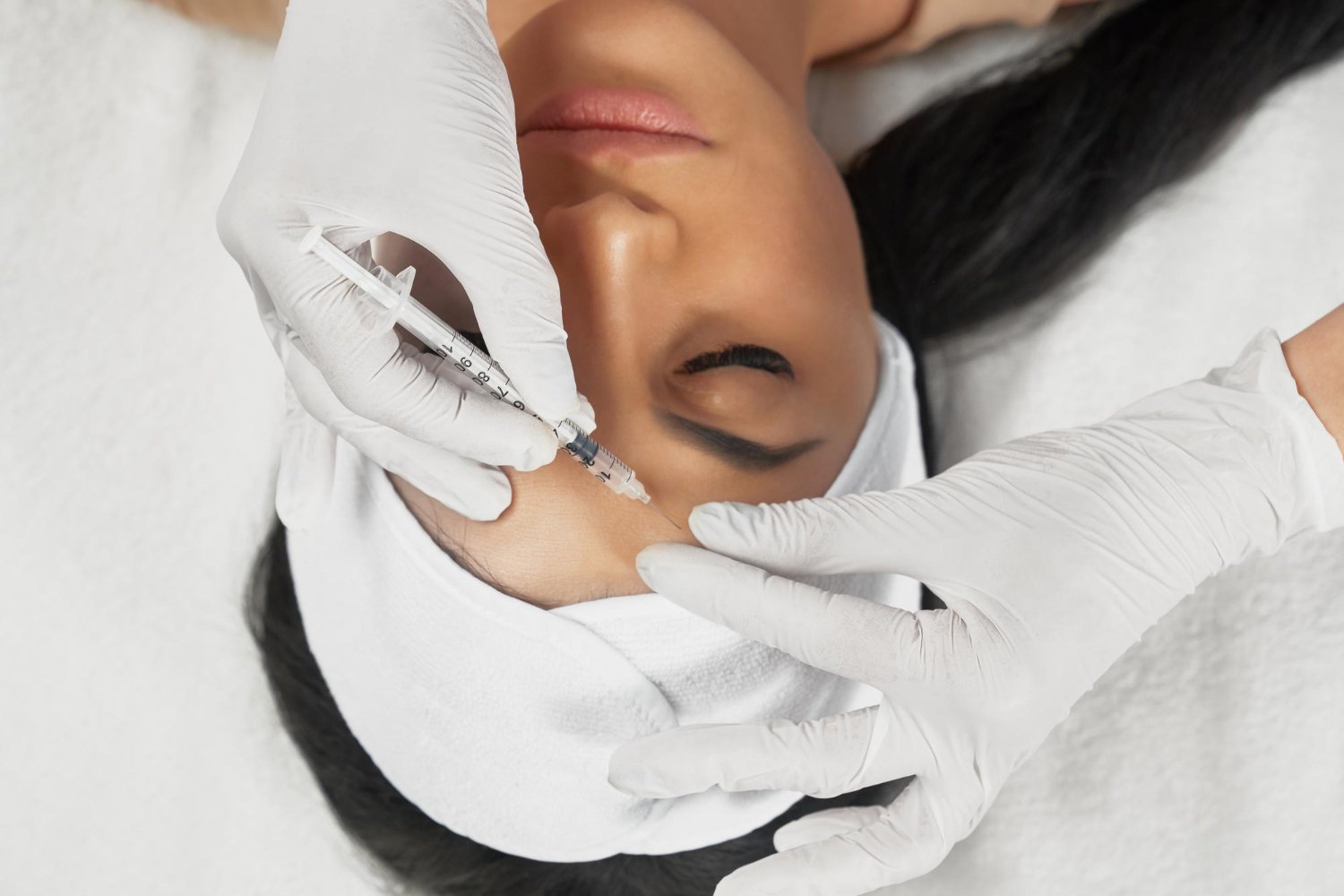
Baby Botox is the use of microdoses of botulinum toxin type A to partially relax the muscles of expression, without leaving the face immobile. It is used mainly for prevention, when lines are starting to set in, to delay dynamic wrinkles from becoming static. Its effect is temporary, lasting a few months, and it should be administered by a physician.
Baby Botox is the use of microdoses of botulinum toxin to relax the muscles of expression slightly, without leaving the face immobile. It is used mainly for prevention: the aim is for expression lines to take longer to set in. Here we explain how it works, how it differs from regular Botox and when it makes sense.
First things first: what is Botox?
Botulinum toxin type A, known by the brand name Botox, is a medication that temporarily blocks the signal between nerve and muscle. The treated muscle contracts with less force and the skin above it folds less. It is one of the most studied procedures in aesthetic medicine.
What is the difference between Botox and botulinum toxin?
Essentially none: botulinum toxin is the name of the active ingredient, and Botox is one of its brands, which became synonymous with the treatment. There are several products with their own doses and characteristics, and the physician chooses the right one for each case.
Why does skin wrinkle, and how does the toxin help prevent it?
Young skin resists repeated folding because it has plenty of collagen, elastic fibers and hyaluronic acid. Over the years those reserves decline: it is estimated that from age 25 the skin loses about 1% of its collagen per year, as we explain in collagen loss after 30. Dynamic wrinkles, the ones that appear when you make expressions, then start to stay visible at rest and become static. Relaxing the muscle reduces that repeated folding.
What is baby Botox?
Baby Botox is the same botulinum toxin, with no added ingredients. The difference is the dose and the technique: fewer units are used, spread over more points, to soften the contraction without erasing the expression.
It is indicated mainly as a preventive treatment for younger people whose lines are just starting, and also for people who want a very subtle change or are trying toxin for the first time and prefer to go step by step.
How does baby Botox work, and which areas of the face can it treat?
Like regular Botox, it relaxes the muscles responsible for expression lines. With a microdose, the muscle keeps much of its movement: you can frown or smile, but with less force, and the skin folds less.
It is applied where lines form from muscle contraction:
- Between the brows.
- The forehead.
- The crow’s feet, around the eyes.
- The tail of the brow, for a slight lift.
- In some cases, the neck and chin.
Nasolabial folds, which run from the nose to the corners of the mouth, aren’t a toxin area: they come mainly from loss of support and are treated with other tools, such as hyaluronic acid.
Does it hurt?
The discomfort is tolerable. A very fine needle is used and each point takes a few seconds; many people describe it as a brief pinch. If you’re sensitive, cold or a numbing cream can be applied a few minutes beforehand. You don’t need time off: you can go back to your day right away.
Baby Botox or regular Botox: what’s the difference?
| Aspect | Baby Botox | Regular Botox |
|---|---|---|
| Dose | Microdoses spread over more points | Standard dose for each area |
| Goal | Prevent and soften lines that are starting | Treat lines that are already set |
| Movement | Much of the expression is preserved | More marked muscle relaxation |
| Typical profile | Ages 25 to 35, or first treatment | Lines visible at rest |
| Approximate duration | About 3 to 4 months | Usually holds for 4 to 6 months |
At what age can you start baby Botox?
There is no fixed age. It is usually considered between 25 and 35, when you notice that the lines on your forehead or between your brows stay visible for a few seconds after you relax your face. Very strong muscles, accumulated sun exposure or smoking can bring that moment forward.
Age alone isn’t an indication. If there are no lines to prevent yet, what protects your skin is daily sunscreen and a good anti-aging routine. In Bogotá, with high UV radiation all year, that step is worth more than any injectable.
Your consultation at iki is free · 45 minutes
A diagnosis and a written, phased plan. You decide afterwards. Related treatment: Botox.How long does baby Botox last, and what happens when it wears off?
The first changes show 3 to 7 days after treatment, and the full effect at around 2 weeks. Because fewer units are used, it usually lasts a little less than a regular dose, generally around three to four months. After that, the toxin is fully metabolized and the muscle gradually regains its strength.
There are two common myths. The first is that Botox freezes your face: when well indicated, baby Botox aims for exactly the opposite. The second is that your face wrinkles more when you stop: it simply returns to its usual movement. And while the effect lasts, the skin folds less, which works in your favor. Results vary from patient to patient.
What side effects can it have?
The most common are mild and short-lived: small red dots or a light bruise where the needle went in, some tenderness or a headache on the first day. Less often, one brow may sit higher than the other or an eyelid may droop slightly if the toxin spreads to a neighboring muscle; in that case the effect is also temporary, and the physician can correct the asymmetry at the follow-up. Choosing the right points and dose is what reduces these risks, which is why treatment should always be done by a physician experienced in facial anatomy.
Who shouldn’t get baby Botox?
- ✗ Pregnancy or breastfeeding.
- ✗ Neuromuscular diseases, such as myasthenia gravis.
- ✗ Active infection in the area or a known allergy to any component.
- ✗ Deep static wrinkles or folds from volume loss: the toxin relaxes, it doesn’t fill.
- ✓ It does make sense when dynamic lines are starting to set in and you want a natural result.
How baby Botox is done at iki
At iki, in Usaquén, a physician first assesses your expressions at rest and in motion, your skin quality and your history. If it isn’t time yet, we tell you. When it is, treatment takes 15 to 30 minutes, with a very fine needle and no recovery time. Every dose and every point is recorded in your medical chart, so the next follow-up starts from real data.
For the first few hours, avoid lying down, massaging the area and intense exercise. If your skin also needs hydration, baby Botox can be combined with a skin booster such as SKINVIVE. To understand the treatment better, also read 5 reasons not to be afraid of facial Botox.
Frequently asked questions
How is baby Botox different from traditional Botox?
It is the same botulinum toxin type A, with no added ingredients. The difference is the dose and the goal: baby Botox uses fewer units spread over more points to relax the muscle without blocking it, so your expression stays natural. That’s why it is used mainly for prevention or for people who want a very subtle change.
At what age can you start baby Botox?
There is no fixed age. It is usually considered between 25 and 35, when expression lines start to stay visible for a few seconds after you relax your face. The indication depends on how strong your muscles are, your skin quality and your history, not just your age. At the consultation, the physician will tell you if it isn’t time yet.
How long does baby Botox last?
It usually lasts a little less than a regular dose, generally around three to four months, because fewer units are used. The toxin is fully metabolized and the muscle gradually regains its movement. When it wears off, your face doesn’t wrinkle more: it simply returns to its usual expression. Results vary from patient to patient.
Which areas of the face can baby Botox treat?
Areas where lines form from muscle contraction: between the brows, the forehead, the crow’s feet around the eyes, the tail of the brow and, in some cases, the neck and chin. It doesn’t work on nasolabial folds, which come mainly from loss of support and are treated with other tools, such as hyaluronic acid.
Does baby Botox freeze your face?
No. The idea is to use a low dose to relax contractions without blocking the muscles, so you can keep expressing yourself naturally. Even so, it is a medical procedure: it requires a thorough knowledge of facial anatomy to choose the points and the dose, and to avoid effects such as a drooping eyelid or an uneven brow.
Who shouldn’t get baby Botox?
It isn’t indicated during pregnancy or breastfeeding, for people with neuromuscular diseases such as myasthenia gravis, with active infection in the area or a known allergy to any component. It also isn’t the right tool for deep static wrinkles or folds from volume loss, because the toxin relaxes the muscle but doesn’t fill.
This article is for information only and does not replace a medical consultation. Results of any treatment vary from patient to patient. If you have a skin condition, book a consultation to get a diagnosis.