Dark circle treatment in Bogotá
First the type of dark circle · then the treatment
Not all dark circles are the same. A hollow, a pigmented circle and a vascular one have different causes and different treatments · and some get worse with the wrong treatment. At iki we diagnose the type before proposing hyaluronic acid, mesotherapy or eye-area care.

Treatment for dark circles depends on the type: under-eye hollows can improve with hyaluronic acid in the tear trough, pigmented circles with depigmenting agents and sun protection, and vascular circles with treatments that improve the skin, such as NCTF mesotherapy. At iki, in Bogotá, a physician identifies the type of dark circle before recommending anything. Results vary from patient to patient.
- Session length
- 20–45 min depending on the treatment
- Options at iki
- Hyaluronic acid · NCTF · Eye Perk
- Sessions
- Filler: 1 · NCTF: series based on your consultation
- Downtime
- Mild swelling or bruising · a few days
- First changes
- Filler from the session · NCTF progressive
- What matters most
- Diagnosing the type of dark circle
Who it’s for · and who it isn’t
Indicated when
- Under-eye hollows from volume loss in the tear trough
- Thin skin around the eyes that looks tired or has fine lines
- Pigmented dark circles that didn’t improve with creams, after diagnosis
- People who want to know what type of dark circle they have before investing in a treatment
Not the right time if
- Prominent fat bags · filler can accentuate them and the indication is usually surgical
- Frequent morning puffiness or fluid retention in the eyelids · investigated before any filler
- Excess skin on the lower eyelid
- Pregnancy, breastfeeding, infection or active eye allergy
The physician makes the final indication at the consultation. Results vary from patient to patient.
Dark circle treatment in Bogotá · how it’s done at iki
The eye area is where mistakes show most. That’s why the first step isn’t injecting · it’s looking in good light and understanding what creates the shadow.
Diagnosing the type of dark circle
The physician examines the area under front and overhead light, gently stretches the skin and checks color and hollowing. That way they can tell whether it’s a hollow, pigmented, vascular or mixed dark circle, which is the most common.
A plan based on the type
Hollow: low-density hyaluronic acid in the tear trough, if the tissue allows it. Pigmented: depigmenting agents and sun protection. Vascular or thin skin: NCTF mesotherapy to improve skin quality.
Treatment
Filler is placed with a cannula, in small amounts and in a deep layer. Mesotherapy is done with superficial microinjections. The Hydrafacial Eye Perk can be added as eye-area care.
Follow-up
The result is reviewed at 2–3 weeks. Around the eyes we prefer to correct a little and adjust at follow-up rather than inject too much in the first session.
What it offers
Hollows · hyaluronic acid
It restores lost volume in the tear trough and reduces the shadow. It can be reversed with hyaluronidase, which is key in this area.
Thin skin · NCTF mesotherapy
Free hyaluronic acid with vitamins and amino acids that improves hydration and skin quality around the eyes over several sessions.
Pigmented circles · depigmenting agents
When the problem is color rather than volume, the answer is a depigmenting protocol for the periocular area plus sun protection · not a filler.
Eye-area care · Eye Perk
An add-on to the Hydrafacial that cleanses and hydrates the eye area. It improves how the area looks · it doesn’t correct a hollow.
Technology with an indication
Hyaluronic acid and NCTF around the eyes
In the tear trough we use low-density hyaluronic acid gels, placed with a cannula in the deep layer. A gel that is too dense, too abundant or too superficial causes the two typical problems of this area: persistent swelling and the Tyndall effect, a bluish tint under the skin. NCTF, on the other hand, doesn’t fill: it nourishes the dermis and improves its quality.
Results and aftercare
With hyaluronic acid, the shadow from the hollow improves from the session, although there may be swelling or a bruise in the first few days; the result is assessed at 2–3 weeks. Mesotherapy improves the skin progressively over the series. Vascular dark circles are the hardest: they can be softened, but rarely disappear. Rest, allergies and genetics also play a part.
Aftercare after the session
- Gentle cold compresses for the first few hours
- Sleep with your head slightly elevated the first night
- Don’t rub or massage the eye area during the first week
- Avoid intense exercise, saunas and alcohol for 24–48 hours
- Contact us if swelling increases after the third day or a bluish tint appears
- Daily sunscreen and sunglasses
Results vary from patient to patient.
Pairs well with
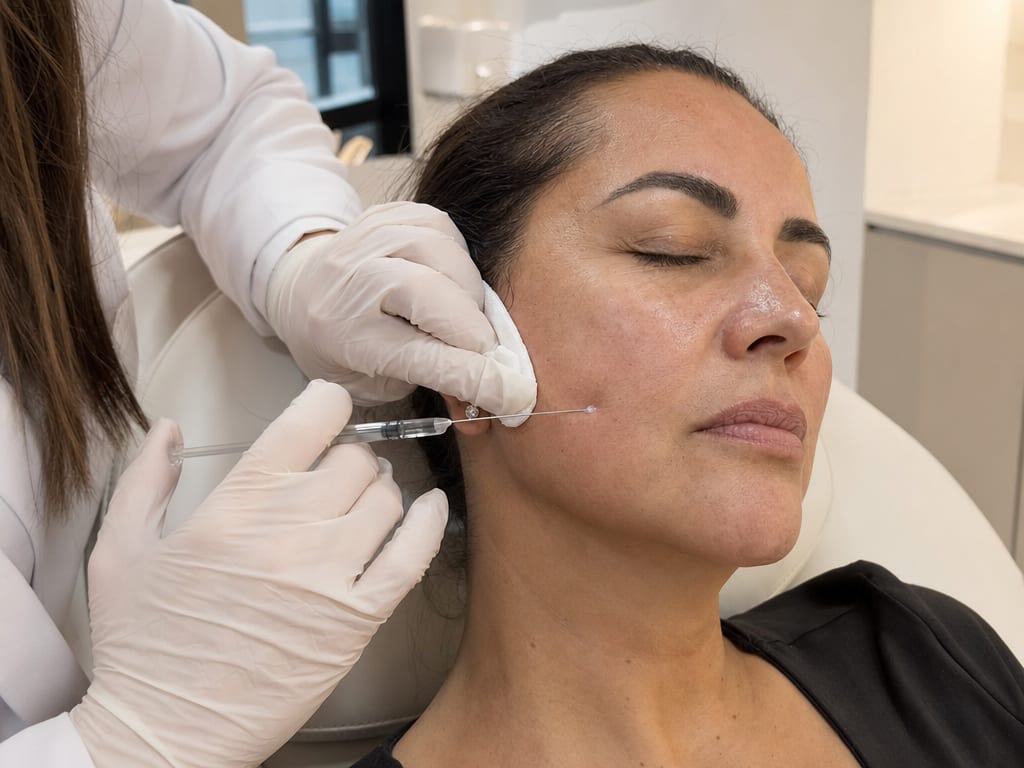 Anti-aging and skin laxity
Hyaluronic acid
Hyaluronic acid is an injectable gel that restores volume and support where the face has lost them over the years: cheekbones,…
See treatment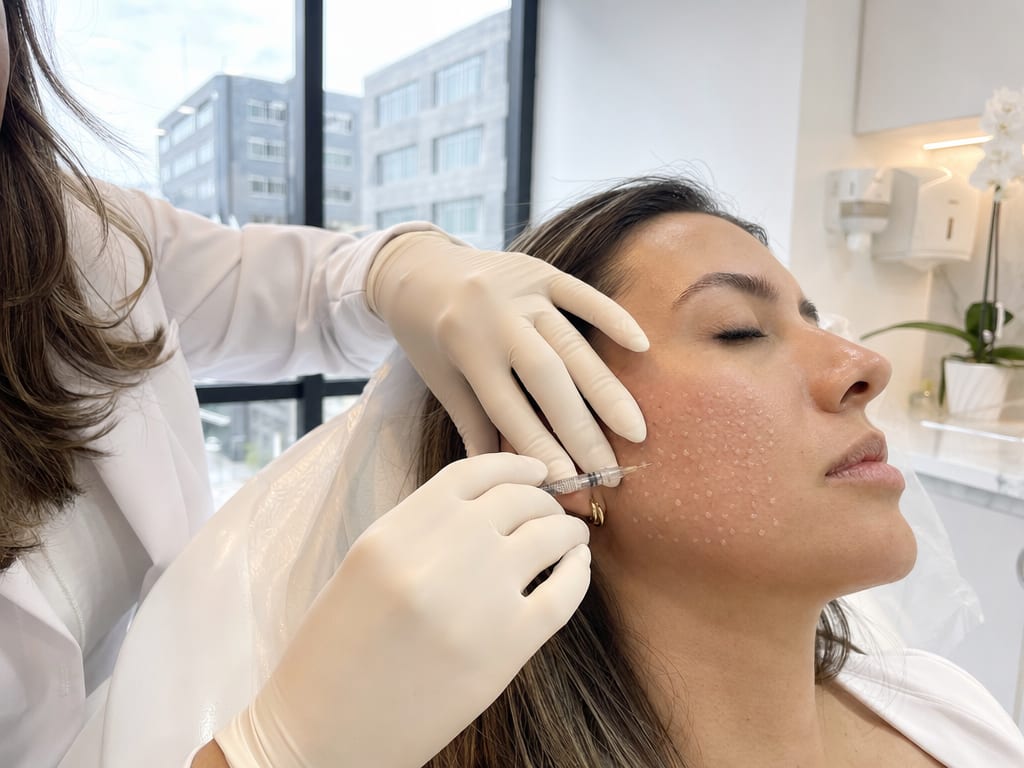 Hydration and glow
Mesotherapy for deep hydration
Mesotherapy for deep hydration uses micro-injections to place a complex of hyaluronic acid and nutrients directly in the dermis.…
See treatment Hydration and glow
Hydrafacial
The Hydrafacial is a medical-aesthetic facial that cleanses, exfoliates, extracts pore impurities and infuses serums with a…
See treatmentFrequently asked questions
Does hyaluronic acid work for all dark circles?
No. It works for under-eye hollows, when the shadow comes from volume loss in the tear trough. It doesn’t change the color of pigmented dark circles, and with prominent bags or puffiness it can make the area look worse. That’s why the first step is identifying the type of dark circle at your consultation.
What is the Tyndall effect?
It’s a bluish tint that appears when hyaluronic acid sits too superficially under thin skin, because light scatters through the gel. It’s prevented with the right technique, layer and product. If it appears, it’s corrected by dissolving the gel with hyaluronidase.
Can the eye area stay puffy after filler?
Some swelling in the first few days is normal. What we aim to avoid is persistent swelling, which is more likely in people who retain fluid, have bags, or when too much product is used. That’s why in this area we inject a little and adjust at follow-up, not in the first session.
What works for dark or pigmented circles?
When the circle is brown, the problem is pigment: it’s treated with depigmenting agents prescribed by the physician, protocols for the periocular area and daily sun protection. A filler doesn’t lighten the skin. In mixed dark circles, strategies are combined, and the order is set at your consultation.
And purple or vascular dark circles?
They’re the hardest, because they come from blood vessels showing through thin skin. NCTF mesotherapy can improve skin quality and soften the shadow, but it rarely eliminates it. We tell you this at the consultation so your expectations are realistic.
Does dark circle treatment hurt?
With hyaluronic acid, a topical anesthetic and a cannula are used, which reduces pinpricks; you feel pressure more than pain. Mesotherapy causes brief pinpricks and redness for a few hours. The Hydrafacial Eye Perk is non-invasive. There may be a bruise, which usually clears within a few days.
How much does dark circle treatment cost in Bogotá?
It depends on the type of dark circle and what is recommended: a hyaluronic acid treatment, a mesotherapy series, a depigmenting protocol or a combination. So there’s no single price. The plan with the full price is given to you in writing at the consultation. Your consultation at iki is free · 45 minutes.
Who isn’t a candidate for under-eye filler?
It isn’t recommended with prominent fat bags, excess eyelid skin, frequent puffiness, active eye allergies, pregnancy or breastfeeding. Nor after recent eyelid surgery without a prior assessment. In those cases there may be better alternatives, or the answer may be surgical.
Read before your appointment

Is Dark circle treatment right for you? · we’ll see at the consultation
Forty-five minutes with a physician, a skin analysis and a written, phased plan with complete prices. You decide afterwards, with no pressure. Living abroad? Start with a virtual consultation.