Chemical peel for dark spots
Renew the surface · without rushing
A chemical peel for dark spots uses solutions that exfoliate the superficial layers of the skin in a controlled way. It helps lighten spots and even out tone when the acid, the concentration and the pace are chosen for each skin. It isn’t a one-session treatment.
Results in dark spots and pigmentation · identity protected
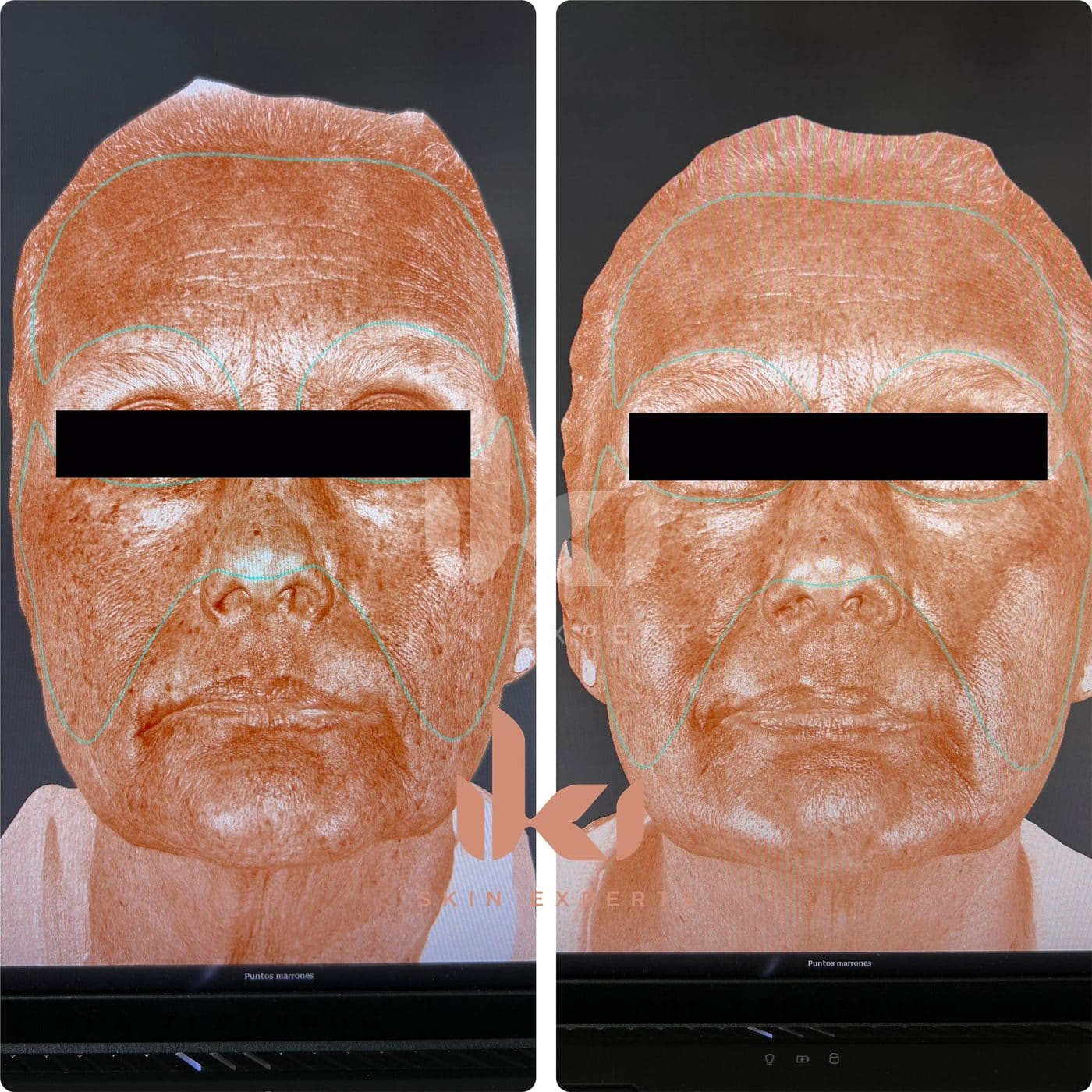
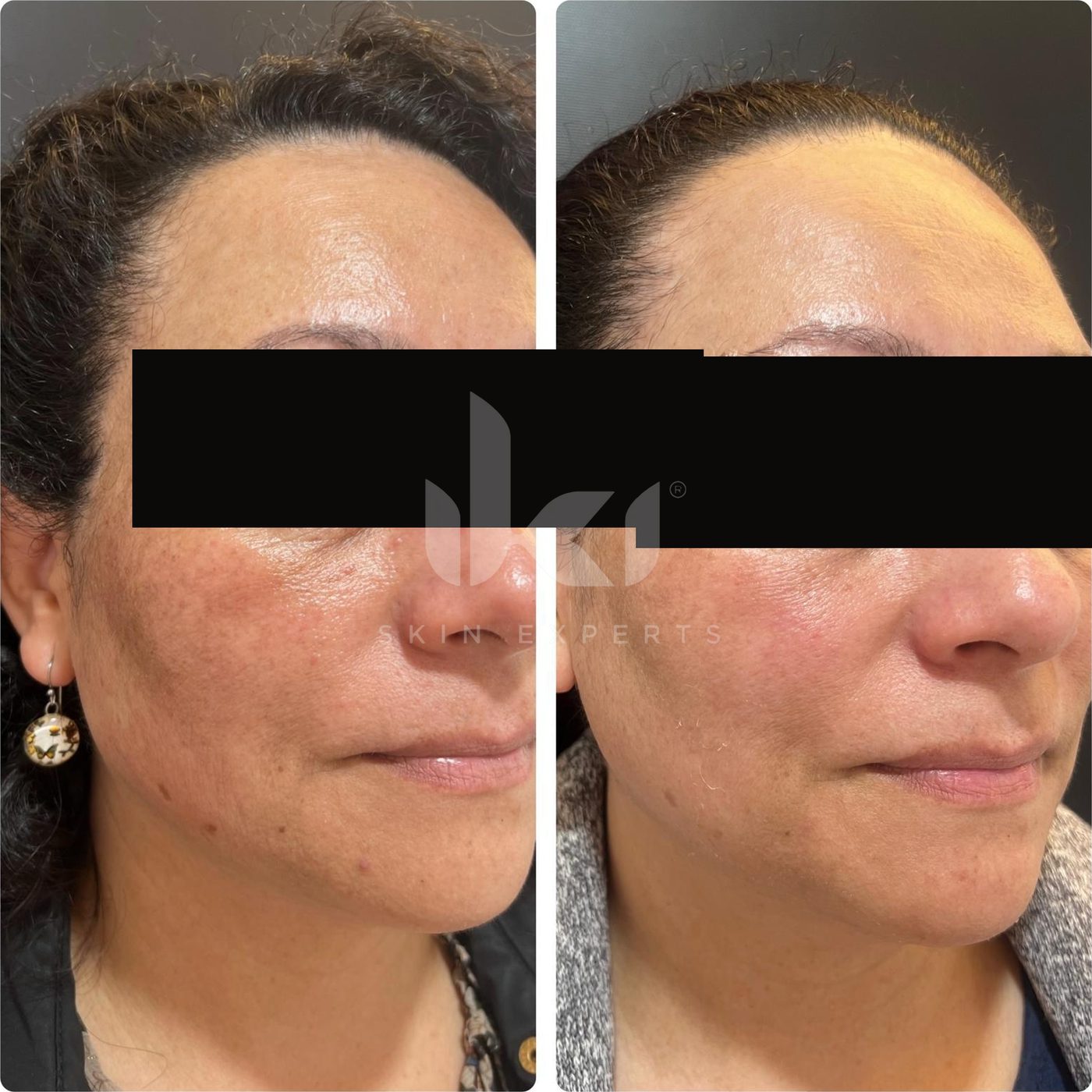
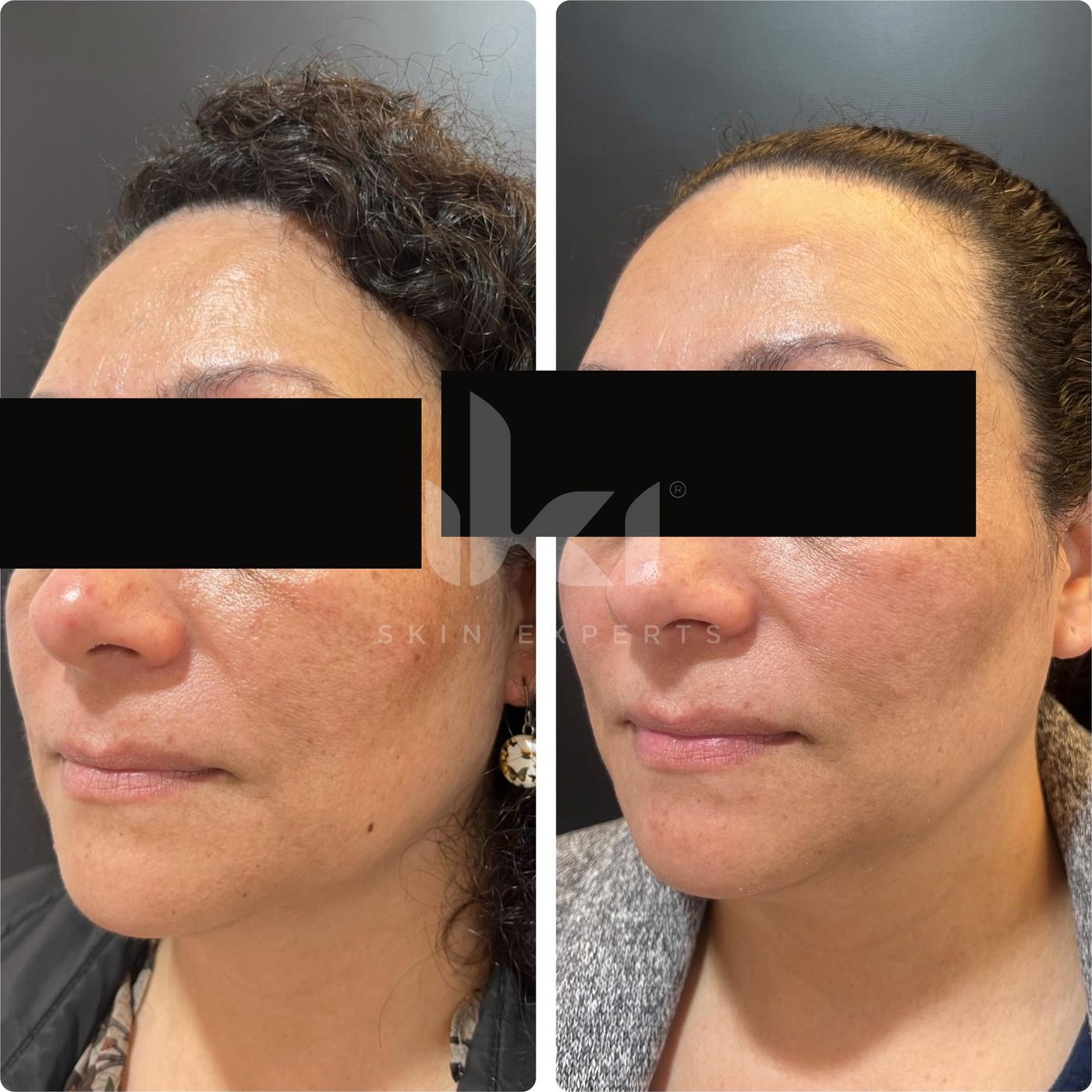
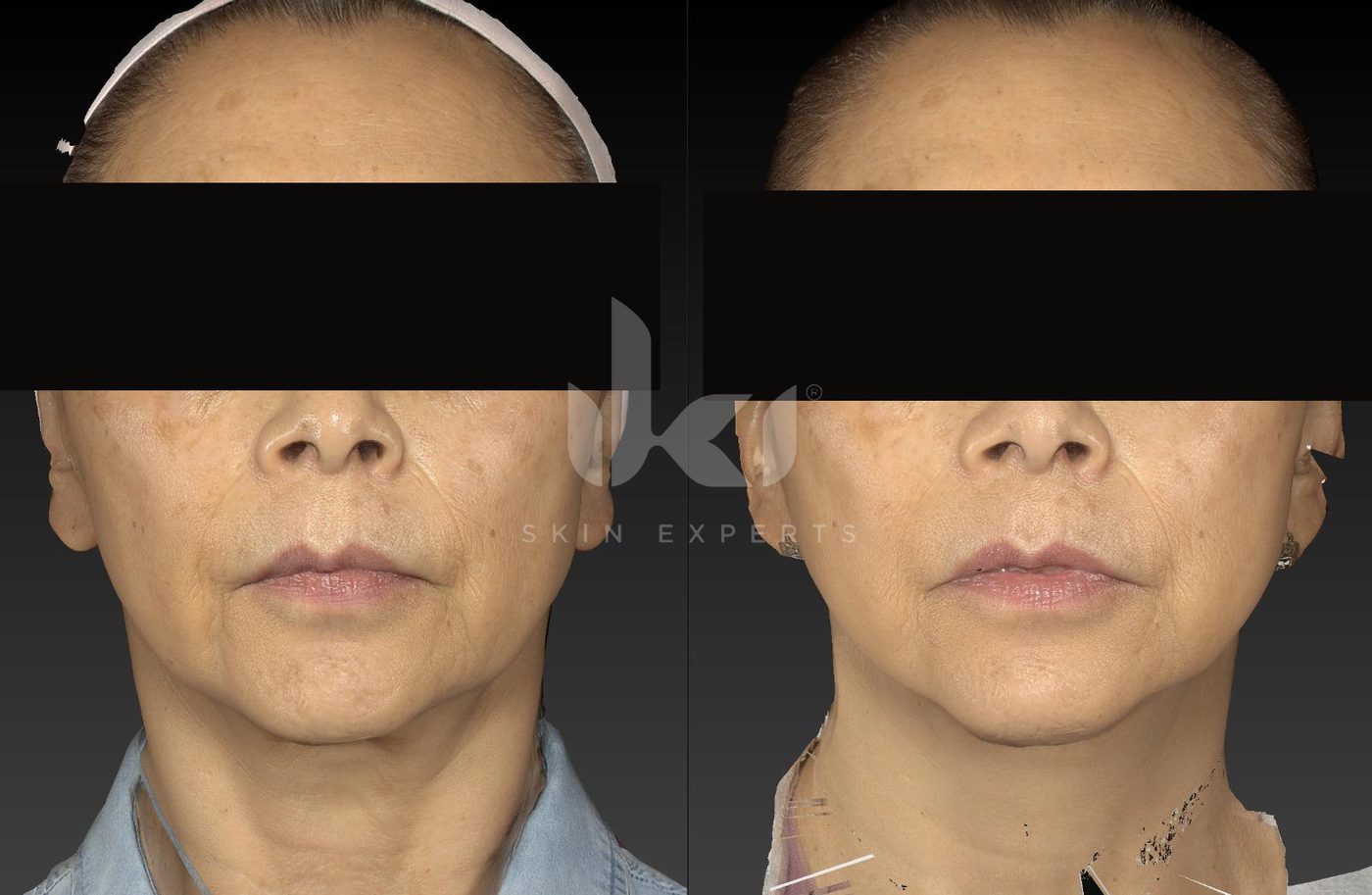
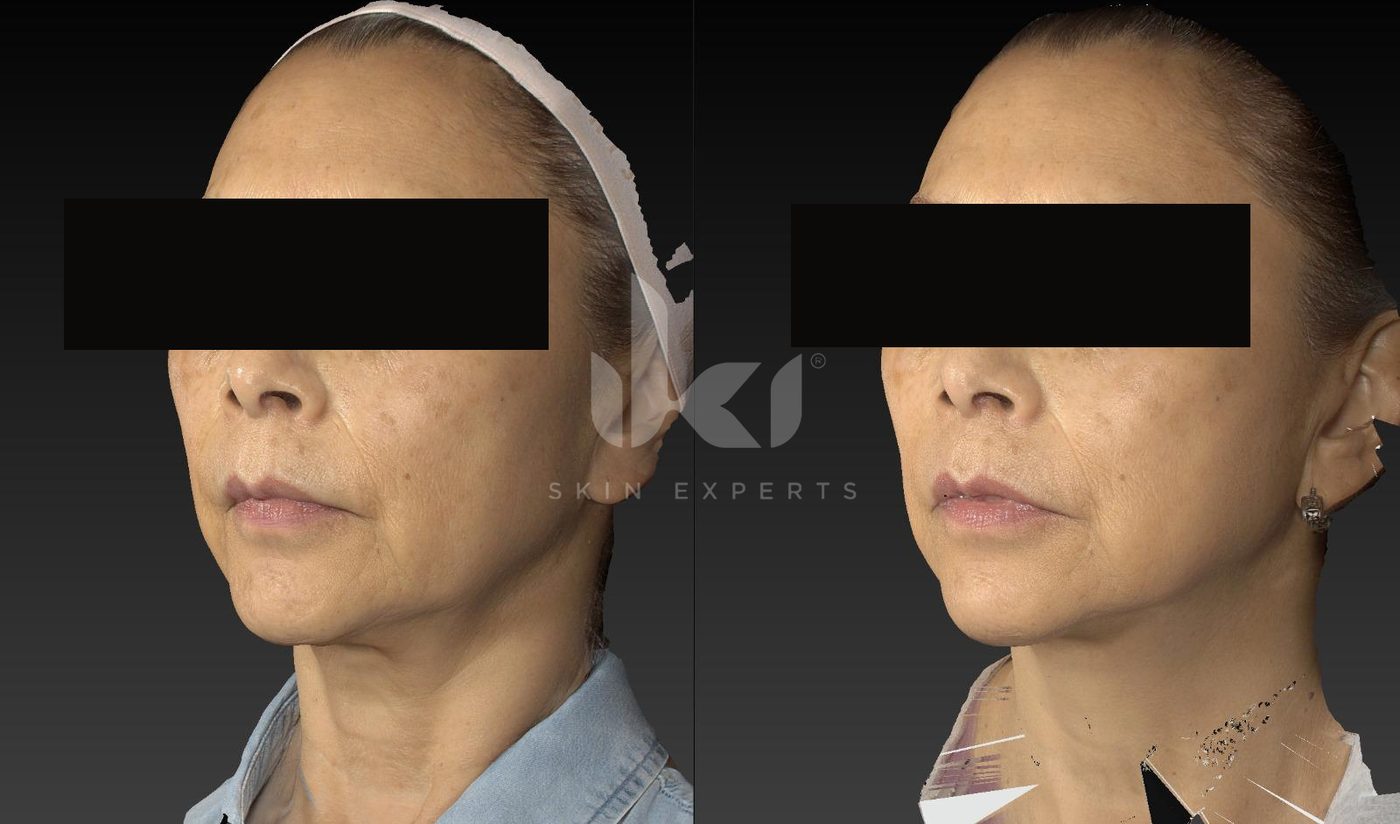
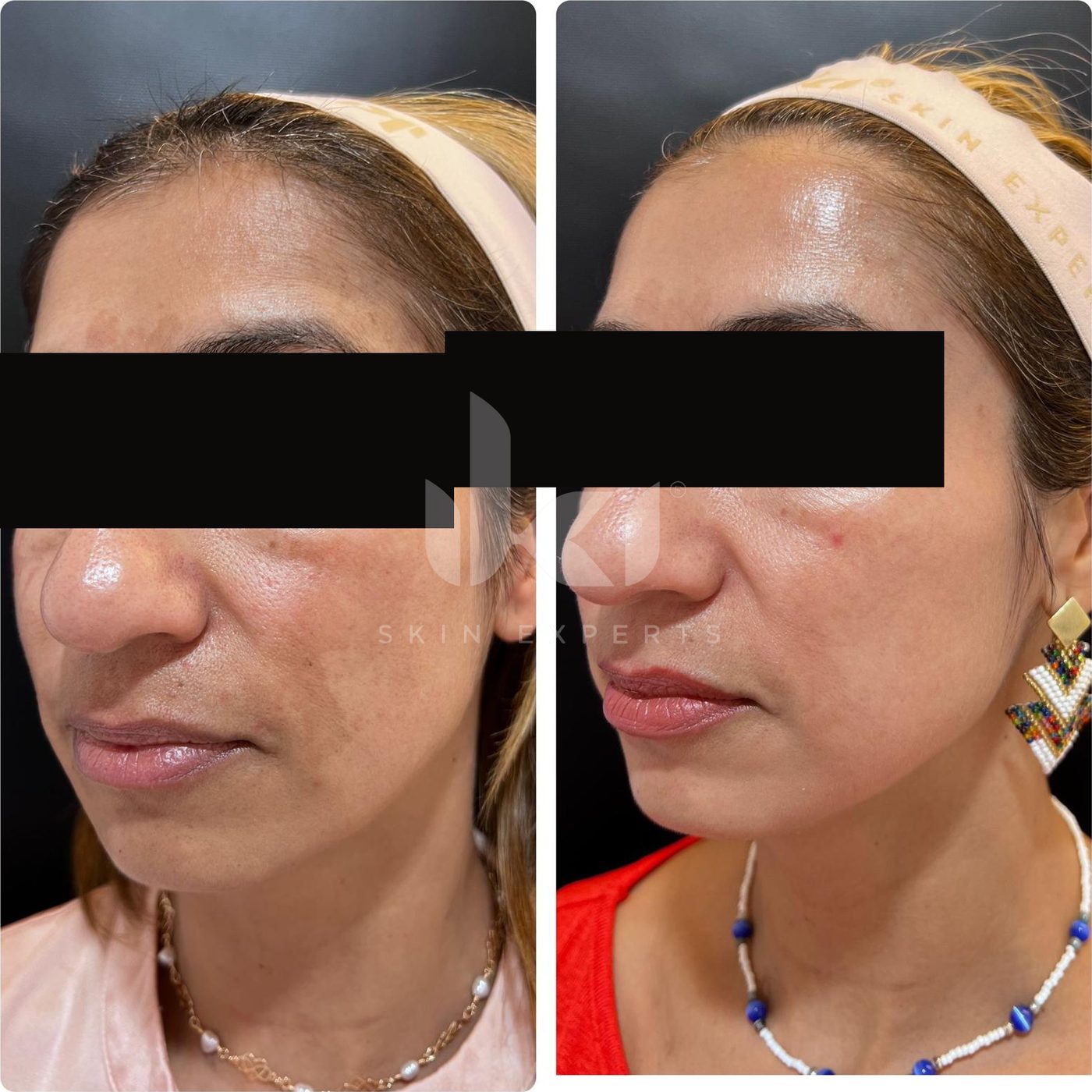
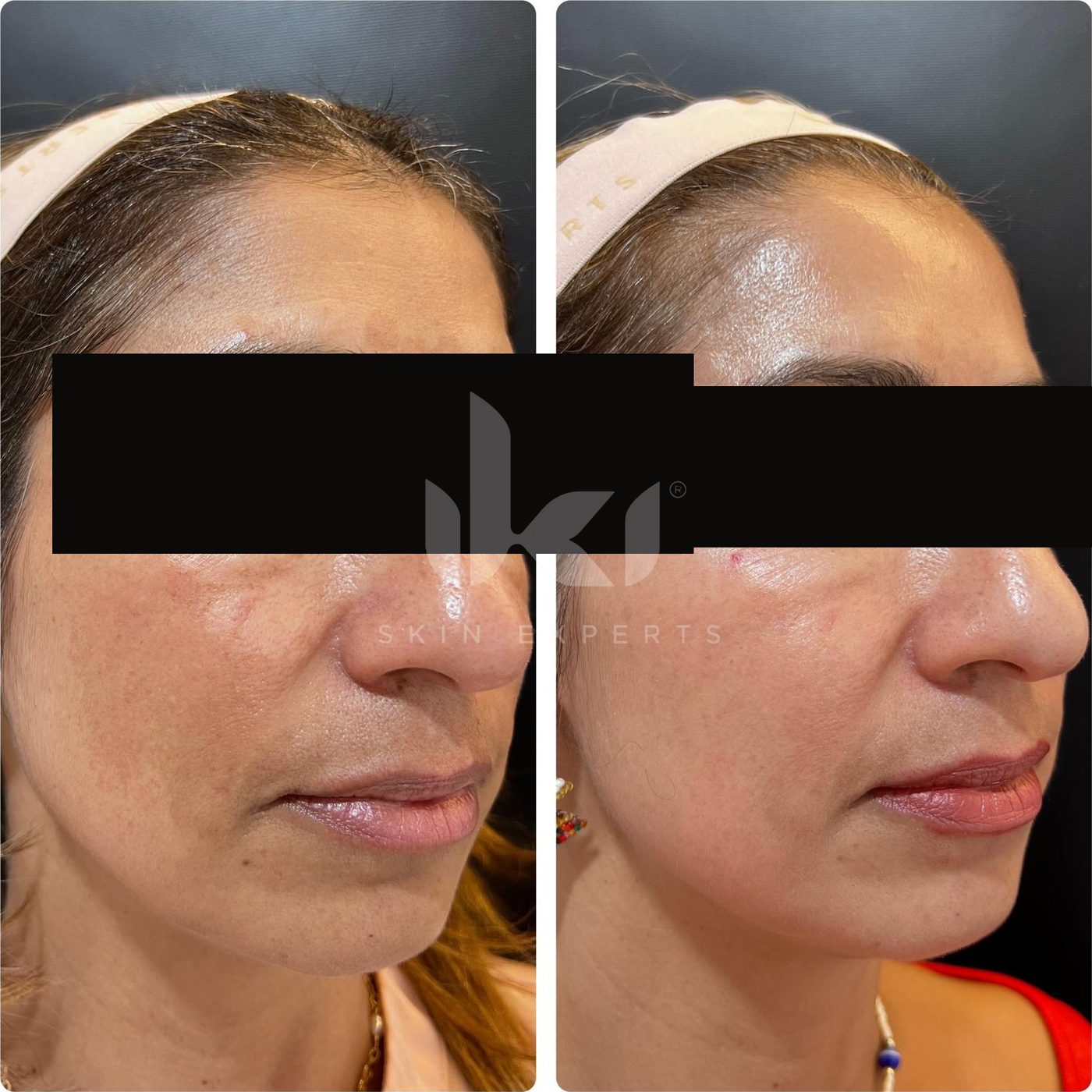
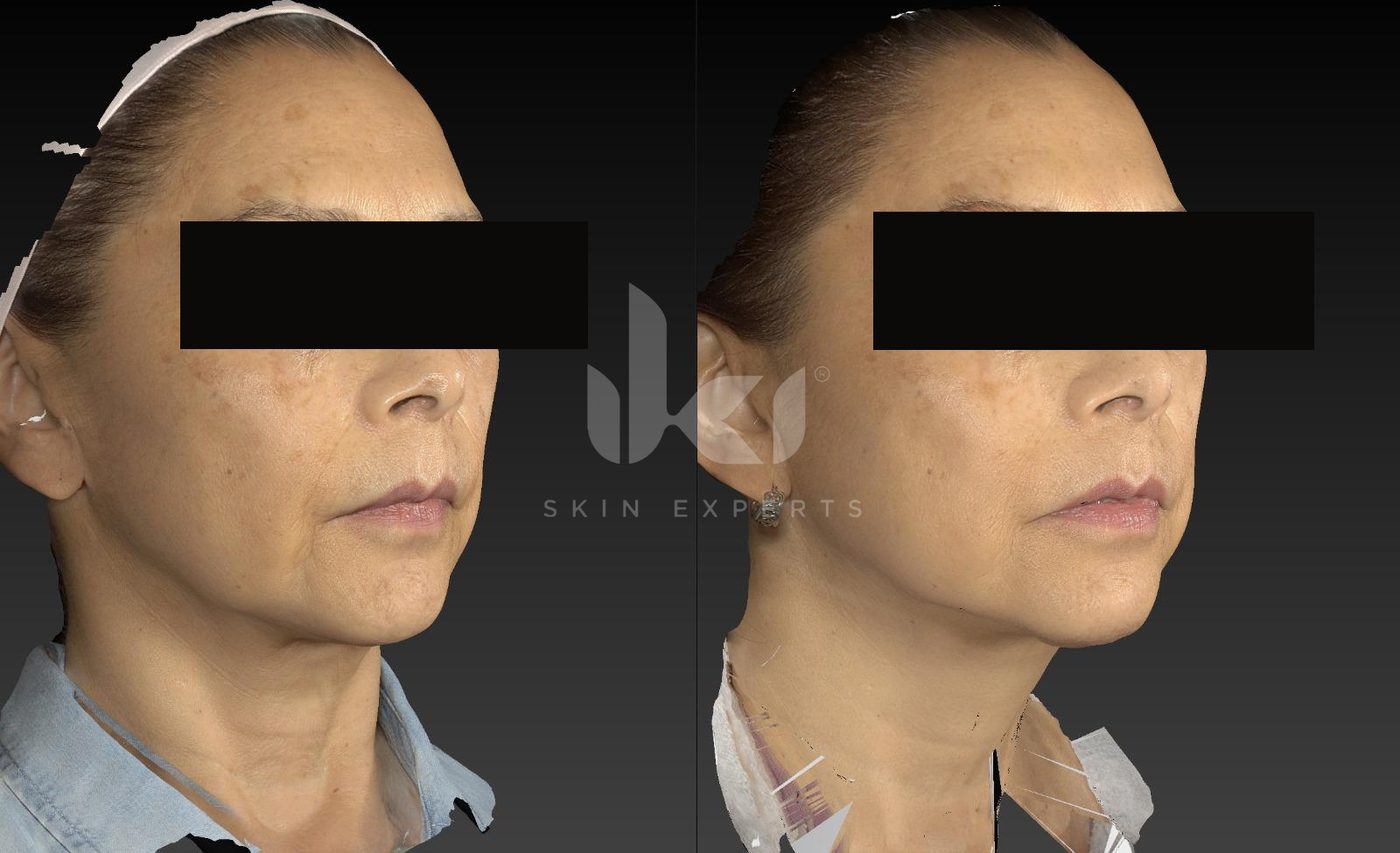
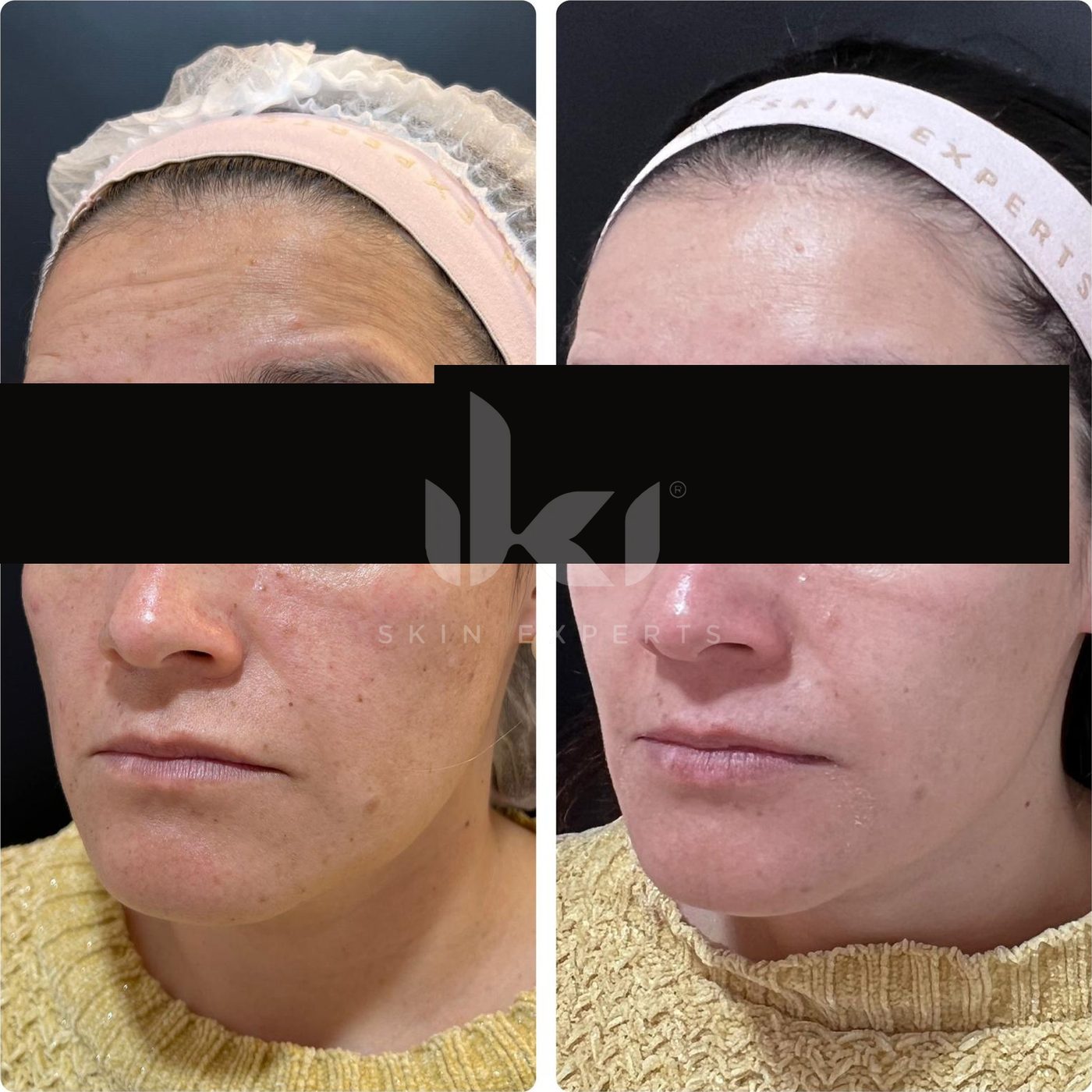
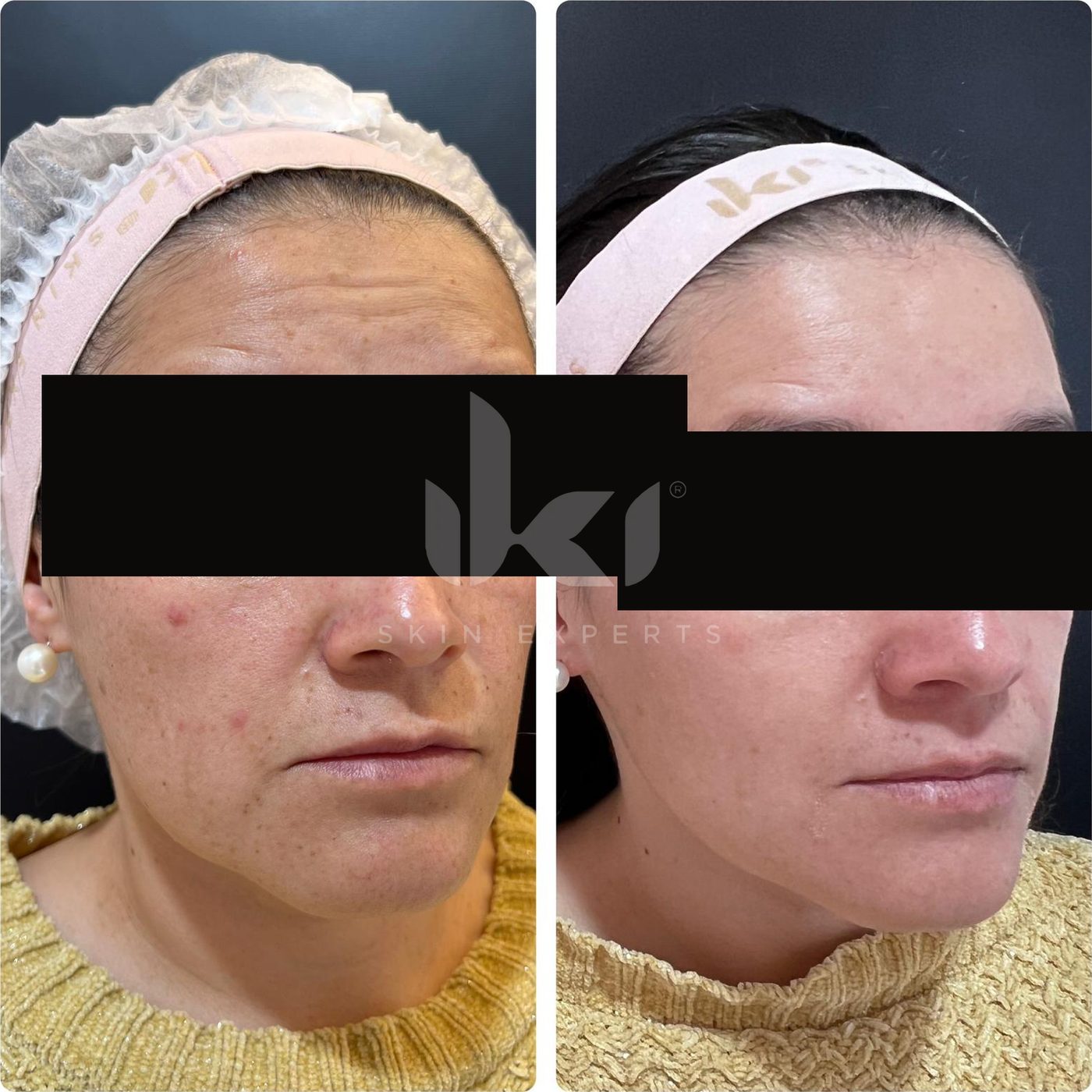
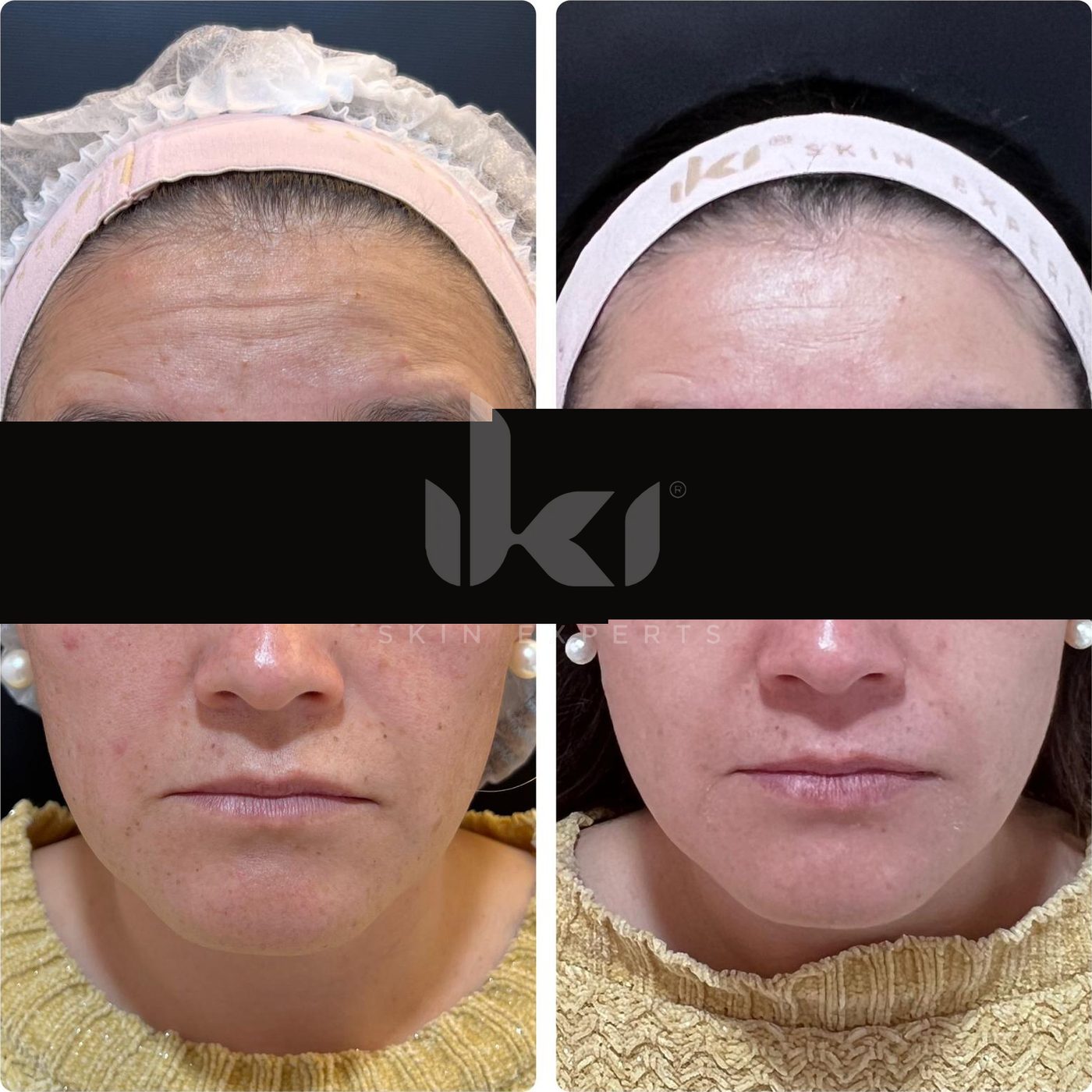
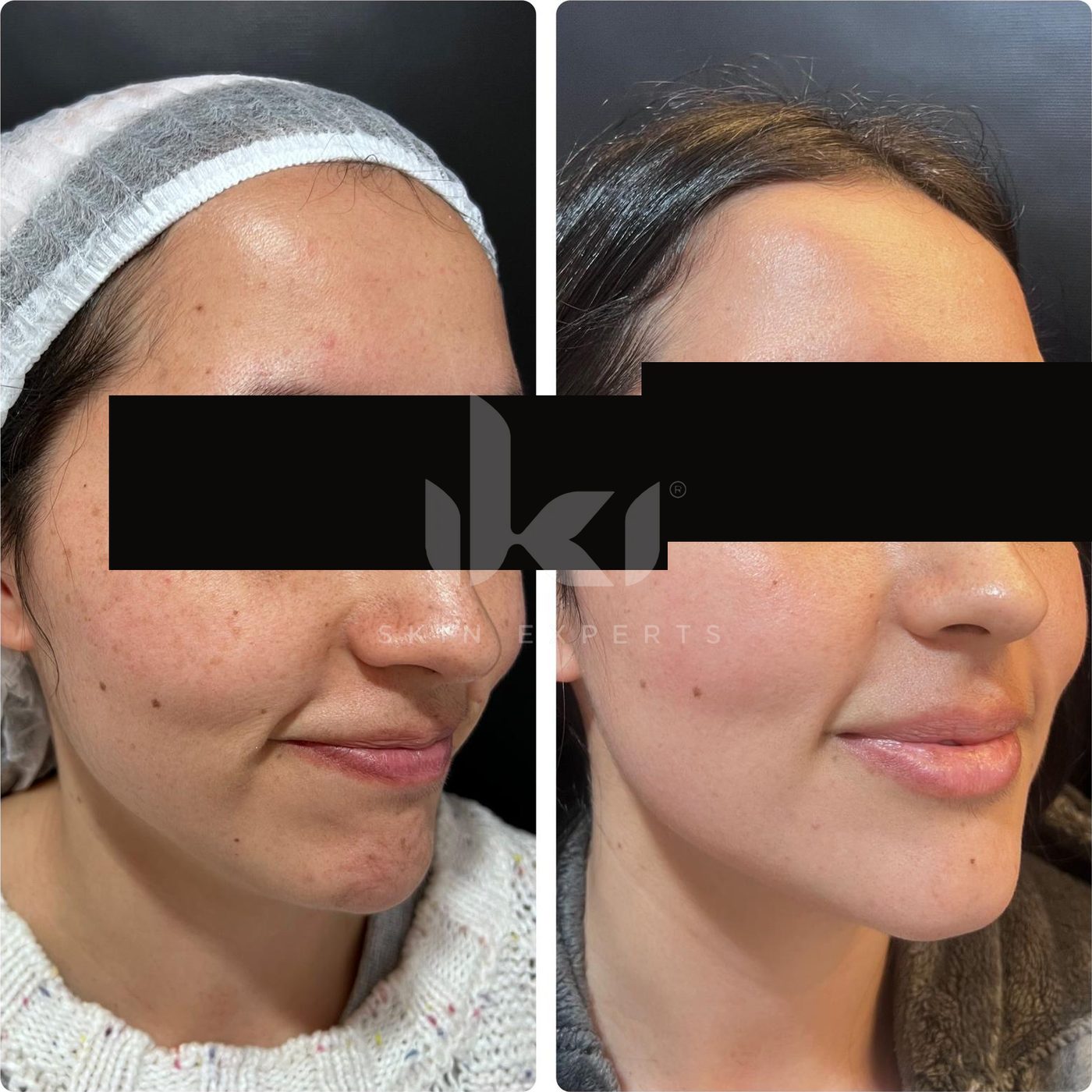
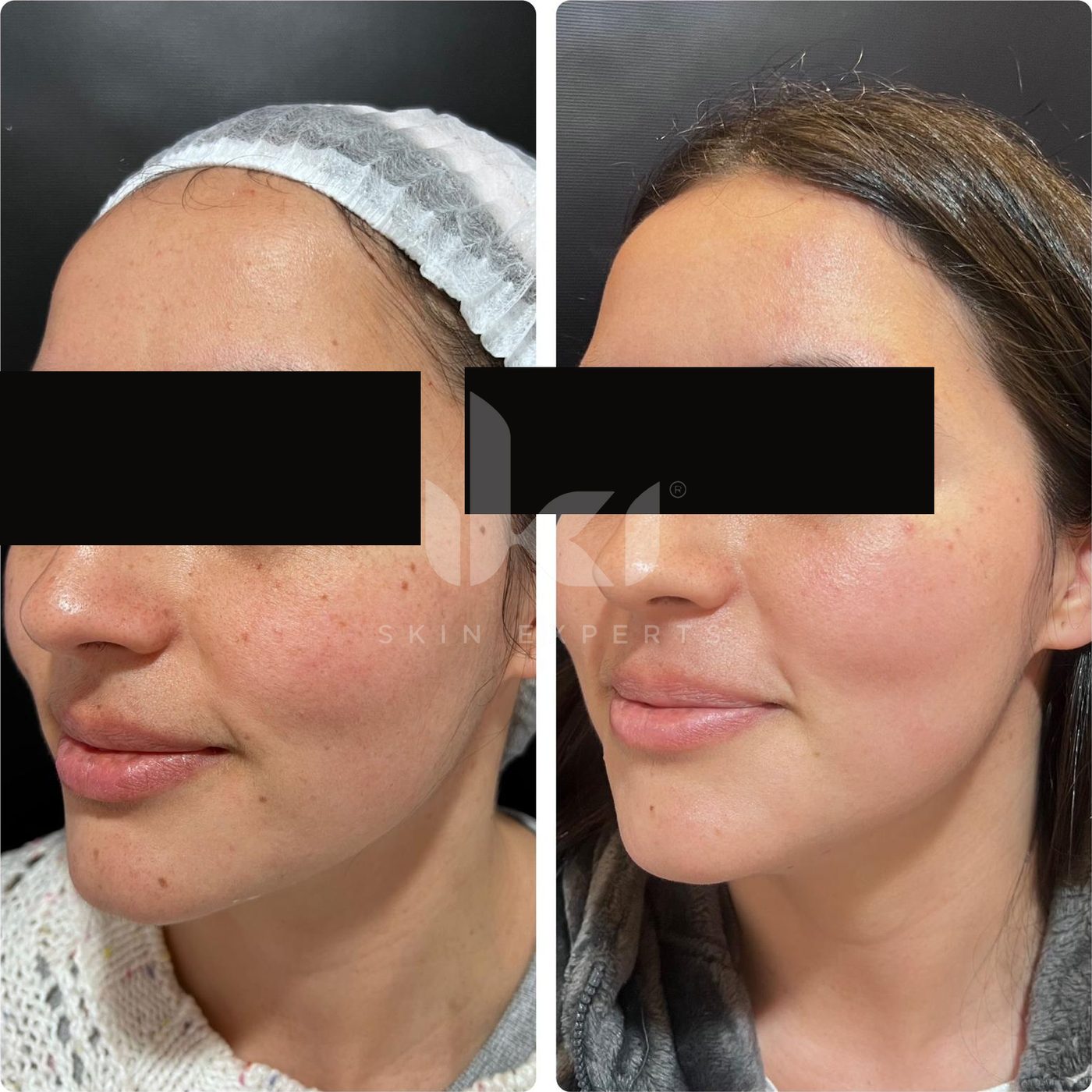
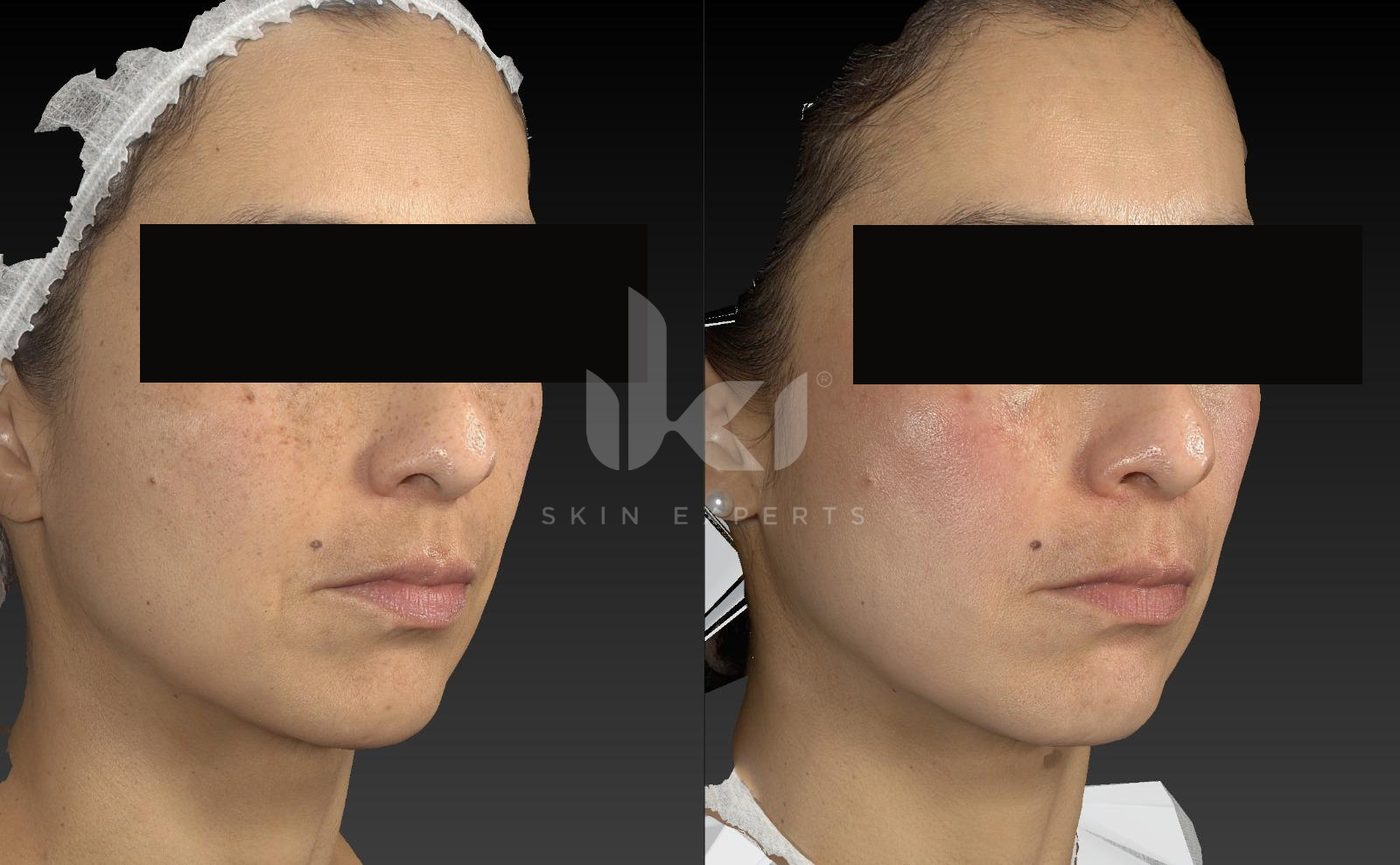
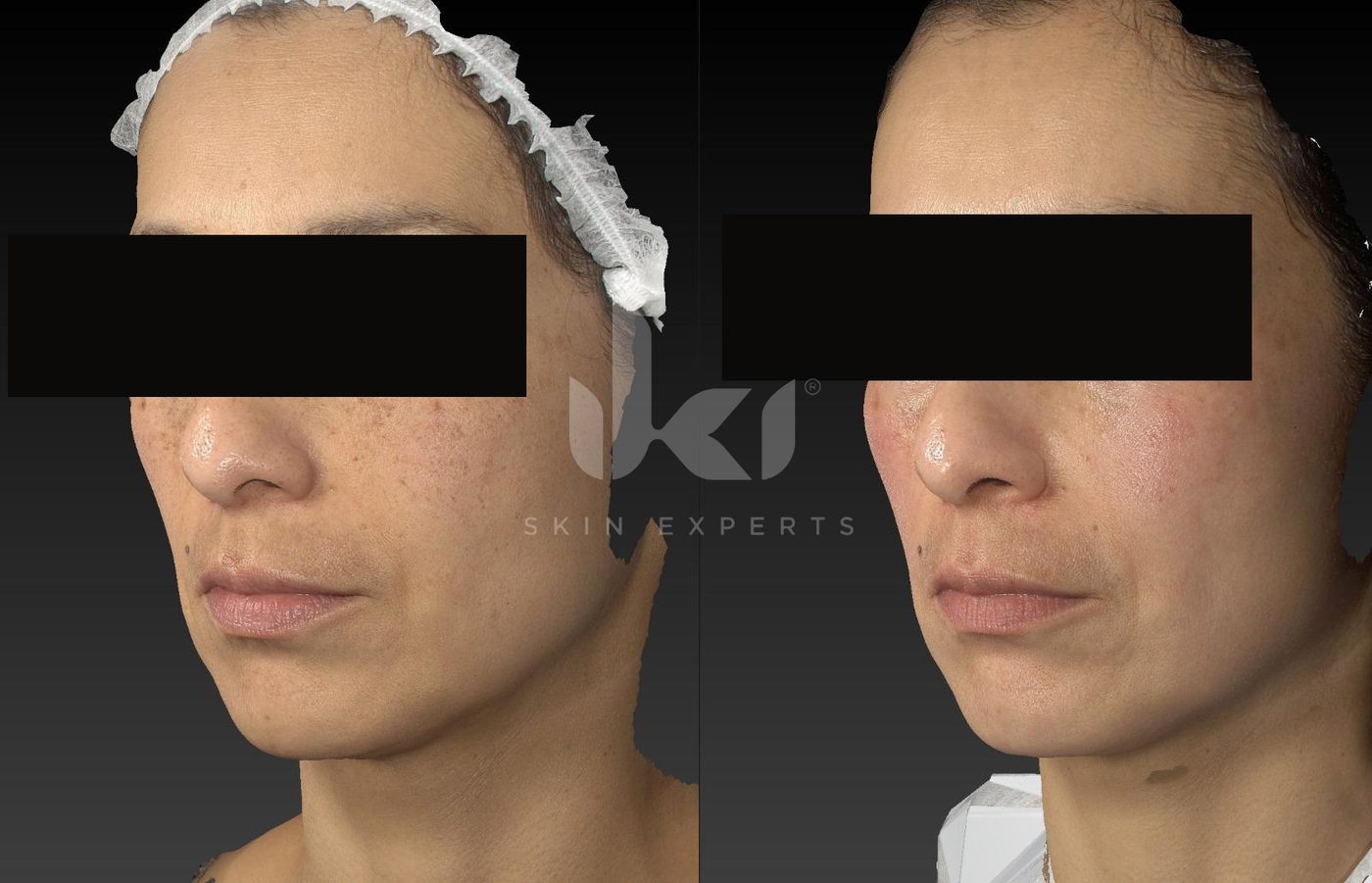
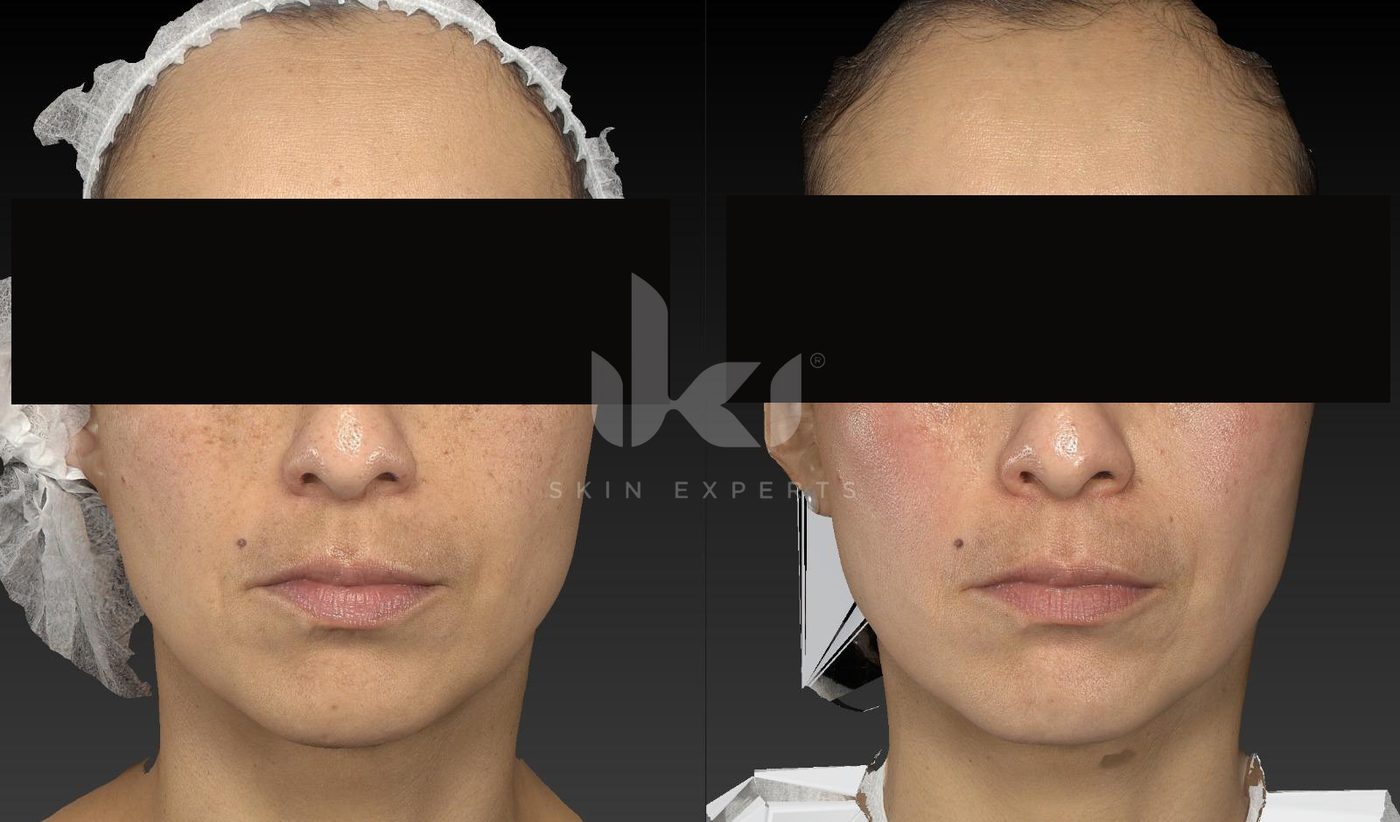
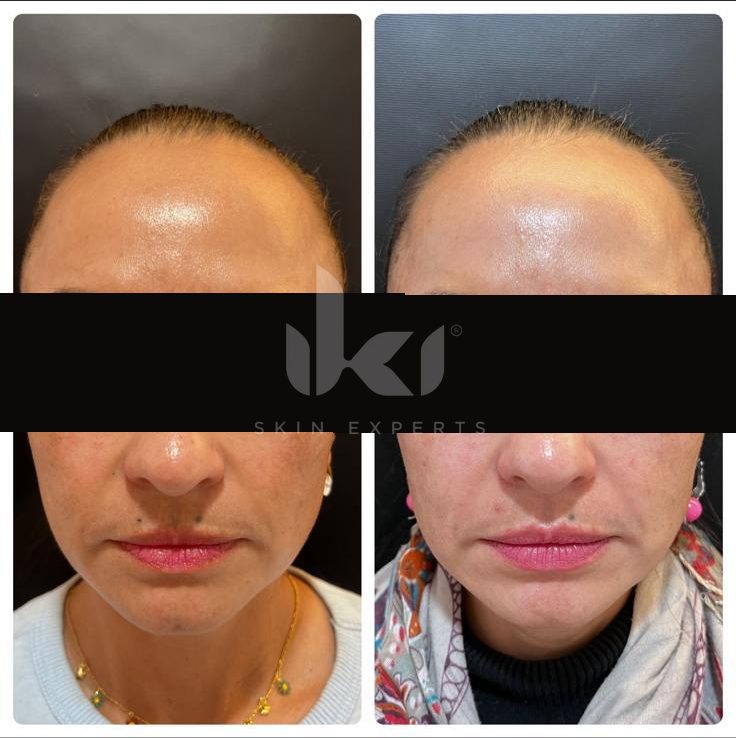
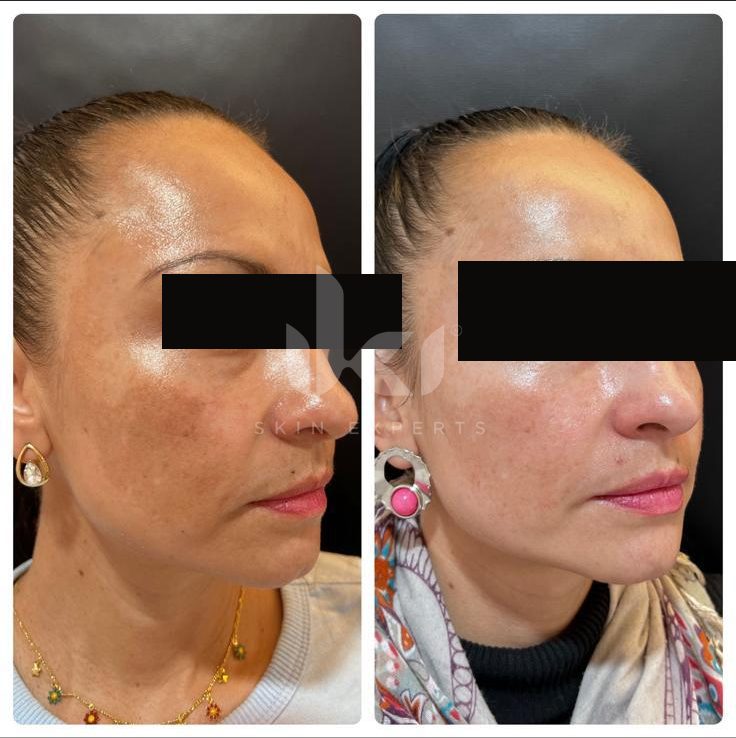
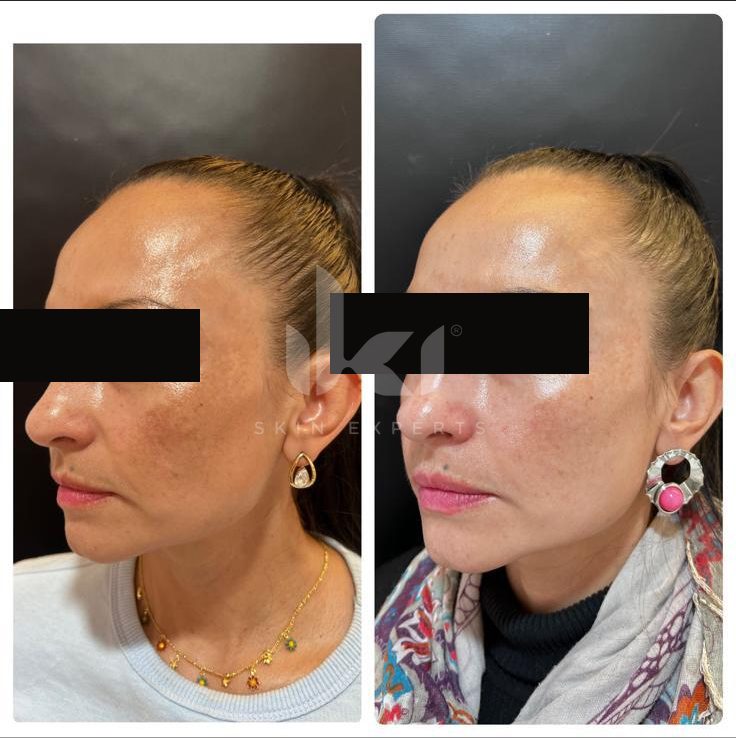
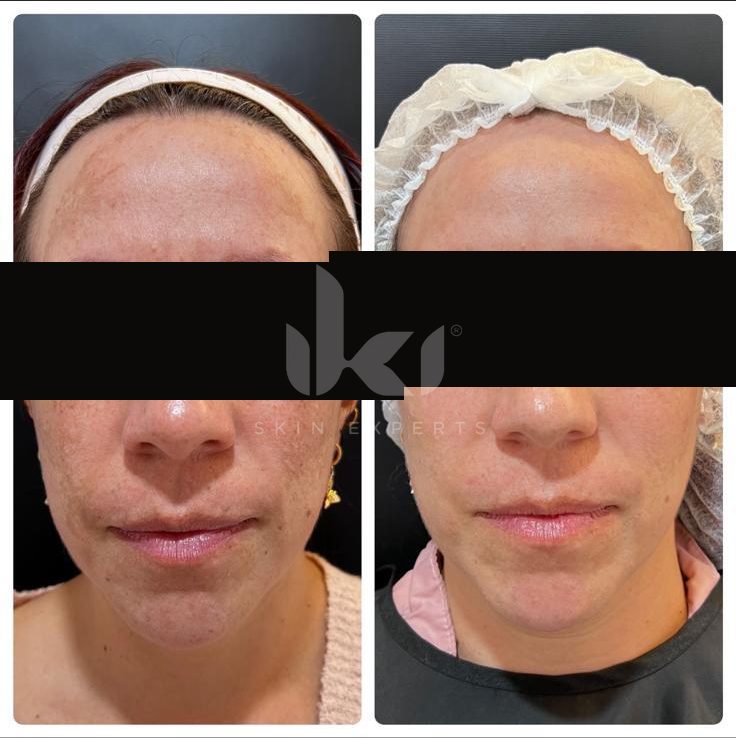
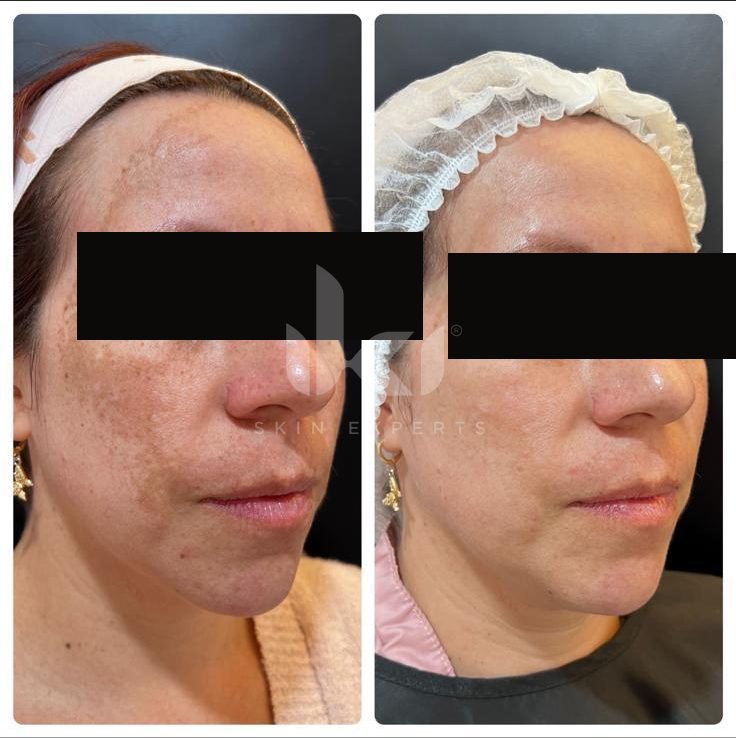
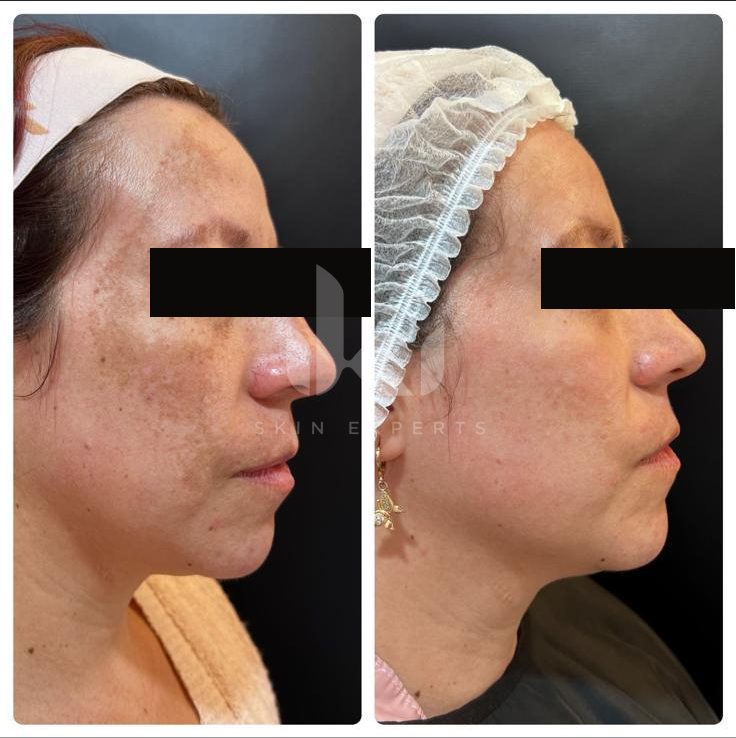
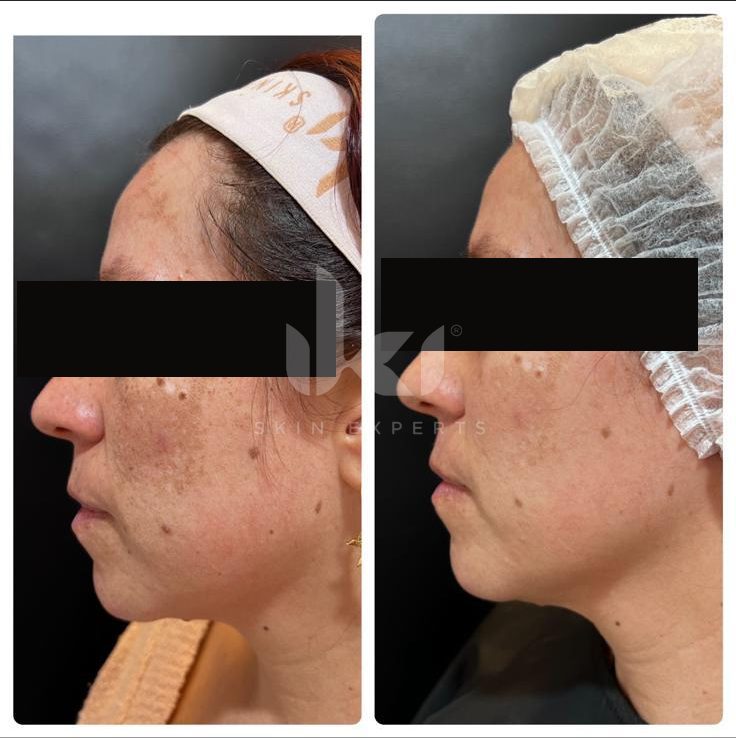
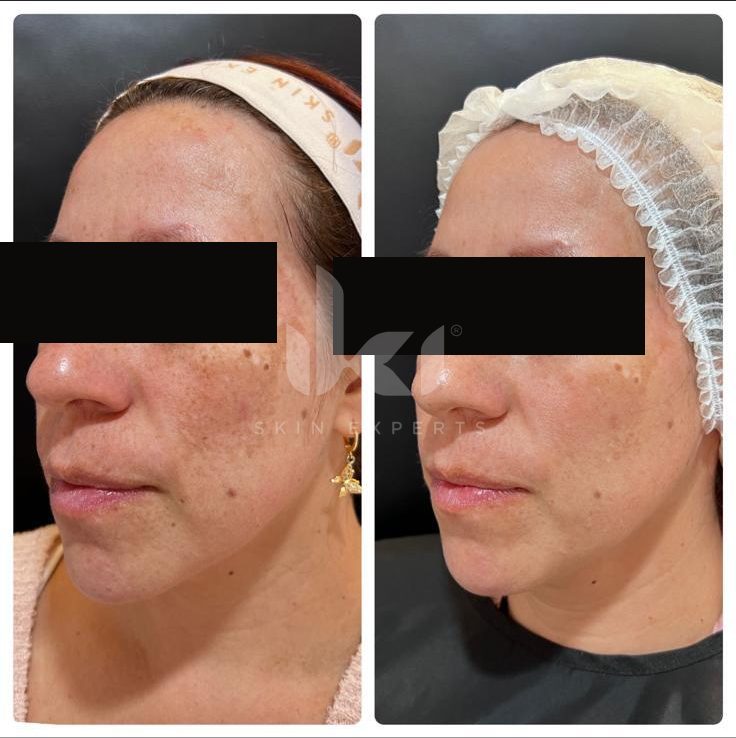
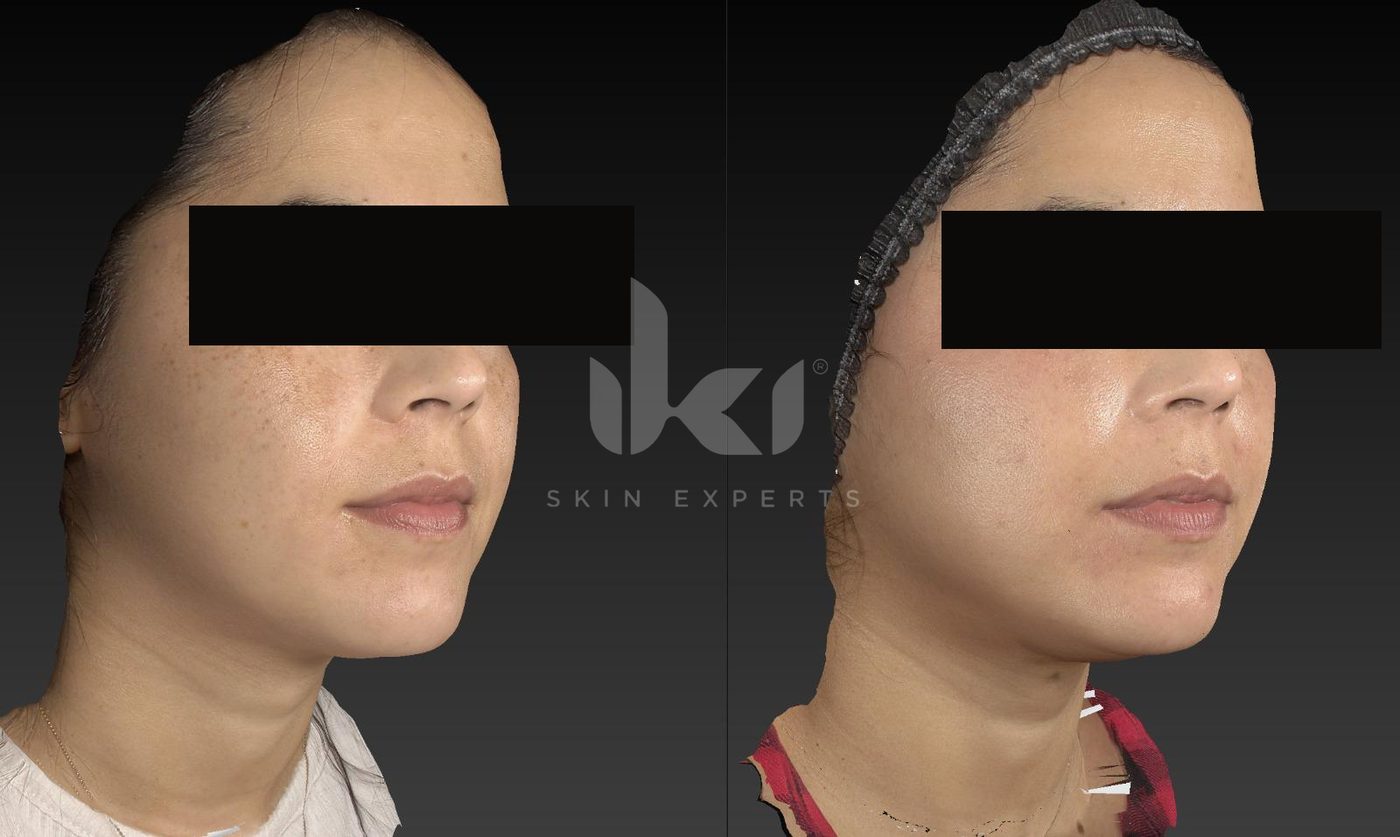
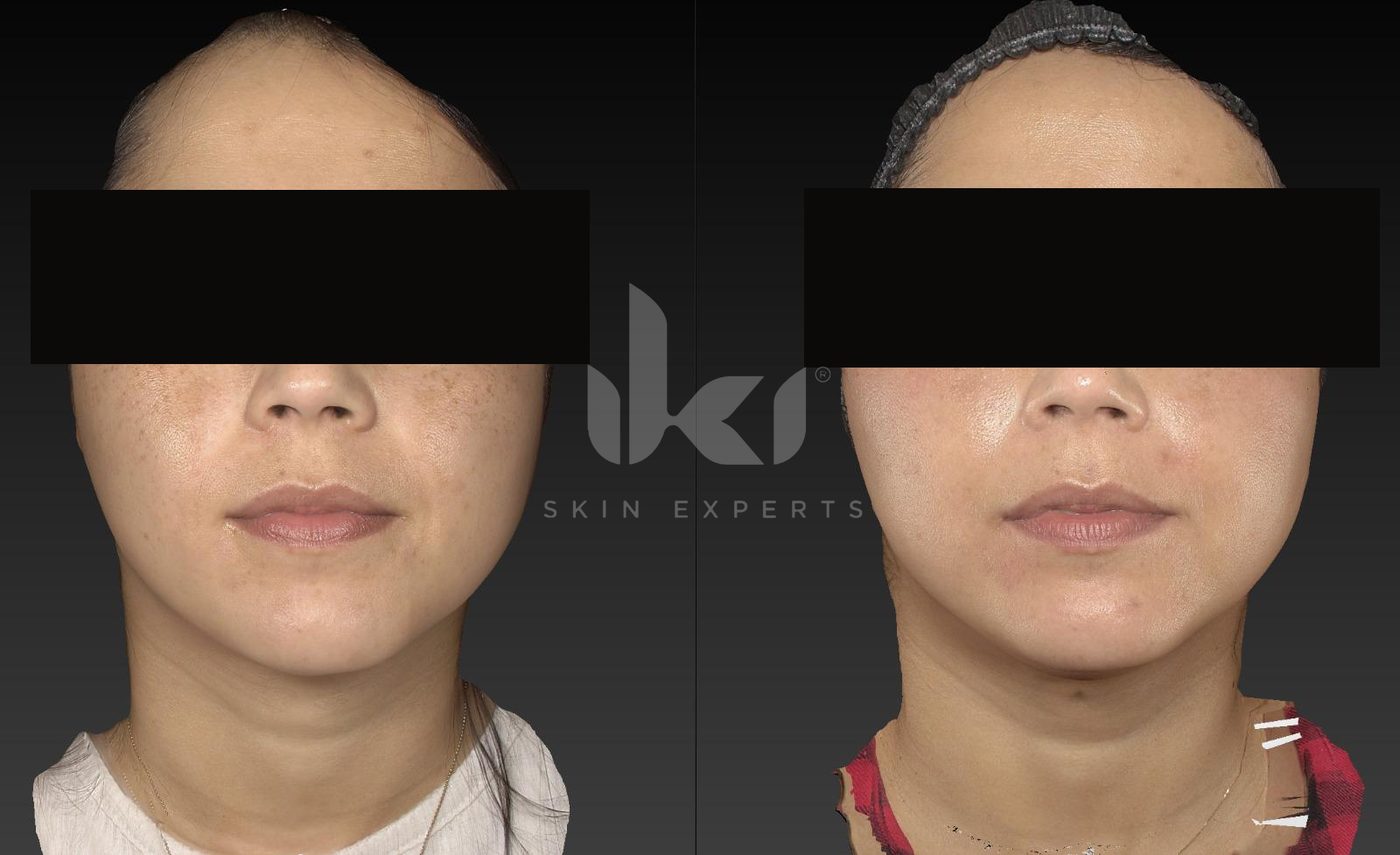
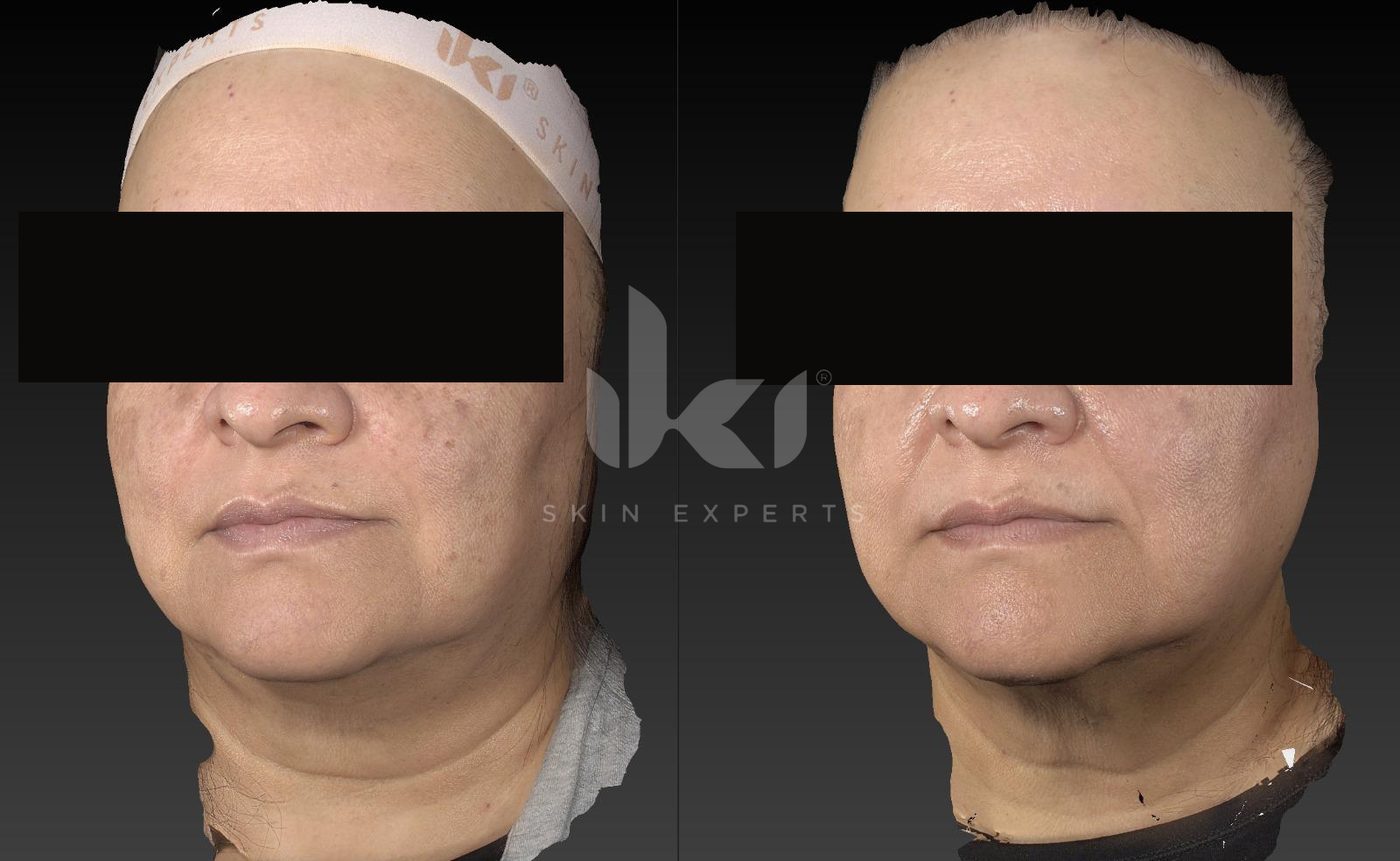
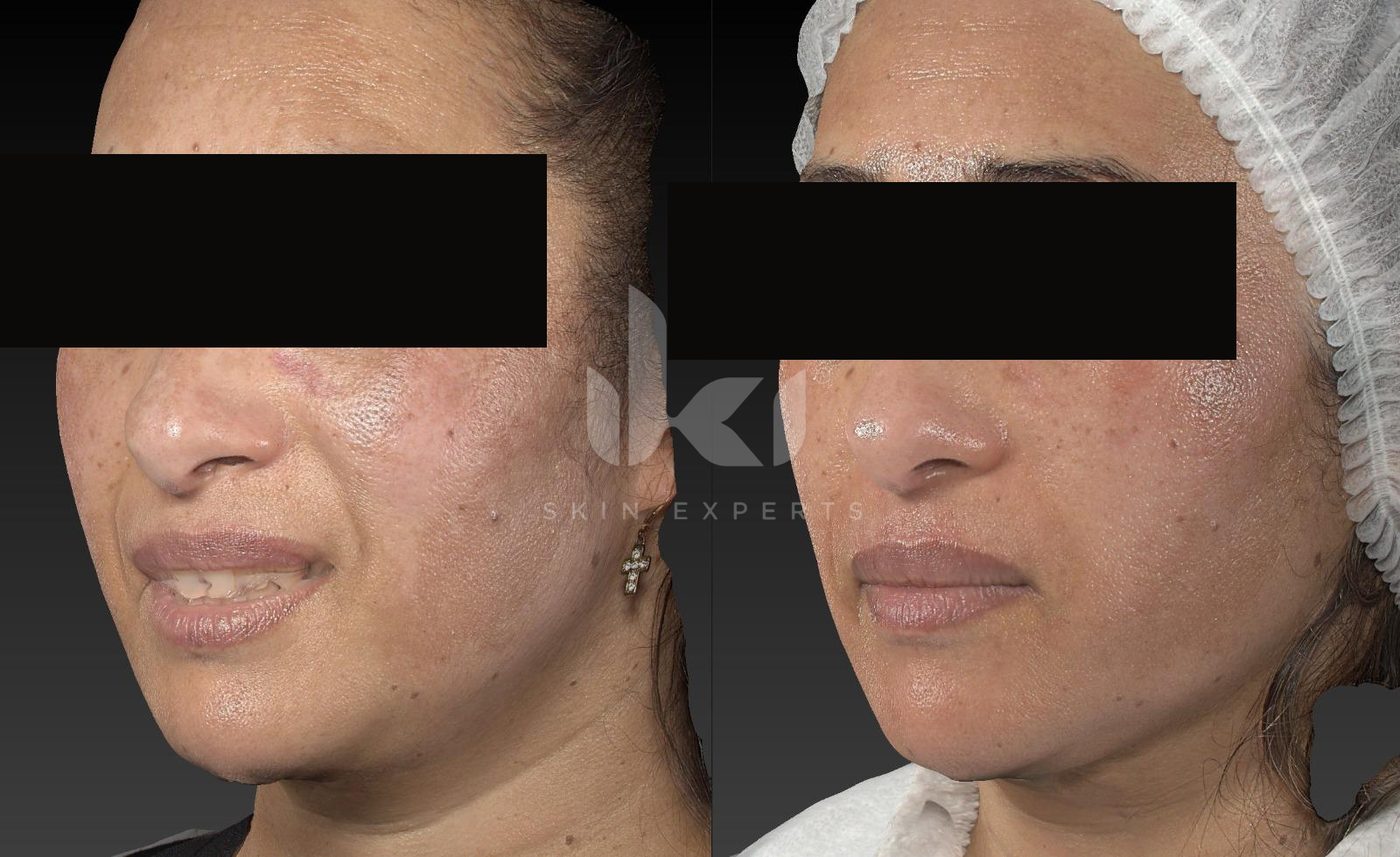
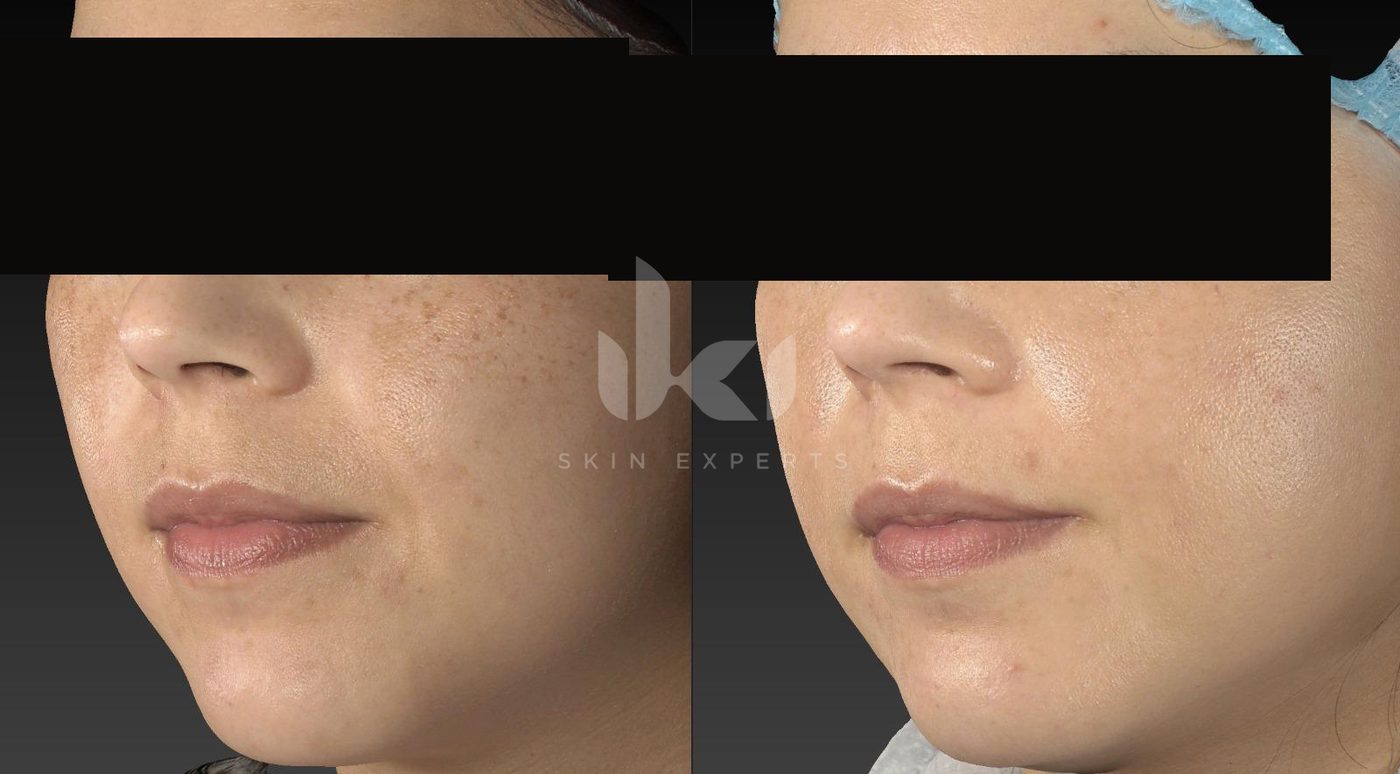
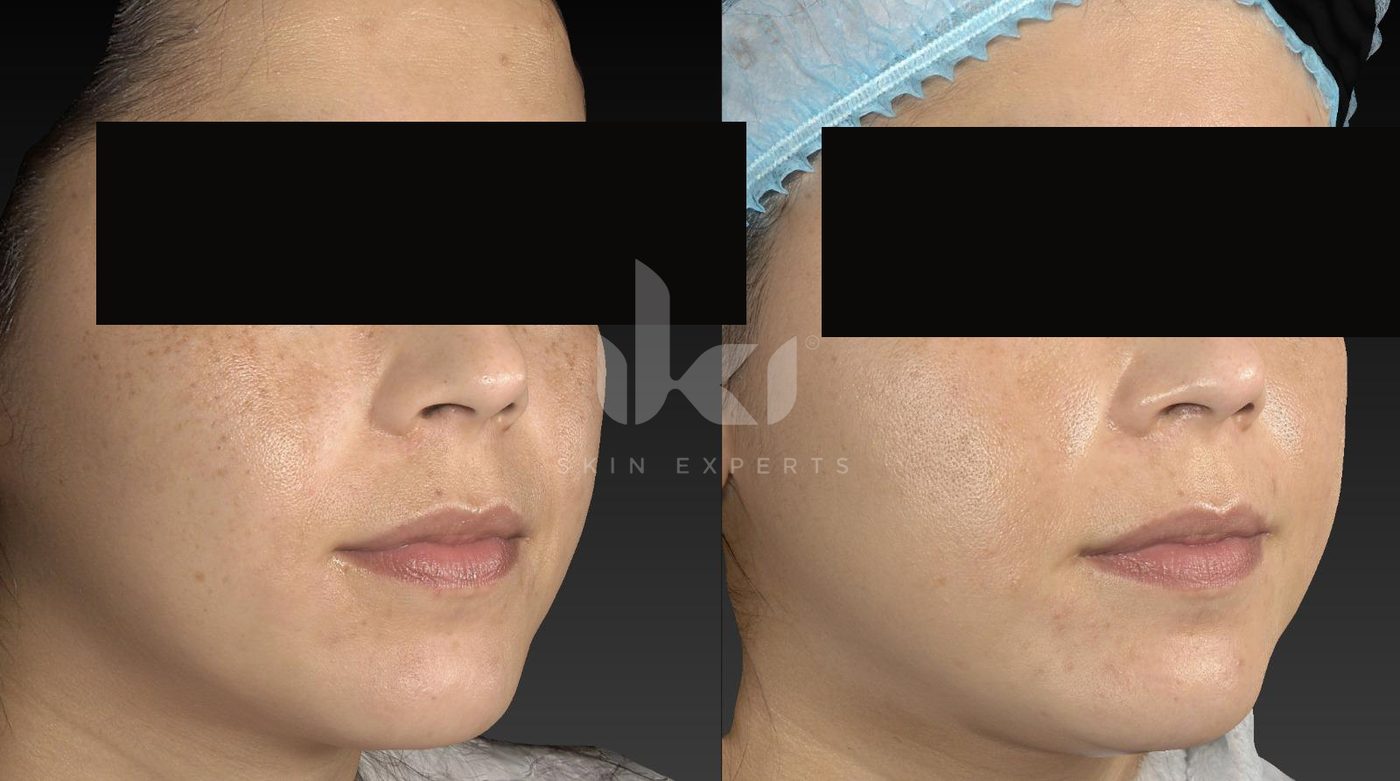
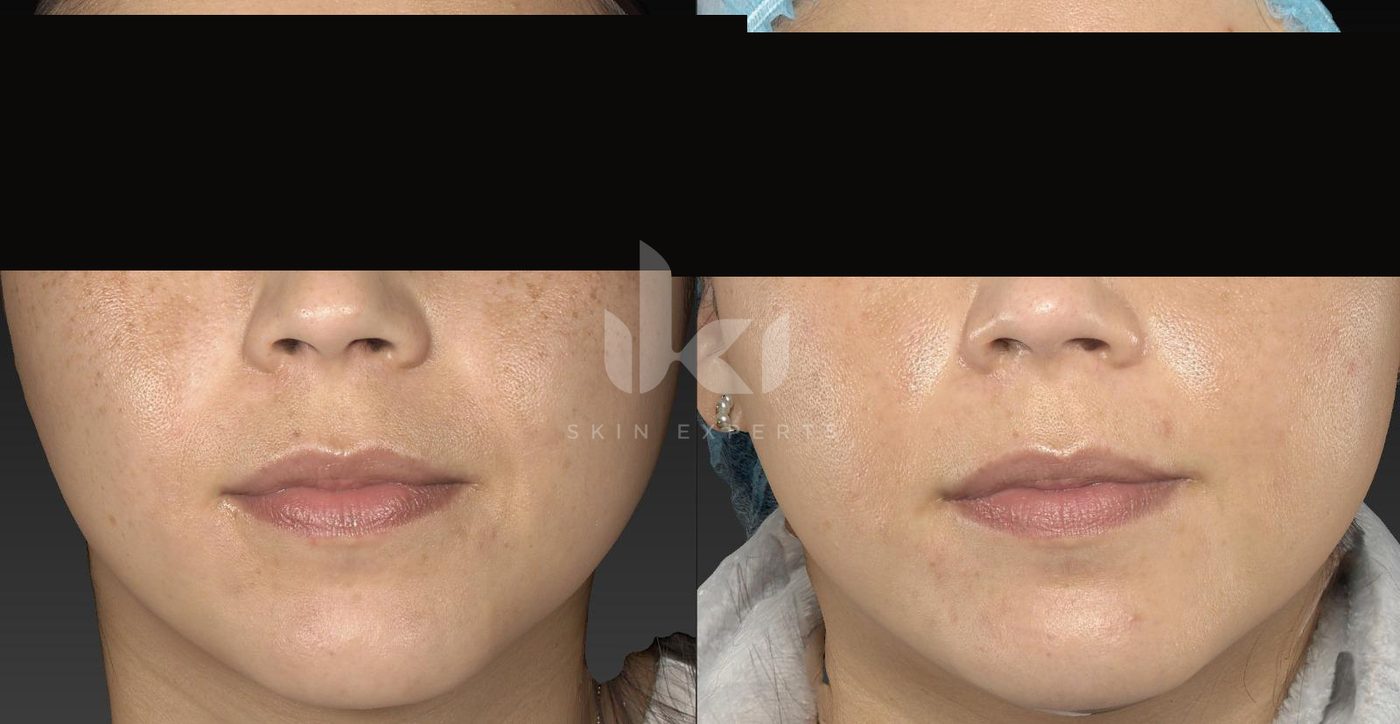
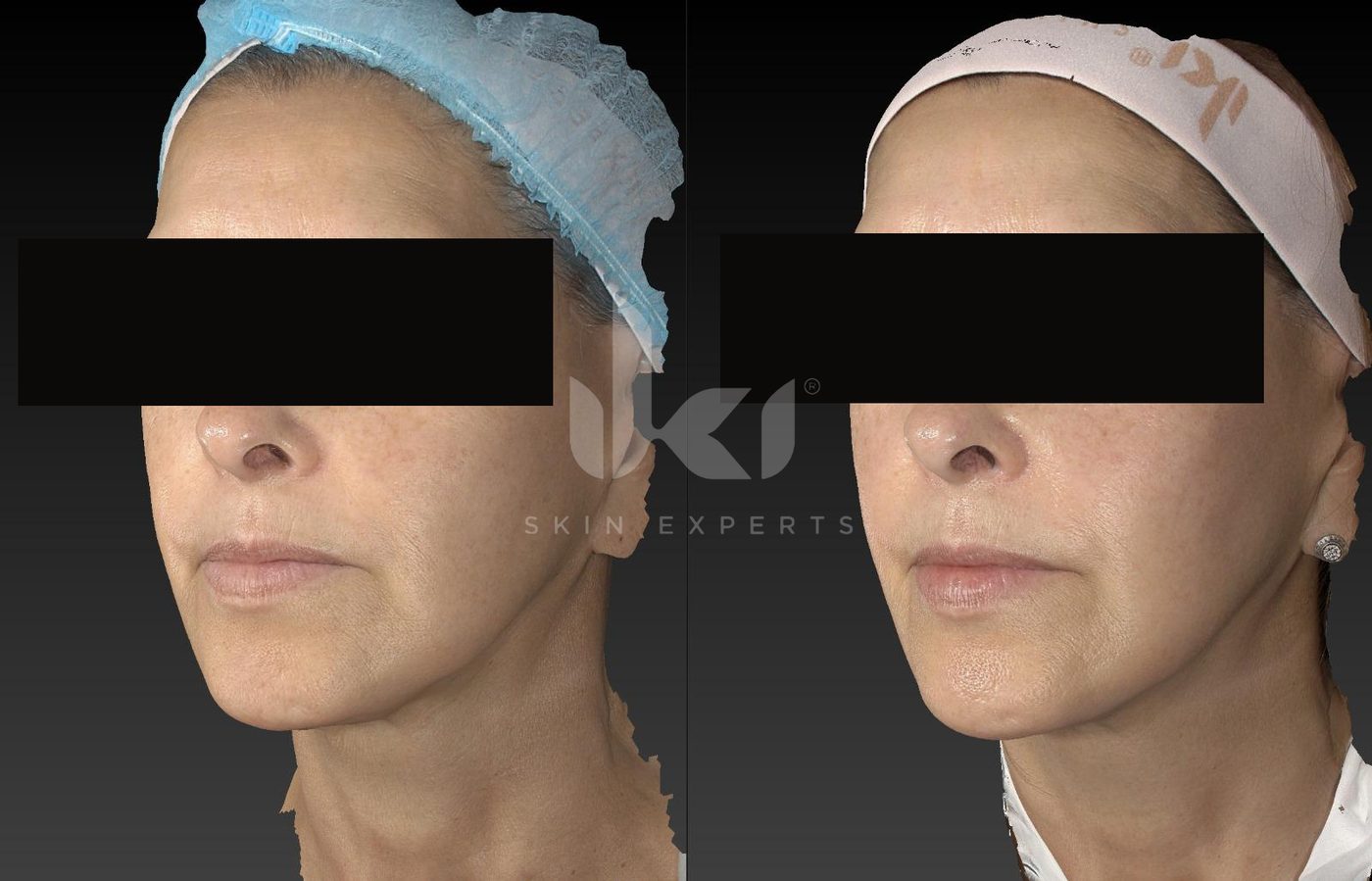
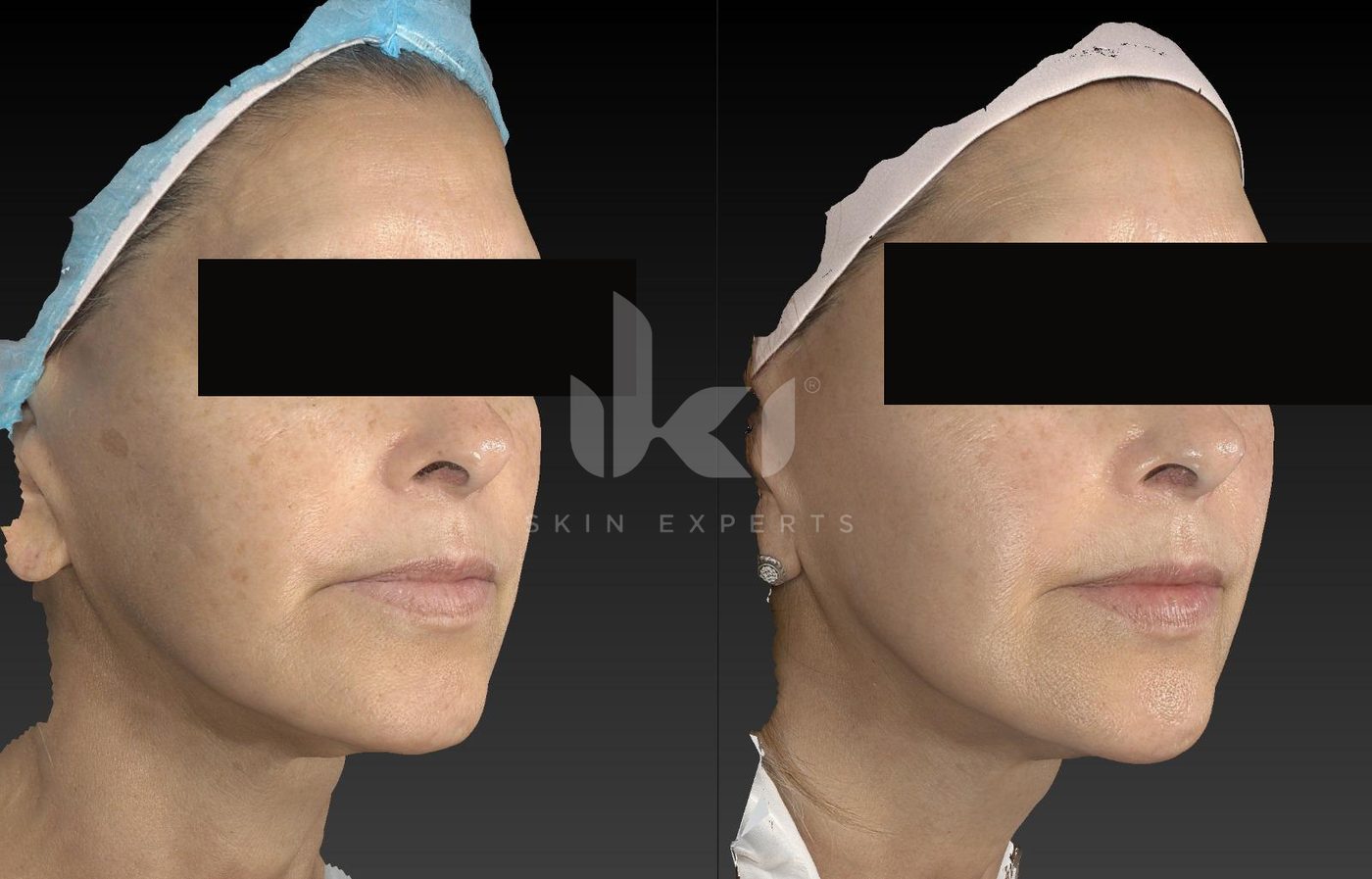
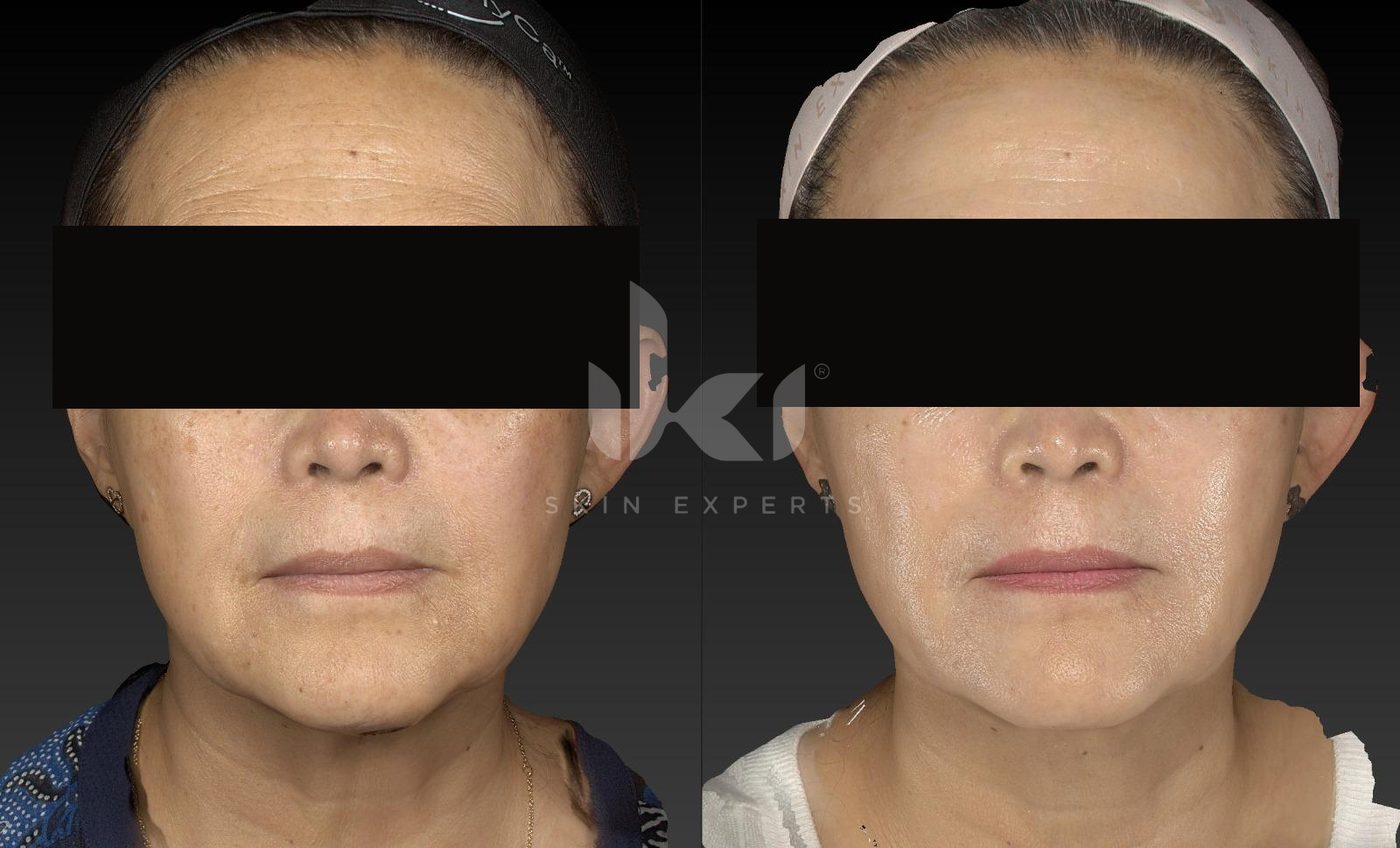
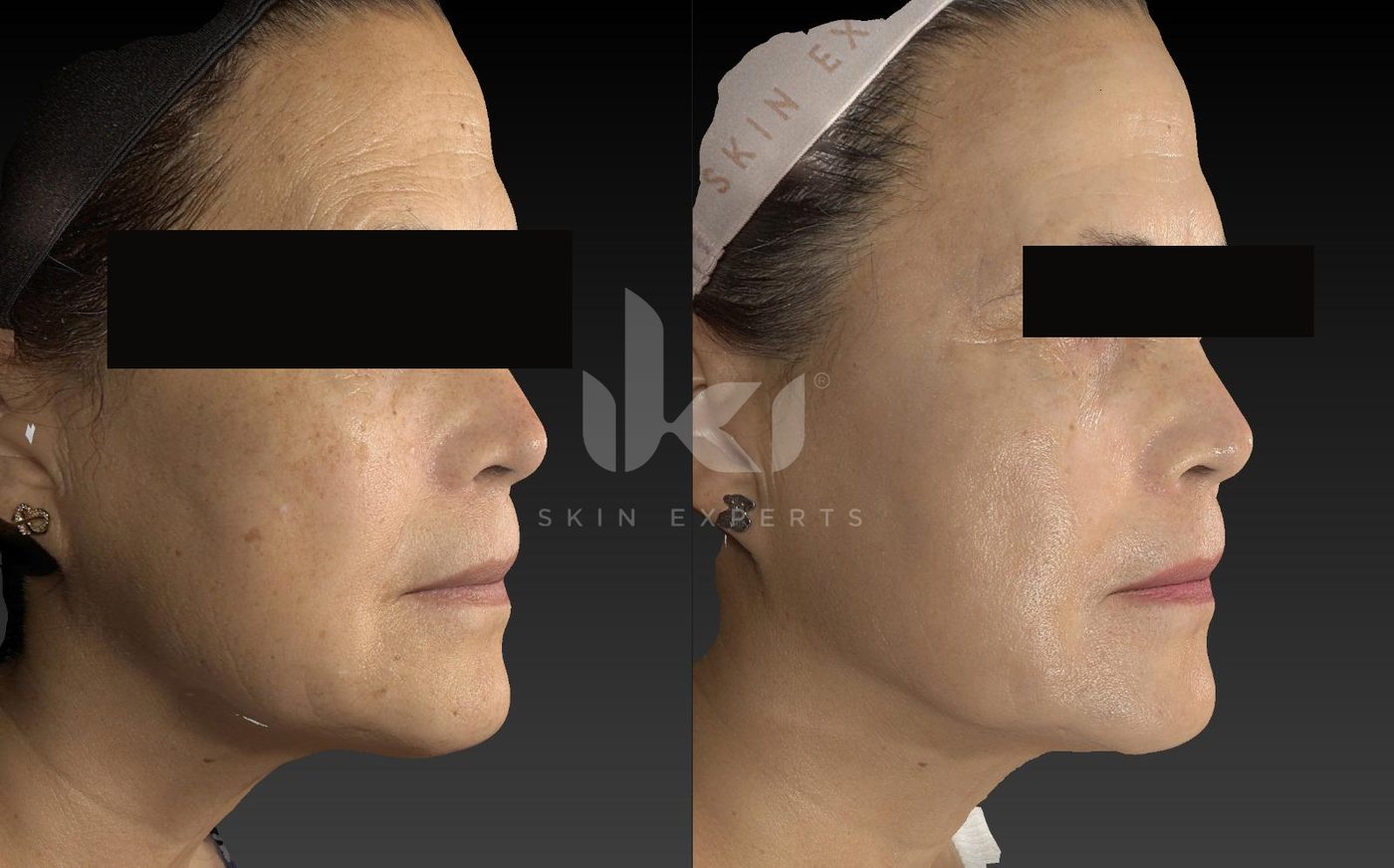
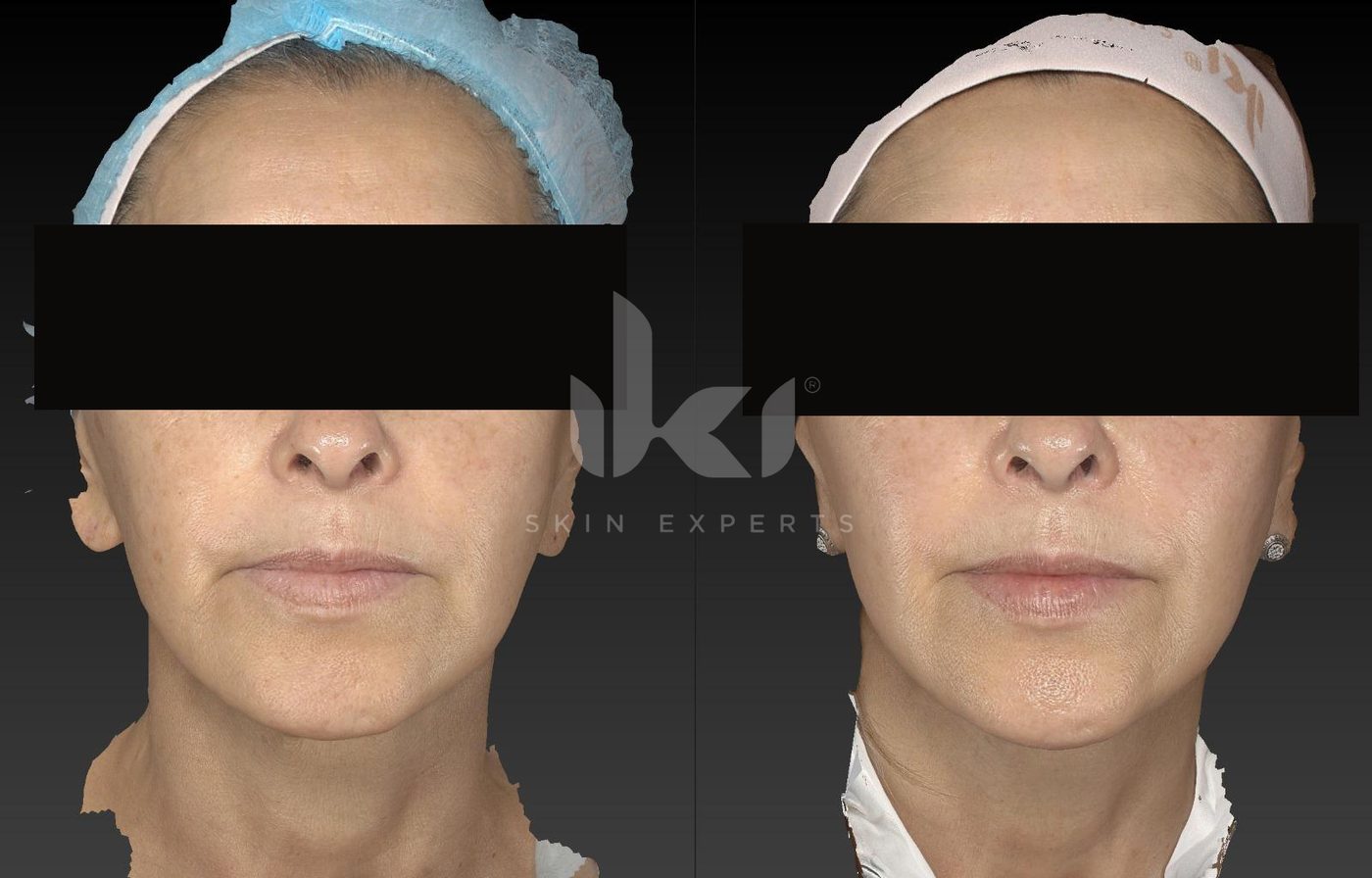
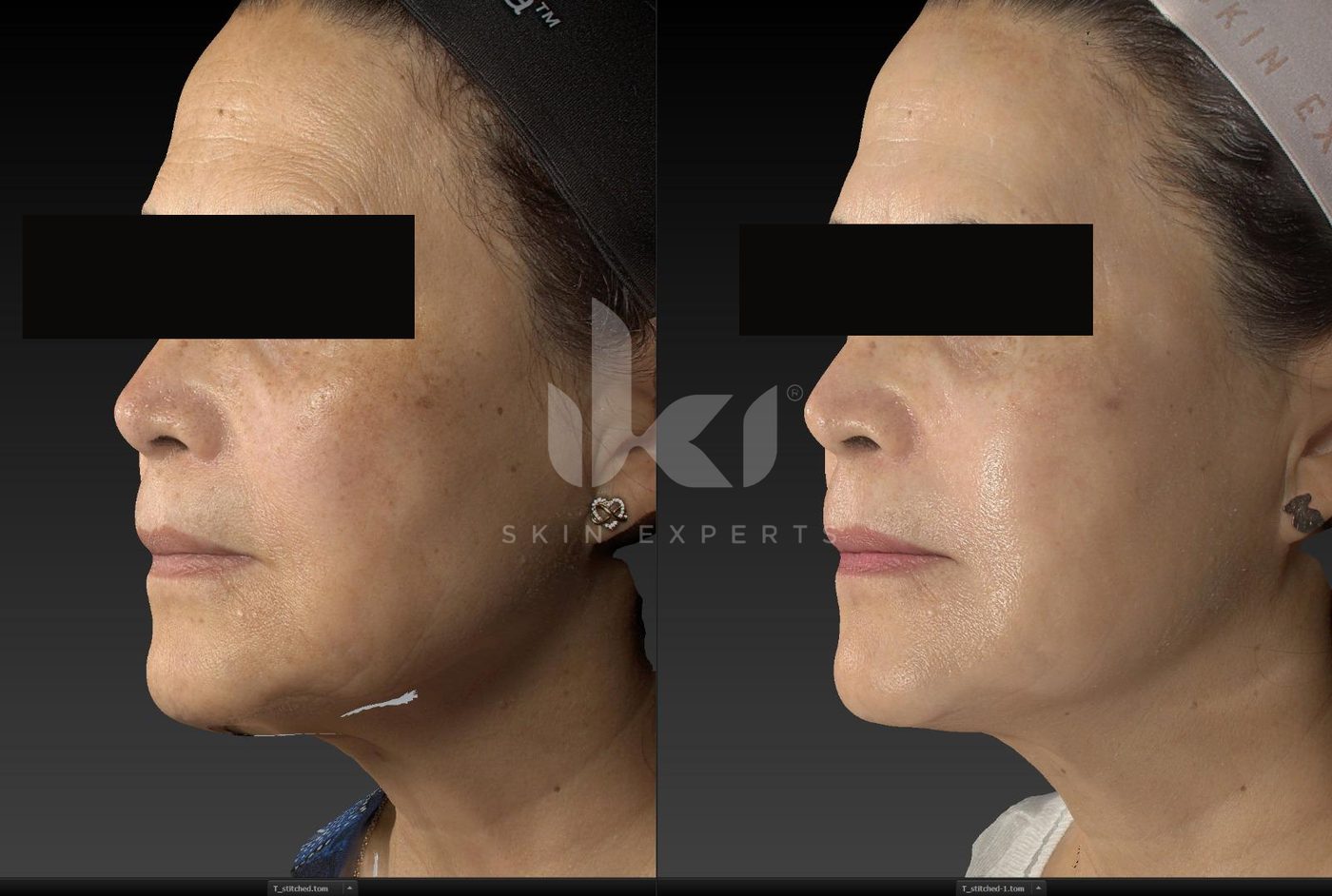
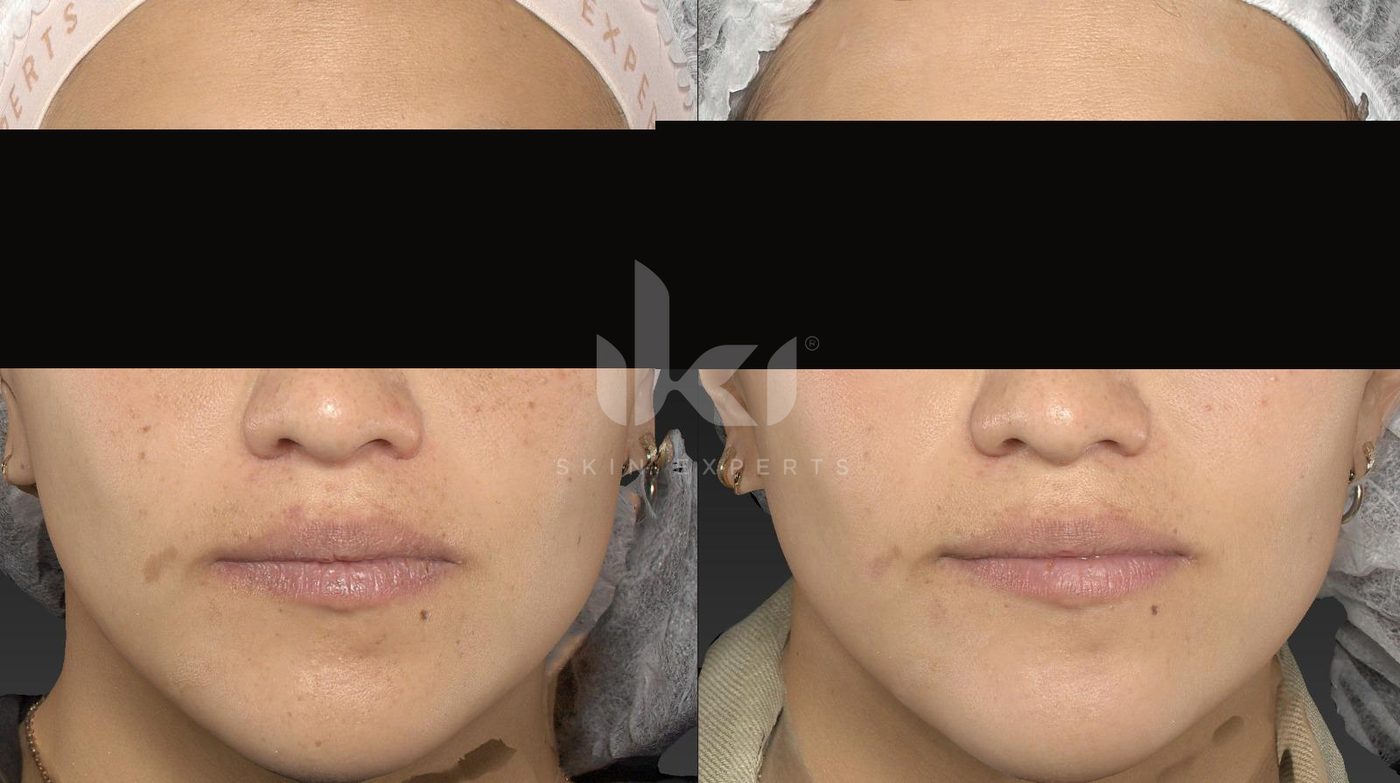
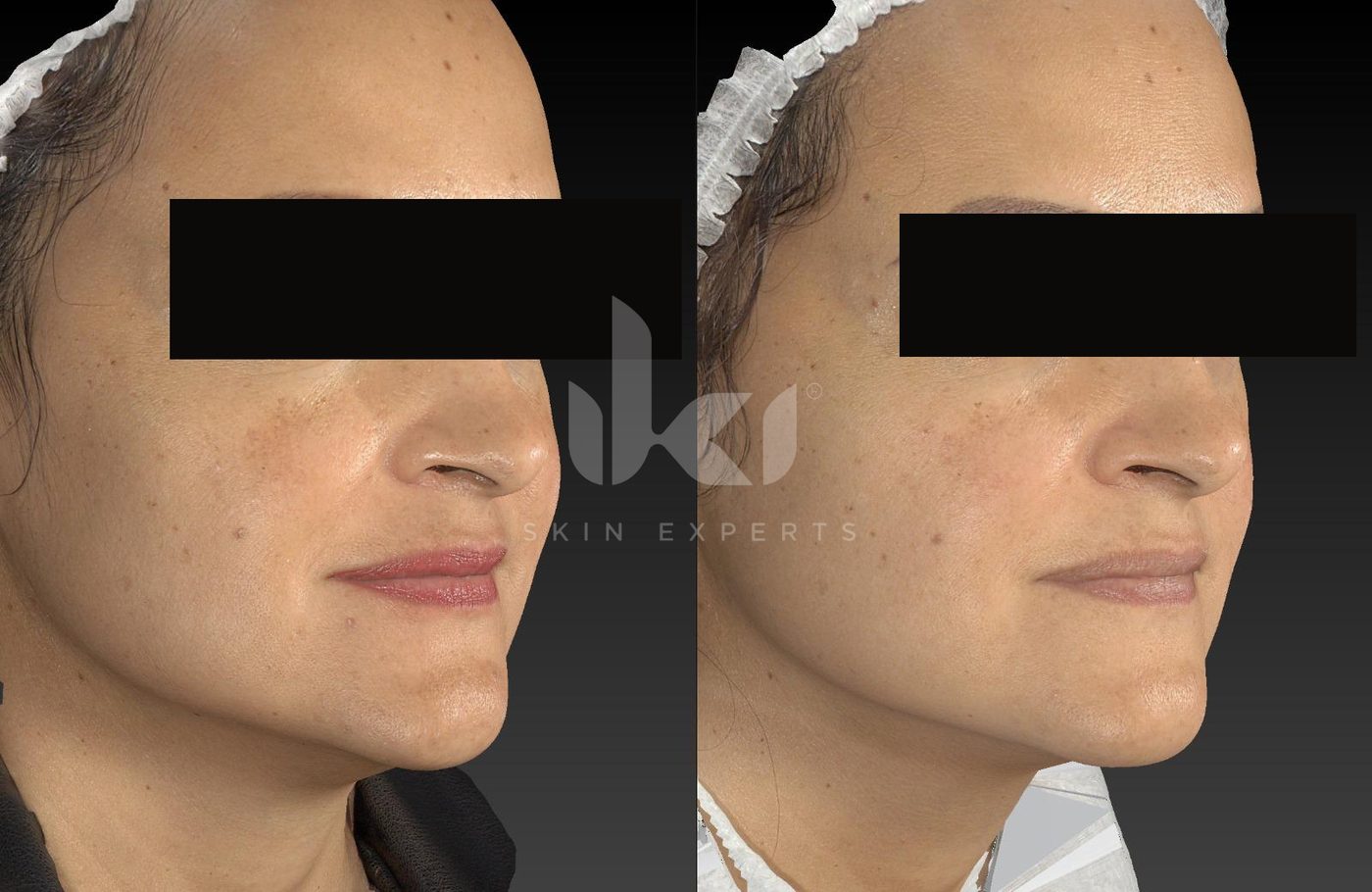
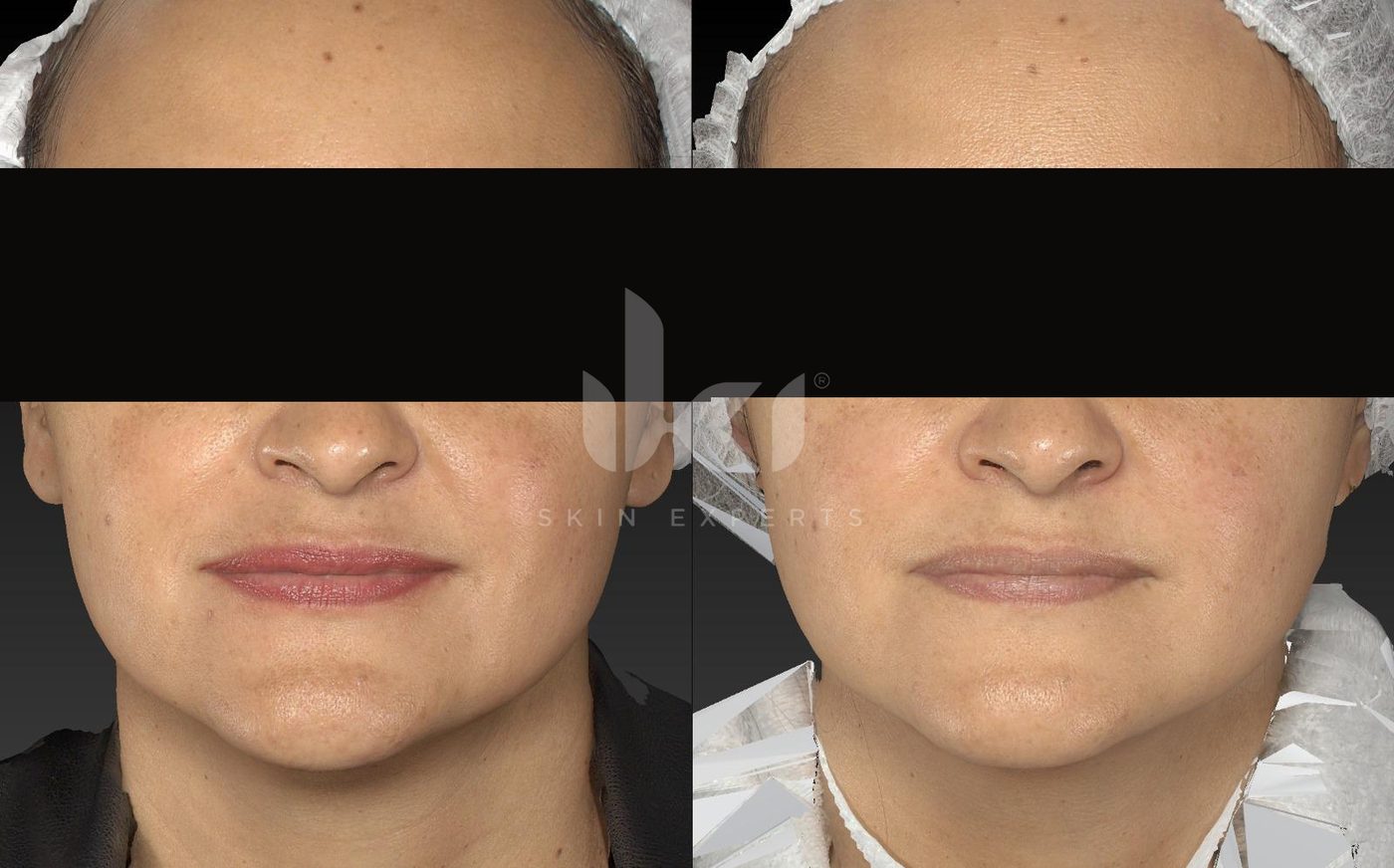
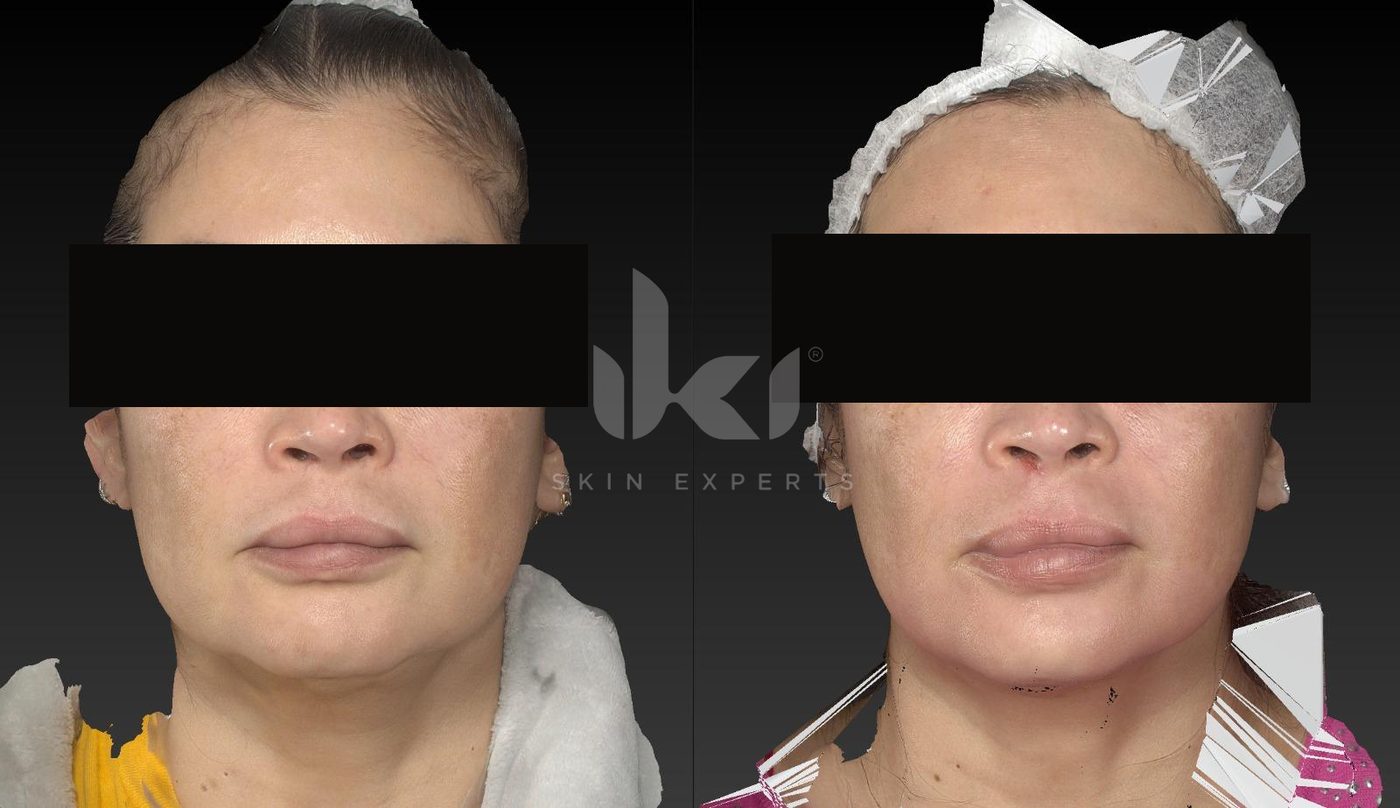
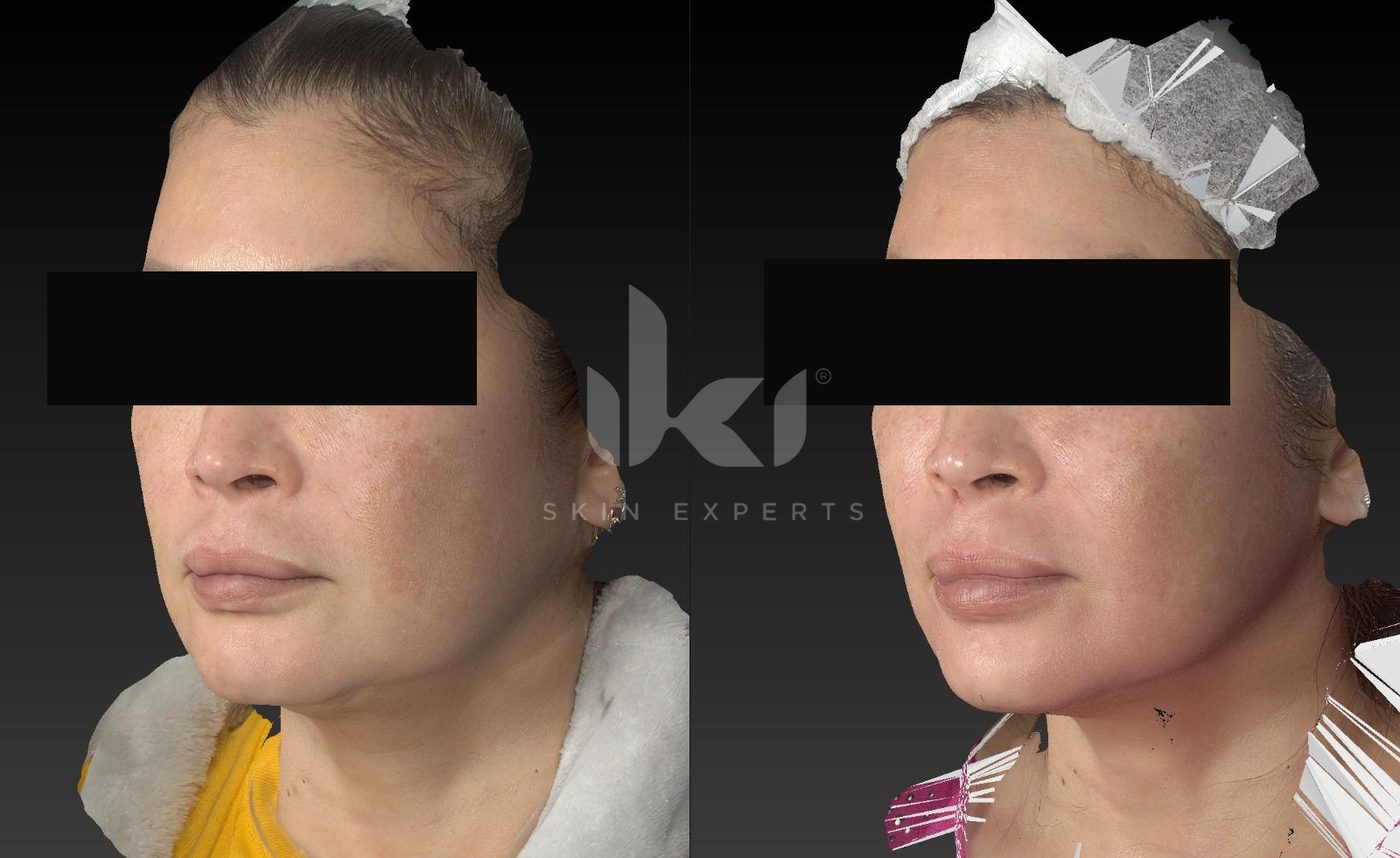
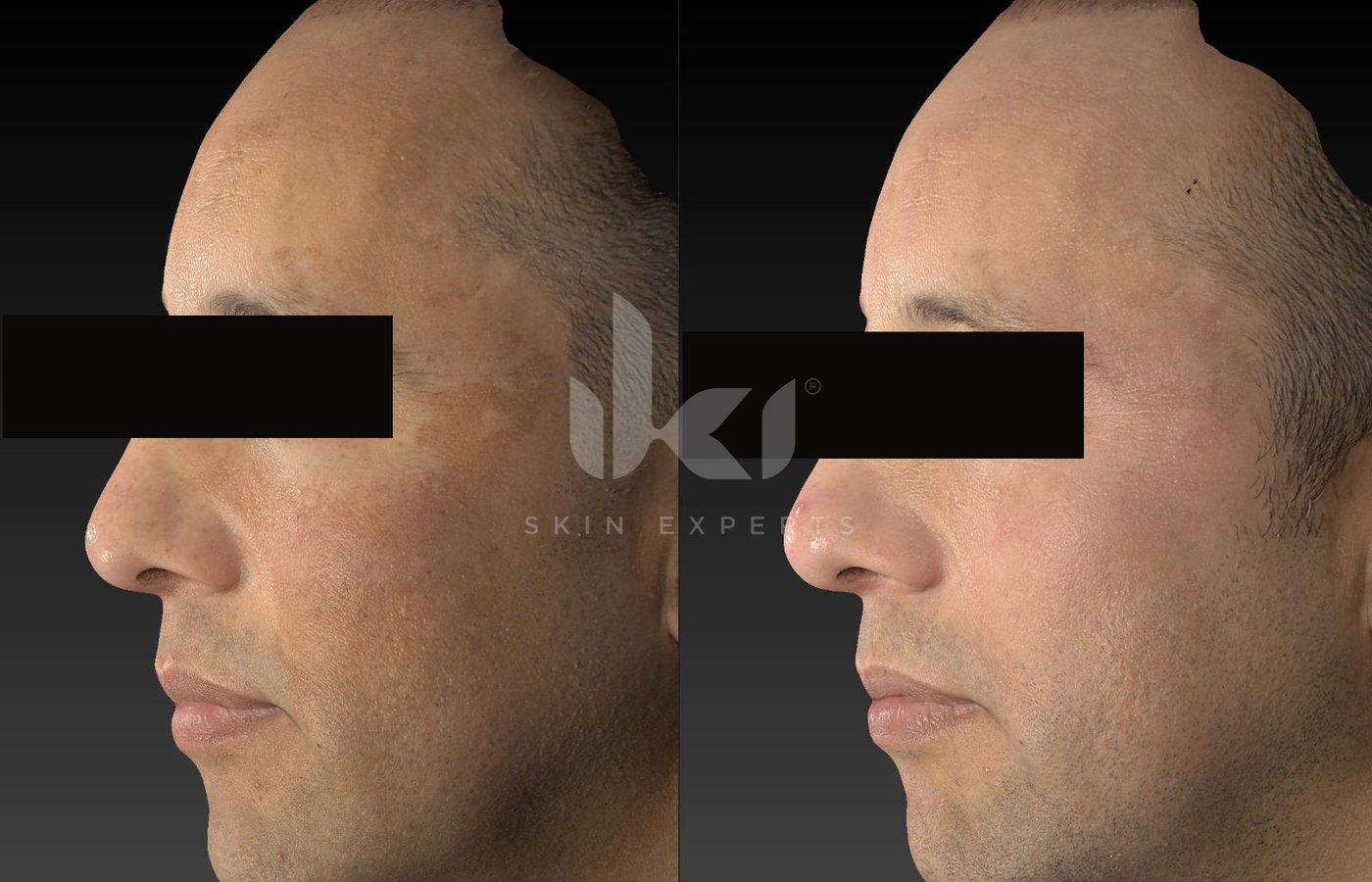
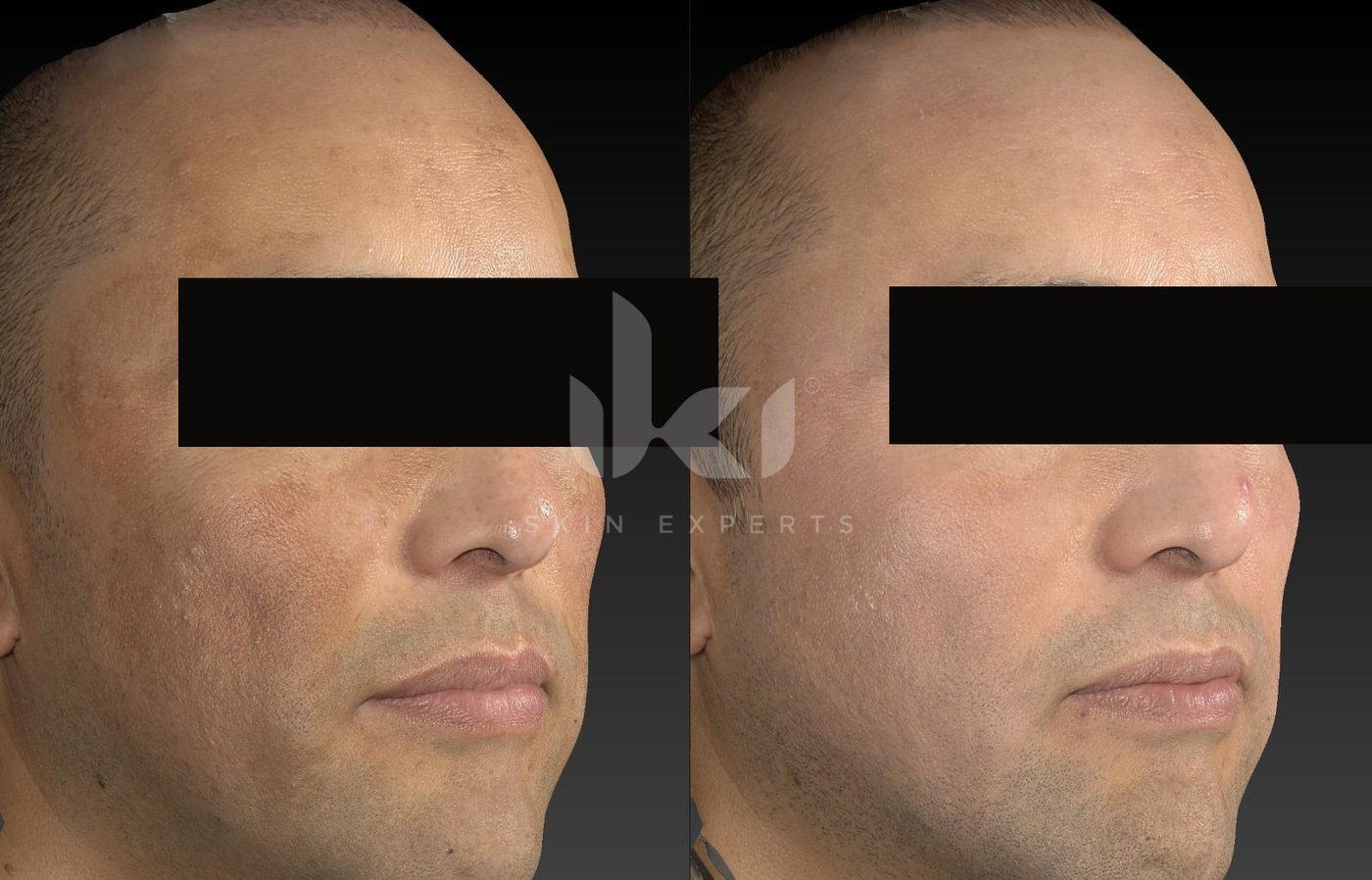
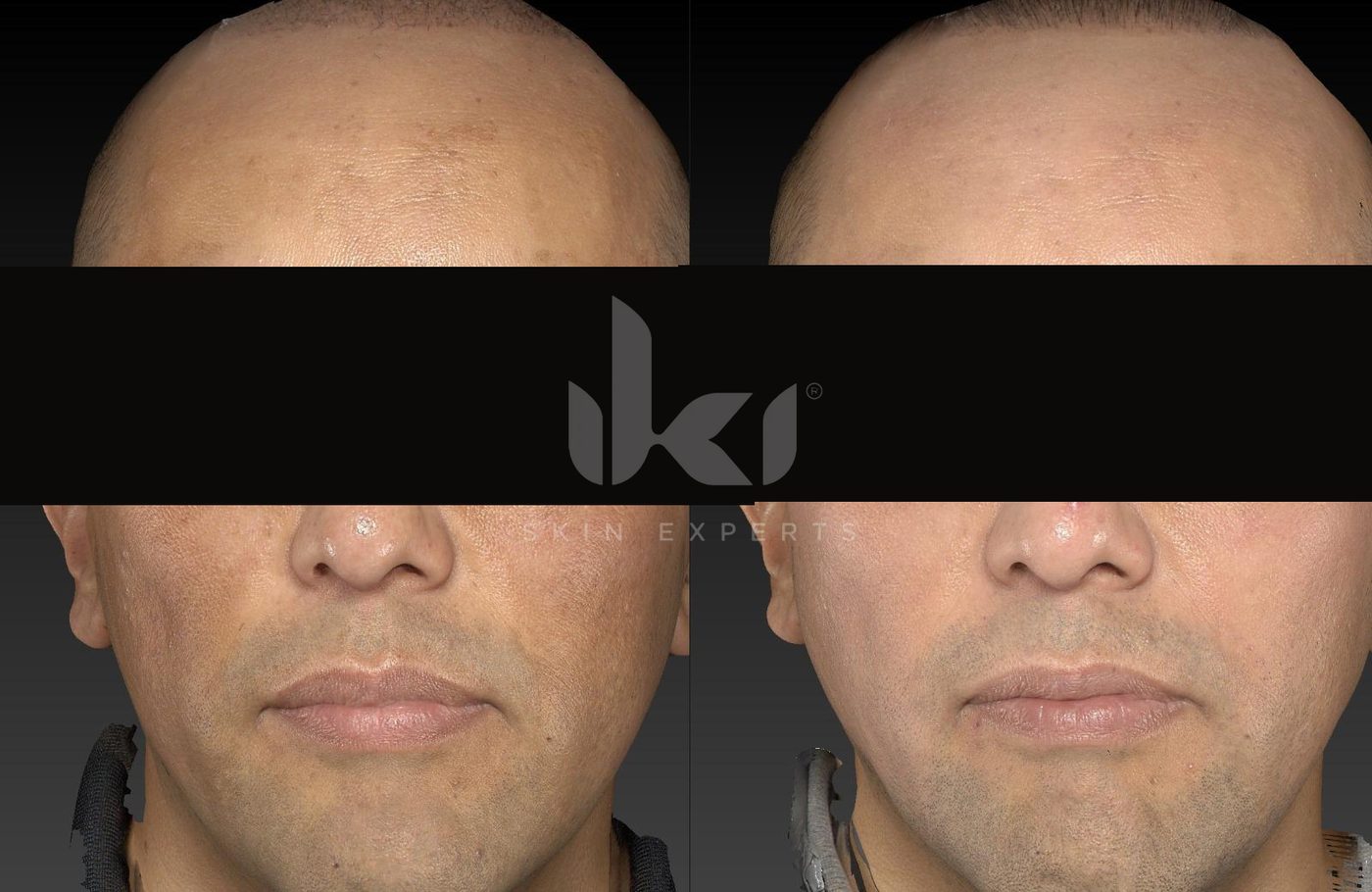
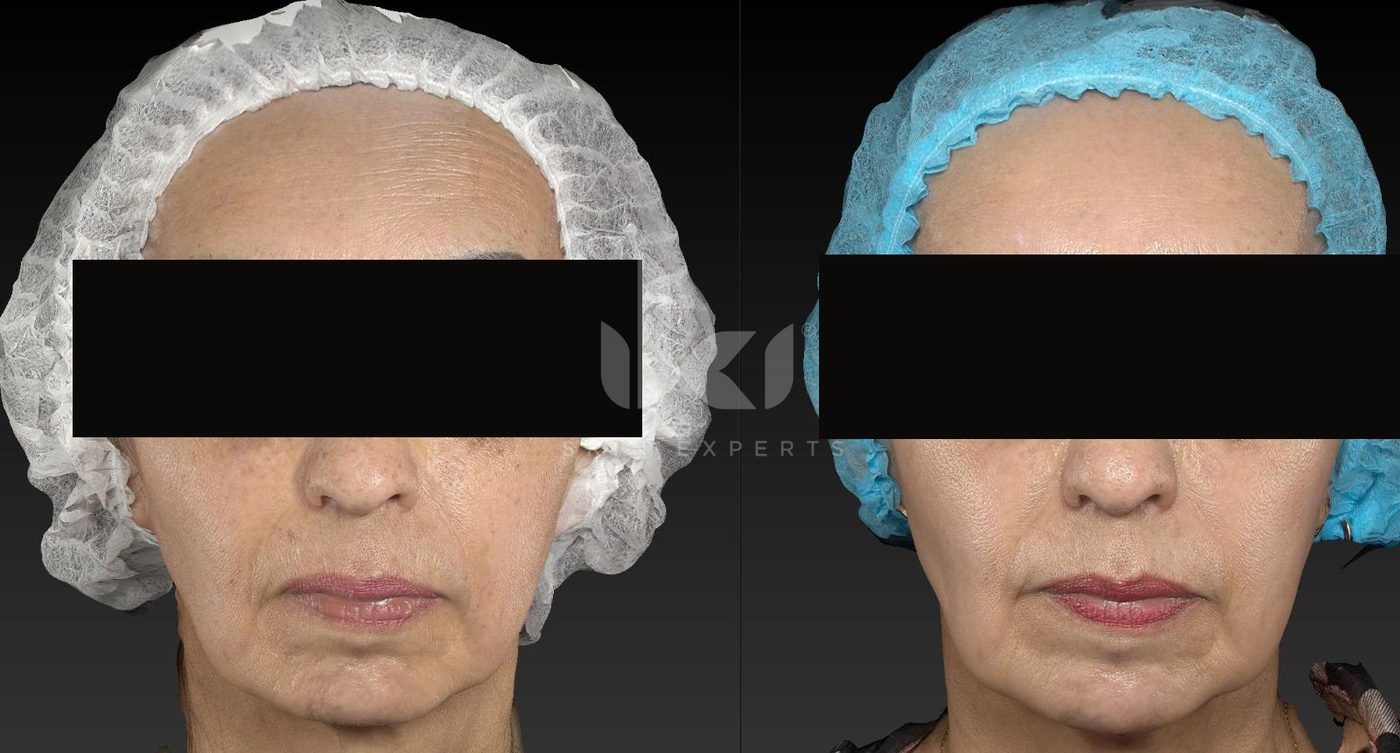
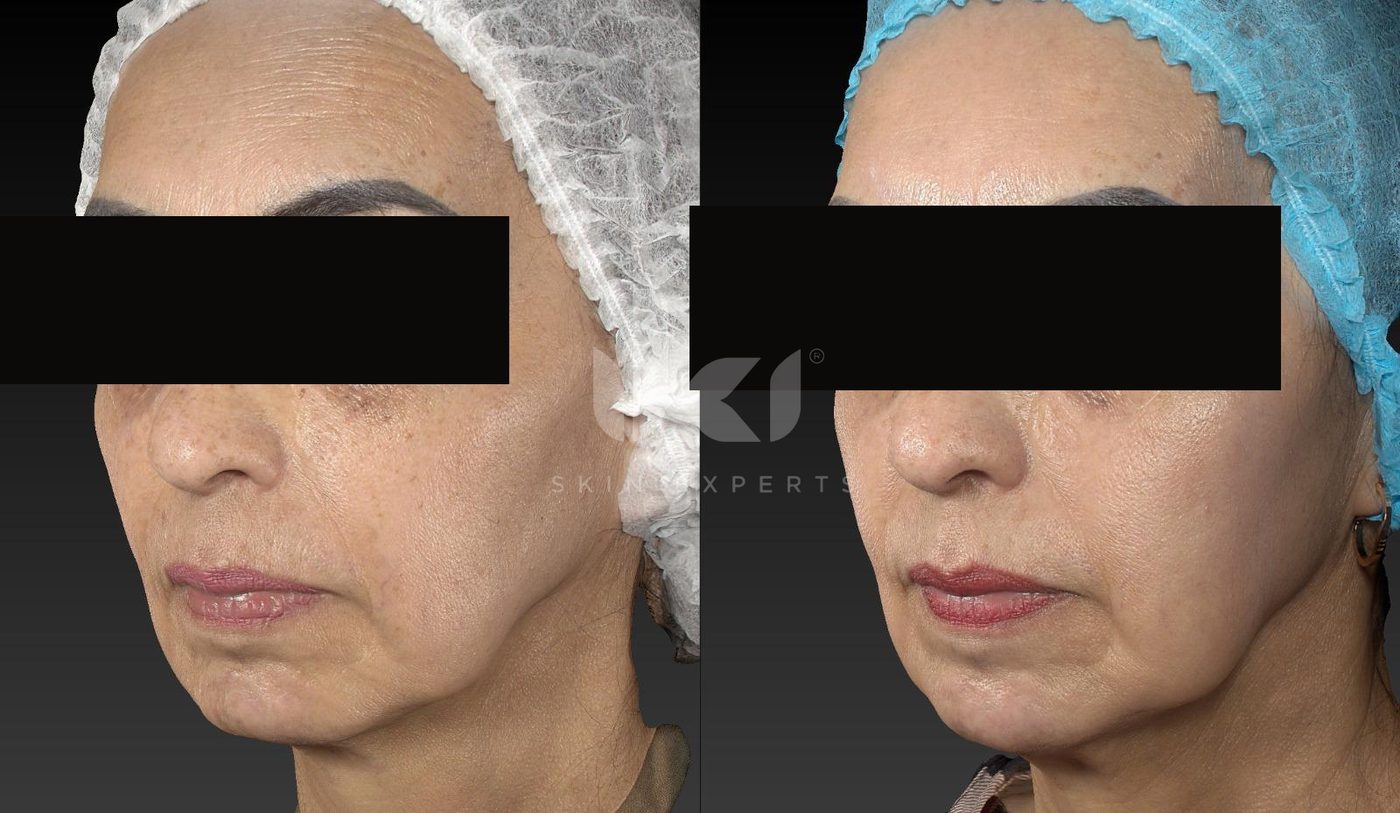
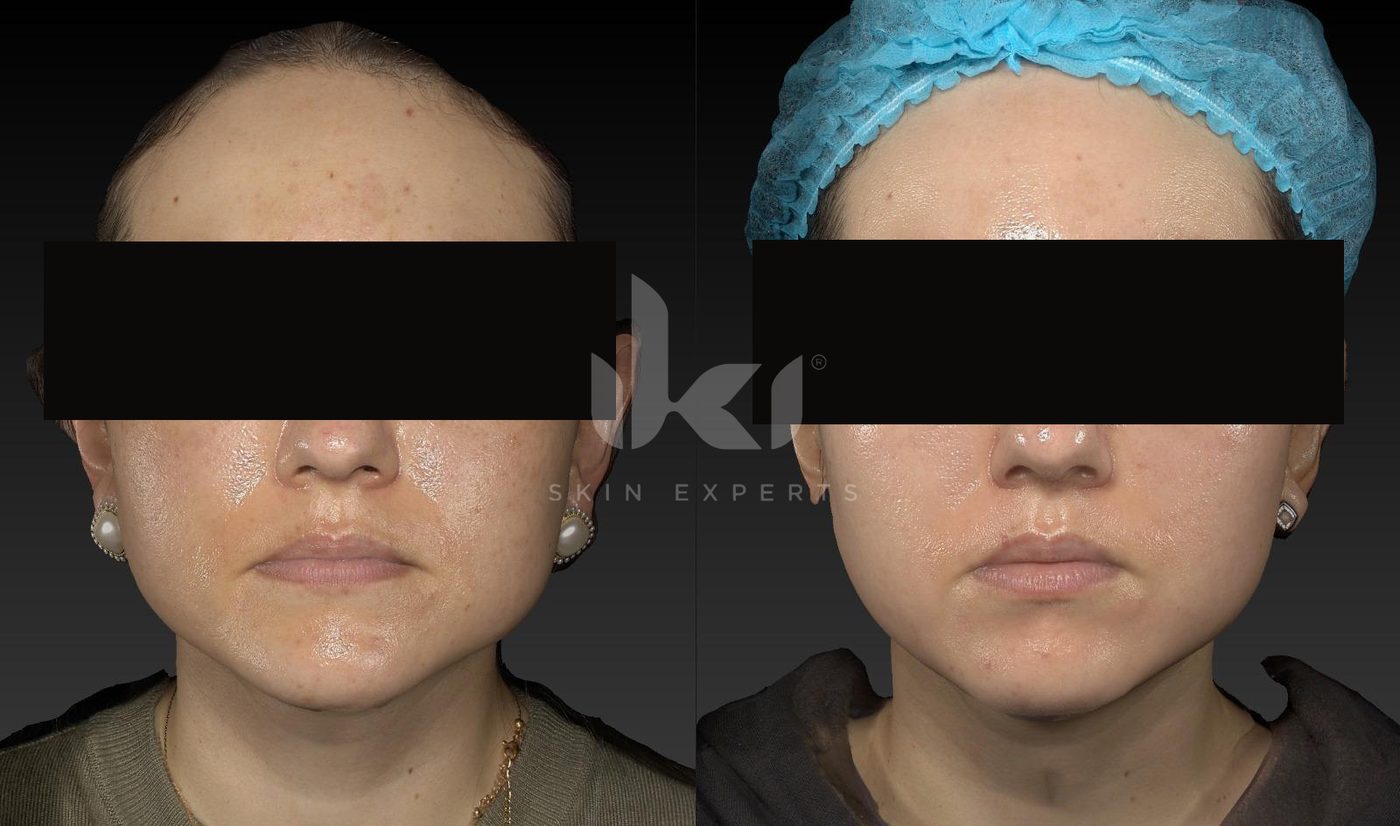
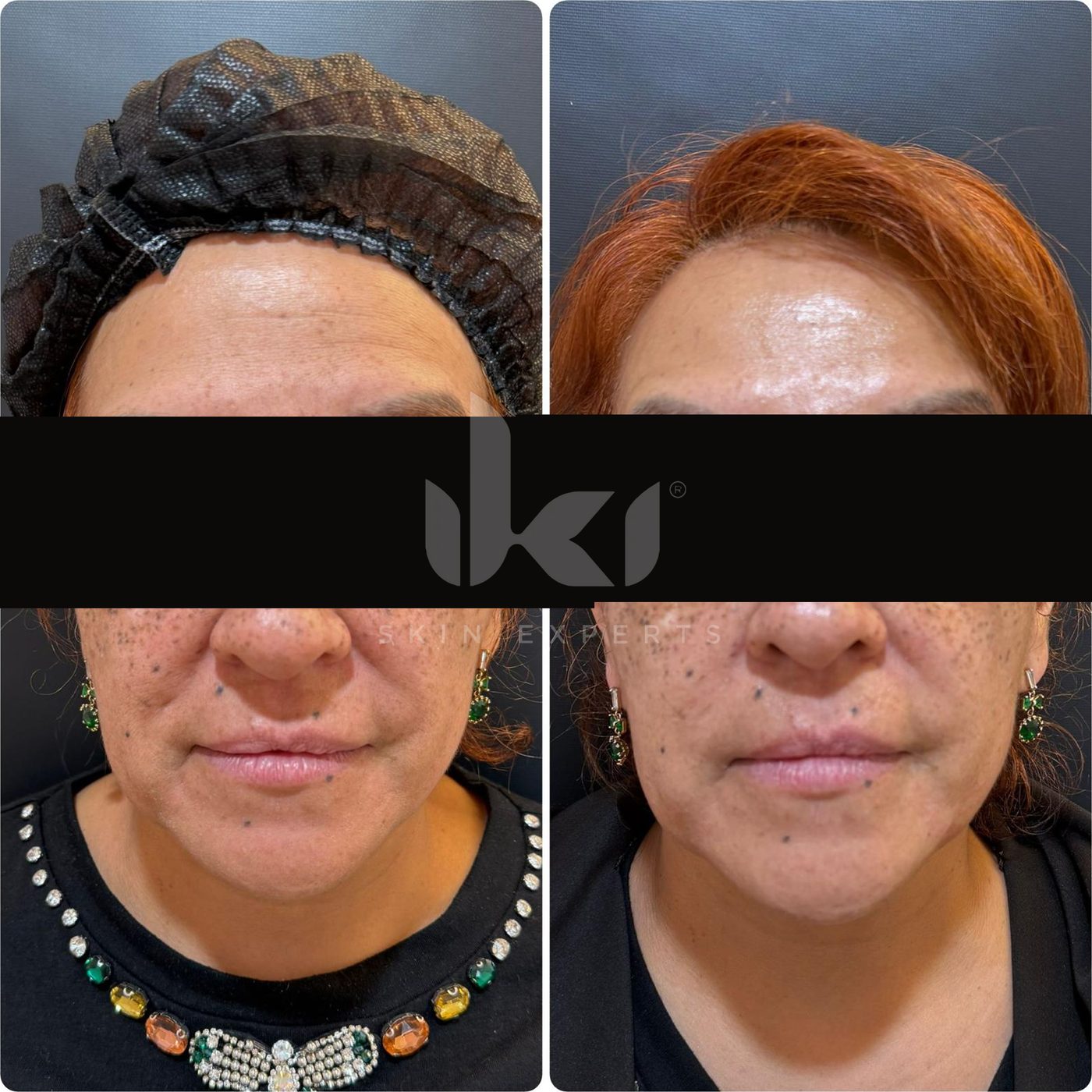
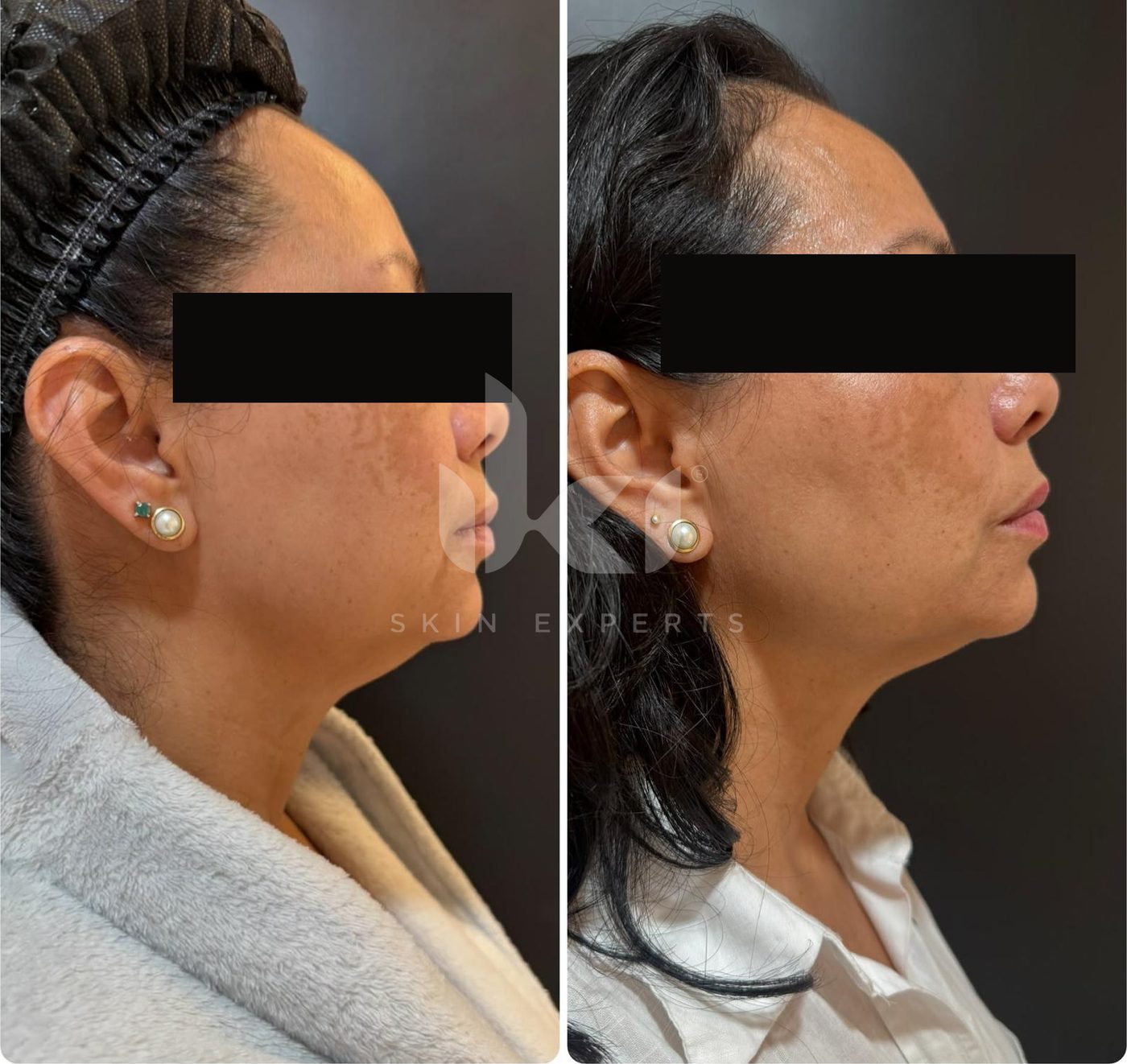
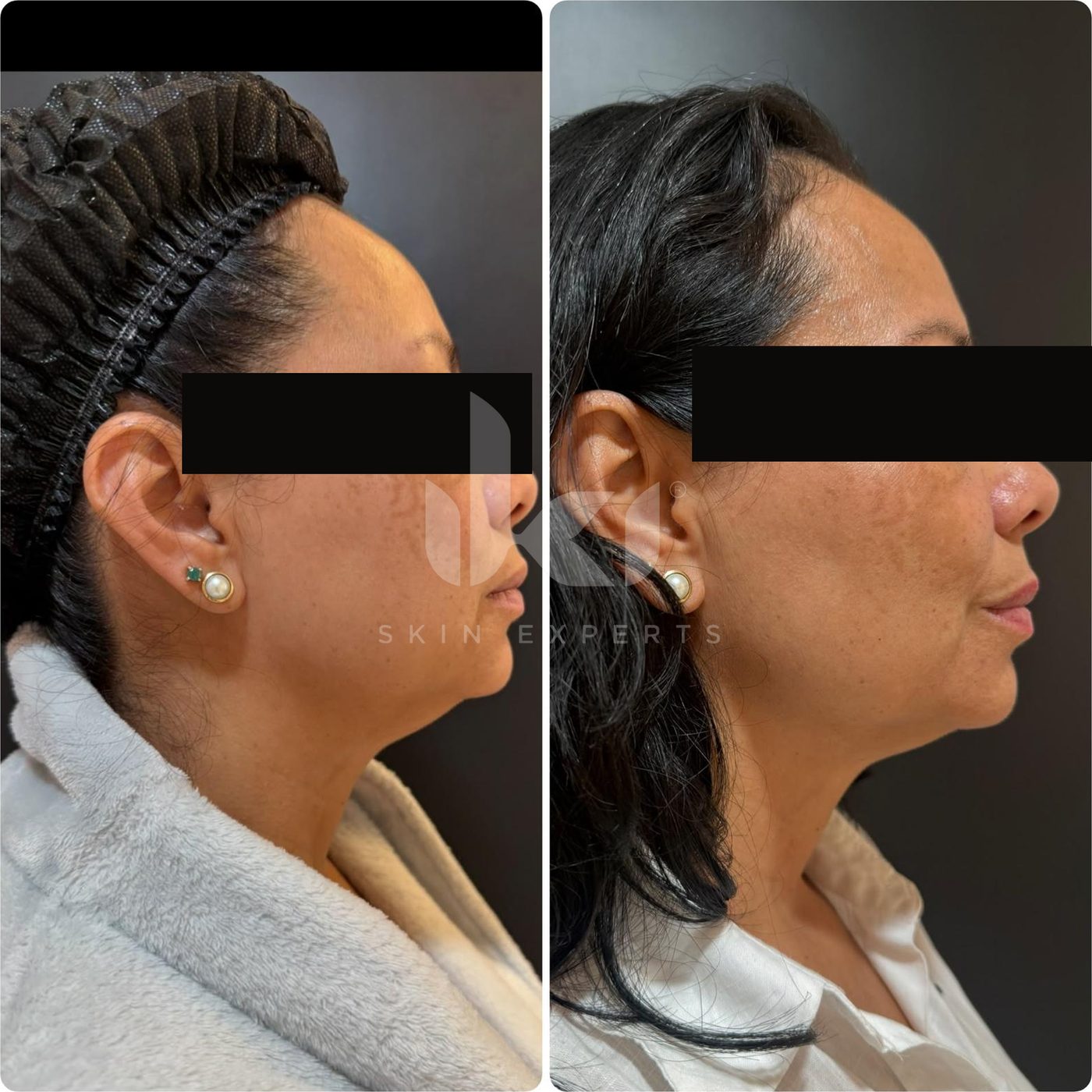
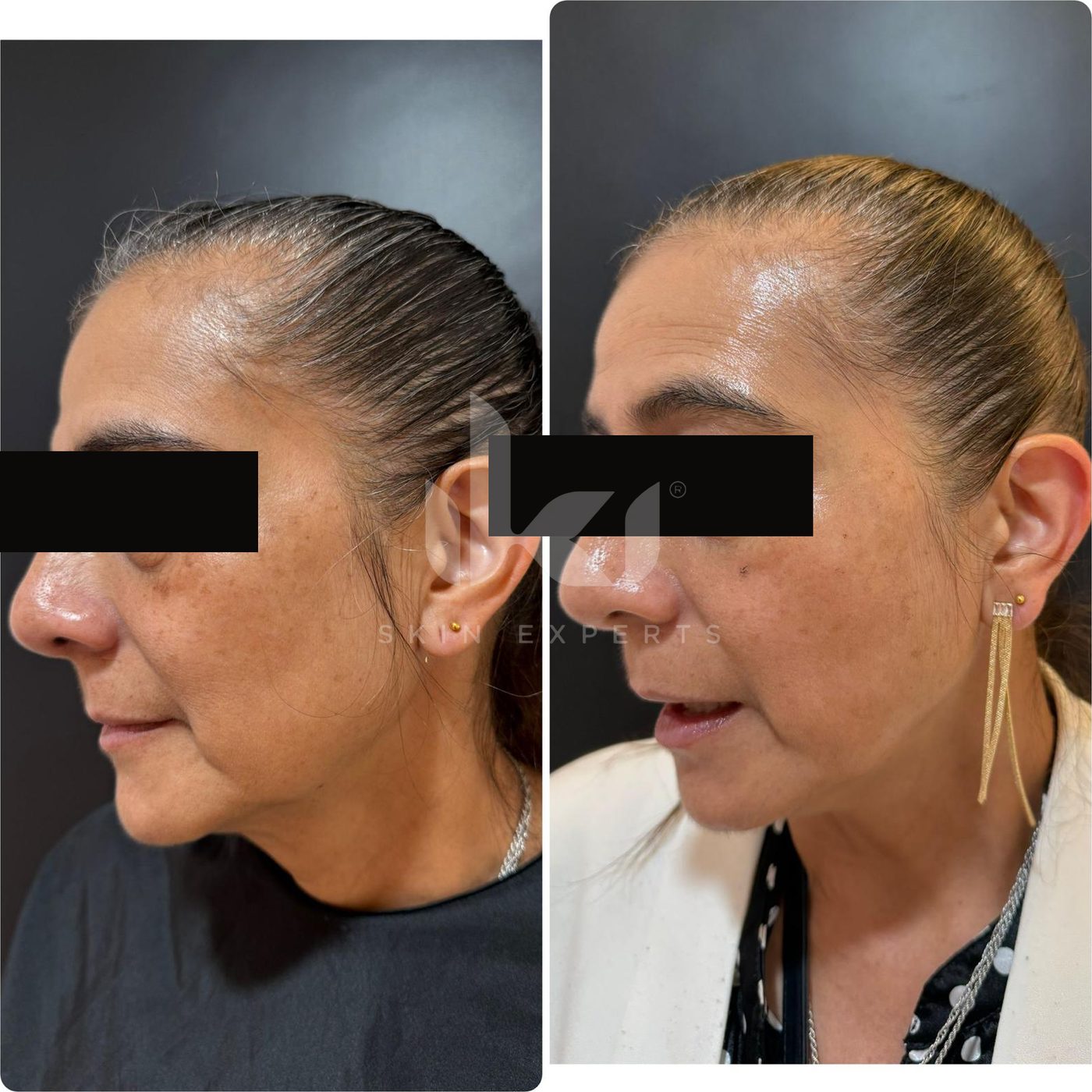
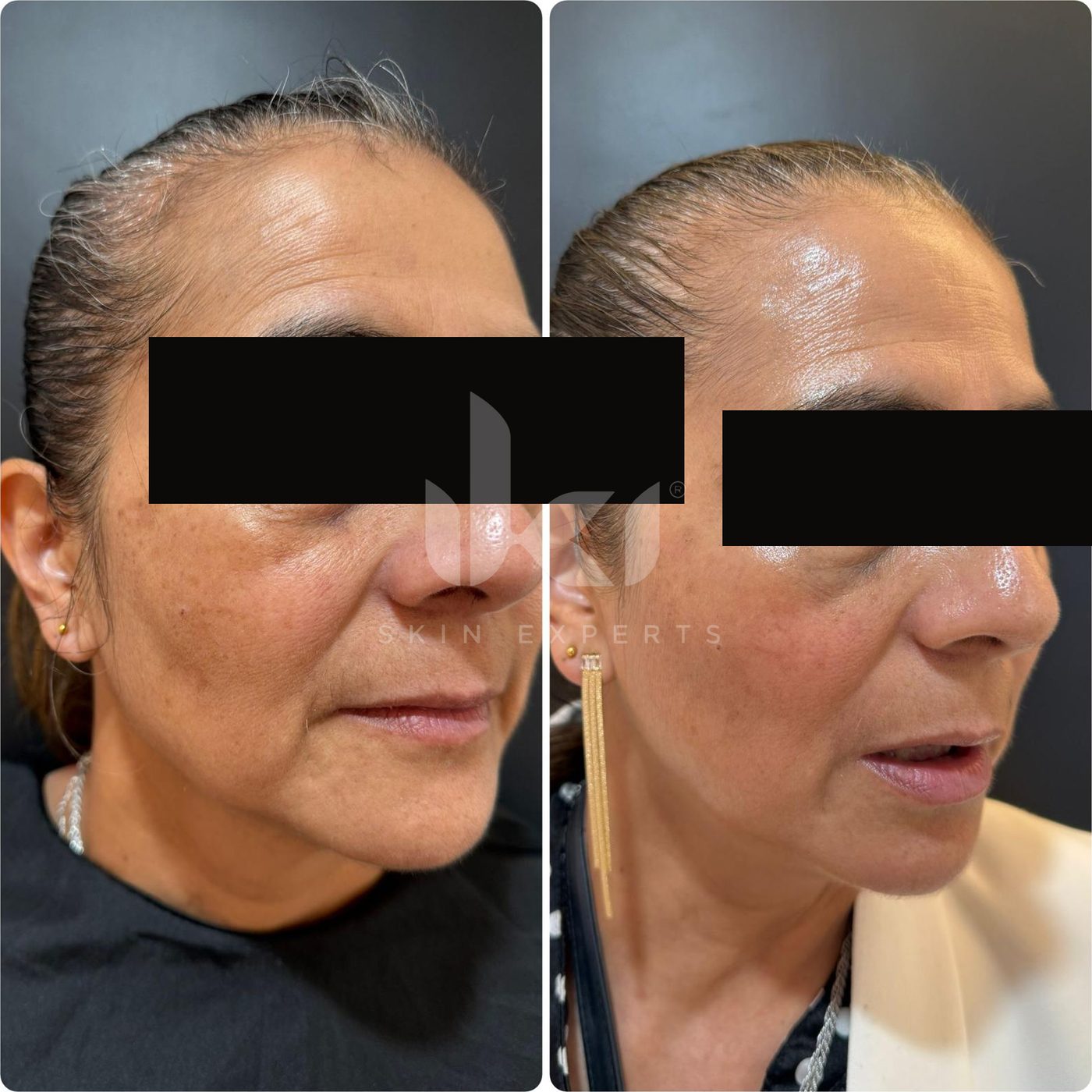
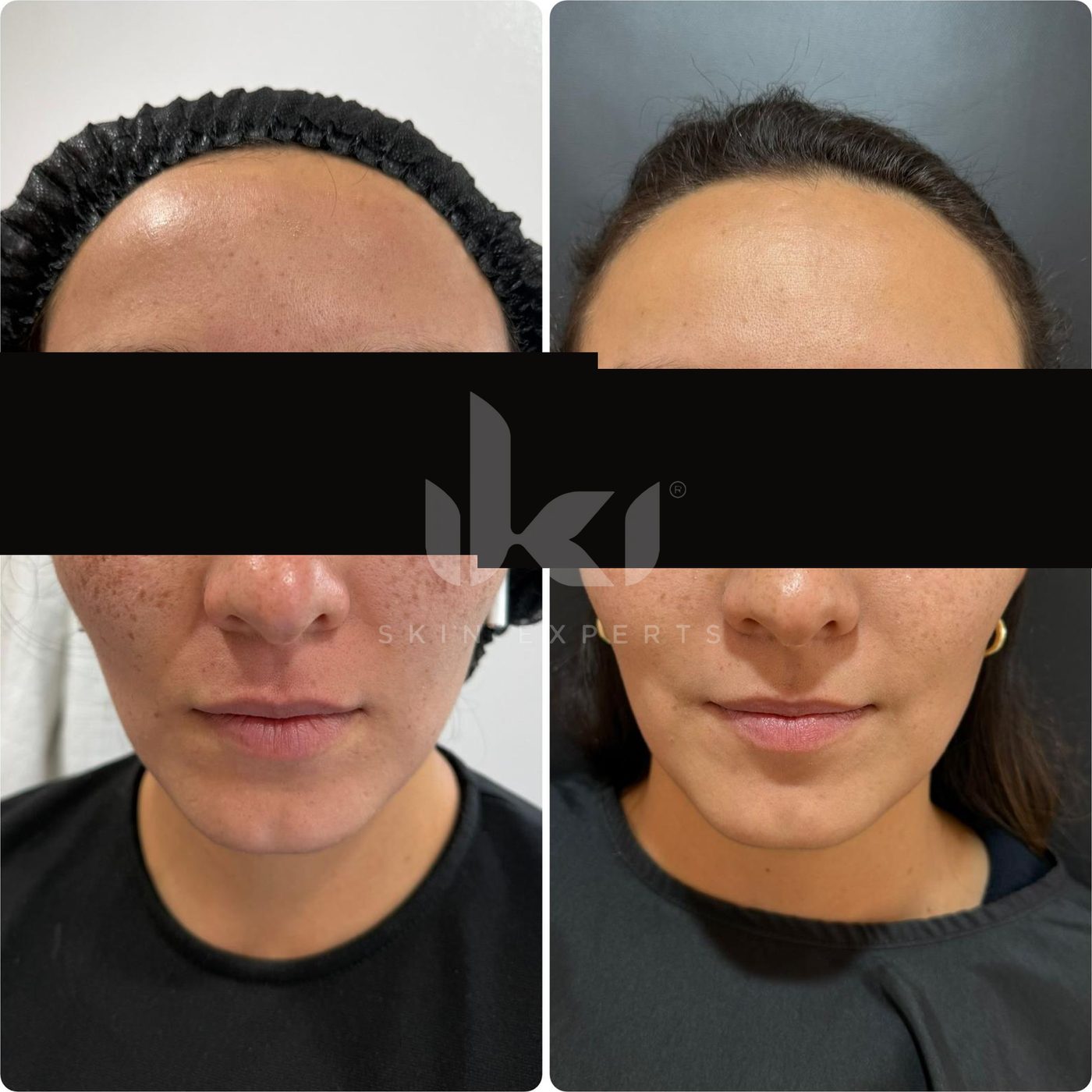
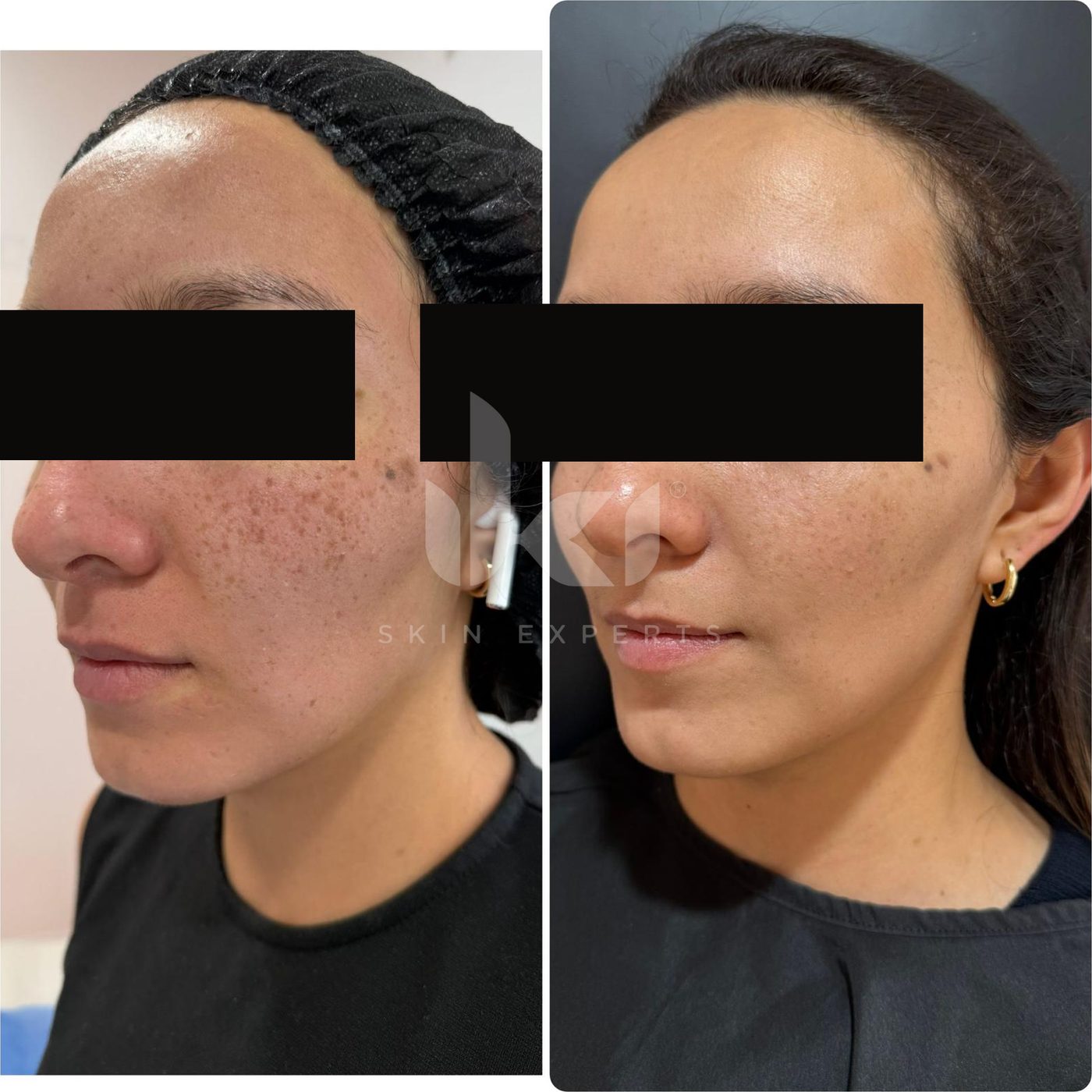
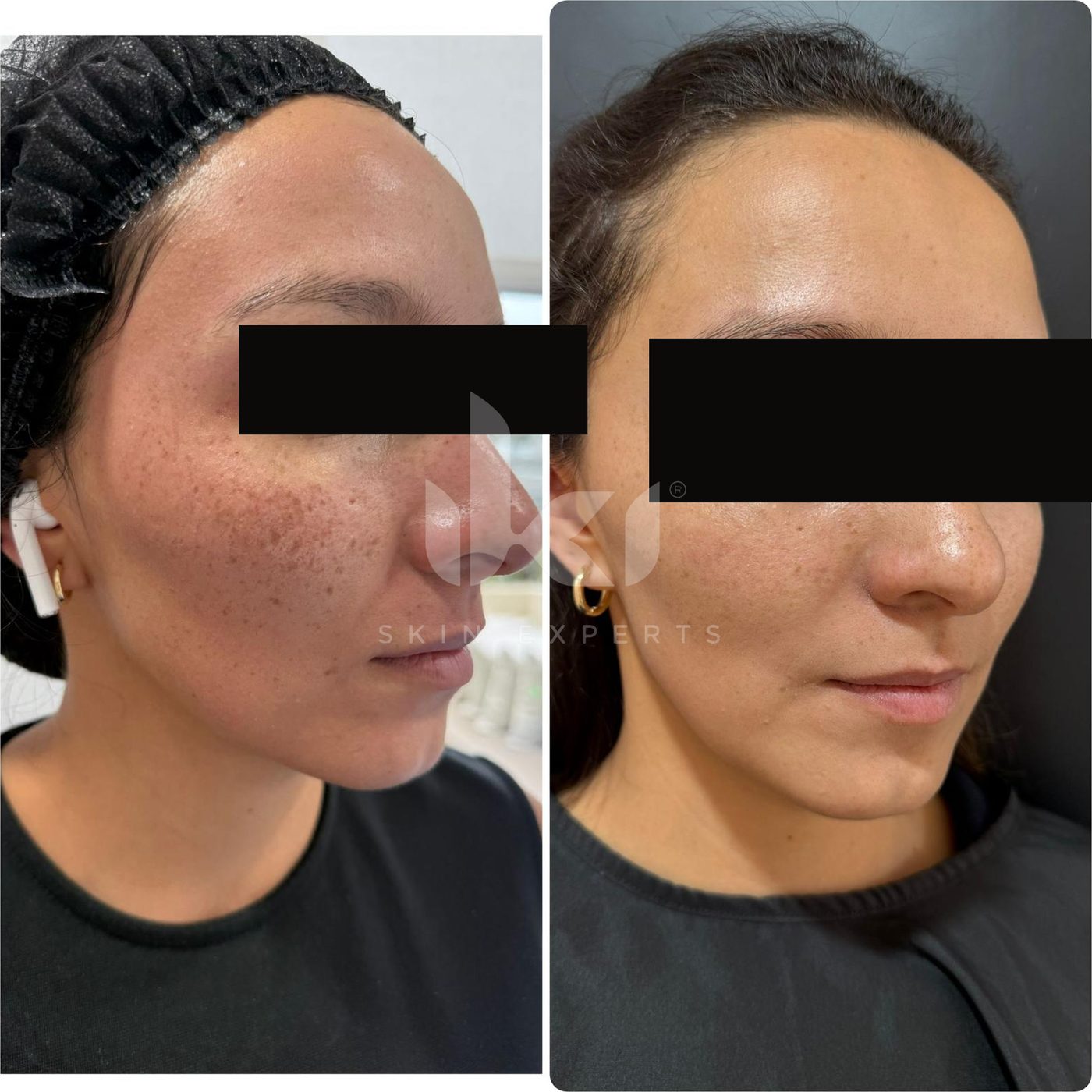
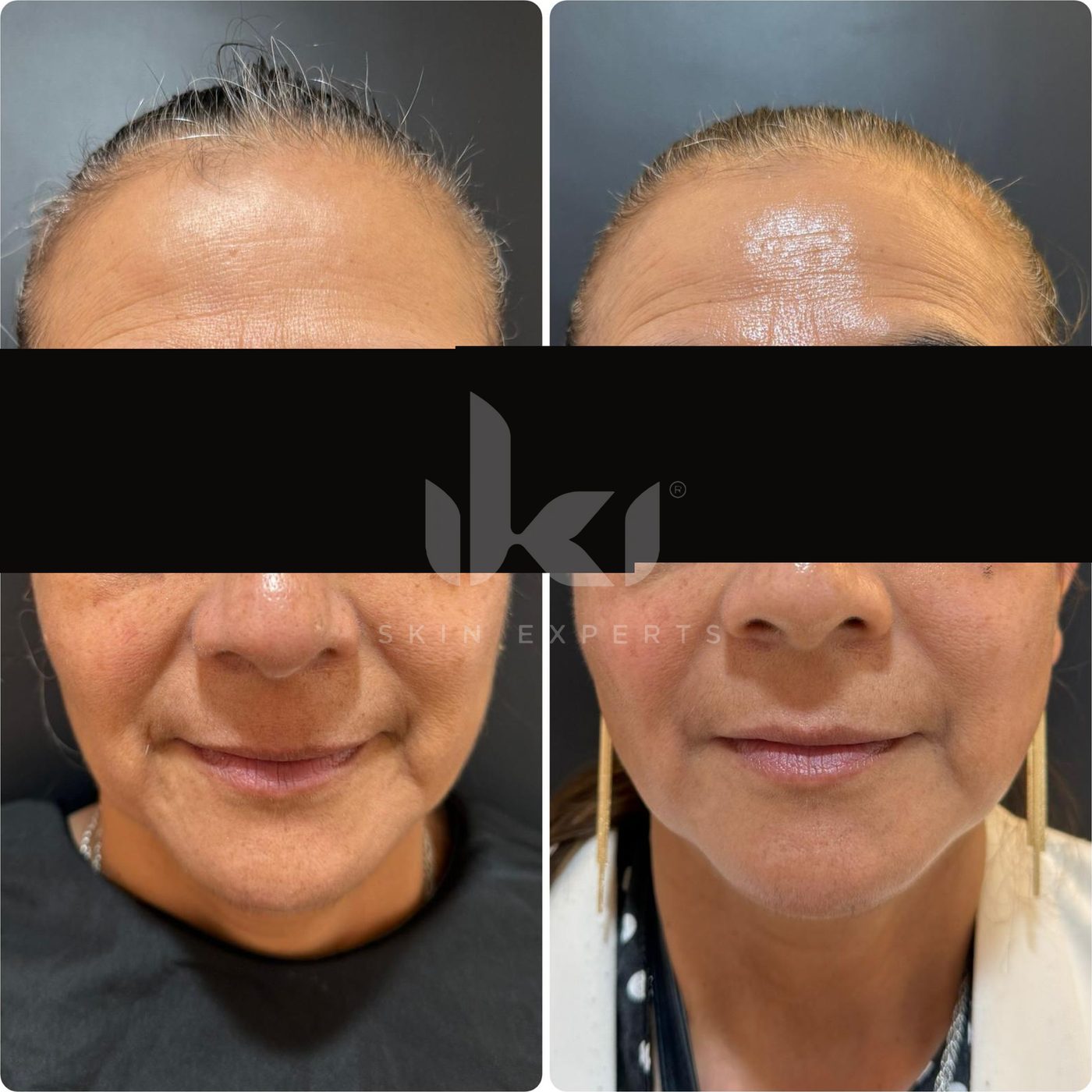
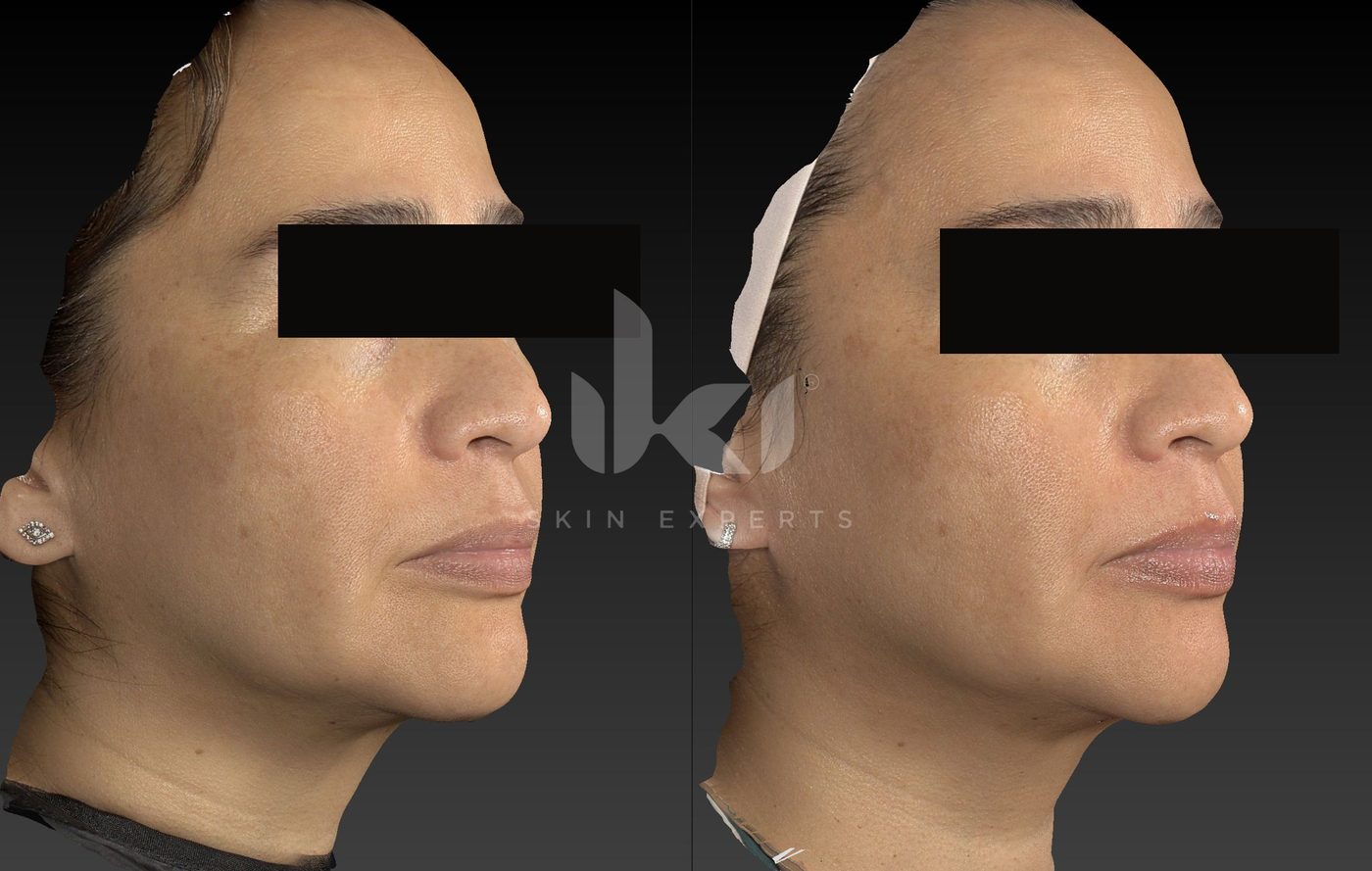
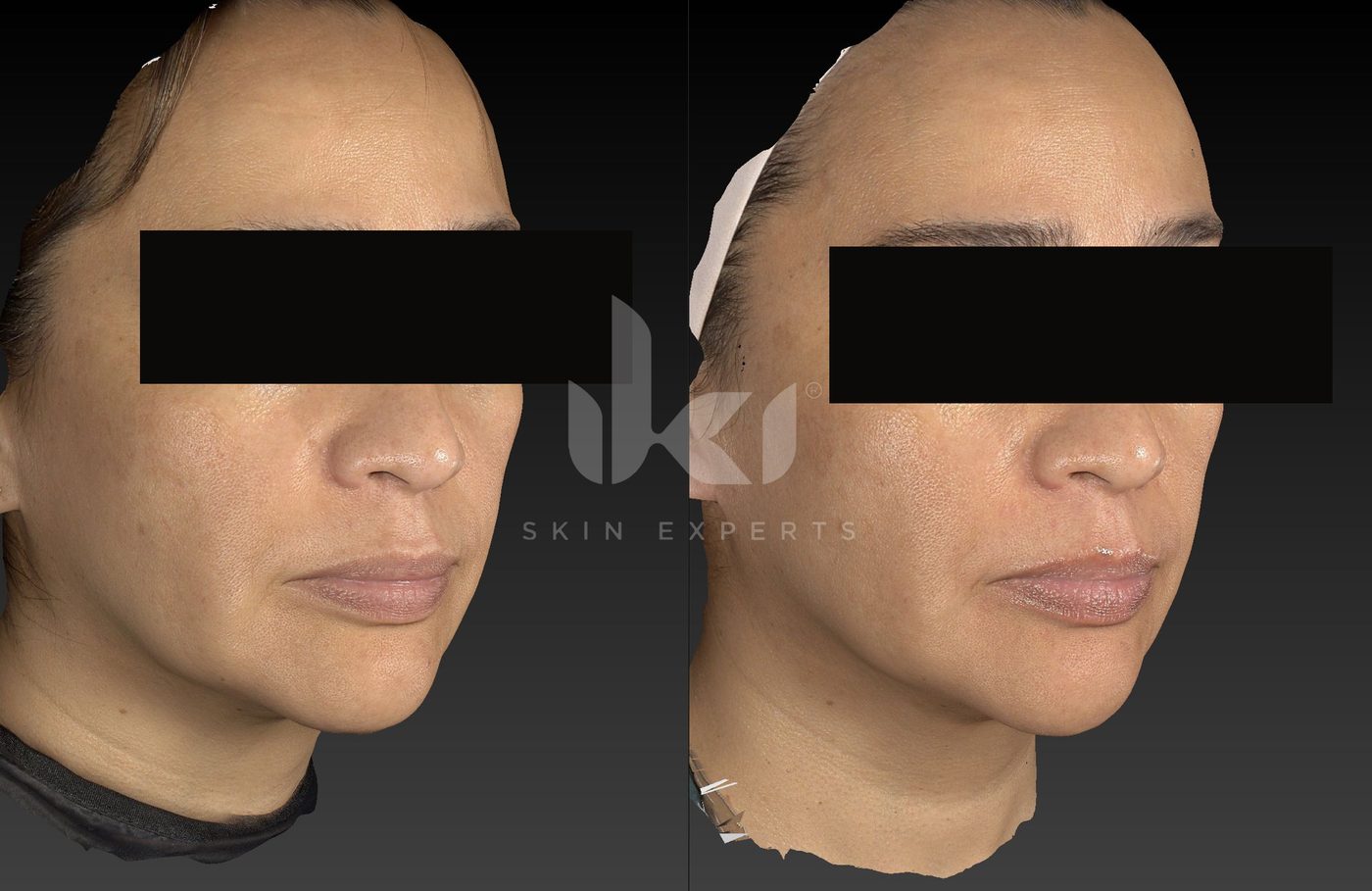
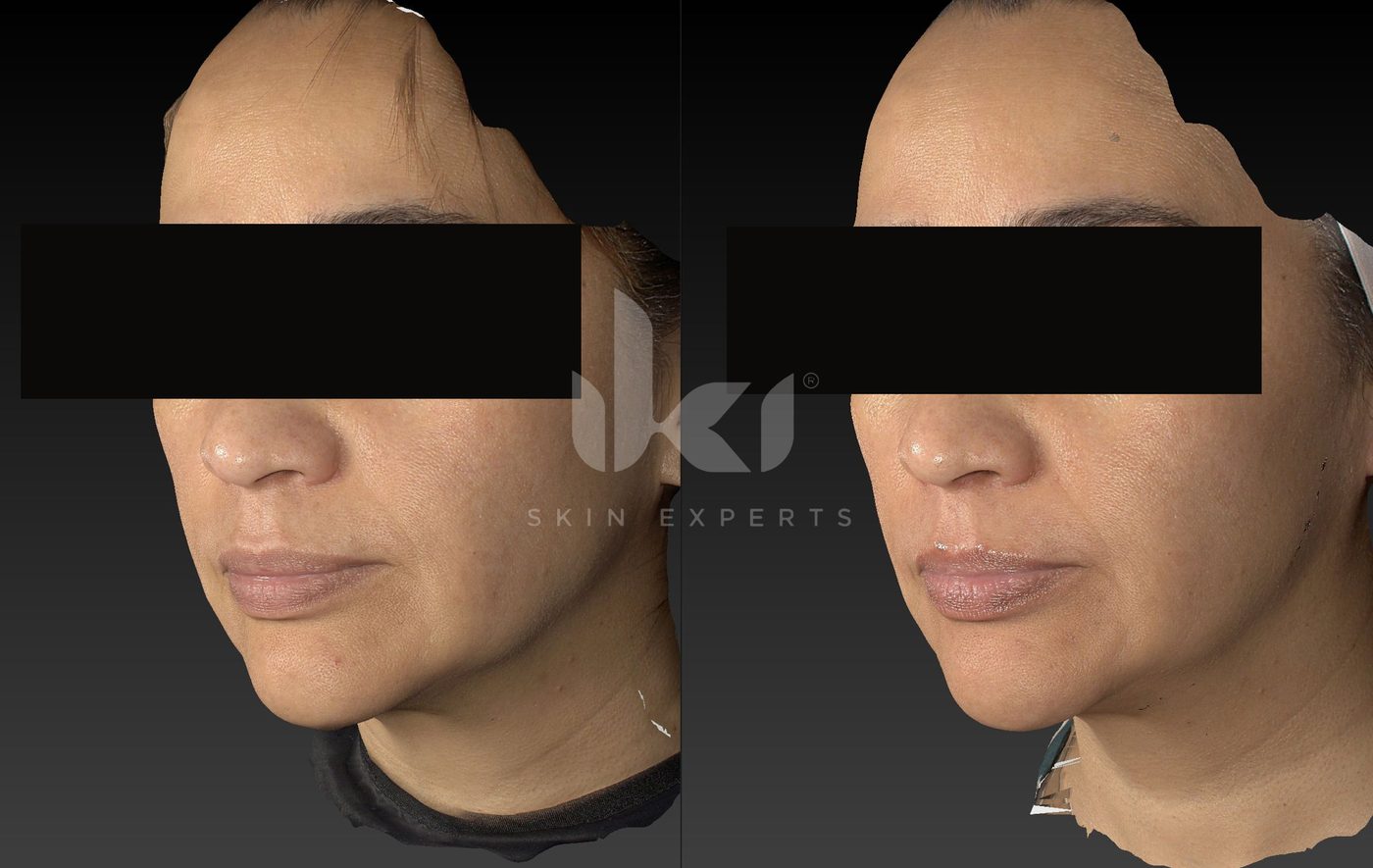
Photos of patients treated at iki, published with their authorization and with their identity covered. Each case had its own diagnosis and plan; the exact treatment may combine several techniques. Results vary from patient to patient. See all cases.
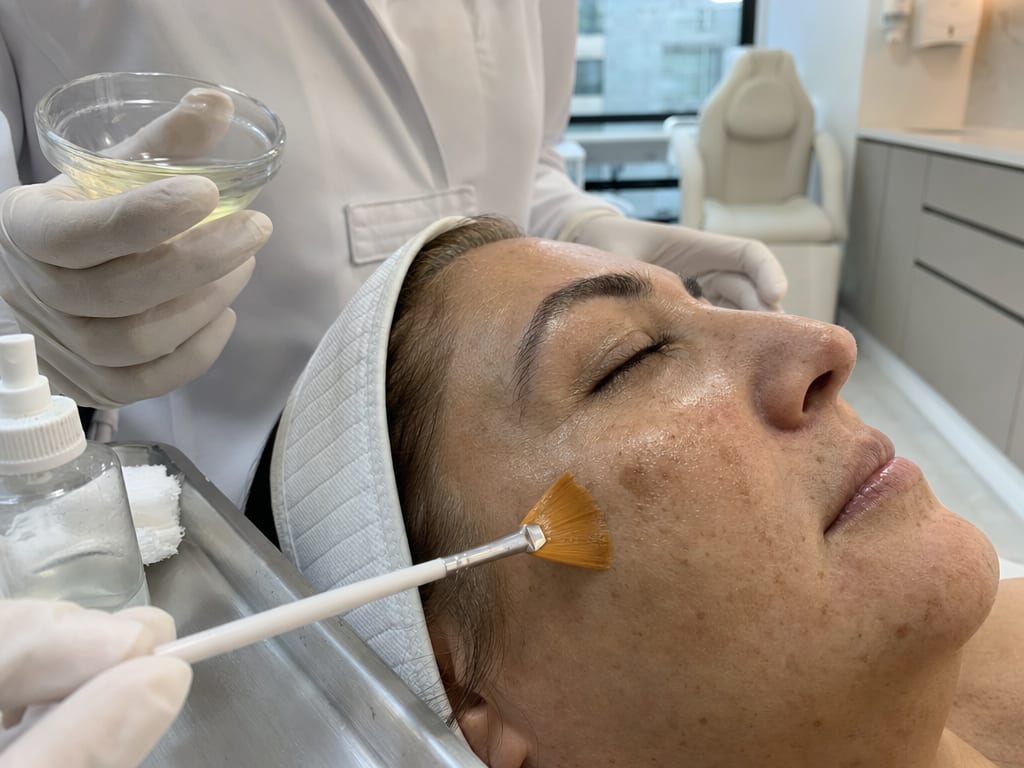
A chemical peel for dark spots is a medical treatment that applies exfoliating solutions to the skin to remove, in a controlled way, the superficial layers that hold excess pigment and to stimulate cell renewal. At iki the type and intensity are chosen for the spot and your skin type. A session takes 30 to 60 minutes and usually causes temporary redness and peeling.
- Session length
- 30–60 min
- Sessions
- Based on diagnosis · step-by-step plan
- Discomfort
- Mild stinging during application
- Recovery
- Redness and peeling · a few days
- Type
- Controlled chemical exfoliation
- Areas
- Face · others after consultation
Who it’s for · and who it isn’t
Indicated when
- Sun spots and dull or uneven tone
- Dark marks left behind by acne
- Superficial melasma, within a plan with sun protection and maintenance
- Uneven texture that comes with the spots
Not the right time if
- Pregnancy or breastfeeding · it’s postponed
- Tanned or sunburned skin, or intense sun exposure planned in the following weeks
- Active cold sores, wounds or dermatitis in the area to be treated
- Recent use of oral isotretinoin · we wait as long as the physician advises
The physician makes the final indication at the consultation. Results vary from patient to patient.
How a chemical peel for dark spots works at iki
Every peel is chosen for a specific skin. The same acid doesn’t work the same way on every spot or every skin type.
Consultation and choosing the peel
We identify the type of spot, your skin type (Fitzpatrick) and how sensitive your skin is. That determines the solution, the concentration and the intensity of the session.
Prep
Depending on the case, you may follow a prep routine at home. On the day of the session, the skin is cleansed and degreased so the solution works evenly.
Controlled application
The solution is applied area by area while the physician watches how your skin reacts. Mild stinging is normal and is controlled through contact time.
Neutralizing and close
The product is removed or neutralized depending on the type of peel, the skin is calmed and sunscreen goes on. Aftercare for the following days is given in writing.
What it offers
Lightens superficial pigment
It removes layers with excess melanin and supports a more orderly renewal of the skin.
Improves texture
By stimulating cell renewal, the skin feels smoother and tone looks more even.
Adjustable intensity
It goes from gentle to deeper depending on the skin · without forcing results in a single session.
Part of a plan
It’s combined with mesotherapy, laser or depigmenting protocols when the diagnosis calls for it.
Technology with an indication
Medical-grade chemical peels
There’s no machine · there’s a clinical decision. We work with chemical solutions of different concentrations and depths, and the physician chooses which one to use for the spot and the skin. iki’s menu also includes depigmenting protocols such as Cosmelan and Dermamelan, indicated in specific cases after the consultation.
Results and aftercare
Once the peeling is over, skin usually looks more even and spots show less contrast. The change is cumulative · it builds session by session. Sun spots usually respond better than melasma, which tends to come back and needs maintenance and constant sun protection. Without sun control, the result doesn’t hold.
Aftercare after the session
- Don’t pull off peeling skin · let it shed on its own
- Daily sunscreen and no direct sun while the peeling lasts
- The gentle cleanser and moisturizer your physician recommends
- Stop acids, retinoids and at-home exfoliants until your physician gives the OK
- Avoid saunas, pools and intense exercise for the first few days
Results vary from patient to patient.
Pairs well with
 Dark spots and pigmentation
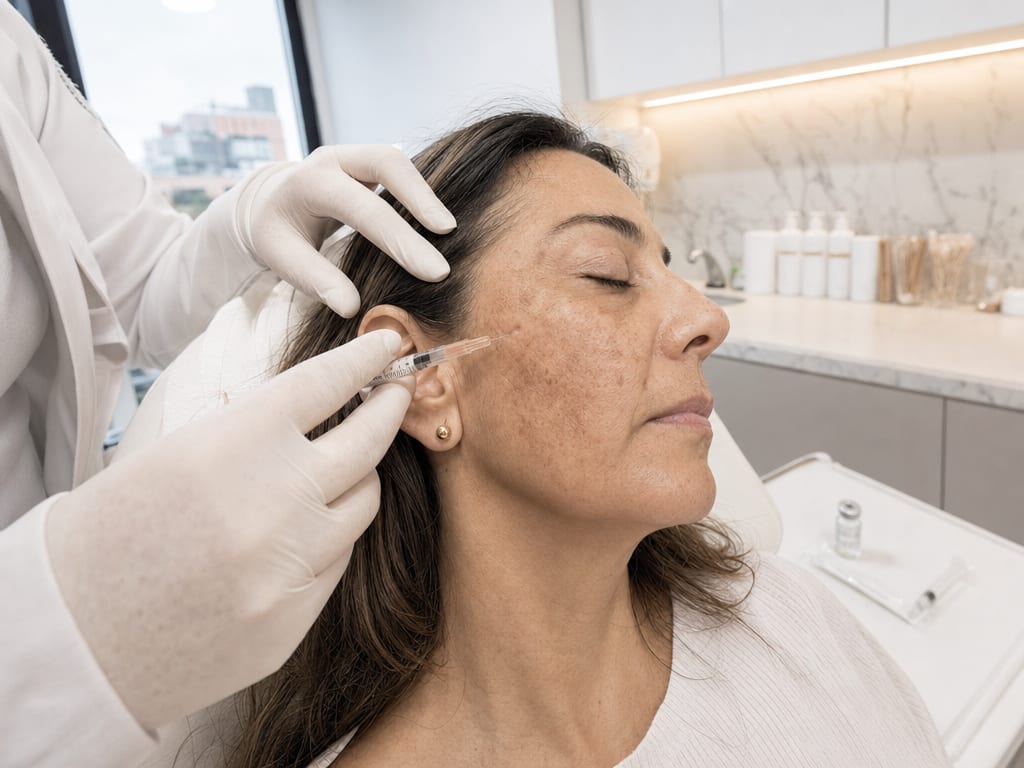
Mesotherapy for dark spots
Mesotherapy for dark spots delivers depigmenting actives straight into the skin through shallow micro-injections. It’s one tool…
See treatment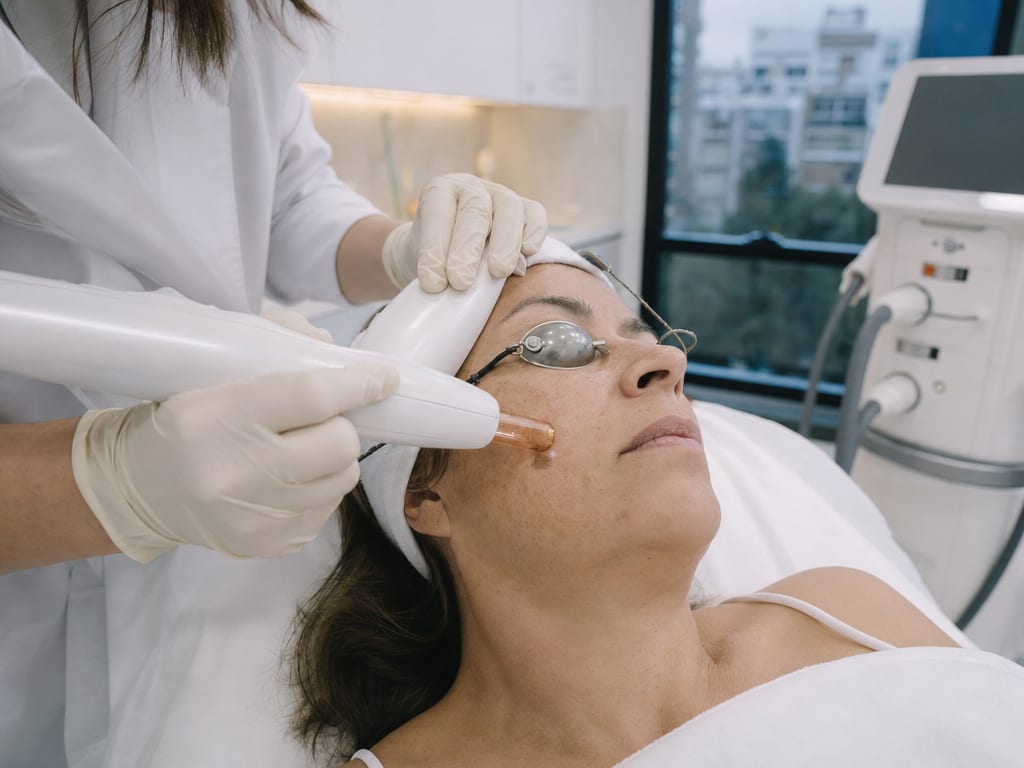 Dark spots and pigmentation
Q-Switched Nd:YAG for dark spots
The Stellar M22’s Q-Switched Nd:YAG fires very short pulses of light that break pigment into particles your body clears little by…
See treatmentFrequently asked questions
Does a chemical peel work for every skin type?
It can be adapted to different skin types, but not every peel suits every skin. On darker or sensitive skin we choose gentler acids and concentrations so we don’t trigger new spots. That’s why we do a consultation first: to decide whether it’s the right treatment and at what intensity.
How long is a session?
Between 30 and 60 minutes, depending on the intensity of the peel and what your skin needs. That includes cleansing, applying the solution area by area, neutralizing when needed, and final aftercare. The consultation is a separate appointment, and that’s where the full plan is defined.
How many sessions do I need?
It varies with the condition of your skin and the goal. A single session is rarely enough for established spots. The physician sets the number of sessions and the interval between them, and adjusts it based on how your skin responds at each follow-up. Maintenance comes after.
What are the side effects?
The usual ones are redness, peeling and a mild stinging sensation, which typically go away within a few days. Less often, a new spot can appear after the inflammation, especially with sun exposure. That’s why aftercare is part of the treatment, not a detail.
Does a chemical peel get rid of melasma for good?
No. Melasma is controlled, not cured. A peel can lighten it, but it tends to return with sun, heat and hormonal changes. The realistic plan combines in-clinic treatment, a routine at home, daily sunscreen and long-term maintenance sessions.
Can I go to work the next day?
With most superficial peels, yes. Your skin may look pink and then peel for several days. If you have an important event or a trip with sun coming up, it’s best to schedule the session with some margin. At the consultation we’ll tell you how much your skin usually peels with the peel we recommend.
Can I have it during pregnancy or breastfeeding?
We prefer to postpone it. During pregnancy the skin tends to develop more spots because of hormonal changes, and several actives aren’t used at that stage. The sensible approach is to protect your skin from the sun, keep a safe routine and resume the plan afterward, with a new consultation.
What’s the difference between a chemical peel and laser for dark spots?
A peel renews the surface layer with a chemical solution · the Q-Switched Nd:YAG laser breaks up pigment with light and reaches deeper. One doesn’t replace the other. The choice depends on how deep the spot is and on your skin type, and sometimes they’re combined in phases.
Read before your appointment
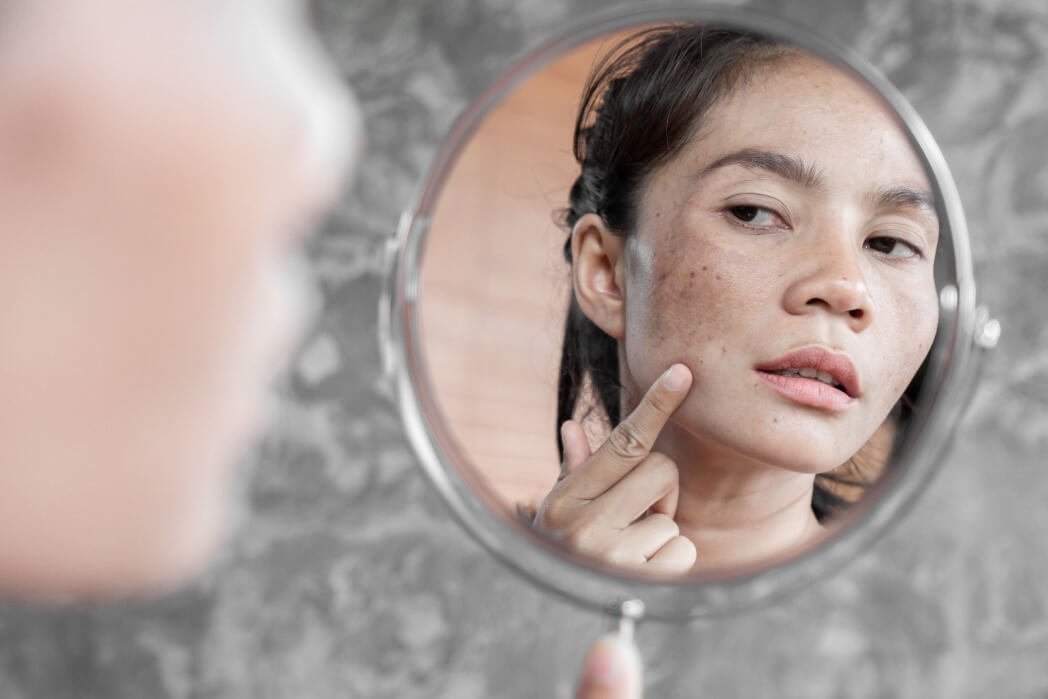
Is Chemical peel for dark spots right for you? · we’ll see at the consultation
Forty-five minutes with a physician, a skin analysis and a written, phased plan with complete prices. You decide afterwards, with no pressure. Living abroad? Start with a virtual consultation.