Facial thread lift
Reposition · don’t pull
Lifting threads are absorbable sutures placed under the skin to reposition tissue that has started to descend and to stimulate collagen around them. They are a non-surgical lift for mild to moderate sagging · not a replacement for surgery when there is excess skin.
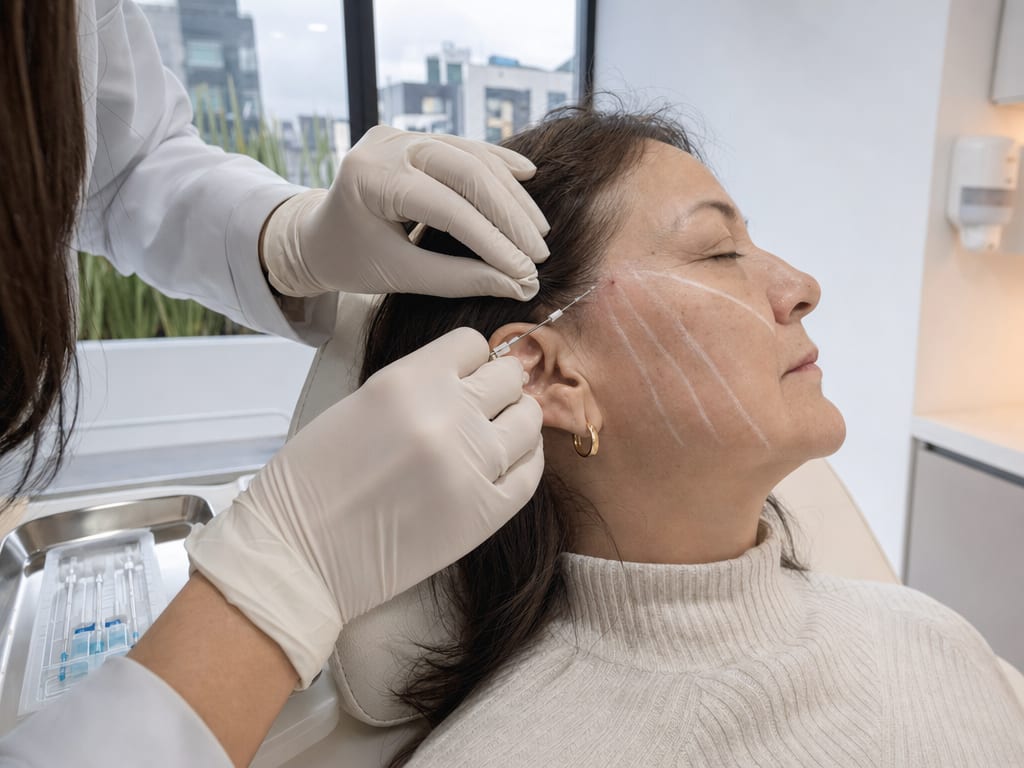
A facial thread lift is a minimally invasive procedure in which absorbable threads are inserted under the skin, with local anesthesia, to reposition descended tissue and stimulate collagen. At iki we use MINT threads chosen by area: brows, mid and lower face, or nose. The support is visible from the session itself, and firmness improves over the following months.
- Session length
- 30–60 min depending on area and number of threads
- Anesthesia
- Local
- Sessions
- 1 · repeating is assessed based on progress
- Recovery
- Mild swelling and tightness · a few days
- Technology
- Absorbable MINT threads
- Areas
- Brows, mid and lower face, nose
Who it’s for · and who it isn’t
Indicated when
- Mild to moderate sagging in the cheeks, folds and jawline
- Lowered brows that give a tired expression
- People who want a visible change without surgery and with a short recovery
- Loss of facial contour definition that doesn’t respond to technology alone
Not the right time if
- Severe sagging with excess skin · the indication is surgical
- Very thin skin or little supporting tissue · the thread may show
- Pregnancy, breastfeeding, active infection or uncontrolled clotting disorders
- Expecting a result equivalent to a surgical facelift
The physician makes the final indication at the consultation. Results vary from patient to patient.
What a facial thread lift is like at iki
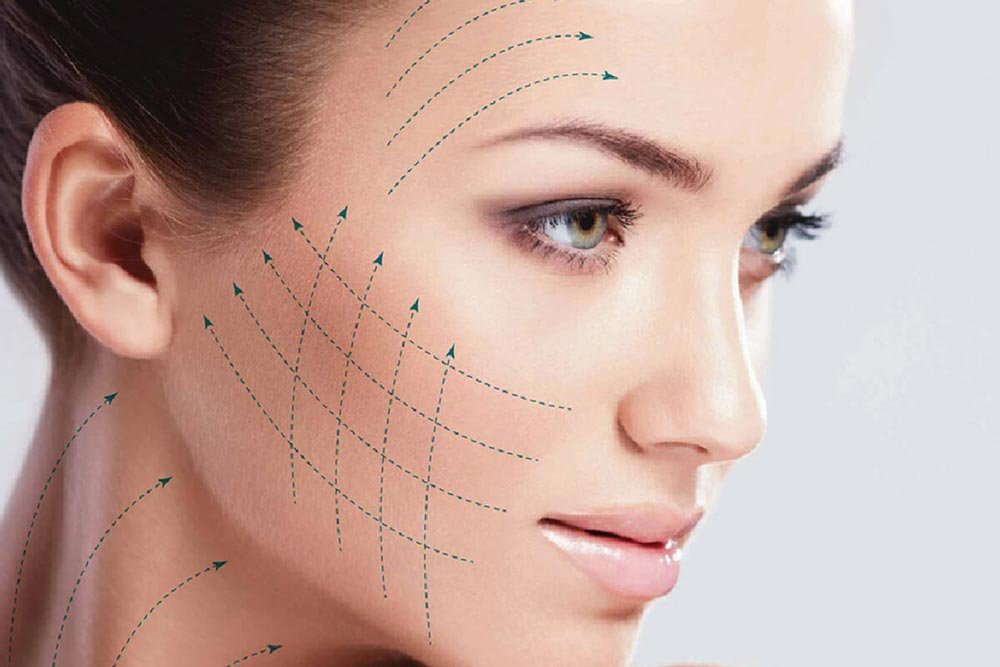
The result of a thread lift depends less on the thread and more on the design: where it enters, which vector it follows and how much tissue it holds. That’s why the plan is made before the session.
Consultation and vector design
The physician assesses skin quality, the degree of descent and the structure of your face, then defines the type of thread, the number and the trajectories in a written plan.
Marking and local anesthesia
The skin is cleansed, entry points and vectors are marked, and local anesthesia is applied at those points.
Thread insertion
Using a fine cannula or needle, the threads are placed in the indicated layer and the tension is adjusted. You feel pressure and tightness, not intense pain.
Review and follow-up
At the end, symmetry is checked. A follow-up visit is scheduled to check progress and address any irregularity early.
What it offers
Repositions tissue
Threads with anchors hold the tissue in a higher position from the session itself · a mechanical effect technology alone doesn’t provide.
Collagen around the thread
As the thread is absorbed, the skin forms collagen around it, which helps keep part of the support.
Short recovery
No incisions and no hospital stay. Most people return to their routine in one or two days, with simple aftercare.
Precision by area
Different threads for the brows, mid and lower face, or nose · each with its own indication.
Technology with an indication
MINT threads
MINT is a line of polydioxanone (PDO) threads, an absorbable material used in medical sutures for decades. It comes in variants for different areas: petite for the brows, fine for the mid and lower face, tip and up for the nose, and mono to work on skin quality. We choose the thread to fit the tissue · not the other way around.
Results and aftercare
The support is visible from day one, although the initial swelling can exaggerate it or make it look uneven. The stable result shows between 4 and 8 weeks, as swelling goes down and collagen formation progresses. The effect typically lasts 18 to 24 months, depending on the type of thread and the quality of the skin. Threads improve support · they don’t remove excess skin.
Aftercare after the session
- Sleep on your back with your head elevated for the first few days
- Avoid opening your mouth wide, facial massage and exaggerated expressions for 1–2 weeks
- No intense exercise, sauna or steam room during the first week
- Check with us before any dental treatment in the first weeks
- Cold compresses and the pain reliever your physician recommends if there is discomfort
- Daily sunscreen
Results vary from patient to patient.
Pairs well with
 Anti-aging and skin laxity
HIFU for skin laxity
HIFU uses focused ultrasound to heat deep layers of the skin and stimulate new collagen, with no incisions and no needles. It…
See treatment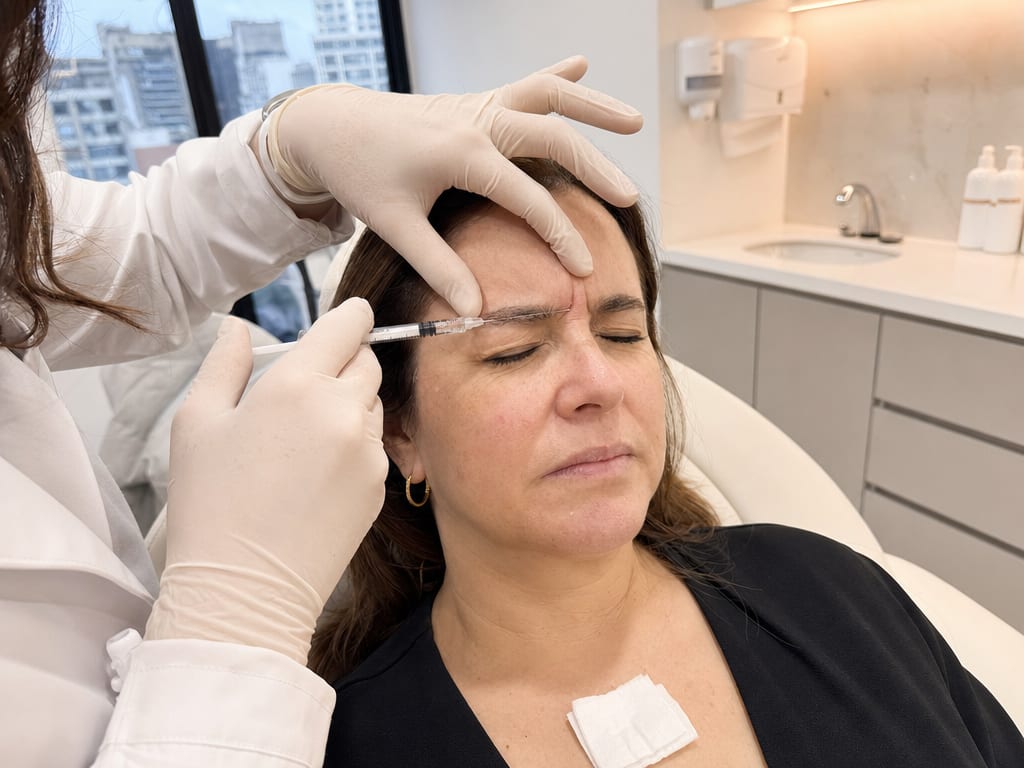 Anti-aging and skin laxity
Botox
Botulinum toxin temporarily relaxes the muscles that etch expression lines into the forehead, the frown area and the crow’s feet.…
See treatment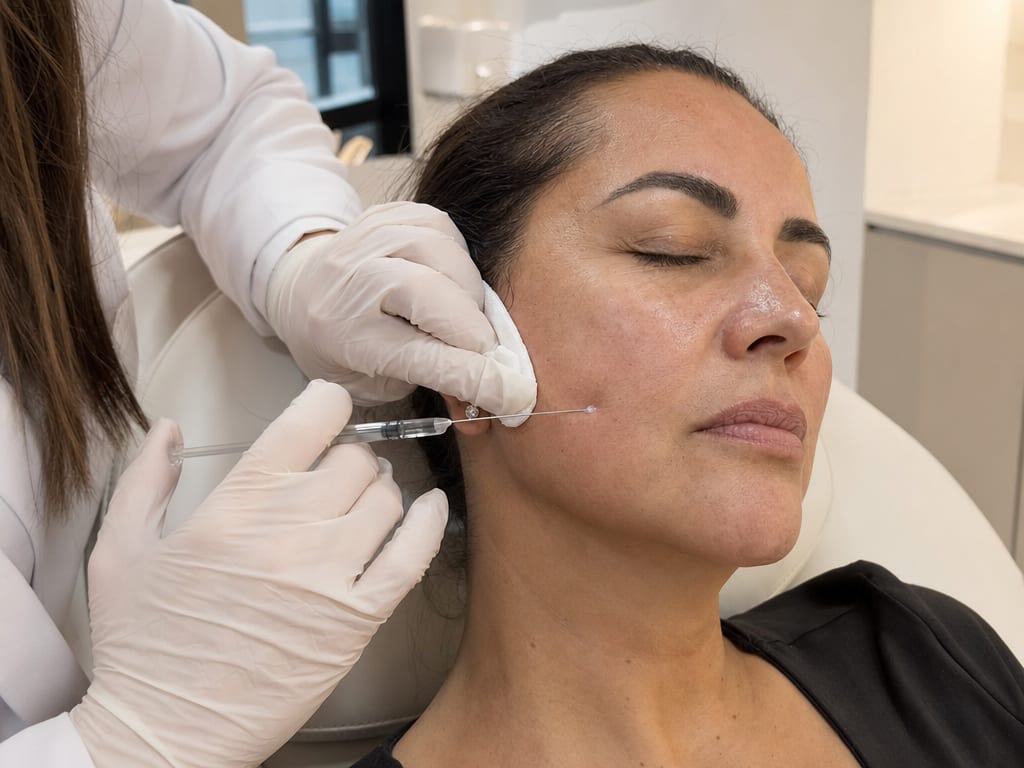 Anti-aging and skin laxity
Hyaluronic acid
Hyaluronic acid is an injectable gel that restores volume and support where the face has lost them over the years: cheekbones,…
See treatmentFrequently asked questions
Does a thread lift hurt?
It’s done with local anesthesia, so during the session you usually feel pressure and tightness rather than pain. Afterward there may be discomfort when opening your mouth, tenderness and mild swelling for a few days. This is managed with cold compresses and the pain reliever your physician recommends.
How long does a thread lift last?
It typically lasts 18 to 24 months, depending on the type of thread, the area treated and the characteristics of your skin. The thread is absorbed over time, and part of the support remains thanks to the collagen formed. Results vary from patient to patient, and maintenance is decided at follow-up.
How long does the procedure take?
Between 30 and 60 minutes, depending on the area and the number of threads, plus time for marking and anesthesia. You leave the clinic the same day, with written instructions for the first few days and a follow-up visit scheduled to review progress.
Will the threads show under the skin?
In skin of good thickness, with the thread in the correct layer, they shouldn’t show. In very thin skin they may be felt or visible, which is why they aren’t always the best option. In the first days there may be small irregularities or dimples that usually settle; if they persist, they are reviewed at follow-up.
What’s the difference between a thread lift and HIFU?
HIFU stimulates collagen with ultrasound, without inserting anything, and its effect is gradual. Threads reposition tissue mechanically from the session itself and also stimulate collagen. They are often combined: HIFU works on firmness and threads on the lifting vector. The choice depends on your consultation.
Who shouldn’t have a thread lift?
It isn’t recommended during pregnancy or breastfeeding, with active infection in the area, uncontrolled autoimmune disease or uncontrolled clotting disorders. Nor when sagging is severe and there is excess skin: in that case the indication is surgical, and we say so clearly at the consultation.
Is a thread lift suitable for every skin type?
In general, threads suit different skin types and tones, because they don’t act on pigment. What matters most is skin thickness, the degree of sagging and the structure of your face. Each case is assessed individually before threads are recommended.
Read before your appointment
Is Thread lift right for you? · we’ll see at the consultation
Forty-five minutes with a physician, a skin analysis and a written, phased plan with complete prices. You decide afterwards, with no pressure. Living abroad? Start with a virtual consultation.