Mesotherapy for dark spots
A more even tone · step by step
Mesotherapy for dark spots delivers depigmenting actives straight into the skin through shallow micro-injections. It’s one tool inside a plan · not an eraser. It works best when the spot is diagnosed correctly and sunscreen is a daily habit.
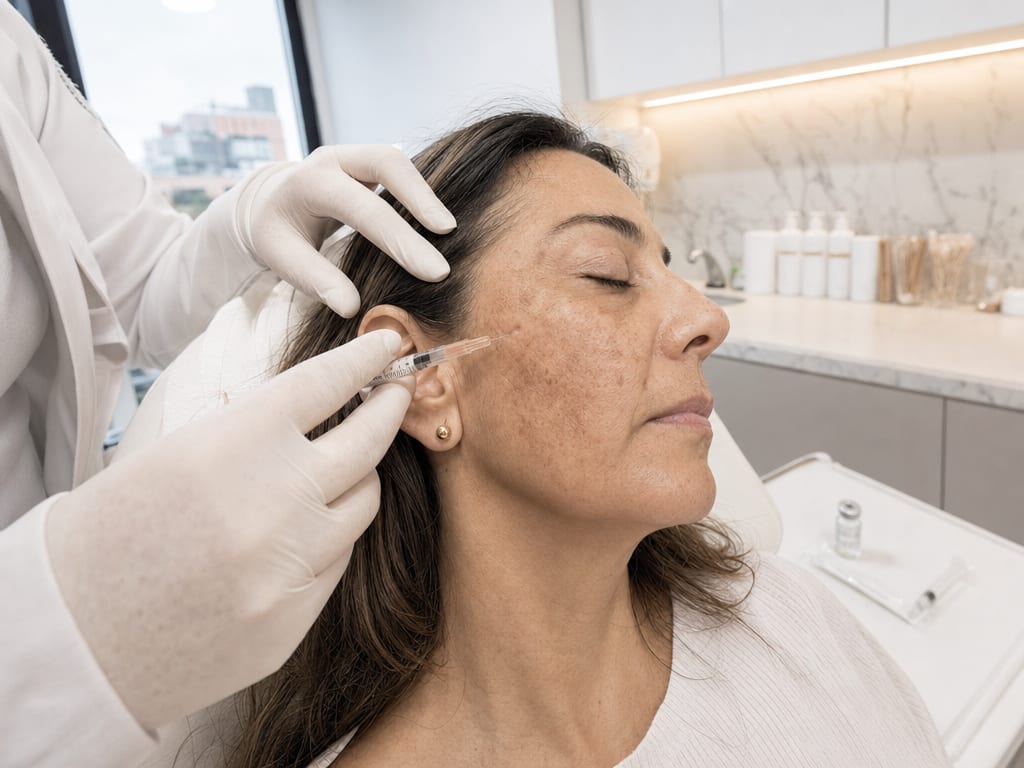
Results in dark spots and pigmentation · identity protected
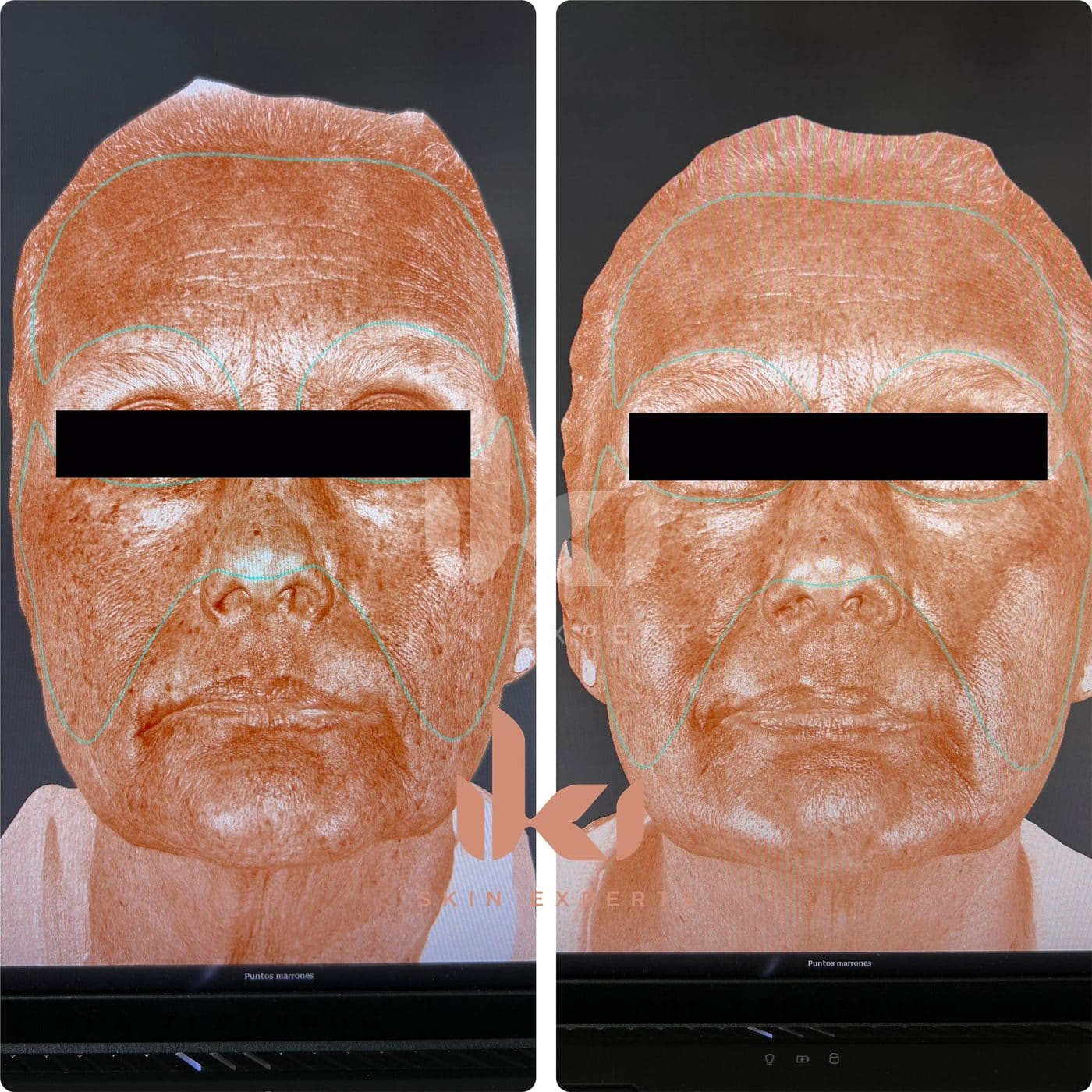
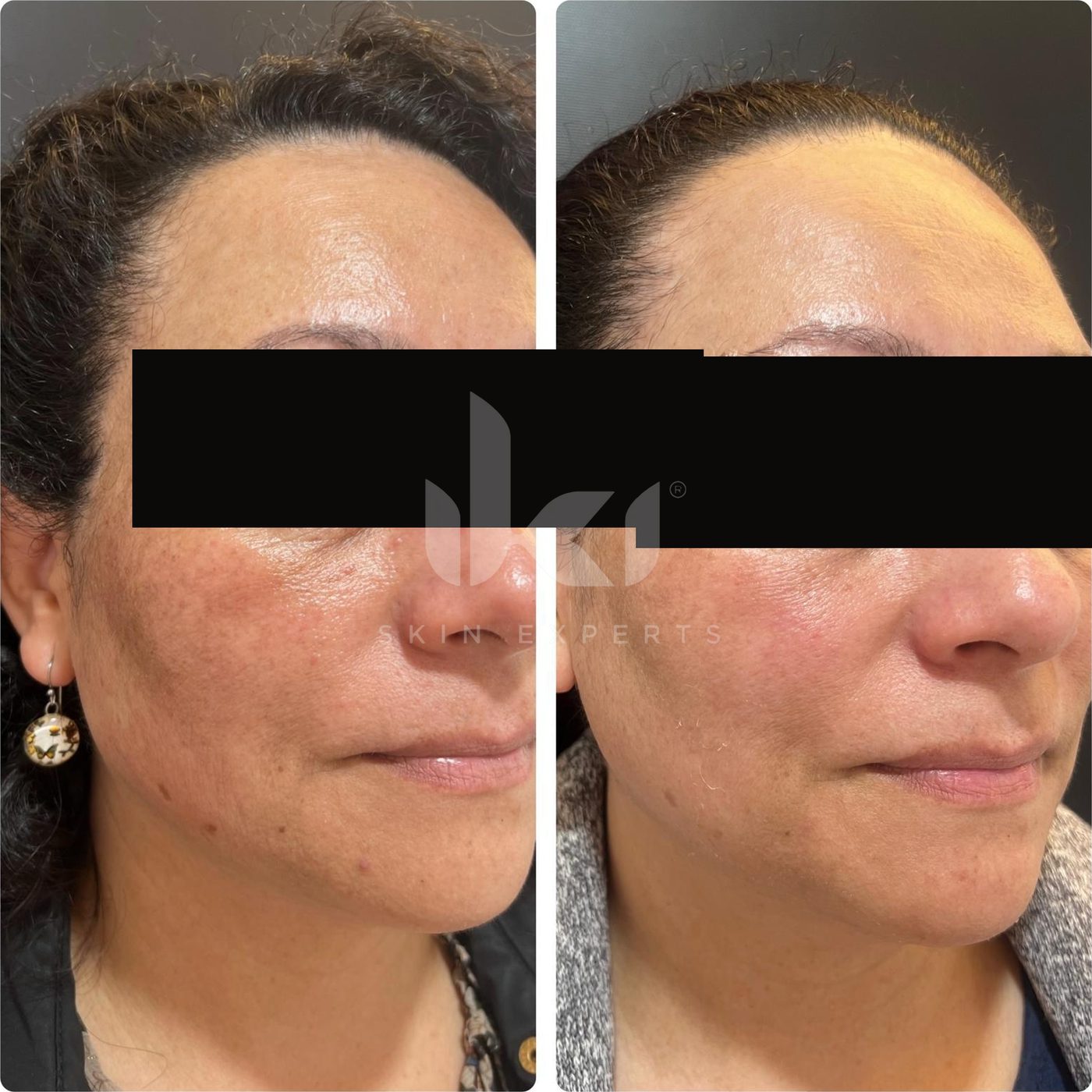
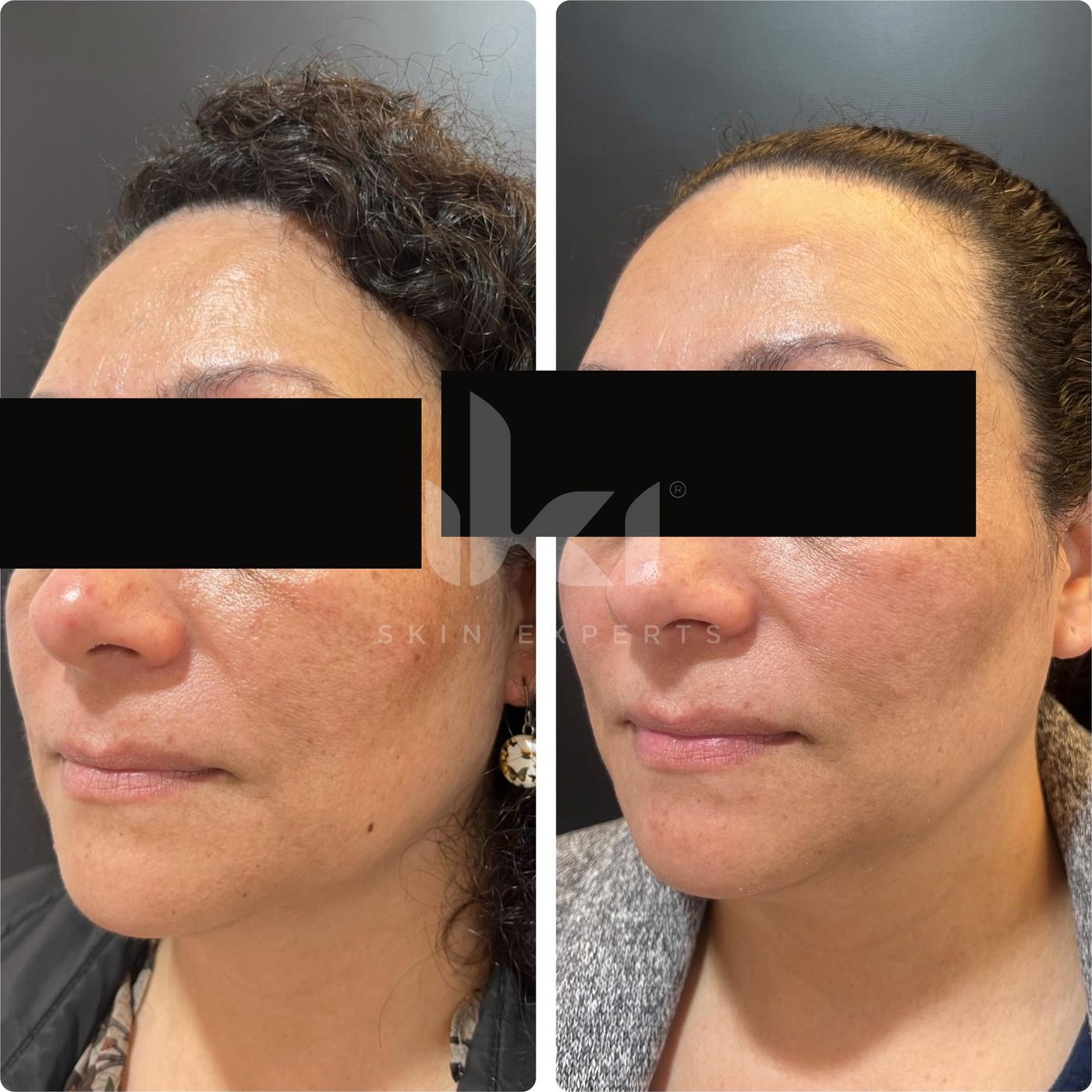
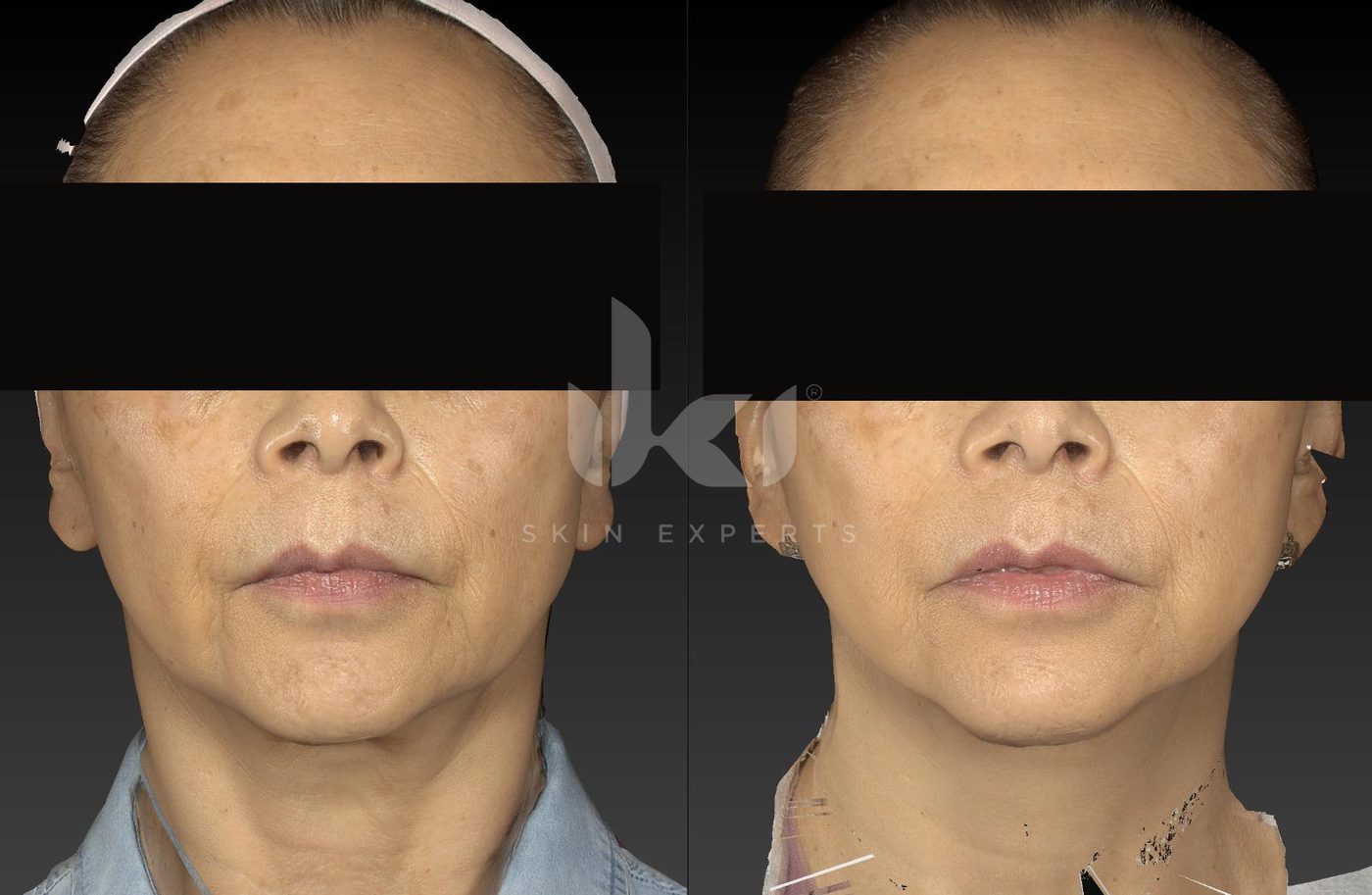
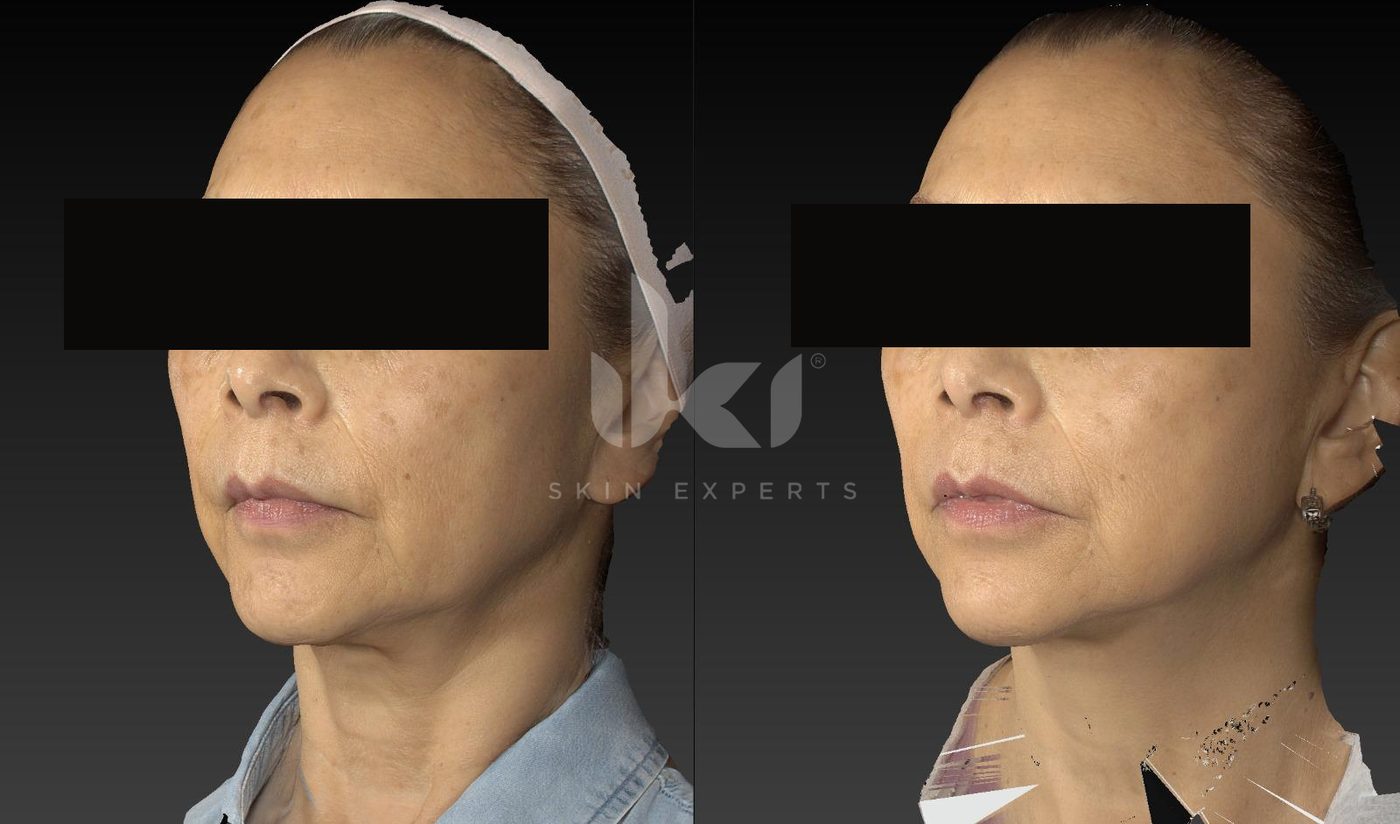
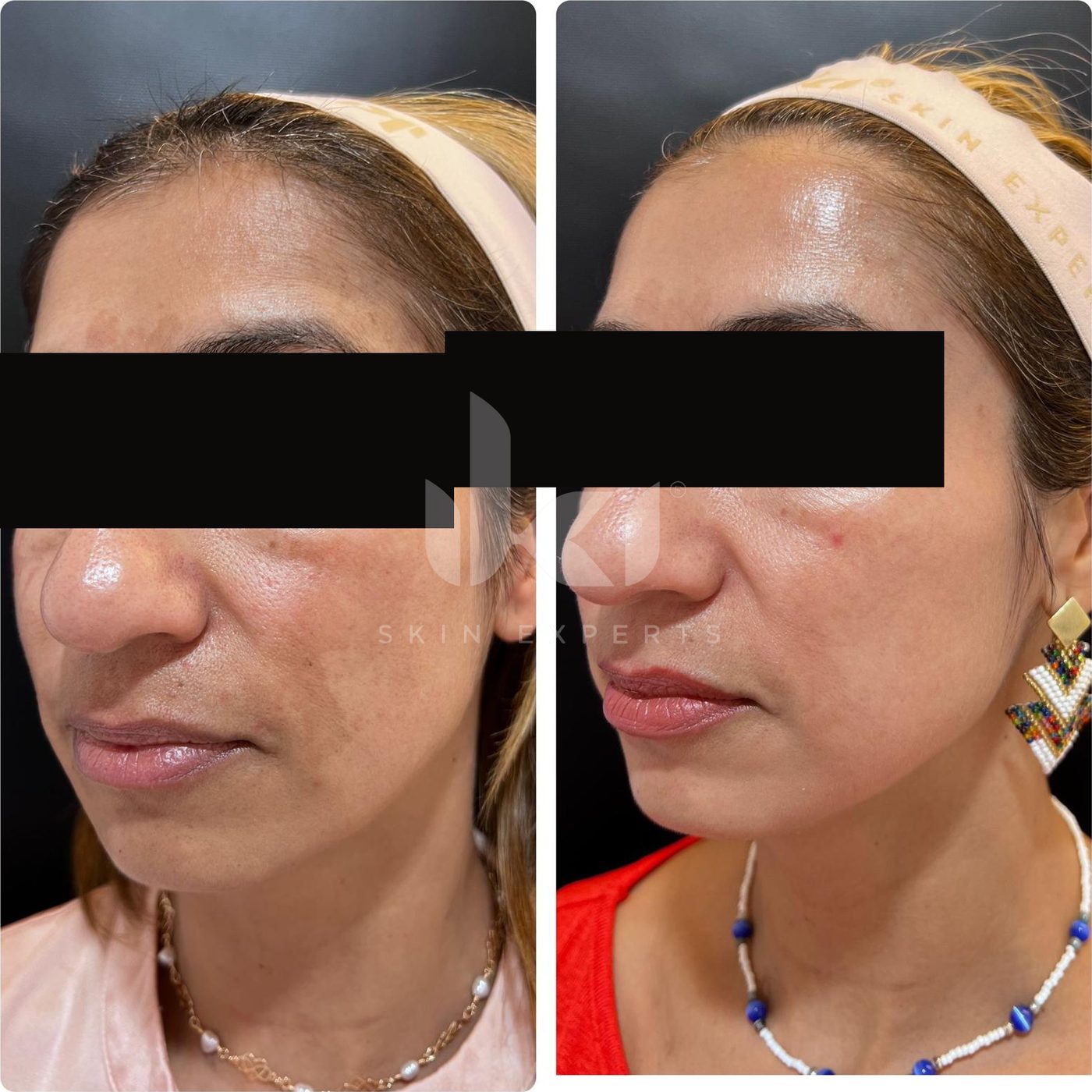
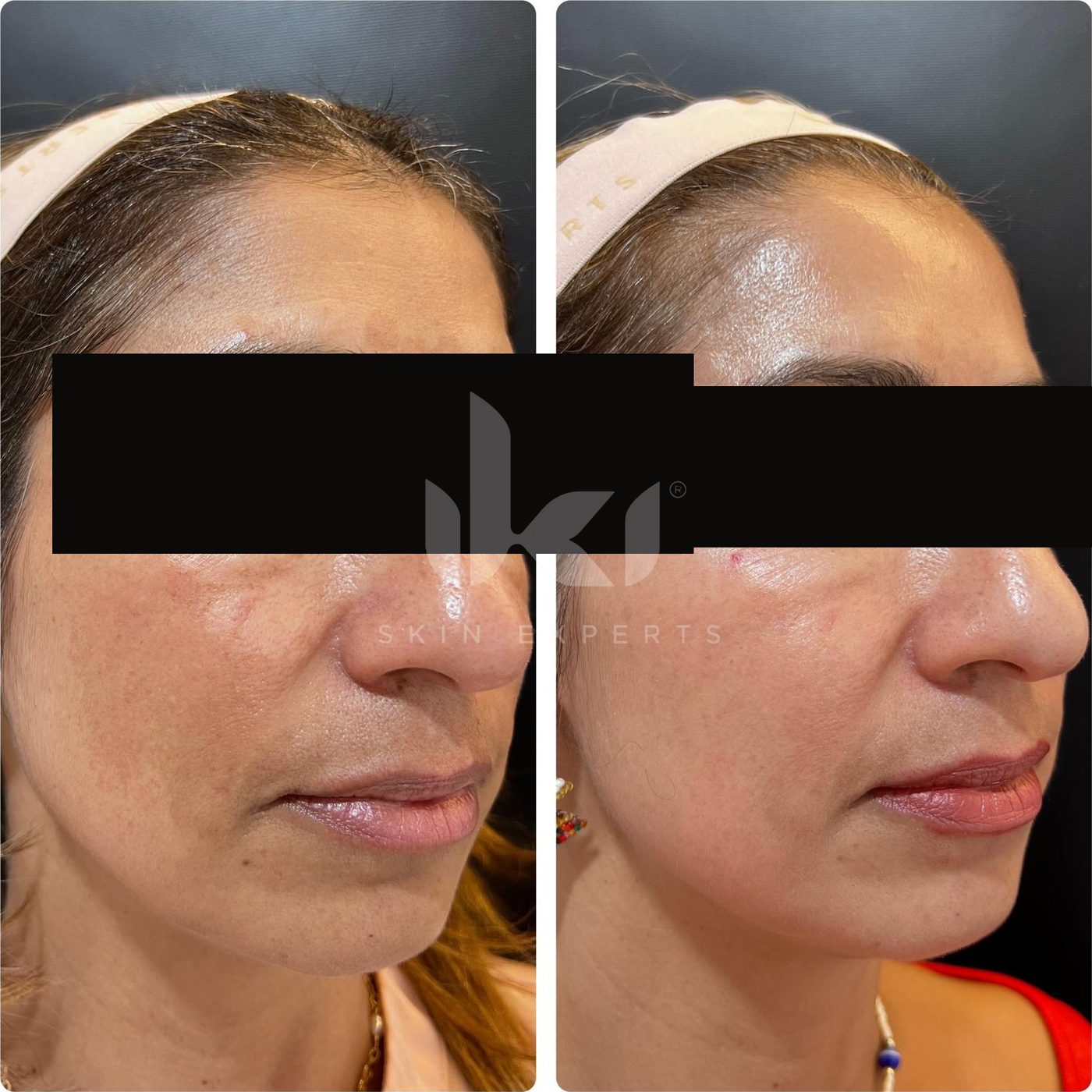
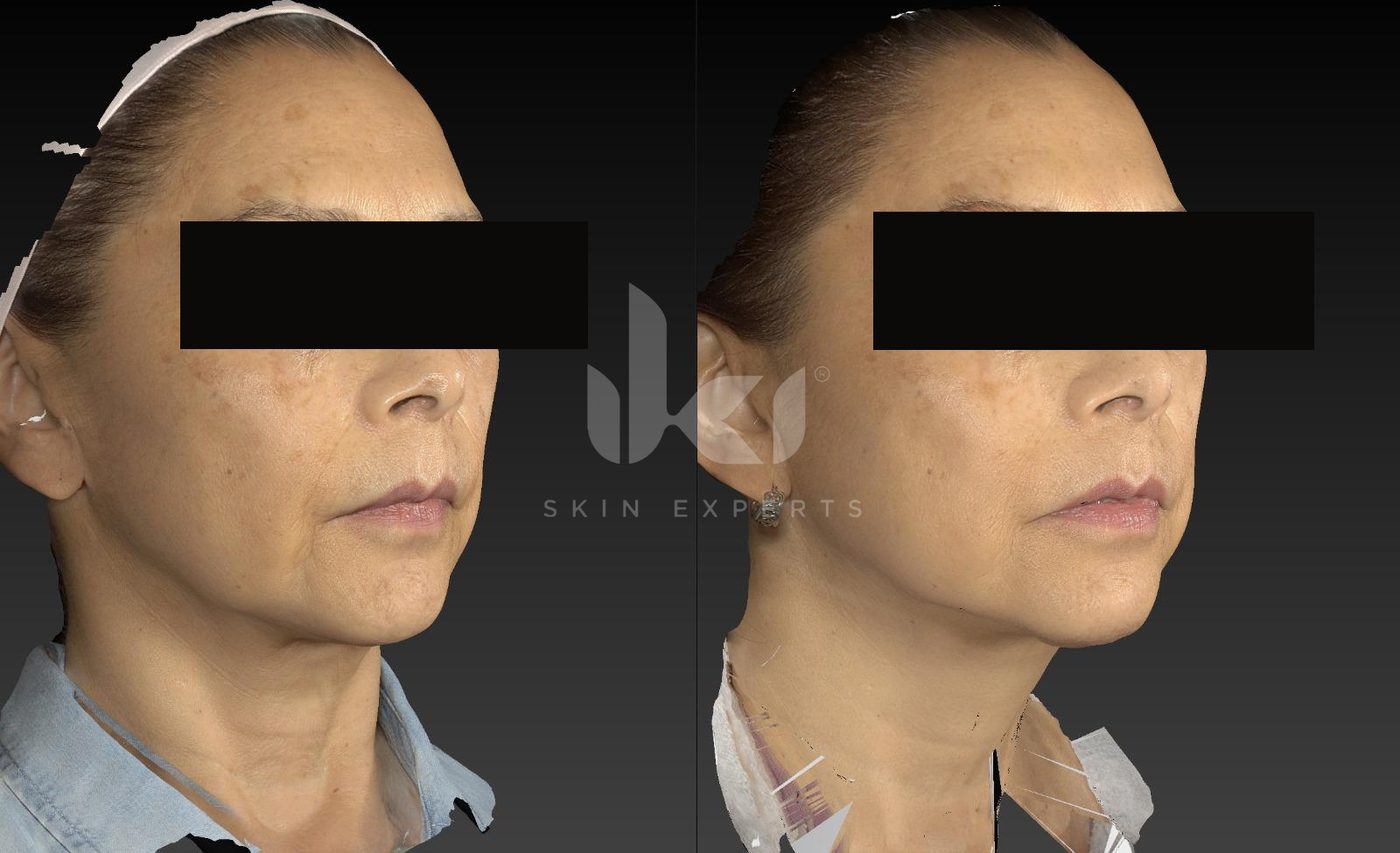
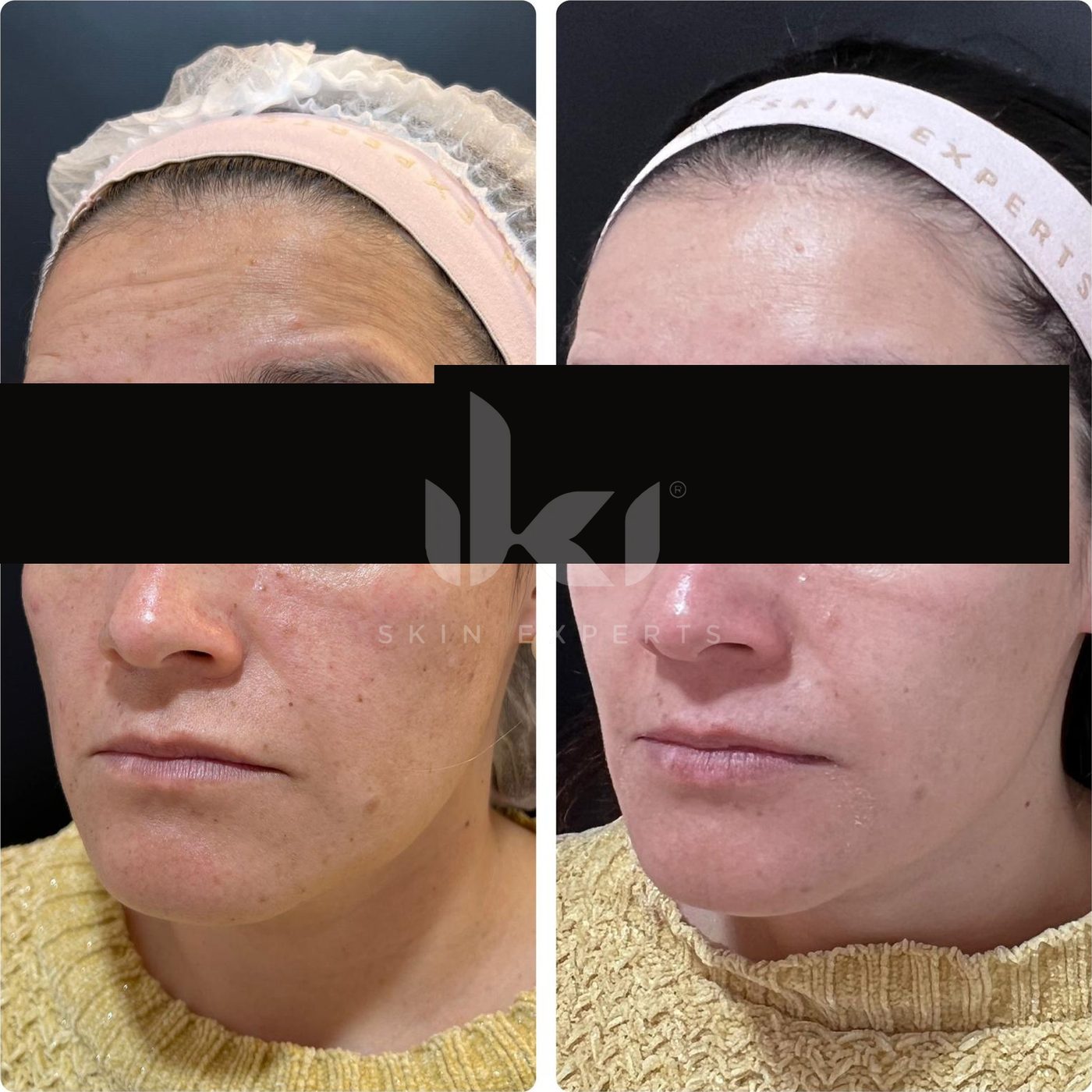
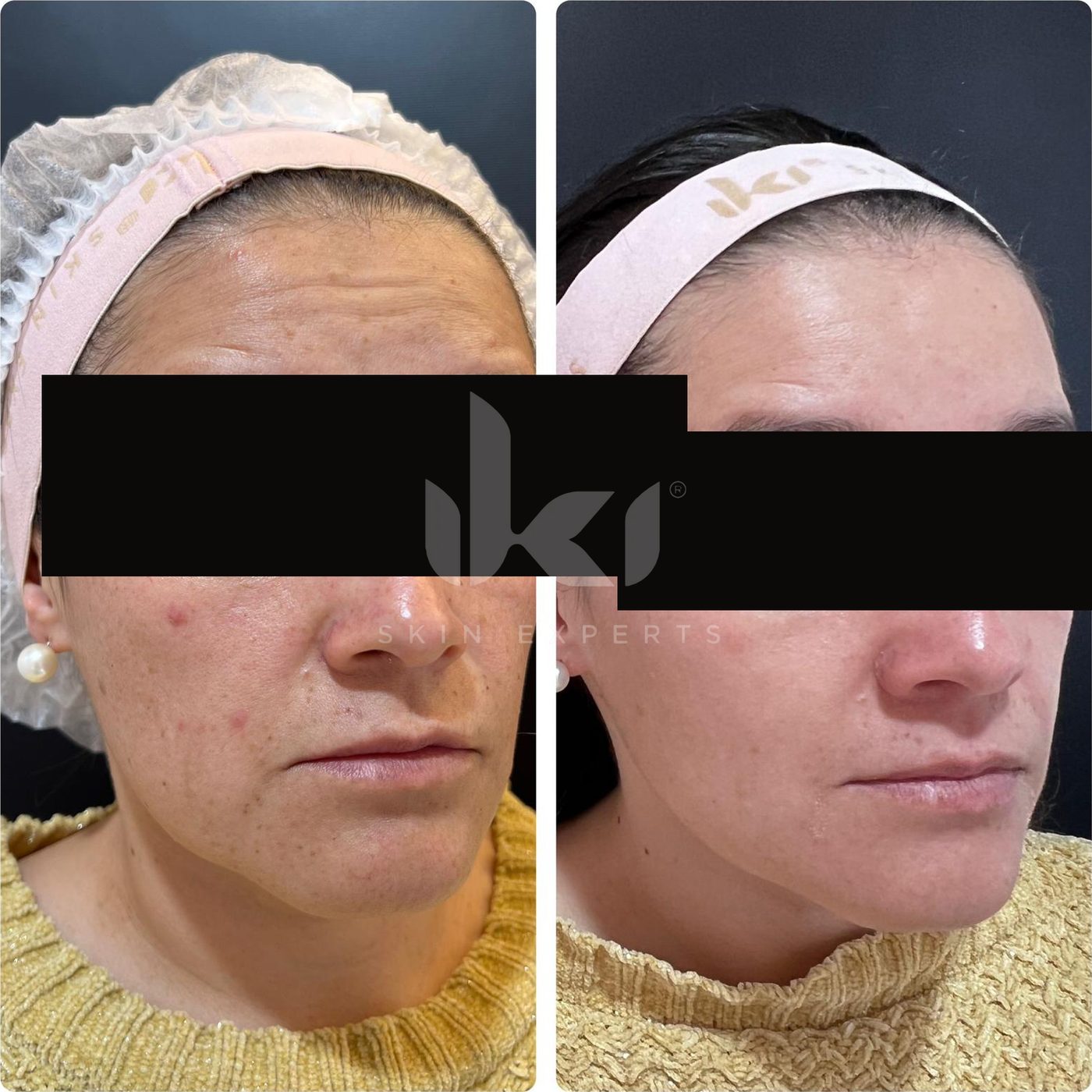
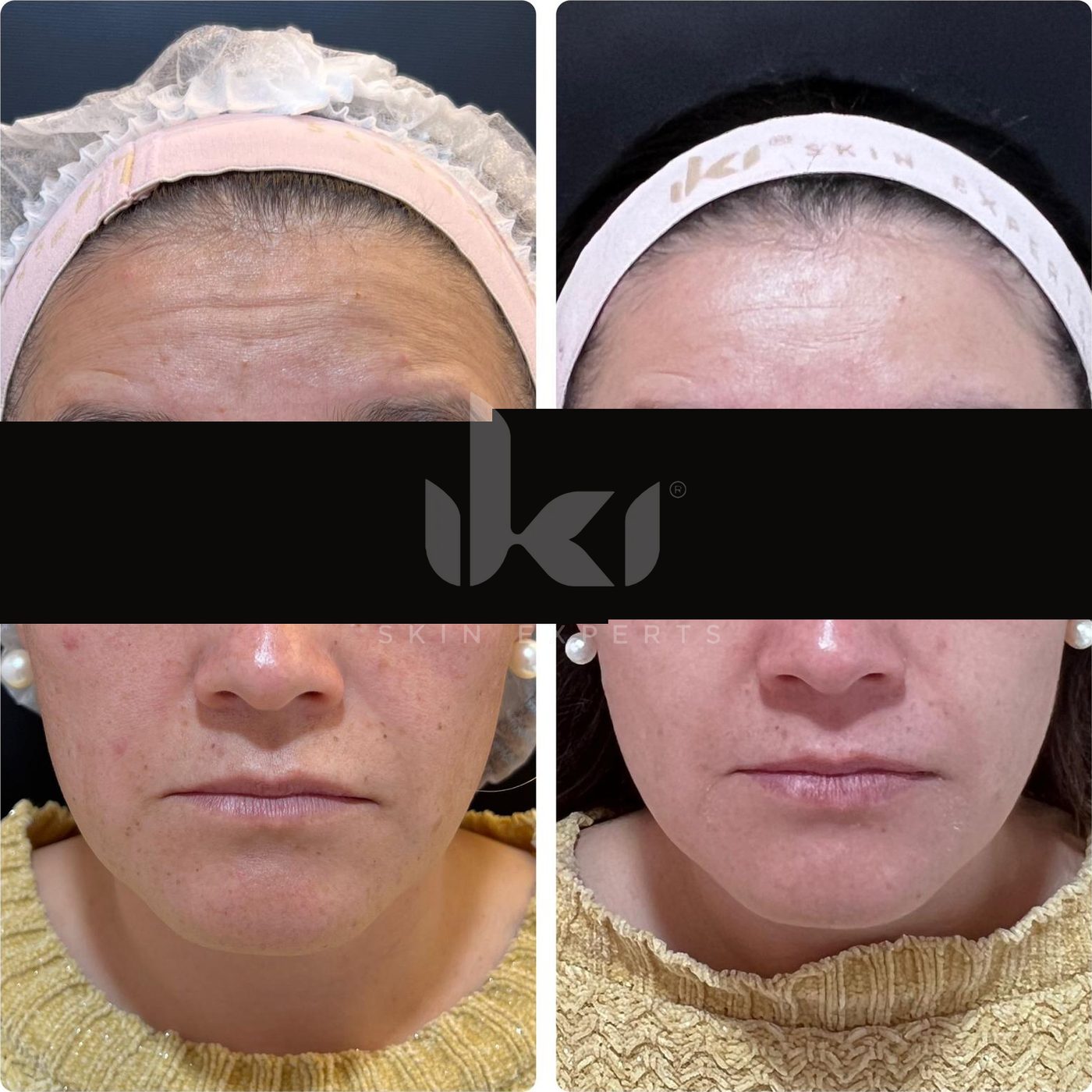
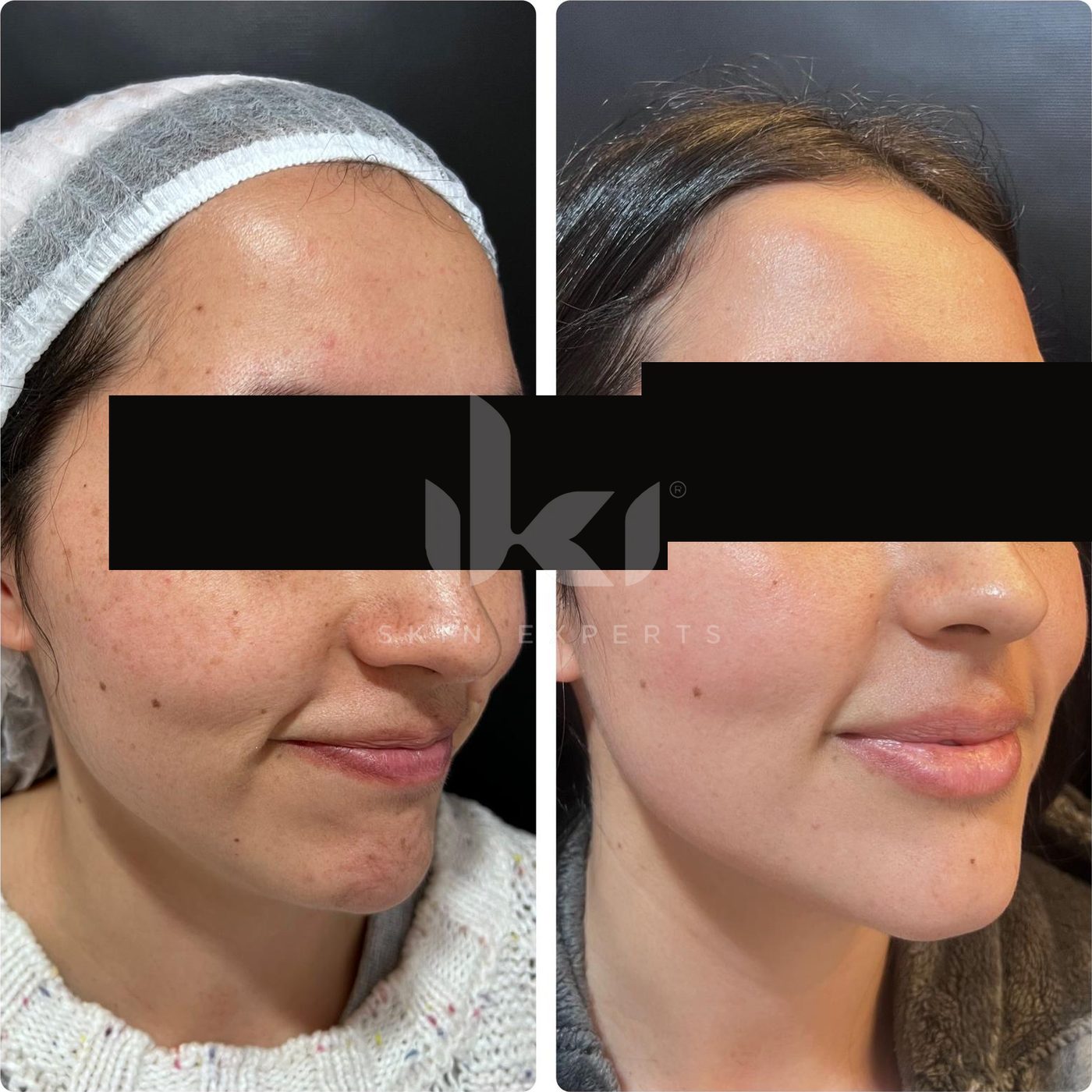
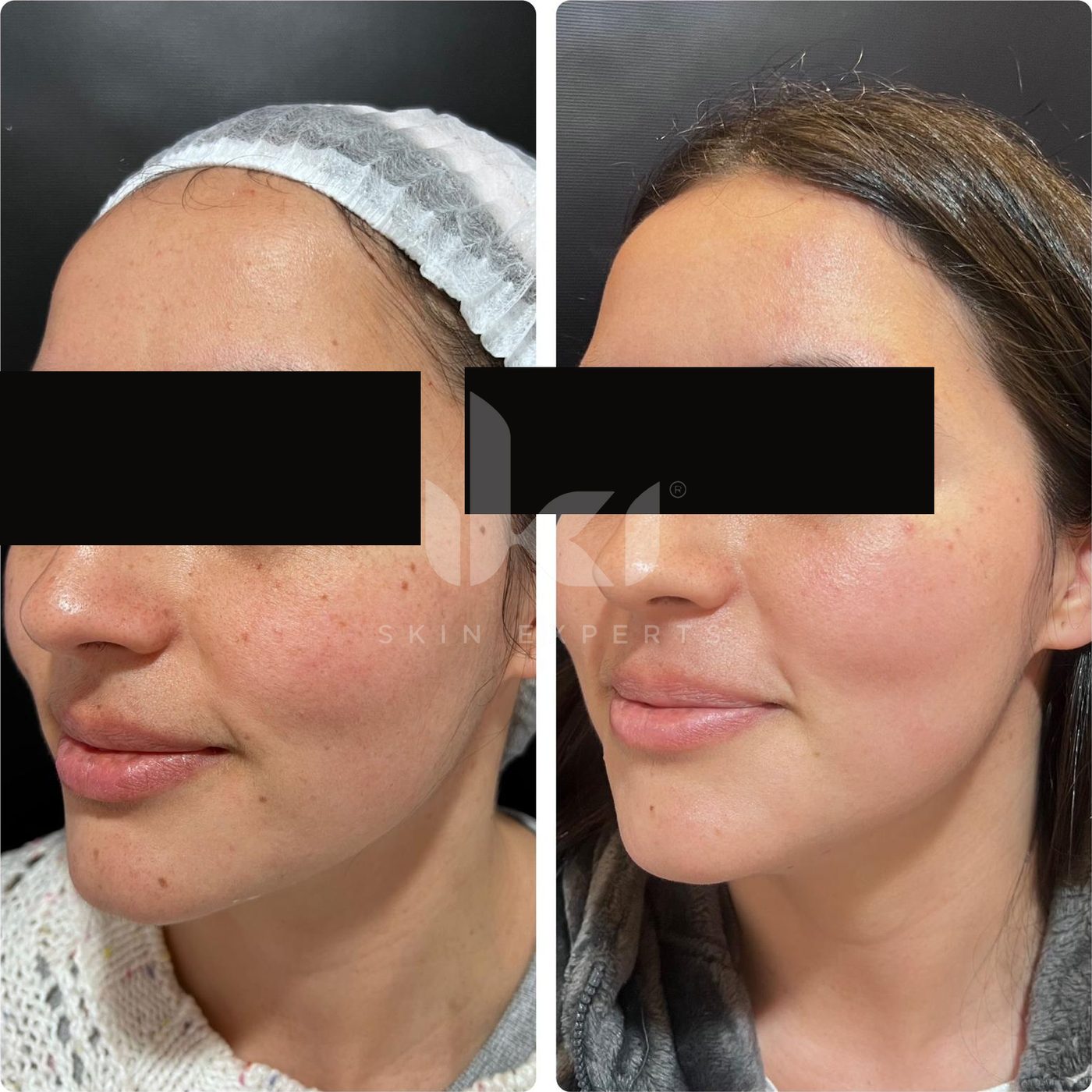
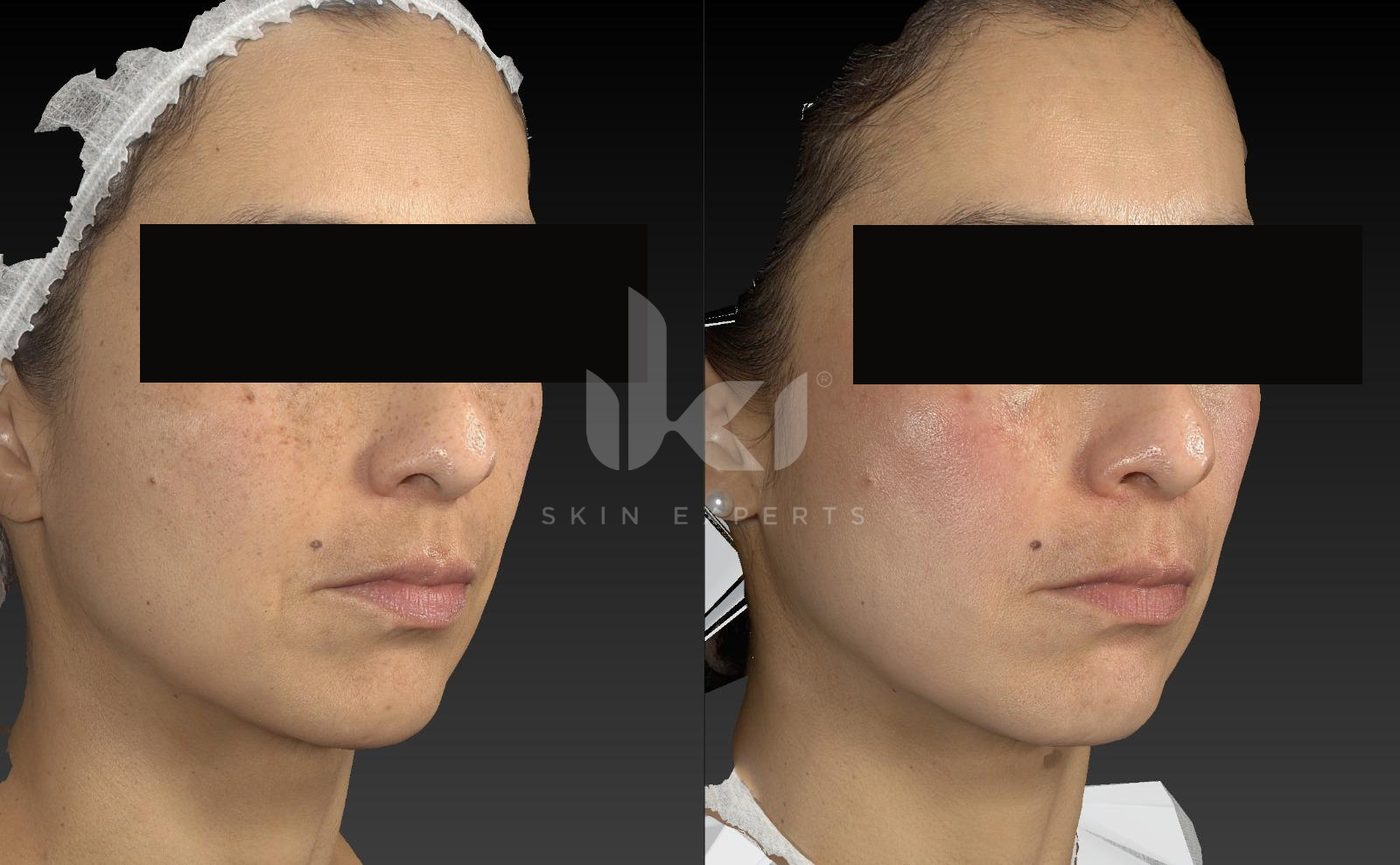
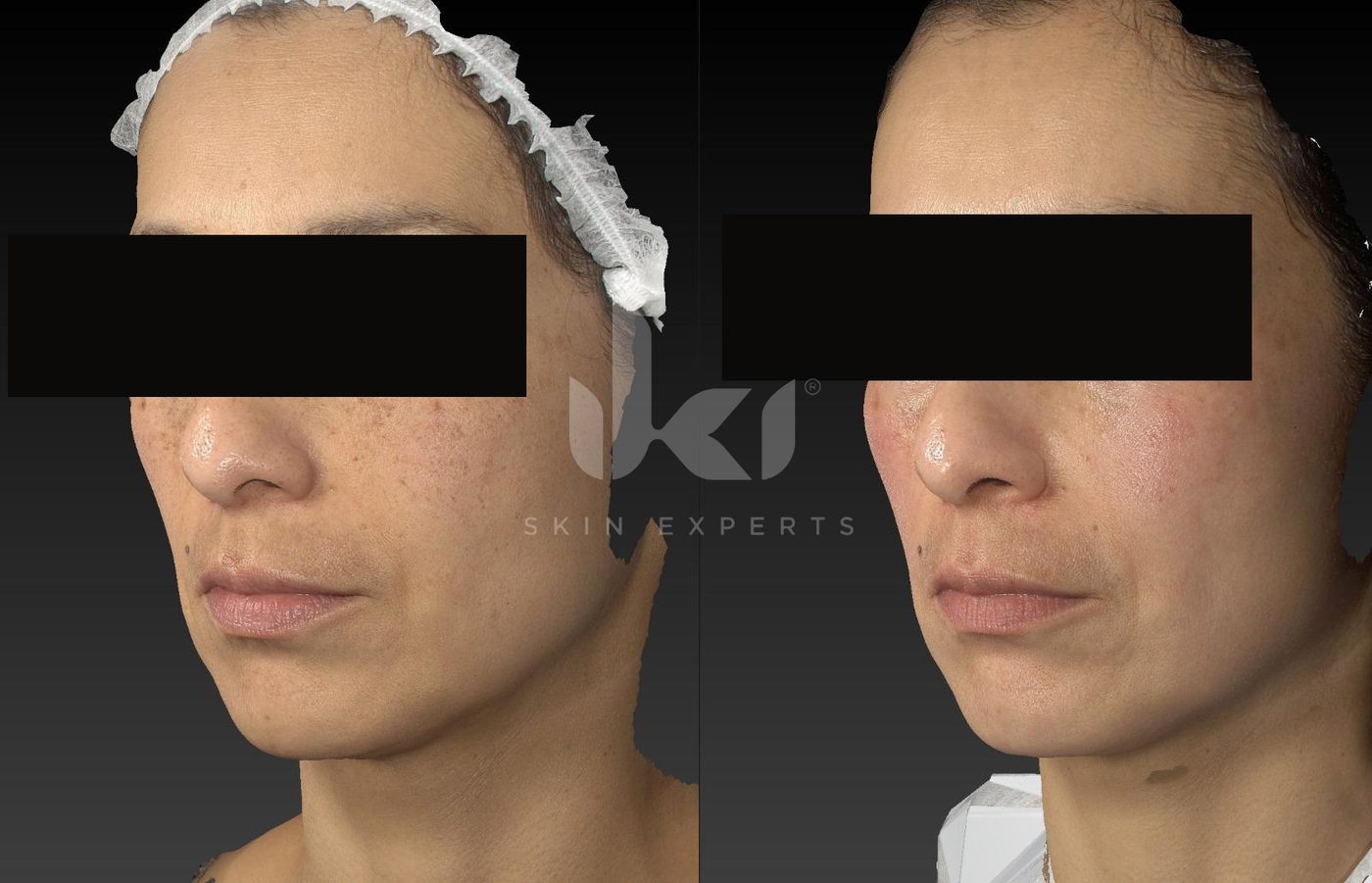
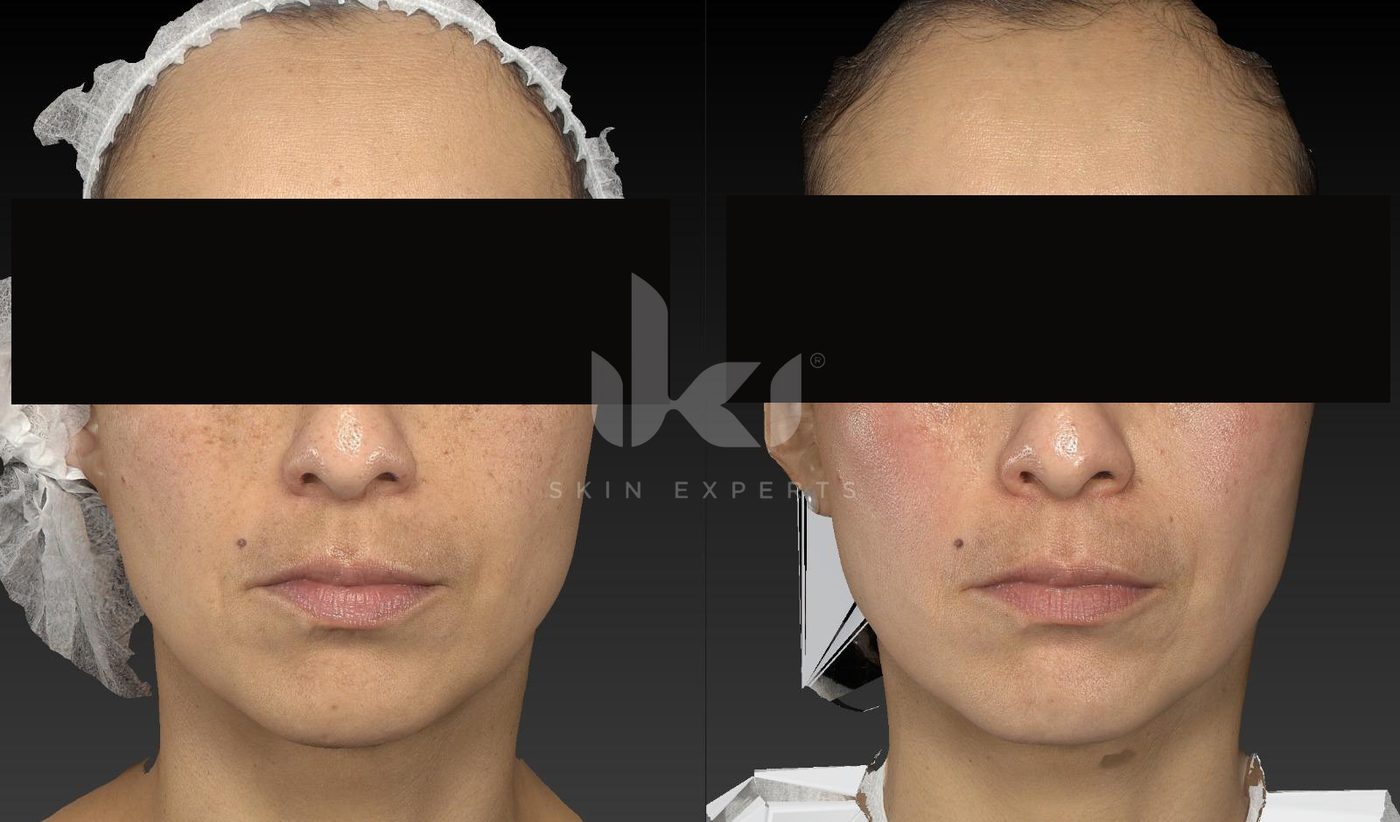
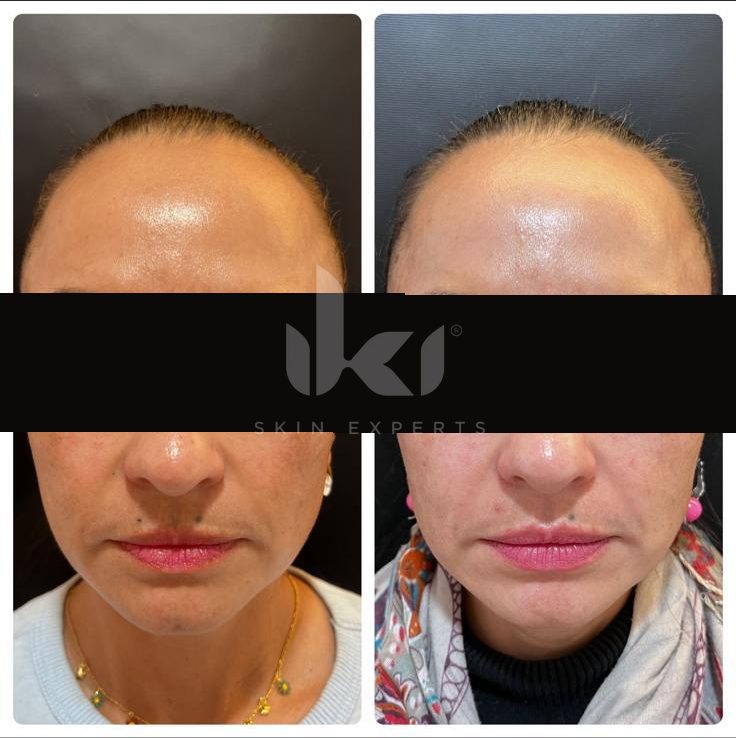
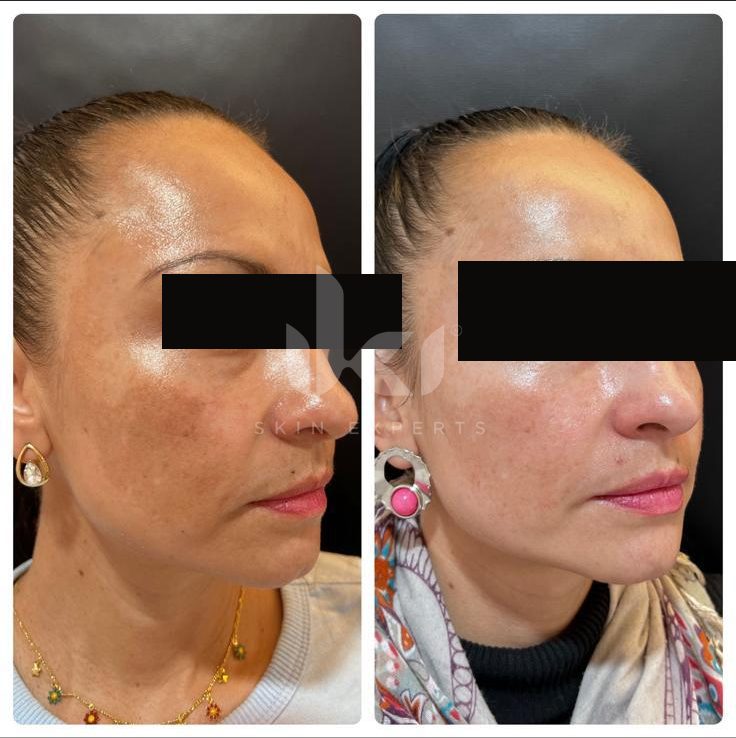
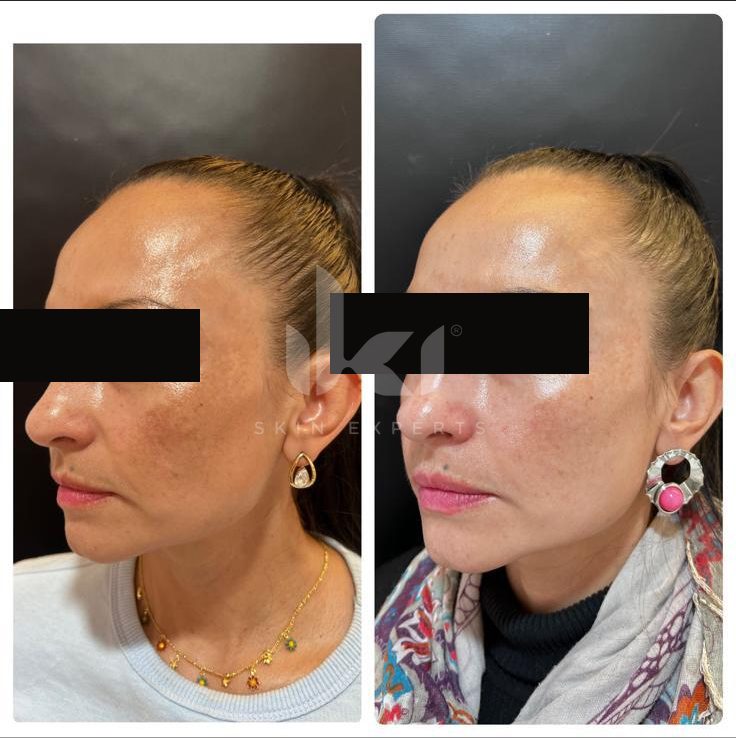
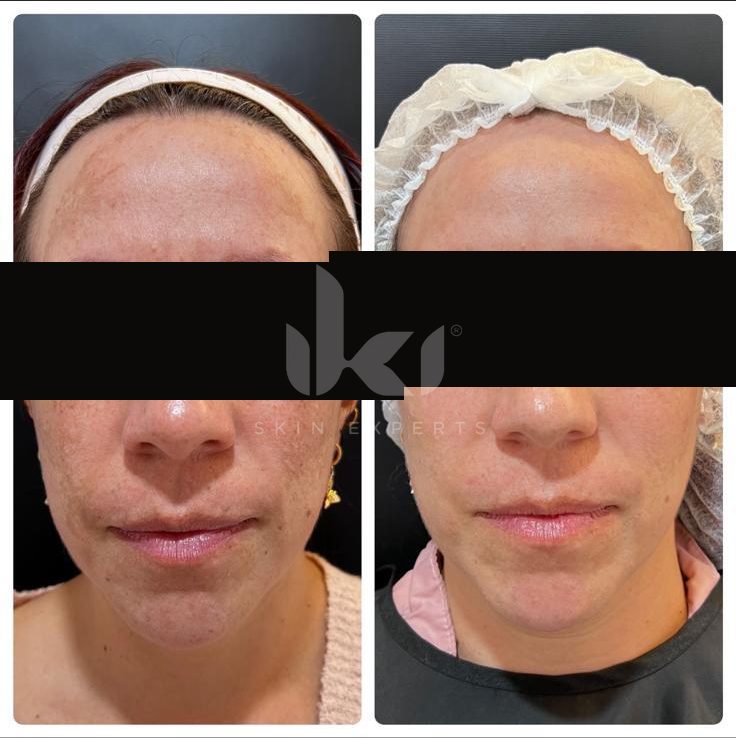
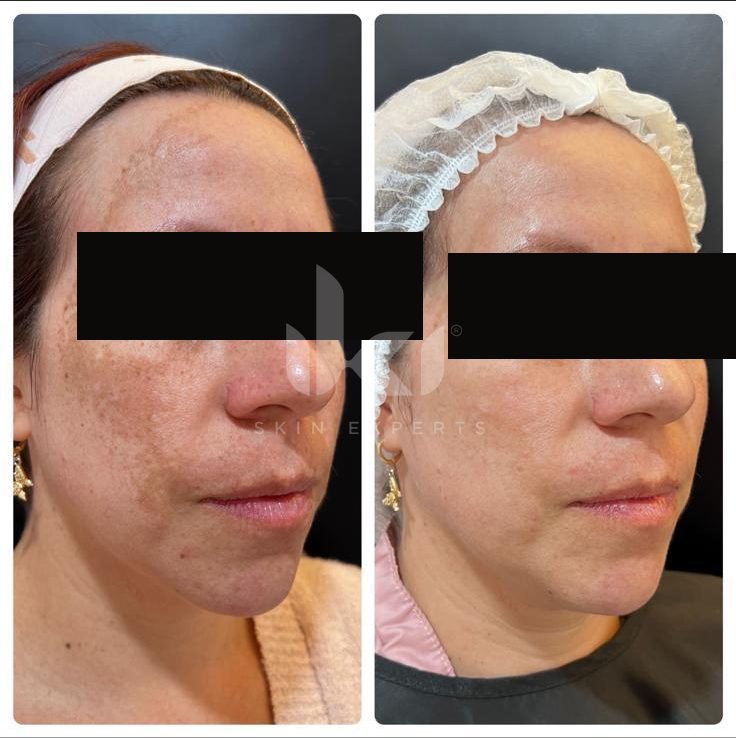
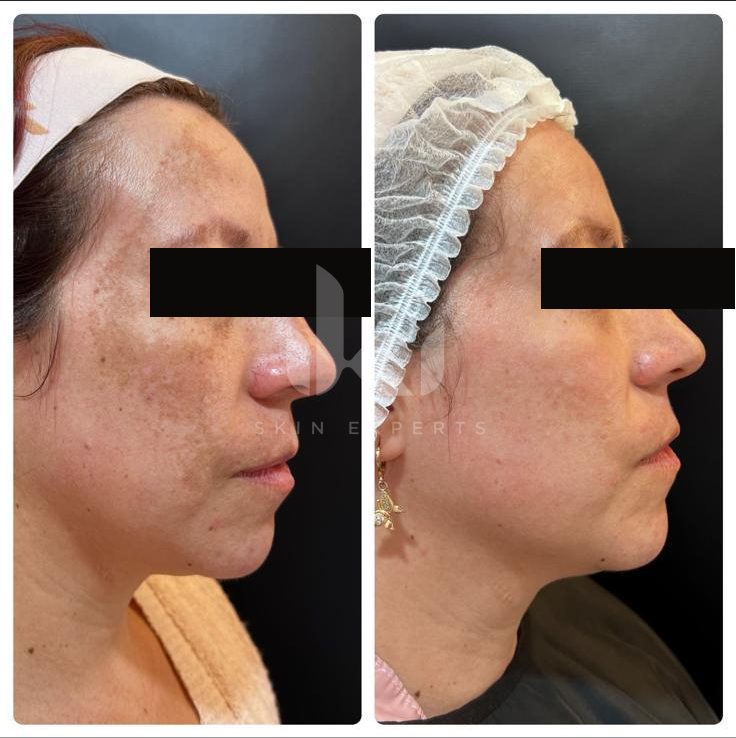
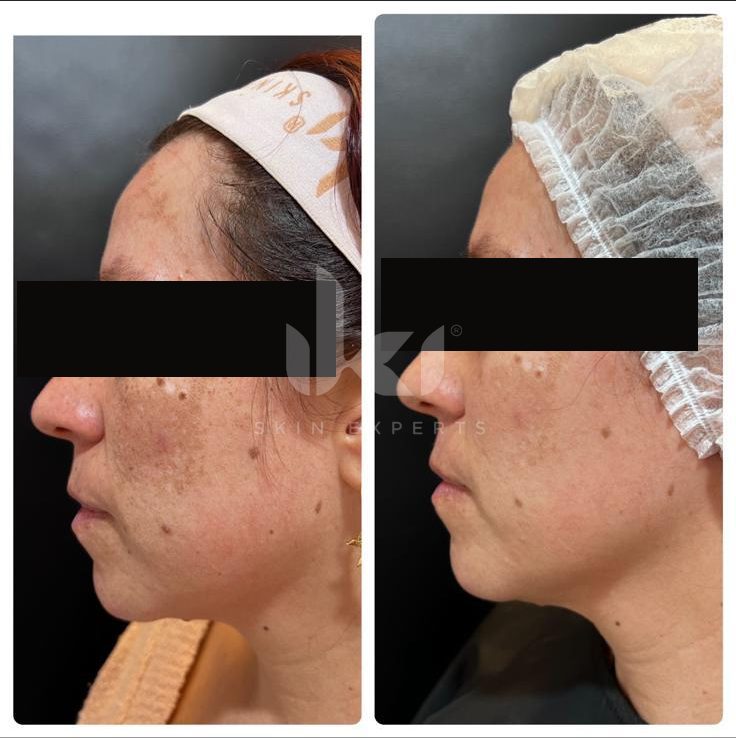
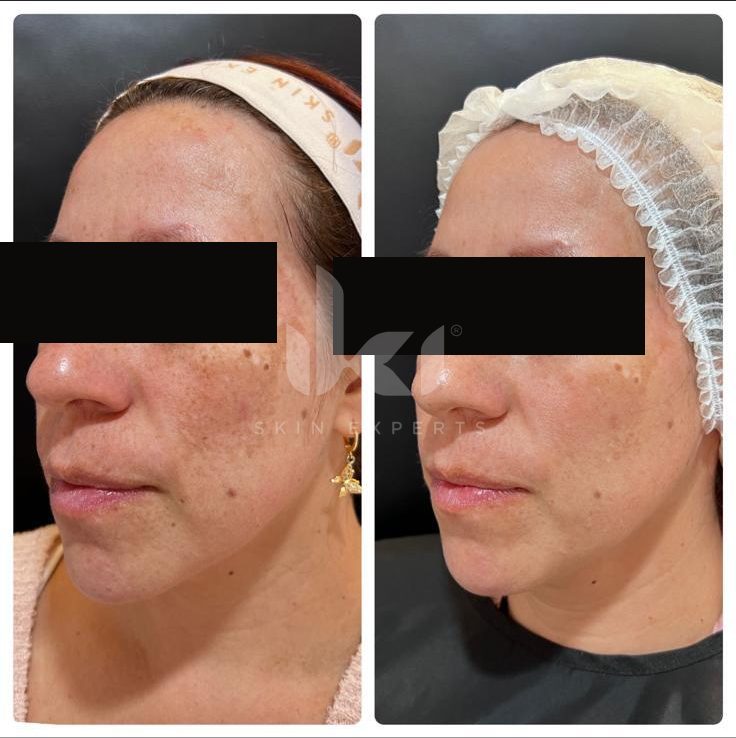
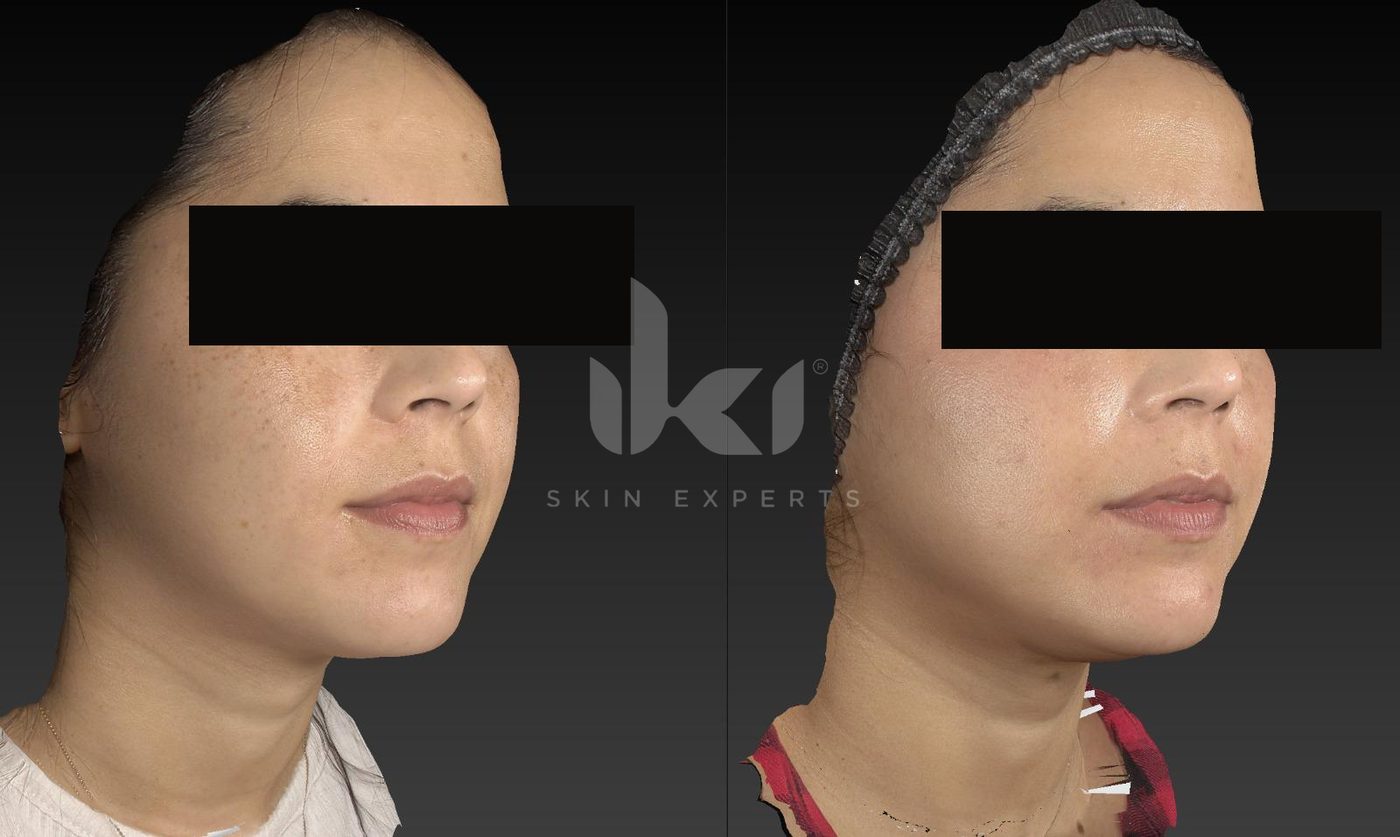
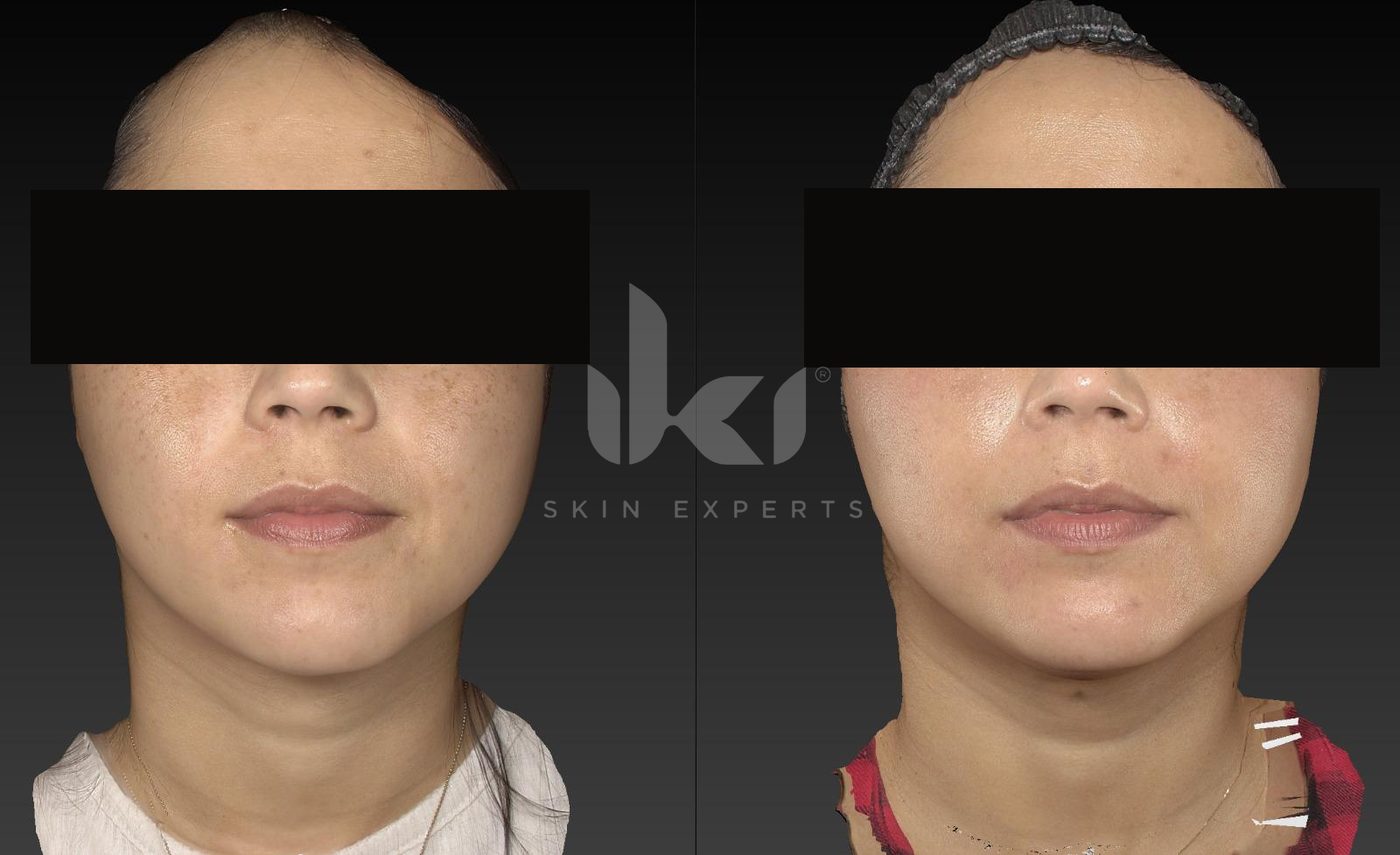
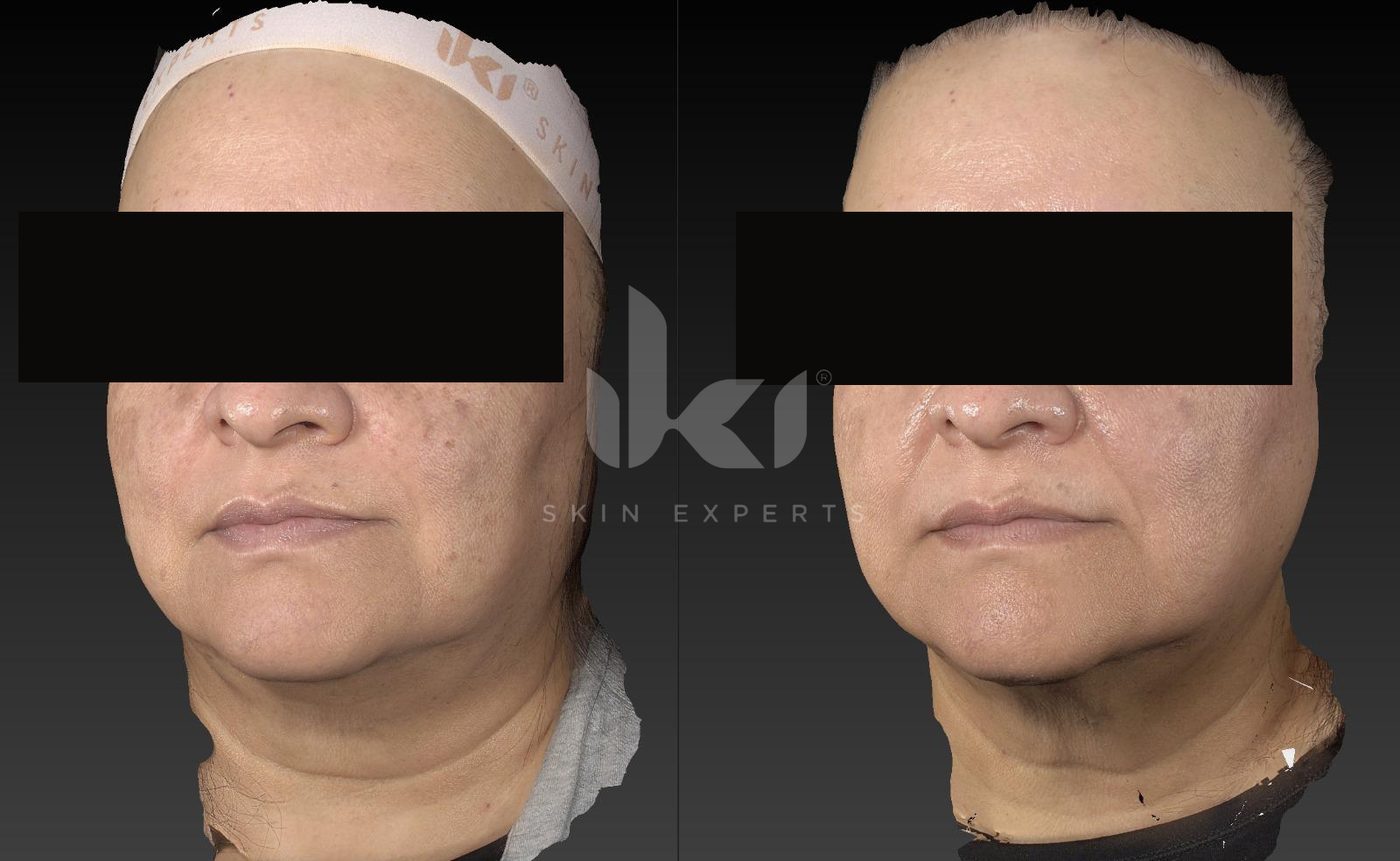
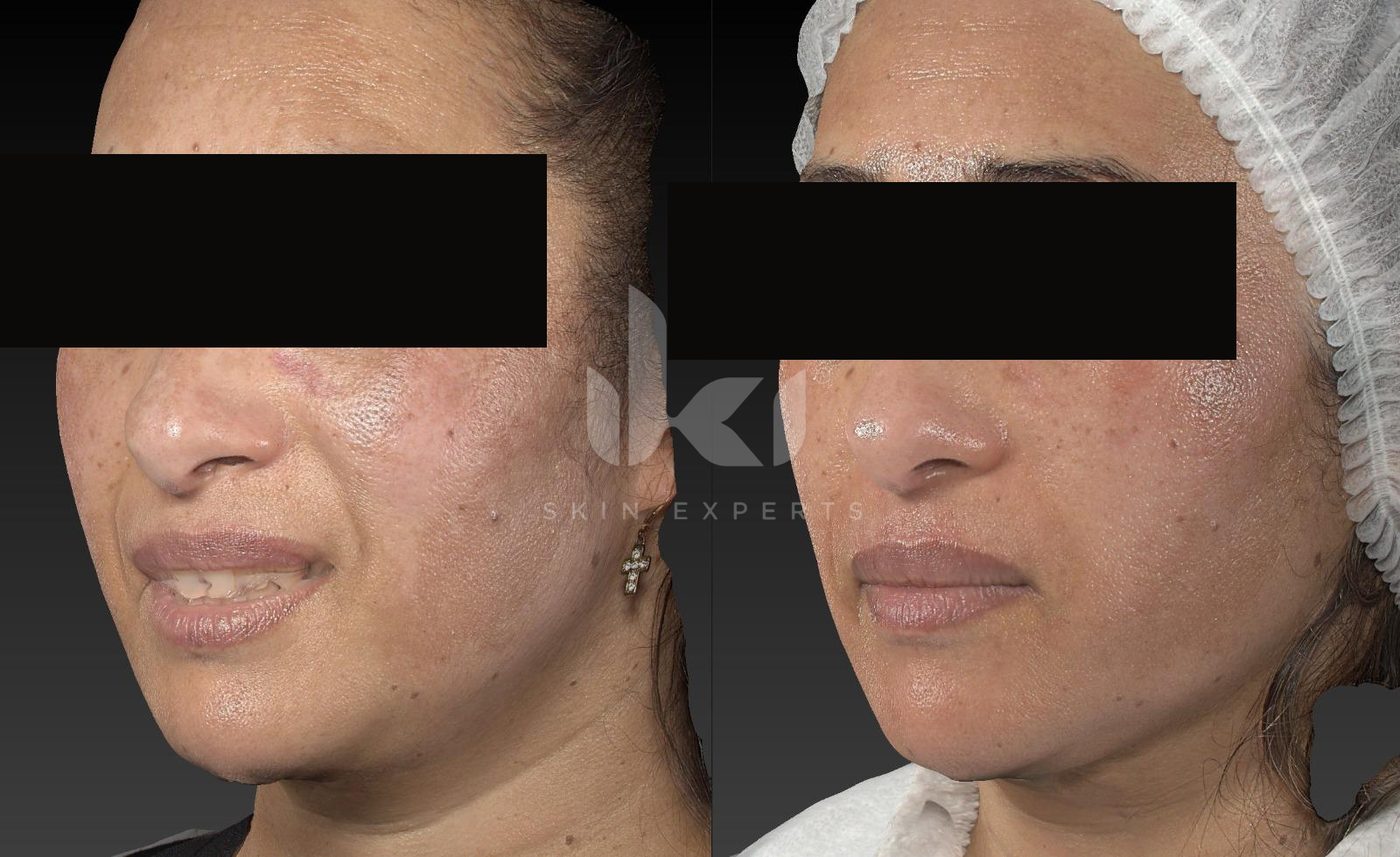
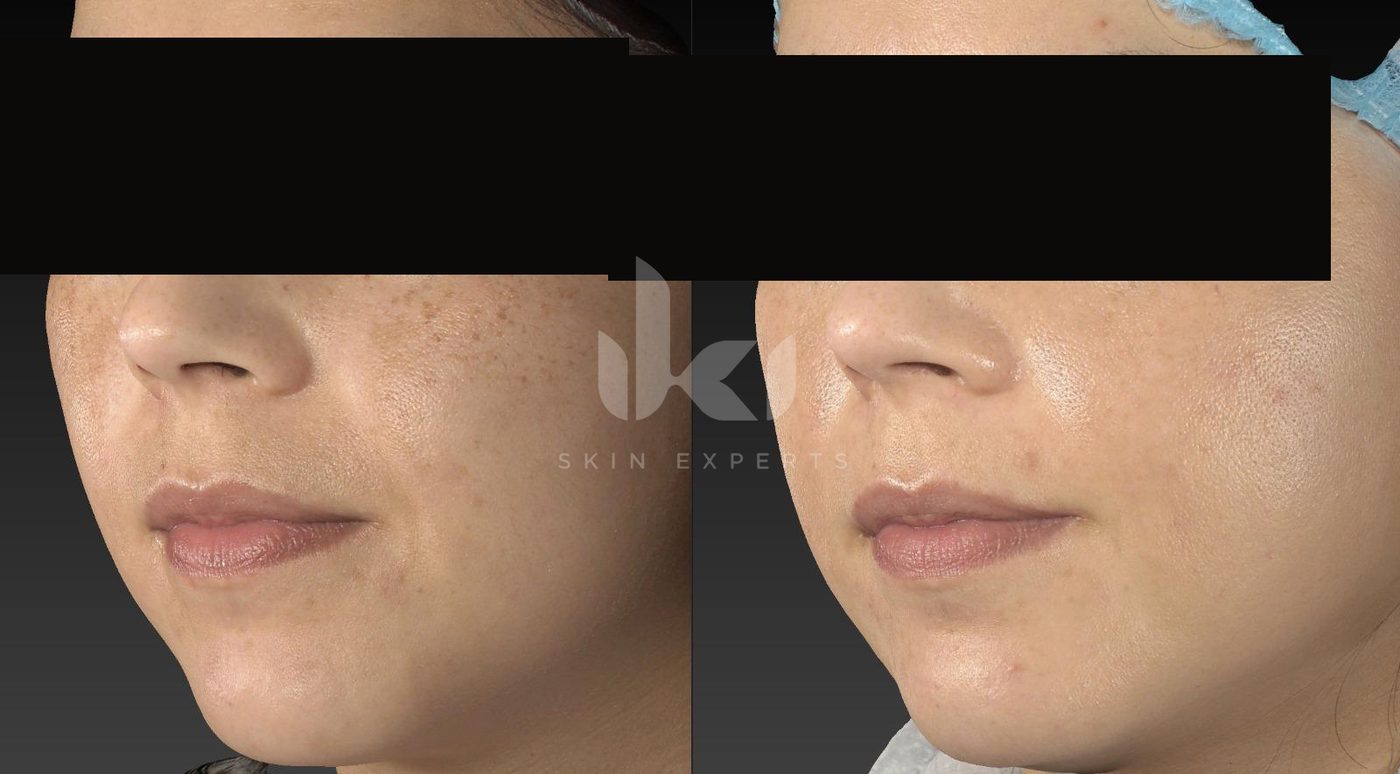
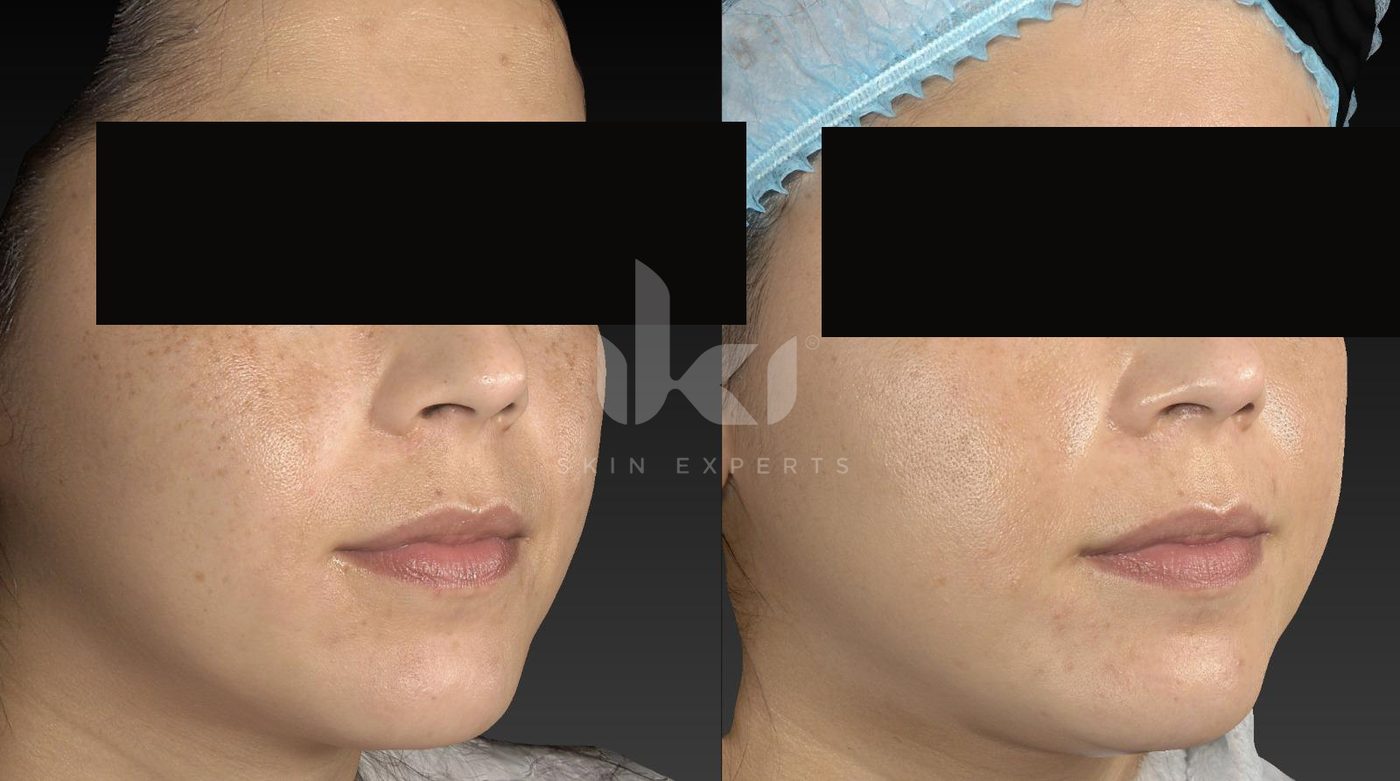
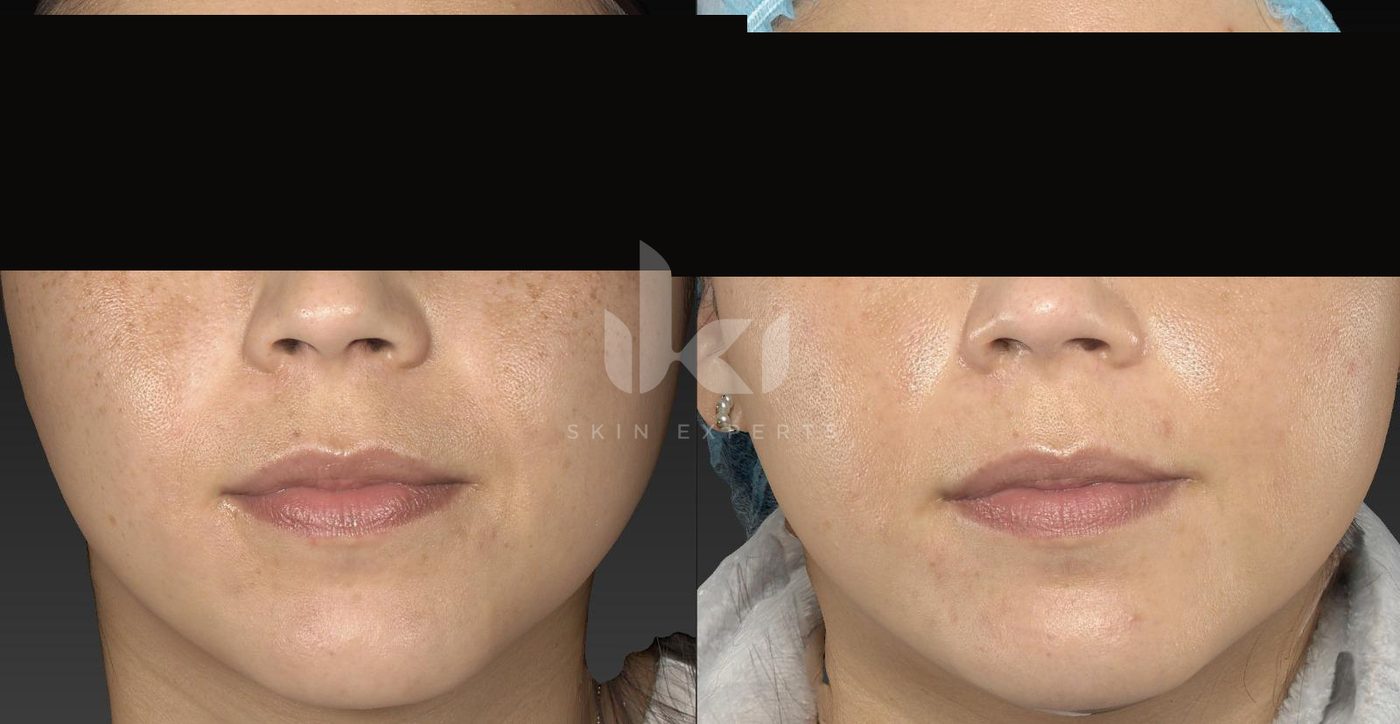
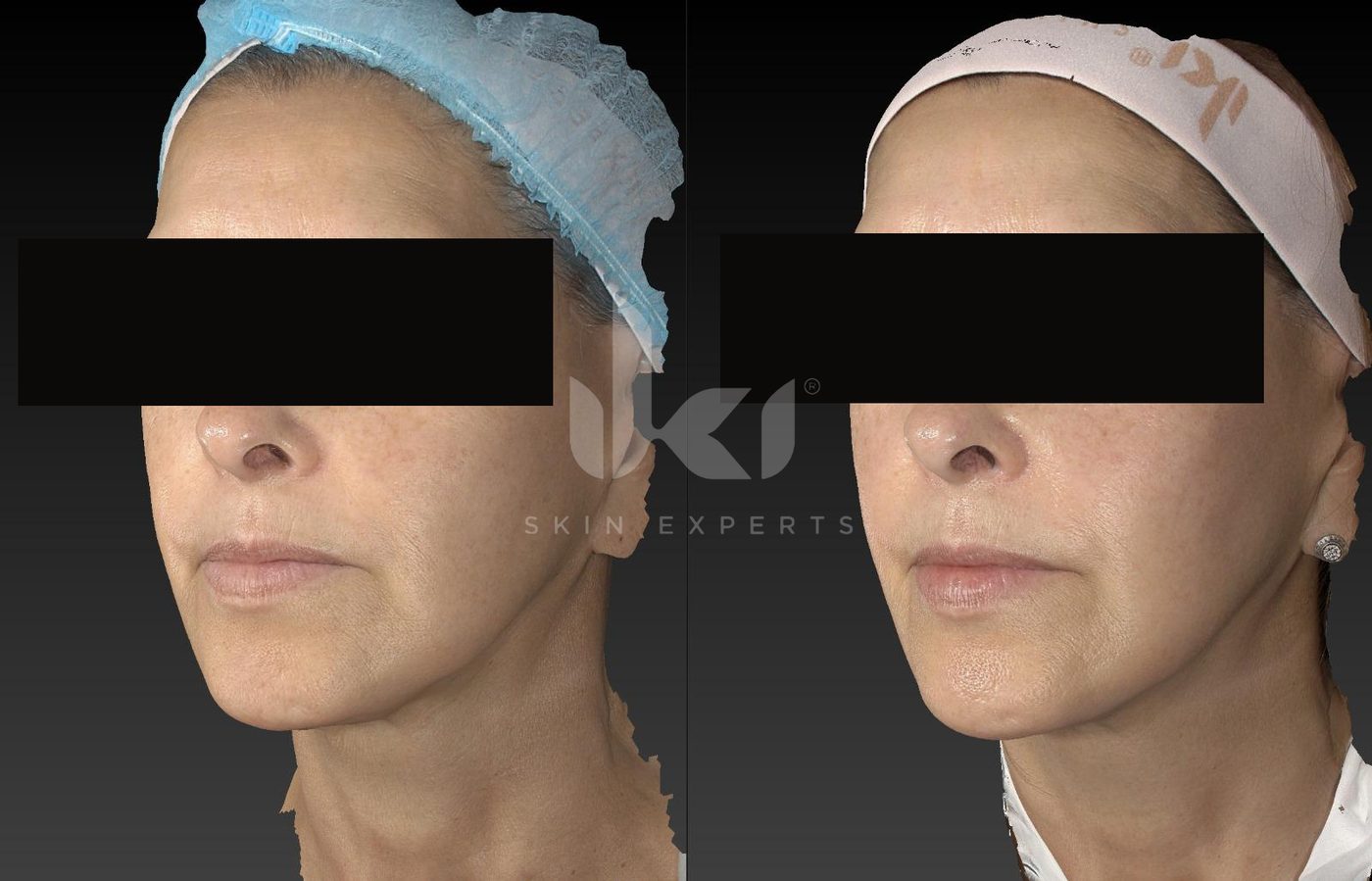
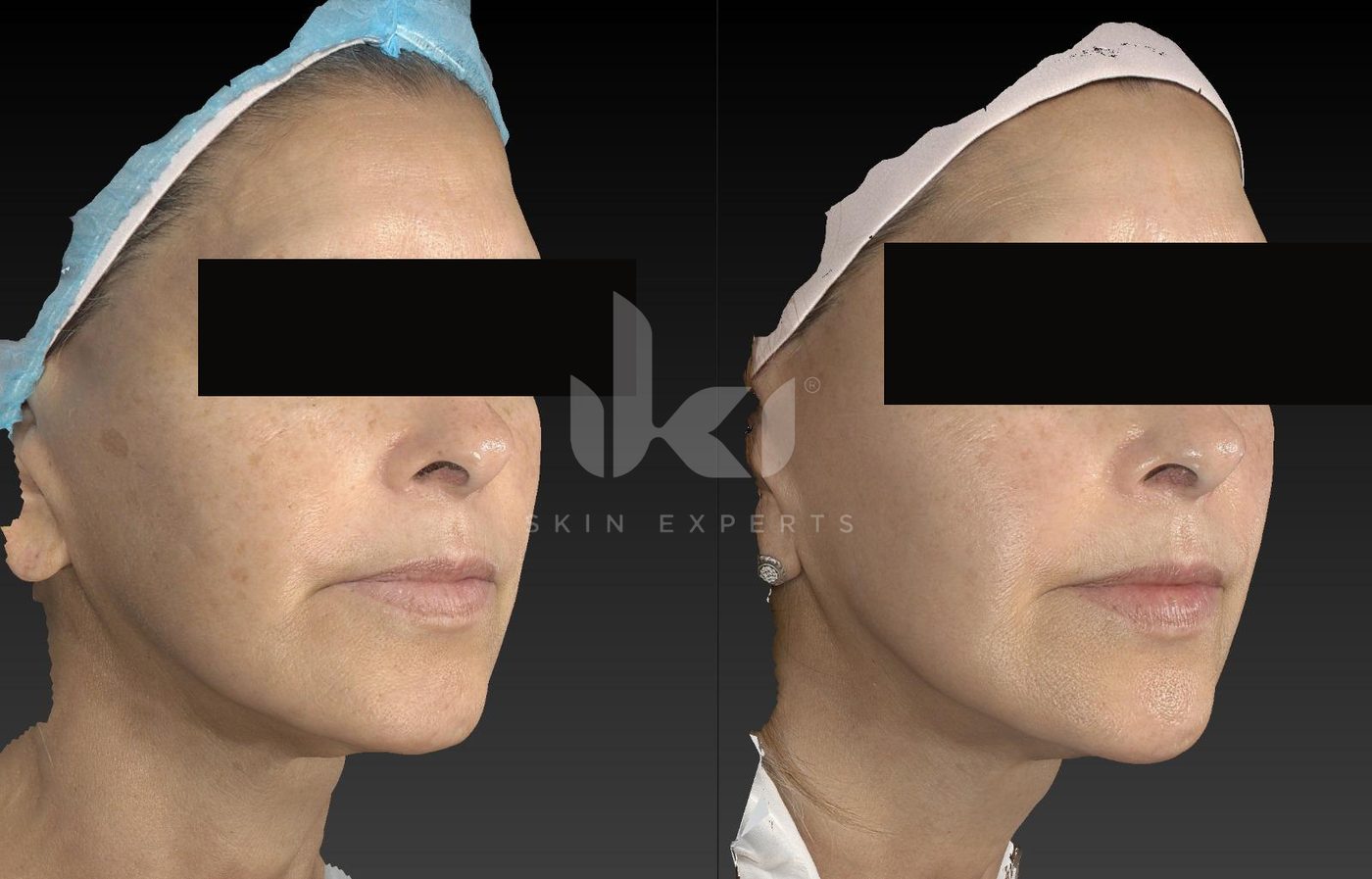
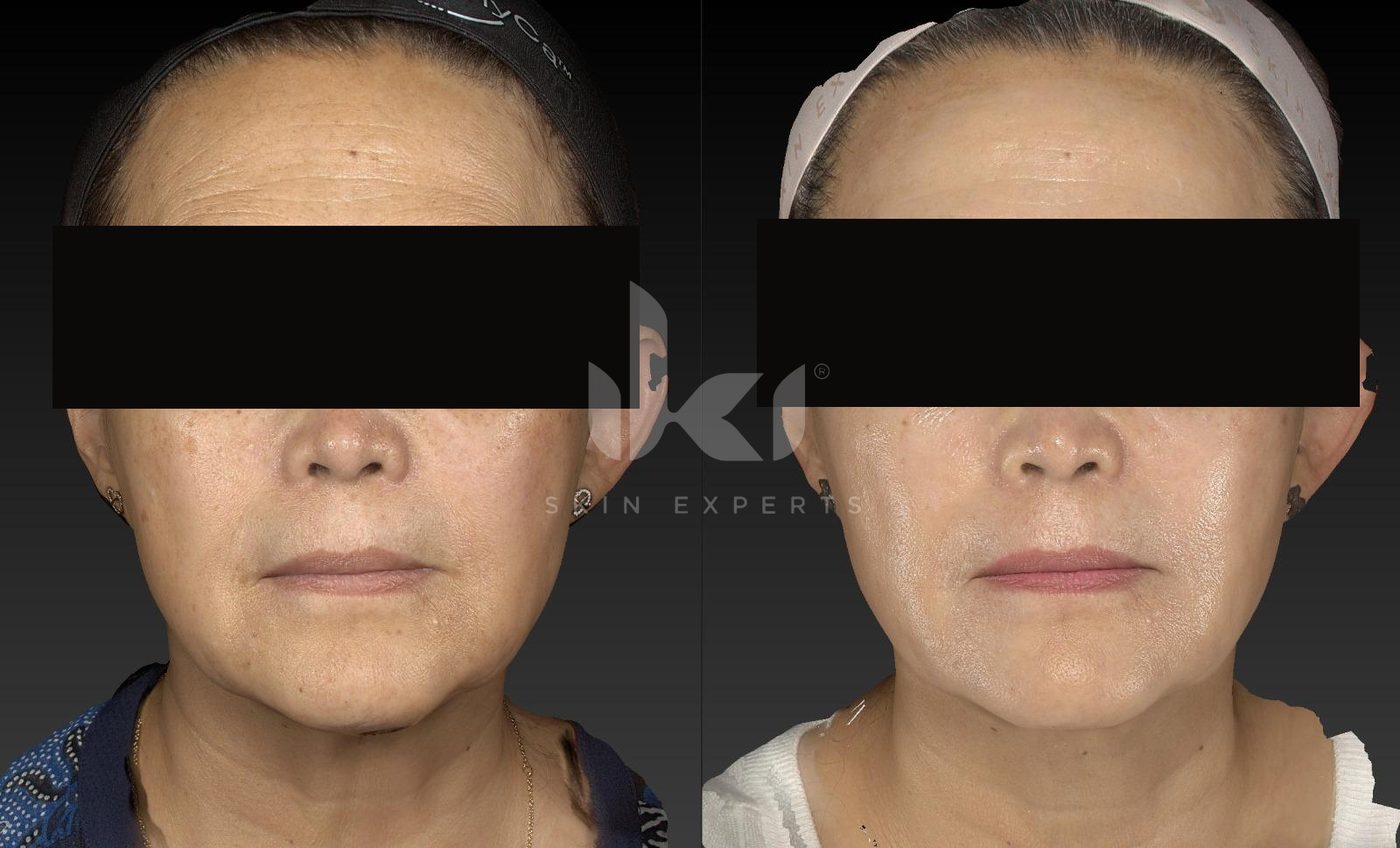
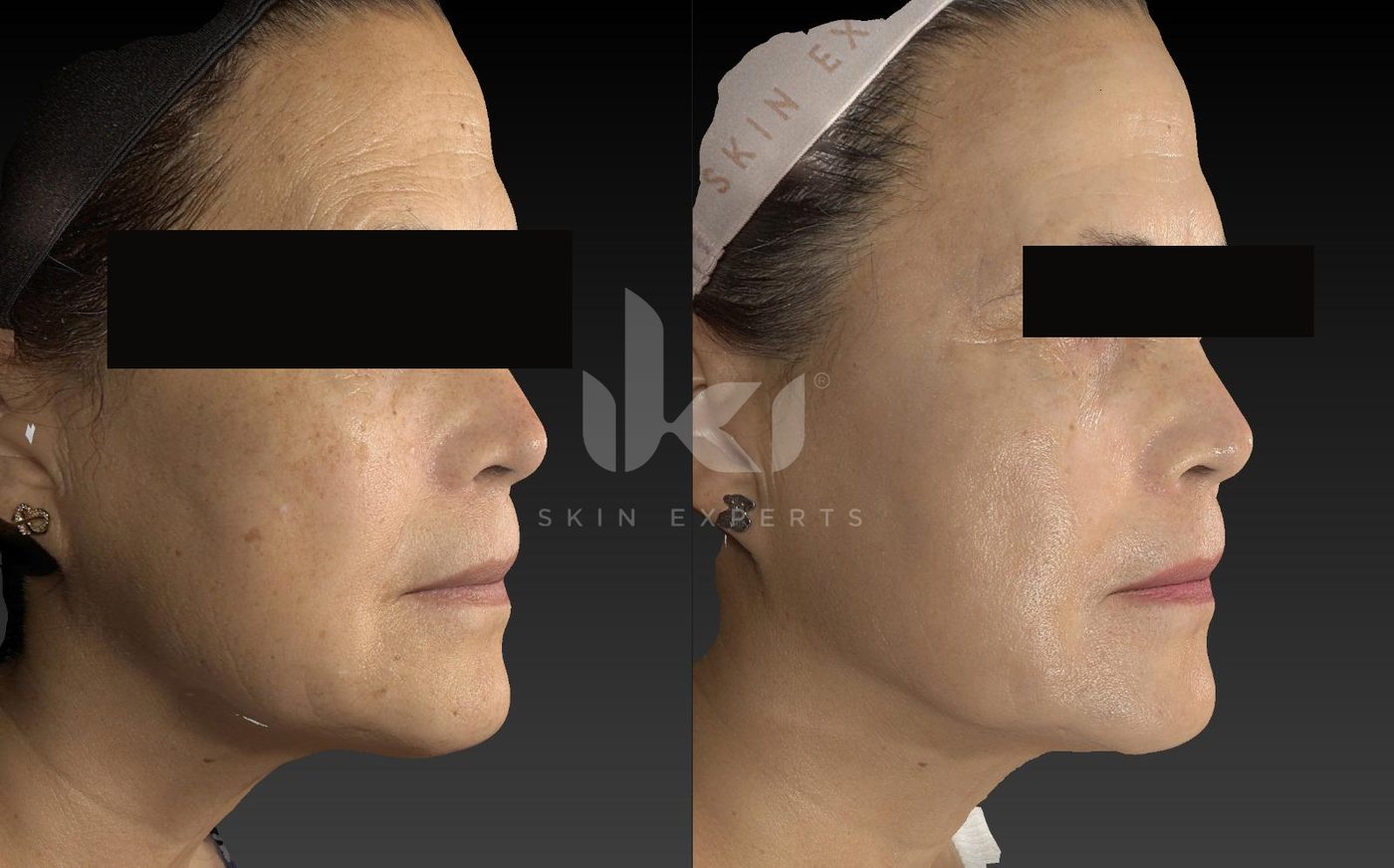
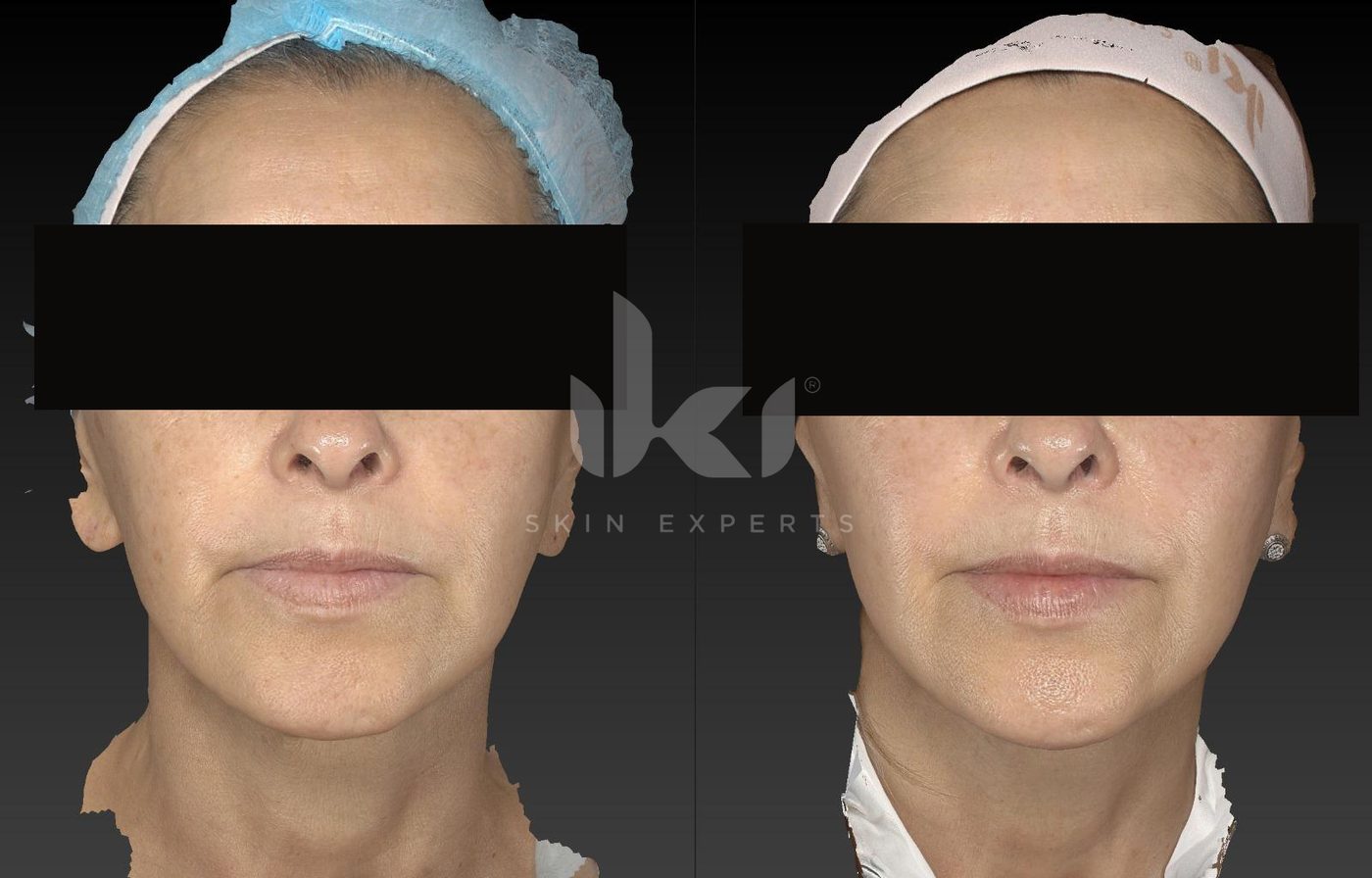
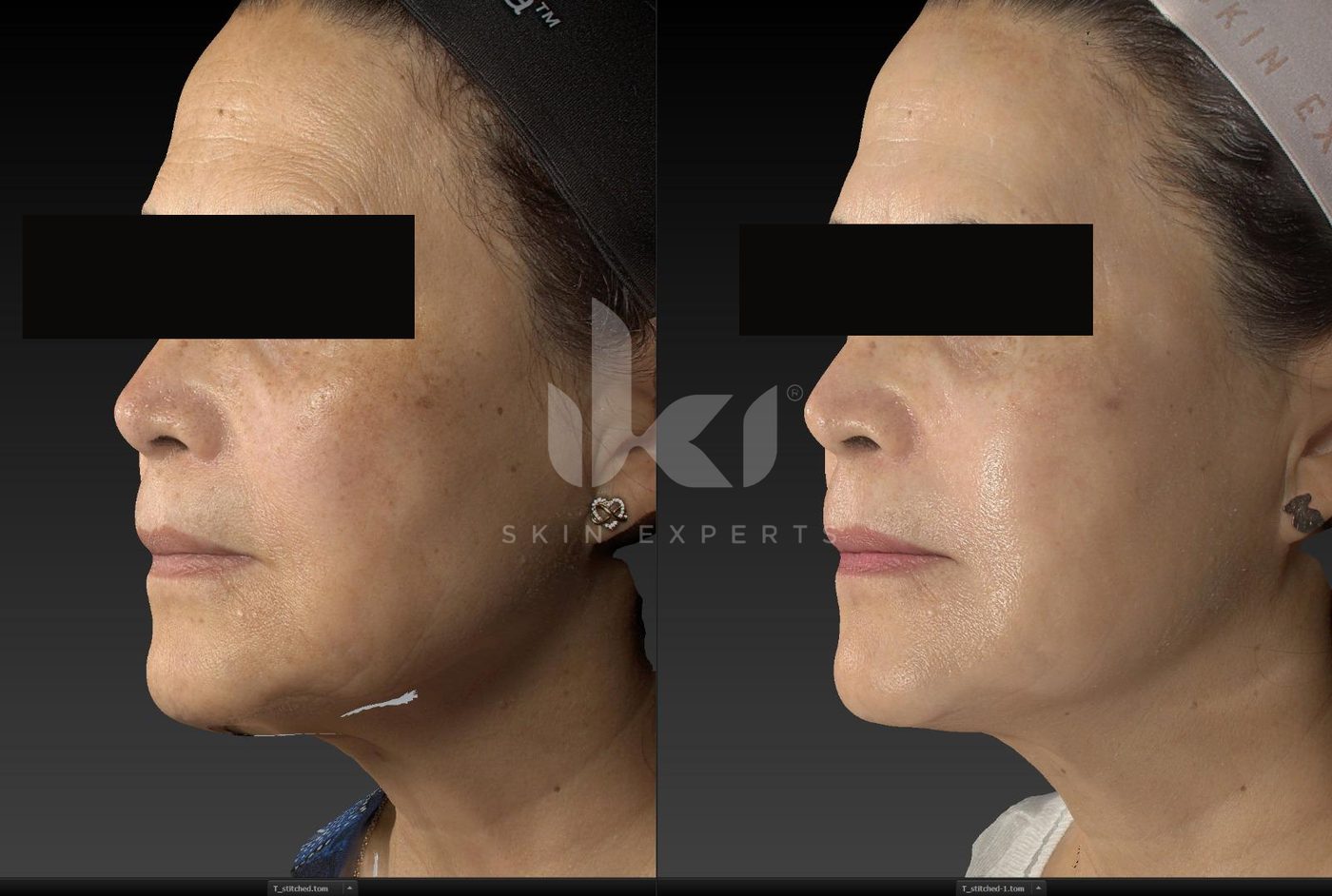
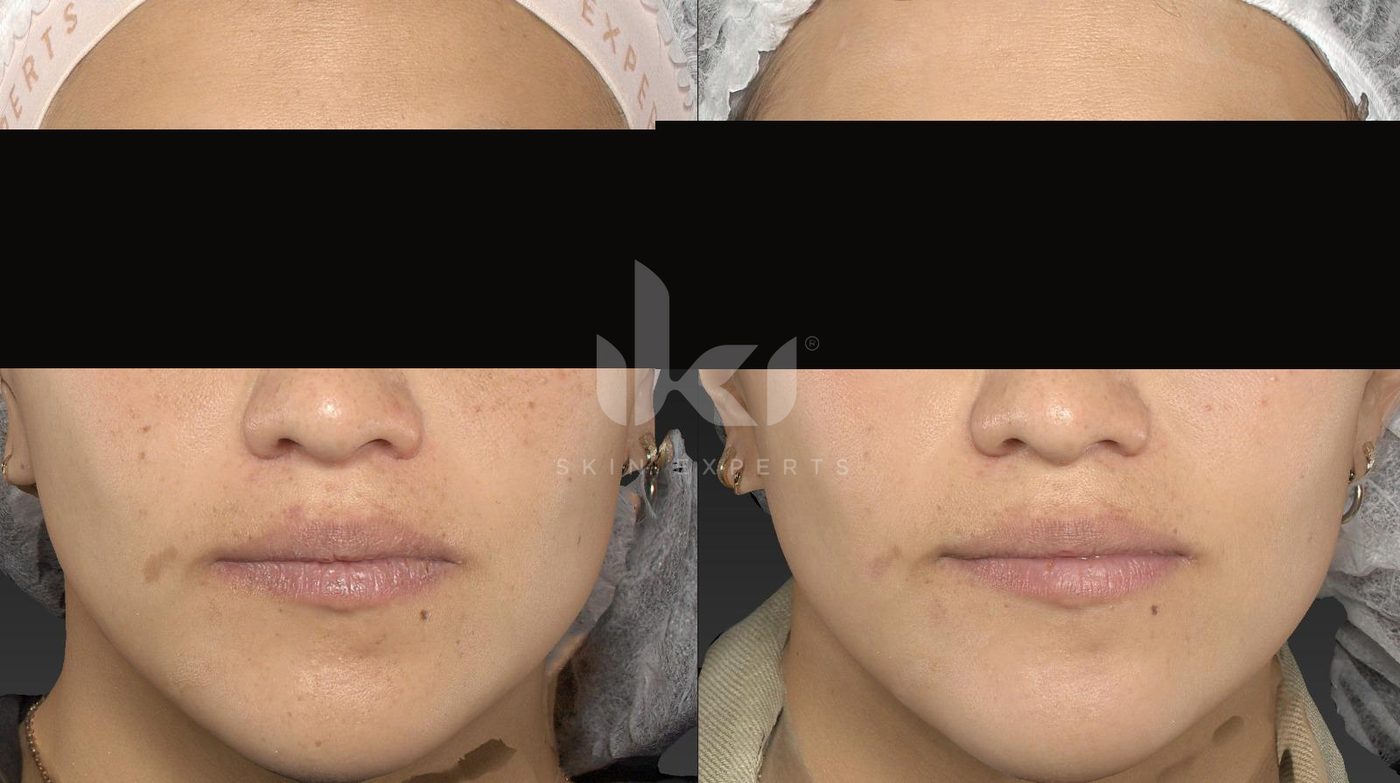
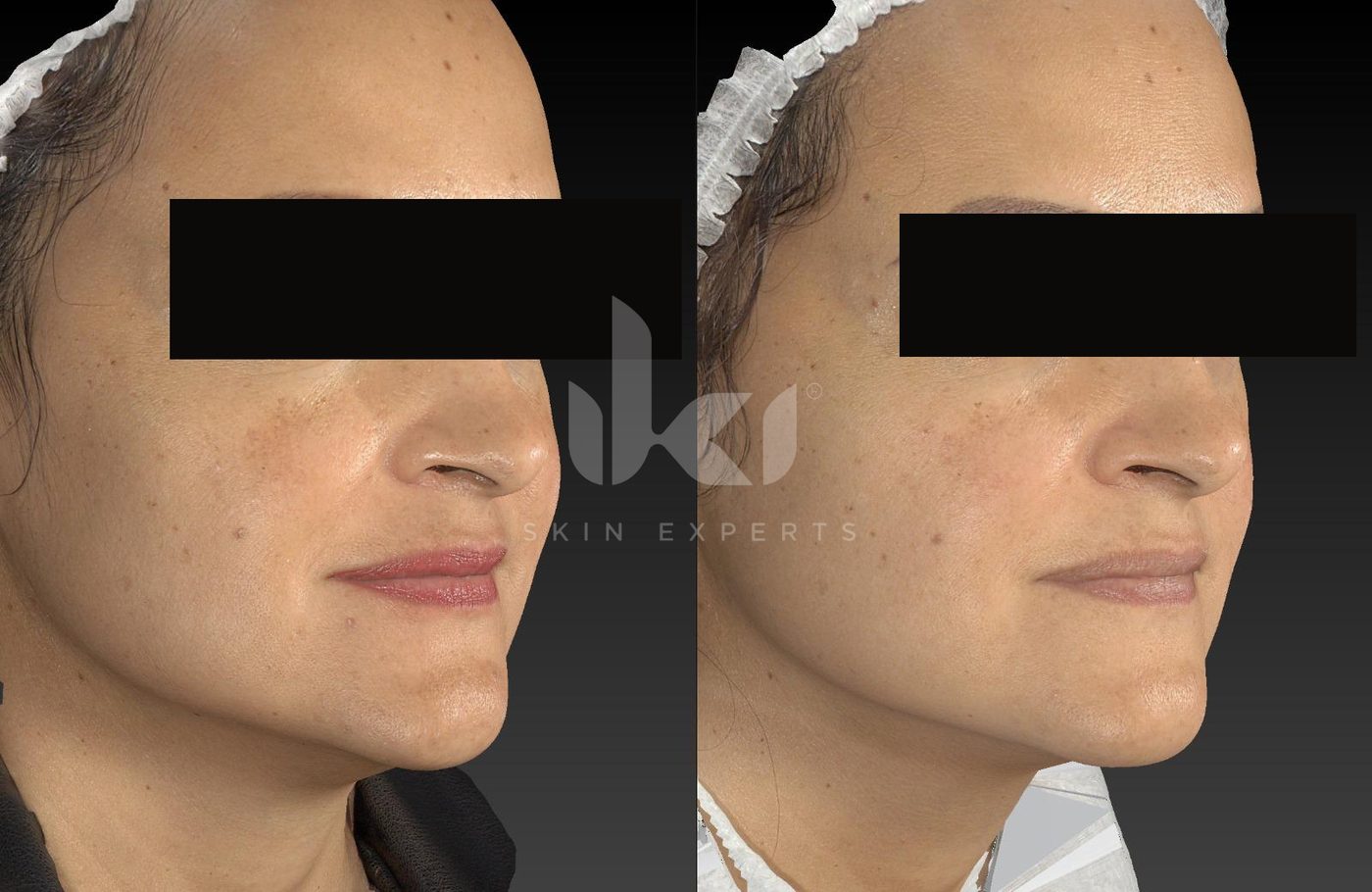
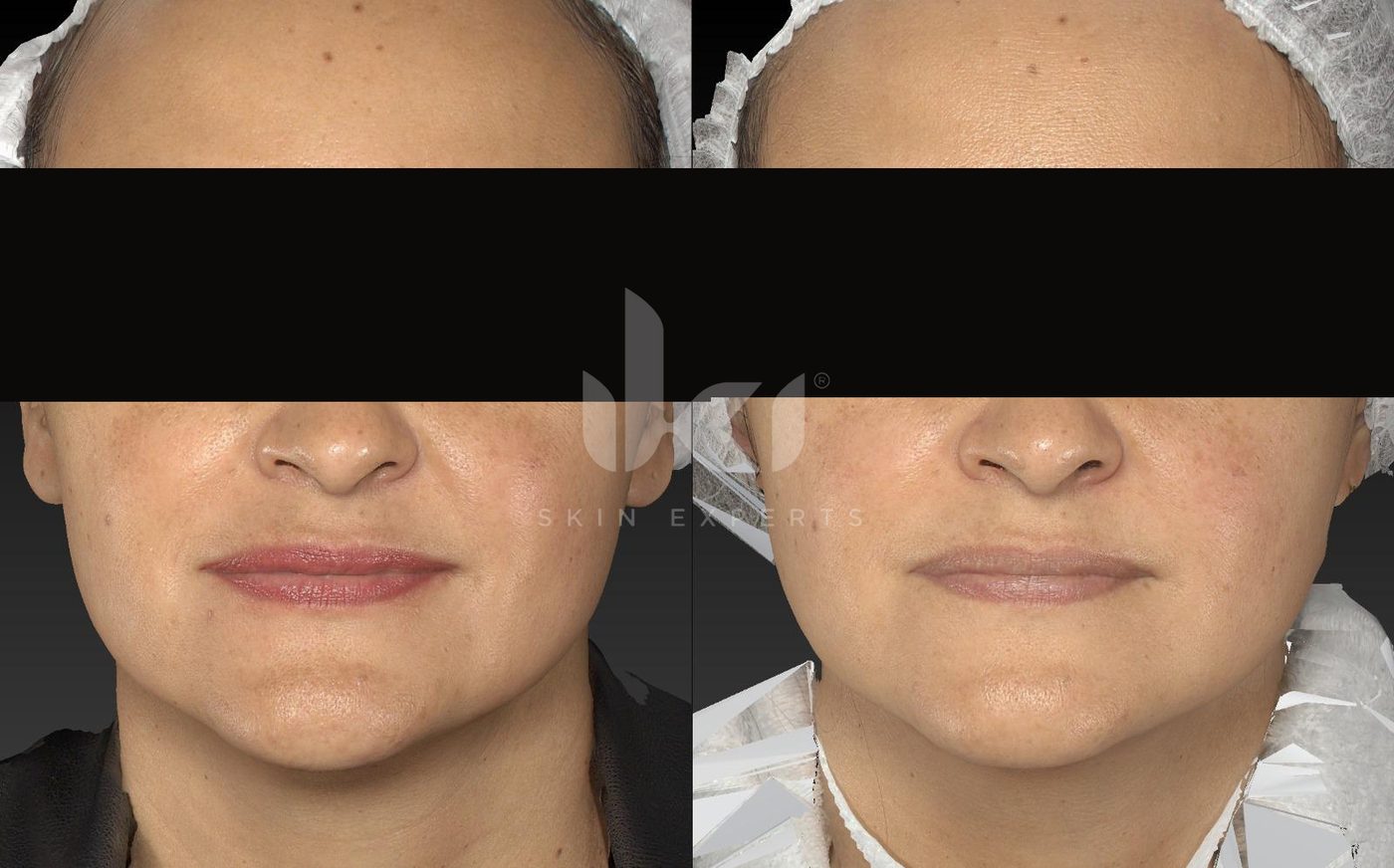
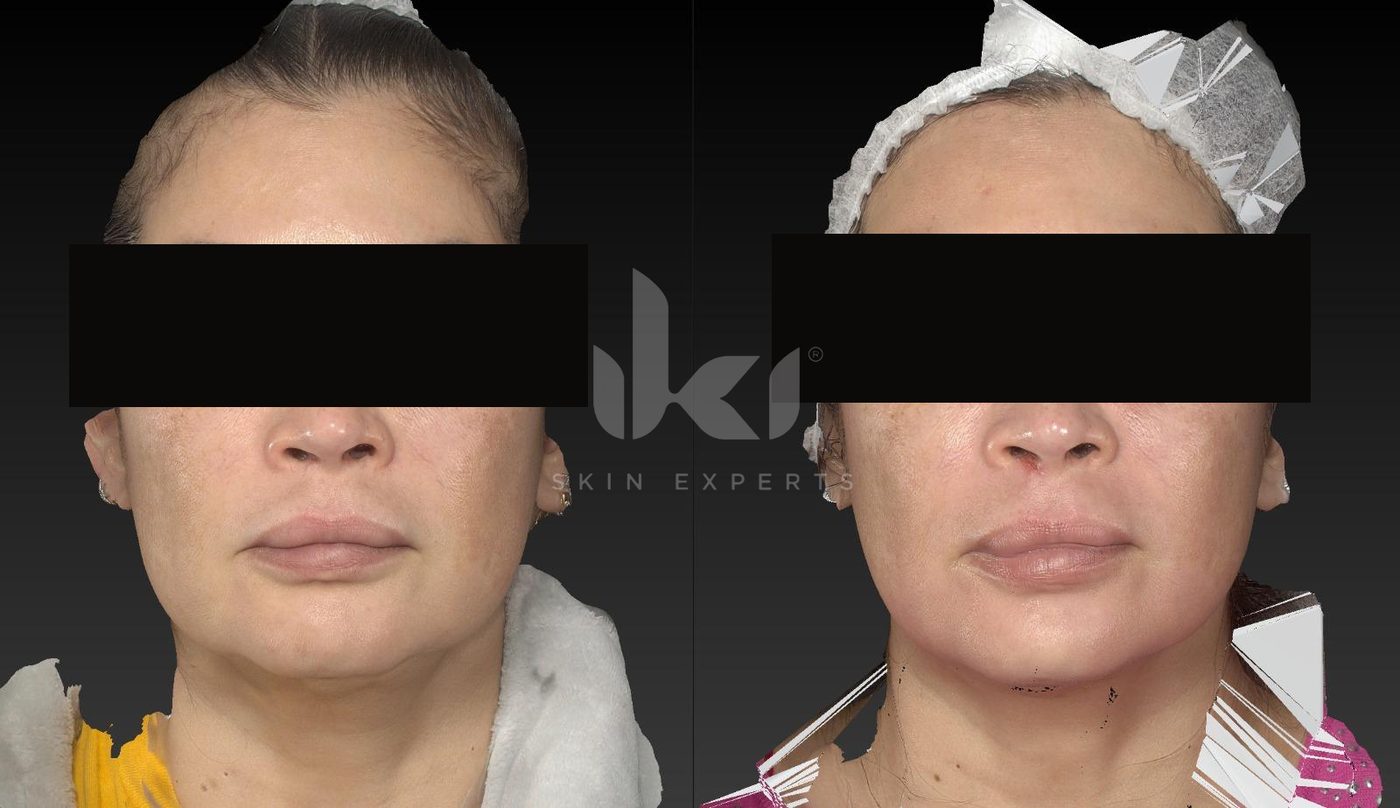
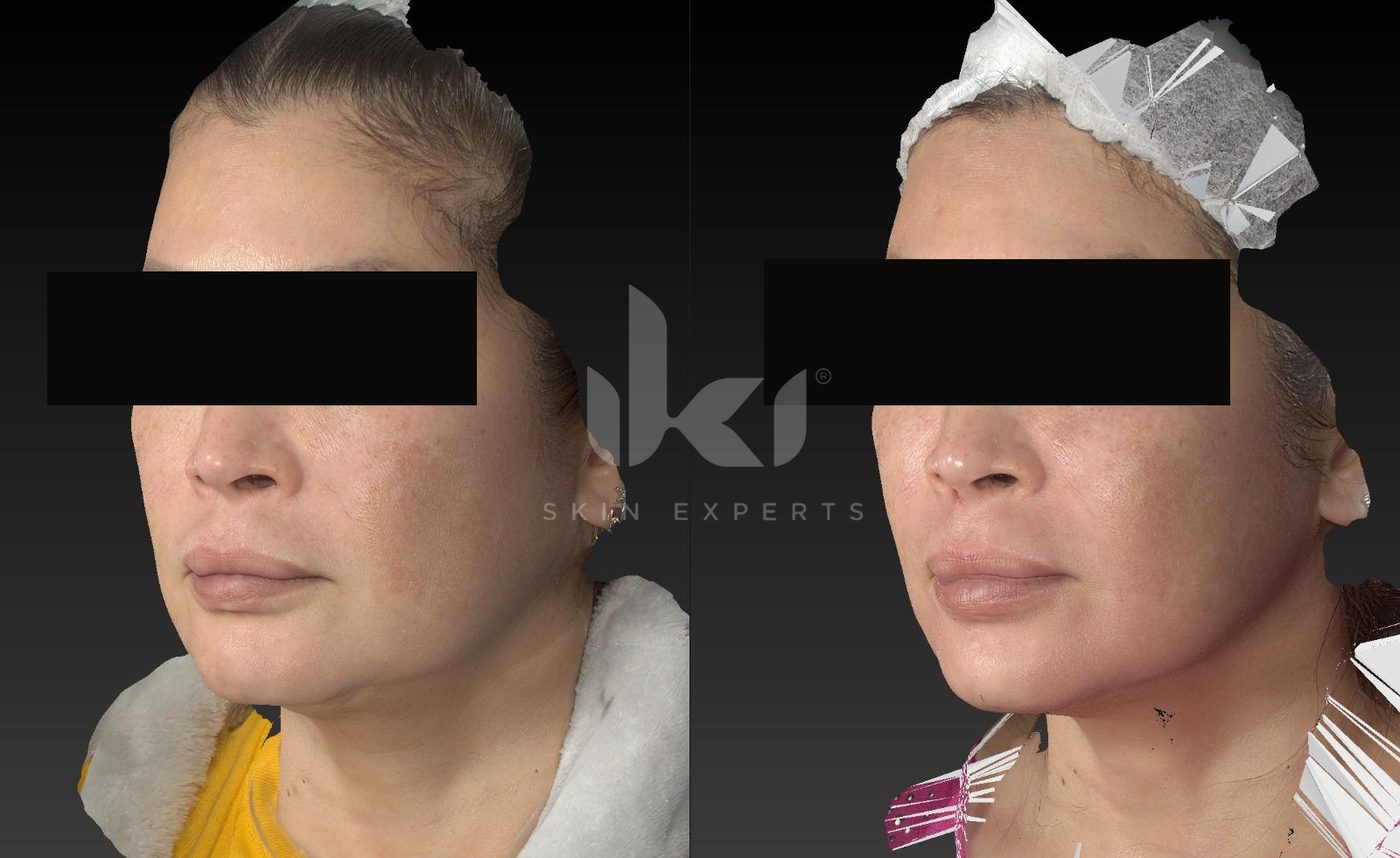
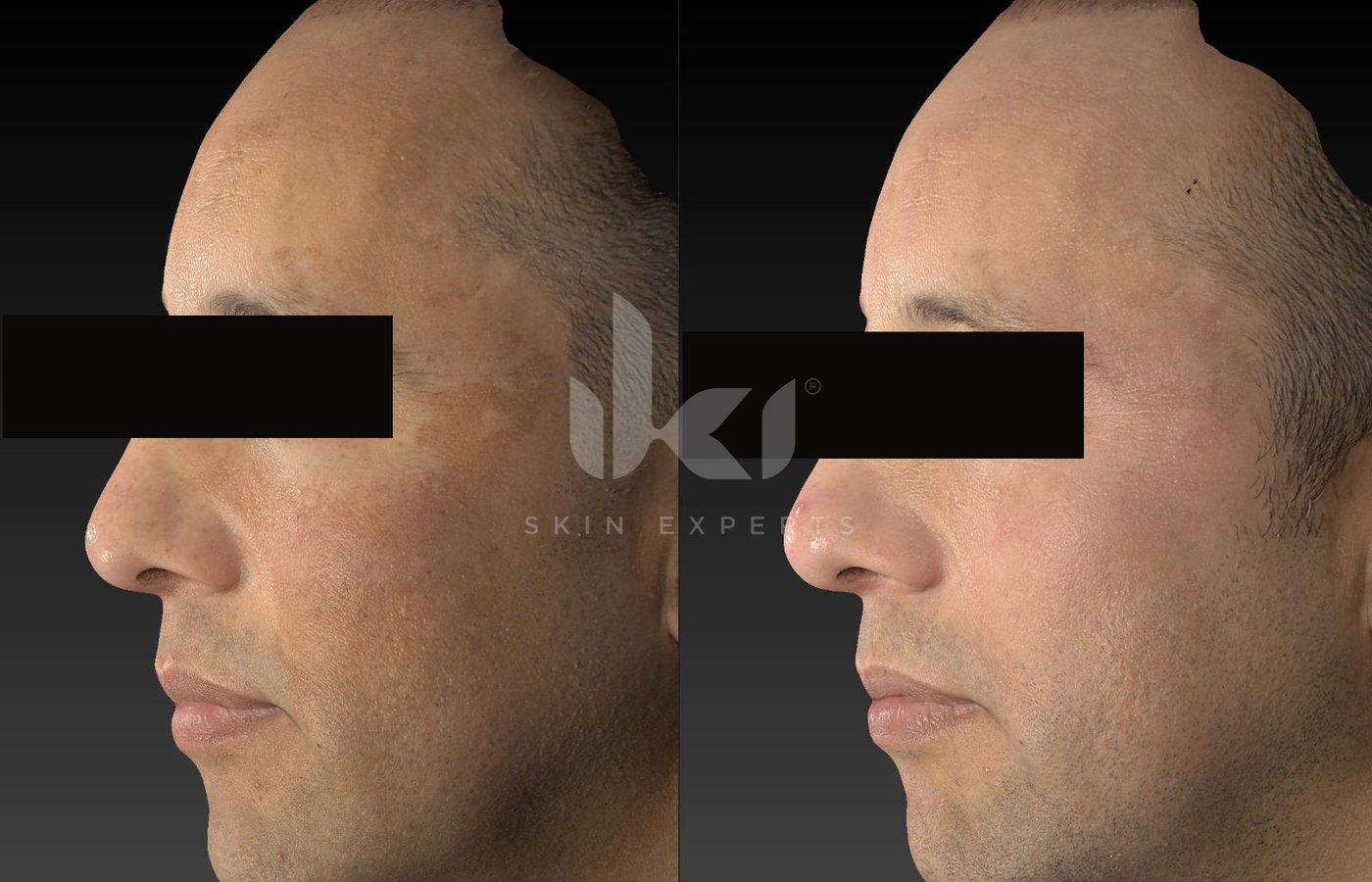
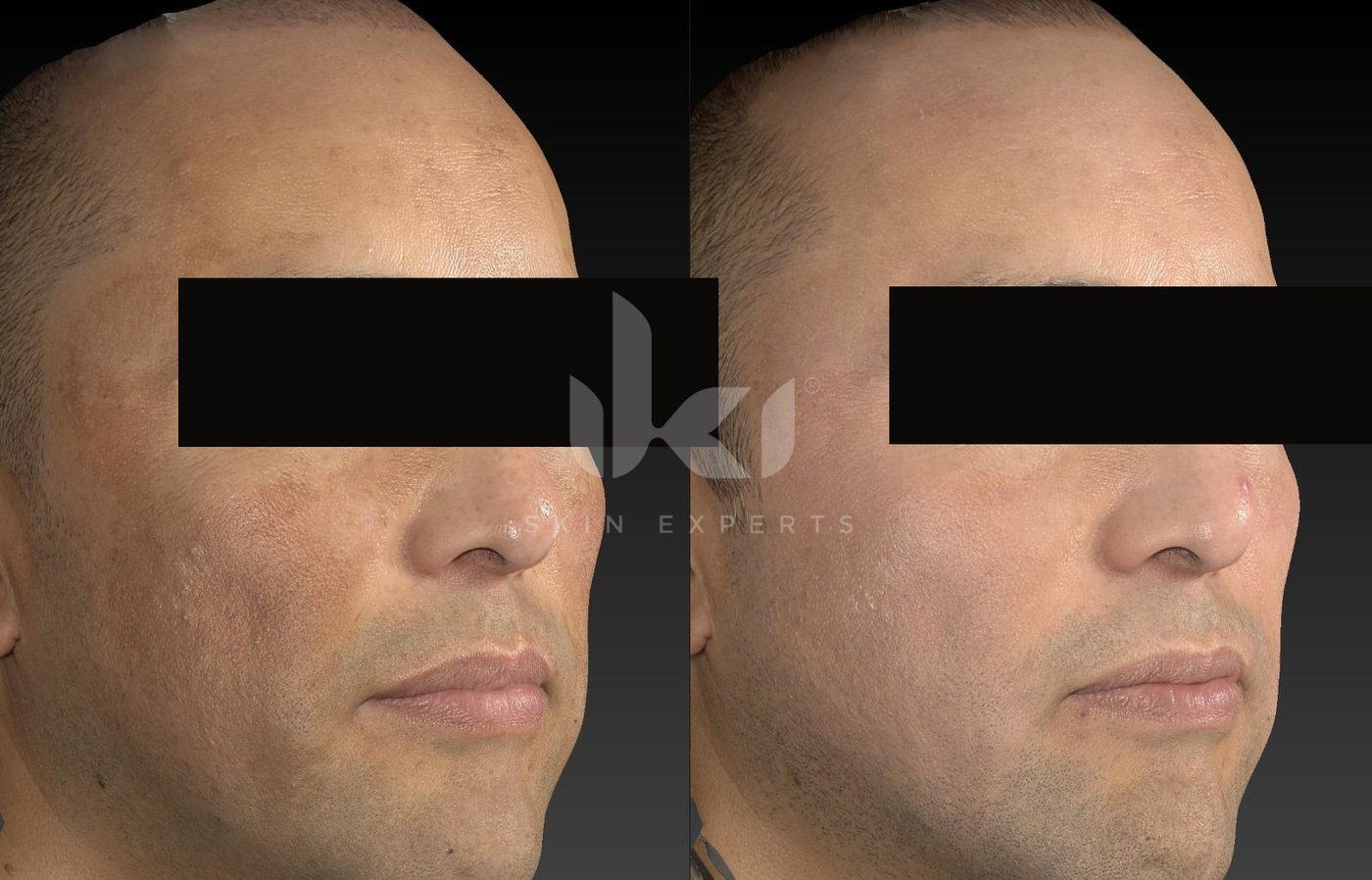
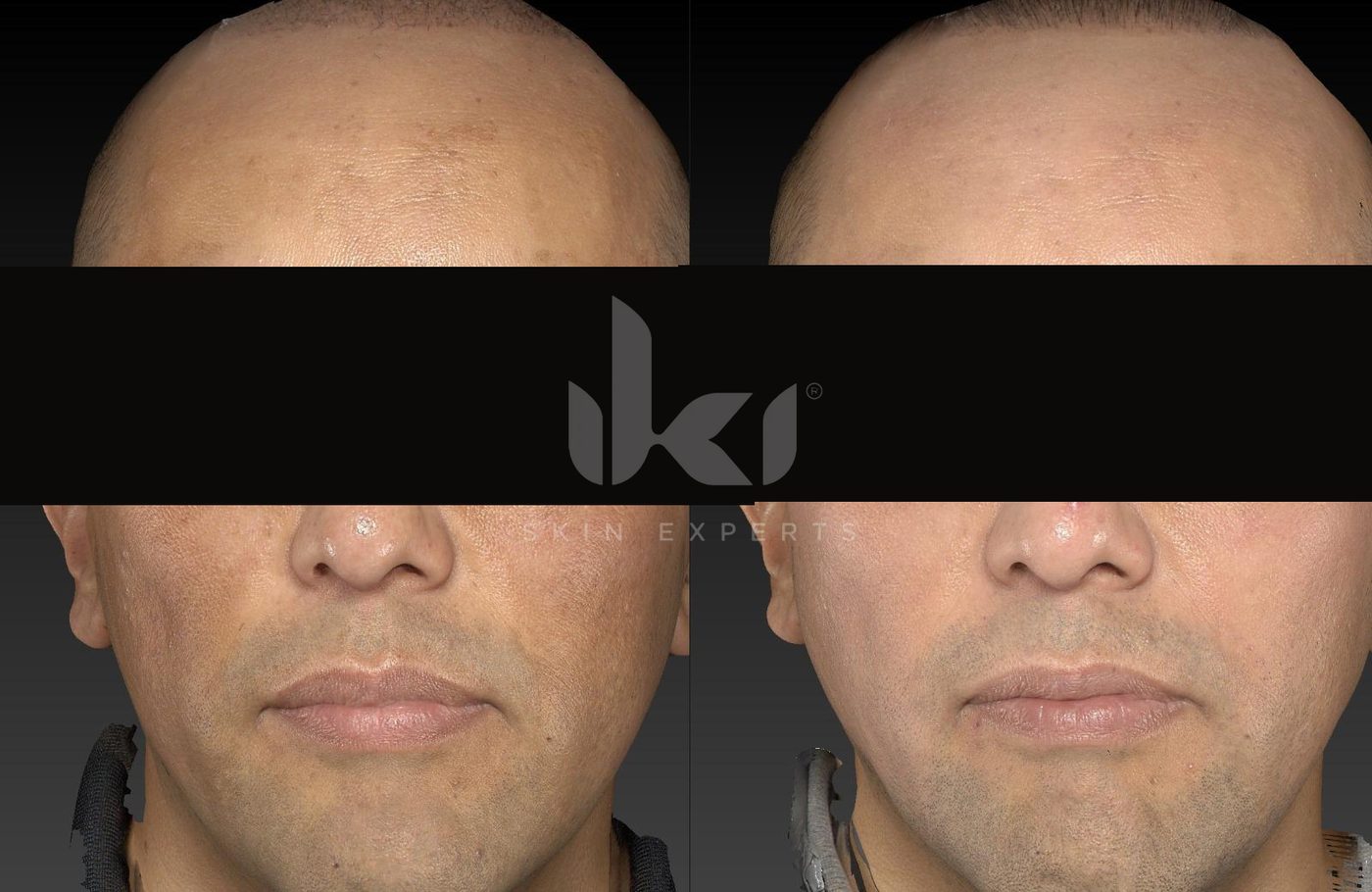
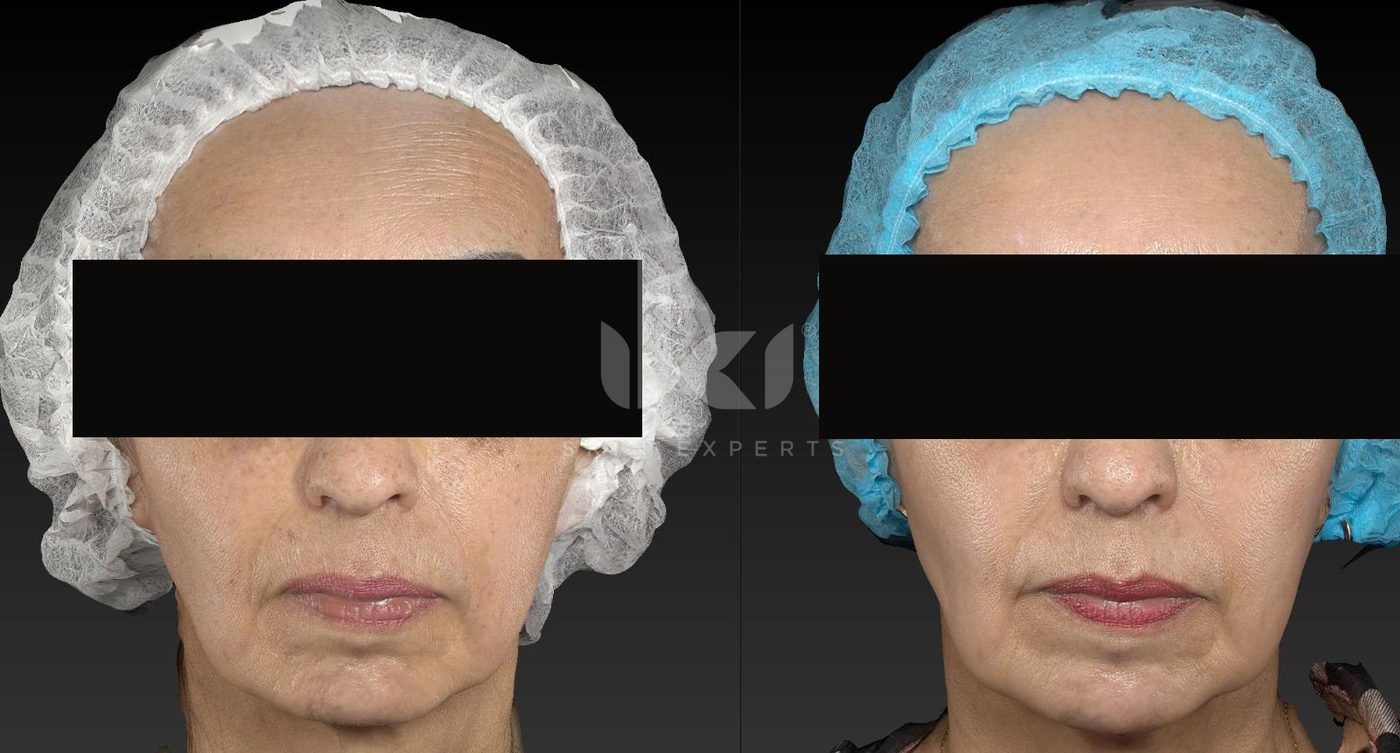
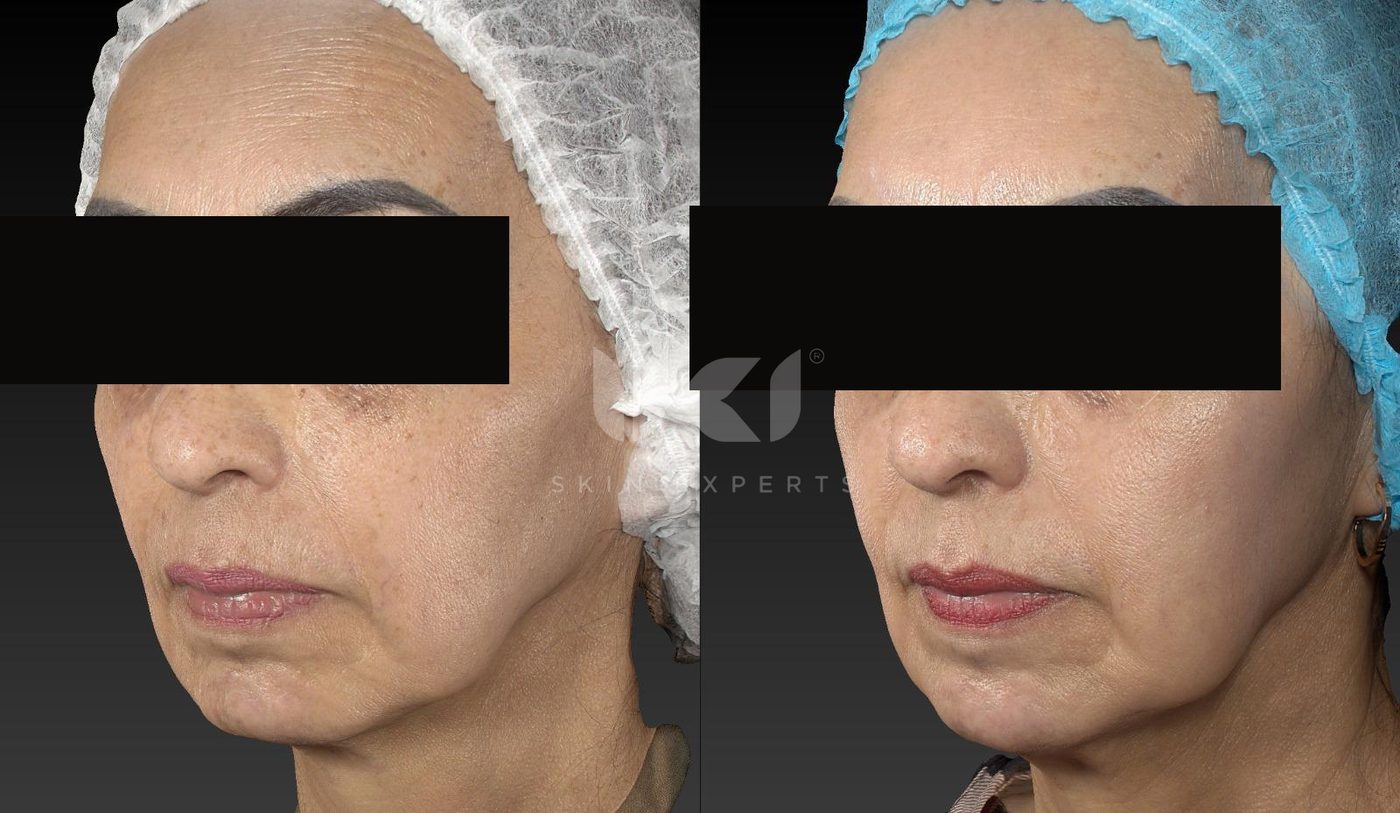
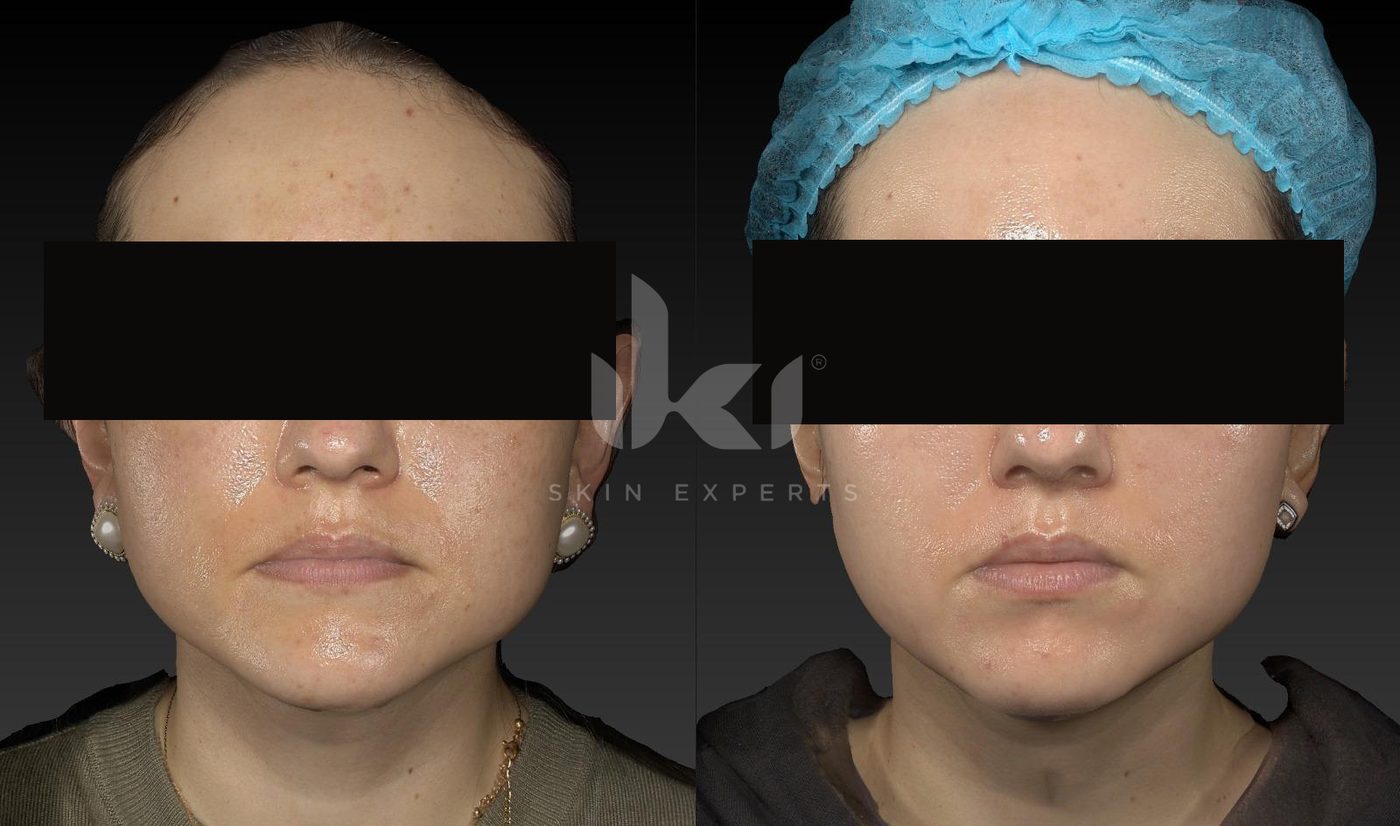
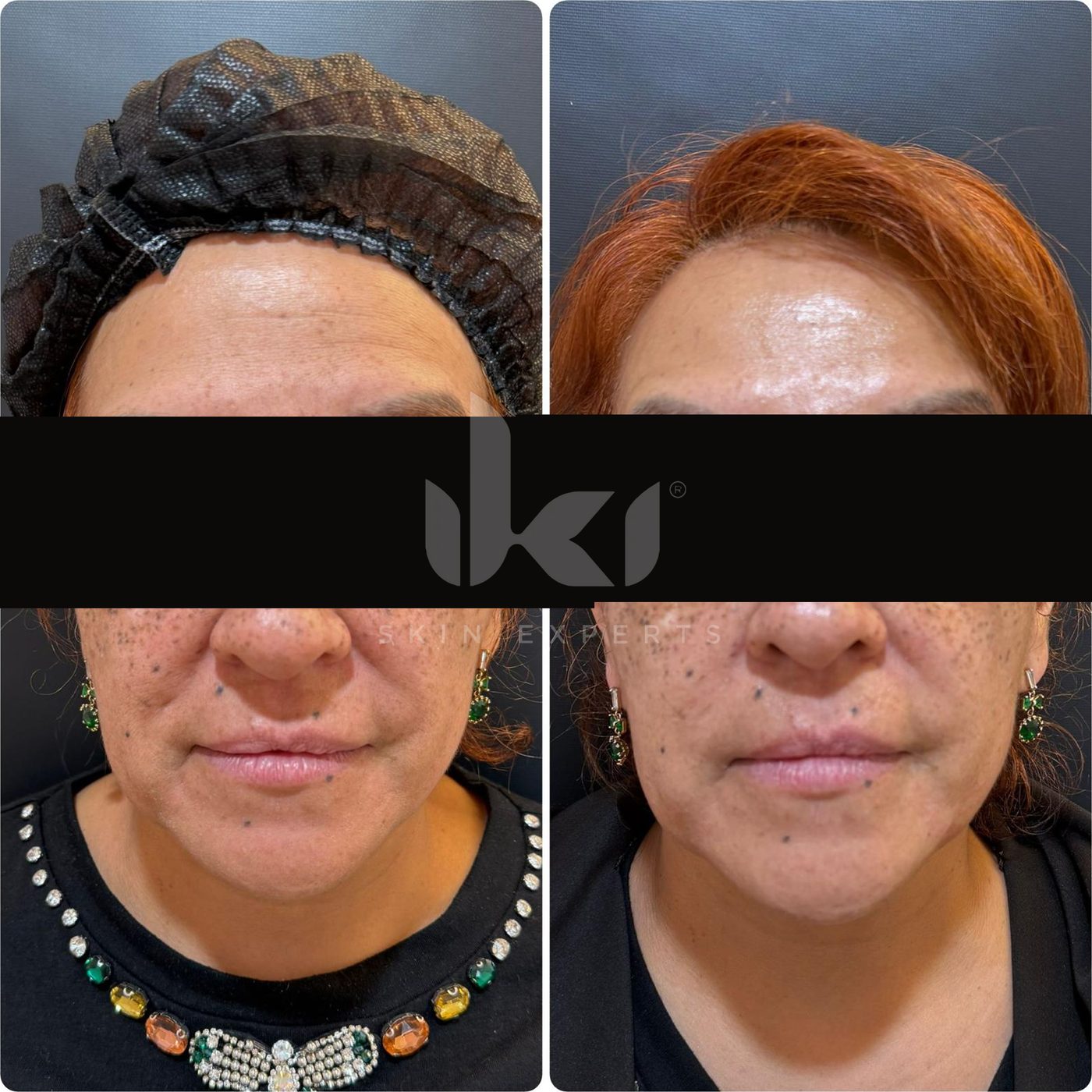
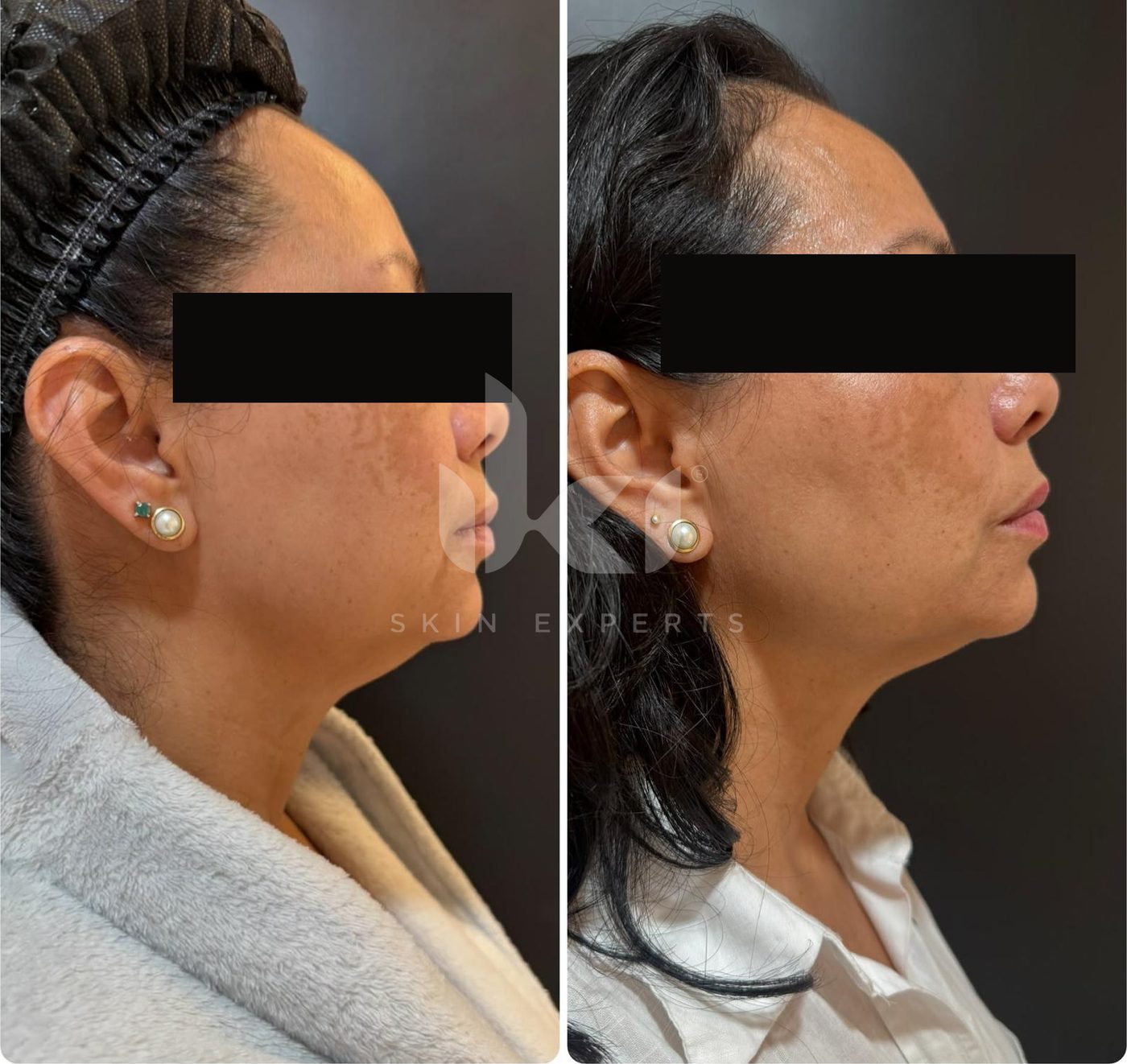
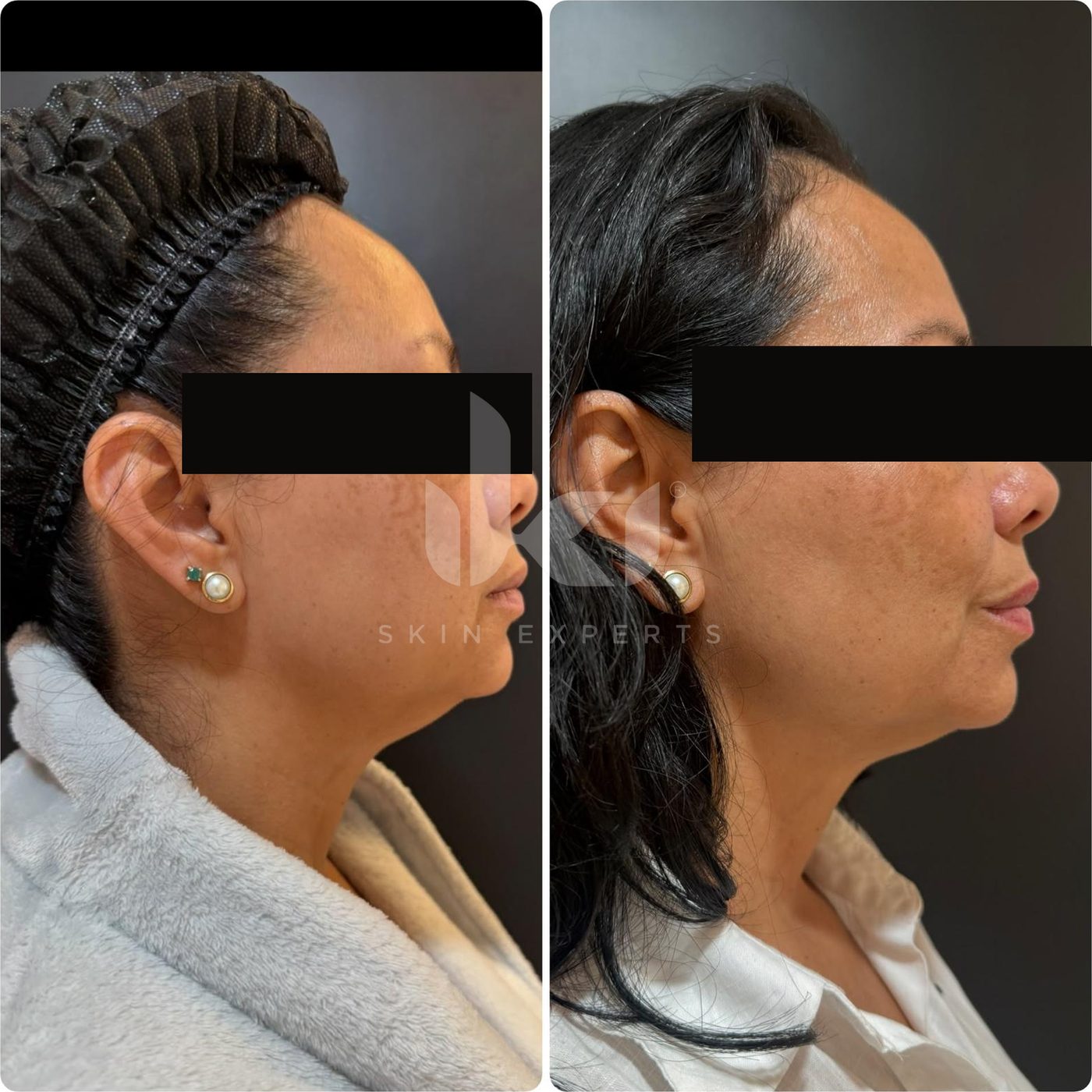
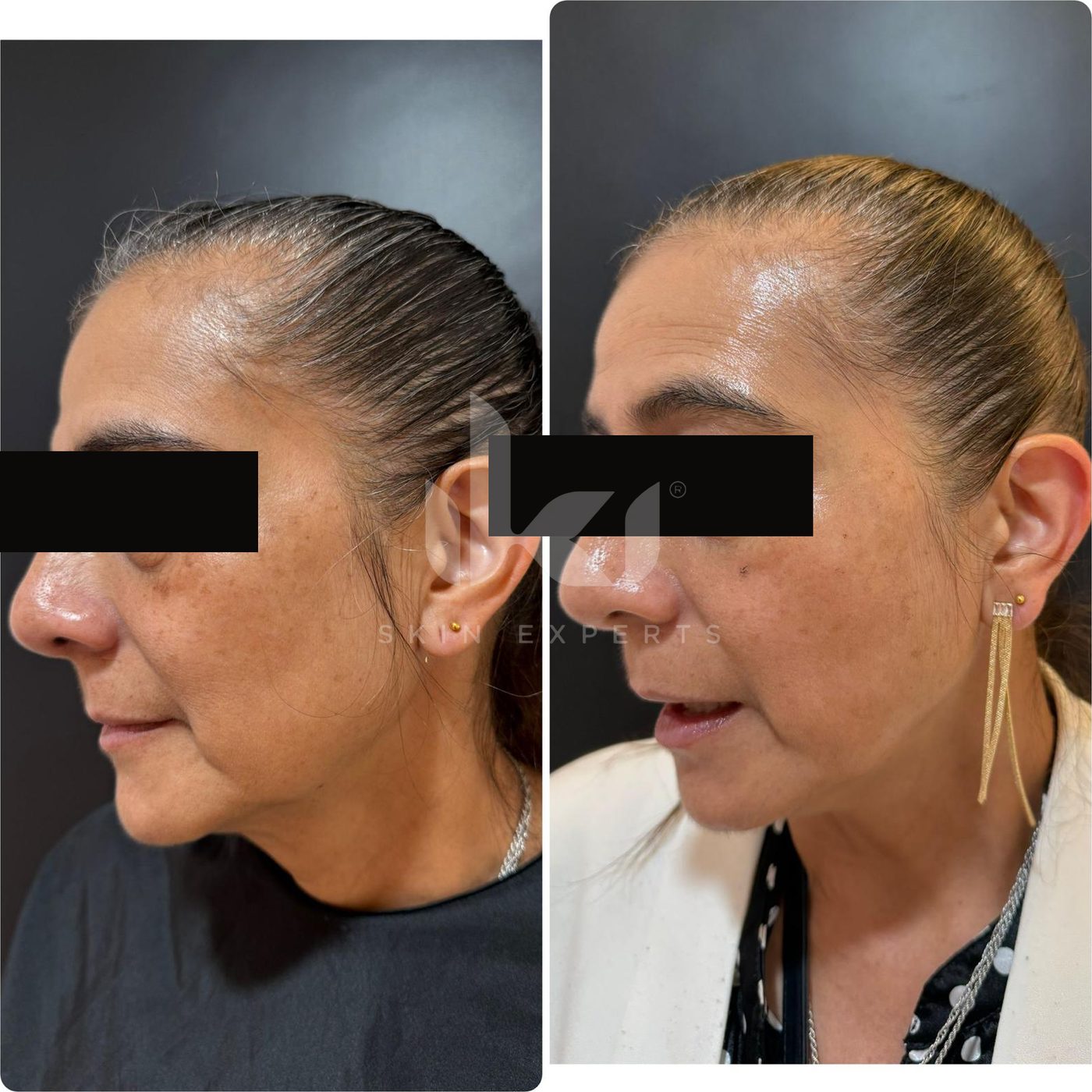
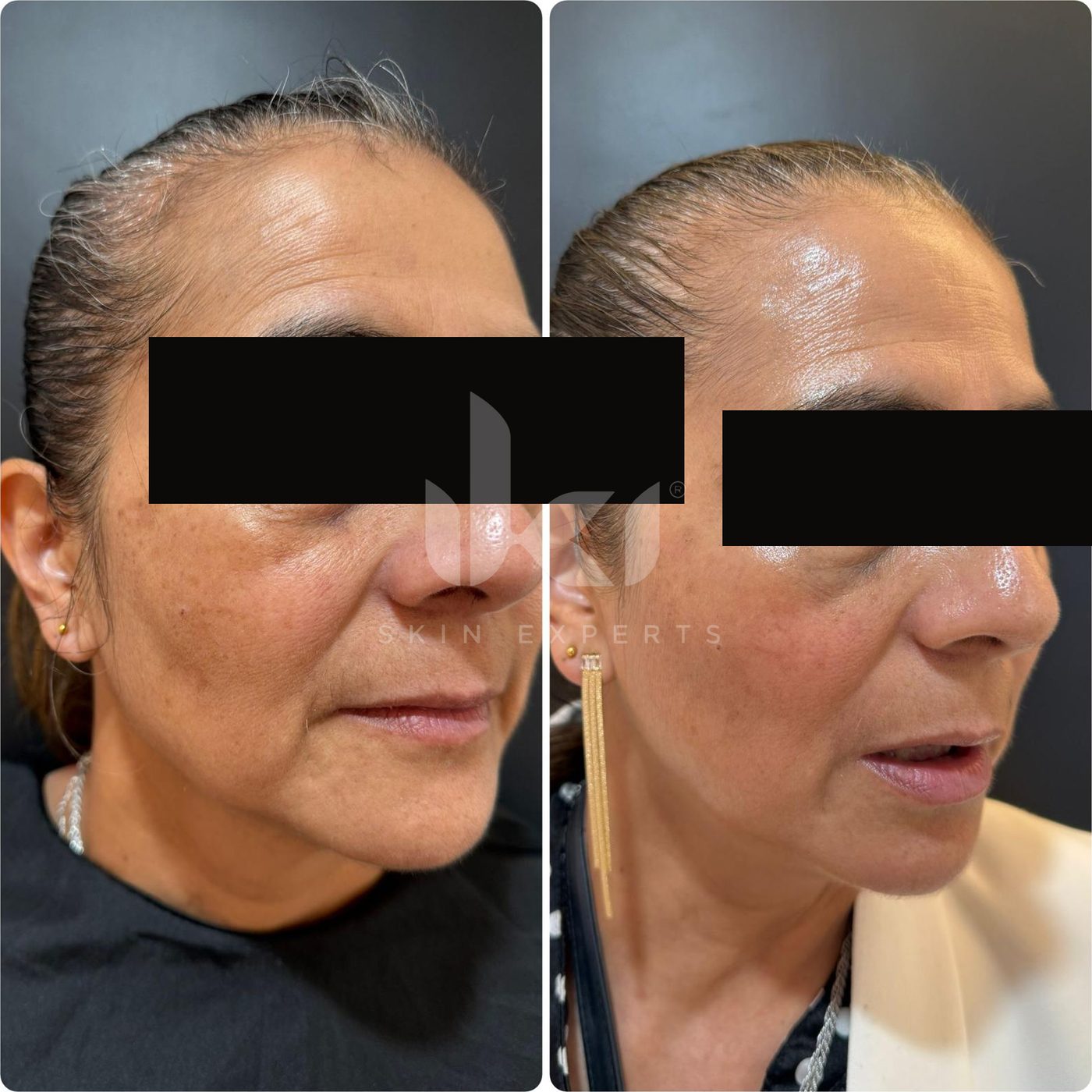
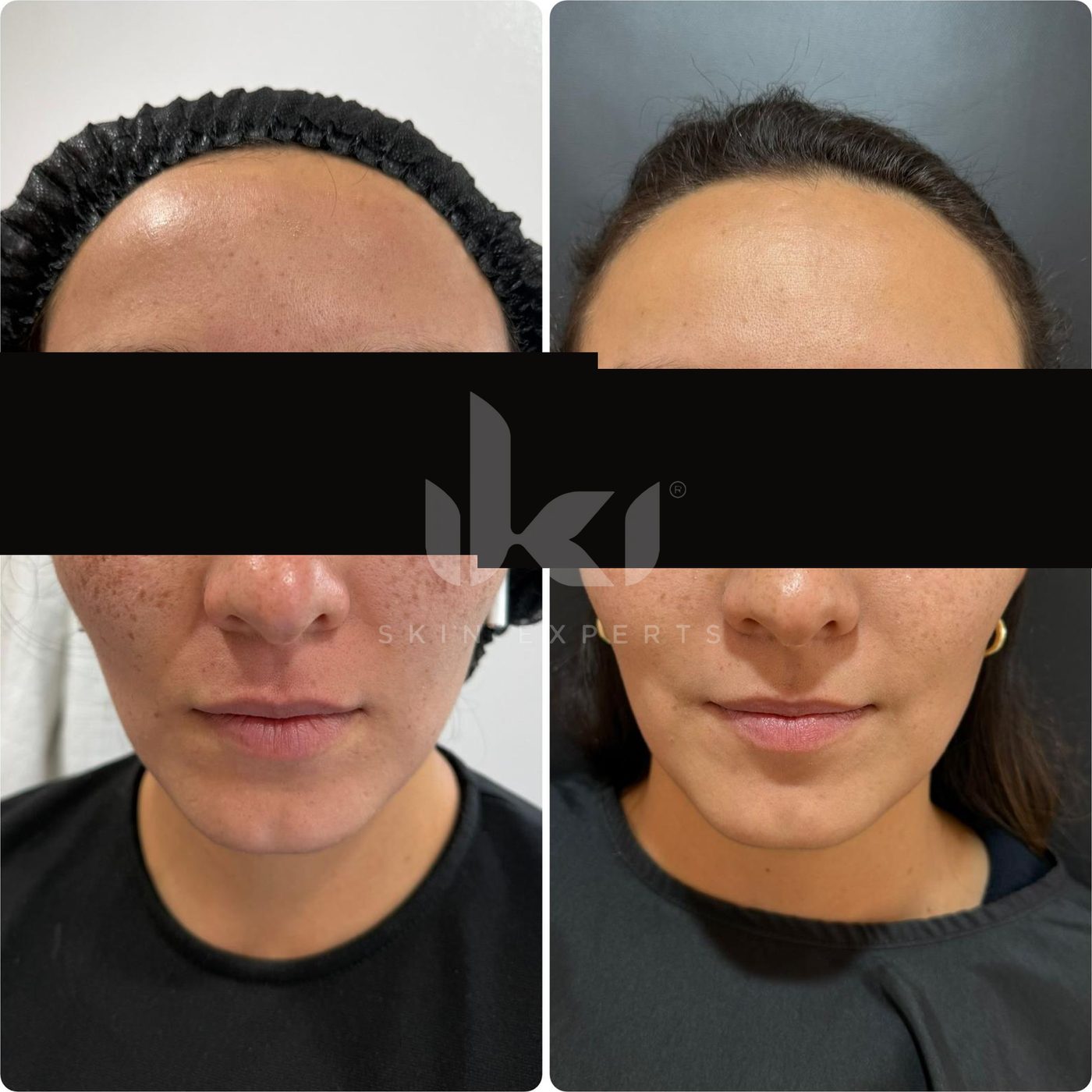
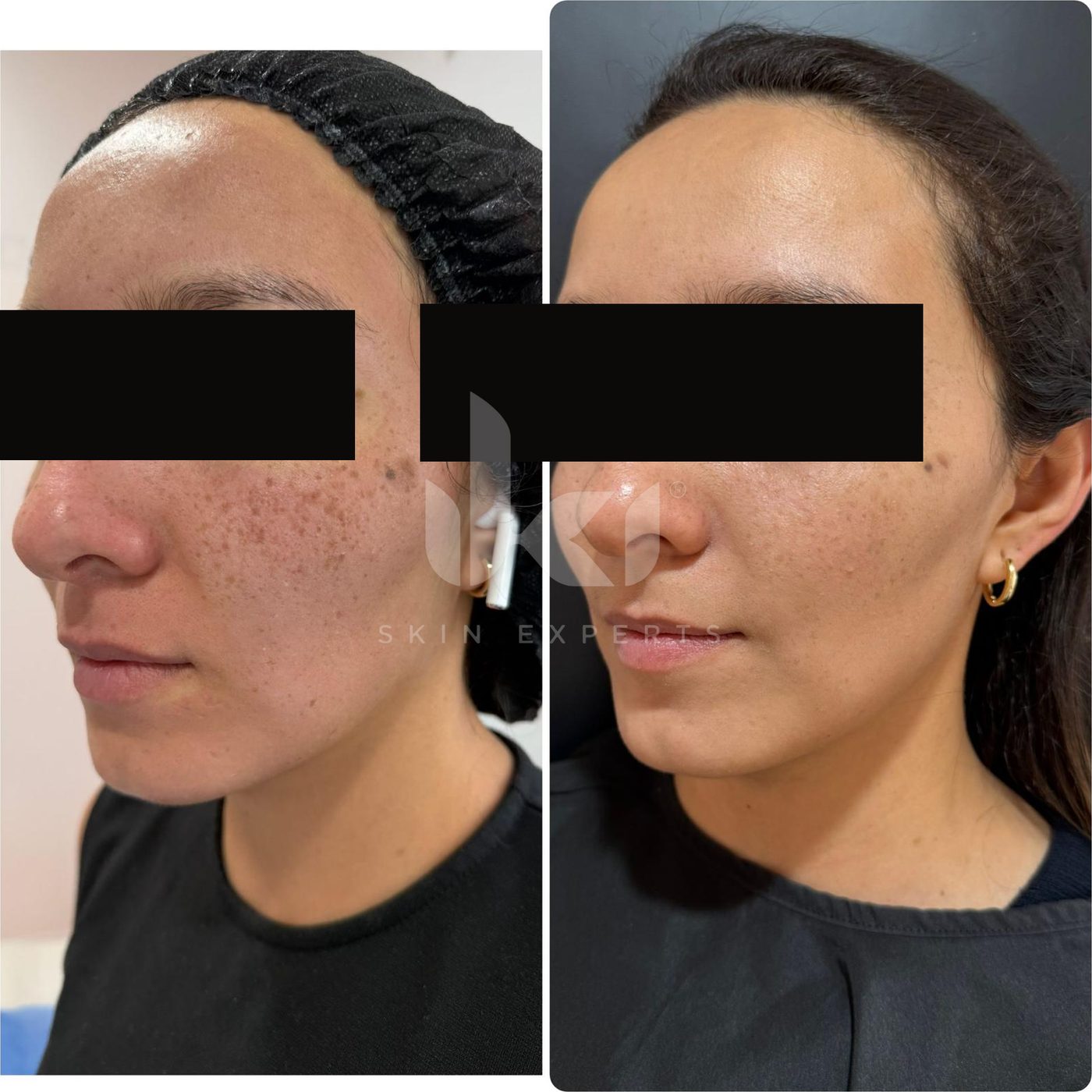
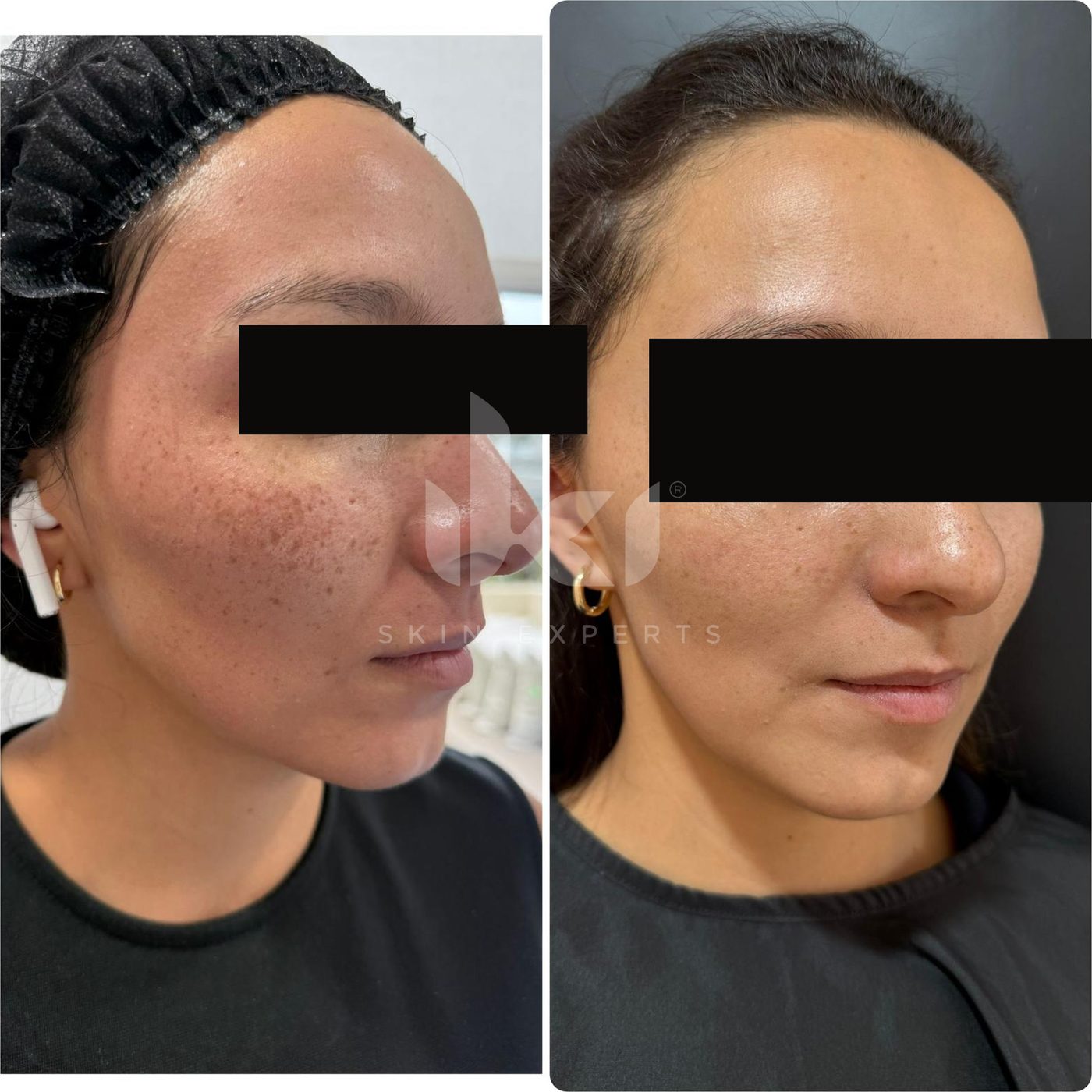
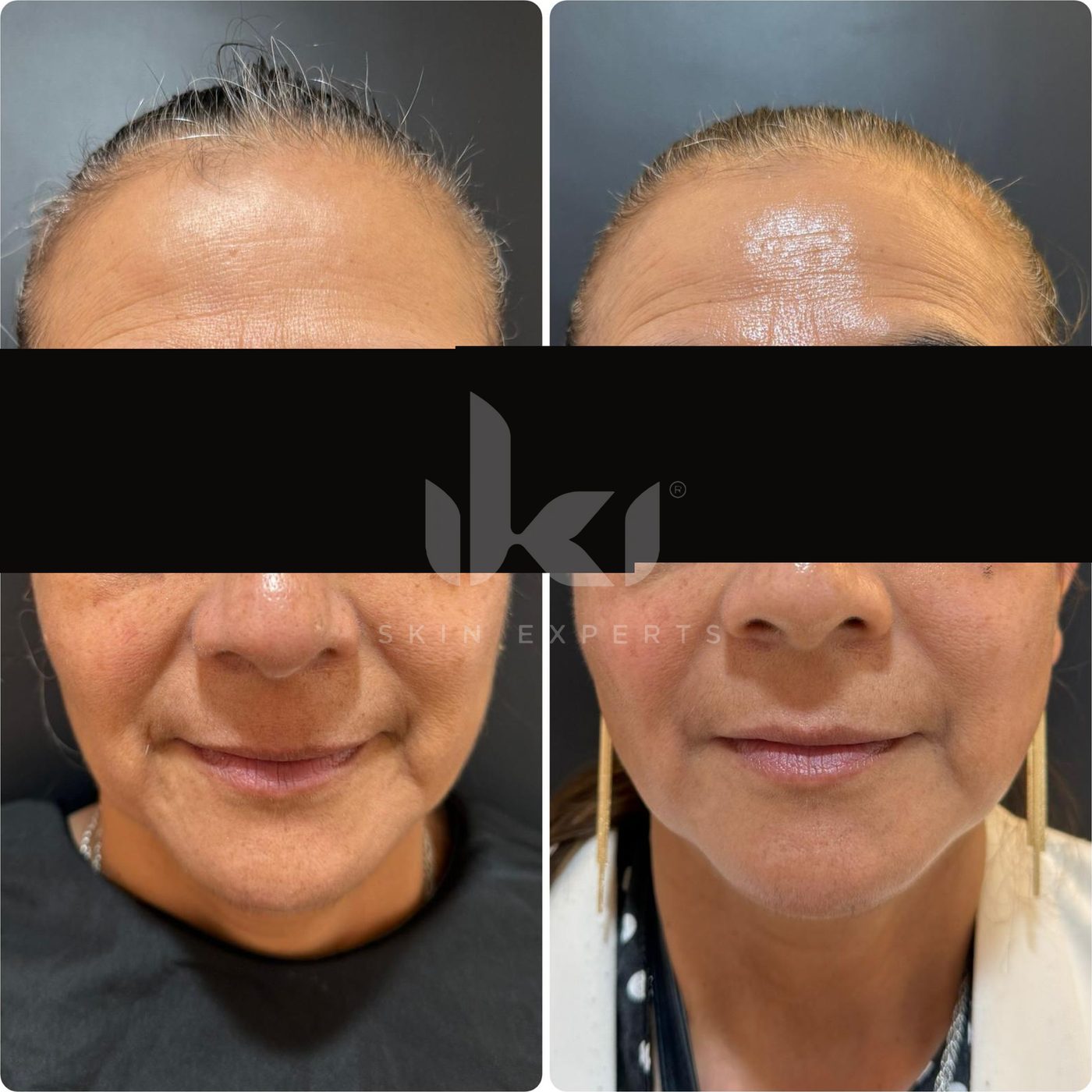
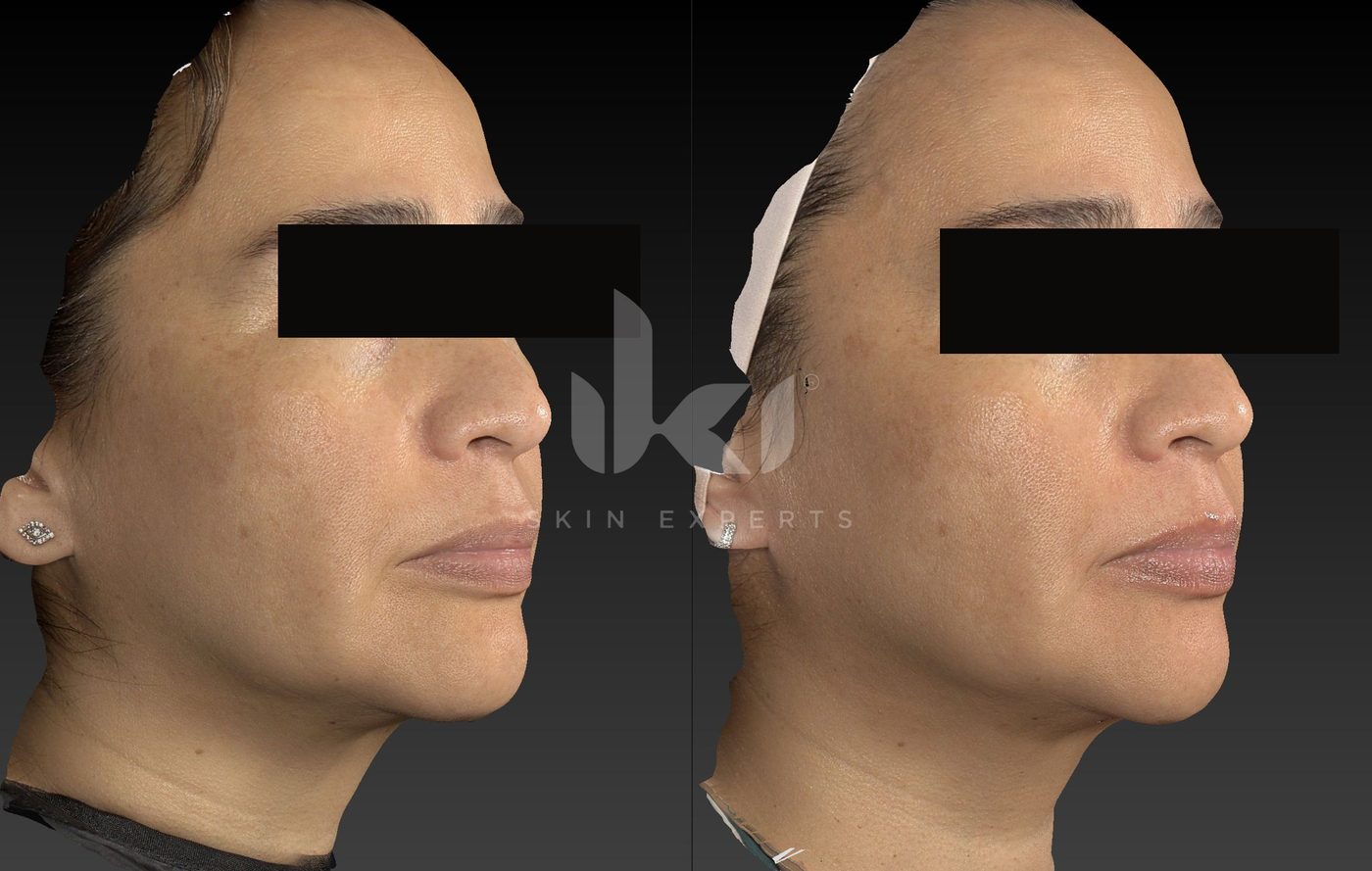
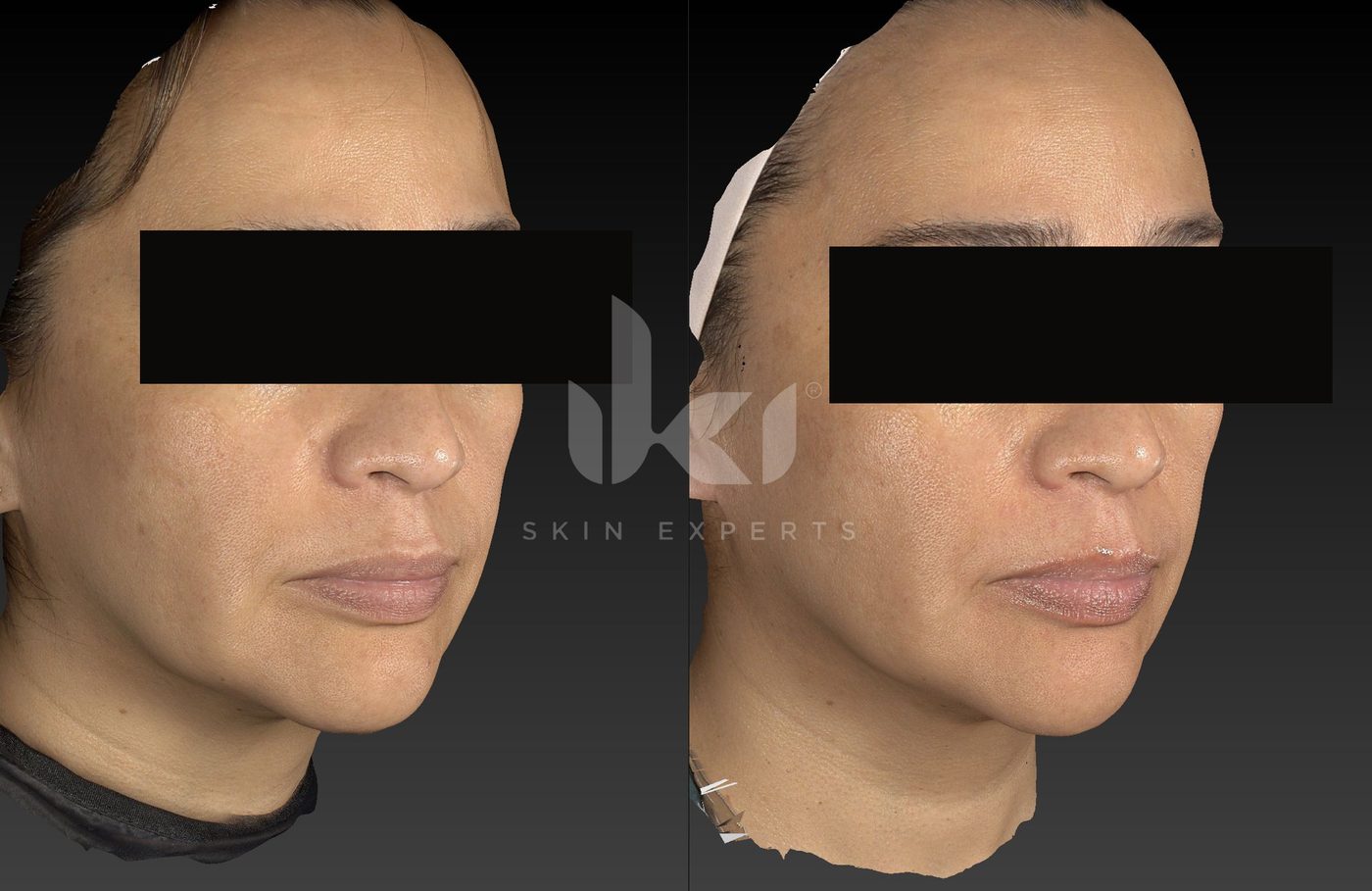
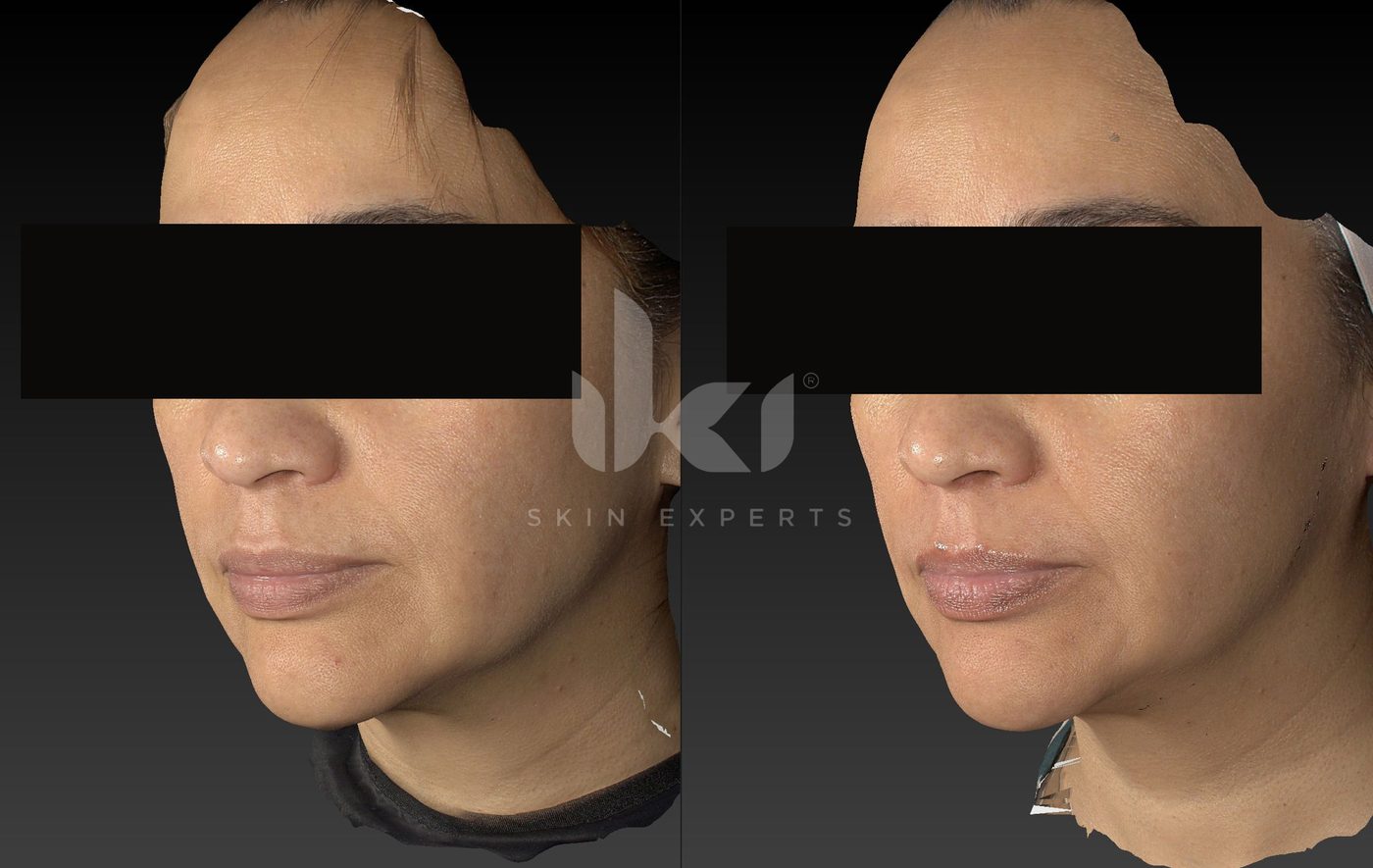
Photos of patients treated at iki, published with their authorization and with their identity covered. Each case had its own diagnosis and plan; the exact treatment may combine several techniques. Results vary from patient to patient. See all cases.
Mesotherapy for dark spots is a medical procedure that uses shallow micro-injections to deliver depigmenting actives chosen for the type of spot. At iki it’s indicated after a consultation that tells melasma, sun spots and post-inflammatory marks apart. Each session takes 30 to 60 minutes, changes usually show from the third session on, and maintenance sessions are needed.
- Session length
- 30–60 min depending on the area
- Sessions
- Step-by-step plan · changes from the 3rd
- Maintenance
- Yes · set by the physician
- Discomfort
- Mild · local anesthetic if needed
- Recovery
- Redness and small bumps · a few days
- Areas
- Face
Who it’s for · and who it isn’t
Indicated when
- Sun spots and uneven tone on the face
- Diagnosed melasma, as part of a plan with sun protection and maintenance
- Dark marks left behind by acne or inflammation
- People already using depigmenting creams who need a next step
Not the right time if
- Pregnancy or breastfeeding · we prefer to postpone it
- Infection, a wound or an active inflammatory flare in the area
- Anyone who can’t keep up daily sunscreen · the spot comes back
- Pigmented lesions that change shape, color or size · those are evaluated first
The physician makes the final indication at the consultation. Results vary from patient to patient.
How mesotherapy for dark spots works at iki
The medical team performs the procedure. Before any injection, we define what the spot is and which active makes sense for it.
Consultation and diagnosis of the spot
We review the type of spot, how long you’ve had it, your skin type (Fitzpatrick) and your history. If it’s melasma, we explain from the start that it’s a chronic condition that needs long-term control.
Skin prep
The area is cleansed and disinfected. When needed, a local anesthetic is applied to reduce the discomfort of the needle pricks.
Micro-injections
With a very fine needle, small amounts of the depigmenting active are placed in the superficial layer of the skin, following a map of the area.
Close and written plan
The skin is calmed, sunscreen goes on, and you leave with your at-home aftercare and the date of your next session in writing.
What it offers
The active reaches the skin
The micro-injection places the depigmenting agent in the superficial layer, without relying only on what a cream can absorb.
Tailored to the type of spot
The blend, depth and frequency are chosen from the diagnosis · not from one fixed protocol for everyone.
Part of a plan
It can be combined with chemical peels or laser in phases when the case calls for it, and with your depigmenting routine at home.
No long downtime
Most patients get back to their day the same day, with strict sun care.
Technology with an indication
Mesotherapy with depigmenting actives
It doesn’t depend on a device · it depends on technique and medical judgment. We use very fine needles and depigmenting actives the physician selects after the consultation. The amount, depth and spacing between points are adjusted to each area of the face and to how sensitive each skin is.
Results and aftercare
Changes are gradual. They usually show from the third session on, as a more even tone and spots with less contrast. Not every spot responds the same way: sun spots usually fade better than melasma, which tends to return with sun, heat and hormonal changes. That’s why the plan includes maintenance sessions and constant sun protection.
Aftercare after the session
- Broad-spectrum sunscreen every day, reapplied
- Avoid direct sun, saunas and intense heat for the first few days
- No makeup and no touching the injection points for the first few hours
- Keep up the depigmenting routine your physician recommends
- Get in touch if you notice pain, warmth or redness that grows instead of fading
Results vary from patient to patient.
Pairs well with
 Dark spots and pigmentation
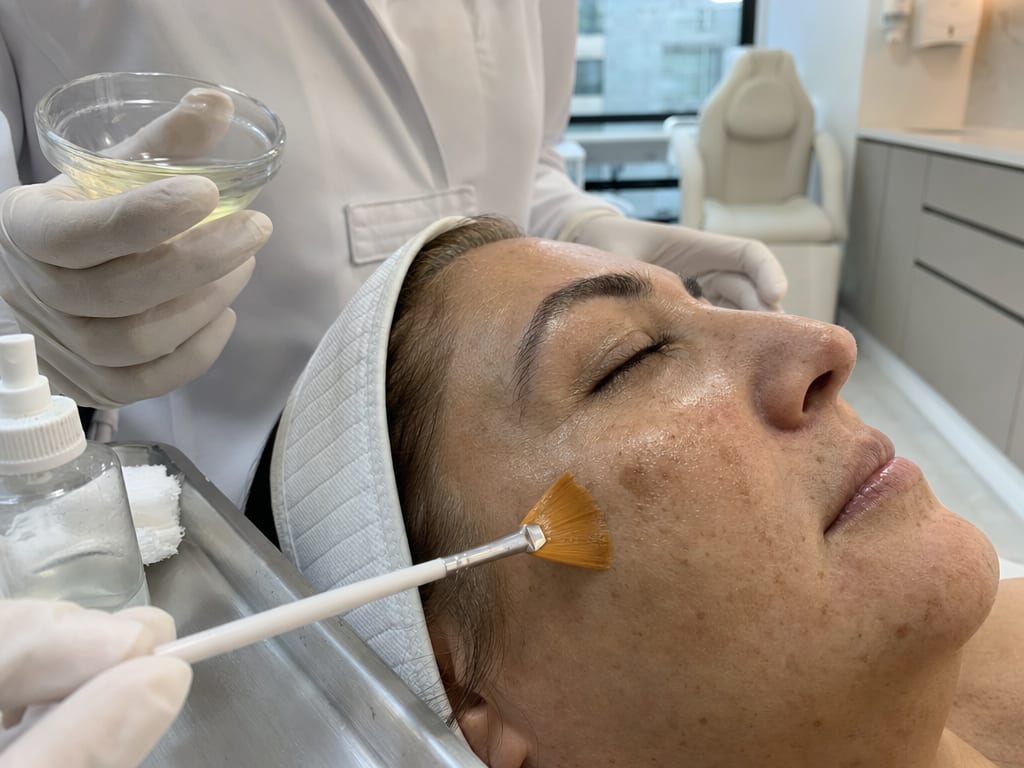
Chemical peel for dark spots
A chemical peel for dark spots uses solutions that exfoliate the superficial layers of the skin in a controlled way. It helps…
See treatment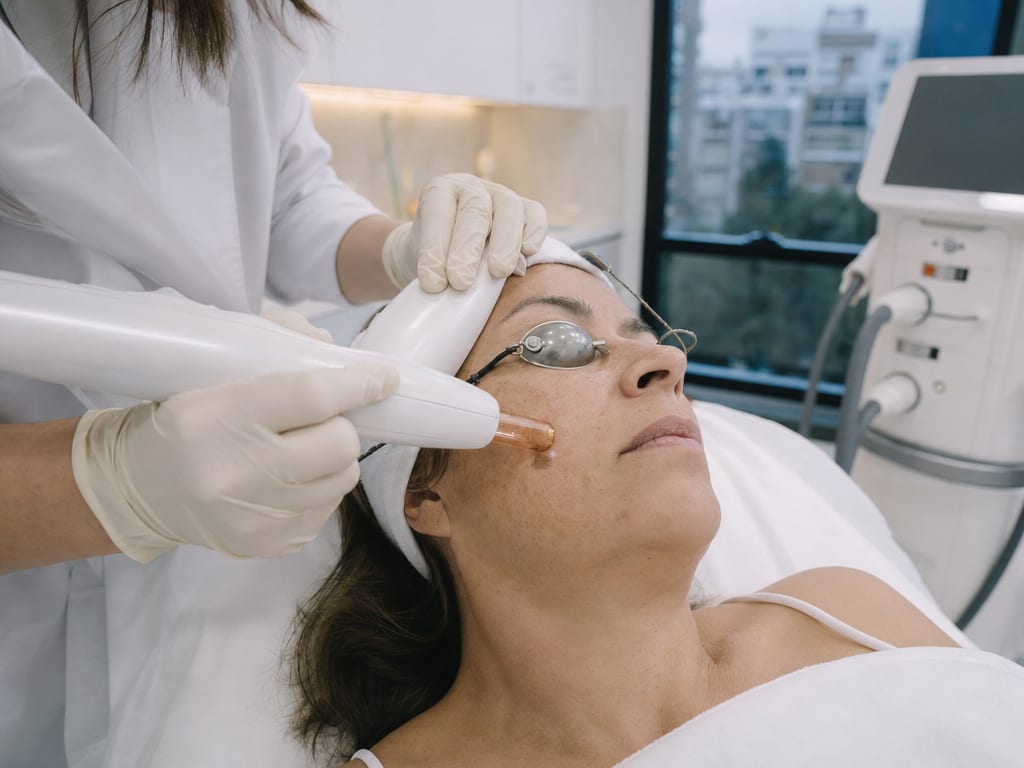 Dark spots and pigmentation
Q-Switched Nd:YAG for dark spots
The Stellar M22’s Q-Switched Nd:YAG fires very short pulses of light that break pigment into particles your body clears little by…
See treatmentFrequently asked questions
Does mesotherapy for dark spots hurt?
It feels like small pricks and light pressure. It’s a minimally invasive procedure and, when needed, a local anesthetic is used to reduce the discomfort. Tolerance varies from person to person and from area to area · the physician adjusts the pace during the session and can pause whenever you need.
How many sessions will I need?
It depends on the type of spot, how long you’ve had it and how your skin responds. Changes usually show from the third session on. The total number and frequency are set at the consultation and adjusted at each follow-up. After that comes a maintenance phase to keep what you’ve gained.
How long is each session?
Between 30 minutes and an hour, depending on the area treated. That includes skin prep, the micro-injections and the close with aftercare. The first session usually takes a little longer because we go over the full plan and answer your questions before starting.
Does mesotherapy get rid of melasma?
No. Melasma is a chronic condition · it’s controlled, not eliminated. Mesotherapy can help lighten it and make it less visible, but it tends to come back with sun, heat, visible light and hormonal changes. That’s why the plan includes daily sunscreen, care at home and maintenance sessions.
Who shouldn’t have this treatment?
We postpone it during pregnancy and breastfeeding, with an active infection or wound in the area, and for anyone who can’t keep up daily sun protection. If a spot changes shape, color or size, it’s evaluated first. There’s always a consultation beforehand to rule out contraindications before the first session.
What will I feel afterward, and when can I get back to my routine?
Small bumps, some redness and occasionally a pinpoint bruise are normal and usually fade within a few days. Most patients get back to their day the same day. What’s non-negotiable is the sun: daily sunscreen and no intense heat while the skin recovers.
Is mesotherapy, a chemical peel or laser better for dark spots?
No single option is best for everyone. Mesotherapy delivers actives into the skin · a chemical peel renews the surface layer · the Q-Switched Nd:YAG breaks up pigment with light. The choice depends on the type of spot, your skin type and your skin’s history. They’re often combined in phases within the same plan.
Does it work on darker skin?
It can be indicated, with extra care. Higher skin types tend to form new spots after any inflammation, so the actives, technique and session pace are adjusted. Prepping the skin and protecting it from the sun before and after are part of the treatment, not an optional extra.
Read before your appointment
Is Mesotherapy for dark spots right for you? · we’ll see at the consultation
Forty-five minutes with a physician, a skin analysis and a written, phased plan with complete prices. You decide afterwards, with no pressure. Living abroad? Start with a virtual consultation.