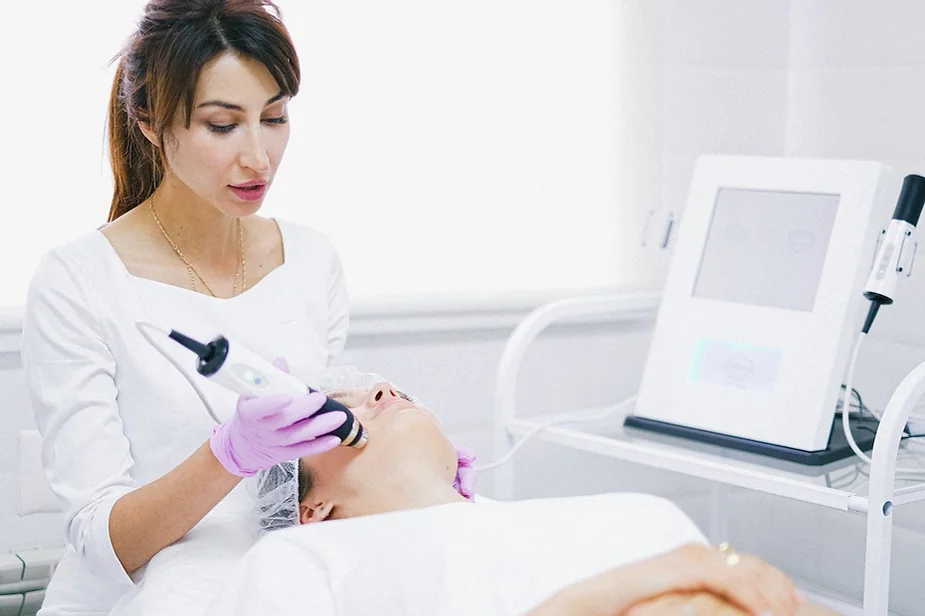
Neither is better in the abstract: it depends on what needs correcting. Non-surgical procedures, such as botulinum toxin, fillers, collagen biostimulators or HIFU, treat expression, skin quality, volume and mild to moderate skin laxity, with a short recovery. Surgery is indicated when there's excess skin, severe sagging or a structural change that no injectable or device can reach.
Neither is better in the abstract: it depends on what needs correcting. Non-surgical aesthetic procedures treat expression, skin quality, volume and mild to moderate skin laxity, with a short recovery. Surgery is indicated when there's excess skin, severe sagging or a structural change that no injectable or device can reach.
In this article we compare the two paths honestly: recovery, duration, the real ceiling and risks. One clarification up front: at iki we don't do cosmetic plastic surgery. When that's what you need, we tell you and guide you to consult a plastic surgeon.
What is a non-surgical aesthetic procedure?
It's a technique without incisions, minimally invasive or non-invasive, done in a medical office. It uses injectables, energy (ultrasound, light, laser, radiofrequency) or medical products to improve the skin and features. The most common:
- Botulinum toxin: relaxes the muscles that create expression lines. We explain it in what Botox is for.
- Hyaluronic acid: restores volume or hydrates the lips, cheekbones, chin or under-eye area.
- Collagen biostimulators: activate your own collagen production to add density and firmness.
- HIFU and radiofrequency: controlled heat in deep layers for mild to moderate skin laxity.
- Thread lift: repositions and supports tissue with mild sagging.
- Peels, laser and IPL: dark spots, acne, scars, rosacea and texture.
What is a surgical aesthetic procedure?
It's surgery: incisions are made to remove, reposition or modify tissue. It's performed by a plastic surgeon in an operating room, under local anesthesia with sedation or general anesthesia, and it requires a recovery of weeks. Examples: blepharoplasty (eyelids), facelift or rhytidectomy, rhinoplasty, liposuction, tummy tuck and breast surgery.
It shouldn't be confused with minor surgical skin procedures, which we do perform at iki: biopsies and removal of moles, cysts or benign lesions. These are medical skin procedures, not cosmetic plastic surgery.
The differences in a table
| Criterion | Non-surgical | Surgical |
|---|---|---|
| Invasiveness | No incisions · needles, cannulas or energy | Incisions and tissue manipulation |
| Where and what anesthesia | Medical office · topical or local anesthesia | Operating room · sedation or general anesthesia |
| Recovery | Hours to a few days | Weeks · time off work and post-op care |
| How long the result lasts | Months to a few years · requires maintenance | Years · aging continues |
| Ceiling of the result | Improves and maintains · doesn't remove excess skin | Corrects structure and excess skin |
| Reversibility | Some are reversible, such as hyaluronic acid | Not reversible |
| Risks | Lower · bruising, nodules, asymmetry; rare serious events | Those of any surgery · anesthesia, infection, scars |
| When it's indicated | Expression, skin quality, volume and mild to moderate skin laxity | Excess skin, severe sagging or a structural change |
When is surgery the right call?
Some problems can't be solved well by any non-surgical treatment. Pushing on with injectables or devices in those cases usually brings poor results, more cost and, sometimes, a face overloaded with product. Surgery is usually what's indicated when there is:
- Excess skin on the upper eyelids that weighs on your eyes.
- Severe sagging of the face and neck, with hanging skin.
- Major changes in the shape or function of the nose.
- Large volumes of fat or excess abdominal skin after pregnancies or major weight loss.
In those cases we tell you during the consultation, even if it means losing the sale, and we guide you to consult a plastic surgeon. After surgery we can support your recovery, for example with post-op lymphatic drainage when the surgeon recommends it, and later with skin-quality treatments.
Your consultation at iki is free · 45 minutes
A diagnosis and a written, phased plan. You decide afterwards. Related treatment: Botox.When does it make sense to start with non-surgical treatment?
For most facial concerns, non-surgical treatment is the reasonable first step, because the problem isn't structural but one of expression, skin quality or mild loss of support:
- Expression lines: botulinum toxin, dosed muscle by muscle.
- Mild to moderate skin laxity: HIFU for skin laxity, collagen biostimulators or a thread lift, depending on the case.
- Mild double chin: enzymes or HIFU. We explain it in double chin without surgery.
- Facial proportions: a phased facial harmonization plan, with little product.
- Nasal bridge with mild irregularities: non-surgical nose reshaping, which doesn't change the function or reduce the size of the nose.
If you're wondering where to start, read the best treatment to start with in aesthetic medicine and how to improve facial skin laxity without surgery.
Safety: less invasive doesn't mean risk-free
Non-surgical procedures carry less risk than surgery, but they're not free of complications. Bruising, swelling, nodules or asymmetry can occur and, with fillers, rare but serious events such as a blocked blood vessel, which require immediate medical management. That's why it's worth checking three things:
- ✓ That the person performing it is a physician trained in the procedure.
- ✓ That the facility is licensed as a healthcare provider with Colombia's Ministry of Health (REPS).
- ✓ That the physician knows when a treatment isn't indicated and tells you.
- ✗ Be wary of offers priced below the cost of the product or of treatments done outside a medical office.
How do I choose the right aesthetic procedure for what I want?
The decision doesn't start with the procedure but with the diagnosis. During the consultation, we review:
- What bothers you and what's causing it: expression, volume, skin quality, laxity or excess skin.
- Age, medical history, medications and pregnancy or breastfeeding.
- Skin type and Fitzpatrick type, key for laser and IPL.
- How much recovery time you have and realistic expectations.
Sometimes the answer is a non-surgical treatment; other times, combining several in phases; and other times, surgery. There are also cases where a procedure doesn't work for a specific reason, as we explain in why some aesthetic medicine procedures don't work. Results vary from patient to patient.
Can surgery and non-surgical treatments be combined?
Yes, and they often complement each other. Surgery repositions tissue or removes skin, but it doesn't improve skin quality, dark spots or expression lines. That's what botulinum toxin, collagen biostimulators, peels or IPL are for. What matters is the order and the timing: any procedure on an operated area is done when the surgeon gives the go-ahead, not before.
A useful test before you decide
Ask yourself what you want to change, not which procedure you want to have. If what bothers you disappears when you gently lift the skin with your fingers in front of the mirror, the problem is one of support and may have a non-surgical path. If what's left over is skin, probably not. It's a guide, not a diagnosis: the final answer comes from the medical exam.
At iki, in Usaquén, we start with the diagnosis, not the menu, and if what you need is surgery, we tell you. Your consultation at iki is free · 45 minutes.
Frequently asked questions
What's the difference between a surgical and a non-surgical aesthetic procedure?
A surgical procedure cuts and repositions or removes tissue: it's done by a plastic surgeon in an operating room, under anesthesia, with a recovery of weeks. A non-surgical procedure uses injectables, energy or products without incisions, is done in a medical office and lets you get back to normal life within hours or a few days. The ceiling also differs: surgery corrects structure; non-surgical treatment improves and maintains.
When is surgery better than a non-surgical treatment?
When the problem is excess skin or a structural change: eyelids with extra skin weighing on your eyes, a sagging neck with severe laxity, major changes to the shape of the nose or large volumes of fat. In those cases, pushing on with injectables or devices usually gives poor results and adds cost. An honest physician will tell you at the first visit.
Does iki do plastic surgery?
No. iki is a center for skin medicine and aesthetic medicine: we work with injectables, technologies and medical protocols, and we perform minor surgical skin procedures, such as biopsies or removal of benign lesions. When what you need is cosmetic plastic surgery, we tell you and guide you to consult a plastic surgeon.
Are non-surgical aesthetic procedures safe?
They carry less risk than surgery, but they're not free of complications: bruising, swelling, nodules, asymmetry and, with fillers, rare but serious events such as a blocked blood vessel. That's why they should be performed by trained physicians, at a facility licensed as a healthcare provider and with a plan to manage any complication.
How long do the results of non-surgical procedures last?
It depends on the treatment. Botulinum toxin usually holds for a few months; hyaluronic acid fillers, several months depending on the area; collagen biostimulators and HIFU produce gradual changes that last longer, because the collagen formed is your own. None of them stops aging, so maintenance is planned. Results vary from patient to patient.
Can surgical and non-surgical procedures be combined?
Yes, and they often complement each other. Surgery corrects structure, but it doesn't improve skin quality or expression lines; that's what botulinum toxin, collagen biostimulators or surface treatments are for. What matters is respecting the timing the surgeon sets before doing any procedure on the operated area.
This article is for information only and does not replace a medical consultation. Results of any treatment vary from patient to patient. If you have a skin condition, book a consultation to get a diagnosis.