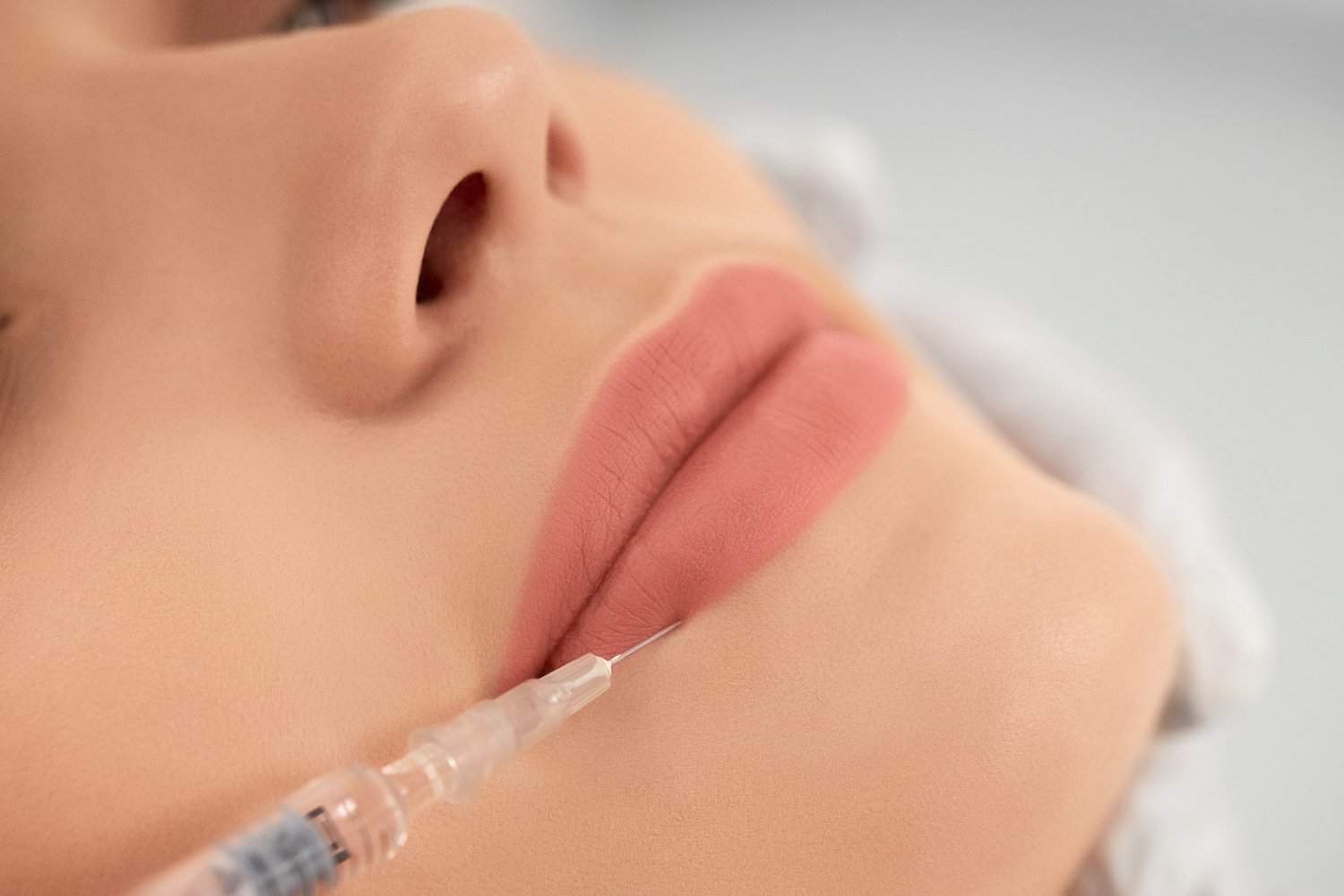
A lip flip and lip fillers aren’t the same. A lip flip injects a few units of botulinum toxin into the upper lip muscle so the lip tilts outward, without adding volume, and usually lasts two to three months. Fillers use hyaluronic acid to add volume, hydration and contour, and usually hold for several months. The choice depends on your anatomy and your goal.
A lip flip and lip fillers aim for different things. A lip flip uses botulinum toxin to relax the upper lip muscle so the lip tilts outward and shows more of its border when you smile, without adding volume. Lip fillers add volume, hydration and contour with hyaluronic acid.
Choosing well depends on how your lip looks at rest and in motion, not on the trend of the moment. In this guide we explain what each one does, how long it lasts, who it’s for and when it makes sense to combine them.
What is a lip flip?
A lip flip isn’t a filler. It involves injecting a few units of botulinum toxin into the edge of the orbicularis muscle, the circular muscle around the mouth, at the level of the upper lip. As that edge relaxes, the lip tilts slightly outward and shows more of its pink surface, especially when you smile.
It is the same toxin used for forehead expression lines, in much smaller doses. To understand how it works, we explain it in what botulinum toxin is used for.

It is usually indicated in three situations: when the upper lip disappears or thins out when you smile, when the upper lip is clearly thinner than the lower one but still has good volume, and when there is a mild gummy smile, meaning more gum shows than usual.
What the procedure is like and when you see it
The injection takes a few minutes, with a very fine needle and a few points. The effect starts to show between day 3 and day 7 and is complete at around two weeks. Because the mouth moves all day, it usually holds for two to three months, less than toxin on the forehead.
Pros and limits of a lip flip
- ✓ A subtle change, with no added volume and no recovery time.
- ✓ Tolerable discomfort and a procedure of just a few minutes.
- ✗ It doesn’t add volume or hydration: if the lip is thin, it won’t solve that.
- ✗ It doesn’t last long and doesn’t show right away.
- ✗ For the first few days, drinking through a straw, whistling or saying p and b sounds may be a little harder.
What are lip fillers?
Lip fillers are injections of hyaluronic acid into the lip to add volume, define the contour and hydrate. Hyaluronic acid is a molecule the skin already produces and that holds water; in fillers it is used as a gel of different densities, chosen according to the goal.
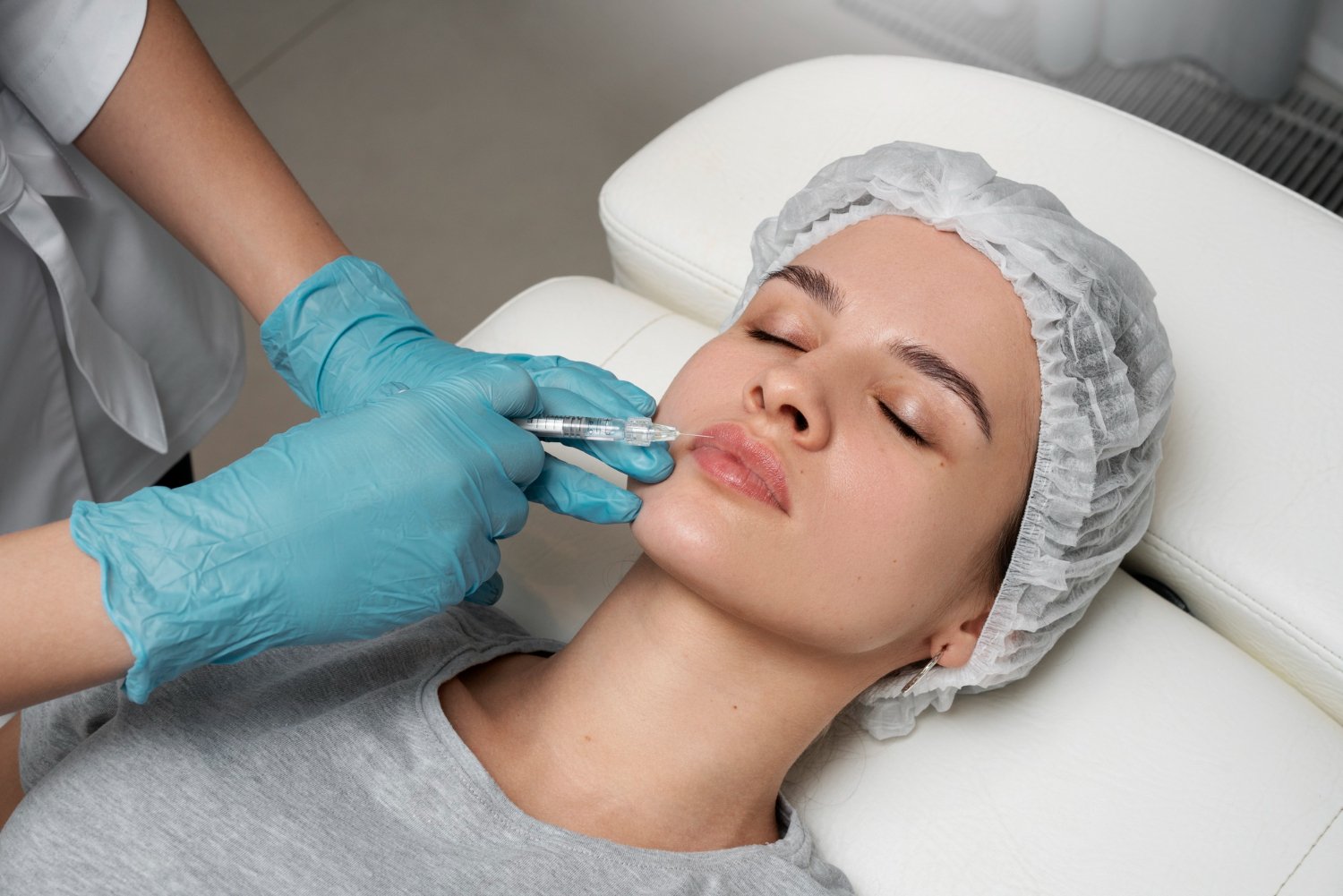
The procedure is done with numbing cream or local anesthesia. The volume shows from the session, although there is swelling in the first hours that usually goes down within 5 to 7 days; you can return to normal life in 24 to 48 hours. The effect usually holds for 6 to 12 months. At iki we generally start with one syringe and inject with proportion in mind: lips that look like yours, not someone else’s.
An important clinical advantage: hyaluronic acid can be dissolved with an enzyme, hyaluronidase, if the result isn’t as expected or in case of a complication. That’s why it is the material of choice for the lips.
Pros and limits of fillers
- ✓ They add volume, contour and hydration to both lips.
- ✓ The amount can be adjusted, from a discreet change to a more noticeable one.
- ✓ The effect lasts several months and the material is reversible.
- ✗ Swelling, redness or bruising in the first few days.
- ✗ They need maintenance as the body reabsorbs the product.
If you don’t want volume yet, there are in-between options that only hydrate; we review them in lip hydration, an alternative to lip fillers.
Lip flip vs lip fillers: the differences in a table
| Criterion | Lip flip | Lip fillers |
|---|---|---|
| What is injected | A few units of botulinum toxin | Hyaluronic acid gel |
| What it does | Relaxes the muscle so the lip tilts outward | Adds volume, contour and hydration |
| Adds volume | No | Yes, adjustable |
| When it shows | Between day 3 and day 7; complete at around 2 weeks | From the session, once the swelling goes down |
| Typical duration | 2 to 3 months | 6 to 12 months |
| Recovery | None | Swelling for 5 to 7 days; normal life in 24–48 h |
| Reversible | No; wears off on its own | Yes, with hyaluronidase |
| Who it’s for | A lip with good volume that disappears when you smile | A thin, asymmetric or dehydrated lip |
These timelines are typical, not promises: results vary from patient to patient, with their metabolism and with the product used.
Which treatment is best for you?
The useful question isn’t which one is better, but what your lip is missing. At the consultation, the physician looks at it at rest, while you talk and while you smile, and checks its proportion with the rest of your face. These criteria guide the decision:
- If your upper lip has volume but disappears when you smile, a lip flip is usually enough.
- If the lip is thin, has little contour or looks dehydrated, the indication is hyaluronic acid filler.
- If one side differs from the other, filler allows a precise correction.
- If there is little volume and the lip also disappears when you smile, combining makes sense.
When it ISN’T for you
- ✗ Pregnancy or breastfeeding: both are postponed.
- ✗ An active cold sore, wounds or infection in the area: the appointment is rescheduled.
- ✗ Someone seeking volume out of proportion with their face: we don’t do it.
- ✗ A lip flip for people who rely on their mouth for work, such as wind instrument players.
Your consultation at iki is free · 45 minutes
A diagnosis and a written, phased plan. You decide afterwards. Related treatment: Hyaluronic acid.Can a lip flip be combined with lip fillers?
Yes. The lip flip works on the muscle and the filler works on volume, so they complement each other. Combined, they usually allow less product for a proportionate result, because the upper lip shows more of its border without needing to be overfilled. They can be done in the same session or in stages; the physician decides based on your anatomy and the expected swelling.
When the goal is balance across the whole face and not just the lips, the plan may include other areas as part of a facial harmonization. If you’re worried the result will look artificial, we recommend reading lip fillers with natural results and facial harmony.
What does the cost of lip filler depend on?
It is one of the most common questions. The cost of filler depends mainly on three things: the product, because hyaluronic acids come in different densities; the amount, which for lips is usually one syringe; and who injects it. A lip flip, since it uses only a few units of toxin, usually costs less.
Be wary of prices far below the market or volume deals: on the lips, more product doesn’t mean a better result. At iki the full price is given to you at the consultation, with no surprises, along with the written plan.
Risks and aftercare after the procedure
The most common effects are short-lived: swelling, redness, tenderness and small bruises at the injection points. In people with a history of cold sores, the procedure can trigger an outbreak, so the physician may prescribe prevention. Vascular complications are uncommon, but they do happen; that’s why filler should be injected by a physician who knows the anatomy of the area and knows how to act if one occurs.
For the first 24 to 48 hours:
- Avoid intense exercise, saunas and strong heat.
- Don’t massage or press on your lips unless the physician tells you to.
- Apply gentle cold if there is swelling.
- Avoid alcohol the first night.
- Seek care right away if you have severe pain, paleness or a change in the color of the skin on your lip.
If you currently use plumping products to get a similar effect, first read what happens when you use lip plumpers every day.
Our recommendation at iki
At IKI Lips we work with a simple idea: 1 syringe, applied with judgment. Before suggesting anything, we check whether what you need is to relax the muscle, add volume, hydrate or simply wait. Sometimes the answer is a lip flip, sometimes a filler and sometimes neither. Results vary from patient to patient. Your consultation at iki is free · 45 minutes.
Frequently asked questions
What is a lip flip?
It is the injection of a few units of botulinum toxin into the edge of the orbicularis muscle of the upper lip. As it relaxes, the lip tilts slightly outward and shows more of its pink border when you smile. It doesn’t add volume or hydrate. It is usually indicated when the upper lip disappears when you smile or when there is a mild gummy smile.
How long does a lip flip last, and how long do lip fillers last?
A lip flip starts to show between day 3 and day 7 and usually holds for two to three months, because the mouth moves all day. Hyaluronic acid fillers show from the session, once the swelling goes down, and usually hold for 6 to 12 months. Results vary from patient to patient, with the product and with metabolism.
Which is better, a lip flip or lip fillers?
Neither is better in the abstract. If the lip has good volume but disappears when you smile, a lip flip may be enough. If volume, contour or hydration is lacking, the indication is hyaluronic acid. When both are present, they are combined. At the consultation, the physician looks at the lip at rest and in motion before suggesting an option.
Can a lip flip and lip fillers be combined?
Yes. The lip flip works on the muscle and the filler works on volume, so they complement each other. They can be done in the same session or in stages, depending on your anatomy and the expected swelling. Combined, they allow less product for a proportionate result. Both can cause mild, short-lived swelling, redness or bruising.
Can hyaluronic acid lip filler be reversed?
Hyaluronic acid can be dissolved with an enzyme called hyaluronidase, which the physician administers if the result isn’t as expected or in case of a complication. That possibility is one of the reasons it is the material of choice for the lips. A lip flip can’t be reversed: its effect wears off on its own, gradually, within a few months.
Who shouldn’t get a lip flip or lip filler?
Treatment is postponed during pregnancy or breastfeeding, with an active cold sore, wounds or infection in the area, and with a known allergy to the components. A lip flip isn’t recommended for people who rely on their mouth for work, such as wind instrument players. Filler also isn’t applied for someone seeking volume out of proportion with their face.
This article is for information only and does not replace a medical consultation. Results of any treatment vary from patient to patient. If you have a skin condition, book a consultation to get a diagnosis.