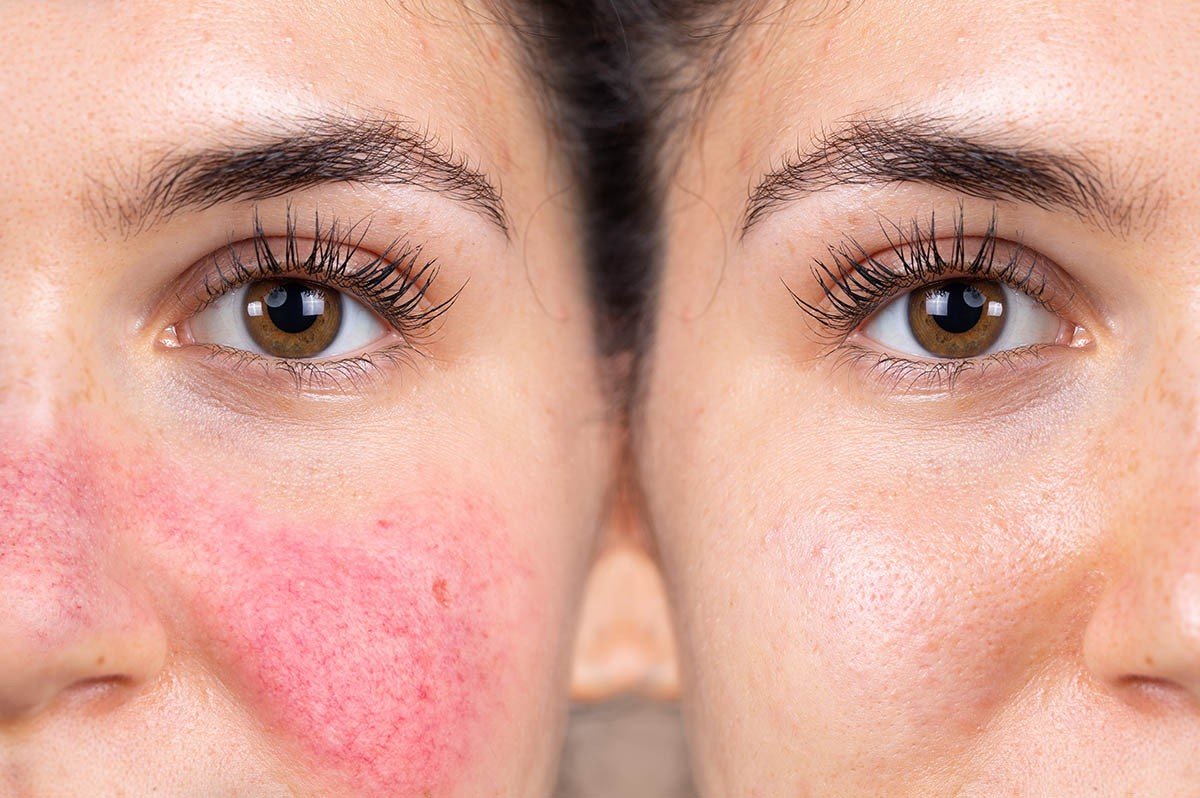
There's no single best treatment for rosacea: it depends on the type. Diffuse redness responds well to IPL (intense pulsed light), visible vessels to the Nd:YAG laser, and inflammatory bumps to creams or medication prescribed by the physician, sometimes together with a gentle azelaic acid peel. Rosacea isn't cured · it's controlled, and that means avoiding its triggers.
There's no single best treatment for rosacea: what works depends on its type. Diffuse redness responds to intense pulsed light, visible vessels to the Nd:YAG laser, and inflammatory bumps to creams or medication prescribed by the physician, sometimes together with a gentle peel. In every case the foundation is the same: rosacea isn't cured · it's controlled.
In this article we explain how to recognize your type of rosacea, what each treatment does, what you should avoid and how much can realistically be achieved.
What is rosacea and how serious is it?
Rosacea is a chronic inflammatory condition of the facial skin. It shows up as redness on the cheeks, nose, chin and forehead, a feeling of heat or burning, fine visible vessels and, in some cases, acne-like bumps. It's more common in fair-skinned adults, although it appears in every skin type (Fitzpatrick), where it's sometimes diagnosed late.
It isn't contagious or dangerous to your overall health, but it can affect your quality of life, and left uncontrolled it tends to progress: redness that used to come and go becomes persistent. That's why it's worth treating early. We tell you more in the consequences of not treating rosacea and clear up common beliefs in rosacea myths.
The types of rosacea
- Erythematotelangiectatic: persistent redness, easy flushing and visible vessels.
- Papulopustular: redness with bumps and pustules, without blackheads.
- Phymatous: thickening of the skin, mostly on the nose. It's uncommon.
- Ocular: red, dry eyes with burning or a gritty feeling.
Many people have features of more than one type, and the plan is adjusted to whatever predominates.
What is the most effective treatment for rosacea?
The one that matches what predominates in your skin. This table sums up the options:
| What predominates | Treatment of choice | Sessions or time | What to expect |
|---|---|---|---|
| Diffuse redness | IPL (intense pulsed light) | Series of 3, every 3–4 weeks, plus maintenance | Less redness and flushing |
| Visible vessels (spider veins) | Nd:YAG laser | 1 to 3 sessions in general | Vessels that are gradually reabsorbed |
| Bumps and pustules | Creams or oral medication prescribed by the physician | Weeks to months | Flare-up under control |
| Reactive skin with mild bumps | Gentle azelaic acid peel | Several sessions, every 3–6 weeks | Less inflammation and more even texture |
| Thickening of the nose | Specific approach | Based on consultation | Requires other techniques |
| Eye symptoms | Ophthalmology consultation | Depending on the case | Joint management |
Results vary from patient to patient, and almost everyone needs maintenance.
Creams and medication
They're the foundation for rosacea with bumps. The most commonly used are azelaic acid, metronidazole and ivermectin creams, and in moderate cases, low-dose oral antibiotics for their anti-inflammatory effect. All of them require a medical prescription. Corticosteroid creams, on the other hand, can make it worse and shouldn't be used on your own.
IPL for rosacea: pulsed light, not a laser
IPL for rosacea is one of the options with the best results for diffuse redness. Although it's often called a laser, it isn't one: it emits filtered broad-spectrum light that is absorbed by the hemoglobin in the vessels. The heat closes the finest vessels and reduces flushing without damaging the skin's surface. This process is called selective photothermolysis.
At iki it's done with the Stellar M22, in an initial series of three sessions spaced three to four weeks apart. Each session takes 30 to 60 minutes depending on the area, and the discomfort is usually tolerable. Afterward there may be some temporary redness, and you can go back to your normal activities.
Before and after IPL
- ✓ Come in with no recent tan, natural or from self-tanner.
- ✓ Let us know if you take medication that makes your skin sensitive to light.
- ✓ Afterward, broad-spectrum sunscreen and no direct sun.
- ✗ It isn't done over active papules and pustules: the flare-up is brought under control first.
If visible vessels predominate
When the main problem is well-defined vessels on the nose and cheeks, the usual recommendation is the Nd:YAG laser for telangiectasias, which treats each vessel more precisely.
Your consultation at iki is free · 45 minutes
A diagnosis and a written, phased plan. You decide afterwards. Related treatment: Chemical peel for rosacea.Professional chemical peels: another treatment for rosacea
It may sound contradictory, because skin with rosacea doesn't tolerate harsh exfoliants. But some peels are designed for reactive skin. A chemical peel for rosacea uses gentle solutions that help reduce redness, inflammation and bumps.
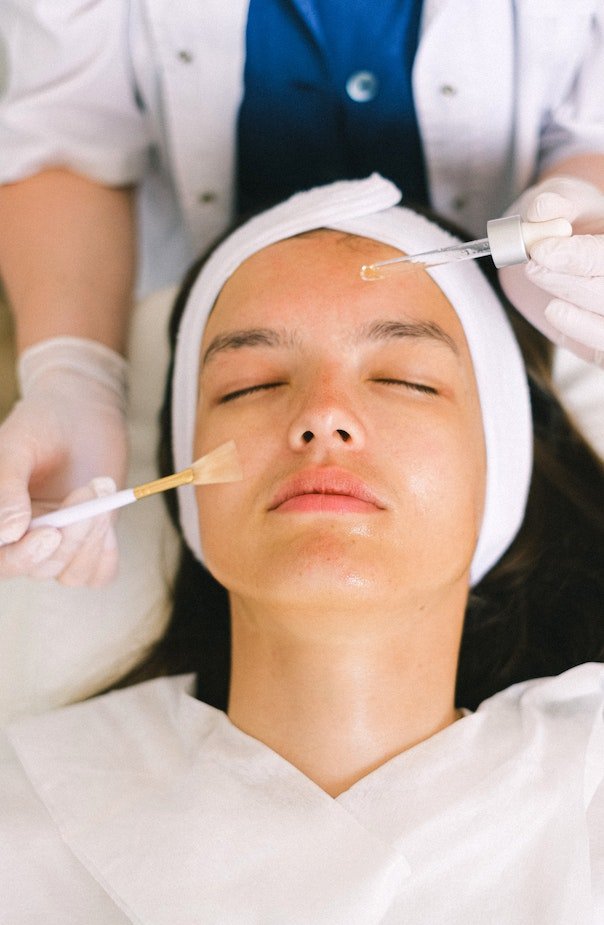
What is the best chemical peel for rosacea?
One of the most widely used is azelaic acid, because it's well tolerated by sensitive skin and darker skin types, has an anti-inflammatory effect and helps prevent dark spots. The session takes 30 to 60 minutes, causes a mild stinging during application and is repeated every three to six weeks. It isn't done during an intense flare-up, with a sunburn or on irritated skin. Harsher acids, such as high-concentration glycolic acid, are usually avoided.
What should you avoid if you have rosacea?
- ✗ Scrubs with grains, facial brushes or rough sponges.
- ✗ Toners with alcohol, fragrance, menthol or eucalyptus.
- ✗ Corticosteroid creams without a medical prescription.
- ✗ Saunas, facial steaming and very hot showers on your face.
- ✗ Treating the bumps like ordinary acne with drying products.
- ✓ Instead: gentle cleansing, a moisturizer for sensitive skin and mineral sunscreen every day.
In Bogotá, the high year-round UV radiation and the sudden temperature changes between the cold outdoors and indoor spaces are common triggers. Daily sunscreen and avoiding sudden shifts in heat help as much as the treatment.
Which foods and habits trigger rosacea?
According to the National Rosacea Society, sun and emotional stress top the list of triggers patients report, followed by heat, wind, intense exercise and alcohol. Among foods, the most often cited are red wine, spicy food and very hot drinks; some people also react to cinnamon, tomatoes, citrus or chocolate.
You don't need a restrictive diet. What helps is keeping a flare-up diary for a few weeks and identifying your own triggers. We cover the link with stress in rosacea and emotional acne, and if you're pregnant, rosacea during pregnancy explains what changes.
How we treat rosacea at iki
At iki, in Usaquén, we have IPL, the Nd:YAG laser and gentle peels, but the decision starts with the diagnosis: confirming it's rosacea and identifying what predominates and what triggers it in your case. From there we build a step-by-step plan: first calm the skin, then treat the redness or the vessels, and then maintain. If you notice redness in other areas of the body, read persistent redness on the legs, because it's almost never rosacea.
Rosacea isn't cured · it's controlled. And once it's controlled · you can live with it calmly. Results vary from patient to patient. Your consultation at iki is free · 45 minutes.
Frequently asked questions
Can rosacea be cured?
No. Rosacea is a chronic condition that isn't cured, but it can be controlled. It goes through flare-ups and calm periods, and it's often mistaken for acne, which delays the right treatment. With an accurate diagnosis, medical treatment, procedures such as IPL or gentle peels, and control of triggers, the skin can stay stable for long periods.
What is the most effective treatment for rosacea?
The one that matches its type. For diffuse redness, IPL is usually the most effective option; for visible vessels, the Nd:YAG laser; for papules and pustules, creams such as azelaic acid, metronidazole or ivermectin, and in moderate cases, oral medication prescribed by the physician. Many people need to combine several options and a maintenance plan.
How does IPL work for rosacea?
IPL (intense pulsed light) emits filtered light that is absorbed by the hemoglobin in blood vessels. The heat closes the finest vessels and reduces redness without damaging the skin's surface. At iki, the plan is an initial series of three sessions spaced three to four weeks apart, followed by maintenance. After a session there may be some temporary redness, and you can go back to your normal activities.
What should you avoid if you have rosacea?
Avoid harsh exfoliants, facial brushes, alcohol-based toners, fragrance and products that sting; don't use corticosteroid creams without a medical prescription, because they can make it worse; avoid unprotected sun and intense heat, such as saunas or facial steaming, and don't treat the bumps as if they were ordinary acne. Switching products often isn't a good idea either.
Which foods trigger rosacea?
Triggers vary from person to person. The most commonly reported are alcohol, especially red wine, spicy food and very hot drinks. Some people also react to foods containing cinnamaldehyde, such as cinnamon, tomatoes, citrus or chocolate. Keeping a flare-up diary helps you identify your own triggers without cutting out foods for no reason.
Can I get a chemical peel if I have rosacea?
Yes, but not just any peel. Skin with rosacea is reactive, and strong peels can make it worse. Gentle solutions are used, such as azelaic acid, which is well tolerated and has an anti-inflammatory effect. It helps mostly with rosacea that comes with bumps. It isn't done during an intense flare-up or on irritated skin, and it should be prescribed by a physician.
This article is for information only and does not replace a medical consultation. Results of any treatment vary from patient to patient. If you have a skin condition, book a consultation to get a diagnosis.