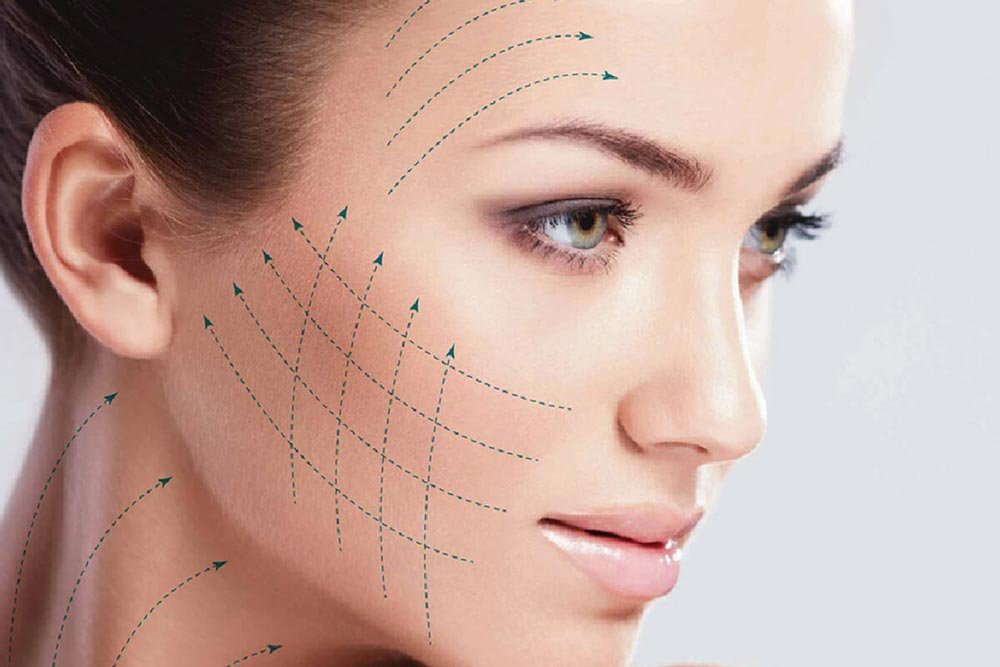
The effect of a thread lift usually holds for 12 to 24 months, depending on the type of thread, the area treated and skin quality. The support shows from the session, but the stable result is assessed between weeks 4 and 8, when swelling goes down and collagen builds. Aftercare during the first two weeks affects how the result settles.
The effect of a thread lift usually holds for 12 to 24 months, but what you see on the day of the session isn’t the final result. The support shows from the start; the stable shape arrives between weeks 4 and 8, when swelling goes down and new collagen starts to support the tissue. Here we explain what happens at each stage and what depends on you.
What is a thread lift?
Lifting threads are absorbable sutures, usually made of polydioxanone (PDO), placed under the skin with local anesthesia to reposition tissue that has started to descend. Barbed threads hold it mechanically and, as they are reabsorbed, the skin forms collagen around them. They are indicated for mild to moderate laxity · they don’t replace surgery when there is excess skin.
If you’re still deciding whether they’re right for you, start with our guide thread lifts: what they are and who they’re for. This article is about what comes after.
How long does a thread lift last?
It usually holds for 12 to 24 months. The range is wide because it depends on several things at once:
- The type and number of threads. Barbed threads hold more than smooth ones, and a well-distributed layout spreads the tension better.
- Skin quality. Skin with good thickness responds with more collagen and holds the support better.
- The degree of laxity. The more the tissue has descended, the sooner the weight shows again.
- Habits. Unprotected sun, smoking and sharp changes in weight speed up collagen loss.
The effect doesn’t disappear overnight: it fades gradually. Results vary from patient to patient.
Timeline: from the session to the first year
This is the usual course. Every case has its own pace, and the medical follow-up is what confirms how yours is going.
| When | What happens | What you notice | What to do |
|---|---|---|---|
| Day of the session | The barbs hold the tissue in a higher position | Visible support, swelling and entry points | Cold compresses and sleeping on your back, with your head raised |
| Days 2 to 7 | Swelling starts to go down | Tightness when you open your mouth, sometimes bruising | Avoid massage, wide facial movements, intense exercise and saunas |
| Weeks 2 to 4 | The tissue settles | Small irregularities usually resolve | Return to your routine as the physician advises |
| Weeks 4 to 8 | Collagen forms around the thread | A stable, more natural result | Medical follow-up to assess the result |
| Months 6 to 8 | The PDO thread finishes reabsorbing | Support is partly maintained by collagen | Sunscreen and a consistent routine |
| Months 12 to 24 | The effect gradually fades | Some descent shows again, without going back to where you started | Assess maintenance or a complementary treatment |
Is the result immediate?
Yes and no. The mechanical lift shows from the session, which is why threads were marketed for years as an "instant lift." But that first result is mixed with swelling: it may look more pronounced than it will end up, or show small asymmetries that won’t be the final ones.
The real shape shows once the tissue settles, between the fourth and eighth week. That’s why at iki we don’t assess the result on the same day or make adjustments before the follow-up. It is more honest to talk about an effect visible from the session and a result that builds over weeks.

Aftercare after a thread lift
Aftercare in the first two weeks affects how the support settles. These are the usual steps; the physician adjusts them to your case and gives them to you in writing.
First 48 hours
- Cold compresses in short intervals to control swelling.
- Sleep on your back, with your head slightly raised.
- The pain reliever the physician recommends if you have discomfort.
First and second week
- Avoid opening your mouth wide, facial massage and exaggerated expressions.
- No intense exercise, saunas or steam rooms during the first week.
- Check with us before any dental treatment in the first few weeks.
- Light makeup once the entry points have closed. We explain how in makeup after a treatment.
Always
Sunscreen every day. In Bogotá, UV radiation is high all year because of the altitude, and skin that is swollen or bruised develops dark spots more easily. If you have questions about your routine during those days, read what to do after a facial treatment.
Your consultation at iki is free · 45 minutes
A diagnosis and a written, phased plan. You decide afterwards. Related treatment: Thread lift.Normal side effects and warning signs
Expected, and usually resolves on its own within days or a few weeks:
- Mild swelling, tenderness and tightness.
- Small bruises at the entry points.
- Subtle dimples or asymmetries at the anchor areas.
Call the clinic promptly if you notice:
- Pain that increases after the third day instead of decreasing.
- Warm redness, discharge or fever.
- A thread poking through the skin or showing as a cord.
- A dimple that doesn’t resolve after three weeks.
These are uncommon and, caught early, are managed at a follow-up. That’s what follow-up care is for.
Benefits of a thread lift and its real ceiling
✓ They reposition tissue from the session, a mechanical effect that technology alone doesn’t provide.
✓ They stimulate collagen around the thread, which helps maintain part of the result once the thread has been reabsorbed.
✓ Short recovery, with no incisions or hospital stay. Most people return to their routine in one or two days.
✓ Precision by area: brows, midface and lower face, or nose, each with its own type of thread.
✗ They don’t remove excess skin. With severe laxity, the result is limited, and the honest conversation is about surgery.
✗ They don’t stop aging. Your face keeps aging, and the effect holds better with good habits and follow-ups.
What makes the effect last longer or shorter
Some factors you don’t control, such as age or skin thickness. Others you do:
- Daily sun protection, because UV radiation breaks down the collagen that supports the result. We help you choose a sunscreen for your face.
- Not smoking and keeping a stable weight.
- Combining treatments when it makes sense. HIFU for skin laxity works on firmness in the deeper layers, and collagen biostimulators such as Radiesse or HArmonyCa improve skin density. Not every plan needs them.
To see the full range of options, read our guide to treatments for facial sagging. And if you’re considering threads, at iki, in Usaquén, we start by reviewing your skin and the degree of descent to tell you what you can really expect in your case, with a written plan for your thread lift. Your consultation at iki is free · 45 minutes.
Frequently asked questions
How much does a thread lift cost, and how long does it last?
The cost depends on the type of thread, how many are needed and the area, so there is no single figure. At iki it is given to you in full and in writing at the consultation, before you decide. The effect usually holds for 12 to 24 months. Results vary from patient to patient.
Are thread lift results immediate?
The support is noticeable from the session, but what you see on day one isn’t the final result: swelling can exaggerate it or make it look uneven. The stable result shows between weeks 4 and 8, when the tissue settles and new collagen starts to support it.
When can I exercise again after a thread lift?
In general, intense exercise, saunas and steam rooms are avoided during the first week, because heat and exertion increase swelling. Walking is usually fine from the next day. The physician confirms at the follow-up when to return to your full routine, based on how the area is healing.
What happens when the thread is reabsorbed?
The polydioxanone thread is gradually reabsorbed over several months. When it is gone, part of the support remains thanks to the collagen that formed around it. The effect fades little by little, not overnight, and at the follow-up you decide together whether maintenance makes sense.
Is it normal to feel tightness or see dimples after a thread lift?
Yes. In the first few days it is common to feel tightness when you open your mouth or smile, and small dimples or asymmetries can appear at the anchor points. They usually resolve on their own within one to three weeks. If a dimple persists or a thread can be felt too much, it is checked at the follow-up.
How often can a thread lift be repeated?
There is no fixed schedule. It is assessed when the effect starts to fade, which is usually after the first year, and always at a follow-up. Sometimes repeating the threads isn’t necessary, and adding HIFU or a collagen biostimulator is enough to maintain firmness. The physician decides based on how you progress.
This article is for information only and does not replace a medical consultation. Results of any treatment vary from patient to patient. If you have a skin condition, book a consultation to get a diagnosis.