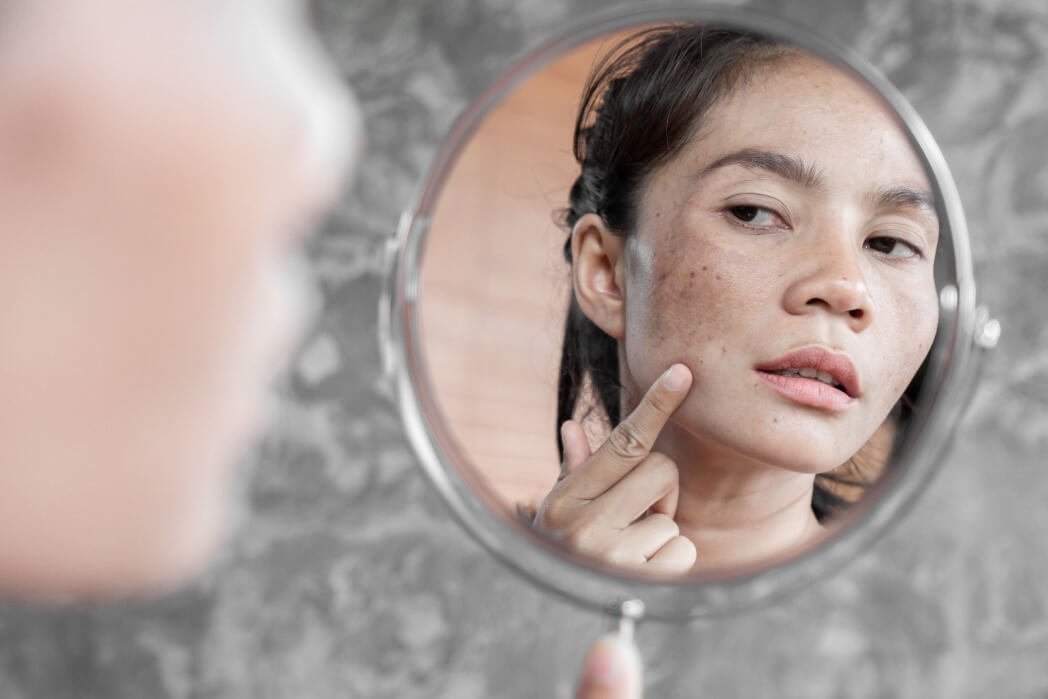
The best treatment for melasma isn't a single one but a step-by-step plan: daily tinted sun protection, depigmenting creams and, depending on the case, tranexamic acid, gentle peels or the Cosmelan protocol. Lasers are reserved for selected cases because they can make it worse. Melasma isn't cured · it's controlled, and it tends to come back with sun, heat and hormonal changes.
Melasma is a chronic pigmentation that forms brown or grayish patches on the face, mostly on the cheeks, forehead, upper lip and chin. There's no single best treatment: what works is a step-by-step plan that starts with sun protection and continues with depigmenting products and procedures chosen for your type of melasma. It can lighten a lot, but it isn't cured · it's controlled.
In this guide we explain what causes it, which options exist, how much lasers really help, what role vitamins play and how to care for it in a city like Bogotá.
What is melasma and how do you get rid of it?
Melasma is a pigmentation disorder in which the cells that produce melanin work overtime in certain areas of the face. You recognize it by symmetrical patches with irregular edges that darken with sun and lighten a little when there's less exposure, but don't go away on their own.

Depending on how deep the pigment sits, it can be epidermal, more superficial and more responsive; dermal, deeper and more stubborn; or mixed, which is the most common. The physician estimates this during the consultation, and it changes the plan.
"Getting rid of it" isn't quite accurate. Melasma lightens with sustained treatment and is kept in check with ongoing care, because the tendency to pigment is still there. Anyone who promises to erase it in one session isn't being honest.
What causes melasma?
It doesn't have a single cause, but several factors that add up:
- Genetics: there's often a family history.
- Hormones: pregnancy, birth control and hormone therapy can trigger it or make it worse. That's why during pregnancy it's called chloasma.
- UV radiation: the main trigger and the one that darkens it most.
- Visible light and heat: high-energy light and heat also stimulate pigment, especially in darker skin. That's why it sometimes gets worse in the kitchen, in the sauna or with intense exercise.
- Irritation: harsh cosmetics or poorly chosen treatments can inflame the skin and leave more pigment behind.
More common in women, but men get it too
According to the American Academy of Dermatology, about 9 in 10 people with melasma are women, and it's especially common during pregnancy and in intermediate to darker skin types (Fitzpatrick), like those of much of the Colombian population.
How do you get rid of melasma in men?
In men the treatment is the same. It's more often linked to accumulated sun, outdoor work or sports, and genetics. The biggest challenge isn't the procedure but sticking with sunscreen: a comfortable texture, such as a tinted gel or fluid, makes the difference. If you're looking for an approach designed for men's skin, see our aesthetic medicine for men.
Can melasma be cured? Types of melasma treatment
It isn't cured, but it can be controlled. These are the tools available, with what they can realistically achieve:
| Option | What it does | Time and sessions | Recovery | Real limit |
|---|---|---|---|---|
| Tinted sun protection | Blocks the stimulus from sun and visible light | Every day, always | None | Without it, nothing else holds |
| Depigmenting creams | Reduce melanin production | Daily use; changes over weeks to months | Possible mild irritation | They lighten gradually |
| Tranexamic acid mesotherapy | Slows signals that activate pigment | Step-by-step plan; changes from the 3rd session | Redness and small bumps for a few days | Requires maintenance |
| Depigmenting peels | Remove superficial pigment and renew the skin | Several spaced-out sessions | Redness and peeling for a few days | Best for epidermal melasma |
| Cosmelan | In-clinic mask and a maintenance cream at home | One application and months of maintenance | Redness and peeling for 1–2 weeks | Requires consistency at home |
| Q-Switched laser | Breaks up pigment with short pulses | Several sessions, in selected cases | Temporary redness | Risk of rebound if poorly indicated |
Timeframes are approximate, and results vary from patient to patient.
Sun protection: the foundation of the plan
For melasma, the American Academy of Dermatology recommends a tinted sunscreen containing iron oxides, because in addition to UV radiation it filters part of the visible light. We explain why in what tinted sunscreen is for.
Tranexamic acid
It's one of the actives with the strongest evidence for melasma. It can be used in a cream, in mesotherapy for dark spots, with superficial micro-injections over the area, or orally. The oral form is only prescribed after a medical assessment of thrombosis risk, never on your own. If you want to know what a session is like, read mesotherapy for dark spots.

Peels and Cosmelan
Depigmenting peels remove superficial pigment in a controlled way. For melasma, gentle, repeated formulas are preferred over one strong peel, because intense inflammation leaves more pigmentation. The Cosmelan protocol combines a mask applied by the physician with a maintenance cream used at home for months; it works when you see it as a process, not a single session.
Your consultation at iki is free · 45 minutes
A diagnosis and a written, phased plan. You decide afterwards. Related treatment: Melasma treatment.What is the best treatment for melasma?
The one that respects the order. If you start with the strongest procedure and leave the foundation for later, melasma usually comes back stronger. At iki, melasma treatment follows these phases:
- Diagnosis: confirm it's melasma and not another kind of spot, estimate its depth and review triggers such as birth control, pregnancies, cosmetics and heat exposure.
- Foundation: tinted sunscreen reapplied throughout the day and a depigmenting routine at home.
- Lightening: tranexamic acid, gentle peels or Cosmelan, depending on the case.
- Selection: laser only in specific cases and on melasma that's already under control.
- Maintenance: always, because melasma tends to come back.
Do lasers work to remove melasma?
They can help, but with caution. The Q-Switched laser uses very short pulses that break up pigment so the body can clear it. The problem is that melasma reacts to heat and inflammation: a poorly indicated or overly intense laser can cause a rebound, with patches darker than the original ones, or leave unevenly lighter areas.
That's why at iki the Q-Switched Nd:YAG isn't the first option for melasma. It's considered in selected cases, with gentle settings, untanned skin and a control plan already underway. IPL (intense pulsed light), useful for other kinds of dark spots, is avoided in hormonal melasma that hasn't been brought under control first.
Which vitamin gets rid of melasma?
No vitamin gets rid of it on its own, but some help as part of your routine:
- Topical vitamin C: an antioxidant that slows part of melanin production. We tell you more in the benefits of vitamin C.
- Niacinamide (vitamin B3): reduces the transfer of pigment to the surface layers and is well tolerated.
- Vitamin E: an antioxidant complement, especially alongside vitamin C.
Oral supplements don't replace sun protection or medical treatment, and any supplement should be reviewed by the physician, especially during pregnancy or breastfeeding.
How to care for skin with melasma
In Bogotá, at about 2,600 m (8,500 ft), UV radiation is high all year and there's no off-season: care is daily, even on cloudy days. These measures make the difference:
- ✓ Broad-spectrum tinted sunscreen, reapplied every three to four hours.
- ✓ A wide-brimmed hat and shade during peak radiation hours, around midday.
- ✓ Avoid intense heat on your face: sauna, facial steaming, long stretches of cooking without a break.
- ✓ A gentle routine, with no harsh exfoliants or irritating products.
- ✗ Don't use creams with corticosteroids or hydroquinone without medical supervision.
- ✗ Don't do peels or lasers on your own or at places without a medical consultation.
During pregnancy, sun protection comes first and everything else is postponed; we explain it in aesthetic treatments during pregnancy. If your spots are small and have been there since childhood, it may not be melasma: see freckle treatment.
The less you're exposed to triggers, the more stable melasma stays and the fewer interventions you need. At iki, in Usaquén, a physician confirms the diagnosis and works out a written, step-by-step plan with you. Results vary from patient to patient. Your consultation at iki is free · 45 minutes.
Frequently asked questions
What is melasma and how do you get rid of it?
Melasma is a chronic pigmentation that forms symmetrical brown or grayish patches on the cheeks, forehead, upper lip or chin. It doesn't go away all at once: it lightens with a plan that combines strict sun protection, depigmenting products at home and procedures such as tranexamic acid, peels or Cosmelan, and it's maintained with lifelong care, because it tends to come back.
What causes melasma?
There's no single cause. Genetic predisposition, female hormones (as in pregnancy or with birth control), UV radiation, visible light and heat all play a part. Some irritating cosmetics and certain medications that make the skin more sensitive to the sun can make it worse. That's why treatment starts by identifying and controlling each person's triggers.
Do lasers work to remove melasma?
They can lighten it in selected cases, but they're not the first option. The heat and inflammation a laser creates can stimulate more pigment and cause a rebound, sometimes worse than the original patch. When a laser is used, a short-pulse laser such as the Q-Switched is chosen, at gentle settings, on melasma that's already under control and with strict sun protection.
Which vitamin gets rid of melasma?
No vitamin gets rid of it on its own. Vitamin C and niacinamide, a form of vitamin B3, applied in a cream, help slow melanin production and are good additions to your routine. Taking vitamins doesn't replace sun protection or medical treatment. Any oral supplement should be reviewed by the physician, especially during pregnancy or breastfeeding.
How do you get rid of melasma in men?
The treatment is the same as in women: daily sunscreen, depigmenting products and procedures chosen for the type of melasma. In men it's more often linked to accumulated sun exposure, outdoor work and genetics. The biggest challenge is usually sticking with sunscreen; choosing a comfortable texture, such as a tinted gel or fluid, makes it easier to keep up.
Which cream is good for melasma on the face?
Creams with azelaic acid, tranexamic acid, niacinamide, vitamin C, kojic acid or retinoids help lighten it gradually. Hydroquinone and combination formulas with a corticosteroid are effective, but they should only be used with a prescription and for defined periods. No cream works without a tinted sunscreen applied every day. The choice depends on each person's skin.
This article is for information only and does not replace a medical consultation. Results of any treatment vary from patient to patient. If you have a skin condition, book a consultation to get a diagnosis.